纺织学报 ›› 2025, Vol. 46 ›› Issue (05): 236-242.doi: 10.13475/j.fzxb.20240707001
耿增民1, 刘诗宇2, 崔牮2, 康申奥3, 王永进3, 刘卫3, 宁俊4( )
)
GENG Zengmin1, LIU Shiyu2, CUI Jian2, KANG Shen'ao3, WANG Yongjin3, LIU Wei3, NING Jun4()
摘要:
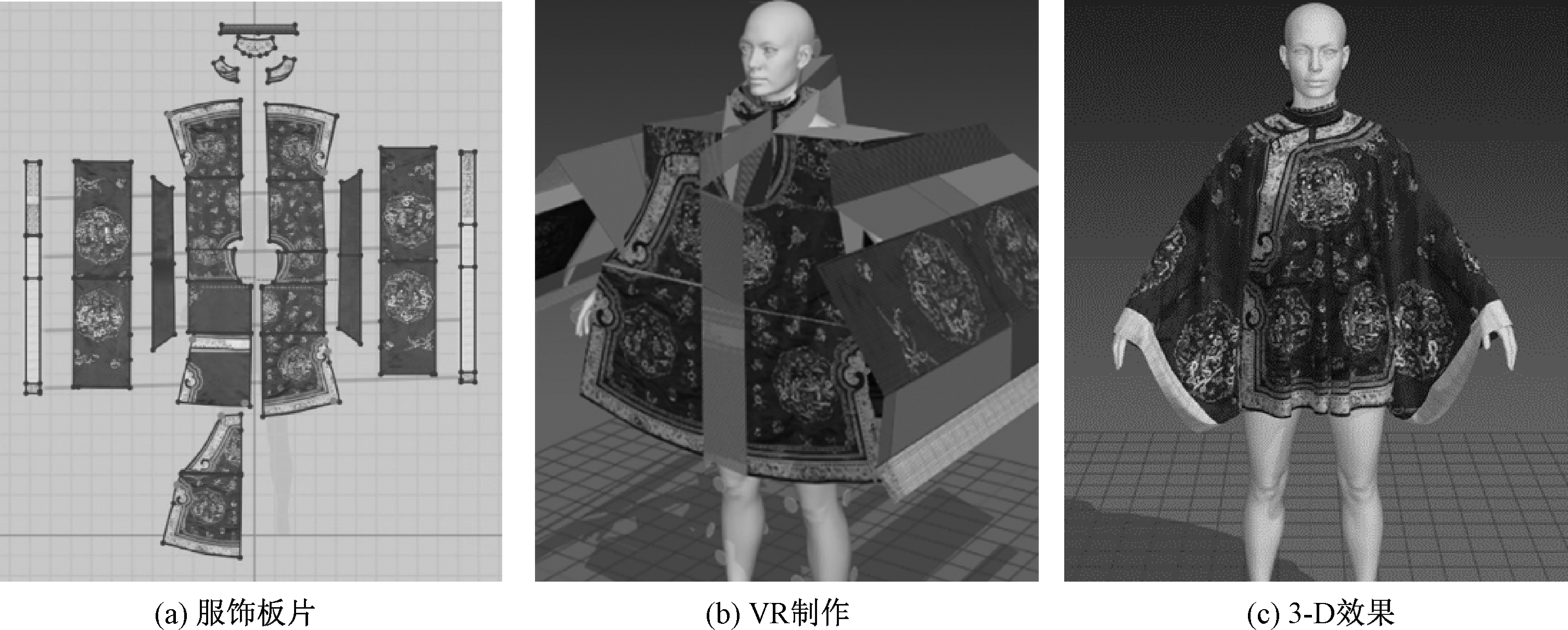
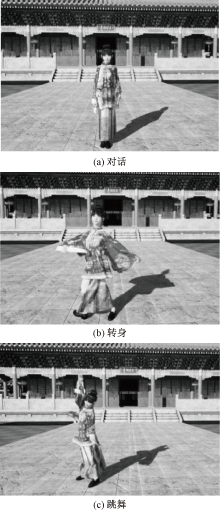
针对目前民族服饰文化遗产保护与传承不足的现状,提出利用数字化技术进行民族服饰保护与传承的方法。首先,采用三维扫描技术对民族服饰进行全方位数字化采集,并以全信息格式存储;其次,运用人工智能辅助的数字修复技术还原服饰细节,同时使用深度学习技术实现民族服饰图像的自动分类;然后,在Marvelous Designer软件中按1:1比例复刻服饰并模拟织物的物理特性;最后,选取馆藏清代蓝缎女袄作为实验对象,在虚幻引擎环境中构建虚拟数字人,通过人机交互方式实现沉浸式展示。实验结果显示:该方法不仅能高效记录和展示民族服饰细节,还可提升公众对民族服饰文化的认知和兴趣。研究结果为民族服饰的数字化保护和创新传承提供了一条全新的技术路径,对其它物质文化遗产的保护与传承亦具有参考价值和借鉴意义。
中图分类号:
| [1] | 民族服饰博物馆. 博物馆介绍[EB/OL].(2020-06-10)/ [2024-03-04]. http://www.biftmuseum.com. |
| Museum of Ethnic Costumes. Museum introduction[EB/OL].(2020-06-10)/ [2024-03-04]. http://www.biftmuseum.com. | |
| [2] | 张旗, 邓苗. 北京非物质文化遗产保护发展报告(2022)[M]. 北京: 社会科学文献出版社, 2022:1-51. |
| ZHANG Qi, DENG Miao. Beijing intangible cultural heritage protection and development report (2022)[M]. Beijing: Social Sciences Academic Press, 2022:1-51. | |
| [3] | 中国纺织工业联合会. “十四五”纺织非物质文化遗产工作行业性指导意见[EB/OL]. (2021-12-28)[2024-07-07]. https://www.cntac.org.cn/guihua/202112/t20211228_4229927.html. |
| China National Textile and Apparel Council. Industry guidance for textile intangible cultural heritage work during the "14th five-year plan" period[EB/OL]. 2021-12-28[2024-07-07]. https://www.cntac.org.cn/guihua/202112/t20211228_4229927.html. | |
| [4] | 覃京燕, 贾冉. 人工智能在非物质文化遗产中的创新设计研究: 以景泰蓝为例[J]. 包装工程艺术版, 2020, 41(6): 1-6. |
| QIN Jingyan, JIA Ran. Research on innovative design of artificial intelligence in intangible cultural heritage: taking cloisonne as an example[J]. Packaging Engineering (Art Edition), 2020, 41(6): 1-6. | |
| [5] | 马晓娜, 图拉, 徐迎庆. 非物质文化遗产数字化发展现状[J]. 中国科学: 信息科学, 2019, 49(2): 121-142. |
| MA Xiaona, TU La, XU Yingqing. Current status of digitization development of intangible cultural herit-age[J]. Scientia Sinica Informationis, 2019, 49(2): 121-142. | |
| [6] | 马碧芳, 王伟, 陈浴权, 等. 基于 VR 技术的福清光饼非物质文化遗产保护系统研究[J]. 电子技术与软件工程, 2019, 10: 152-153. |
| MA Bifang, WANG Wei, CHEN Yuquan, et al. Research on protection system of fuqing guangbing intangible cultural heritage based on vr technology[J]. Electronic Technology & Software Engineering, 2019, 10: 152-153. | |
| [7] | 故宫博物院.[EB/OL]. 2021-12-15[2024-07-07], https://www.dpm.org.cn/classify_detail/257023.html. |
| The Palace Museum.[EB/OL]. 2021-12-15[2024-07-07], https://www.dpm.org.cn/classify_detail/257023.html. | |
| [8] | 郭丹, 商书元. 基于Unity3D的虚拟博物馆展陈模型研究[J]. 北京服装学院学报(自然科学版), 2017, 37(2):63-68. |
| GUO Dan, SHANG Shuyuan. Research on virtual museum exhibition model based on Unity3D[J]. Journal of Beijing Institute of Fashion Technology (Natural Science Edition), 2017, 37(2): 63-68. | |
| [9] | SHAO Xiwen. Research on key technologies of museum costume virtual exhibition based on Web3D[J]. Journal of Physics;Conference Series, 2019, 1176(2): 1-6. |
| [10] | 邓可卉, 卫艺林. 基于三维服装建模技术的古代服装数字化虚拟复原[J]. 纺织学报, 2023, 44(4):179-186. |
| DENG Kehui, WEI Yilin. Digital virtual restoration of ancient clothing based on 3D garment modeling technology[J]. Journal of Textile Research, 2023, 44(4): 179-186. | |
| [11] | 廖珣, 曾慧. 基于数字化技术的满族服饰保护与创新研究[J]. 艺术品鉴, 2016(3):129-131. |
| LIAO Xun, ZENG Hui. Research on the protection and innovation of manchu clothing based on digital technology[J]. Art Appreciation, 2016(3): 129-131. | |
| [12] | 刘瑞璞, 陈果. 中国藏族服饰结构谱系[M]. 北京: 科学出版社, 2021:314-346. |
| LIU Ruipu, CHEN Guo. The structural spectrum of tibetan costumes in China[M]. Beijing: Science Press, 2021: 314-346. | |
| [13] | BOLTON A, SCATURRO S. The digital transformation of the costume institute: the application of 3D technology, VR/AR technology in costume preservation and dissemination[J]. Museum, 2021, 100(2): 36-45. |
| [14] | YE H, DAI Z. Research on the application of chinese elements in the design of fashion culture clothing under the fashion intelligent manufacturing path[J]. International Journal of Social Science and Education Research, 2021, 4(1): 264-277. |
| [15] | 杨燕. 中国唐代服装与日本和服的图案审美意识比较[J]. 文化创新比较研究, 2018, 2(18):54-55. |
| YANG Yan. A comparative study on the aesthetic consciousness of patterns between Chinese Tang dynasty clothing and Japanese kimono[J]. Comparative Study of Cultural Innovation, 2018, 2(18): 54-55. | |
| [16] |
PANG B, NIJKAMP E, WU Y N. Deep learning with tensorflow: a review[J]. Journal of Educational and Behavioral Statistics, 2020, 45(2): 227-248.
doi: 10.3102/1076998619872761 |
| [17] | TANTAWY RR, MUHAMMAD K, FARGHALY S T, et al. Advancements in 3D digital technology for virtual fashion design and education[J]. Journal of Textiles, Coloration and Polymer Science, 2024, 21(2): 477-485. |
| [18] | 蔡山. Unreal Engine 5 互动开发: 物联网/虚拟人/直播/全景展示/音效控制实战[M]. 北京: 清华大学出版社, 2023:100-118. |
| CAI Shan. Interactive development with Unreal Engine 5: practical applications in IoT, virtual humans, live streaming, panoramic display, and sound control[M]. Beijing: Tsinghua University Press, 2023:100-118. | |
| [19] | Epic Games. Unreal Engine[EB/OL]. [2024-07-20]. https://www.unrealengine.com. |
| [20] |
PANG B, NIJKAMP E, WU Y N. Deep learning with tensorflow: a review[J]. Journal of Educational and Behavioral Statistics, 2020, 45(2): 227-248.
doi: 10.3102/1076998619872761 |
| [21] | KETKAR N, MOOLAYIL J, KETKAR N, et al. Deep learning with python[M]. Berkeley: Apress, 2021:27-91. |
| [22] | ALZUBAIDI L, ZHANG J, HUMAIDI A J, et al. Review of deep learning: concepts, cnn architectures, challenges, applications, future directions[J]. Journal of big Data, 2021, 8: 1-74. |
| [23] | WU Z, SHEN C, VAN DEN HENGEL A. Wider or deeper: revisiting the resnet model for visual recogni-tion[J]. Pattern Recognition, 2019, 90: 119-133. |
| [24] | 田静, 王洪武. TPO 原则在服饰中的应用[J]. 重庆工商大学学报(自然科学版), 2008, 25(6): 650-653. |
| TIAN Jin, WANG Hongwu. Application of TPO principles in clothing[J]. Journal of Chongqing Technology and Business University (Natural Science Edition), 2008, 25(6): 650-653. | |
| [25] | WEI L, WANG Y, LI D. Research on speech-based digital human driving system based on unreal engine[C]// 2023 IEEE International Symposium on Broadband Multimedia Systems and Broadcas-ting (BMSB). Beijing: IEEE, 2023: 1-6. |
| [26] | ROUMELIOTIS K I, TSELIKAS N D. ChatGPT and open-AI models: a preliminary review[J]. Future Internet, 2023, 15(6): 192. |
| [1] | 吴燕飞, 张颖, 薛哲彬. 虚拟形象娱乐价值对时尚品牌购买意愿的影响[J]. 纺织学报, 2023, 44(12): 153-161. |
| [2] | 许晗, 沈雷, 陈涵. 居里叶分形在艾德莱斯裙装图案设计中的应用[J]. 纺织学报, 2023, 44(06): 191-199. |
| [3] | 赵晶;刘冠彬;左双喜. 湘西少数民族几何抽象图案中的美学寓意[J]. 纺织学报, 2011, 32(3): 116-121. |
| [4] | 常丽霞;高卫东. 鱼形图案在我国民族服饰中的文化寓意[J]. 纺织学报, 2009, 30(9): 106-108. |
| [5] | 许凡;吴秋英. 西南少数民族服饰纹样的精神显现[J]. 纺织学报, 2007, 28(10): 95-99. |
|
||
 京公网安备11010502044800号