Journal of Textile Research ›› 2024, Vol. 45 ›› Issue (11): 80-87.doi: 10.13475/j.fzxb.20230806801

• Textile Engineering • Previous Articles     Next Articles

Three-dimensional parametric modeling of yarn based on point clouds

LI Wenya(), LIANG Jianhang, XUE Tao, DONG Zhenzhen   

  1. School of Textile Science and Engineering, Xi'an Polytechnic University, Xi'an, Shaanxi 710048, China
  • Received:2023-08-18 Revised:2024-04-20 Online:2024-11-15 Published:2024-12-30

Abstract:

Objective The three-dimensional yarn simulation is an important part for yarn design and fabric development. The use of computer simulation technology to simulate and visualize the yarn appearance is the key part of the current research. At present, most yarn simulations are carried out in two-dimensional or three-dimensional space, so that the appearance and shape of the yarn are limited. Therefore, it is necessary to design a fast and real three -dimensional yarn modeling method.

Method Circle stack diagram is first established based on the space circle and the Circle library, and then the spatial spline curve is established by combining the spiral twist equations of the circle stack diagram in different quadrants. According to the twisting characteristics of the fibers in the yarn, the curve is divided into multiple equidistant line segments, the spatial circle represented by the 3-D point cloud is established with the line segments as the normal vector, and the point cloud meshing algorithm is used to construct the point cloud as the initial triangular mesh model. The Loop subdivision algorithm is used to subdivide the mesh model.

Results The effectiveness of the 3-D yarn model based on point cloud method is verified and analyzed, and the 3-D yarn model established by different methods was compared and demonstrated. According to the effect of the 3-D yarn model established in literature, the geometric tube is modeled according to the input yarn parameters to match these fibers, and several single yarns with different structures are simulated, which shows that this is an effective yarn modeling and rendering method. In the three-dimensional yarn model based on the point cloud method, the distribution of fibers in the yarn cross-section is uneven, therefore it is necessary to deal with the regular circle pile diagram established by the regular yarn cross-section. Through the randomness of the starting point of fiber generation and the twisting state of the fiber, combined with the spiral twisting formula of different quadrants, the three-dimensional spatial spline without splicing state can be continuously generated. According to the twisting characteristics of the fibers in the yarn, the curve is divided into multiple equidistant segments, and the spatial circle represented by the 3-D point cloud is established with the line segments as the normal vector. Then, the point cloud grid algorithm is used to construct the point cloud as an initial triangular mesh model. Finally, the Loop subdivision algorithm is used to subdivide the surface of the mesh model, and the number of subdivisions is set according to the required model accuracy to improve the overall smoothness of the 3-D yarn model. In addition, the hairiness on the 3-D yarn model is formed by one end of the fiber protruding from the surface of the yarn body, which is consistent with the generation state of the actual yarn hairiness. Experiments show that the method can quickly generate a real 3-D yarn model, and the model contains multiple feature points such as number of fibers, fiber diameter, yarn twist direction, hairiness, and so on, which further illustrates the effectiveness of the method.

Conclusion Based on the importance of 3-D yarn simulation in yarn design and fabric development, a method for parametric modelling of 3-D yarn based on point cloud is proposed. The starting point of 3-D yarn model establishment is the circle stack diagram, the spatial spline curve composed of multiple equidistant line segments is created according to the custom conditions, and the spatial scattering circle expressed by 3-D point cloud is generated with the line segments as the center of the circle, and then the 3-D point cloud reconstruction algorithm is used to construct the point cloud between multiple spatial scattering circles into a triangular mesh model, and finally the surface subdivision of the initial 3-D yarn model is carried out to obtain the 3-D yarn model with high accuracy. The experimental results show that the 3-D visual effect of the yarn model is more obvious based on the number of constructed point clouds and the optimization of subdivision. At the same time, the algorithm realistically expresses the geometric characteristics of the simulated object, such as yarn thickness, hairiness, twist direction and fiber diameter, and so on, and can be adjusted according to the actual situation. The simulation is easy to operate and runs fast, which can better assist yarn design and development for practice.

Key words: circle packing, spatial curve, point cloud, triangular grid, yarn model

CLC Number: 

  • TS101.8

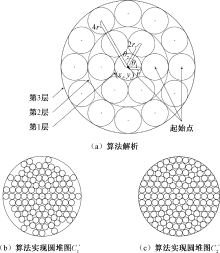
Fig.1

Implementing a circular nested layout algorithm to achieve a circular heap chart. (a) Algorithm parsing; (b) Circle packing C'1; (c) Circle packing C'2"

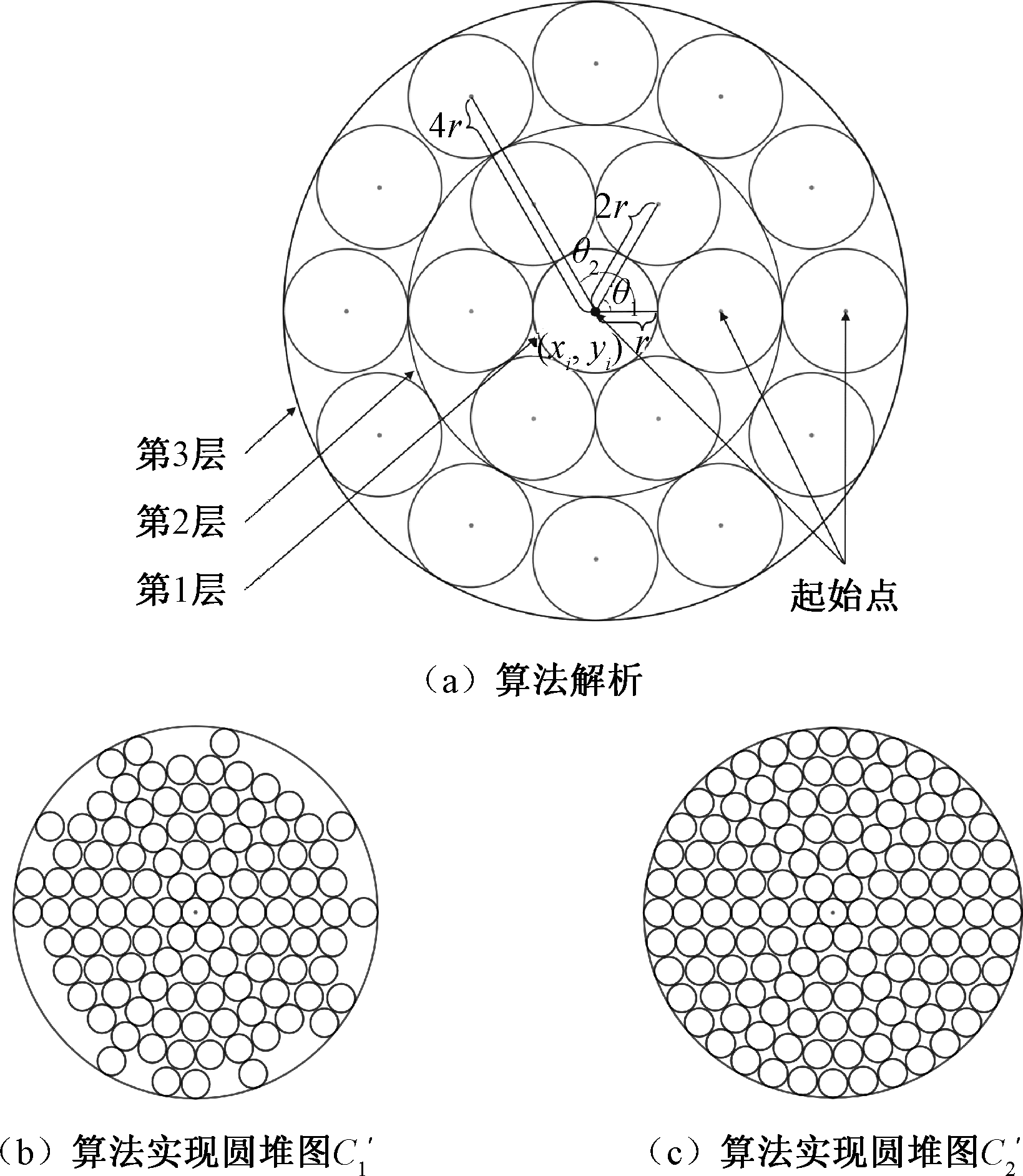
Fig.2

Spatial spline. (a) Initial spatial spline cross-section; (b) Improved spatial spline cross-section; (c) Spatial spline displaying the starting point; (d) Spatial spline without the starting point"

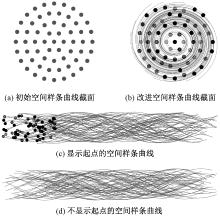
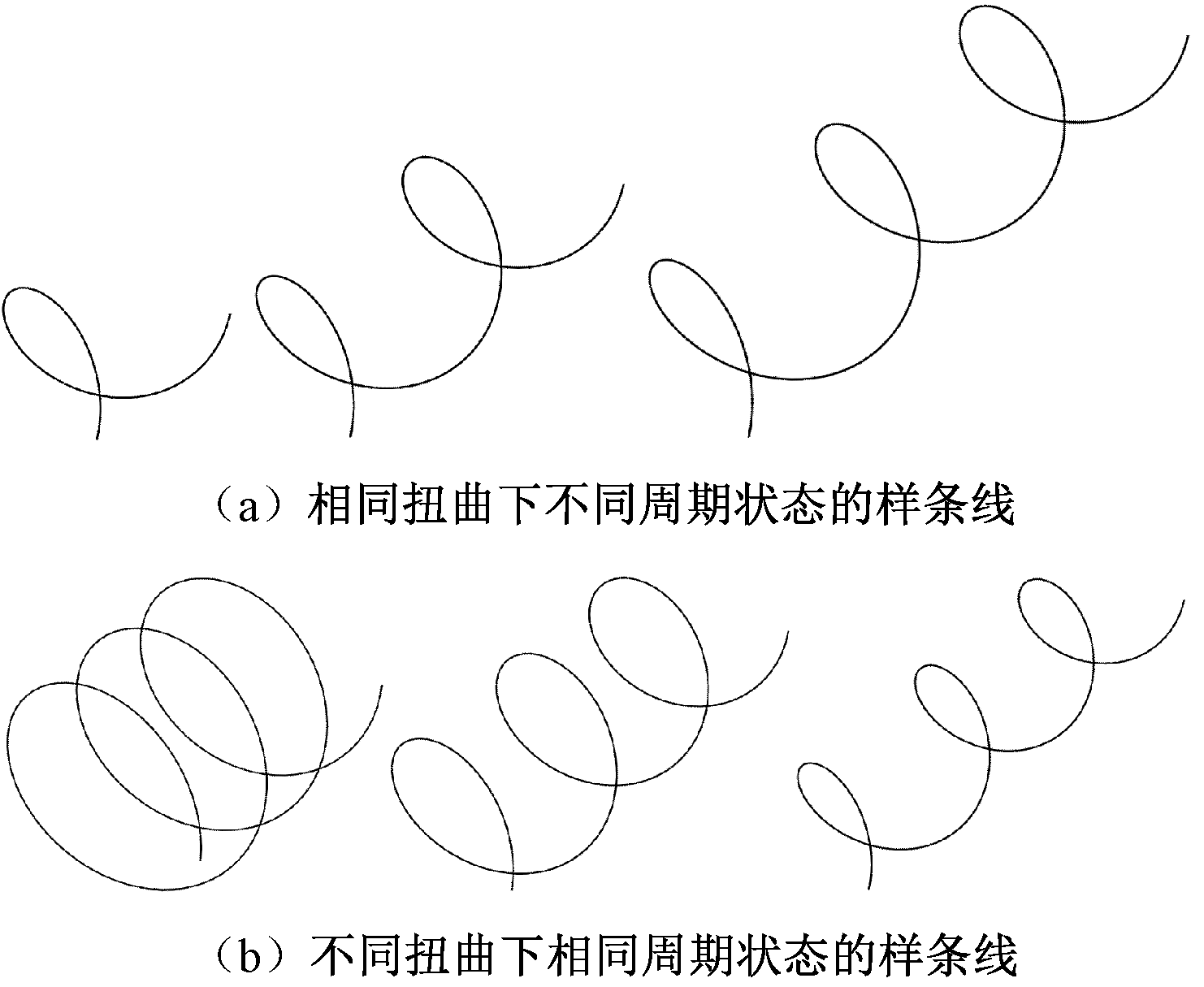
Fig.3

Splines with different distortions and different periodic states. (a) Splines with same distortion and different periodic states; (b) Splines with different distortions and same periodic state"

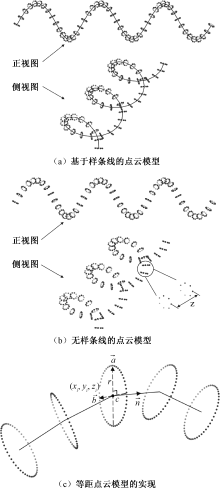
Fig.4

Point cloud model. (a) Spline-based point cloud model; (b) Splineless point cloud model; (c) Implementation of equidistant point cloud model"

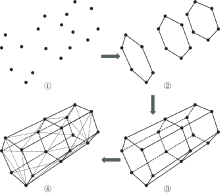
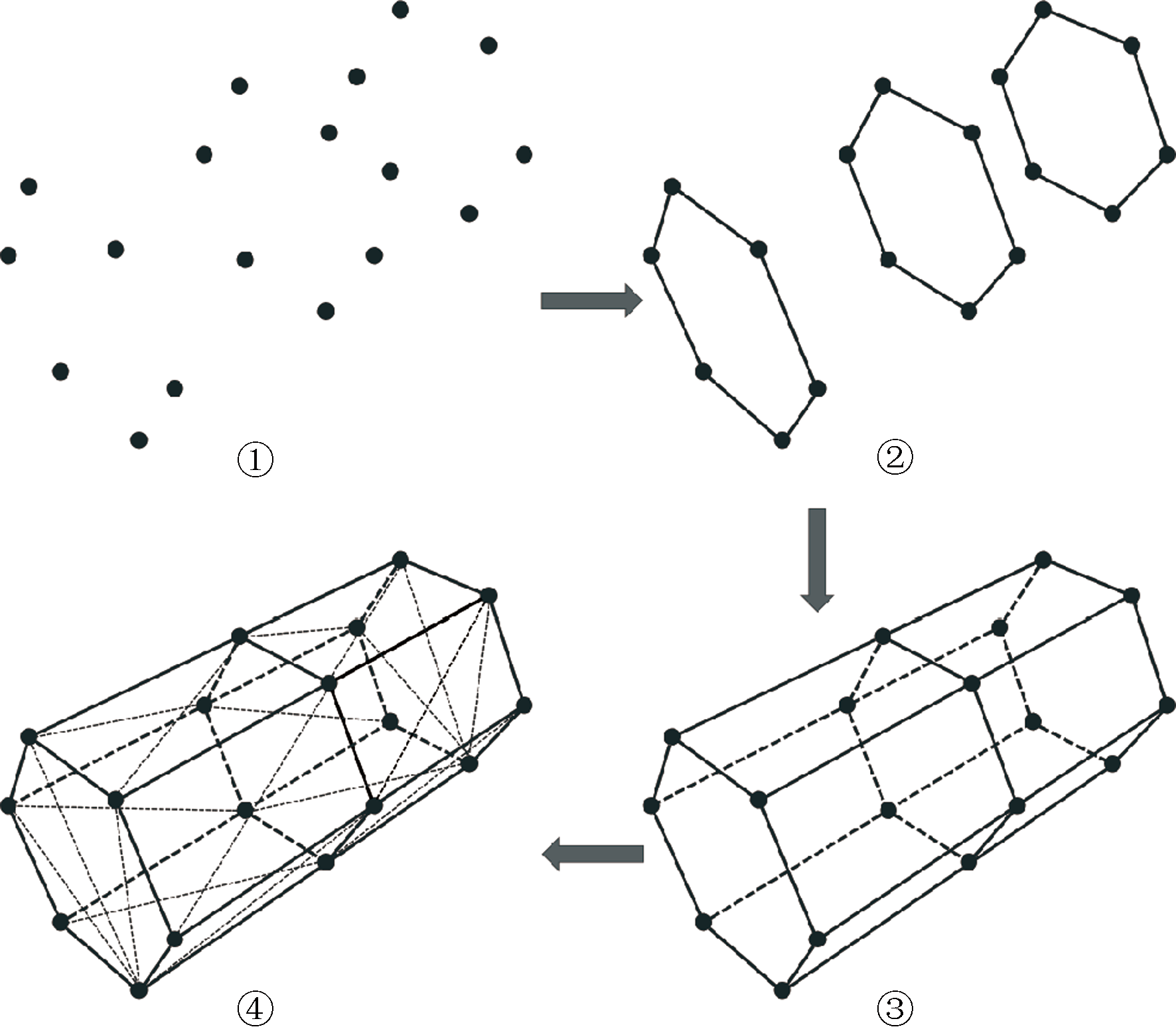
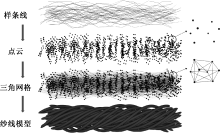
Fig.5

3-D point cloud reconstruction meshing process"

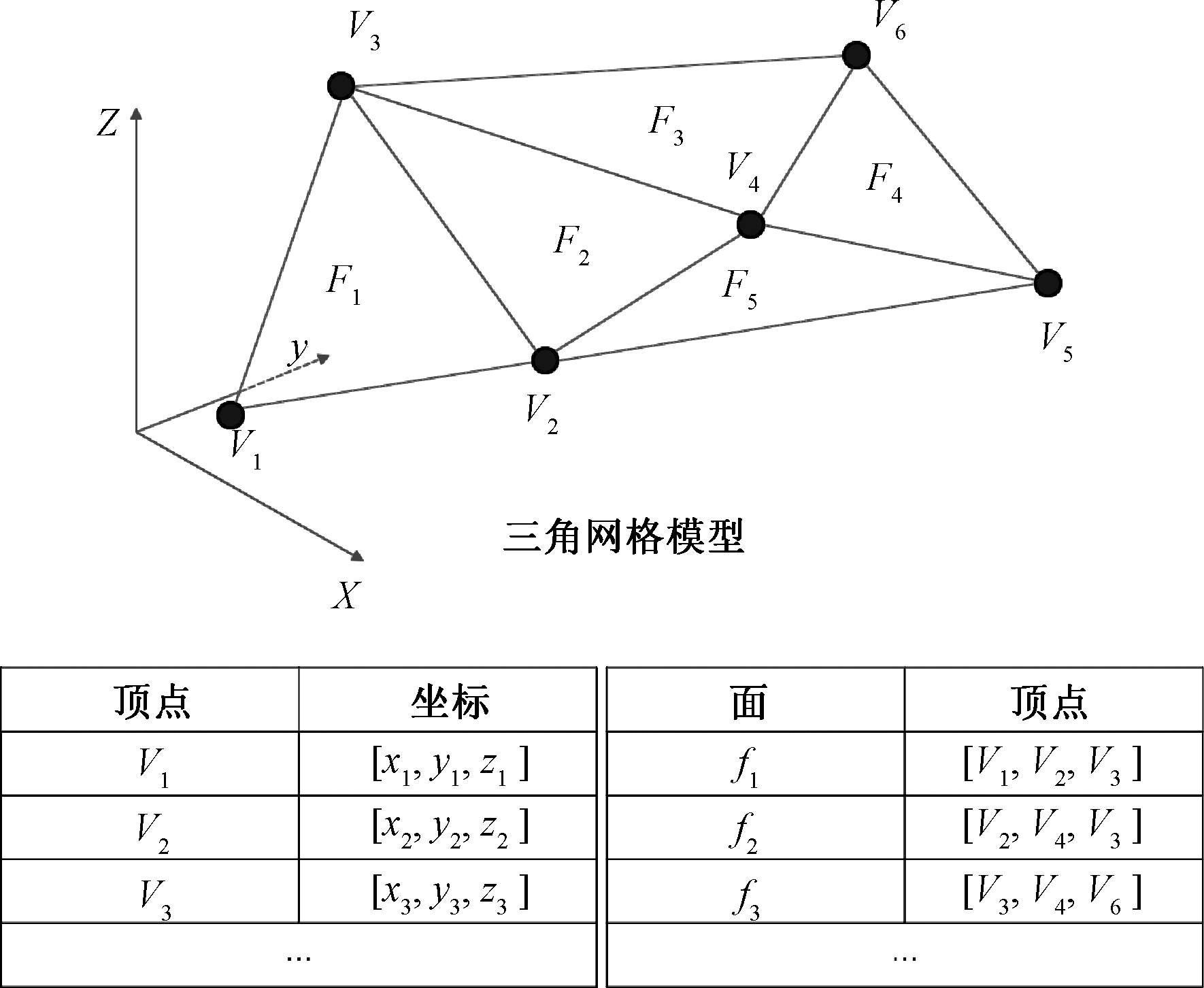
Fig.6

Example of polygon list"

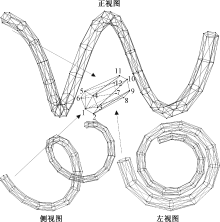
Fig.7

Triangular mesh plot based on point cloud curves"

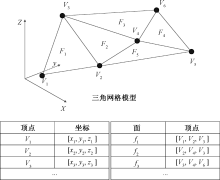
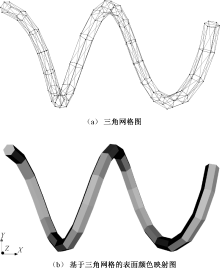
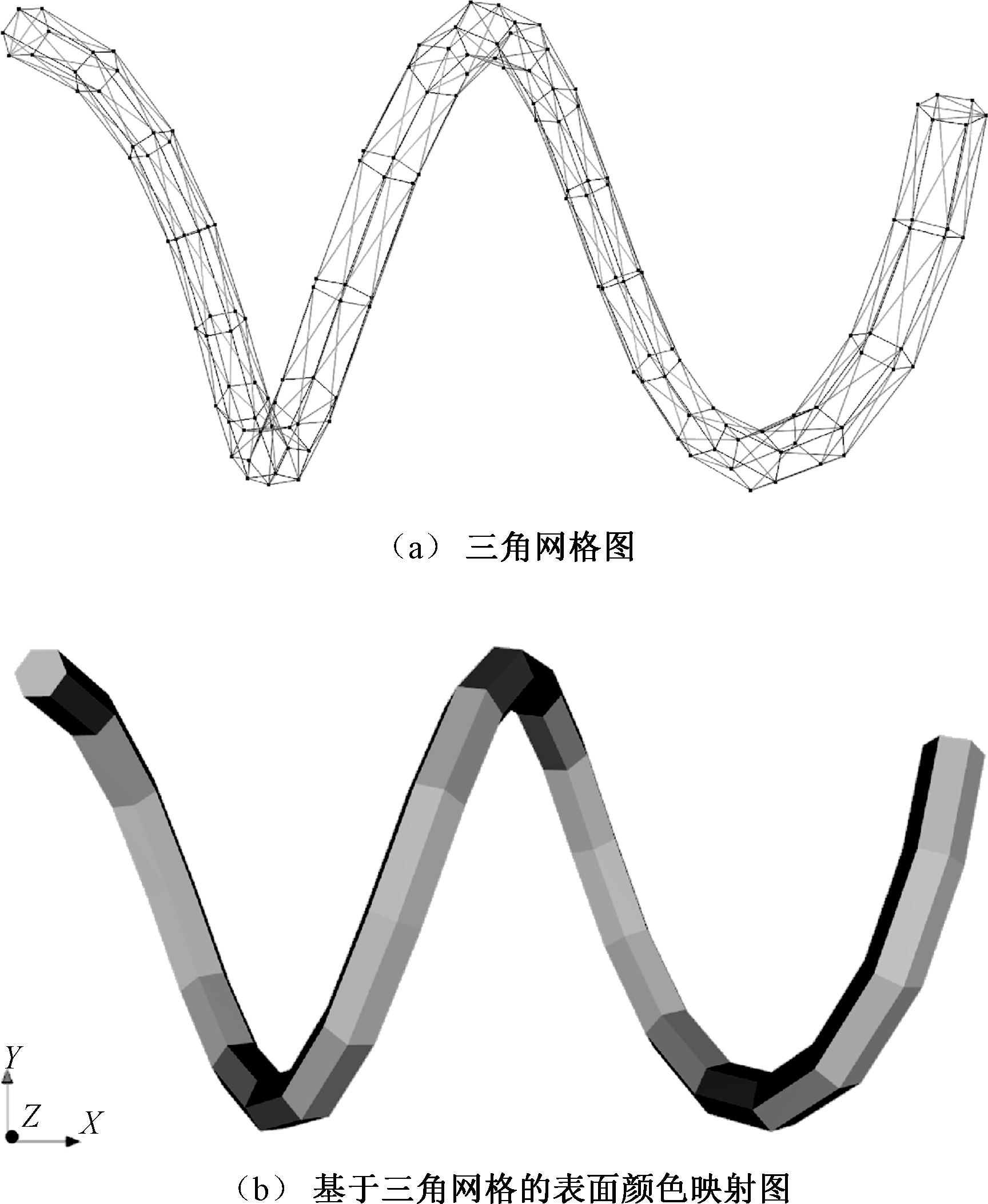
Fig.8

Grid defines color. (a) Triangular grid diagram; (b) Surface color mapping based on triangular grid"

Fig.9

Yarn model build order"

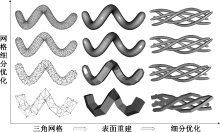
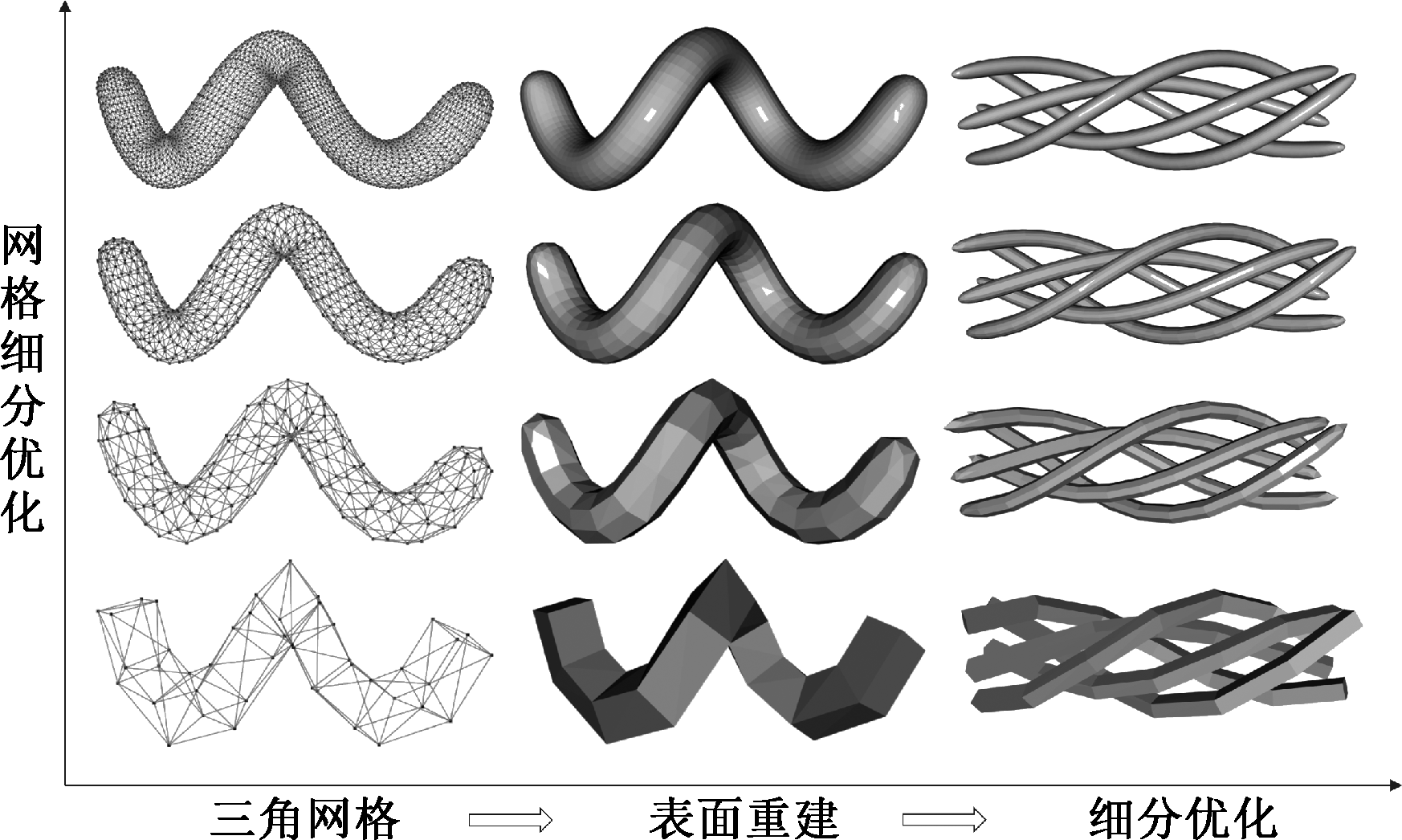
Fig.10

Model tessellation process"

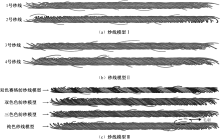
Fig.11

3-D yarn model. (a) Yarn model Ⅰ; (b) Yarn model Ⅱ; (c) Yarn model Ⅲ"

Tab.1

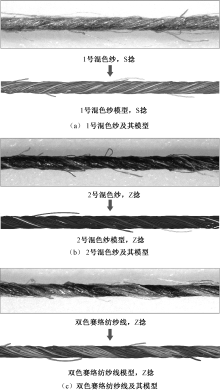
Spinning process parameter table"

图片
编号
纤维颜色
(RGB)
混合比 纱线
类别
捻度/
(捻·m-1)
捻向
图12(a) (107,190,140)
(107,182,151)
(168,207,190)
(235,235,235)
0.7
0.1
0.1
0.1
混色纱 850 Z
图12(b) (107,28,90)
(137,58,140)
(149,65,128)
(235,235,235)
0.85
0.05
0.05
0.05
混色纱 850 Z
图12(c) (113,45,111)
(115,176,142)
0.5
0.5
赛络纺纱 850 Z

Fig.12

Comparison of actual spun staple fiber yarn with 3-D staple fiber yarn model. (a) No.1 color spinning and model; (b) No.2 color spinning and model; (c) Two-color siro yarn and model"

[1] 韩要宾, 张杰, 潘如如, 等. 纤维尺度下数码纱仿真方法[J]. 纺织学报, 2017, 38(11): 150-155.
doi: 10.13475/j.fzxb.20160708606
HAN Yaobin, ZHANG Jie, PAN Ruru, et al. Simulation method of digital yarn at fiber scale[J]. Journal of Textile Research, 2017, 38(11): 150-155.
[2] KARGAR M, PAYVANDY P, MOZAFARY V. A numerical structure-based method of simulating filament yarns[J]. The Journal of the Textile Institute, 2022, 113(12): 2681-2693.
[3] LIU H, KYOSEV Y, JIANG G, et al. Realistic fabric rendering with yarn models[J]. Textile Research Journal, 2023, 93(15/16): 3552-3563.
[4] ZHAN S, LUAN F, BALA K. Fitting procedural yarn models for realistic cloth rendering[J]. ACM Transactions on Graphics, 2016, 35(4) : 1-11.
[5] WANG J, AKANKWASA NT, ZHANG Y, et al. The three-dimensional model of staple yarn formation simulated from randomly assembled fibers[J]. Textile Research Journal, 2020, 90(7/8): 866-876.
[6] 郑成杰, 郑之. 基于最大分类器差异域适应方法的三维点云分类[J]. 信息与控制, 2023, 52(5): 588-597.
ZHENG Chengjie, ZHENG Zhi. 3 dimensions based on the maxi mum classifier difference domain adaptation method point cloud classification[J]. Information and Control, 2023, 52(5): 588-597.
[7] 王文曦, 李乐林. 深度学习在点云分类中的研究综述[J]. 计算机工程与应用, 2022, 58(1): 26-40.
doi: 10.3778/j.issn.1002-8331.2105-0200
WANG Wenxi, LI Lelin. Review of deep learning in point cloud classification[J]. Computer Engineering and Applications, 2022, 58(1): 26-40.
doi: 10.3778/j.issn.1002-8331.2105-0200
[8] CHEN Y, LIU J, NI B, et al. Shape self-correction for unsupervised point cloud understanding[C]// Proceedings of the IEEE/CVF International Conference on Computer Vision. Montreal: IEEE, 2021: 8382-8391.
[9] CHERCHI G, LIVESU M, SCATENI R, et al. Fast and robust mesh arrangements using floating-point arithmetic[J]. ACM Transactions on Graphics (TOG), 2020, 39(6): 1-16.
[10] LOOP C. Smooth subdivision surfaces based on triangles[D]. Utah: Masters Thesis University, 1987: 2-31.
[1] JIN Shoufeng, SHEN Wenjun, XIAO Fuli, LI Yi. Measurement method of steel ring roundness based on line structured light [J]. Journal of Textile Research, 2023, 44(10): 164-171.
[2] PAN Bo, ZHONG Yueqi. Image-based three-dimensional garment reconstruction [J]. Journal of Textile Research, 2020, 41(04): 123-128.
[3] BAO Chen, MIAO Yongwei, SUN Yuliang, ZHANG Xudong. Automatic measurement of three-dimensional human body based on scattered point cloud [J]. Journal of Textile Research, 2019, 40(01): 120-129.
[4] . Customization of sports bra cup based on 3-D printing [J]. Journal of Textile Research, 2018, 39(11): 135-139.
[5] . Data simplification and hole-filling of body scan line point clouds [J]. Journal of Textile Research, 2015, 36(03): 110-114.
[6] . 3-D body scanning system for garment design [J]. JOURNAL OF TEXTILE RESEARCH, 2014, 35(1): 144-.
[7] LI Xiao-Zhi.  Construction of 3-D body surface model based onpPartitioning [J]. JOURNAL OF TEXTILE RESEARCH, 2013, 34(9): 145-0.
[8] LI Xiao-Jiu, JING Xiao-Ning. Study of body point cloud simplification based on non-contacted measurement [J]. JOURNAL OF TEXTILE RESEARCH, 2012, 33(7): 144-148.
[9] LI XiaoZhi;LI Xiaojiu;WANG Yuxiu. [J]. JOURNAL OF TEXTILE RESEARCH, 2010, 31(3): 133-138.
[10] ZHANG Rui-yun;HUANG Xin-lin;LI Ru-qin . 3D computer simulation of woven fabric [J]. JOURNAL OF TEXTILE RESEARCH, 2005, 26(1): 62-63.
Viewed
Full text


Abstract

Cited

  Shared   
  Discussed   
No Suggested Reading articles found!