Journal of Textile Research ›› 2025, Vol. 46 ›› Issue (05): 252-261.doi: 10.13475/j.fzxb.20240600301

• Machinery & Equipment • Previous Articles     Next Articles

Body design and optimization of shovel type fabric unloading vehicle based on multi-working conditions

SONG Shuanjun(), SHANG Changwei, ZHANG Jiahao, ZHOU Jinliang   

  1. College of Mechanical and Electrical Engineering, Xi'an Polytechnic University, Xi'an, Shaanxi 710048, China
  • Received:2024-06-03 Revised:2024-12-31 Online:2025-05-15 Published:2025-06-18

Abstract:

Objective In the textile workshop, the handling of full rolls of fabric sticks is a key and difficult problem. There are design problems in the existing fabric unloading vehicle, which cause it to consume a lot of energy in the process of handling to overcome its own weight, and the poor stability of the vehicle body also affects the transportation efficiency. Therefore, it is of great significance to optimize the vehicle body structure of the fabric unloading vehicle to achieve the design goals of equal strength, light weight and high stability.
Method Aiming at the problems such as high body weight and poor stability, a system-level optimization method was introduced to improve the anti-torsional performance and the uniformity of modal natural frequency distribution and eliminate the potential stress concentration by optimizing the overall design, material and layout of the vehicle body. At the same time, considering several working conditions, the topological optimization method is utilized to adjust the material distribution, which can meet the requirements of structural strength and stiffness to the maximum extent and reduce the weight of the vehicle body. The comprehensive application of these optimization methods provides a new idea for the precise design and efficient optimization of the vehicle body structure of the fabric unloading vehicle.
Results This paper introduces a comprehensive optimization methodology addressing vehicle body weight, stability, and the design of a specialized fabric unloading vehicle. By meticulously optimizing the vehicle body's structure, materials, and layout, improvements in anti-torsional resilience and modal frequency distribution uniformity are achieved, effectively eliminating stress concentration. This systematic approach combines vehicle body optimization principles with the specialized requirements of fabric unloading vehicles, enhancing their performance and structural integrity in industrial applications. system-level optimization method, this paper optimizes the vehicle body of the fabric unloading vehicle, finds the most dangerous working condition under 5 working conditions, and then carries out topology optimization to achieve the design of equal strength, lightweight and high stability of the vehicle body. After simulation verification, according to the comparison results, it is shown that after optimization, the first five order natural frequency of the vehicle body is significantly increased, which reduces the potential risk of the falling vehicle being affected by vibration during driving, and thus improves the stability of the vehicle body. The optimized vehicle body uses less material under the same load, while its strength, stiffness and stability are significantly improved. Compared to the original design, the optimized solution not only achieves a 32.5% reduction in vehicle body weight. The static stiffness analysis results of the optimized vehicle body are compared. It can be seen that the maximum stress of the optimized vehicle body is reduced by 23.3%, which fully meets the allowable stress conditions and approaches to the allowable stress, thus improving the utilization rate of materials. After optimization, the maximum deformation of the vehicle body is reduced by 60.3%, and the maximum displacement of the frame is reduced by 9%, that is, the stiffness of the vehicle body is enhanced. This shows that the system level optimization scheme considering the loading condition is feasible.
Conclusion The proposed optimization method not only significantly improves the performance of the vehicle body structure, but also provides a new optimization idea for related fields, which has certain practical value and theoretical guidance. However, the specific details and complexity of the working conditions, may be ignored, resulting in the simulation results are not accurate enough, and the description has certain limitations. Therefore, in order to improve the accuracy of the research results, it is necessary to further explore the specific effects of specific conditions. Subsequently, more types and quantities of working conditions are considered, and the influence of factors such as different heights and angles is considered in the loading and unloading process, so as to simulate the actual working scene more comprehensively. At the same time, the load calculation process is refined, considering the influence of the power arm length, the shape of the hook, the friction between the hook and the cloth, etc., so as to simulate the actual loading situation more accurately. Furthermore, a more refined simulation model is introduced, such as considering the influence of factors such as the speed change of the cloth hook in the process of resetting, the friction between the fabric and the fabric cart, so as to improve the accuracy of the simulation and make the optimized results more accurate and reasonable.

Key words: vehicle body structure, lightweight, mechanical analysis, multiple load cases, topology optimization, simulation analysis, fabric unloading vehicle

CLC Number: 

  • TH122

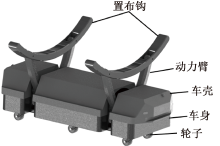
Fig.1

Sample drawing of fabric unloading vehicle"

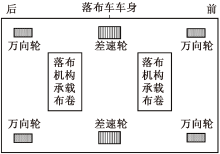
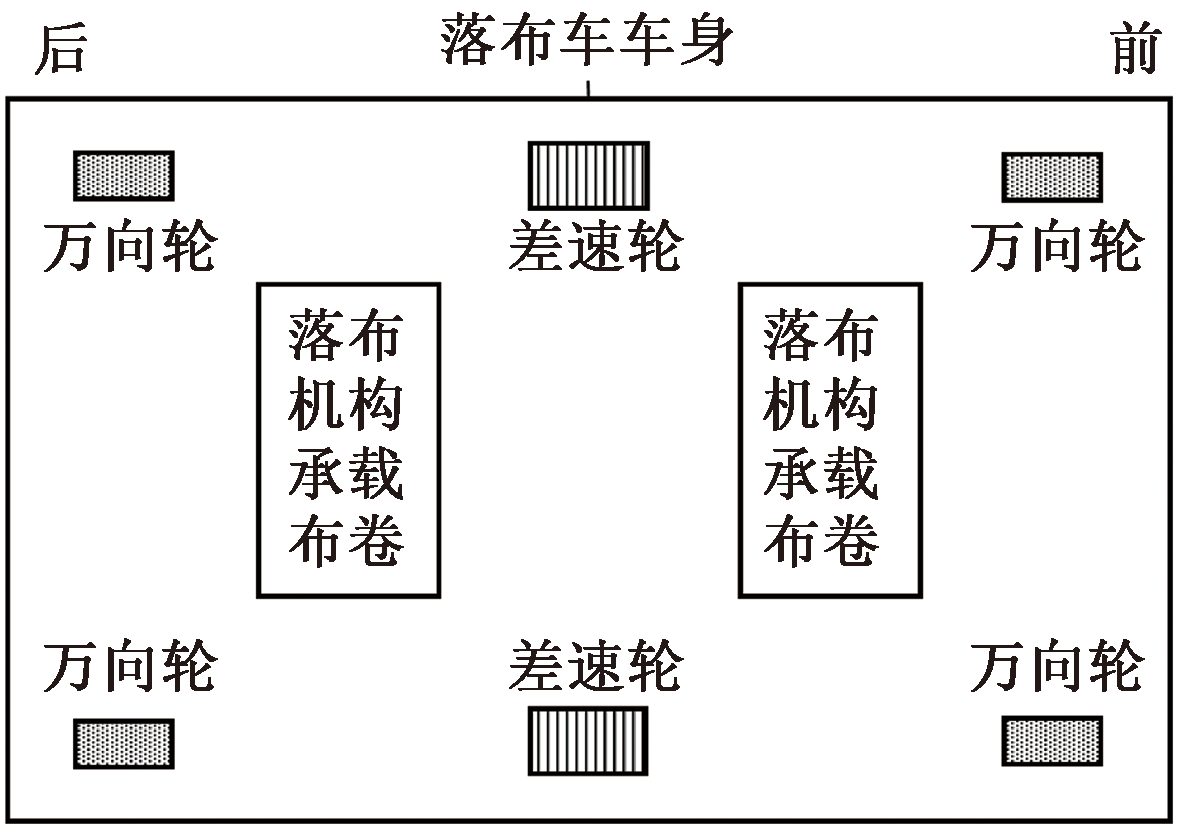
Fig.2

Layout diagram of fabric unloading vehicle"

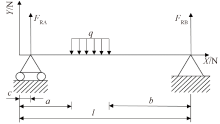
Fig.3

Load condition diagram"

Tab.1

7 different working condition constraints and load conditions"

工况
类型
方向约束 载荷施加
前万向轮 后万向轮 差速轮
装载工况 X,Y X,Y Y,Z Y轴方向上1.2倍
全局载荷
横移工况 X,Y X,Y X,Y Y轴方向上全局载荷
制动工况 X,Y,Z X,Y,Z X,Y,Z Y轴方向上全局载荷
卸载工况 Y,Z Y,Z Y,Z Y轴方向上全局载荷
转弯工况 Y,Z Y,Z Y Y轴方向上全局载荷
加速 YZ Y YZ Y轴全局载荷和
X轴上惯性量
减速 YZ YZ YZ Y轴全局载荷和
X轴上惯性量

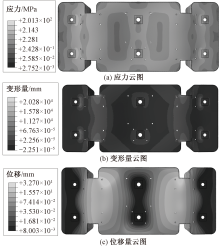
Fig.4

Figure of finite element solution results for loading conditions. (a) Stress cloud map; (b) Deformation cloud map; (c) Displacement cloud map"

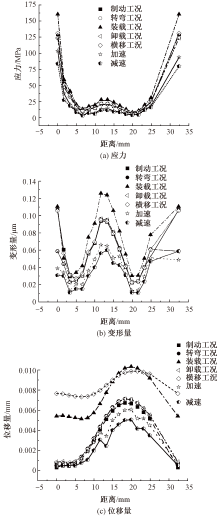
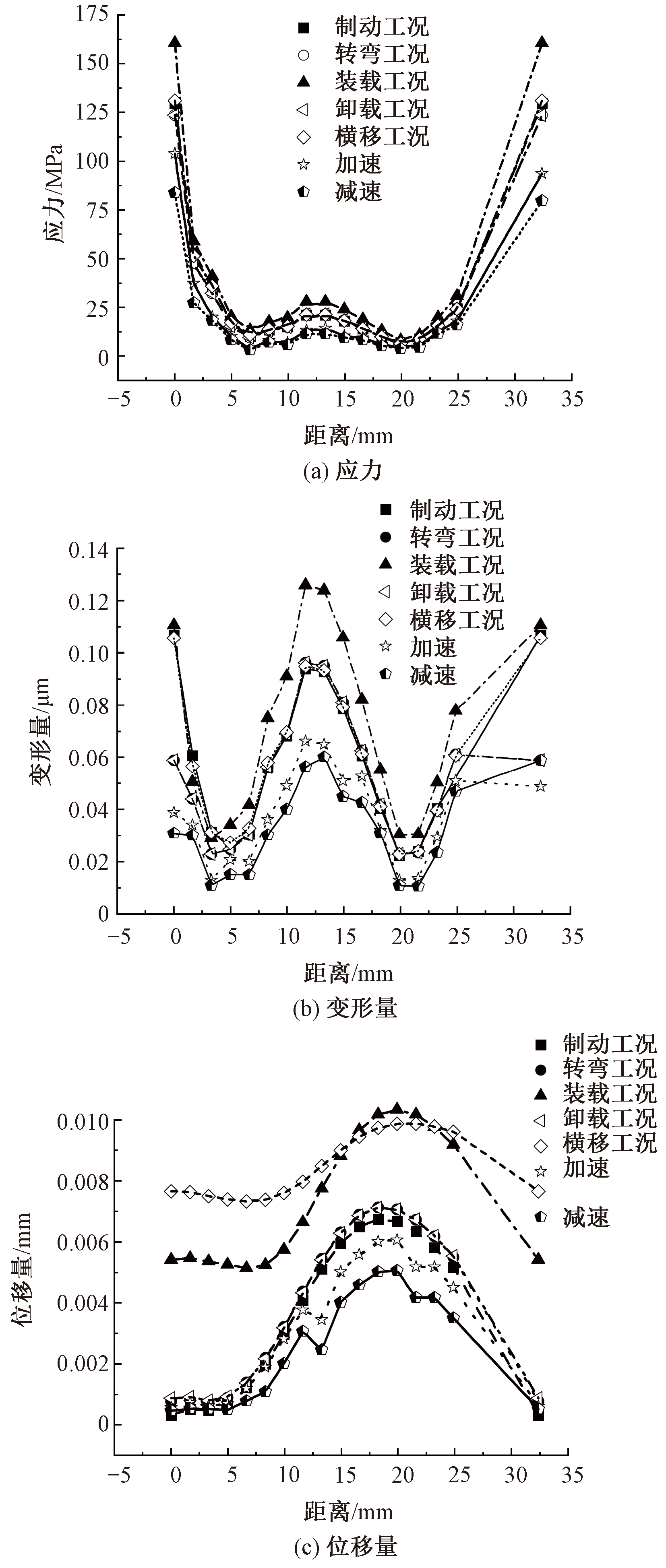
Fig.5

Static analysis point set distribution maps. (a) Stress; (b) Displacement; (c) Deformation"

Tab.2

Static simulation verification of vehicle body structure under 7 different working conditions"

工况类型 最大变
形量/mm
最大等效
应力/MPa
最大位
移量/mm
装载工况 0.000 68 201.3 0.327
横移工况 0.000 57 167.9 0.273
制动工况 0.000 54 167.1 0.267
卸载工况 0.000 56 151.9 0.269
转弯工况 0.000 55 151.9 0.269
加速 0.000 46 139.4 0.227
减速 0.000 36 111.7 0.178

Tab.3

Influence weights of 7 working conditions"

工况类型 权重
装载工况 0.311
横移工况 0.159
制动工况 0.130
卸载工况 0.128
转弯工况 0.123
加速 0.086
减速 0.063

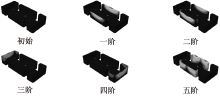
Fig.6

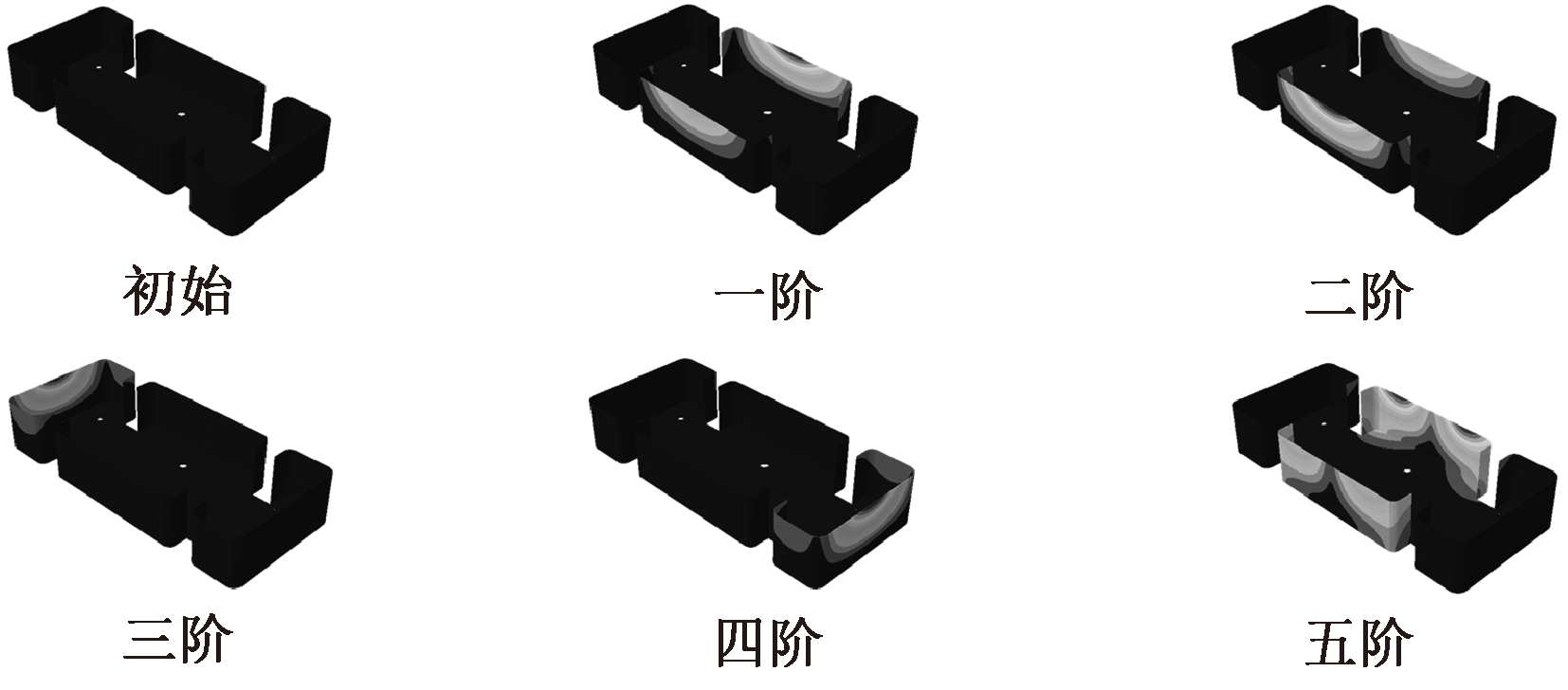
Spatial distribution cloud maps of displacement under modal analysis"

Tab.4

First 5-order natural frequencies and vibration modes of vehicle body"

阶数i 固有频率/Hz 对应振型
1 56.73 局部侧弯
2 56.94 局部侧弯
3 70.01 局部侧弯
4 70.65 局部侧弯
5 82.30 局部侧向扭转

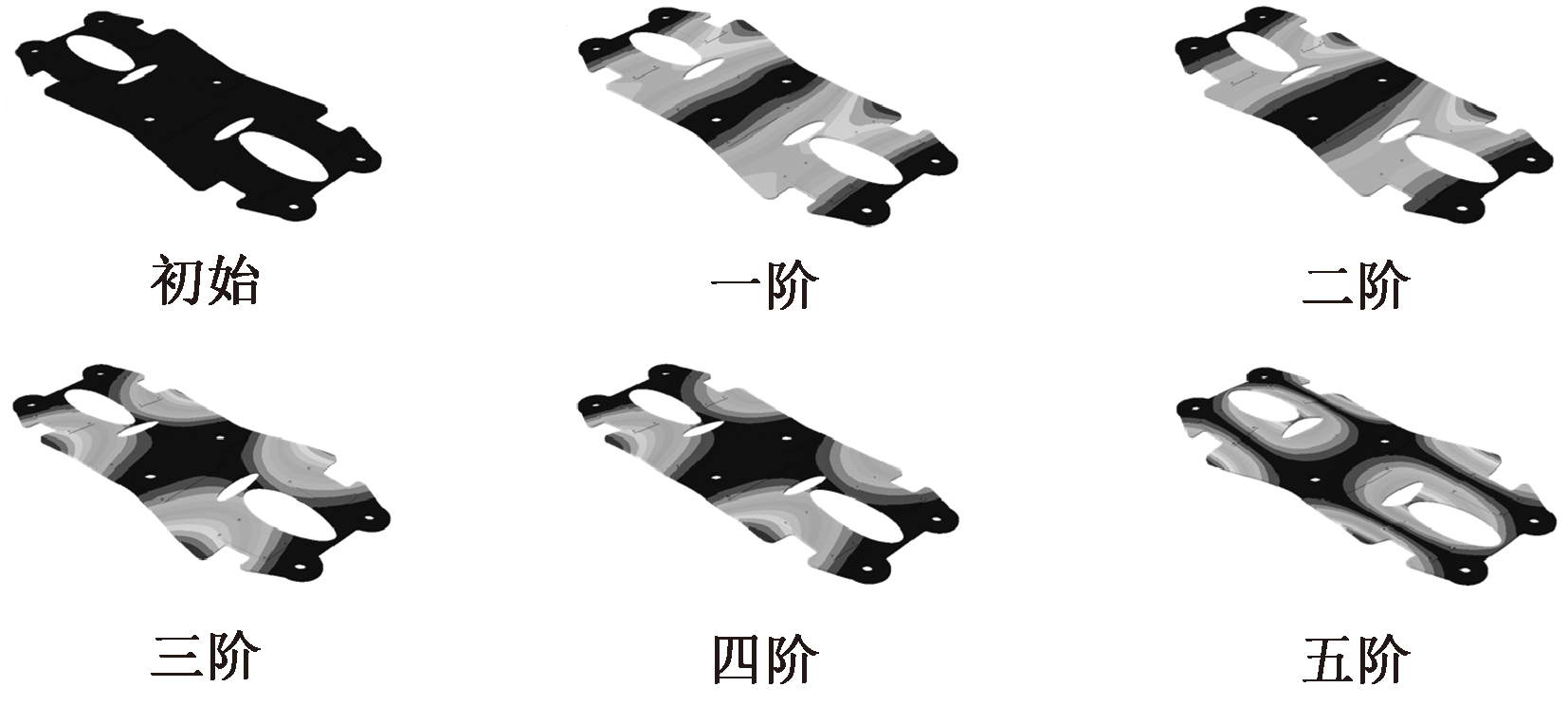
Fig.7

Space distribution cloud maps of optimized vehicle displacement"

Tab.5

Comparison of first 5-order natural frequencies of front and rear bodies before and after optimization Hz"

阶数i 固有频率/Hz
优化前 优化后
1 16.73 159.72
2 56.94 169.87
3 70.01 180.14
4 70.65 185.81
5 82.50 207.67

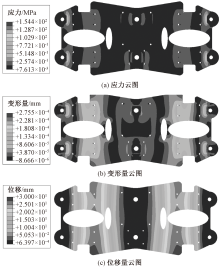
Fig.8

Figure of finite element solution results for optimized vehicle body. (a) Stress cloud map; (b) Deformation cloud map; (c) Displacement cloud map"

Tab.6

Analysis results of static stiffness of vehicle body before and after optimization"

类型 最大变
形量/mm
最大
应力/MPa
最大位
移量/mm
优化前 0.000 68 201.3 0.327
优化后 0.000 27 154.4 0.300
变化率/% -60.3 -23.3 -9

Fig.9

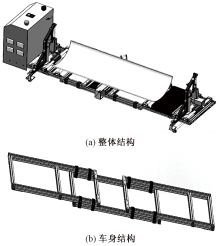
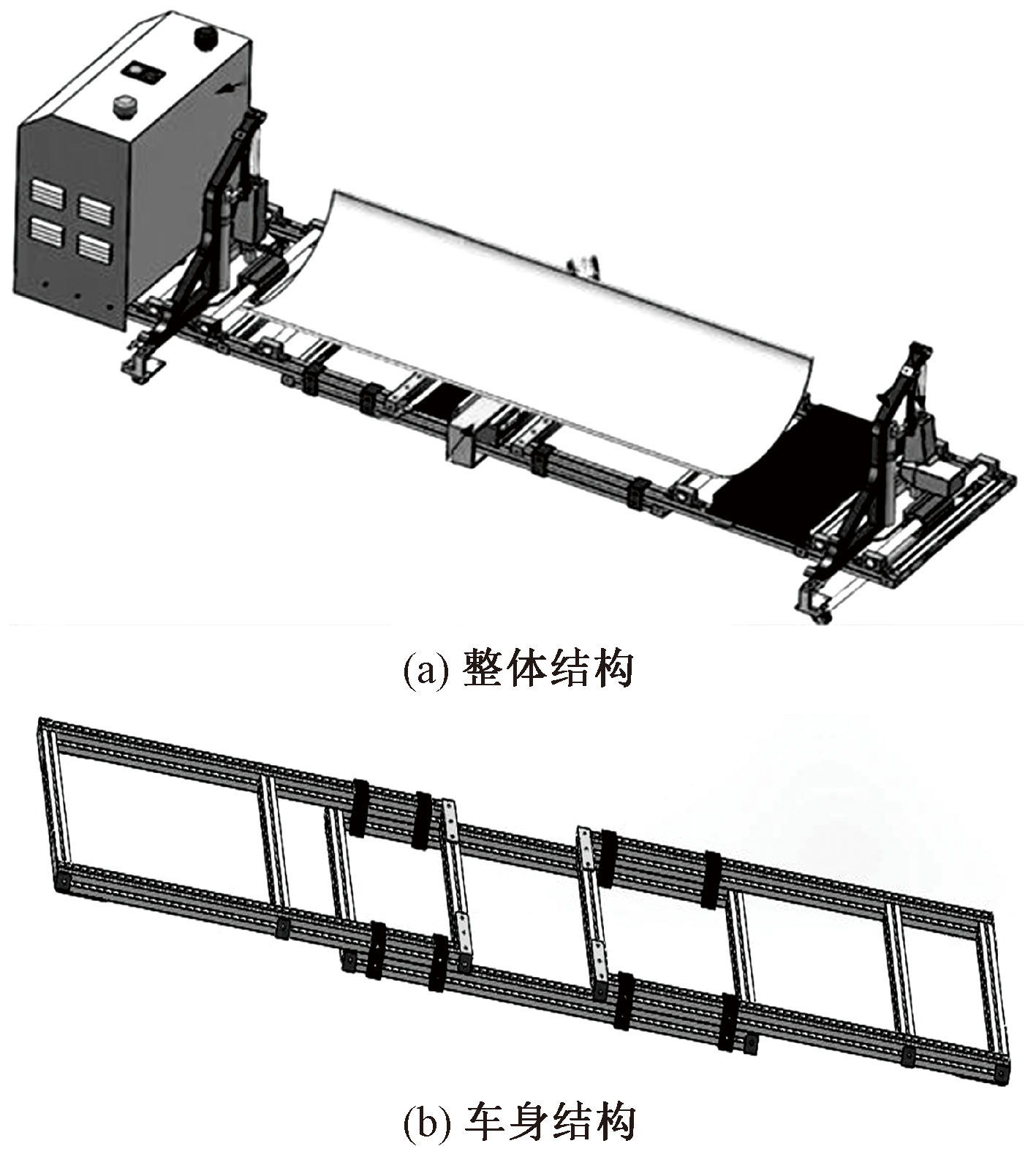
Experience design of fabric unloading structure. (a) Overall structure; (b) Vehicle body structure"

Tab.7

Comparison of vehicle body parameters designed by empirical method and proposed optimization method"

类型 质量/kg 长/m 宽/m 高/m
经验设计 34.133 1.30 0.52 0.200
本文优化设计 19.095 1.12 0.76 0.008

Tab.8

Comparison of stability parameters designed by empirical method and proposed optimization"

类型 落布车重心
高度/mm
车身宽
长比
车身最大负载
变形量/mm
经验设计 227.51 0.40 0.026 00
本文优化设计 156.50 0.68 0.000 68

Tab.9

Comparsion of first 5-order natural frequencies of vehicle body and modal shapes"

阶数i 经验设计
固有频率/Hz
模态形状 本文优化设计
固有频率/Hz
模态形状
1 34.15 局部侧弯 159.72 整体扭转
2 63.76 局部侧弯 169.87 整体扭转
3 70.46 局部扭转 180.14 整体侧弯
4 81.33 局部扭转 185.81 整体侧弯
5 89.43 局部侧弯扭转 207.67 整体侧弯
扭转
[1] 余联庆, 郑飞, 李琳. 一种双边型自动多载落布小车:201810614981.7[P]. 2018-12-21.
YU Lianqing, ZHENG Fei, LI Lin. A bilateral automatic multi load fabric dropping cart: 201810614981.7[P]. 2018-12-21.
[2] 段博, 余联庆, 樊飞. 超长车体AGV落布小车控制系统设计研究[J]. 自动化与仪器仪表, 2020(12): 79-84.
DUAN Bo, YU Lianqing, FAN Fei. Design and research of control system for extra long vehicle AGV cloth drop car[J]. Automation and Instrumentation, 2020 (12): 79-84.
[3] 李鹏飞, 王水明, 周贤钢, 等. 链条导轨型自动落布小车设计与实践[J]. 棉纺织技术, 2022, 50(6):66-70.
LI Pengfei, WANG Shuiming, ZHOU Xiangang, et al. Design and practice of chain guide automatic cloth drop car[J]. Cotton Textile Technology, 2022, 50 (6): 66-70.
[4] LI Shenhua, ZHOU Dashuang, PAN Anxia. Integrated lightweight optimization design of wall thickness, material, and performance of automobile body side structure[J]. Structural and Multidisciplinary Optimization, 2024. DOI: 10.1007/s00158-024-03810-1.
[5] QIN Huan, GUO Yi, LIU Zijian, et al. Shape optimization of automotive body frame using an improved genetic algorithm optimizer[J]. Advances in Engineering Software, 2018, 121(7):235-249.
[6] FU C L, BAI Y C, LIN C, et al. Design optimization of a newly developed aluminum-steel multi-material electric bus body structure[J]. Structural and Multidisciplinary Optimization, 2019, 60: 2177-2187.
[7] LI S, WANG D, WANG S, et al. Structure-connection-performance integration lightweight optimisation de-sign of multi-material automotive body skeleton[J]. Structural and Multidisciplinary Optimization, 2023, 66(9): 1-9.
[8] 李作轩, 贾良跃, 郝佳, 等. 基于多工况关联的无人车辆车身结构轻量化优化设计[J]. 兵工学报, 2023, 44(11):3529-3542.
doi: 10.12382/bgxb.2022.1301
LI Zuoxuan, JIA Liangyue, HAO Jia, et al. Multi-condition-correlated lightweight optimization design of unmanned vehicle body structure[J]. Journal of Ordnance Engineering, 2023. 44(11), 3529-3542.
[9] 吴斌, 钱晓明, 武星, 等. 自动导引车骨架结构优化设计[J]. 中国机械工程, 2014, 25(19):2653-2657,2664.
WU Bin, QIAN Xiaoming, WU Xing, et al. Optimization design of automatic guided vehicle skeleton structure[J]. China Mechanical Engineering, 2014, 25(19):2653-2657,2664.
[10] TECHASEN T, WANSASUEB K, PANAGANT N, et al. Simulta neous topology, shape, and size optimization of truss-es, taking account of uncertainties using multi-objective evolutionary algorithms[J]. Engineering with Computers, 2019, 35(2): 721-740.
[11] 李健, 王宏伟, 慕宗燚, 等. 考虑性能稳定性的机械系统可靠性分配方法研究[J]. 中国机械工程, 2024, 35(5):821-828,850.
LI Jian, WANG Hongwei, MU Zongyi, et al. Research on reliability allocation method for mechanical systems considering performance stability[J] China Mechanical Engineering, 2024, 35 (5): 821-828,850.
[12] 孙旭光, 李强强, 孙晓策, 等. 某两栖车辆新质材料白车身模态分析与测试[J]. 科学技术与工程, 2023, 23(7): 2864-2870.
SUN Xuguang, LI Qiangqiang, SUN Xiaoce, et al. Modal Analysis and test of a new material body in white for amphibious vehicle[J]. Science Technology and Engineering, 2023, 23(7): 2864-2870.
[13] CHEN J L, KWAK Y, XU M R, et al. Topology and mod-ular size optimization of small electric vehicle frame based on cross-section contribution analysis[J]. Structural and Multidisciplinary Optimization, 2021, 64(6): 1-18.
[14] IQBAL T, WANG L, LI D, et al. A general multi-objective topology optimization methodology developed for customized design of pelvic prostheses[J]. Medical Engineering & Physics, 2019, 69: 1-8.
[15] 芮强, 王红岩, 王良曦. 多工况载荷下动力舱支架结构拓扑优化设计[J]. 兵工学报, 2010, 31(6):782-786.
RUI Qiang, WANG Hongyan, WANG Liangxi. Topology optimization design of power cabin support structure under multiple working conditions and loads[J]. Journal of Ordnance Engineering, 2010, 31 (6): 782-786.
[16] LIU J H, LUO L, XIAO X W, et al. Multi-objectives topology optimization of frame in an electric mining dump truck based on fuzzy satisfaction variable weight coefficients method[J]. Journal of Mechanical Science and Technology, 2022, 36(6): 3059-3069.
[1] BAI Yuwei, XU Jian, ZHU Yaolin, DING Zhanbo, LIU Chenyu. Image detection of cotton nep in carding net based on improved YOLOv8 [J]. Journal of Textile Research, 2025, 46(03): 56-63.
[2] HU Xudong, TANG Wei, ZENG Zhifa, RU Xin, PENG Laihu, LI Jianqiang, WANG Boping. Structure classification of weft-knitted fabric based on lightweight convolutional neural network [J]. Journal of Textile Research, 2024, 45(05): 60-69.
[3] LU Weijian, TU Jiajia, WANG Junru, HAN Sijie, SHI Weimin. Model for empty bobbin recognition based on improved residual network [J]. Journal of Textile Research, 2024, 45(01): 194-202.
[4] ZHOU Li, FAN Peihong, JIN Yuting, ZHANG Longlin, LI Xinrong. Digital design method of clothing reverse modeling [J]. Journal of Textile Research, 2023, 44(12): 138-144.
[5] REN Guodong, TU Jiajia, LI Yang, QIU Zian, SHI Weiming. Yarn state detection based on lightweight network and knowledge distillation [J]. Journal of Textile Research, 2023, 44(09): 205-212.
[6] XU Jian, HU Daojie, LIU Xiuping, HAN Lin, YAN Huanying. Cotton impurity image detection based on improved RFB-MobileNetV3 [J]. Journal of Textile Research, 2023, 44(01): 179-187.
[7] CHEN Jinguang, LI Xue, SHAO Jingfeng, MA Lili. Lightweight clothing detection method based on an improved YOLOv5 network [J]. Journal of Textile Research, 2022, 43(10): 155-160.
[8] JIANG Gaoming, ZHOU Mengmeng, ZHENG Baoping, ZHENG Peixiao, LIU Haisang. Research progress of green and low-carbon knitting technology [J]. Journal of Textile Research, 2022, 43(01): 67-73.
[9] YANG Enhui, QIU Hua, DAI Wenjie. Three-dimensional modeling and analysis of knitted fabric based on hexagonal mesh structure [J]. Journal of Textile Research, 2019, 40(11): 69-74.
[10] LI Zhiqiang, NI Li, ZHAO Zexiang, ZHANG Hong, LIANG Ying. Structure optimization for work roll of carding machine [J]. Journal of Textile Research, 2019, 40(08): 146-150.
[11] . Finite element analysis of curved multi-axial warp-knitted composite car door under low-velocity impact [J]. JOURNAL OF TEXTILE RESEARCH, 2018, 39(02): 43-48.
[12] . Structural optimization design of high-speed computerized embroidery machine [J]. Journal of Textile Research, 2018, 39(01): 133-138.
[13] . Modeling and simulation of elliptical motion mechanism for R680 series automatic printing machine [J]. JOURNAL OF TEXTILE RESEARCH, 2017, 38(03): 143-148.
[14] LI Jingyi;WANG XiaoFeng. Inventory control policy for apparel retailing sector based on Kalman filter [J]. JOURNAL OF TEXTILE RESEARCH, 2010, 31(5): 131-136.
[15] 孙颖;李嘉禄;陈利. Topology optimization of the fiber microstructure of 3-D multidirectional braided composites [J]. JOURNAL OF TEXTILE RESEARCH, 2007, 28(10): 45-48.
Viewed
Full text


Abstract

Cited

  Shared   
  Discussed   
No Suggested Reading articles found!