纺织学报 ›› 2025, Vol. 46 ›› Issue (07): 69-77.doi: 10.13475/j.fzxb.20240402001

• 纺织工程 • 上一篇    下一篇

基于质量分布法的棉集合体中纤维弯钩研究

楚祥婷1, 高见2, 章红豆1, 陆惠文2, 刘新金1(), 苏旭中1   

  1. 1 江南大学 纺织科学与工程学院, 江苏 无锡 214122
    2 乌斯特技术(中国)有限公司, 江苏 苏州 200051
  • 收稿日期:2024-04-08 修回日期:2024-09-25 出版日期:2025-07-15 发布日期:2025-08-14
  • 通讯作者: 刘新金(1984—),男,副教授,博士。主要研究方向为新型纺纱技术。E-mail:liuxinjin2006@163.com
  • 作者简介:楚祥婷(2000—),女,硕士生。主要研究方向为棉集合体内纤维弯钩。

Study on fiber hooking in cotton fiber assembly based on fiber mass distribution method

CHU Xiangting1, GAO Jian2, ZHANG Hongdou1, LU Huiwen2, LIU Xinjin1(), SU Xuzhong1   

  1. 1 College of Textile Science and Engineering, Jiangnan University, Wuxi, Jiangsu 214122, China
    2 Uster Technologies (China) Co., Ltd., Suzhou, Jiangsu 200051, China
  • Received:2024-04-08 Revised:2024-09-25 Published:2025-07-15 Online:2025-08-14

摘要:

为快速检测棉集合体内纤维弯钩状态,提高成纱质量,对棉纤维纺纱加工中制得的纤维集合体,包括棉条、粗纱、细纱,借助乌斯特棉纤维分析系统获取集合体前端、后端内的纤维长度分布,并将长度分布转化为质量分布,根据前后端质量分布的差值表征集合体内的纤维弯钩比例(弯钩指数NMD)。将计算结果与示踪纤维法弯钩比例(弯钩指数NTF)进行综合对比分析,结果表明:对于棉条,采用纤维质量分布方法计算得到的NMD与采用示踪纤维法得到的NTF的误差一般在6%以内;对于粗纱、细纱,二者的差异在2%以内;因此,通过纤维质量分布法在一定程度上可快速表征棉集合体内纤维弯钩,从而为批量化测试棉条与棉纱内在质量提供新途径。

关键词: 纤维弯钩, 纤维质量分布法, 棉集合体, 弯钩指数, 纤维长度分布, 成纱质量

Abstract:

Objective In textile production, 80% of fibers in card sliver are hooked fibers. However, the hooked fiber is easy to twist into nep in the later process, which has a significant negative impact on the yarn strength, uniformity and fabric appearance. The number and directions of hooked fibers determine the fiber straightness and yarn evenness. Therefore, the measurement and characterization of hooked fiber is of great significance for optimizing process parameters, regulating spinning processes and improving semi-finished products and yarn quality. At present, most methods to characterize hooked fibers by measuring fiber straightness have the disadvantages of heavy workload and long testing time. The rapid batch detection of hooked fibers is of great significance for adjusting process parameters in time and improving yarn quality.

Method In order to quickly detect the hooked fiber state in each process, this paper puts forward a new method to quickly obtain the hooked index in cotton yarn to characterize the hooked state with the instrument USTER®LVI 930. The proportion of hooked fiber in spinning process measured by the tracer fiber method is based on data. Then the instrument USTER®LVI 930 was adopted to characterize the proportion of hooked fibers. Combined with the quality test, the feasibility of this method was explored by comparing the data of the two.

Results Based on the tracer fiber method, viscose fiber with similar properties to raw cotton was used as tracer fiber. In this study, one thousandth tracer fiber is mixed into the cotton fiber. The processed cotton yarn, including card sliver, semi-drawn sliver, drawn sliver, roving and yarn, were tested by tracer fiber method first. The leading hooked fiber, the trailing hooked fiber and the both ends hooked fibers are counted as the hooked fiber ratio in the cotton yarn, that is, the hook index NTF. Then, the above-mentioned cotton yarn was tested by the instrument USTER®LVI 930, and the fiber length distribution at the front and back ends intervals of 3.175 mm was obtained. The length difference between the front and back ends was believed to be caused by hooked fibers. Therefore, the fiber length distribution was transformed into the fiber mass distribution. Then, according to the difference between the fiber mass distribution of the front and back ends, the proportion of hooked fibers in cotton yarn, that is, the hook index NMD, was calculated. By comparing the hook index NMD of fiber mass distribution method and the hook index NTF of tracer fiber method, it was that with the progress of spinning process, the fiber straightness increases and the hooked fiber decreases, and the hook index NMD is closer to NTF. Finally, the cotton yarn was tested for quality, which showed that the change trend of quality index and hook index was basically the same in the spinning process. Among them, a big gap is found in the hook index in the first drawing. This may be due to the fact that the length of the hook was related to the length of the fiber, and the longer fiber was easy to form a longer hook. The average length of tracer fiber was higher than the weighted half average length of raw cotton. In the process of sliver and drawing with low fiber straightness, the hook index NTF of tracer fiber method was higher than that of fiber mass distribution method NMD.

Conclusion By comparing the hook index and quality test in the two testing methods, the hook index of fiber weight distribution method can quickly characterize the hook in cotton yarn to some extent. For slivers, the hooks index calculated by the fiber mass distribution method proposed in the paper is generally within 6% error compared with the tracer fiber method. For roving and spun yarn, the difference is within 2%. The rapid batch acquisition of hook index NMD is expected to optimize process parameters and improve carding effect in time, thus improving economic benefits and promoting the new development of high-quality textiles.

Key words: hooked fiber, fiber weight distribution, cotton fiber assembly, hook index, fiber length distribution, yarn quality

中图分类号: 

  • TS102

表1

棉集合体内弯钩纤维数量和弯钩指数NTF"

工序 伸直
纤维根数
前弯钩
纤维根数
后弯钩
纤维根数
两端弯钩
纤维根数
弯钩指数
NTF/%
生条 1 027 572 2 830 905 80.75
一并条 2 320 2 288 202 192 53.62
二并条 4 000 528 886 111 27.60
二并粗纱 445 54 10 0 12.57
二并细纱 103 3 2 0 4.63
三并条 1 413 312 52 16 21.19
三并粗纱 466 16 16 1 6.61
三并细纱 113 4 2 1 5.83

图1

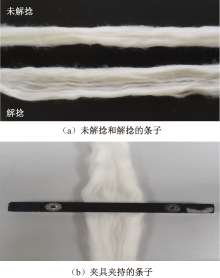
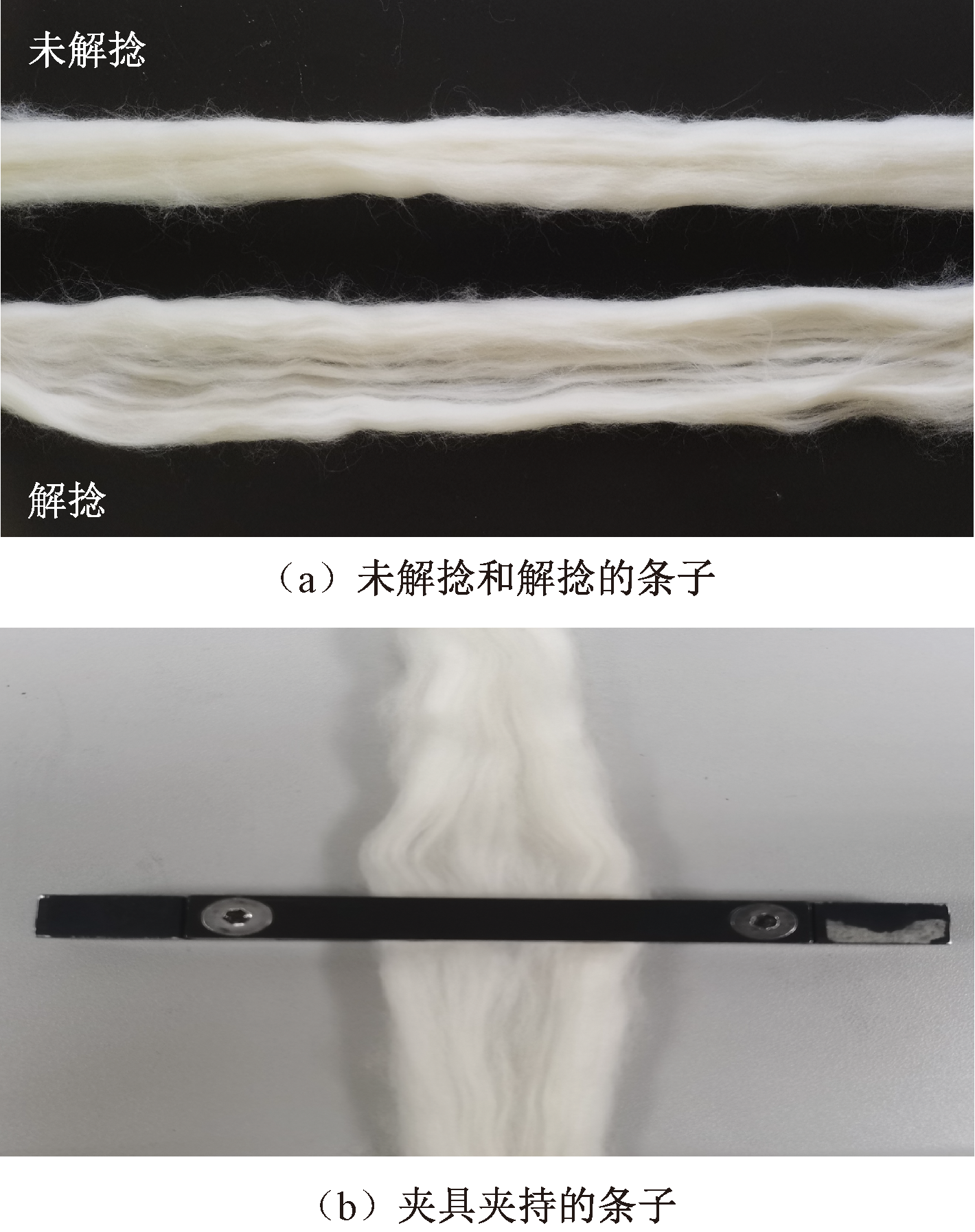
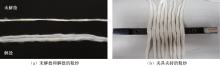
条子的取样测试"

图2

生条F10纤维照影曲线"

图3

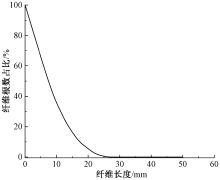
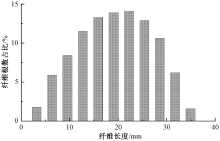
生条F10纤维长度分布直方图"

图4

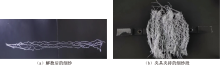
粗纱的取样测试"

图5

细纱的取样测试"

表2

生条与并条工序的纤维长度分布"

纤维长度区间
n/mm
生条 一并条 二并条 三并条
ηB/% ηF/% ηB/% ηF/% ηB/% ηF/% ηB/% ηF/%
0.000~3.175 0.763 1.675 1.032 3.639 0.480 1.607 0.852 2.834
3.176~6.350 2.633 5.605 0.583 1.946 0.799 2.716 0.584 1.972
6.351~9.525 3.898 7.812 1.032 3.639 0.480 1.607 0.852 2.834
9.526~12.700 3.929 9.928 0.583 1.946 0.799 2.716 0.584 1.972
12.701~15.875 3.711 12.325 1.032 3.639 0.480 1.607 0.852 2.834
15.876~19.050 7.949 14.647 0.583 1.946 0.799 2.716 0.584 1.972
19.051~22.225 15.279 15.509 1.032 3.639 0.480 1.607 0.852 2.834
22.256~25.400 20.790 14.590 0.583 1.946 0.799 2.716 0.584 1.972
25.401~28.575 21.122 11.197 1.032 3.639 0.480 1.607 0.852 2.834
28.576~31.750 14.093 5.509 0.583 1.946 0.799 2.716 0.584 1.972
31.751~34.925 5.127 1.197 1.032 3.639 0.480 1.607 0.852 2.834
34.926~38.100 0.703 0.006 0.583 1.946 0.799 2.716 0.584 1.972
38.101~41.275 0.001 0.000 1.032 3.639 0.480 1.607 0.852 2.834
41.276~44.450 0.000 0.000 0.583 1.946 0.799 2.716 0.584 1.972

表3

粗纱与细纱工序的纤维长度分布"

纤维长度
区间n/mm
二并粗纱 二并细纱 三并粗纱 三并细纱
ηB/% ηF/% ηB/% ηF/% ηB/% ηF/% ηB/% ηF/%
0.000~3.175 0.700 2.335 1.270 4.340 0.515 1.735 1.060 3.600
3.176~6.350 0.480 1.685 1.270 4.335 0.520 1.800 1.305 4.370
6.351~9.525 0.700 2.335 1.270 4.340 0.515 1.735 1.060 3.600
9.52612.700 0.480 1.685 1.270 4.335 0.520 1.800 1.305 4.370
12.701~15.875 0.700 2.335 1.270 4.340 0.515 1.735 1.060 3.600
15.876~19.050 0.480 1.685 1.270 4.335 0.520 1.800 1.305 4.370
19.051~22.225 0.700 2.335 1.270 4.340 0.515 1.735 1.060 3.600
22.256~25.400 0.480 1.685 1.270 4.335 0.520 1.800 1.305 4.370
25.401~28.575 0.700 2.335 1.270 4.340 0.515 1.735 1.060 3.600
28.576~31.750 0.480 1.685 1.270 4.335 0.520 1.800 1.305 4.370
31.751~34.925 0.700 2.335 1.270 4.340 0.515 1.735 1.060 3.600
34.926~38.100 0.480 1.685 1.270 4.335 0.520 1.800 1.305 4.370
38.101~41.275 0.700 2.335 1.270 4.340 0.515 1.735 1.060 3.600
41.276~44.450 0.480 1.685 1.270 4.335 0.520 1.800 1.305 4.370

表4

生条与并条工序的纤维质量分布"

纤维长度
区间n/mm
生条 一并条 二并条 三并条
εB/% εF/% εB/% εF/% εB/% εF/% εB/% εF/%
0.000 1.000 1.000 1.000 1.000 1.000 1.000 1.000 1.000
0.000~3.175 0.992 0.983 0.990 0.994 0.995 0.992 0.991 0.994
3.176~6.350 0.966 0.927 0.953 0.975 0.979 0.965 0.963 0.974
6.351~9.525 0.927 0.849 0.903 0.942 0.950 0.924 0.921 0.942
9.526~12.700 0.888 0.750 0.852 0.910 0.922 0.882 0.871 0.903
12.701~15.875 0.851 0.627 0.789 0.895 0.914 0.843 0.823 0.876
15.876~19.050 0.771 0.480 0.682 0.837 0.878 0.764 0.752 0.832
19.051~22.225 0.618 0.325 0.526 0.685 0.752 0.616 0.633 0.734
22.256~25.400 0.411 0.179 0.344 0.462 0.542 0.415 0.471 0.570
25.401~28.575 0.199 0.067 0.170 0.230 0.298 0.210 0.286 0.358
28.576~31.750 0.058 0.012 0.053 0.072 0.110 0.069 0.126 0.162
31.751~34.925 0.007 0.000 0.007 0.010 0.021 0.011 0.032 0.044
34.926~38.100 0.000 0.000 0.000 0.000 0.001 0.000 0.003 0.005
38.101~41.275 0.000 0.000 0.000 0.000 0.000 0.000 0.000 0.000
41.276~44.450 0.000 0.000 0.000 0.000 0.000 0.000 0.000 0.000

表5

粗纱与细纱工序的纤维质量分布"

纤维长度
区间n/mm
二并粗纱 二并细纱 三并粗纱 三并细纱
εB/% εF/% εB/% εF/% εB/% εF/% εB/% εF/%
0.000 1.000 1.000 1.000 1.000 1.000 1.000 1.000 1.000
0.000~3.175 0.993 0.995 0.987 0.987 0.995 0.995 0.989 0.987
3.176~6.350 0.970 0.978 0.944 0.944 0.978 0.977 0.953 0.943
6.351~9.525 0.933 0.949 0.885 0.885 0.949 0.946 0.902 0.883
9.526~12.700 0.892 0.913 0.816 0.814 0.913 0.908 0.843 0.806
12.701~15.875 0.859 0.887 0.724 0.720 0.889 0.884 0.774 0.711
15.876~19.050 0.803 0.850 0.604 0.601 0.855 0.843 0.674 0.595
19.051~22.225 0.693 0.757 0.462 0.466 0.765 0.741 0.534 0.462
22.256~25.400 0.527 0.587 0.302 0.317 0.599 0.572 0.359 0.313
25.401~28.575 0.324 0.363 0.146 0.164 0.379 0.360 0.184 0.159
28.576~31.750 0.144 0.162 0.039 0.050 0.174 0.165 0.062 0.047
31.751~34.925 0.038 0.044 0.003 0.006 0.049 0.046 0.010 0.006
34.926~38.100 0.003 0.005 0.000 0.000 0.006 0.005 0.000 0.000
38.101~41.275 0.000 0.000 0.000 0.000 0.000 0.000 0.000 0.000
41.276~44.450 0.000 0.000 0.000 0.000 0.000 0.000 0.000 0.000

图6

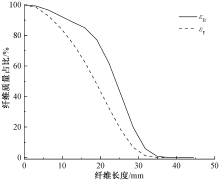
生条前端F与后端B的纤维质量分布"

表6

棉集合体弯钩指数NMD和NTF"

棉集合体类别 NMD/% NTF/%
生条 74.49 80.75
一并条 37.18 53.62
二并条 33.61 27.60
二并粗纱 15.51 12.57
二并细纱 3.01 4.63
三并条 26.13 21.19
三并粗纱 5.48 6.61
三并细纱 18.56 5.83

表7

条子与粗纱的质量测试结果"

棉集合体类别 U值/% CV值/%
生条 5.37 6.96
一并条 3.25 4.13
二并条 3.67 4.63
二并粗纱 6.99 9.20
三并条 3.68 4.63
三并粗纱 5.89 7.55

表8

细纱的质量测试结果"

棉集合体
类别
断裂强度/
(cN·tex-1)
强力/
cN
条干
CV值/%
质量
不匀/%
毛羽
指数H
细节(-40%)/
(个·km-1)
粗节(+35%)/
(个·km-1)
棉结(+140%)/
(个·km-1)
二并细纱 16.09 293.1 16.38 12.96 5.03 650.00 1 338.33 463.33
三并细纱 14.05 256.0 16.38 12.89 5.60 690.00 1 265.00 1 018.33
[1] MALAKANE P B, KADOLE P V, 史雅楠. 梳理工艺参数对纤维取向与纱条质量的影响[J]. 国际纺织导报, 2022, 50(2): 13-15,25.
MALAKANE P B, KADOLE P V, SHI Yanan. Effect of carding variables on fiber orientation and sliver quality[J]. Melliand China, 2022, 50(2): 13-15,25.
[2] 棉纺教研组译. 梳毛和针梳过程中的弯钩问题[J]. 国外纺织技术, 1975(Z1): 115-118.
Translation of Cotton Textile Teaching and Research Group. The problem of bending hooks in carding and needle carding[J]. Textile Technology Overseas, 1975(Z1): 115-118.
[3] SIMPSON J. Relation between "minority" hooks and neps in the card web[J]. Textile Research Journal, 1972, 42(10): 590-591.
[4] SHEN Y, YU C, YANG J. A study on fiber motion in the drafting zone and hook removal[J]. Textile Research Journal, 2019, 90(11/12): 1277-1290.
[5] 申元颖. 牵伸区内纤维运动的研究[D]. 上海: 东华大学, 2023:72-89.
SHEN Yuanying. Study on fiber movement in drafting zone[D]. Shanghai: Donghua University, 2023: 72-89.
[6] 王青, 梁高翔, 殷俊清, 等. 新型气流牵伸通道结构模型的构建与性能分析[J]. 纺织学报, 2023, 44(11): 52-60.
doi: 10.13475/j.fzxb.20220701701
WANG Qing, LIANG Gaoxiang, YIN Junqinng, et al. Establishment of novel model and performance analysis of airflow drafting channel[J]. Journal of Textile Research, 2023, 44(11): 52-60.
doi: 10.13475/j.fzxb.20220701701
[7] 唐文辉, 李鸿儒. 条粗半制品内在结构的研究[J]. 纺织学报, 1979(3): 12-19,46.
TANG Wenhui, LI Hongru. A study on the intrinsic structure of strip rough semi-products[J]. Journal of Textile Research, 1979(3): 12-19,46.
[8] YANG J, SHEN Y, ZHANG H. A study of fiber configuration in sliver fiber arrangement and its influence on sliver limit irregularity[J]. Textile Research Journal, 2019, 89(23/24): 4799-4807.
[9] 费青. 弯钩方向性和纤维伸直度研究[J]. 纺织科技进展, 2009(2): 20-23,29.
FEI Qing. Study on directionality of bending hook and fiber straightness[J]. Progress in Textile Science & Technology, 2009(2): 20-23,29.
[10] 费青. 纤维伸直度的测定方法及影响因素分析[J]. 棉纺织技术, 2005(4): 1-5.
FEI Qing. Analyses on influence factors and determine methods of fiber straightness[J]. Cotton Textile Technology, 2005(4): 1-5.
[11] 张亚秋, 陈霞, 江慧, 等. 基于图像处理技术的弯钩纤维表征[J]. 纺织器材, 2014, 41(5): 32-36.
ZHANG Yaqiu, CHEN Xia, JIANG Hui, et al. The characterization of the hooked fiber based on image processing technology[J]. Textile Accessories, 2014, 41(5): 32-36.
[12] 张弘强. 纱条中纤维形态及排列对条干不匀的影响[D]. 上海: 东华大学, 2016:18-23.
ZHANG Hongqiang. Effect of fiber shape and arrangement on yarn or sliver irregularity[D]. Shanghai: Donghua University, 2016: 18-23.
[13] IYER I K P, 胡齐咏. 去除纤维弯钩的纺纱短流程[J]. 国外纺织技术(纺织分册), 1987(12): 7-10.
IYER I K P, HU Qiyong. A short spinning process for removing fiber bends[J]. Textile Technology Overseas (Textile Division), 1987(12): 7-10.
[14] SENGUPTA A K, 贺福敏. 梳棉机上纤维由锡林向道夫转移时构形的变化[J]. 国外纺织技术(纺织分册), 1983(7): 4-6.
SENGUPTA A K, HE Fumin. Conformational changes in fiber transfer from seline to doff on a card[J]. Textile Technology Overseas (Textile Division), 1983(7): 4-6.
[1] 章红豆, 陈芳, 楚祥婷, 陆惠文, 刘新金, 苏旭中. 基于示踪纤维法测试的化纤条内纤维弯钩[J]. 纺织学报, 2024, 45(12): 74-79.
[2] 李新荣, 韩鹏辉, 李瑞芬, 贾坤, 路元江, 康雪峰. 数字孪生在纺纱领域应用的关键技术解析[J]. 纺织学报, 2023, 44(10): 214-222.
[3] 邵景峰, 董梦园. 相依竞争失效模型下细纱机性能退化对成纱质量的影响[J]. 纺织学报, 2022, 43(06): 171-179.
[4] 邵景峰, 石小敏. 基于非支配排序遗传算法的细纱工艺参数优化[J]. 纺织学报, 2022, 43(01): 80-88.
[5] 林惠婷, 高备, 张玉泽, 史倩倩, 汪军. 转杯纺旁路通道设计对成纱质量的影响[J]. 纺织学报, 2019, 40(02): 153-158.
[6] 查刘根, 谢春萍. 应用四层BP神经网络的棉纱成纱质量预测[J]. 纺织学报, 2019, 40(01): 52-56.
[7] 杨瑞华 刘超 薛元 高卫东. 转杯复合纺成纱器内流场模拟及纱线质量分析[J]. 纺织学报, 2018, 39(03): 26-30.
[8] 罗婷 纪峰 程隆棣 吉宜军 邓万胜. 双S曲线软牵伸纺纱技术[J]. 纺织学报, 2017, 38(07): 34-38.
[9] 贾国欣 任家智 冯清国. 基于纤维长度根数分布的精梳加工模拟及棉网质量预测[J]. 纺织学报, 2017, 38(06): 23-27.
[10] 汪兴锋 徐伯俊 苏旭中 陈松 戴家雨. 集聚纺系统在绢纺细纱机中的应用[J]. 纺织学报, 2016, 37(4): 124-127.
[11] 曹继鹏 张志丹 孙鹏子. 锡林速度对盖板花纤维长度分布的影响[J]. 纺织学报, 2015, 36(03): 24-27.
[12] 张明光;孙鹏子;曹继鹏. 梳棉机盖板速度对盖板花纤维长度分布的影响[J]. 纺织学报, 2011, 32(3): 47-50.
[13] 苏玉恒;严广松;任家智. 牵伸区浮游纤维动态行为的随机模拟[J]. 纺织学报, 2011, 32(3): 30-35.
[14] 金玉茂 葛明桥 邱华. 旋流纺闭合式纤维集聚机构的改进及成纱性能[J]. 纺织学报, 2011, 32(10): 122-0.
[15] 任家智;杨玉广. 细纱机后区压力棒牵伸的效果及牵伸倍数的优化[J]. 纺织学报, 2009, 30(05): 34-37.
Viewed
Full text


Abstract

Cited

  Shared   
  Discussed   
No Suggested Reading articles found!