纺织学报 ›› 2025, Vol. 46 ›› Issue (03): 177-187.doi: 10.13475/j.fzxb.20240701101

• 服装工程 • 上一篇    

多品牌服装企业供应商产能规划与订单分配联合优化

沈珂妃, 王长军()   

  1. 东华大学 旭日工商管理学院, 上海 200051
  • 收稿日期:2024-07-05 修回日期:2024-11-20 出版日期:2025-03-15 发布日期:2025-04-16
  • 通讯作者: 王长军(1976—),男,副教授,博士。主要研究方向为物流与供应链优化。E-mail: cjwang@dhu.edu.cn
  • 作者简介:沈珂妃(1999—),女,硕士生。主要研究方向为多品牌服装企业供应商产能规划与订单分配。
  • 基金资助:
    教育部人文社科规划项目(24YJAZH166);国家自然科学基金项目(72372022);中央高校基本科研业务费专项资金服务管理与创新基地项目(2232018H-07)

Integrated optimization of capacity planning and order allocation for multi-brand garment enterprises

SHEN Kefei, WANG Changjun()   

  1. The Glorious Sun School of Business and Management, Donghua University, Shanghai 200051, China
  • Received:2024-07-05 Revised:2024-11-20 Published:2025-03-15 Online:2025-04-16

摘要: 为最大限度发挥多品牌服装企业的整体优势,研究了服装企业的跨品牌供应商选择、产能规划和订单分配的联合优化,构建了考虑需求随机场景,优化需求满足、运营成本等多目标的两阶段随机鲁棒模型,并设计Benders分解算法实现了对模型的最优求解。利用国内某知名多品牌服装企业的实际数据,展开模型验证。结果表明:在需求不确定的情况下,各品牌间供应商资源协同能够有效改善供需;而且,高需求品牌和低需求品牌都有动力进行供应商产能共享,前者会受益于其它品牌供应商的闲置产能,后者可为自有供应商提高产能利用率;然而,过度要求产能规划与实际订单分配结果一致,虽有助于供应商的稳定运营,但也会引起产能过剩成本、订单缺货成本的显著增加,损害品牌企业和供应商的整体利益。

关键词: 多品牌服装企业, 产能规划, 订单分配, 两阶段随机鲁棒, Benders分解

Abstract:

Objective After moving away from low-priced labeling, Chinese garment enterprises have entered the era of building their own brands and carrying out multi-brand strategy. Because of the distinct development history and positioning of each brand, most enterprises operate their multi-brand in a decentralized way, i.e., each brand division has its own supplier base. This ensures the independence and competitiveness of each brand, but leads to the loss of opportunities to integrate these supplier bases. To this end, this paper considers the multi-brand garment enterprises and studies the integrated optimization of supplier selection, capacity planning, and order allocation.

Method Considering decision-makers faced the demand uncertainties, and multiple requirements on demand satisfaction, cost, and operations, a two-stage stochastically robust model was developed. The first stage focused on the supplier selection and capacity planning decisions, which should be made before demand information was given. Next, the order would be assigned to the selected supplier. Orders consisted of two parts, the first being the allocated order quantity that was consistent with the capacity planning characteristics, and the other being the adjusted order quantity obtained by integrating the unused planned capacity of suppliers. A solution method based on Benders decomposition was designed to improve the computational efficiency.

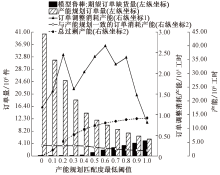
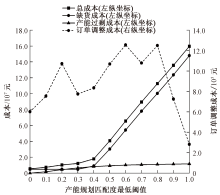
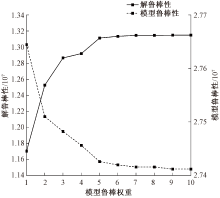
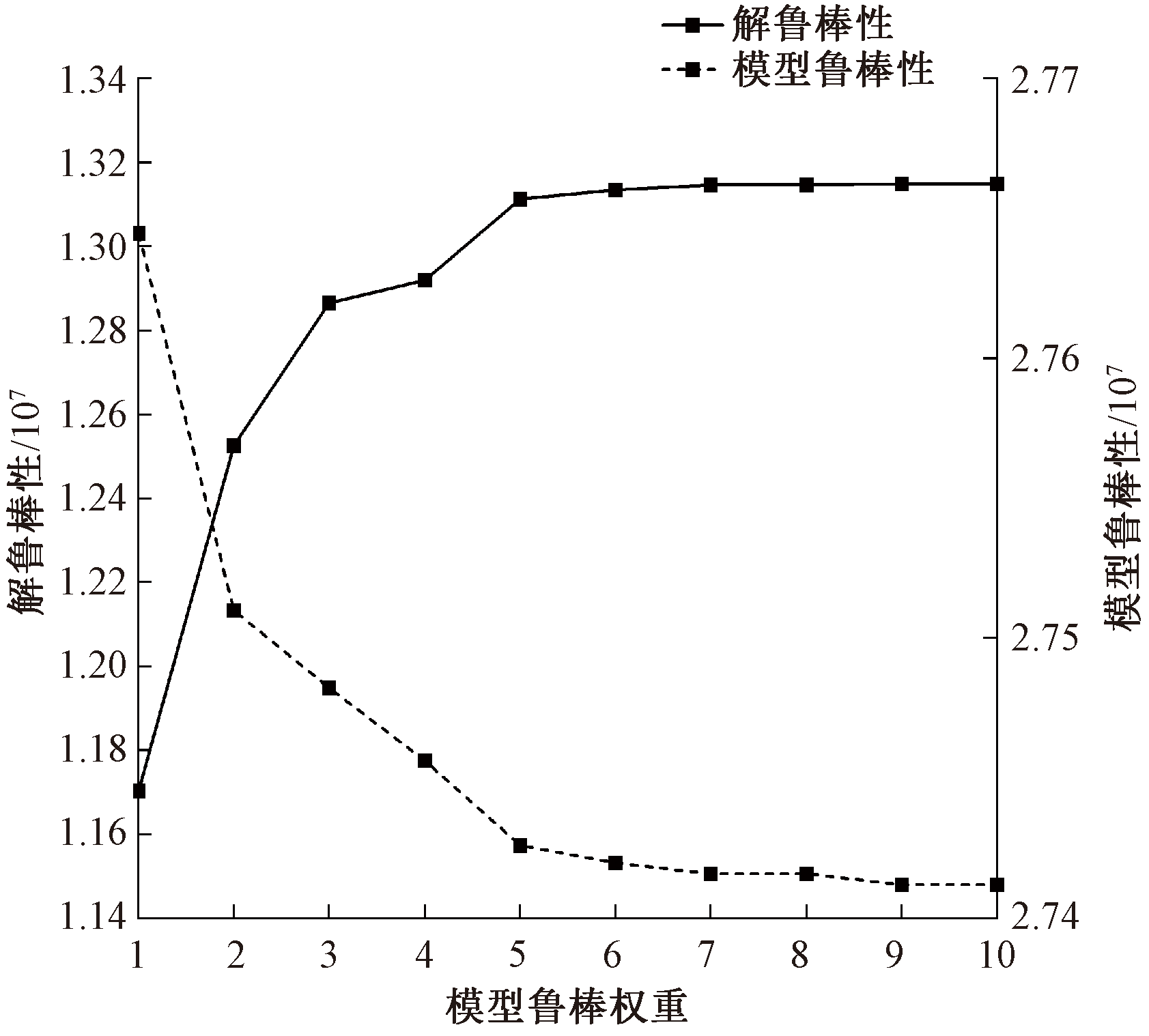
Results The proposed approach was applied to address a real-world case of a well-known multi-brand garment enterprise in China. Sensitivity analysis for the mismatch degree and the robustness-economics weighted value was also conducted. First of all, by comparing whether to implement the capacity sharing decision among brands, it was found that capacity sharing could effectively reduce the loss of unfulfilled orders and make the total cost better. The differences in supplier production capacity and order demand led to different trends in order adjustments for various brand suppliers as market demand increased. To be specific, in an event that market demand for all brands was rising, the less-demanding brand would arrange for its own suppliers to dedicate more capacity to producing orders for other brands with higher demand. However, demanding requirement on the match of the planning and the operational results seemed beneficial to stabilize the operations of suppliers, it also resulted in two disadvantages: harm to the benefits of the garment enterprises and reduction in the capacity utilization of the suppliers. Especially when the threshold of capacity planning matching degree was above 0.4, the out-of-stock cost as well as the total cost of the enterprise got significantly increased. A trade-off existed between the robustness and the economics of the decision-making results. Correspondingly, the economic requirement could be improved at the price of the robustness, and vice versa. With the increase of model robustness requirement, the total order shortage was decreased and the supplier's order adjustment was increased. This also indicated that the order adjustment strategy could effectively alleviate the imbalance between supply and demand.

Conclusion This paper highlights the importance of supplier resource coordination between brands. Specifically, the implementation of capacity sharing and order adjustment strategies can effectively improve the supply and demand balance of manufacturing resources and uncertain market demand. Both high-demand and low-demand brand divisions have the incentive to share supplier capacity. The high-demand division prefers capacity sharing because much capacity can be obtained via this practice, while the low-demand division will benefit from the capacity sharing by increasing the capacity utilization of its supplier bases. In addition, this paper comprehensively considers the trade-offs between cost, market, and supplier relationships in the modeling process. Therefore, it provides the scientific basis for supplier management of multi-brand garment enterprises, and the decision-making support for the win-win of garment enterprises and their suppliers.

Key words: multi-brand garment enterprises, capacity planning, order allocation, two-stage stochastically robust, Benders decomposition

中图分类号: 

  • C935

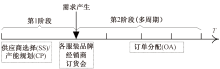
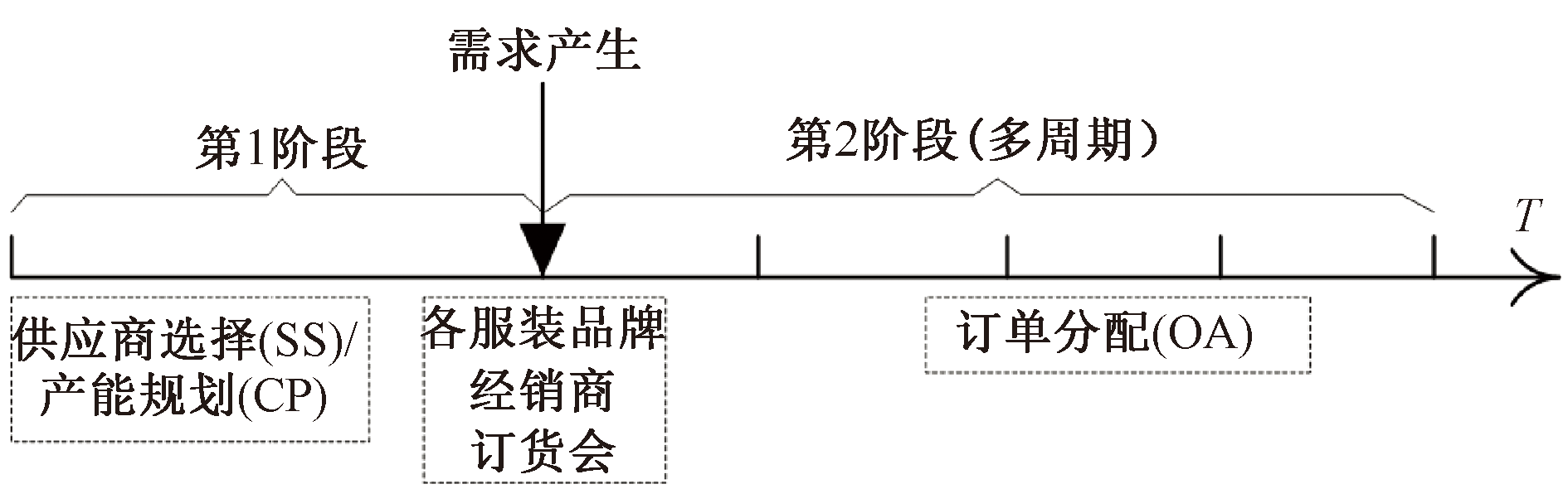
图1

两阶段决策示意图"

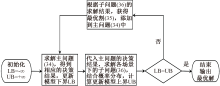
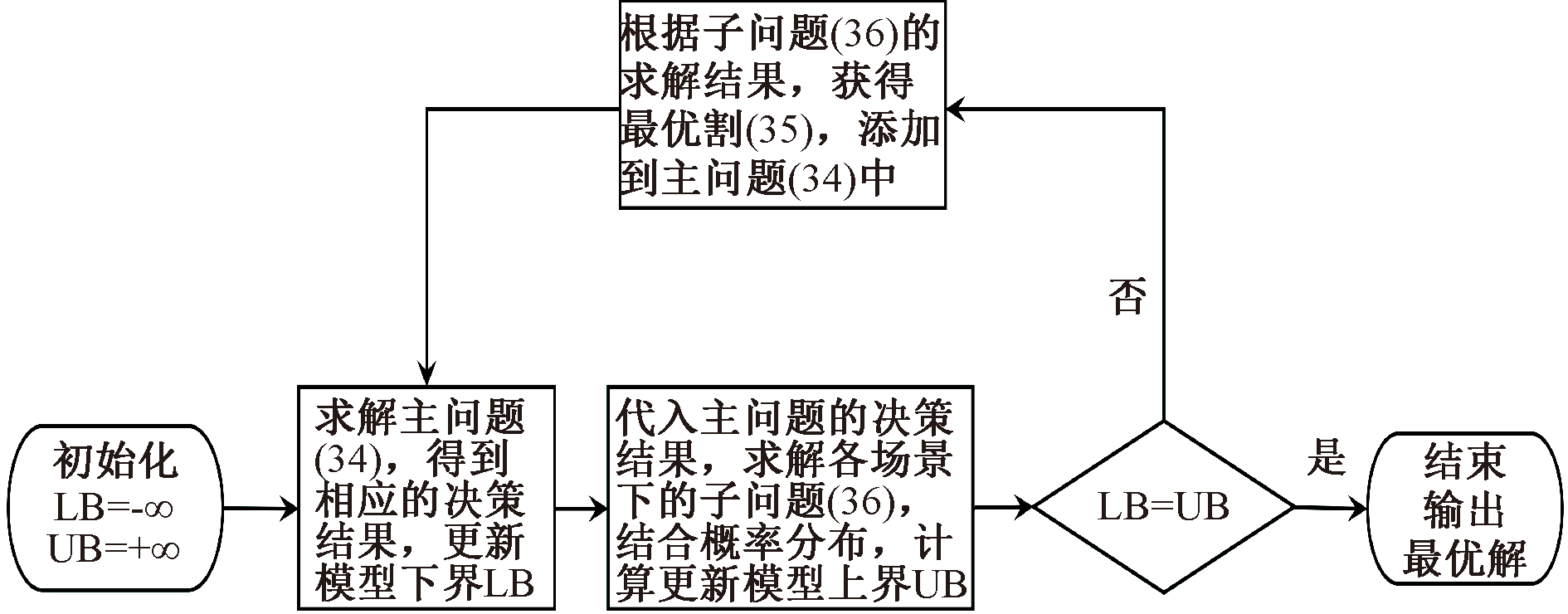
图2

Benders分解算法流程图"

表1

供应商与各品牌间的合作(所属)关系"

供应商 等级 品牌1 品牌2 品牌3 品牌4
v1 核心 0 1 0 1
v2 合格 0 1 0 0
v3 战略 0 1 0 0
v4 战略 0 1 0 0
v5 合格 1 0 0 0
v6 战略 1 1 0 0
v7 核心 0 1 1 0
v8 核心 1 0 0 0
v9 核心 1 0 0 0
v10 合格 0 0 1 0
v11 合格 0 0 0 1
v12 战略 1 0 0 0
v13 合格 0 0 1 0
v14 合格 0 0 1 0
v15 合格 0 0 0 1
v16 合格 0 0 0 1
v17 合格 0 1 0 1

表2

各供应商产能上限"

供应商 面料/工时
针织 机织 牛仔 毛织
v1 0 9 660 0 0
v2 114 260 0 0 0
v3 114 582 0 0 175 074
v4 87 533 0 0 0
v5 91 182 0 0 0
v6 0 117 142 24 343 0
v7 0 29 069 0 0
v8 139 497 0 0 0
v9 0 27 456 0 0
v10 16 370 0 7 040 0
v11 22 527 35 323 0 0
v12 0 44 698 0 16 280
v13 9 158 0 0 0
v14 10 044 0 0 21 673
v15 0 52 560 0 0
v16 0 0 0 11 872
v17 0 0 28 987 0

表3

供应商技术能力标签(以v6为例)"

面料 服装
大类
适用性别 年龄段
仅男性 仅女性 男女通用
机织 上装 1 1 1 成人
裤装 1 1 1
裙装 0 1 0
套装 1 1 1
牛仔 上装 1 1 1
裤装 1 1 1
裙装 0 1 0
套装 1 1 1
机织 上装 1 1 1 儿童
裤装 1 1 1
裙装 0 1 0
套装 0 0 0
牛仔 上装 1 1 1
裤装 1 1 1
裙装 0 1 0
套装 1 1 1

表4

各品牌服装订单需求"

品牌 特征 针织/件 机织/件 牛仔/件 毛织/件
品牌1 均值 1 972 334 818 504 743 747 41 691
标准差 662 394 274 889 249 781 14 002
品牌2 均值 3 289 059 1 358 170 439 773 353 549
标准差 1 104 612 456 134 147 697 118 738
品牌3 均值 914 429 165 522 50 084 81 062
标准差 307 107 55 590 16 822 27 224
品牌4 均值 151 864 162 314 44 398 34 288
标准差 51 002 54 512 14 910 11 515

表5

各类服装的标准单位作业时间"

品牌 面料 上装/工时 裤装/工时 裙装/工时 套装/工时
品牌1 针织 0.22 0.18 0.30 0.37
机织 0.97 0.37 0.40 0.87
牛仔 0.57 0.37 0.42 0.55
毛织 0.78 0.88 0.88 1.08
品牌2 针织 0.23 0.17 0.28 0.43
机织 0.60 0.35 0.57 0.63
牛仔 0.70 0.28 0.38 0.60
毛织 0.62 0.50 0.77 1.02
品牌3 针织 0.30 0.12 0.28 0.43
机织 0.58 0.32 0.38 0.58
牛仔 0.57 0.33 0.43 0.45
毛织 0.80 0.60 1.15 1.40
品牌4 针织 0.37 0.17 0.28 0.38
机织 0.77 0.35 0.57 0.70
牛仔 0.72 0.28 0.38 0.52
毛织 1.20 0.50 0.77 0.98

表6

不同供应商的订单调整单位成本"

供应商 v1 v2 v3 v4 v5 v6 v7 v8 v9 v10 v11 v12 v13 v14 v15 v16 v17
单位调整成本/(元·件-1) 3.5 2.4 1.0 5.0 2.5 2.0 3.1 1.5 4.0 2.6 3.3 4.5 3.4 3.6 2.8 3.0 4.2

表7

产能共享对结果的影响"

有无
共享
订单调整
成本/元
缺货
成本/元
解鲁棒 模型鲁棒 总成本/元
无共享 0 87 909 537 10 623 385 2 876 732 98 532 922
有共享 1 079 285 77 945 864 11 703 499 2 764 475 89 649 363

表8

各品牌实际产能共享比例"

品牌 针织 机织 牛仔 毛织
品牌1 50.37 0 100.00 100.00
品牌2 14.24 0 100.00 100.00
品牌3 63.33 0 100.00 100.00
品牌4 100.00 0 24.29 100.00

表9

各品牌供应商在不同需求场景下的订单调整量"

合作品牌 供应商 订单调整量/件
场景1 场景2 场景3 场景4 场景5 场景6
品牌2 v3 460 976 387 489 363 624 181 318 79 963 3 965
品牌4 v11 67 762 92 536 124 094 190 887 228 866 233 624

表10

订单缺货量和产能过剩情况"

面料 订单缺货量/件 过剩产能/工时
针织 1 509 657 5 992 429
机织 785 162 3 619 203
牛仔 286 204 555 508
毛织 183 453 2 471 989

图3

CP结果随规划匹配度的变化"

图4

各项成本随规划匹配度的变化"

图5

解鲁棒性和模型鲁棒性的变化趋势"

图6

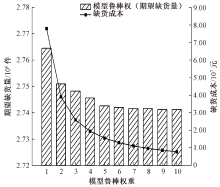
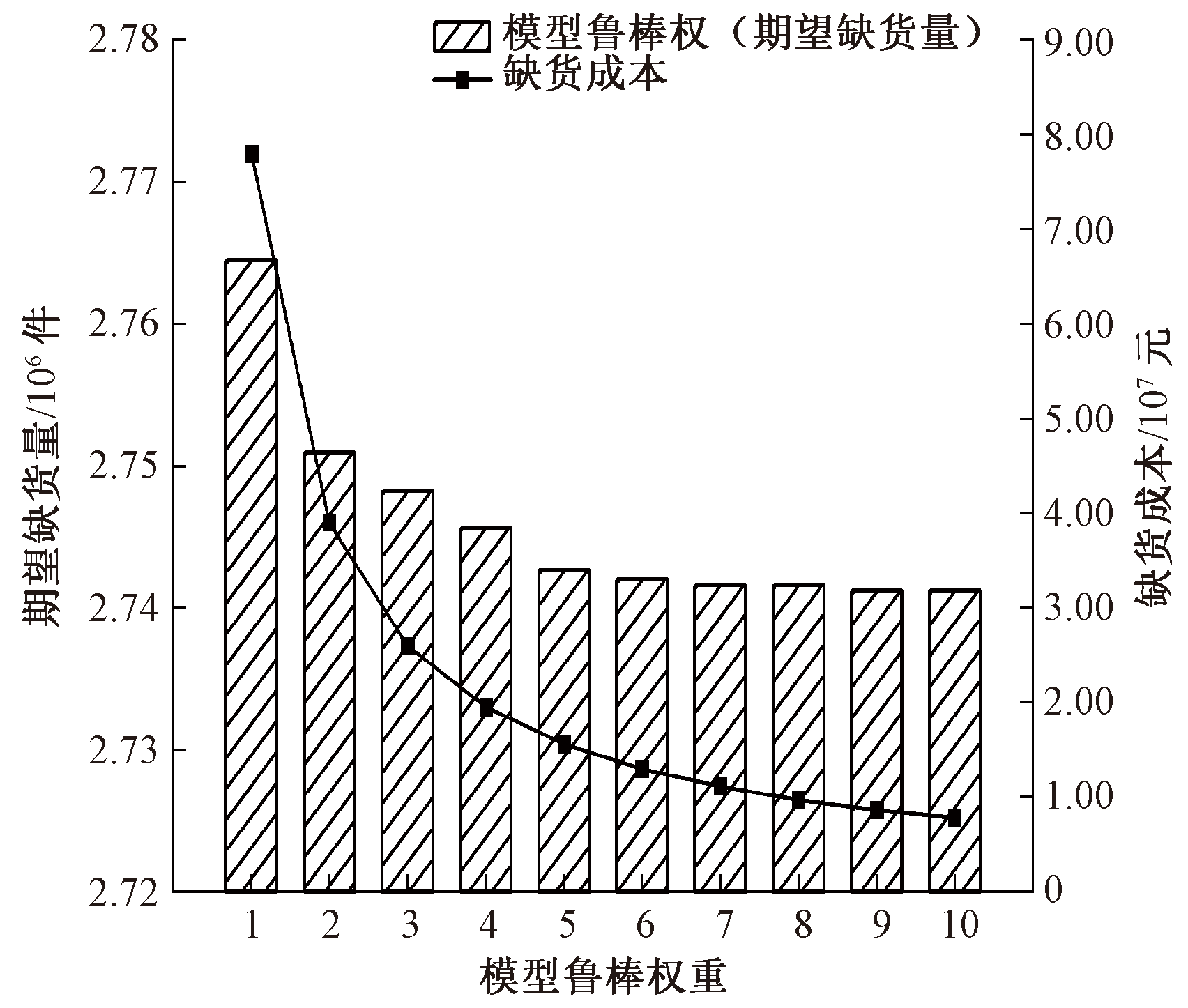
缺货量与缺货成本的变化"

图7

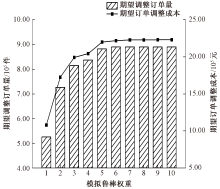
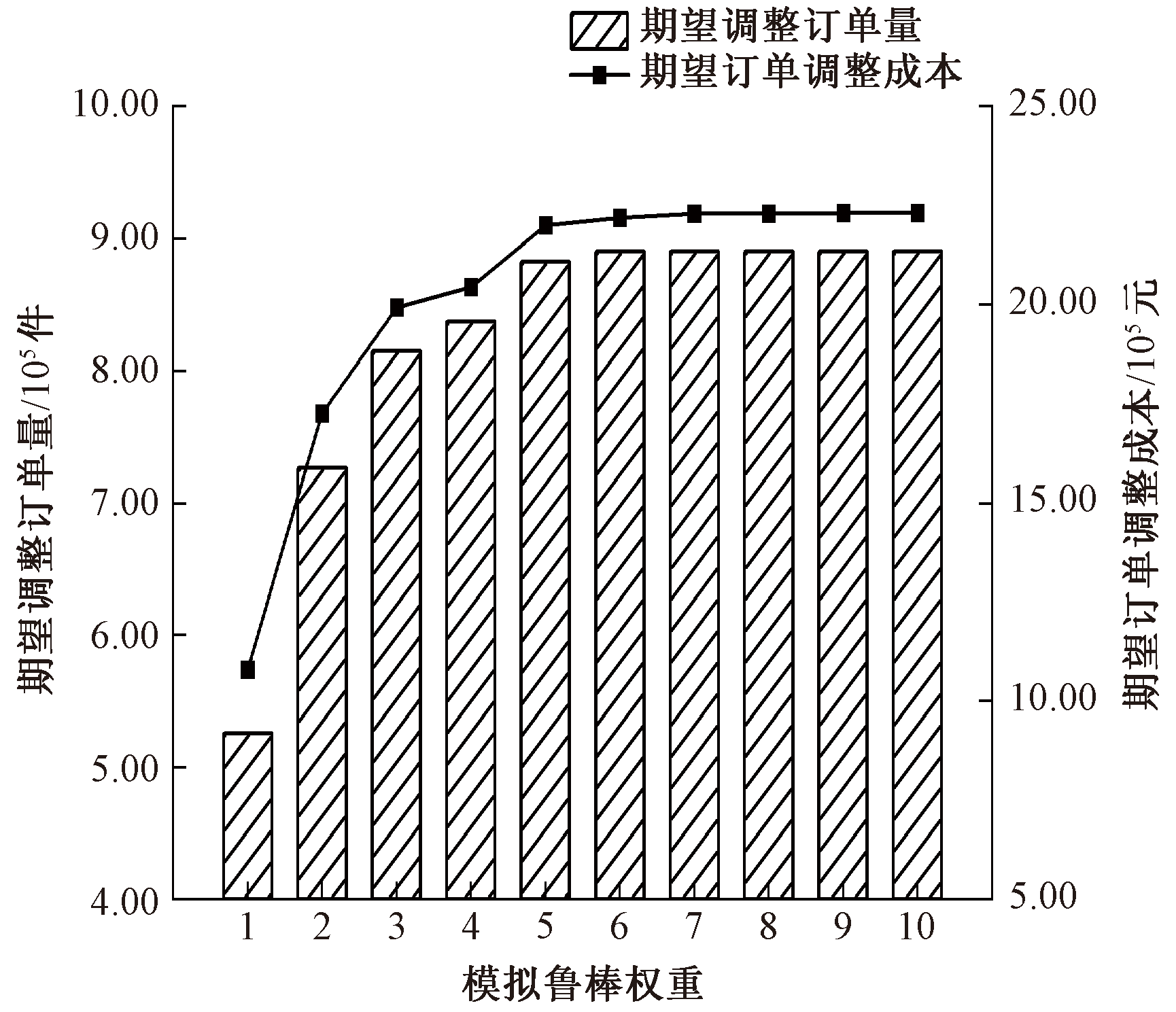
调整订单量与订单调整成本的变化"

[1] 孙瑞哲. 中国纺织工业的创新发展与供应链重构[J]. 纺织导报, 2017(7):24-36,40-41.
SUN Ruizhe. Innovative development of China's textile industry and reconstruction of supply chain[J]. China Textile Leader, 2017(7):24-36,40-41.
[2] 中华网财经. 森马2023业绩恢复增长,距2019的高光仍有较大差距[EB/OL]. (2024-04-02) [2024-04-18]. https://finance.china.com/xiaofei/13004691/20240402/46326678.html.
Finance China. Senma's performance resumed growth in 2023, but there is still a significant gap from the highlights of 2019[EB/OL]. (2024-04-02) [2024-04-18]. https://finance.china.com/xiaofei/13004691/20240402/46326678.html.
[3] 投资快报. 森马服饰(002563):休闲服饰与儿童服饰龙头企业[EB/OL]. (2024-04-07) [2024-04-18]. https://www.927953.com/tzkb/611636.html.
Investment Express. Senma clothing (002563): leading enterprise in leisure and children's clothing[EB/OL]. (2024-04-07) [2024-04-18]. https://www.927953.com/tzkb/611636.html.
[4] 李明洁, 李圣男, 卢安. 基于“结构-行为-绩效”范式的中国运动装产业市场分析[J]. 毛纺科技, 2018, 46(2): 81-86.
LI Mingjie, LI Shengnan, LU An. Study of athletic apparel industry market of China on SCP model[J]. Wool Textile Journal, 2018, 46(2): 81-86.
[5] 艾瑞咨询. 2023年中国户外运动鞋服行业研究报告[EB/OL]. (2023-11-27) [2024-01-15]. https://www.iresearch.com.cn/Detail/report?id=4268&isfree=0.
iResearch. 2023 China outdoor sports footwear industry research report[EB/OL]. (2023-11-27) [2024-01-15]. https://www.iresearch.com.cn/Detail/report?id=4268&isfree=0.
[6] 陈莎, 修毅, 李雪飞. 基于遗传算法的服装大规模定制生产线平衡优化[J]. 纺织学报, 2022, 43(12):144-150,159.
doi: 10.13475/j.fzxb.20211100208
CHEN Sha, XIU Yi, LI Xuefei. Balance optimization of clothing mass customization production line based on genetic algorithm[J]. Journal of Textile Research, 2022, 43(12):144-150,159.
doi: 10.13475/j.fzxb.20211100208
[7] 何家波, 顾新建, 张今. 面向生产能力共享的供需匹配[J]. 计算机集成制造系统, 2022, 28(3):880-891.
HE Jiabo, GU Xinjian, ZHANG Jin. Supply-demand matching for production capacity sharing[J]. Computer Integrated Manufacturing Systems, 2022, 28(3):880-891.
[8] WANG G, HU X, LI X, et al. Multiobjective decisions for provider selection and order allocation considering the position of the CODP in a logistics service supply chain[J]. Computers & Industrial Engineering, 2020. DOI: 10.1016/j.cie.2019.106216.
[9] MAHAPATRA M S, PRADHAN P C, JHA J K. Sourcing decisions with order allocation under supply disruption risk considering quantitative and qualitative criteria[J]. Operational Research, 2022, 22: 3291-3333.
[10] MARTINEZ-COSTA C, MAS-MACHUCA M, BENE-DITO E, et al. A review of mathematical programm-ing models for strategic capacity planning in manu-facturing[J]. International Journal of Production Economics, 2014, 153: 66-85.
[11] CARVALHO A N, OLIVEIRA F, SCAVARDA L F. Tactical capacity planning in a real-world ETO industry case: a robust optimization approach[J]. International Journal of Production Economics, 2016, 180: 158-171.
[12] LV F, MA S, GUAN X. The implication of capacity reservation contracts in assembly system with asymmetric demand information[J]. International Journal of Production Research, 2015, 53(18): 5564-5591.
[13] TAKEMOTO Y, ARIZONO I. Moral hazard problem and collaborative coordination in supply chain with capacity reservation contract[J]. International Journal of Production Research, 2020, 58(8): 2510-2526.
[14] GOVINDAN K, SALEHIAN F, KIAN H, et al. A location-inventory-routing problem to design a circular closed-loop supply chain network with carbon tax policy for achieving circular economy: an augmented epsilon-constraint approach[J]. International Journal of Production Economics, 2023. DOI: 10.1016/j.ijpe.2023.108771.
[15] FATTAHI M. Resilient procurement planning for supply chains: a case study for sourcing a critical mineral material[J]. Resources Policy, 2021. DOI: 10.1016/j.resourpol.2017.10.010.
[16] 叶静, 金程远. 推进高水平对外开放要坚持底线思维[N]. 中国社会科学报, 2022-01-11(8).
YE Jing, JIN Chengyuan. Promoting high-level opening up to the outside world should adhere to the bottom line thinking[N]. Chinese Social Sciences Today, 2022-01-11( 8).
[17] MULVEY J M, VANDERBEI R J, ZENIOS S A. Robust optimization of large-scale systems[J]. Operations Research, 1995, 43(2): 264-281.
[18] YU C S, LI H L. A robust optimization model for stochastic logistic problems[J]. International Journal of Production Economics, 2000, 64(1-3): 385-397.
[19] RAHMANIANI R, CRAINIC T G, GENDREAU M, et al. The Benders decomposition algorithm: a literature review[J]. European Journal of Operational Research, 2017, 259(3): 801-817.
[20] 茅茂, 王长军. 考虑原产地规则的跨境纺织供应链网络设计[J]. 纺织学报, 2022, 43(7):170-177.
MAO Mao, WANG Changjun. Design of global textile supply chain network with rules of origin[J]. Journal of Textile Research, 2022, 43(7):170-177.
[1] 茅茂, 王长军. 考虑原产地规则的跨境纺织供应链网络设计[J]. 纺织学报, 2022, 43(07): 170-177.
Viewed
Full text


Abstract

Cited

  Shared   
  Discussed   
No Suggested Reading articles found!