纺织学报 ›› 2025, Vol. 46 ›› Issue (04): 63-70.doi: 10.13475/j.fzxb.20231206301
何灏1,2, 张迎亮1,2, 刘宸君1,2, 殷亚然1,2, 陈康1,2( ), 张先明1,2
HE Hao1,2, ZHANG Yingliang1,2, LIU Chenjun1,2, YIN Yaran1,2, CHEN Kang1,2(), ZHANG Xianming1,2
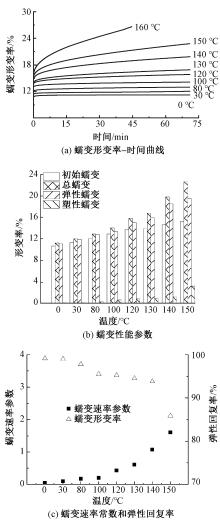
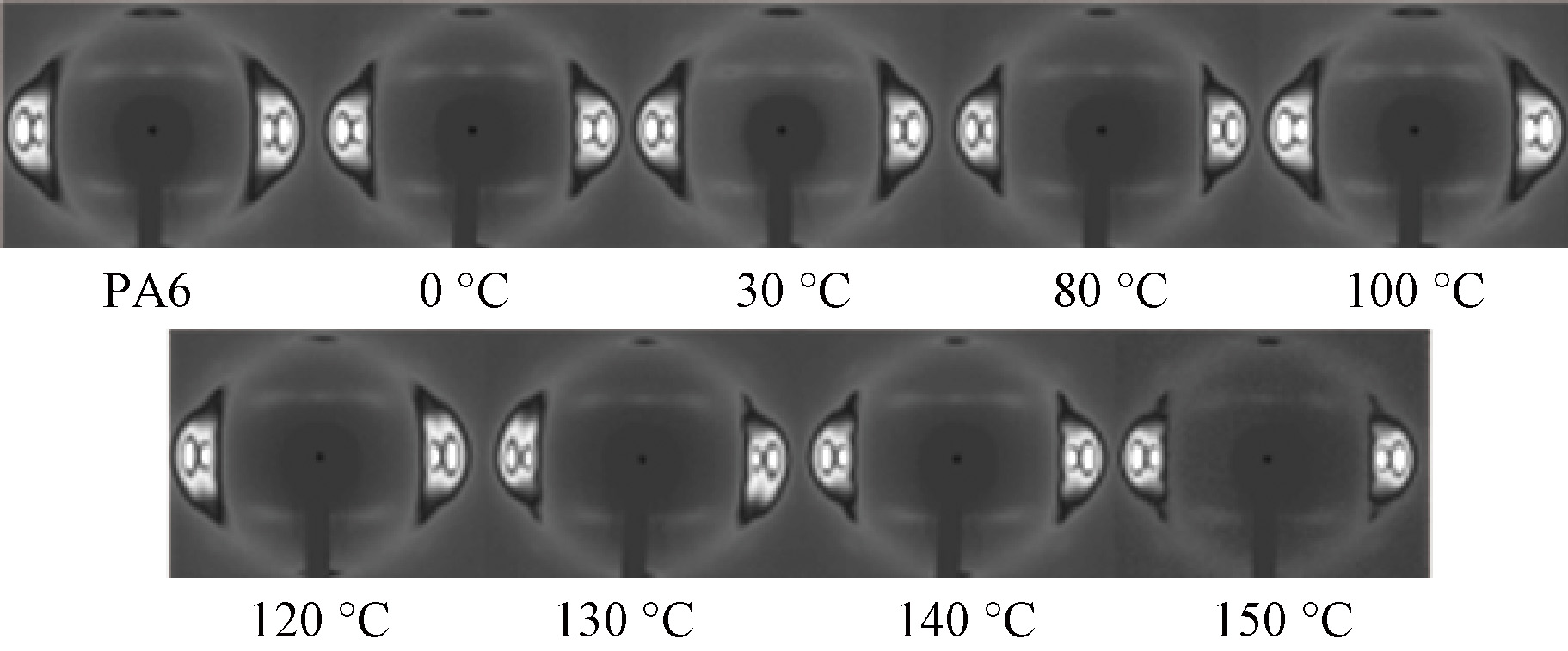
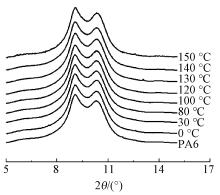
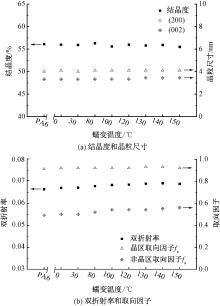
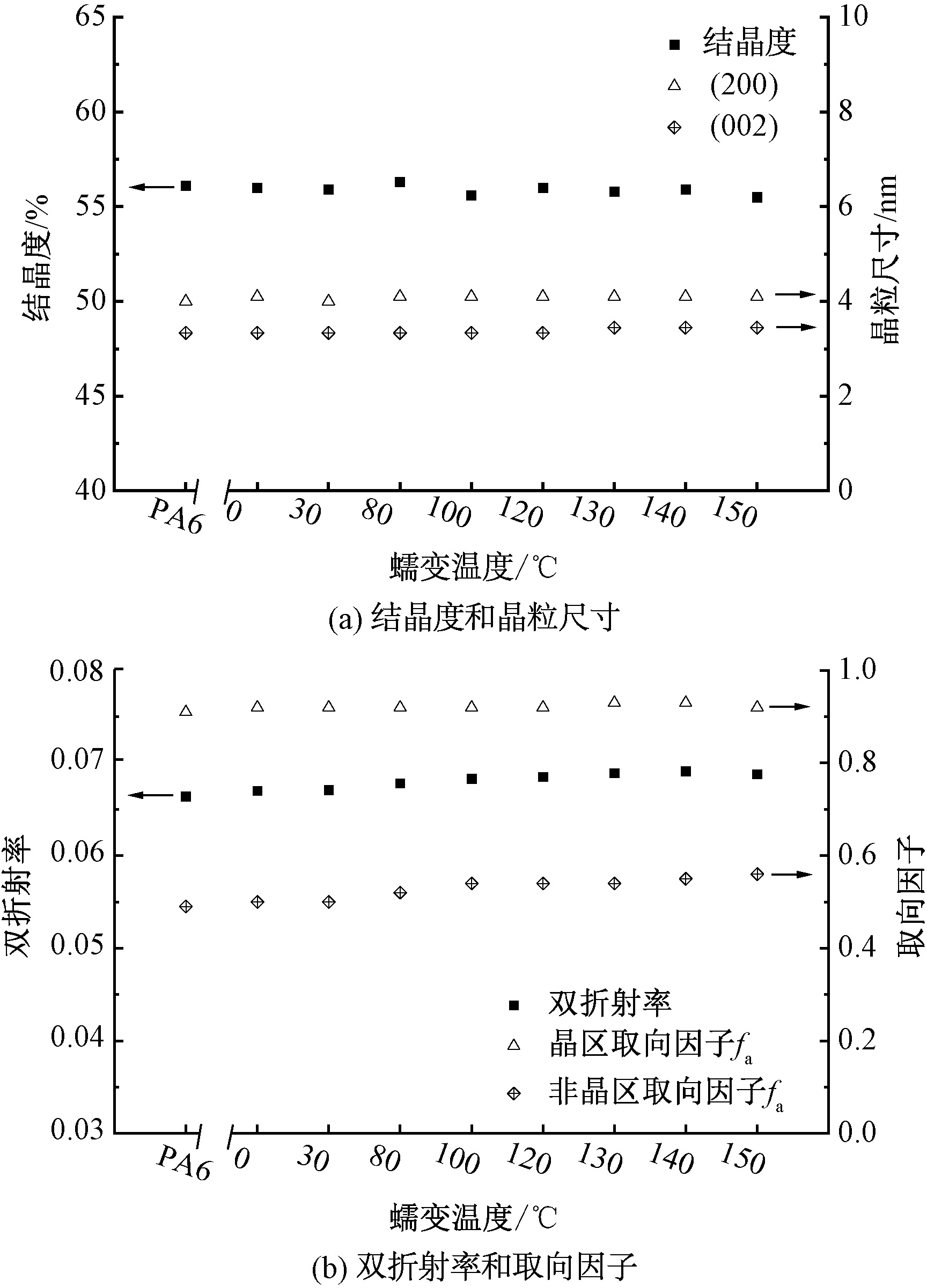
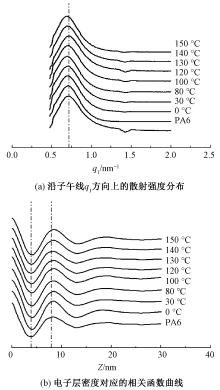
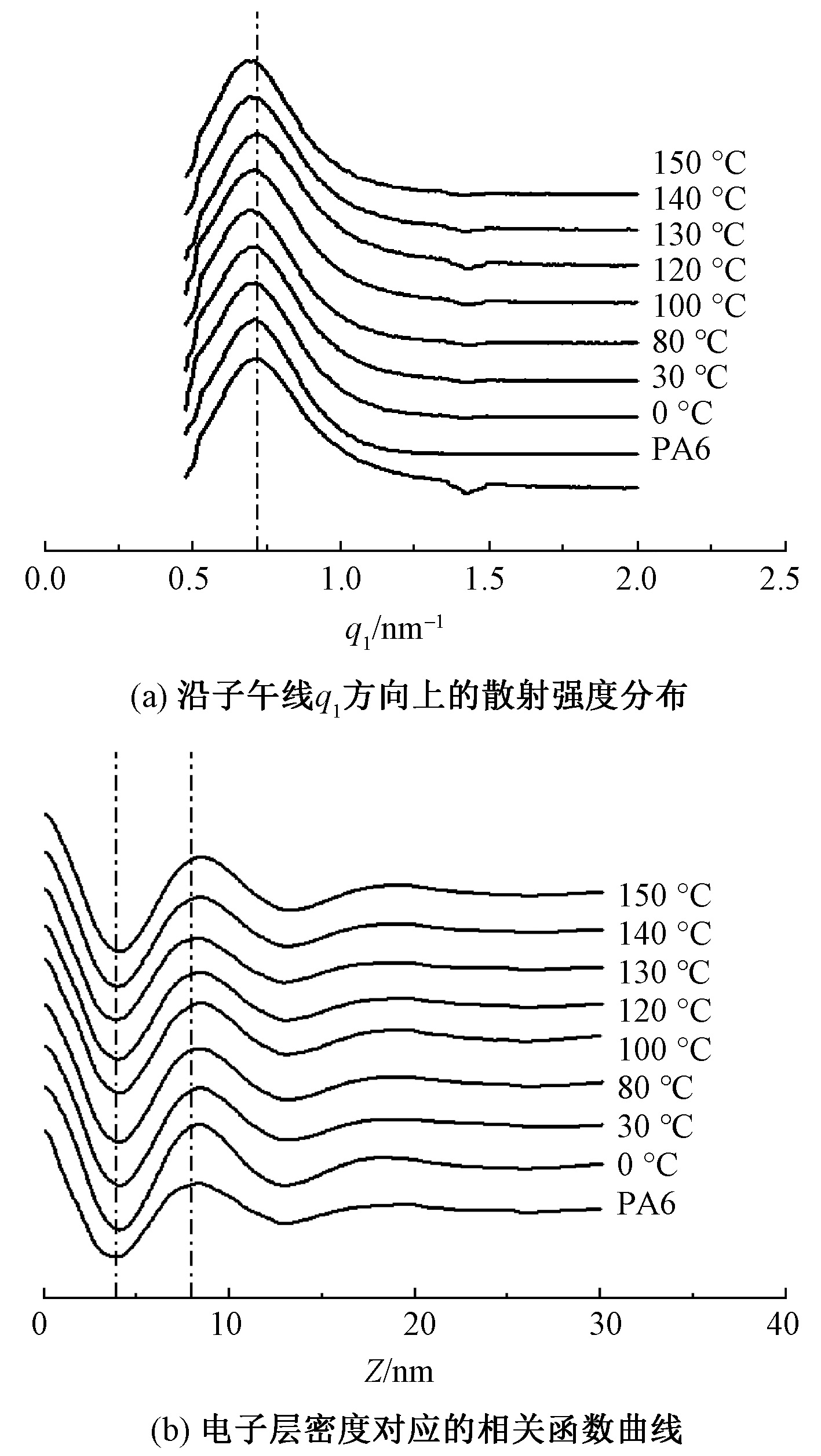
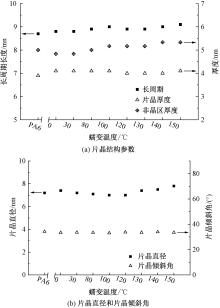
摘要: 为探究锦纶6工业丝在不同温度区间的蠕变行为及形变机制,借助广角X射线衍射(WAXD)、小角X射线散射、双折射等测试研究了样品在0~150 ℃温度条件下蠕变前后的微观结构变化。结果表明:样品蠕变形变率均随着蠕变温度升高呈增大的趋势,卸去蠕变负荷后的弹性回复率与蠕变速率在温度低于玻璃化转变温度时基本保持不变,当蠕变温度处于玻璃化转变温度以上时弹性回复率降低,蠕变速率增加。卸去负荷后结晶度与晶区取向度均未发生明显变化,说明稳定的晶区结构在撤去蠕变负荷后均可完全回复;蠕变过程后锦纶6工业丝样品非晶区取向、片晶厚度和玻璃化转变温度均略有增加,部分取向程度较低的非晶区分子链在蠕变负荷下进一步发生形变而形成了取向的非晶区;在蠕变温度高于玻璃化转变温度的条件下,非晶区分子链的运动能力增强,导致变化程度更为明显。
中图分类号:
| [1] | WANG C, TSOU S Y, LIN H S. Brill transition of nylon-6 in electrospun nanofibers[J]. Colloid and Polymer Science, 2012, 290(17): 1799-1809. |
| [2] | WELLER S D, JOHANNING L, DAVIES P, et al. Synthetic mooring ropes for marine renewable energy applications[J]. Renewable Energy, 2015, 83: 1268-1278. |
| [3] | SAMON J M, SCHULTZ J M, WU J, et al. Study of the structure development during the melt spinning of nylon 6 fiber by on-line wide-angle synchrotron X-ray scattering techniques[J]. Journal of Polymer Science Part B: Polymer Physics, 1999, 37(12): 1277-1287. |
| [4] | SAMON J M, SCHULTZ J M, HSIAO B S. Study of the cold drawing of nylon 6 fiber by in-situ simultaneous small- and wide-angle X-ray scattering techniques[J]. Polymer, 2000, 41(6): 2169-2182. |
| [5] | CHEN J, ZHU J, WU H, et al. Constructing highly aligned crystalline structure to enhance sliding wear performance of bulk polyamide 6[J]. Polymer, 2021. DOI:10.1016/j.polymer.2021.124353. |
| [6] | MURTHY N S, BEDNARCZYK C, MOORE R A F, et al. Analysis of small-angle X-ray scattering from fibers: structural changes in nylon 6 upon drawing and annealing[J]. Journal of Polymer Science Part B: Polymer Physics, 1996, 34(5): 821-835. |
| [7] | MURTHY N S, GRUBB D T. Tilted lamellae in an affinely deformed 3D macrolattice and elliptical features in small-angle scattering[J]. Journal of Polymer Science Part B: Polymer Physics, 2006, 44(8): 1277-1286. |
| [8] | MURTHY N S, GRUBB D T. Deformation of lamellar structures: Simultaneous small- and wide-angle X-ray scattering studies of polyamide-6[J]. Journal of Polymer Science Part B: Polymer Physics, 2002, 40(8): 691-705. |
| [9] | CIVIER L, CHEVILLOTTE Y, BLES G, et al. Short and long term creep behaviour of polyamide ropes for mooring applications[J]. Ocean Engineering, 2022. DOI:10.1016/j.oceaneng.2022.111800. |
| [10] | WARD I M, WILDING M A. Creep behavior of ultrahigh-modulus polyethylene: influence of draw ratio and polymer composition[J]. Journal of Polymer Science: Polymer Physics Edition, 1984, 22(4): 561-575. |
| [11] | YAKUSHEV P N, PESCHANSKAYA N N, MARIKHIN V A, et al. Creep rate variability in gel-spun polyethylene fibers[J]. Polymer Engineering & Science, 1997, 37(8): 1286-1293. |
| [12] | ERICKSEN R H. Creep of aromatic polyamide fibres[J]. Polymer, 1984, 26(5): 733-746. |
| [13] | CHEN K, LIU Y, JI H, et al. Structural evolutions during creep deformation of polyester industrial fiber via in situ synchrotron small-angle X-ray scattering/wide-angle X-ray scattering[J]. Journal of Industrial Textiles, 2020, 51(5): 8035-8054. |
| [14] | CHEN K, YU J, LIUY, et al. Creep deformation and its correspondence to the microstructure of different polyester industrial yarns at room temperature[J]. Polymer International, 2018, 68(3): 555-563. |
| [15] |
陈康, 蒋权, 姬洪, 等. 高强型聚酯工业丝在不同温度下的蠕变断裂机制[J]纺织学报, 2020, 41(11): 1-9.
doi: 10.13475/j.fzxb.20200200209 |
|
CHEN Kang, JIANG Quan, JI Hong, et al. Temperature related creep rupture mechanism of hign-tenacity polyester industrial fiber[J]. Journal of Textile Research, 2020, 41(11): 1-9.
doi: 10.13475/j.fzxb.20200200209 |
|
| [16] | MIRI V, PERSYN O, SEGUELA R, et al. On the deformation induced order-disorder transitions in the crystalline phase of polyamide 6[J]. European Polymer Journal, 2011, 47(1): 88-97. |
| [17] | 葛陈程, 吕汪洋, 石教学, 等. 应用二维X射线衍射法测定涤纶工业丝结晶和取向行为[J]. 纺织学报, 2018, 39(3): 19-25. |
| GE Chencheng, LÜ Wangyang, SHI Jiaoxue, et al. Measurement of crystallinity and crystal orientation of polyester industrial yarns by 2-D X-ray diffraction[J]. Journal of Textile Research, 2018, 39(3): 19-25. | |
| [18] | PEPIN J, GAUCHER V, ROCHAS C, et al. In-situ SAXS/WAXS investigations of the mechanically-induced phase transitions in semi-crystalline polyamides[J]. Polymer, 2019, 175: 87-98. |
| [19] | GUO H, LI J, WANG J, et al. Direct observations on structure evolutions in polyamide 6 during deformation at high temperatures with WAXS and SAXS[J]. Polymer Engineering & Science, 2019, 60(3): 581-586. |
| [20] | 张颖, 宋明根, 姬洪, 等. 热定形工艺对高强型聚酯工业丝结构性能的影响[J]. 纺织学报, 2023, 44(9): 43-51. |
| ZHANG Ying, SONG Minggen, JI Hong, et al. Influence of heat-setting process on structure and properties of hign-tenacity polyester industrial yarns[J]. Journal of Textile Research, 2023, 44(9): 43-51. | |
| [21] | MURASE S, MATSUDA T, HIRAMI M. Intrinsic birefringence of γ-form crystal of nylon 6: application to orientation development in high-speed spun fibers of nylon 6[J]. Macromolecular Materials and Engineering, 2001, 286(1): 48-51. |
| [22] | HUMEAU C, DAVIES P, LEGAC P Y, et al. Influence of water on the short and long term mechanical behaviour of polyamide 6 (nylon) fibres and yarns[J]. Multiscale and Multidisciplinary Modeling, Experiments and Design, 2018, 1(4): 317-327. |
| [23] | YU J, CHEN K, LI X, et al. Performance and structure changes of the aromatic co-polysulfonamide fibers during thermal-oxidative aging process[J]. Journal of Applied Polymer Science, 2016. DOI:10.1002/app.44078. |
| [24] | TASHIRO K, KOBAYASHI M, TADOKORO H. Calculation of three-dimensional elastic constants of polymer crystals: I: method of calculation[J]. Macromolecules, 2002, 11(5): 908-913. |
| [25] | LI Y, GODDARD W A. Nylon 6 crystal structures, folds, and lamellae from theory[J]. Macromolecules, 2002, 35(22): 8440-8455. |
| [26] | VASANTHAN N, SALEM D R. FTIR spectroscopic characterization of structural changes in polyamide-6 fibers during annealing and drawing[J]. Journal of Polymer Science: Part B, 2001, 39(5): 536-547. |
| [27] | MEYABADI T F, MOHADDES MOJTAHEDI M R, MOUSAVI Shoushtari S A. Melt spinning of reused nylon 6: structure and physical properties of as-spun, drawn, and textured filaments[J]. Journal of the Textile Institute, 2010, 101(6): 527-537. |
| [28] | VASANTHAN N. Determination of molecular orientation of uniaxially stretched polyamide fibers by polarized infrared spectroscopy: comparison of X-ray diffraction and birefringence methods[J], 2005, 59(7): 897-903. |
| [1] | 乔思杰, 邢桐贺, 童爱心, 史芷丞, 潘恒, 刘可帅, 余豪, 陈凤翔. 不同聚乳酸材料的性能对比[J]. 纺织学报, 2025, 46(03): 27-33. |
| [2] | 张颖, 宋明根, 姬洪, 陈康, 张先明. 热定形工艺对高强型聚酯工业丝结构性能的影响[J]. 纺织学报, 2023, 44(09): 43-51. |
| [3] | 李杨, 彭来湖, 郑秋扬, 胡旭东. 基于分数阶模型的纱线蠕变性能模拟与预测[J]. 纺织学报, 2022, 43(11): 46-51. |
| [4] | 汪泽幸, 李帅, 谭冬宜, 孟硕, 何斌. 循环加载处理对聚氯乙烯涂层膜材料蠕变性能的影响[J]. 纺织学报, 2021, 42(07): 101-107. |
| [5] | 陈康, 蒋权, 姬洪, 张阳, 宋明根, 张玉梅, 王华平. 高强型聚酯工业丝在不同温度下的蠕变断裂机制[J]. 纺织学报, 2020, 41(11): 1-9. |
| [6] | 王宗乾, 杨海伟, 周剑, 李长龙. 尿素脱胶对丝素蛋白气凝胶力学性能的影响[J]. 纺织学报, 2020, 41(04): 9-14. |
| [7] | 刘淑萍, 李亮, 刘让同, 崔世忠, 王艳婷. 羧甲基纤维素钠改性角蛋白膜的结构与性能[J]. 纺织学报, 2019, 40(06): 14-19. |
| [8] | 汪泽幸 刘超 何斌 周锦涛 李洪登. 聚氯乙烯涂层膜材料非线性蠕变性能预测[J]. 纺织学报, 2018, 39(10): 68-73. |
| [9] | 曹意 陈韶娟 尹德河 曹洪花 马建伟. 碱溶性涤纶/锦纶6海岛纤维各组分性能解析[J]. 纺织学报, 2018, 39(09): 15-21. |
| [10] | 曲腾云 于伟东. 纤维素纤维的生物降解性能[J]. 纺织学报, 2015, 36(11): 20-26. |
| [11] | 潘巧灵 杜以军 蒋金华 陈南梁. 聚芳酯织物的光老化性能[J]. 纺织学报, 2014, 35(7): 53-0. |
| [12] | 杨旭红;顾俊晶. 热处理对竹浆纤维微观结构和力学性能的影响[J]. 纺织学报, 2011, 32(1): 11-15. |
| [13] | 章伟;何建新;李克兢;崔世忠;王善元. 竹浆粕的预水解与硫酸盐蒸煮工艺[J]. 纺织学报, 2009, 30(10): 31-36. |
| [14] | 叶静. PET/纳米矿物粒子纤维的结构与性能[J]. 纺织学报, 2009, 30(01): 22-25. |
| [15] | 何建新.;王善元. 天然纤维素的核磁共振碳谱表征[J]. 纺织学报, 2008, 29(5): 1-5. |
|
||
 京公网安备11010502044800号