纺织学报 ›› 2025, Vol. 46 ›› Issue (07): 144-153.doi: 10.13475/j.fzxb.20241105601

• 染整工程 • 上一篇    下一篇

基于流行色的织物花型图案色彩迁移方法

王建辉1, 张华熊1(), 金耀1, 刘志2   

  1. 1 浙江理工大学 计算机科学与技术学院, 浙江 杭州 310018
    2 杭州万事利丝绸文化股份有限公司, 浙江 杭州 310009
  • 收稿日期:2024-11-25 修回日期:2025-03-06 出版日期:2025-07-15 发布日期:2025-08-14
  • 通讯作者: 张华熊(1971—),男,教授。主要研究方向为智能信息处理。E-mail:zhxhz@zstu.edu.cn
  • 作者简介:王建辉(2000—),男,硕士生。主要研究方向为织物图案设计。
  • 基金资助:
    浙江省“尖兵”“领雁”研发攻关计划项目(2022C01220)

Color transfer method for fabric patterns based on trending colors

WANG Jianhui1, ZHANG Huaxiong1(), JIN Yao1, LIU Zhi2   

  1. 1 School of Computer Science and Technology, Zhejiang Sci-Tech University, Hangzhou, Zhejiang 310018, China
    2 Hangzhou Wanshili Silk Culture Co., Ltd., Hangzhou, Zhejiang 310009, China
  • Received:2024-11-25 Revised:2025-03-06 Published:2025-07-15 Online:2025-08-14

摘要:

针对传统织物花型图案设计效率低、成本高、种类单一等问题,提出了一种高效、智能化的基于流行色的花型图案色彩迁移方法。首先根据流行色趋势和色彩理论,通过当前流行色生成兼顾花型图案设计特征的流行色调色盘。然后利用K-means聚类算法,结合生成的流行色调色盘与不同类型的花型图案,构建流行色花型图案数据集。最后设计了色彩迁移模型,对CycleGAN模型进行网络架构优化,引入了边缘保持损失函数和色彩感知损失函数,优化了色彩迁移模型对纹理细节的捕捉能力和色彩真实性的保持效果;同时在模型训练过程中加入椒盐噪声,进一步提升了模型的稳健性。实验结果表明:生成的流行色调色盘在问卷调查中得票率为67.36%,显著高于传统调色盘;生成的色彩迁移图的结构相似性指数和峰值信噪比分别为29.714和0.911,显著高于其它色彩迁移方法。本文提出的色彩迁移方法为织物花型图案的智能化设计提供了一种高效方案,有助于推动纺织服装产业的数字化转型。

关键词: 色彩迁移, 生成对抗网络, 花型图案, 织物花型设计, 流行色

Abstract:

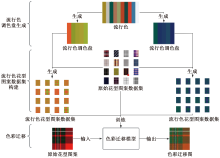
Objective In order to solve problems of the inefficiencies, high costs, and limited variety in conventional handmade fabric pattern color designs, which are worsened by the frequent shifts in seasonal fashion colors, an efficient, intelligent color-transfer method for fabric patterns is introduced, based on the latest fashion color trends. By closely following fashion color trends, it aims to keep textile and apparel products visually appealing and appealing to consumers. Ultimately, this approach can minimize waste from color-related obsolescence and help the industry quickly adapt to market changes.

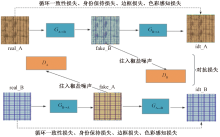
Method A comprehensive and trend-responsive color palette was developed by integrating fashion color trends, color theory principles, and the unique color attributes of fabric patterns. Using the K-means clustering algorithm, a dataset of fabric patterns incorporating popular color palettes was established. In order to refine the color transfer model, an edge-preserving loss function and a color perception loss function were introduced. This enhanced the ability of the model to capture intricate texture details while maintaining color authenticity. Additionally, salt-and-pepper noise during the model training phase was incorporated to enhance the overall robustness of the model.

Results A well-designed survey with 40 participants was conducted to compare two different color palettes in detail. One palette incorporated complex features of fabric patterns, while the other served as a control without these elements. Participants were asked to select their preferred palette based on various factors such as overall fabric design, pattern complexity, and color harmony. This evaluation, based on a diverse set of 90 test samples, ensured the comprehensiveness of the assessment. The results showed that the palette incorporating fabric pattern features received overwhelming positive feedback, with 2 425 votes (67.36% of the total), significantly outperforming the conventional palette and highlighting the strong appeal of fabric-inspired designs. Furthermore, the proposed color transfer model demonstrated excellent performance metrics. Specifically, it achieved a structural similarity index (s) of 0.911, indicating high visual fidelity between the original and transferred images. Additionally, the peak signal-to-noise ratio (p) reached 29.714, further confirming the model's ability to maintain image quality during the color transfer process. Compared to other conventional color transfer methods that perform well.It outperformed Neural Preset (p=28.295,s=0.894) and AdaIN (s=0.857), These results validate its strengths in maintaining color authenticity and structural fidelity for floral pattern adaptation.

In order to verify the contributions of the introduced salt-and-pepper noise, edge loss, and color perception loss to optimizing the color transfer model, ablation experiments were conducted. Compared to the baseline (p=27.596, s=0.806), introducing color perception loss alone (p=28.621, s=0.892) improved color accuracy by 3.7% in p and 10.7% in s, demonstrating superior sensitivity to subtle hue variations. Edge loss achieved an SSIM of 0.844 (4.7% gain), effectively preserving structural details, while salt-and-pepper noise enhanced robustness with a 0.9% p increase (27.835). The integrated model combining all components achieved optimal performance (p=29.714, s=0.911). The results indicated that the introduction of the color perception loss function significantly improved the model's sensitivity to subtle color changes, resulting in more precise and accurate matching of target fashion colors. Thirdly, the edge-preserving loss function played a crucial role in mitigating edge blurring and detail loss during the color transfer process, ensuring that the resulting patterns maintained clear outlines and rich details. Finally, incorporating salt-and-pepper noise during the training phase enhanced the model's robustness to fluctuations in image quality, simulating real-world disturbances that may occur during image transmission or storage. This enhancement allowed the model to accurately distinguish between true structures and noise, ultimately generating more stable and visually appealing images.

Conclusion The proposed fabric pattern color transfer method based on popular colors significantly improves design efficiency and enriches the diversity of fabric patterns while effectively reducing production costs through intelligent means. The feasibility and effectiveness of this method have been verified through empirical experiments. The proposed color transfer method provides an efficient solution for the intelligent design of fabric patterns, accelerating the digital transformation of the textile and apparel industry. Furthermore, by applying the color transfer technology to the fusion design of popular colors and fabric patterns, it not only meet the market's demand for diversification and personalization but also further respond to the initiative of sustainable development. This approach helps reduce dependence on new materials, aligns with the principles of a circular economy, and provides a more sustainable solution for the textile industry. Ultimately, the research lays the foundation for achieving textile designs that are both environmentally friendly and aesthetically pleasing, making a positive contribution to promoting a sustainable, innovative, and vibrant fashion industry.

Key words: color transfer, generative adversarial network, fabric pattern, fabric pattern design, fashion color

中图分类号: 

  • TP399

图1

本文方法的总体架构"

图2

色彩迁移模型结构"

图3

流行色"

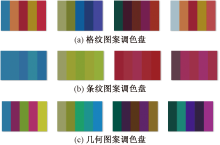
图4

流行色调色盘示例图案"

表1

不同调色盘得票情况"

方法 是否考虑
花型图案特征
得票情况
得票数 得票率/%
本文方法 2 425 67.36
对比方法 1 175 32.64

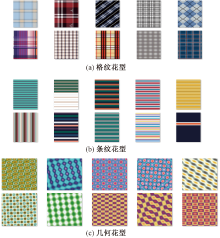
图5

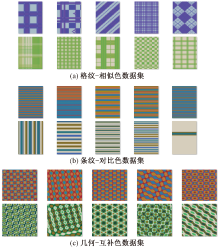
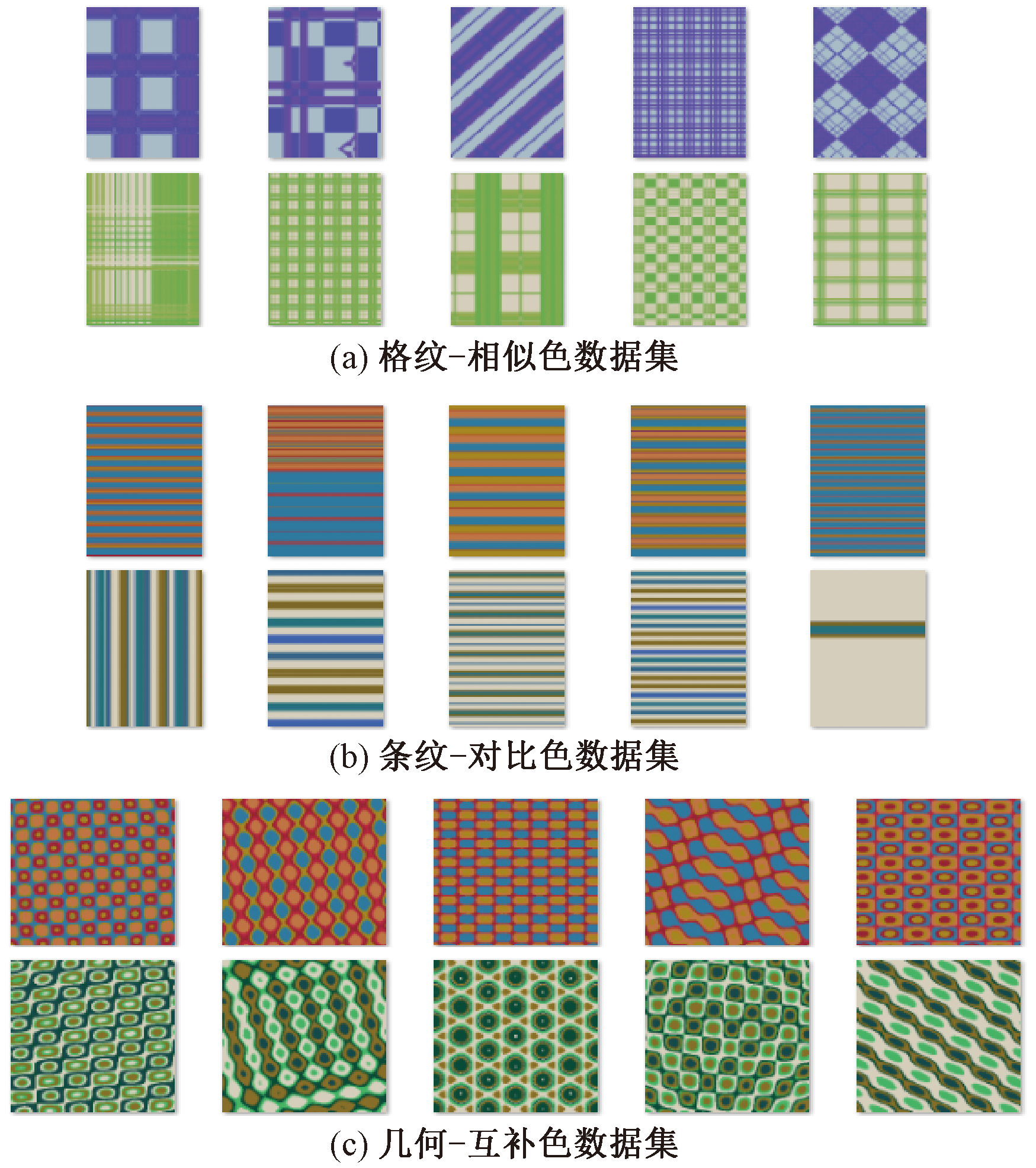
原始花型图案数据集示例图案"

图6

流行色花型图案数据集示例图案"

图7

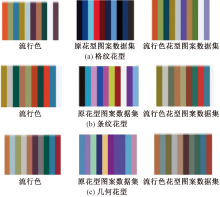
花型图案数据集主色调提取结果"

图8

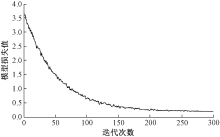
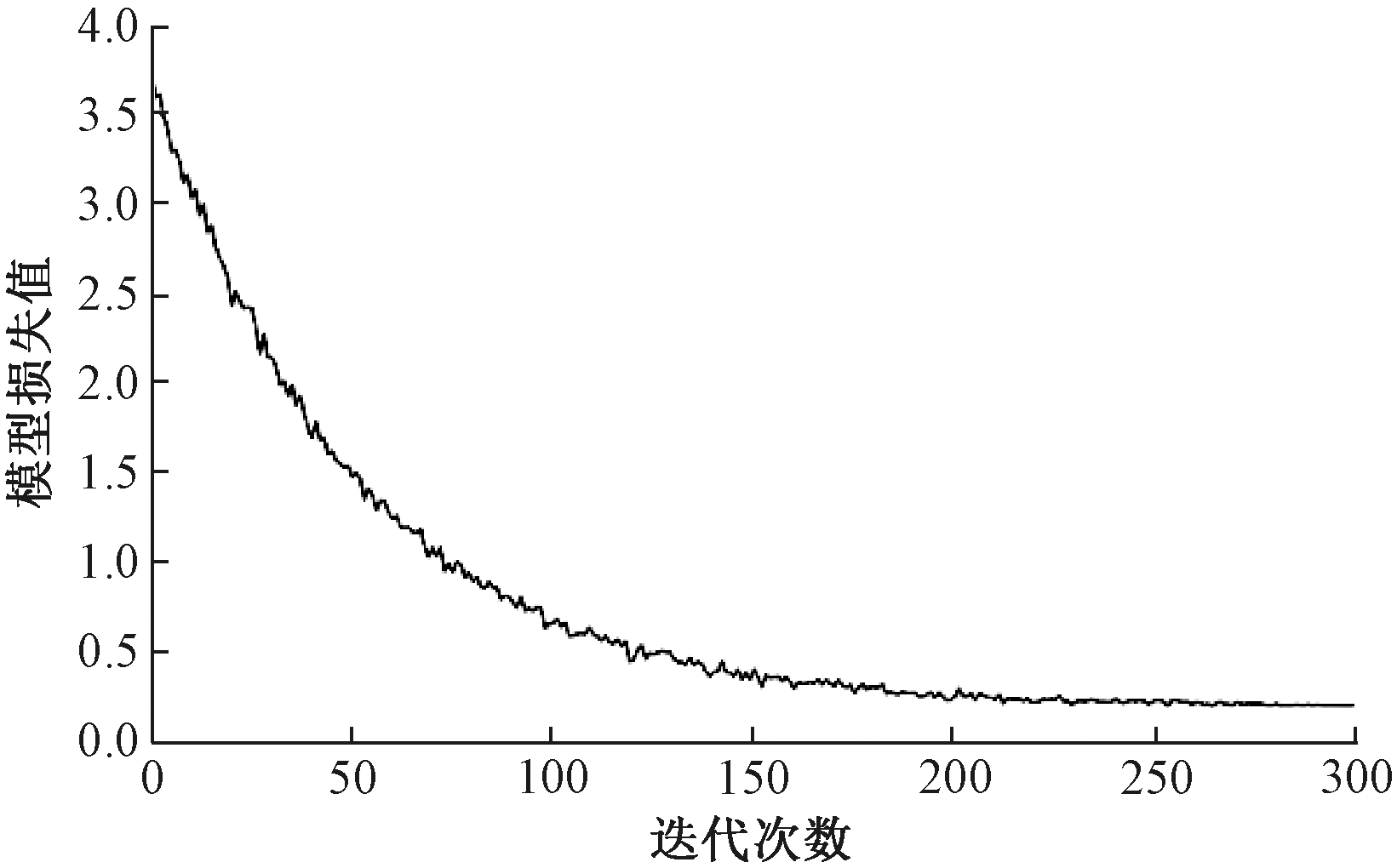
模型训练损失曲线"

图9

色彩迁移后的花型图案"

图10

不同方法的色彩迁移结果"

图11

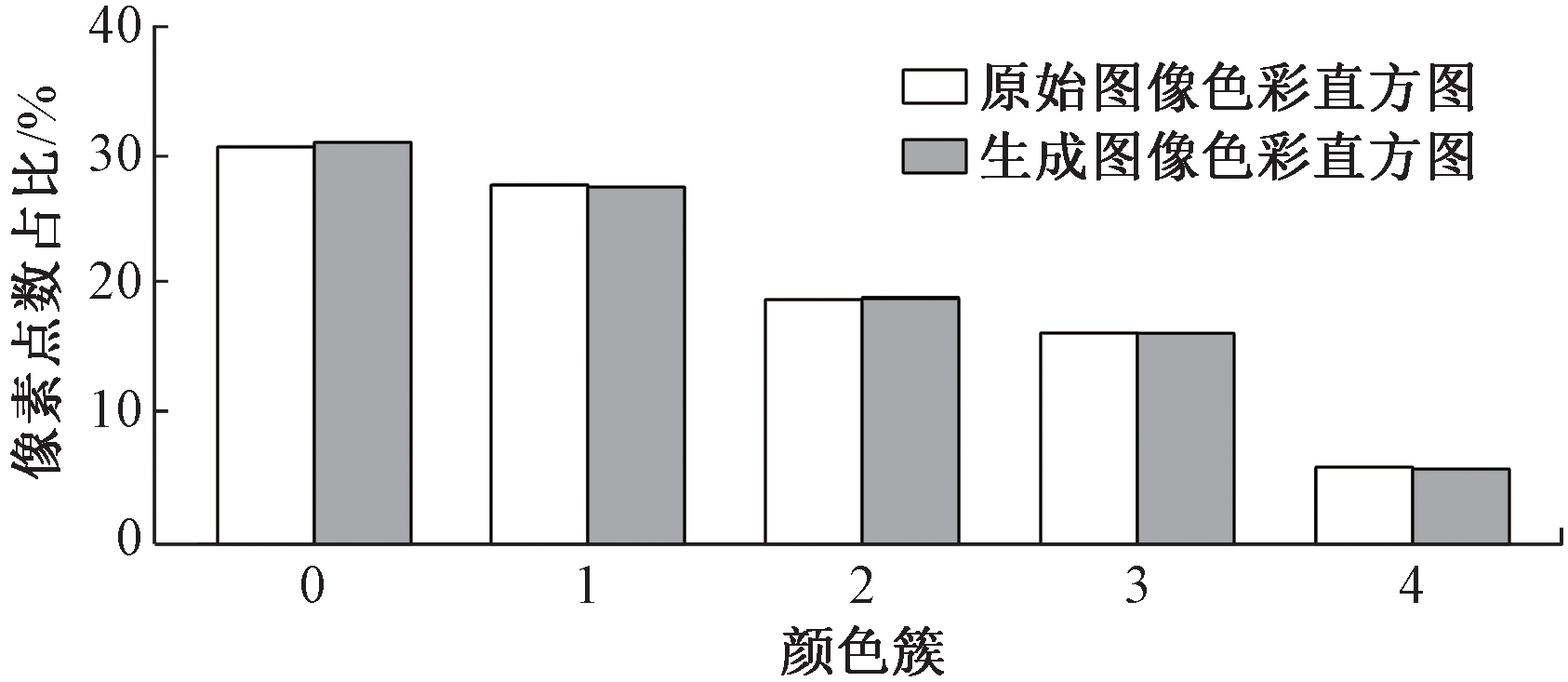
色彩迁移前后色彩直方图对比"

表2

不同方法的色彩迁移图像的评价指标"

方法 峰值信噪比 结构相似性指数
Gatys 27.857 0.739
AdaIN 27.811 0.857
CAMS 27.743 0.611
Neural Preset 28.295 0.894
CycleGAN 27.596 0.806
本文方法 29.714 0.911

表3

各模块对迁移实验贡献"

实验
编号
椒盐
噪声
边缘保持
损失
色彩感知
损失
峰值信
噪比
结构
相似性指数
a × × × 27.596 0.806
b × × 27.835 0.828
c × × 28.913 0.844
d × × 28.621 0.892
[1] 贺显伟. 色彩经济时代纺织品创新设计中的色彩策略[J]. 现代纺织技术, 2022, 30(2): 113-117.
doi: 10.19398/j.att.202106053
HE Xianwei. Color strategies in textile innovation design in the age of color economics[J]. Modern Textile Technology, 2022, 30(2): 113-117.
[2] WAN S H, XIA Y, QI L Y, et al. Automated colorization of a grayscale image with seed points propagation[J]. IEEE Transactions on Multimedia, 2020, 22(7): 1756-1768.
[3] GATYS L A, ECKER A S, BETHGE M. A neural algorithm of artistic style[C]// Proceedings of the 16th International Conference on Computer Vision. Venice: IEEE, 2016: 2295-2303.
[4] HUANG X, BELONGIE S. Arbitrary style transfer in real-time with adaptive instance normalization[C]// 2017 IEEE International Conference on Computer Vision. Venice: IEEE, 2017: 1510-1519.
[5] AFIFI M, ABUOLAIM A, HUSSIEIN M, et al. CAMS: Color-aware multi-style transfer[EB/OL]. (2021-06-23)[2023-11-08]. https://arxiv.org/abs/2106.13920.
[6] KE Z H, LIU Y H, ZHU L, et al. Neural preset for color style transfer[C]// 2023 IEEE/CVF Conference on Computer Vision and Pattern Recognition. Vancouver: IEEE, 2023: 14173-14182.
[7] ZHU J Y, PARK T, ISOLA P, et al. Unpaired image-to-image translation using cycle-consistent adversarial networks[C]// 2017 IEEE International Conference on Computer Vision. Venice: IEEE, 2017: 2242-2251.
[8] 徐明慧. 民族服饰色彩解析与纹样自动配色方法研究[D]. 杭州: 浙江理工大学, 2022: 90-99.
XU Minghui. Research on color analysis and automatic color matching of ethnic clothing patterns[D]. Hangzhou: Zhejiang Sci-Tech University, 2022: 90-99.
[9] 任艳博, 蒋超, 王教庆, 等. 基于聚类算法和色彩网络的蝴蝶色彩分析及应用[J]. 纺织学报, 2021, 42(5): 103-108.
REN Yanbo, JIANG Chao, WANG Jiaoqing, et al. Butterfly color analysis and application based on clustering algorithm and color network[J]. Journal of Textile Research, 2021, 42(5): 103-108.
[10] 庄冰冰, 向军, 张宁, 等. 便携式织物图像颜色测量系统开发[J]. 纺织学报, 2024, 45(10): 208-215.
doi: 10.13475/j.fzxb.20231105501
ZHUANG Bingbing, XIANG Jun, ZHANG Ning, et al. Development of a portable fabric image color measurement system[J]. Journal of Textile Research, 2024, 45(10): 208-215.
doi: 10.13475/j.fzxb.20231105501
[11] BALLESTER C, BUGEAU A, CARRILLO H, et al. Influence of color spaces for deep learning image colorization[EB/OL].(2022-04-06)[2024-06-20]. https://arxiv.org/abs/2204.02850.
[12] 邱笑迎. 基于颜色特征的面料花型图案检索算法[J]. 计算机时代, 2023(9): 92-95.
QIU Xiaoying. Fabric pattern retrieval algorithm based on color features[J]. Computer Era, 2023(9): 92-95.
[13] ZHU X, LIU J. Improving robustness of deep learning models with salt-and-pepper noise augmentation[C]// 2019 IEEE/CVF Conference on Computer Vision and Pattern Recognition. Long Beach: IEEE, 2019: 1234-1243.
[14] 王可铮, 徐玉芬, 周尚波. 结合对比感知损失和融合注意力的图像去雾模型[J]. 计算机工程, 2023, 49(8): 207-214.
doi: 10.19678/j.issn.1000-3428.0065255
WANG Kezheng, XU Yufen, ZHOU Shangbo. Image dehazing model combining contrast perception loss and fusion attention[J]. Computer Engineering, 2023, 49(8): 207-214.
doi: 10.19678/j.issn.1000-3428.0065255
[1] 蔡丽玲, 王梅, 邵一兵, 陈炜, 曹华卿, 季晓芬. 基于改进堆叠生成对抗网络的传统汉服智能定制推荐[J]. 纺织学报, 2024, 45(12): 180-188.
[2] 陆寅雯, 侯珏, 杨阳, 顾冰菲, 张宏伟, 刘正. 基于姿态嵌入机制和多尺度注意力的单张着装图像视频合成[J]. 纺织学报, 2024, 45(07): 165-172.
[3] 刘玉叶, 王萍. 基于纹理特征学习的高精度虚拟试穿智能算法[J]. 纺织学报, 2023, 44(05): 177-183.
[4] 贾静, 曹竟文, 徐平华, 林瑞冰, 孙晓婉. 基于京剧脸谱意象色彩的服饰纹样自动配色[J]. 纺织学报, 2022, 43(12): 160-166.
[5] 赵黎 杨连贺 黄新. 采用多蜂群协同演化算法的服装流行色预测[J]. 纺织学报, 2018, 39(03): 137-142.
[6] 彭来湖 吕江东 汝欣 史伟民 向忠. 提花圆纬机花型图案嵌入式显现系统[J]. 纺织学报, 2016, 37(08): 138-142.
[7] 常丽霞 高卫东 潘如如 刘建立. 灰色GM(1,1)模型在国际春夏女装流行色色相预测中的应用[J]. 纺织学报, 2015, 36(04): 128-133.
[8] 李建中;张 灏;杨培源. 服装流行色预测的调研要点[J]. 纺织学报, 2011, 32(1): 100-104.
[9] 常丽霞;高卫东;卢雨正;潘如如. 流行色春夏定案特征分析与探讨[J]. 纺织学报, 2010, 31(3): 98-103.
[10] 吴志明;李熠. 服装流行色的色彩意向灰色预测[J]. 纺织学报, 2009, 30(04): 94-100.
[11] 王承轩. 色织面料新品开发之途径[J]. 纺织学报, 2001, 22(05): 34-36.
[12] 刘卉;许端清;陈纯. 流行色的计算机辅助设计与分析[J]. 纺织学报, 2001, 22(03): 56-58.
[13] 刘卉;许端清;陈纯. 对计算机管理流行色的研究[J]. 纺织学报, 2001, 22(01): 51-53.
Viewed
Full text


Abstract

Cited

  Shared   
  Discussed   
No Suggested Reading articles found!