纺织学报 ›› 2025, Vol. 46 ›› Issue (07): 169-176.doi: 10.13475/j.fzxb.20240800901
丁亚茹1( ), 张豪杰1, 刘让同1, 王一帆1, 王晶晶2
DING Yaru1(), ZHANG Haojie1, LIU Rangtong1, WANG Yifan1, WANG Jingjing2
摘要:
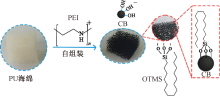
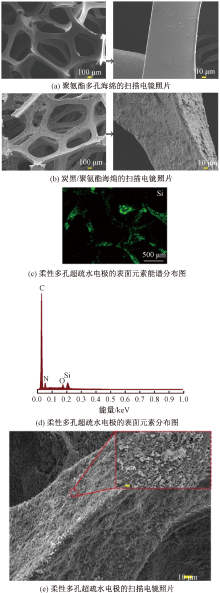
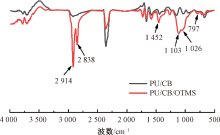
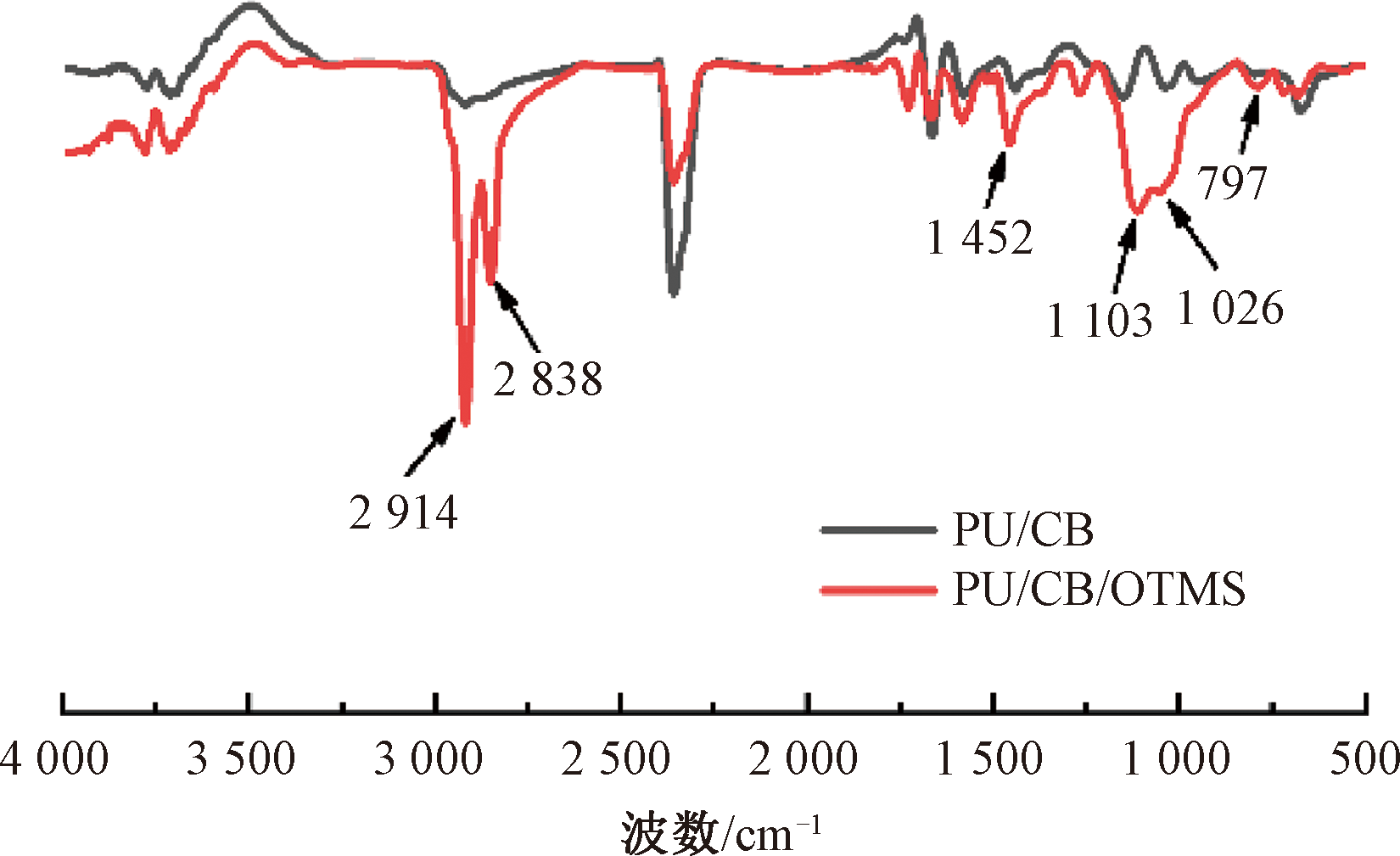
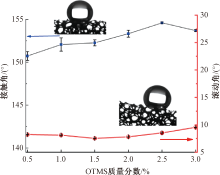
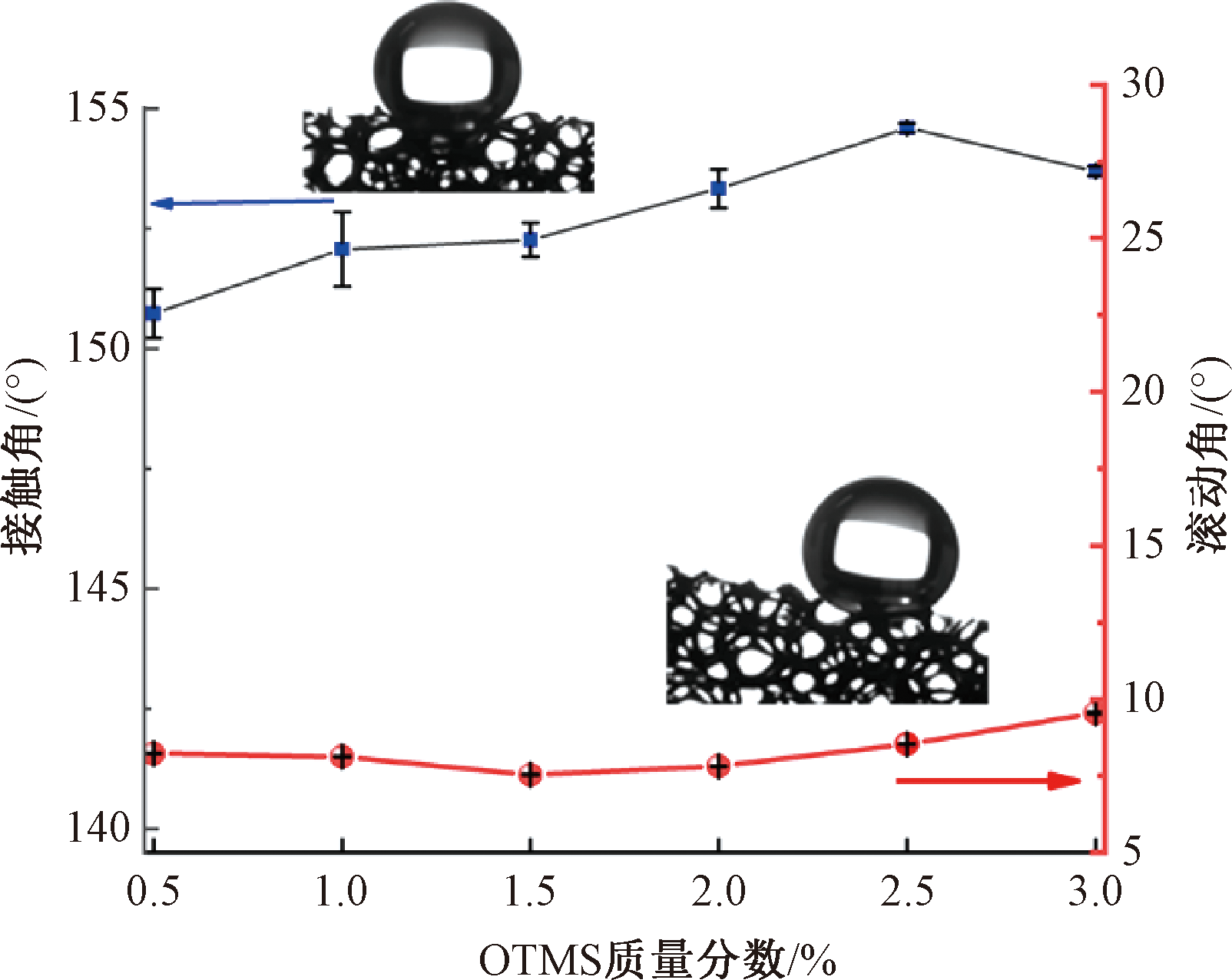
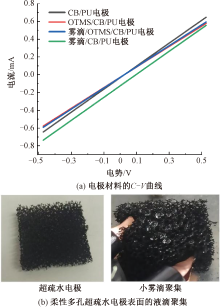
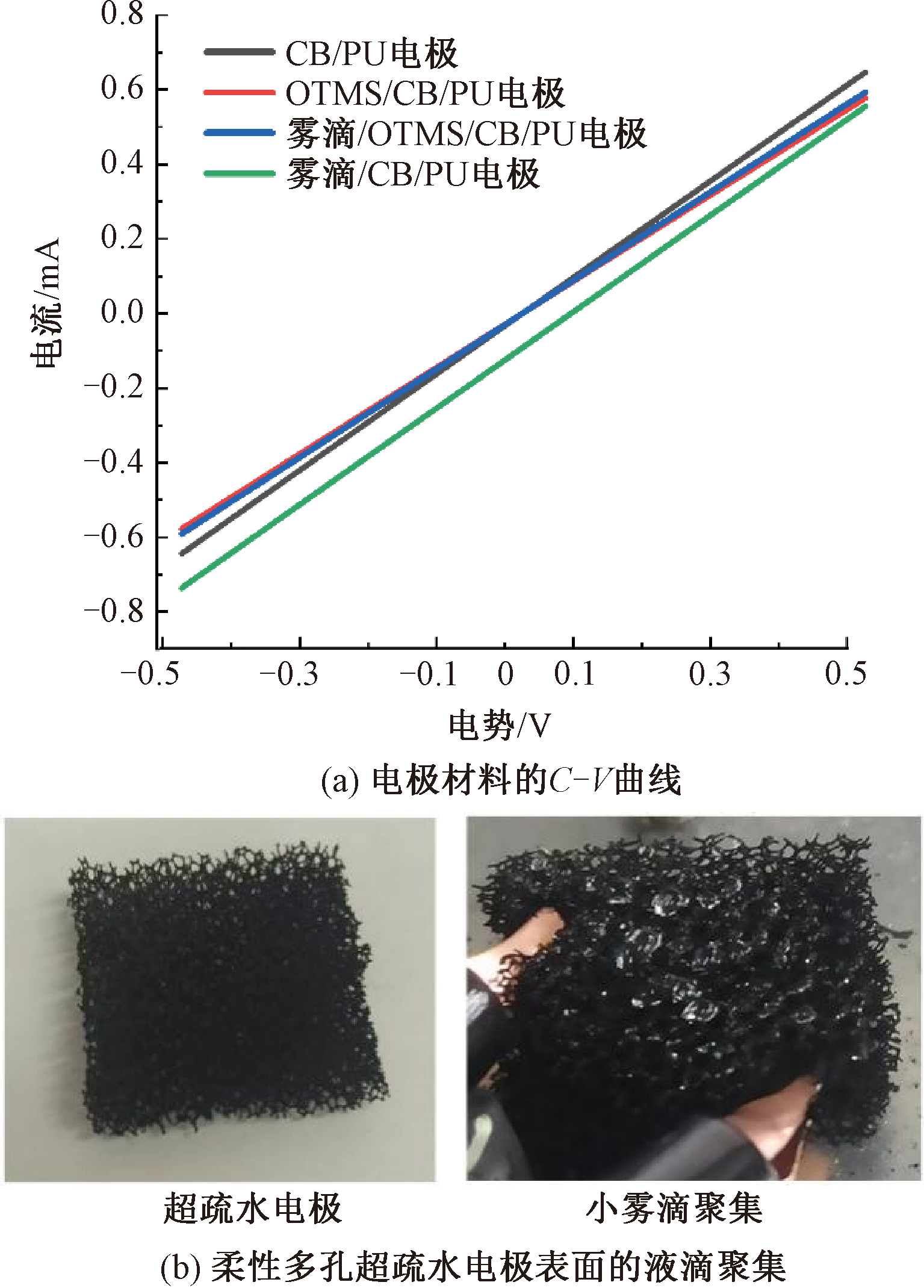
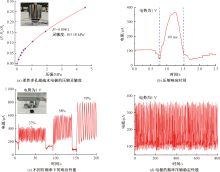
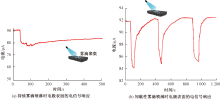
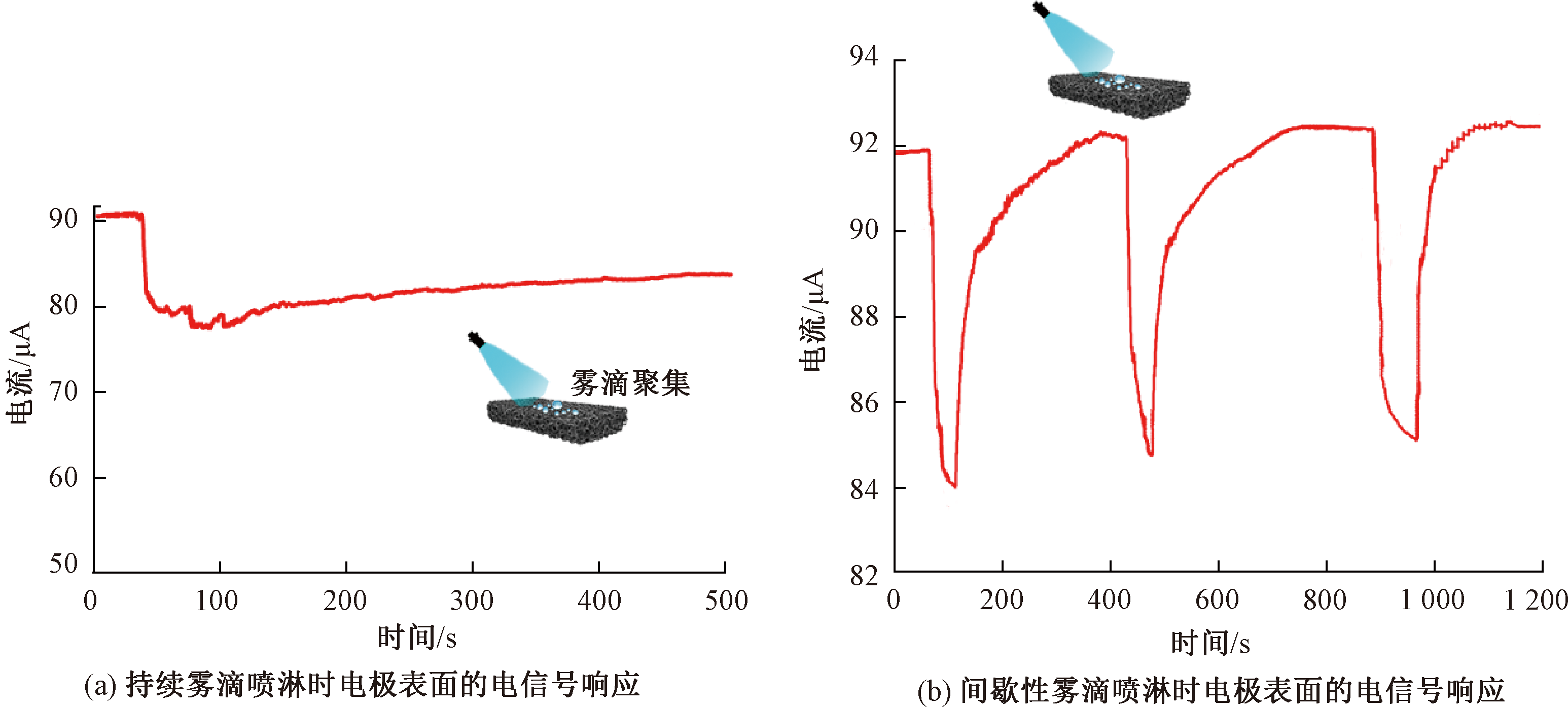
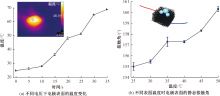
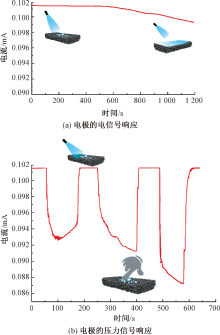
为抵御外环境中小液滴(雾)对多孔电极材料的浸润作用以及雾滴凝聚所产生的长期电信号干扰,采用涂层法在多孔聚氨酯海绵(PU)上构筑炭黑(CB)导电层,制备柔性多孔电极;再对柔性电极用十八烷基三甲氧基硅烷(OTMS)进行疏水化处理,制得柔性多孔超疏水电极,研究了电极的表面形态、浸润性能及表面温度对材料电响应性能的影响规律。结果表明:CB和OTMS能够均匀负载到PU海绵上制备柔性多孔超疏水电极;该电极表面的水接触角为152.5°,滚动角为6.2°,展现出良好的超疏水性能,且OTMS涂层对电极的电性能几乎不影响;电极作为压力传感器展现出较高的灵敏度、较快的响应时间及良好的响应稳定性;另外电加热能够增强OTMS涂层对雾滴凝聚的抵御能力;因此,在OTMS涂层、多孔结构与电热效应协同作用下,该电极在600 s内实现了精准的压力信号响应。柔性多孔导电材料作为压力响应器件,在高湿度的环境中,实现了持久的抗干扰能力,拓宽了其在可穿戴设备中的应用。
中图分类号:
| [1] | WEI Junjie, XIAO Peng, CHEN Tao. Water-resistant conductive gels toward underwater wearable sensing[J]. Advanced Materials, 2023. DOI:10.1002/adma.202370305. |
| [2] | NADA Bjelobrk, HENRI Louis Girard, SRINIVAS Bengaluru Subramanyam, et al. Thermocapillary motion on lubricant-impregnated surfaces[J]. Physical Review Fluids, 2016. DOI: 10.1103/PhysRevFluids.1.063902. |
| [3] |
SONG Dong, BHARAT Bhushan. Enhancement of water collection and transport in bioinspired triangular patterns from combined fog and condensation[J]. Journal of Colloid and Interface Science, 2019, 557: 528-536.
doi: S0021-9797(19)31111-7 pmid: 31546118 |
| [4] | HOU Lanlan, QIU Mengna, WANG Yaqiong, et al. Bioinspired double-stranded yarn with alternating hydrophobic/hydrophilic patterns for high-efficiency fog collection[J]. Chinese Journal of Polymer Science, 2024, 42, 968-975. |
| [5] | DONG Shaojun, WANG Yang, PEI Ying, et al. Water collecting carbon nanotube yarn with biomimetic composition and structure[J]. Composites Communications, 2021. DOI: 10.1016/j.coco.2021.100960. |
| [6] |
YE Lijun, GUAN Jipeng, LI Zhixiang, et al. Fabrication of superhydrophobic surfaces with sontrollable electrical conductivity and water adhesion[J]. Langmuir, 2017, 33(6): 1368-1374.
doi: 10.1021/acs.langmuir.6b03848 pmid: 28052672 |
| [7] |
PENG Chaoyi, CHEN Zhuyang, TIWARI Manish K. All-organic superhydrophobic coatings with mechanochemical robustness and liquid impalement resistance[J]. Nature Materials, 2018, 17 (4): 355-360.
doi: 10.1038/s41563-018-0044-2 pmid: 29581573 |
| [8] | BISWAS, JANA Aritra, NIKHIL R. Cotton modified with silica nanoparticles, N,F codoped TiO2 nanoparticles, and octadecyltrimethoxysilane for textiles with self-cleaning and visible light-based cleaning properties[J]. ACS Applied Nano Materials, 2020, 4 (1): 877-885. |
| [9] | 戈亚南, 刘慧丽, 陈华艳, 等. 十八烷基硅烷疏水改性PVDF膜的制备及膜蒸馏抗润湿性能[J]. 山东化工, 2023, 52 (13): 5-9. |
| GE Yanan, LIU Huili, CHEN Huayan, et al. Octadecyl-silane hydrophobic modified PVDF membrane and membrane distillation anti-wetting properties[J]. Shandong Chemical Industry, 2023, 52 (13): 5-9. | |
| [10] | 朱志文, 徐国华, 安越, 等. 辛基三乙氧基硅烷/十八烷基三氯硅烷均相混合自组装单分子膜的表征及其形成机制[J]. 物理化学学报, 2014, 30 (8): 1509-1517. |
| ZHU Zhiwen, XU Guohua, AN Yue, et al. Characterization of a homogeneously mixed octyltriethoxyilane/octadecyltrichlorosilane self-assembled monolayer and analysis of its formation mechanism[J]. Acta Physico-Chimica Sinica, 2014, 30(8): 1509-1517. | |
| [11] | SHA Di, ZHENG Run, SHI Kai, et al. Macroporous polyvinyl alcohol-formaldehyde-silicon composite sponges with designed structure for high-efficiency water-in-oil emulsion separation[J]. Journal of Environmental Chemical Engineering, 2024. DOI:10.1016/j.jece.2023.111738. |
| [12] | KIM Jisun, KIM Sunghwa, LEE Hajin, et al. An easy preparation of carbon nanoparticle-coated hydrophobic substrates for highly efficient oil/water separation[J]. Colloids and Surfaces A: Physicochemical and Engineering Aspects, 2024. DOI: 10.1016/j.colsurfa.2024.133532. |
| [13] | XIANG Yaolei, HUANG Shenglin, HUANG Tianyun, et al. Superrepellency of underwater hierarchical structures on salvinia leaf[J]. Proceedings of the National Academy of Sciences, 2020, 5, 117: 2282-2287. |
| [14] |
LI Xiaolong, HAO Junnan, LIU Rong, et al. Interfacing MXene flakes on fiber fabric as an ultrafast electron transport layer for high performance textile electrodes[J]. Energy Storage Materials, 2020, 33: 62-70.
doi: 10.1016/j.ensm.2020.05.004 |
| [15] | LONG Yifei, YIN Xingxing, MU Peng, et al. Slippery liquid-infused porous surface (SLIPS) with superior liquid repellency, anti-corrosion, anti-icing and intensified durability for protecting substrates[J], Chemical Engineering Journal, 2020. DOI: 10.1016/j.cej.2020.126137. |
| [16] |
WANG Ling, CHEN Yang, LIN Liwei, et al. Highly stretchable, anti-corrosive and wearable strain sensors based on the PDMS/CNTs decorated elastomer nanofiber composite[J], Chemical Engineering Journal, 2019, 362: 89-98.
doi: 10.1016/j.cej.2019.01.014 |
| [17] | 朱志文. 不锈钢/硅表面烷基三氯硅烷自组装单分子膜测制备及表征[D]. 浙江: 浙江大学, 2014: 20-38. |
| ZHU Zhiwen. Preparation and characterization of alkyltrichlorosilane SAMs on stainless steel/silica surface[D]. Zhejiang: Zhejiang University, 2014:20-38. | |
| [18] | 冯军勇. 辛烷基三乙氧基硅烷/十八烷基三氯硅烷混合自组装单分子膜的制备[D]. 浙江: 浙江大学, 2007: 15-28. |
| FENG Junyong. Preparation of the mixed octyltrieyhoxysilane and octadecyltrichlorosilane self-assembled monolayers[D]. Zhejiang: Zhejiang University, 2007:15-28. | |
| [19] | XU Ruixin, ZHANG Kaili, XU Xiangyang, et al. Superhydrophobic WS2-nanosheet-wrapped sponges for underwater detection of tiny vibration[J]. Advanced Science, 2018. DOI:10.1002/advs.201700655. |
| [20] | SHI Yunfen, ZHONG Yinyan, SUN Zhong, et al. One-step foam assisted synthesis of robust superhydrophobic lignin-based magnetic foams for highly efficient oil-water separation and rapid solar-driven heavy oil removal[J]. Journal of Water Process Engineering, 2022. DOI: 10.1016/j.jwpe.2022.102643. |
| [1] | 袁华彬, 王沂沨, 王家朋, 向永翾, 陈国强, 邢铁玲. 基于山嵛酸和ZIF-8改性的超疏水防结冰棉织物[J]. 纺织学报, 2025, 46(02): 197-206. |
| [2] | 旋湘桃, 张辉, 车秋凌, 魏乾阳, 张劲峰, 王毅. 自清洁织物的研究进展[J]. 纺织学报, 2025, 46(01): 227-237. |
| [3] | 王心雨, 郭明明, 张乐乐, 郑伟杰, AMJAD Farooq, 王宗乾. 耐久性抗菌超疏水棉织物的制备及其性能[J]. 纺织学报, 2024, 45(11): 170-177. |
| [4] | 张应秀, 徐丽慧, 潘虹, 姚程健, 赵红, 窦梅冉, 沈勇, 赵诗怡. 基于甘蔗渣多孔碳的超疏水棉织物制备及其性能[J]. 纺织学报, 2024, 45(10): 161-169. |
| [5] | 李成才, 朱登辉, 朱海霖, 郭玉海. 聚四氟乙烯膜的超疏水改性及应用研究进展[J]. 纺织学报, 2024, 45(08): 65-71. |
| [6] | 邵明军, 蹇玉兰, 唐唯, 柴希娟, 万辉, 解林坤. 涤纶织物表面耐久超疏水涂层制备及其水油分离性能[J]. 纺织学报, 2024, 45(04): 142-150. |
| [7] | 王露砚, 张彩宁, 赵倩倩, 马志豪, 王煦漫. 紫外光/氨气双重响应超疏水棉织物的制备及其性能[J]. 纺织学报, 2023, 44(11): 160-166. |
| [8] | 柳敦雷, 陆佳颖, 薛甜甜, 樊玮, 刘天西. 超疏水隔热聚酯纳米纤维/二氧化硅气凝胶复合膜的制备及其性能[J]. 纺织学报, 2023, 44(07): 18-25. |
| [9] | 赵伦玉, 隋晓锋, 毛志平, 李卫东, 冯雪凌. 气凝胶材料在纺织品上的应用研究进展[J]. 纺织学报, 2022, 43(12): 181-189. |
| [10] | 乔路阳, 吕巧莉, 胡乾恒, 王成龙, 郑今欢. 改性羰基铁粉制备及其在蓝光固化磁控超疏水薄膜中的应用[J]. 纺织学报, 2022, 43(12): 88-95. |
| [11] | 方寅春, 陈吕鑫, 李俊伟. 阻燃超疏水涤/棉混纺织物的制备及其性能[J]. 纺织学报, 2022, 43(11): 113-118. |
| [12] | 高强, 范浩军, 颜俊, 陈玉国, 郑萍. 三维超疏水超细纤维绒面革的仿生构建[J]. 纺织学报, 2022, 43(10): 126-132. |
| [13] | 谢爱玲, 乐昱含, 艾馨, 王亚辉, 王义容, 陈新彭, 陈国强, 邢铁玲. 茶多酚改性超疏水涤纶织物制备及其在油水分离中的应用[J]. 纺织学报, 2022, 43(02): 162-170. |
| [14] | 许仕林, 杨世玉, 张亚茹, 胡柳, 胡毅. 热塑性聚氨酯/特氟龙无定形氟聚物超疏水纳米纤维膜制备及其性能[J]. 纺织学报, 2021, 42(12): 42-42. |
| [15] | 李维斌, 张程, 刘军. 超疏水棉织物制备及其在油水过滤分离中应用[J]. 纺织学报, 2021, 42(08): 109-114. |
|
||
 京公网安备11010502044800号