纺织学报 ›› 2026, Vol. 47 ›› Issue (03): 272-280.doi: 10.13475/j.fzxb.20250903301
刘月刚1, 孟婥2( ), 张俊玲1, 徐利云3, 蔡高委2
LIU Yuegang1, MENG Zhuo2(), ZHANG Junling1, XU Liyun3, CAI Gaowei2
摘要:
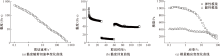
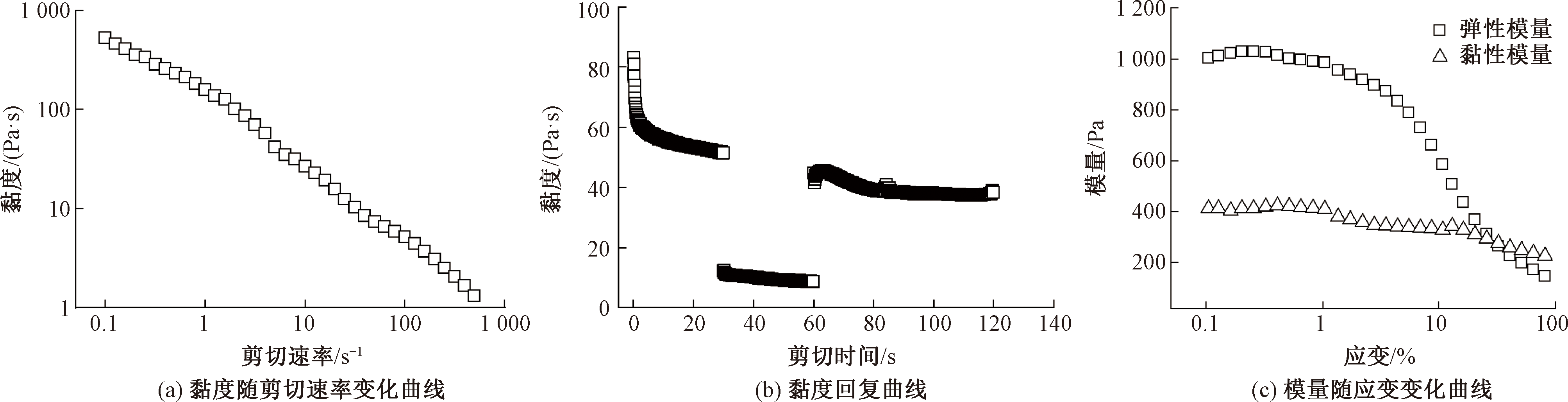
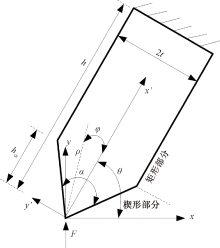
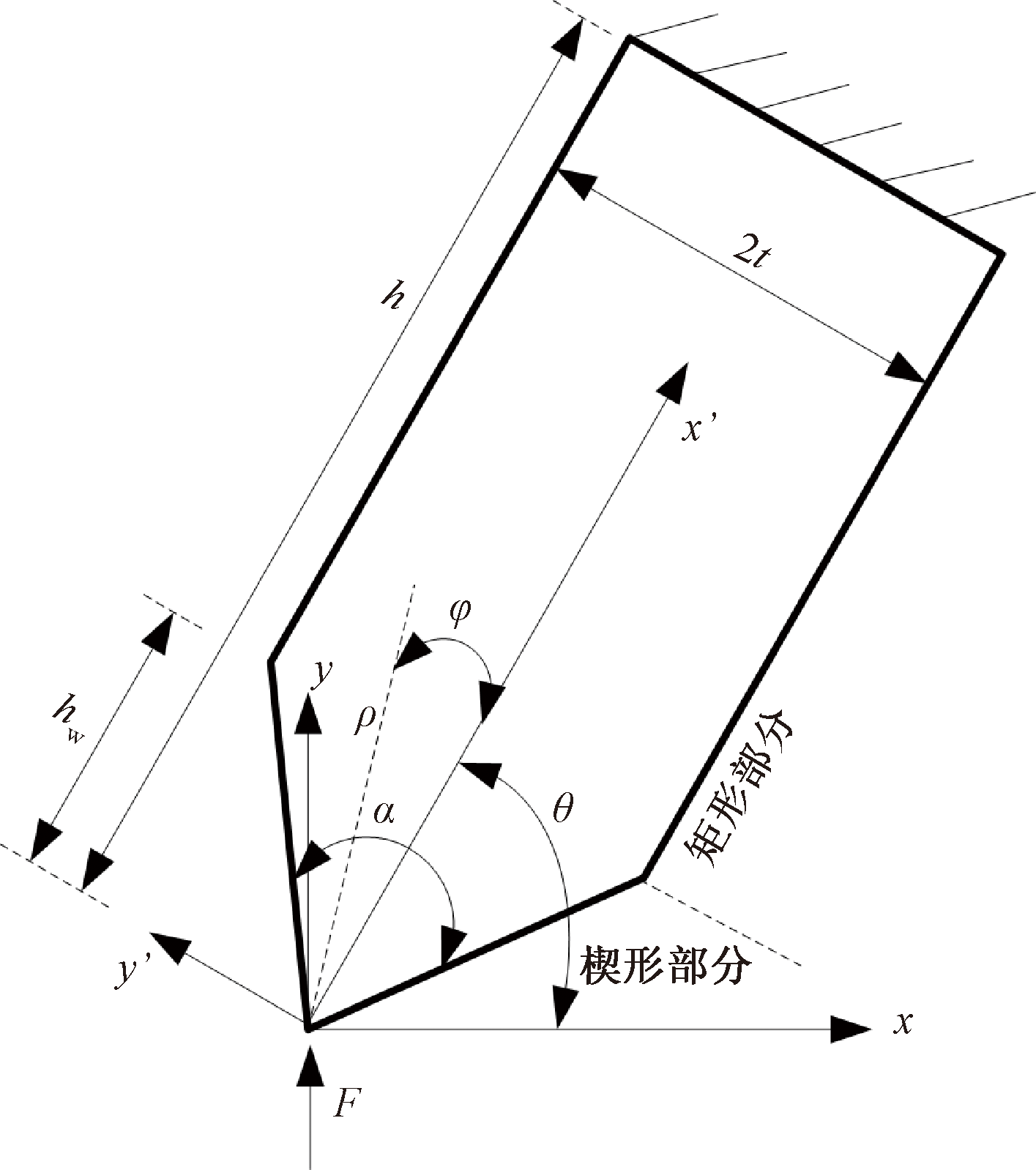
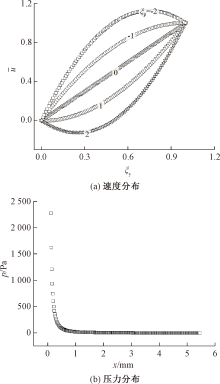
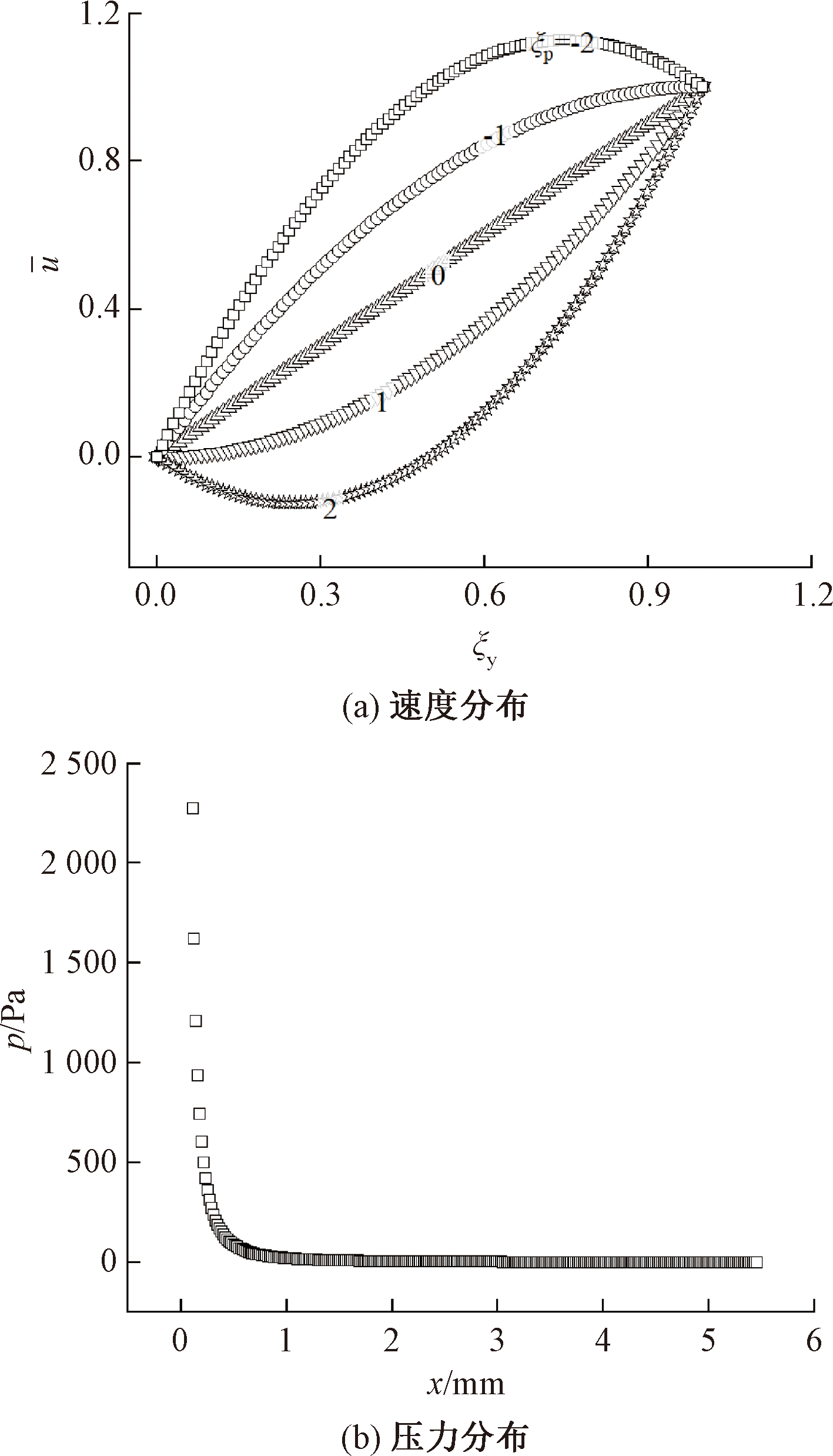
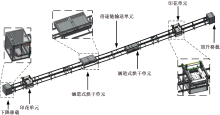
针对经编运动鞋面人工印花技能要求高、劳动强度大、产品品质难保证的问题,提出印花流场动力学建模方法,并开发自动印花装备。首先,测试印花浆料的稳态剪切性能、动态振荡性能和瞬态触变性能,揭示其非牛顿流体的流变学特性与印花工艺的关系,基于弹性力学理论提出求解楔形变截面刮刀形态变化的解析方法,得到印花流场精准的变形边界;其次,结合润滑理论构建考虑浆料流变性和刮刀变形特性的楔形印花流场动力学模型,分析流场速度分布和动压分布特征,阐明流场随工艺参数的变化规律;最后,设计印花力精准可控、印花角度可调的印花机构,实现印花力、角度和速度的解耦控制,并开发轻薄柔性承印板和完全定位机构,实现叠印、套印精准定位。结果表明:基于理论建模与关键机构设计,开发的承印板移动、工作机台固定的倍速链式经编鞋面印花机,可实现经编运动鞋面的高质量自动印花,为相关产业升级提供了可靠的技术与装备支撑。
中图分类号:
| [1] |
KUMARI S, MANSHAHIA M. Advancements in smart textiles and ergonomic innovations for athletic footwear: enhancing comfort, performance, and customization[J]. Journal of the Institution of Engineers (India): Series E, 2025, 106(2): 317-324.
doi: 10.1007/s40034-025-00306-5 |
| [2] | 凌子超. 再生涤纶经编鞋用间隔织物设计与开发[J]. 针织工业, 2025(6): 12-15. |
| LING Zichao. Design and development of recycled polyester warp knitted spacer fabric for shoe uppers[J]. Knitting Industries, 2025(6): 12-15. | |
| [3] |
沈瑞超, 郗欣甫, 孙以泽. 三维增材鞋面印花机对位平台的冗余驱动控制策略[J]. 纺织学报, 2020, 41(10): 164-169.
doi: 10.13475/j.fzxb.20191104106 |
|
SHEN Ruichao, XI Xinfu, SUN Yize. Redundant actuation control strategy of positioning platform for 3-D additive printing machine[J]. Journal of Textile Research, 2020, 41(10): 164-169.
doi: 10.13475/j.fzxb.20191104106 |
|
| [4] |
王晓晖, 刘月刚, 孟婥, 等. 基于遗传算法和神经网络的3D增材印花工艺参数优化[J]. 纺织学报, 2019, 40(11): 168-174.
doi: 10.13475/j.fzxb.20180604807 |
|
WANG Xiaohui, LIU Yuegang, MENG Zhuo, et al. Optimization of process parameters for 3D additive screen printing based on genetic algorithm and neural network[J]. Journal of Textile Research, 2019, 40(11): 168-174.
doi: 10.13475/j.fzxb.20180604807 |
|
| [5] |
LIU Y G, MENG Z, WANG Y C, et al. Analysis and modeling of viscosity for aqueous polyurethane dispersion as a function of shear rate, temperature, and solid content[J]. ACS Omega, 2020, 5(40): 26237-26244.
doi: 10.1021/acsomega.0c03959 pmid: 33073150 |
| [6] |
MENG Z, LIU Y G, JI C C, et al. Rheological experiment and fractional derivative model for aqueous polyurethane dispersion[J]. Journal of Applied Polymer Science, 2022, 139(22): 52259.
doi: 10.1002/app.v139.22 |
| [7] | RIEMER D E. The theoretical fundamentals of the screen printing process[J]. Hybrid Circuits, 1989, 6(1): 8-17. |
| [8] | HUNTER B. A Stokes flow analysis of the screen printing process[J]. International Journal of Microcircuits and Electronic Packaging, 1994, 17: 21-26. |
| [9] |
LIU Y G, MENG Z, JI C C, et al. Mathematical modelling of flow field in 3-dimensional additive printing[J]. International Journal of Mechanical Sciences, 2022, 224: 107326.
doi: 10.1016/j.ijmecsci.2022.107326 |
| [10] | DURAIRAJ R, JACKSON G J, EKERE N N, et al. Correlation of solder paste rheology with computational simulations of the stencil printing process[J]. Soldering & Surface Mount Technology, 2002, 14(1): 11-17. |
| [11] | 李培波. 空间太阳电池阵自动贴装工艺机理及系统研究[D]. 上海: 上海交通大学, 2013: 19-26. |
| LI Peibo. Analysis of auto-mounting process mechanism and system for space solar cell arrays[D]. Shanghai: Shanghai Jiao Tong University, 2013: 19-26. | |
| [12] |
STICKEL J J, POWELL R L. Fluid mechanics and rheology of dense suspensions[J]. Annual Review of Fluid Mechanics, 2005, 37: 129-149.
doi: 10.1146/fluid.2005.37.issue-1 |
| [13] |
ASIF A, HUANG C Y, SHI W F. Structure-property study of waterborne, polyurethane acrylate dispersions based on hyperbranched aliphatic polyester for UV-curable coatings[J]. Colloid and Polymer Science, 2004, 283(2): 200-208.
doi: 10.1007/s00396-004-1123-2 |
| [14] | 王莉莉, 陆大年. 天然印花糊料流变性能的研究[J]. 印染助剂, 2014, 31(4): 19-23. |
| WANG Lili, LU Danian. Study on the rheological properties of natural printing pastes[J]. Textile Auxiliaries, 2014, 31(4): 19-23. | |
| [15] |
IKEDA S, NISHINARI K. ″Weak gel″-type rheological properties of aqueous dispersions of nonaggregated κ-carrageenan helices[J]. Journal of Agricultural and Food Chemistry, 2001, 49(9): 4436-4441.
doi: 10.1021/jf0103065 |
| [16] |
NAJI-TABASI S, ALI RAZAVI S M. New studies on basil (Ocimum bacilicum L.) seed gum: part III: steady and dynamic shear rheology[J]. Food Hydrocolloids, 2017, 67: 243-250.
doi: 10.1016/j.foodhyd.2015.12.020 |
| [17] |
ROHM H, KOVAC A. Effects of starter cultures on linear viscoelastic and physical properties of yogurt gels[J]. Journal of Texture Studies, 1994, 25(3): 311-329.
doi: 10.1111/jts.1994.25.issue-3 |
| [18] | SIMON V V. Improved mixed elastohydrodynamic lubrication of hypoid gears by the optimization of manufacture parameters[J]. Wear, 2019, 438: 102722. |
| [19] |
CHIEN S Y, CRAMER M S. Pressure, temperature, and heat flux in high speed lubrication flows of pressurized gases[J]. Tribology International, 2019, 129: 468-475.
doi: 10.1016/j.triboint.2018.08.030 |
| [20] | KIANI SHAHVANDI M. Applications of numerical in-tegration in geodesy and geophysics[J]. Acta Geophys-ica, 2021, 69(1): 29-45. |
| [21] |
SEE Y S, LEONG K C. Entropy generation for flow boiling on a single semi-circular minichannel[J]. International Journal of Heat and Mass Transfer, 2020, 154: 119689.
doi: 10.1016/j.ijheatmasstransfer.2020.119689 |
| [22] | 刘玉国. 基于机器视觉的精密对准系统研究[D]. 上海: 上海大学, 2007: 7-11. |
| LIU Yuguo. Research on machine vision-based precision alignment systems[D]. Shanghai: Shanghai University, 2007: 7-11. |
| [1] | 邓钢, 张涛, 吴超平, 王军, 张磊. 异形二醋酯纤维干法纺丝成形过程模拟及其截面分析[J]. 纺织学报, 2024, 45(09): 42-49. |
| [2] | 黄晨静, 张蕾, 孙逊, 王晓华. 基于动力学模型的面料抓取机械臂轨迹跟踪控制方法[J]. 纺织学报, 2023, 44(06): 207-214. |
| [3] | 钱成, 刘燕卿, 刘新金, 谢春萍, 苏旭中. 四罗拉集聚纺纱系统纤维运动数值模拟与分析[J]. 纺织学报, 2020, 41(03): 39-44. |
| [4] | 陈咏, 王颖, 何峰, 王静, 朱志国, 董振峰, 王锐. 共聚型磷系阻燃聚酯聚合反应动力学及其性能[J]. 纺织学报, 2019, 40(10): 13-19. |
| [5] | 刘念 夏风林 张琦 蒋高明 殷明跃 秦文. 经编机梳栉横移机构的动力学分析[J]. 纺织学报, 2012, 33(11): 121-126. |
| [6] | 汪燕;邹专勇;华志宏;竺韵德;程隆棣 . 网格圈型集聚纺集聚区纤维运动轨迹模拟分析[J]. 纺织学报, 2009, 30(10): 48-52. |
| [7] | 刘晓洪;曾军河;易长海;陈明珍. 聚酯纤维光接枝丙烯酸聚合反应动力学研究[J]. 纺织学报, 2008, 29(1): 1-4. |
| [8] | 罗正鸿;詹晓力;陈丰秋;阳永荣. 本体共聚合成氨基硅油的反应动力学模型[J]. 纺织学报, 2002, 23(04): 28-30. |
|
||
 京公网安备11010502044800号