纺织学报 ›› 2026, Vol. 47 ›› Issue (06): 122-130.doi: 10.13475/j.fzxb.20260100701
邓富坤1, 陈智杰2( ), 银倩琳3, 陈宇4, 温蕾4, 戚栋明1,5
DENG Fukun1, CHEN Zhijie2(), YIN Qianlin3, CHEN Yu4, WEN Lei4, QI Dongming1,5
摘要:
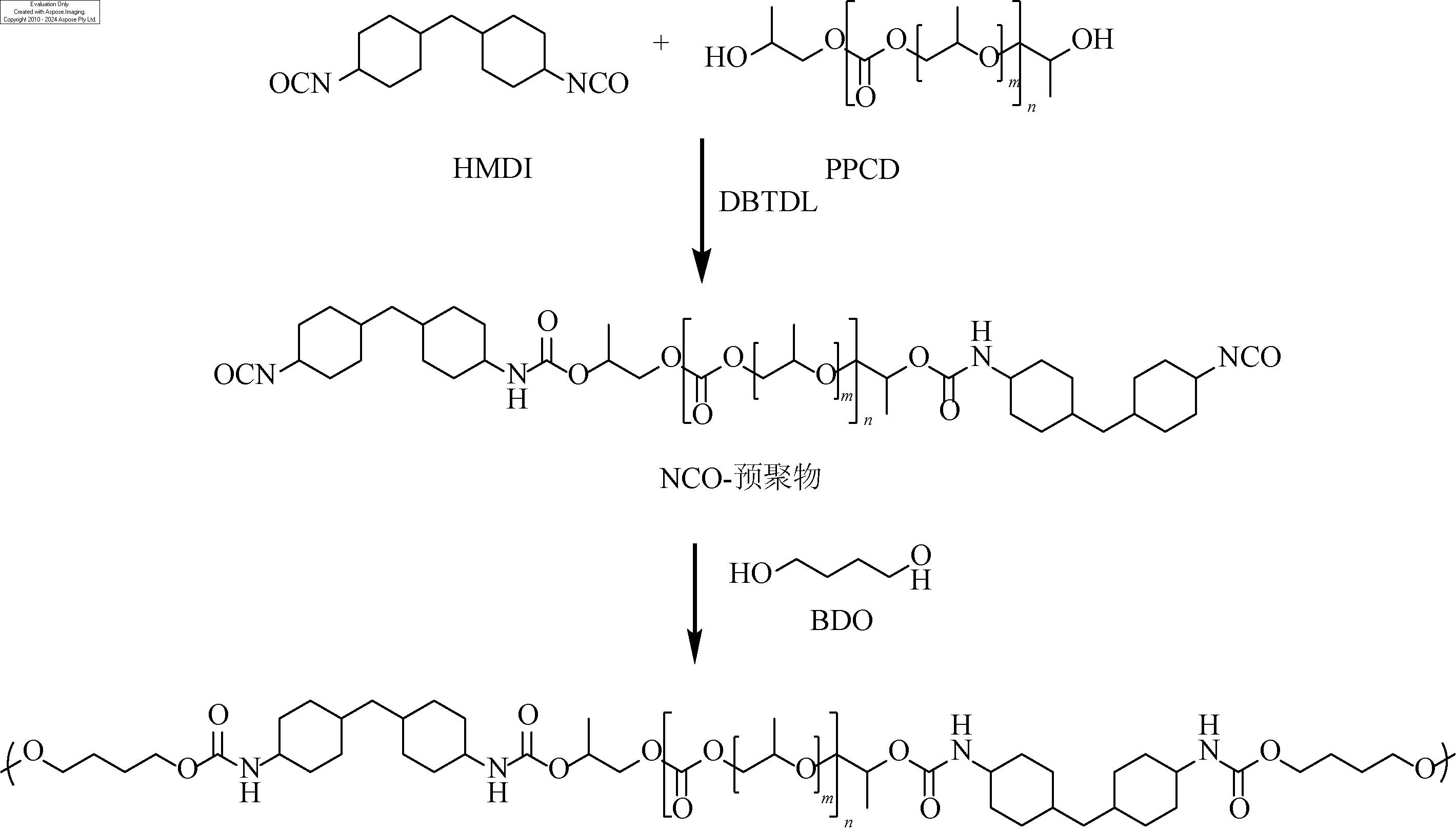
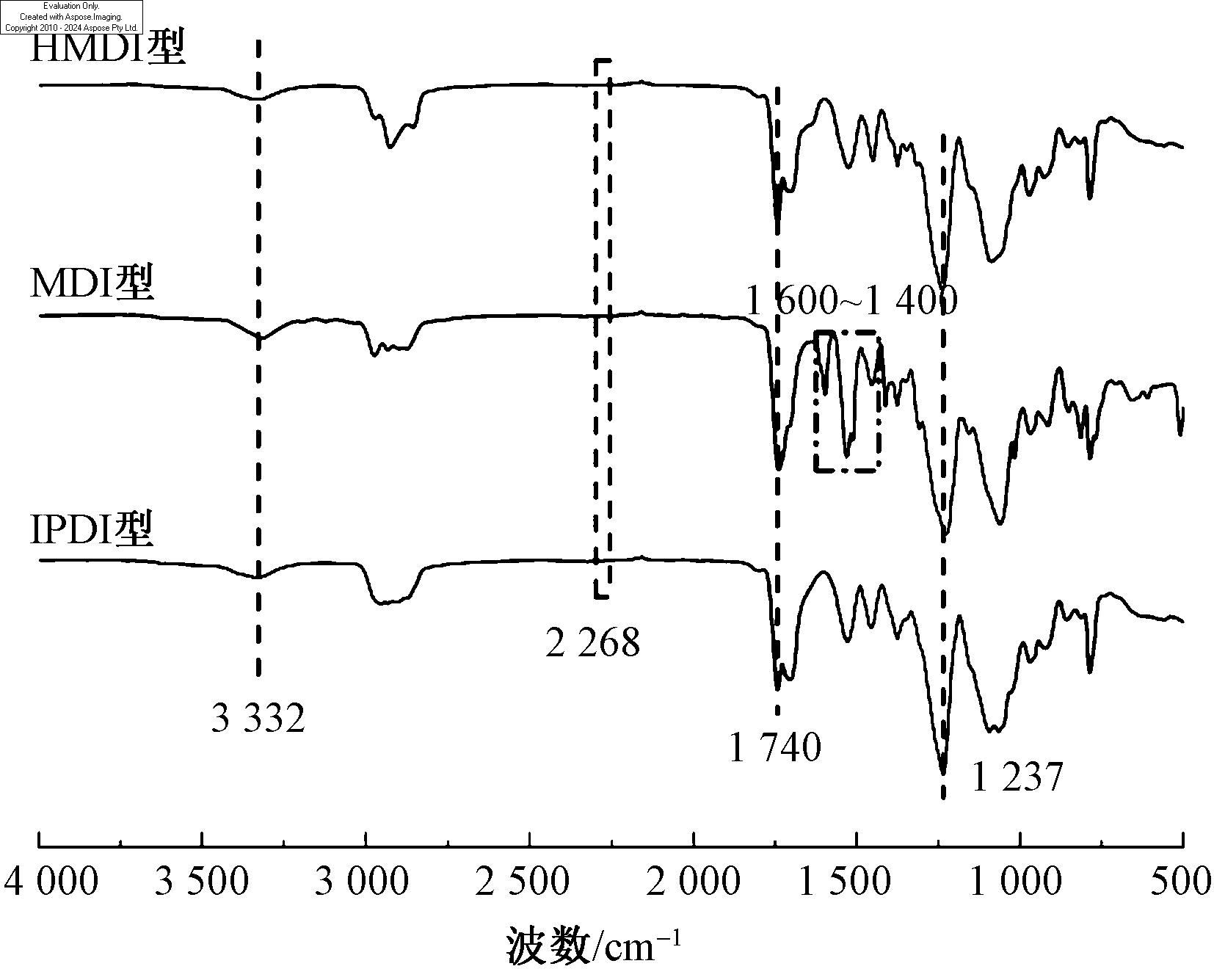
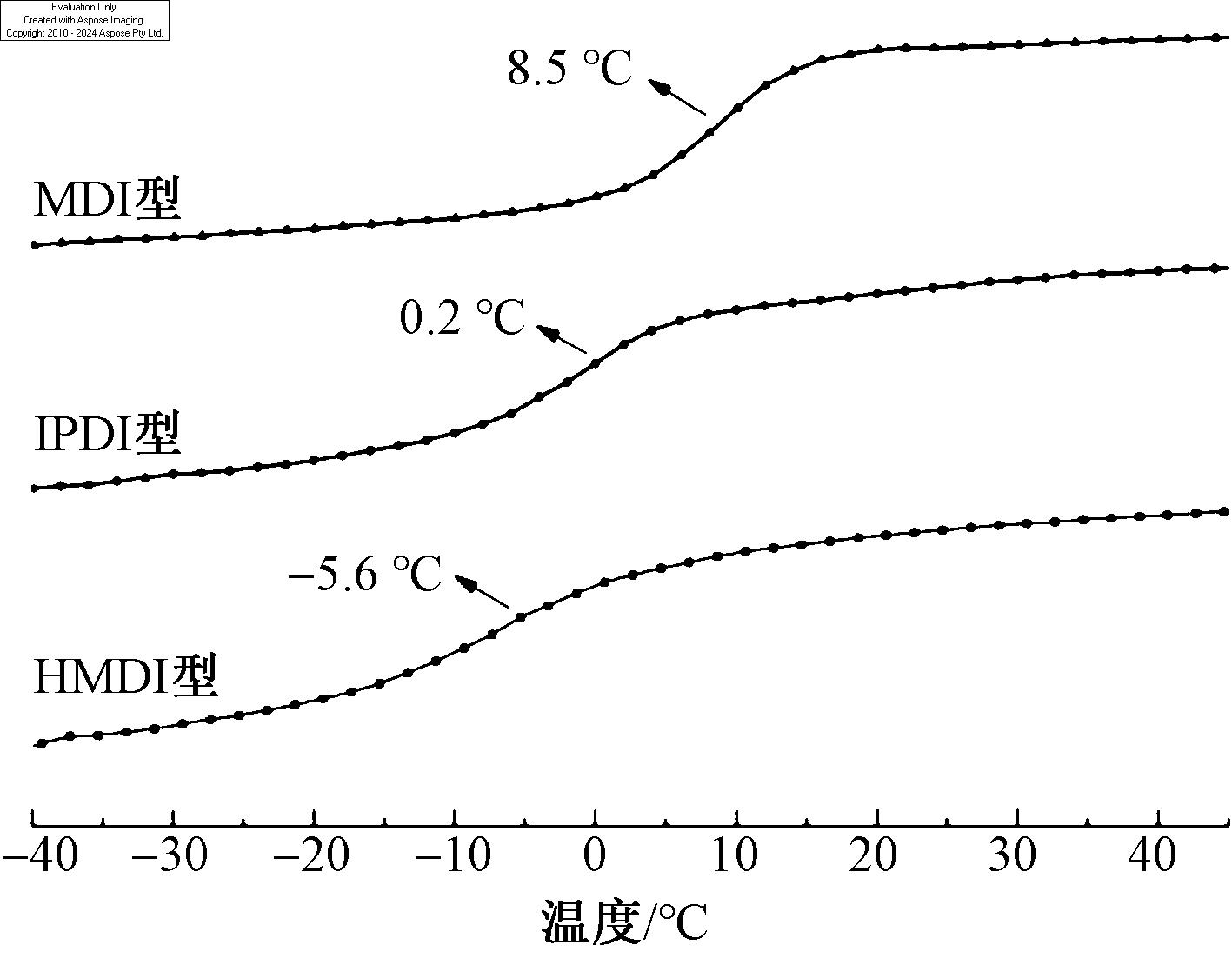
为解决传统石油基热塑性聚氨酯热熔胶(TPU)存在的不可再生问题,以聚碳酸亚丙酯二醇(PPCD)为软段,分别采用异佛尔酮二异氰酸酯(IPDI)、二苯基甲烷二异氰酸酯(MDI)和二环己基甲烷二异氰酸酯(HMDI)为硬段,合成了用于数码烫画工艺的CO2基TPU,并对其分子结构和应用性能进行表征。结果表明:HMDI型TPU结构中存在适度的微相分离,其玻璃化转变温度(-5.6 ℃)、断裂强度(15.557 MPa)、断裂伸长率(596.137%)、邵氏硬度(A 61)等指标测试均显示其兼具牢固的黏结力和适应织物形变的能力。对数码烫画应用后的织物性能测试表明,使用HMDI型TPU印花的织物耐干/湿摩擦色牢度均达到4~5级,同时相对硬挺度(126%)远低于MDI型(308%),在保证图案耐久性的同时,最大程度地保持了织物的柔软舒适性。
中图分类号:
| [1] | 胡建. 数码白墨和彩墨涂料烫画的技术发展[J]. 丝网印刷, 2020(11): 26-31. |
| HU Jian. Development of digital white ink/color ink paint pyrography technology[J]. Screen Printing, 2020(11): 26-31. | |
| [2] | 蔡丽云, 欧阳承辉, 黄泽洋, 等. 彩色乳胶粒的制备及其在涤纶/棉混纺织物印花中的应用[J]. 纺织学报, 2025, 46(10): 135-142. |
| CAI Liyun, OUYANG Chenghui, HUANG Zeyang, et al. Preparation of colored latex particles and their application in printing of polyester-cotton fabrics[J]. Journal of Textile Research, 2025, 46(10): 135-142. | |
| [3] | 李敏, 赵影, 张丽平, 等. 涤纶针织物数码印花清晰度的影响因素[J]. 纺织学报, 2018, 39(5): 62-66. |
| LI Min, ZHAO Ying, ZHANG Liping, et al. Factors influencing printing accuracy of digital printing for knitted polyester fabric[J]. Journal of Textile Research, 2018, 39(5): 62-66. | |
| [4] | 房文杰, 陶亚茹, 杨雪, 等. 皮革的白墨数码烫画印花工艺实践[J]. 中国皮革, 2023, 52(2): 129-134. |
| FANG Wenjie, TAO Yaru, YANG Xue, et al. White ink digital hot stamping printing of leather[J]. China Leather, 2023, 52(2): 129-134. | |
| [5] | 陈家辉, 梁跃耀, 陈妮, 等. 棉织物喷墨印花打印方式的调控及其应用[J]. 纺织学报, 2023, 44(7): 159-166. |
| CHEN Jiahui, LIANG Yueyao, CHEN Ni, et al. Research and application of ink jet printing on cotton fabrics[J]. Journal of Textile Research, 2023, 44(7): 159-166. | |
| [6] | ZHU J X, MOU W J, LI X Q, et al. TPU nanocomposites with good adhesive strength and water resistance for thermal sublimation transfer printing[J]. International Journal of Adhesion and Adhesives, 2025, 139: 103972. |
| [7] | WANG D B, LIU H Y, YANG A C, et al. Dual-coordination synergy in polyurethane hot-melt adhesives: integrating ultrahigh strength, self-healing, and extreme environmental tolerance[J]. ACS Applied Polymer Materials, 2025, 7(21): 14897-14907. |
| [8] | XI J, WANG N G, WEI L H. Design and preparation of a high mechanical strength recyclable polyurethane adhesive based on dynamic disulfide bonds[J]. Journal of Polymer Science, 2025, 63(7): 1739-1747. |
| [9] | ZIEGLER W, GUTTMANN P, KOPEINIG S, et al. Influence of different polyol segments on the crystallisation behavior of polyurethane elastomers measured with DSC and DMA experiments[J]. Polymer Testing, 2018, 71: 18-26. |
| [10] | LI S Y, LIU Z Y, HOU L J, et al. Effect of polyether/polyester polyol ratio on properties of waterborne two-component polyurethane coatings[J]. Progress in Organic Coatings, 2020, 141: 105545. |
| [11] | HUANG Z, GENG S M, CHEN Y Z, et al. Biobased comb polyurethane hot-melt adhesives consisting of dangling fatty acid chains and H-bonds for tailoring bonding strength[J]. European Polymer Journal, 2025, 229: 113880. |
| [12] | 肖宁宁, 陈智杰, 欧阳裕福, 等. 超细纤维合成革用阻燃水性聚氨酯的制备及其性能[J]. 纺织学报, 2024, 45(9): 113-120. |
| XIAO Ningning, CHEN Zhijie, OUYANG Yufu, et al. Preparation and characterization of waterborne flame retardant polyurethane for microfiber synthetic leather[J]. Journal of Textile Research, 2024, 45(9): 113-120. | |
| [13] | OMRANI I, KHOEINI M, BEHZADNASAB M. Hot-melt polyurethane adhesive using dynamic reversible phenol-carbamate bonds[J]. Reactive and Functional Polymers, 2025, 214: 106337. |
| [14] | CHEN Y Q, HUANG Z H, CHEN H J, et al. Synthesis and modification of waterborne polyurethane derived from hybrid CO2-based polyols[J]. Journal of Polymer Research, 2024, 31(10): 303. |
| [15] | 王瑞, 李梅. 一种篮球用的无溶剂双组分聚氨酯胶粘剂改性制备研究[J]. 粘接, 2025, 52(10): 9-12. |
| WANG Rui, LI Mei. Research on modification and preparation of a solvent-free two-component polyurethane adhesive for basketball[J]. Adhesion, 2025, 52(10): 9-12. | |
| [16] | NAHEED S, AFSHEEN S, ZUBER M, et al. Synthesis, characterization, and performance evaluation of highly reactive and sustainable hot-melt polyurethane adhesives derived from lignin-based polyols[J]. ACS Omega, 2025, 10(41): 47857-47866. |
| [17] | XU H R, WANG S L, LI W L, et al. Mechanism exploration of spider-silk-inspired multiple-hydrogen-bond polyurethane healable elastomers for anticorrosion[J]. Nano Letters, 2025, 25(26): 10513-10520. |
| [18] | WANG X Y, YUAN Z F, PAN X Y, et al. Eco-friendly polyurethane reactive hot-melt adhesive derived from poly(ε-caprolactone-co-lactic acid) diols[J]. ACS Applied Polymer Materials, 2023, 5(9): 7308-7317. |
| [19] | LEE P S, YANG W J, JUNG S M. Sustainable flexible polyurethane foams from marine-biodegradable PHA and PCL-based polyols: synthesis, characterization, and degradation[J]. Journal of Applied Polymer Science, 2026, 143(2): e57996. |
| [20] | WANG X, YIN D X, CHEN Z, et al. CO2-based polyurethane elastomers with enhanced mechanical and tunable room-temperature damping performances[J]. European Polymer Journal, 2024, 220: 113499. |
| [21] | WANG C Z, LI H L, HUANG Z H, et al. Novel CO2-based low-molecular weight poly (propylene carbonate) diol (PPCD) for two-component polyurethane adhesive[J]. Chemical Papers, 2023, 77(6): 3347-3359. |
| [22] | 袁洁, 谢正斌, 冼文琪, 等. PPCD型水性聚氨酯胶粘剂的制备及性能研究[J]. 中国胶粘剂, 2022, 31(3): 23-28. |
| YUAN Jie, XIE Zhengbin, XIAN Wenqi, et al. Preparation and properties of PPCD-based waterborne polyurethane adhesive[J]. China Adhesives, 2022, 31(3): 23-28. | |
| [23] | ZHU Y M, ZHOU C, LIU L, et al. Heat-resistant and high adhesion PPCD-type double crosslinked network structure waterborne polyurethane coatings[J]. Progress in Organic Coatings, 2024, 197: 108858. |
| [24] | LEE S H, SHIN S R, LEE D S. Sorbitol as a chain extender of polyurethane prepolymers to prepare self-healable and robust polyhydroxyurethane elastomers[J]. Molecules, 2018, 23(10): 2515-2528. |
| [25] | 李思远. 聚丁二酸丁二醇酯基聚酯型聚氨酯热塑性弹性体制备与性能研究[D]. 北京: 北京化工大学, 2020: 22-23. |
| LI Siyuan. Study on the preparation and properties of poly(butylene succinate)-based thermoplastic poly(ester-urethane)elastomers[D]. Beijing: Beijing University of Chemical Technology, 2020: 22-23. | |
| [26] | 冼文琪. 二氧化碳基多元醇(PPCD)及水性聚氨酯的合成与应用研究[D]. 广州: 广东工业大学, 2021: 34-52. |
| XIAN Wenqi. Synthesis and application of CO2 based polyols(PPCD) and waterborne polyurethane[D]. Guangzhou: Guangdong University of Technology, 2021: 34-52. | |
| [27] | 崔彬. 生物基聚氨酯的制备与性能研究[D]. 南昌: 江西科技师范大学, 2016: 53-58. |
| CUI Bin. Study on preparation and performance of bio-based polyurethanes[D]. Nanchang: Jiangxi Science and Technology Normal University, 2016: 53-58. | |
| [28] | BARSZCZEWSKA-RYBAREK I M. Characterization of urethane-dimethacrylate derivatives as alternative monomers for the restorative composite matrix[J]. Dental Materials, 2014, 30(12): 1336-1344. |
| [29] | SHI J X, LI X W, LI A X, et al. Polyurethane hot-melt adhesives for strong and tough adhesion[J]. European Polymer Journal, 2025, 228: 113814. |
| [30] | WONGSAMUT C, SUWANPREEDEE R, MANUSPIYA H. Thermoplastic polyurethane-based polycarbonate diol hot melt adhesives: the effect of hard-soft segment ratio on adhesion properties[J]. International Journal of Adhesion and Adhesives, 2020, 102: 102677. |
| [1] | 刘旭颖, 银倩琳, 王先成, 樊高晴, 戚栋明, 陈智杰. 二氧化碳基聚氨酯丙烯酸酯乳液制备及其胶膜性能[J]. 纺织学报, 2026, 47(01): 168-175. |
|
||
 京公网安备11010502044800号