纺织学报 ›› 2024, Vol. 45 ›› Issue (11): 99-105.doi: 10.13475/j.fzxb.20230601501

• 纺织工程 • 上一篇    下一篇

针织软凉席面料设计与性能评价

赵雅杰, 丛洪莲(), 孙江龙   

  1. 江南大学 针织技术教育部工程研究中心, 江苏 无锡 214122
  • 收稿日期:2023-06-09 修回日期:2023-08-29 出版日期:2024-11-15 发布日期:2024-12-30
  • 通讯作者: 丛洪莲(1976—),女,教授,博士。主要研究方向为针织生产的数字化与智能化、针织产品的创新设计与性能。E-mail:cong-wkrc@163.com
  • 作者简介:赵雅杰(1999—),女,硕士生。主要研究方向为针织产品设计与性能研究。

Design and performance evaluation of knitted soft mat fabric

ZHAO Yajie, CONG Honglian(), SUN Jianglong   

  1. Engineering Research Center for Knitting Technology, Ministry of Education, Jiangnan University, Wuxi, Jiangsu 214122, China
  • Received:2023-06-09 Revised:2023-08-29 Published:2024-11-15 Online:2024-12-30

摘要: 为缓解夏季炎热环境对人体睡眠舒适性的影响,解决传统凉席质感硬、吸湿透气性差,现有软凉席散热性差等的问题,从纱线的选取和组织结构2个方面入手,设计出手感较柔软,具有良好吸湿透气、透热凉爽性能的针织软凉席面料。选用单丝线密度为1.85 dtex的超高分子量聚乙烯纤维、1.62 dtex的锦纶、2.31 dtex的涤纶3种纱线分别与单丝线密度为0.24 dtex的超细涤纶低弹丝(DTY)组合成3组纱线,结合针织复合组织结构,设计出3种针织软凉席面料,测试面料的柔软性、透气性、透湿性、吸湿导湿性和凉感性,并与市场上的2种凉席进行对比。结果表明:设计的3种软凉席面料的柔软性、透湿性、吸湿导湿性均优于市场上的2种凉席,采用超高分子量聚乙烯和超细涤纶DTY织造的软凉席面料具有优于其它2种软凉席面料,且综合性能最优,为夏季软凉席面料的开发提供思路。

关键词: 针织, 凉感纤维, 超高分子量聚乙烯, 软凉席面料, 热湿舒适

Abstract:

Objective As the greenhouse effect intensifies, the ambient temperature in summer becomes hotter. This research aims to alleviate that influence of the hot environment in summer on the sleep comfort of the human body, and solve the problems of hard texture, poor moisture absorption and air permeability, and poor heat dissipation of the traditionally made cool mat. From the perspectives of yarn selection and structure design, the soft mat fabric with soft hand feel, good air permeability, moisture absorption, moisture permeability, heat permeability and cooling properties was designed.

Method Three types of yarn with ultrahigh molecular weight polyethylene (UHMWPE) of 1.85 dtex, nylon with 1.62 dtex and polyester of 2.31 dtex and polyester with superfine polyester draw texturing yarn (DTY) of 0.24 dtex were combined into three groups of yarn. Using the knitted composite structure, three types of knitted soft mat fabrics were produced on KSC-132 domestic Longxing computerized flat knitting machine. The three types of woven fabrics are numbered as 1#, 2# and 3# in turn. The two types of straw mats and rattan mats on the market selected in this paper were numbered 4# and 5# respectively. The softness, air permeability, moisture permeability, moisture absorption and moisture conductivity and cool sensibility of the fabric were tested, and were compared with the two types of mats on the market.

Results Fabric softness are shown that the longitudinal and transverse bending stiffness of 1# to 3# soft mat fabrics is less than 5.000 mN·cm, far less than 4# straw mat and 5# rattan mat, indicating that the softness of the 3 soft mat fabrics is better than the straw mat and the rattan mat. The air permeability test results of fabrics are shown that the air permeability of all 5 fabrics is 658.19, 303.79, 427.56, 59.82 and 961.74 mm/s, indicating that the air permeability of 5# rattan mat is the best, 4# straw mat is the worst, and the air permeability of 1# soft mat fabric is better than that of 2# and 3#. The moisture permeability test results of fabrics shows that the moisture permeability of 1#-3# soft mat fabrics is 7 615.55, 7 539.22 and 6 801.41 g/(m2·24 h), while the moisture permeability of 4# straw mat and 5# rattan mat is much less than that of the three soft mat fabrics, indicating that the moisture permeability of 1# soft mat fabric is the best. The results of the moisture absorption rating of the 5 fabrics demonstrates that 1#-3# soft mat fabrics soaking time and water absorption rate are rated at grade 3, suggesting that the 3 designed soft mat fabrics have good moisture absorption, and 4# straw mat and 5# rattan mat have lower water absorption rate which is less than grade 3, and they failed to meet the requirement, indicating that poor moisture absorption. The one-way transfer index for 1# and 3# fabrics are rated at level 3, indicating that only 1# and 3# fabrics have good wet conductivity. The test results of the cool sensitivity of fabrics show that the heat transfer coefficient of 1# soft mat fabric is 54.05 W/(m2·℃), which is the largest among the 5 types of fabrics and has the best cool sensitivity. The performance evaluation of the 5 types of fabrics was conducted, and the result shows that the comprehensive rating value of 3 soft mat fabrics is greater than the 2 commercial mats, and the comprehensive evaluation value of 1# fabric is 0.769 4, which is the largest among all 5 fabrics, indicating that its comprehensive performance is the best.

Conclusion Based on three combinations of fiber materials and one knitted double-sided stitch, three knitted soft mat fabrics were produced. A series of hot and wet comfort performance tests were conducted on these 3 soft mat fabrics, and the results show that the soft mat fabric with UHMWPE is better than the fabrics containing nylon and polyester in related performance. The 3 soft mat fabrics were compared to 2 commercial mats made from straw and rattan respectively, and the results show that the 3 soft mat fabrics are superior in softness, moisture permeability, and moisture absorption over the straw mat and rattan mat, and UHMWPE soft mat fabric introduced cool sensation which is better than the straw mat and rattan mat. For comprehensive evaluation and analysis of the hot and wet comfort performance of all 5 fabrics, the result is that the comprehensive performance of 1# soft mat fabric is the best, and the comprehensive performance of straw mat and rattan mat is worse than that of the 3 soft mat fabrics, so the soft mat fabrics designed in this research can replace the straw mat or rattan mat as a good bed to deal with the hot sleep environment in summer.

Key words: knitting, cool-feeling fiber, ultrahigh molecular weight polyethylene, soft mat fabric, thermal-wet comfort

中图分类号: 

  • TS186.2

图1

织物结构效果图"

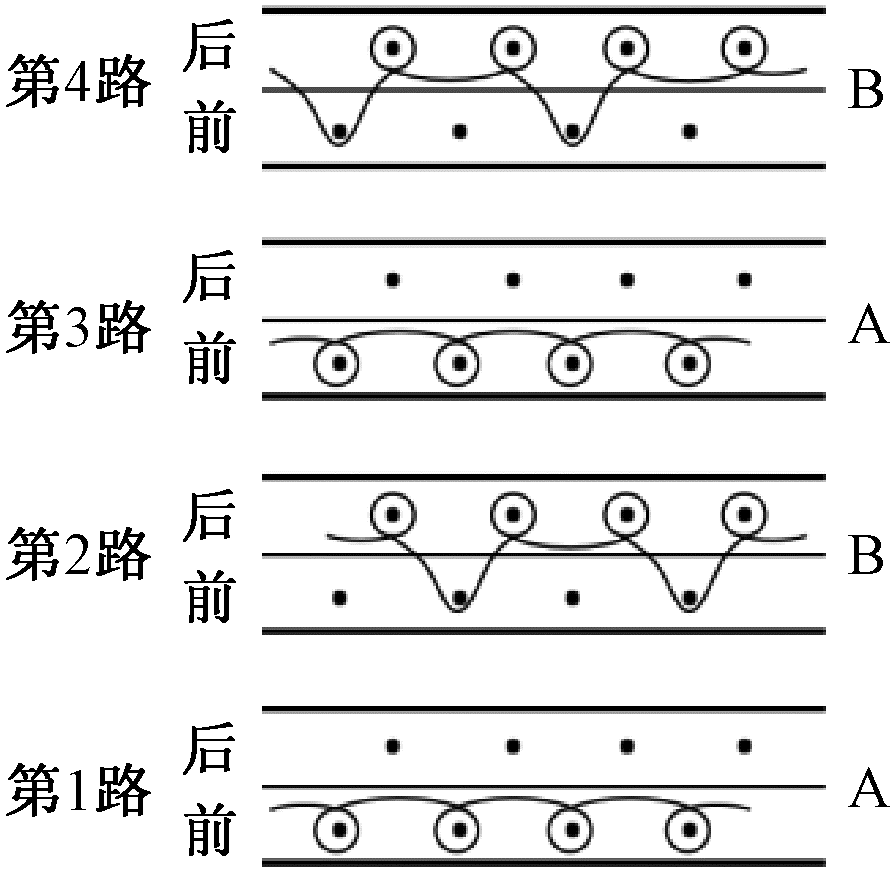
图2

织物编织工艺图"

表1

面料的基本参数"

织物
编号
纤维材料 面密度/
(g·m-2)
厚度/
mm
纵密/
(横列·(5 cm)-1)
1# A1: UHMWPE纤维;
B:涤纶
364 1.18 60
2# A2:锦纶;B:涤纶 388 1.53 55
3# A3:涤纶;B:涤纶 361 1.54 55

图3

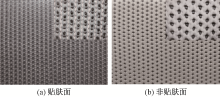
面料实物图及放大图"

图4

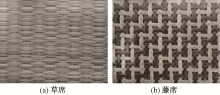
市场上的凉席"

表2

织物的弯曲长度和抗弯刚度"

织物
编号
弯曲长度C/cm 抗弯刚度G/(mN·cm)
纵向 横向 纵向 横向
1# 1.7 1.7 1.788 1.788
2# 1.9 1.8 2.661 2.263
3# 2.4 1.9 4.990 2.476
4# >10 3.2 >572 18.743
5# 9.5 9.5 425.258 425.258

表3

织物吸湿速干性能指标评级结果"

织物
编号
浸湿时间 吸水速率 单向传递
指数O
T1 T2 S1 S2
1# 4 5 3 4 5
2# 4 5 3 3 2
3# 4 5 3 3 5
4# 5 5 4 2 1
5# 3 5 4 1 1

表4

凉感测试结果"

织物
编号
热阻/
(m2·℃·W-1)
克罗值 保温率/
%
传热系数/
(W·(m2·℃)-1)
1# 0.018 5 0.119 15.80 54.05
2# 0.035 7 0.230 26.58 27.97
3# 0.031 9 0.206 24.45 31.33
4# 0.043 9 0.283 30.80 22.73
5# 0.029 9 0.193 23.25 33.40
[1] 纪柏林, 王碧佳, 毛志平. 纺织染整领域支撑低碳排放的关键技术[J]. 纺织学报, 2022, 43(1): 113-121.
JI Bolin, WANG Bijia, MAO Zhiping. Key technologies supporting low-carbon emissions in dyeing and finishing of textiles[J]. Journal of Textile Research, 2022, 43(1): 113-121.
[2] 兰丽, 连之伟. 改善睡眠热环境可提高睡眠质量[J]. 科学通报, 2020, 65(7): 533-534.
LAN Li, LIAN Zhiwei. Better sleeping thermal environment, better sleep quality[J]. Chinese Science Bulletin, 2020, 65(7): 533-534.
[3] 孟媛. 毛麻类床上用品织物的热湿舒适性与风格评价研究[D]. 西安: 西安工程大学, 2020: 1-3.
MENG Yuan. Study on thermal and wet comfort and style evaluation of linen bedding fabrics[D]. Xi'an: Xi'an Polytechnic University, 2020: 1-3.
[4] 陈佳. 功能性家用纺织品的创新开发与发展趋势[J]. 纺织导报, 2020(8): 28-35.
CHEN Jia. Innovative Development and future trend of functional home textiles[J]. China Textile Leader, 2020(8): 28-35.
[5] 李勇翰, 刘燕, 贾云辉, 等. 凉感纺织品的研究现状与进展[J]. 毛纺科技, 2023, 51(2): 135-141.
LI Yonghan, LIU Yan, JIA Yunhui, et al. Research status and progress of cool functional textiles[J]. Wool Textile Journal, 2023, 51(2): 135-141.
[6] 倪庆美. 针织凉感织物制备及其测试评价研究[D]. 苏州: 苏州大学, 2020: 11-12.
NI Qingmei. Study on the preparation and evaluation of the cool-feel knitted fabric[D]. Suzhou: Soochow University, 2020: 11-12.
[7] YANG Yang, YU Xin, WANG Xunga, et al. Thermal comfort properties of cool-touch nylon and common nylon knitted fabrics with different fibre fineness and cross-section[J]. Industria Textila, 2021, 72(2): 217-224.
doi: 10.35530/IT.072.02.20209
[8] 陈晨. 超高分子量聚乙烯/罗布麻交织凉席面料的设计与生产[J]. 上海纺织科技, 2021, 49(7): 47-48.
CHEN Chen. Design and production of UHMWPE/ apocynum fabric for high-grade health mat[J]. Shanghai Textile Science & Technology, 2021, 49(7): 47-48.
[9] 包玉秀, 肖红, 王越平, 等. 结构参数对超高分子量聚乙烯织物导热性的影响[J]. 毛纺科技, 2020, 48(1): 14-17.
BAO Yuxiu, XIAO Hong, WANG Yueping, et al. Influence of fabric parameters on thermal conductivity of UHMWPE interwoven fabric[J]. Wool Textile Journal, 2020, 48(1): 14-17.
[10] QIAN Juan, XIE Ting, CHEN Liqun, et al. Effect of knitting structure and polyethylene content on thermal-wet comfort and cooling properties of polyethylene/polyester fabrics[J]. Fibers and Polymers, 2022, 23(11): 3297-3308.
[11] 李宏英. 薄荷油微胶囊整理对聚酯织物舒适凉爽功能化效果的研究[D]. 无锡: 江南大学, 2019: 2-4.
LI Hongying. Effect of peppermint oil microcapsule finishing on the comfortable and cool functionalization of polyester fabric[D]. Wuxi: Jiangnan University, 2019: 2-4.
[12] ZHOU Hua, WANG Hongxia, NIU Haitao, et al. One-way water transport cotton fabrics with enhanced cooling effect[J]. Advanced Materials Interfaces, 2016, 3(17): 1-8.
[13] 沈星星. 粘胶/UHMWPE混纺纱床品面料工艺与性能研究[D]. 苏州: 苏州大学, 2017: 3-7.
SHEN Xingxing. Study on the technology and performance of viscose/UHMWPE yarn bed fabric[D]. Suzhou: Soochow University, 2017: 3-7.
[14] SUGANTHI T, SENTHILKUMAR P. Moisture-management properties of bi-layer knitted fabrics for sportswear[J]. Journal of Industrial Textiles, 2018, 47(7): 1447-1463.
[15] 吴赞敏, 吕彤, 王建伟. 运用模糊专家系统智能评价织物风格[J]. 纺织学报, 2005, 26(4): 115-117.
WU Zanmin, LÜ Tong, WANG Jianwei. Intelligent evaluation of fabric style using fuzzy expert system[J]. Journal of Textile Research, 2005, 26(4): 115-117.
[1] 巫晓雯, 方蕾妹, 江昆, 丛洪莲. 基于热湿舒适性的横编全成形运动内衣的分区设计[J]. 纺织学报, 2024, 45(12): 172-179.
[2] 阳腾, 孙志慧, 伍思钰, 于晖, 王飞. 基于聚氨酯/炭黑/锦纶导电纱线的织物应变传感器制备及其性能[J]. 纺织学报, 2024, 45(12): 80-88.
[3] 韩炜, 邢晓梦, 张海宝, 姜茜, 刘天威, 卢佳浩, 闫志强, 巩继贤, 吴利伟. 基于粒子群算法对纬编针织物Johnson-Champoux-Allard模型参数反分析研究[J]. 纺织学报, 2024, 45(10): 103-112.
[4] 杨雨琪, 高兴忠, 高世萱, 陈宏, 刘涛. 三维超高分子量聚乙烯纤维/苎麻混杂轮胎防滑织物的设计与制备[J]. 纺织学报, 2024, 45(10): 72-79.
[5] 李露红, 罗天, 丛洪莲. 针织一体成形电容传感器设计及其性能[J]. 纺织学报, 2024, 45(10): 80-88.
[6] 史伟民, 李洲, 陆伟健, 屠佳佳, 徐寅哲. 基于改进Yolov5模型的纱筒余纱量检测方法[J]. 纺织学报, 2024, 45(07): 196-203.
[7] 葛美彤, 董智佳, 丛洪莲, 丁玉琴. 凹凸点阵双面织物的结构与湿热管理评价[J]. 纺织学报, 2024, 45(07): 47-54.
[8] 李倩倩, 郭晓玲, 崔文豪, 许宇真, 王林峰. 汽车座椅用抗菌涤纶针织物制备及其性能[J]. 纺织学报, 2024, 45(06): 127-133.
[9] 胡旭东, 汤炜, 曾志发, 汝欣, 彭来湖, 李建强, 王博平. 基于轻量化卷积神经网络的纬编针织物组织结构分类[J]. 纺织学报, 2024, 45(05): 60-69.
[10] 齐育宝, 汝欣, 李建强, 周悦欣, 彭来湖. 基于随机共振-反向传播算法的压电选针器渐变失效检测[J]. 纺织学报, 2024, 45(03): 202-208.
[11] 陈露, 石宝, 魏赛男, 贾立霞, 阎若思. 三维一体针织结构超级电容器的储能性能[J]. 纺织学报, 2024, 45(02): 126-133.
[12] 方春月, 刘紫璇, 贾立霞, 阎若思. 双等离子体改性超高分子量聚乙烯复合材料的弹道响应[J]. 纺织学报, 2024, 45(02): 77-84.
[13] 王兆芳, 张辉, 丁波, 张淼. 文胸罩杯透湿率测定新方法[J]. 纺织学报, 2024, 45(01): 176-184.
[14] 姚晨曦, 万爱兰. 聚对苯二甲酸丁二醇酯/聚对苯二甲酸乙二醇酯纬编运动T恤面料的热湿舒适性[J]. 纺织学报, 2024, 45(01): 90-98.
[15] 常辰玉, 王雨薇, 原旭阳, 刘锋, 卢致文. 基于交织点改进弹簧-质点模型的纬编针织物动态变形模拟[J]. 纺织学报, 2024, 45(01): 99-105.
Viewed
Full text


Abstract

Cited

  Shared   
  Discussed   
No Suggested Reading articles found!