纺织学报 ›› 2024, Vol. 45 ›› Issue (12): 74-79.doi: 10.13475/j.fzxb.20230803701

• 纺织工程 • 上一篇    下一篇

基于示踪纤维法测试的化纤条内纤维弯钩

章红豆1, 陈芳2, 楚祥婷1, 陆惠文2, 刘新金1(), 苏旭中1   

  1. 1.江南大学 纺织科学与工程学院, 江苏 无锡 214122
    2.乌斯特技术(中国)有限公司, 江苏 苏州 215122
  • 收稿日期:2023-08-18 修回日期:2023-12-26 出版日期:2024-12-15 发布日期:2024-12-31
  • 通讯作者: 刘新金(1984—),男,副教授,博士。主要研究方向新型纺纱技术。E-mail:liuxinjin2006@163.com
  • 作者简介:章红豆(2000—),女,硕士生。主要研究方向为化纤条内纤维弯钩。

Study on fiber hooking in chemical fiber sliver based on fiber tracing method

ZHANG Hongdou1, CHEN Fang2, CHU Xiangting1, LU Huiwen2, LIU Xinjin1(), SU Xuzhong1   

  1. 1. College of Textile Science and Engineering, Jiangnan University, Wuxi, Jiangsu 214122, China
    2. Uster Technologies (China) Co., Ltd., Suzhou, Jiangsu 215122, China
  • Received:2023-08-18 Revised:2023-12-26 Published:2024-12-15 Online:2024-12-31

摘要:

为了提高纱线和纺织品质量,以纤维素粘胶纤维与合成纤维涤纶为例,采用示踪纤维法对相应的生条、头并条、末并条内的纤维弯钩进行测试,并综合对比分析。首先制作荧光纤维,并将荧光纤维与原料混合后制条,然后对弯钩纤维的各种具体形态进行定义,观测条子内各种纤维的状态,并根据所给出的弯钩纤维的定义得到各种状态的弯钩纤维占比。本实验通过对各种形态弯钩纤维的细致定义,得到各种形态纤维的占比情况,为以后定量分析弯钩纤维提供了原始数据,另外通过对实验结果和原理的分析,也间接验证了此方法的有效性和准确性。

关键词: 纱线质量, 粘胶纤维, 涤纶, 纤维弯钩, 示踪纤维法, 梳理中纤维形态

Abstract:

Objective In order to improve the quality of yarn and textiles, this study tests and characterizes the fiber hook in chemical fier slivers, which is one of the most important internal performance indicators of fiber slivers, in order to explore the benefits to yarn producers in setting up production processes and optimizing spinning production parameters.

Method In this study, the cellulose fiber and polyester fiber were selected to be the research objects, and the tracer fiber method was used to evaluate the fiber hooks in the corresponding raw fiber slivers, head slivers, and end slivers. Firstly, the fluorescent fiber was made and mixed with the raw material for making the raw slivers. The specific forms of the hook fibers were defined, the state of various fibers in the sliver was observed, and the proportion of the hook fiber in each state was obtained according to the hook fiber definition.

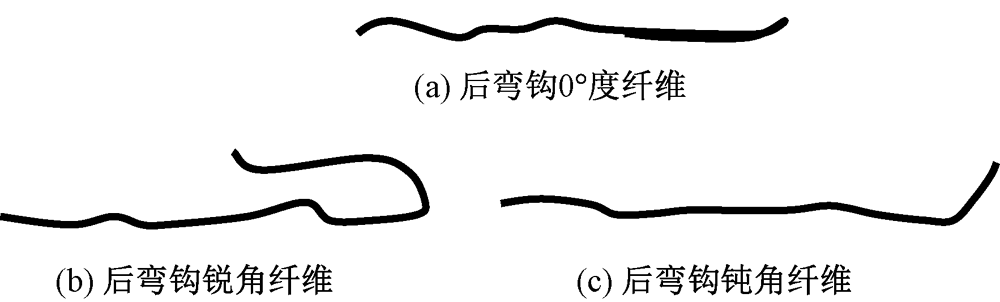
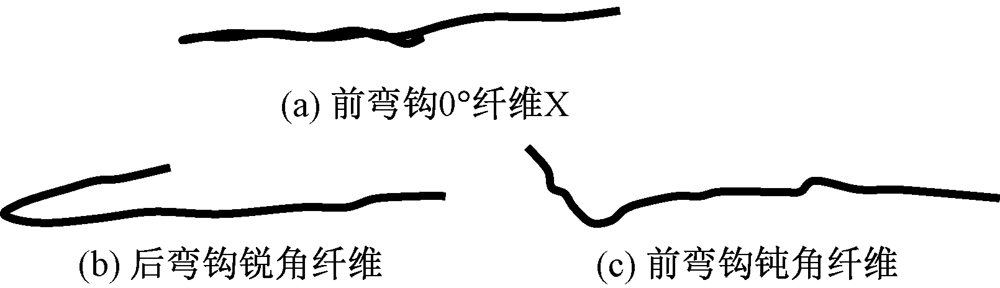
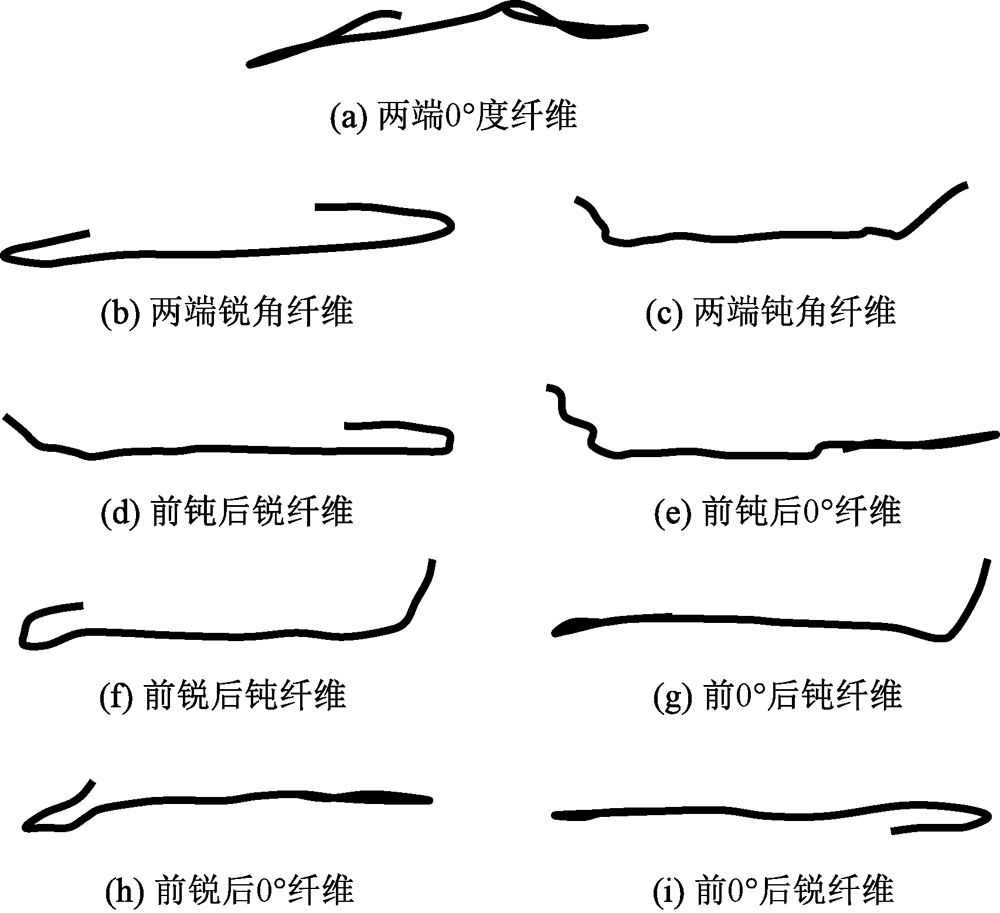
Results In this study, the real state of fluorescent fibers in the viscose and polyester raw slivers, head draws and end draws was observed and analyzed, and various forms of fluorescent fibers were defined and classified. The fibers in the yarn sliver were divided into straightened fibers, broken fibers, zigzag fibers, 0-degree back/front hooking fibers, acute angle back/front hooking fibers, obtuse angle back/front hooking fibres, 2-end folding fibers, and 2-end acute angle hooking fibers. According to these 18 types of observed fluorescent fiber states, and the proportion of various forms of fibers was obtained, the results showed that the proportion of posterior hooking fibers in the green sliver was the largest, and more than 50% of the fibers were shown as posterior hooking fibers, and the proportion of front hooking fibers was about 10%, which was much lower than that of the back hooking. This was due to the configuration of the comb needle between cylinder and doffer and the relationship between specifications and carding, and therefore the probability of various fibers on the cylinder to be transformed to the upper back hook of the doffer was greater than that of the front hook, causing the directional problem of more back hooks in the green sliver. Due to the drafting effect, the straightened fibers in the head drawing were significantly increased, and when the back hooking fibers in the green sliver was transfered onto the cylinder and then led out to feed the head, they became the front hooking fiber. In this process, part of the hooked fibers were drawn and straightened, resulting in the reduction of the front hooking fibers in the head drawing compared with the amount of back hooking fibers in the green sliver. The hooked fibers in the end draw was straightened again, and the front hooking fibers in the head draw was encircled into the sliver and then led out to feed the second draw, hence forming the back hooking fibers.

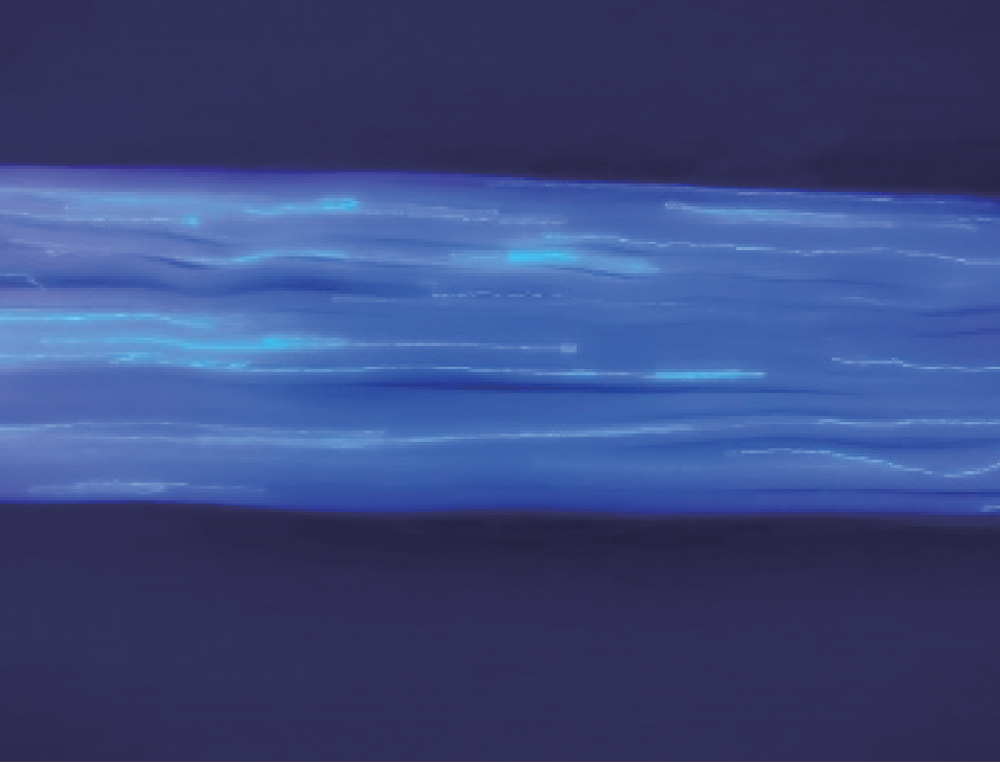
Conclusion The tracer fiber method can not only accurately reflect the various stages of the fibers in the sliver, but also accurately calculate the proportion of fibers in various stages in the sliver produced by this process through the observation of a certain number of slivers. By making fluorescent fibers, the state and number of fibers in the sliver can be accurately recognized and measured by using tools such as fluorescent light boxes. This study reveals that the ratio of fluorescent fibers to raw materials was 1/1000 under the condition that the observation results were not affected, and a mixing method of "small batches and multiple batches" was established to allow the fluorescent fibers and raw materials to be mixed evenly. At the same time, the morphological characteristics of various hooking fibers in the yarn sliver are defined in detail, and the observed data results also provide a more detailed and comprehensive original data accumulation for the follow-up research on the final yarn quality and the relationship between the hook.

Key words: yarn quality, viscose fiber, polyester, fiber cook, tracer fiber method, fiber morphology in combing

中图分类号: 

  • TS102

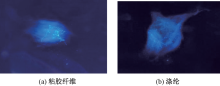
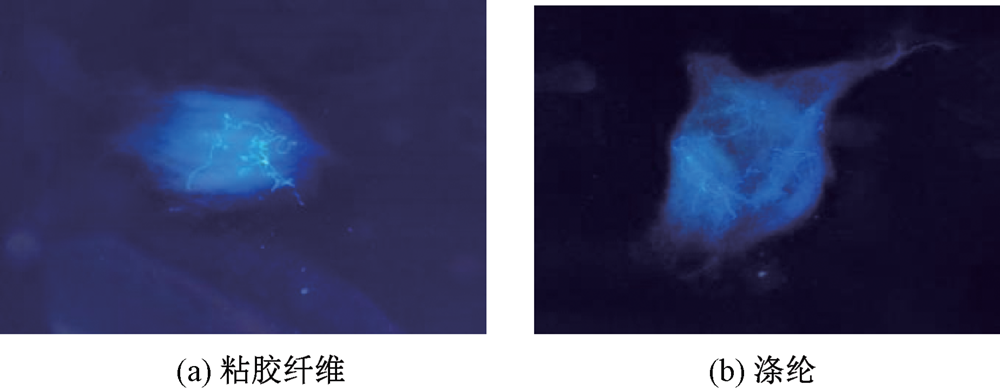
图1

荧光灯箱内纤维图片"

表1

并条的工艺参数设置"

并条 条干CV
值/%
定量/
(g·(5 m)-1)
出条速度/
(m·min-1)
并合
眼距 喇叭口
径/mm
粘胶头并 4.27 21.0 480 6 620 3.2
粘胶末并 3.61 20.5 480 6 620 3.0
涤纶头并 3.30 21.0 480 6 620 3.4
涤纶末并 2.71 20.5 480 6 620 3.2

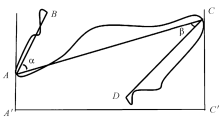
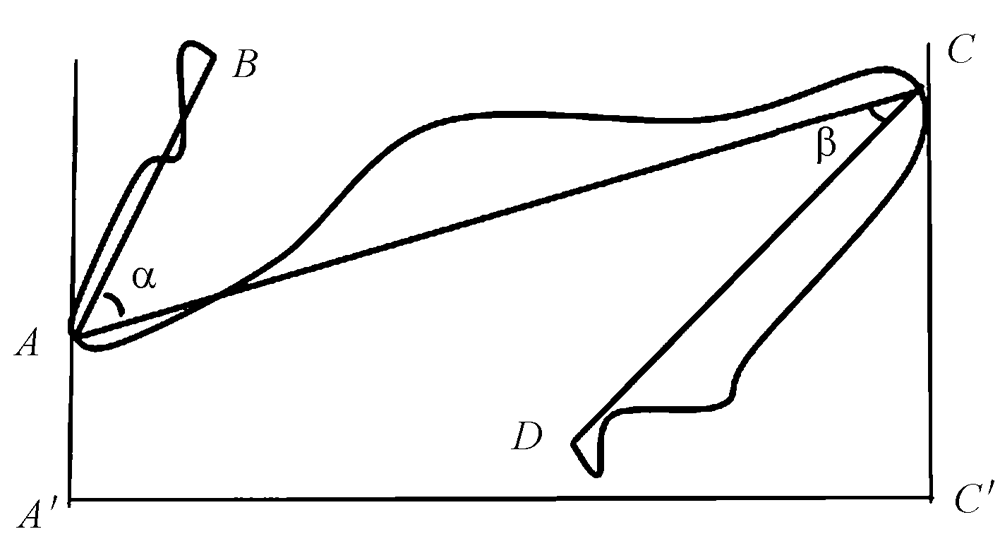
图2

弯钩纤维示意图"

图3

后弯钩纤维示意图"

图4

前弯钩纤维示意图"

图5

两端弯钩纤维示意图"

图6

荧光纤维效果图"

表2

粘胶示踪纤维的观测结果"

纤维类型 生条内纤维
根数
头并条内
纤维根数
末并条内
纤维根数
伸直纤维 222 769 1 326
断裂纤维 222 288 396
曲折纤维 206 61 40
后弯钩0° 105 15 100
后弯钩锐角 681 65 289
后弯钩钝角 41 36 103
前弯钩0° 15 250 23
前弯钩锐角 109 505 143
前弯钩钝角 22 44 102
两端0° 6 8 0
两端锐角 257 51 26
两端钝角 5 10 15
前钝后锐 70 3 11
前钝后0° 6 1 5
前锐后钝 18 8 11
前0°后钝 0 5 1
前锐后0° 8 0 1
前0°后锐 4 5 2

表3

粘胶示踪纤维的计算结果"

荧光纤维类型 占比/%
生条 头并条 末并条
伸直纤维 18.48 48.39 71.64
两端纤维 17.53 3.61 1.34
后弯钩纤维 54.94 4.73 18.77
前弯钩纤维 9.05 43.27 8.25

表4

涤纶示踪纤维的观测结果"

纤维类型 生条内纤维
根数
头并条内
纤维根数
末并条内
纤维根数
伸直纤维 270 770 1 565
断裂纤维 159 208 255
曲折纤维 277 67 45
后弯钩0° 462 61 198
后弯钩锐角 275 27 59
后弯钩钝角 73 34 68
前弯钩0° 102 640 80
前弯钩锐角 51 230 104
前弯钩钝角 50 87 106
两端0° 50 11 11
两端锐角 72 16 13
两端钝角 23 2 9
前钝后锐 52 3 4
前钝后0° 43 0 2
前锐后钝 19 7 3
前0°后钝 14 1 0
前锐后0° 30 3 0
前0°后锐 26 3 3

表5

涤纶示踪纤维的计算结果"

荧光纤维类型 占比/%
生条 头并条 末并条
伸直纤维 16.75 47.12 78.56
两端纤维 20.41 1.64 1.21
后弯钩纤维 50.25 4.80 11.82
前弯钩纤维 12.59 46.44 8.40
[1] WAKANKAR V A, BHADURI S N, RAMASWAMY B R, et al. Some studies on the formation of hooks in carding[J]. Textile Research Journal, 1961, 31: 931-940.
[2] GHOSH G C, BHADURI S N. Transfer of fibers from cylinder to doffer during cotton and staple fiber carding[J]. Textile Research Journal, 1969,39:390-392.
[3] SIMPSON J. Relation between minority hooks and neps in the card web[J]. Textile Research Journal, 1972, 42: 590-591.
[4] 张弘强. 纱条中纤维形态及排列对条干不匀的影响[D]. 上海: 东华大学,2016:18-19.
ZHANG Hongqiang. Effect of fiber morphology and arrangement on uneven strip drying[D]. Shanghai: Donghua University,2016:18-19.
[5] 张亚秋, 陈霞, 江慧, 等. 基于图像处理技术的弯钩纤维表征[J]. 纺织器材, 2014, 41(5):32-36.
ZHANG Yaqiu, CHEN Xia, JIANG Hui, et al. Characterization of hooked fibers based on image processing technology[J]. Textile Accessories, 2014, 41(5): 32-36.
[6] MALAKANE P B, KADOLE P V, 史雅楠. 梳理工艺参数对纤维取向与纱条质量的影响[J]. 国际纺织导报, 2022, 50(2): 13-15, 25.
MALAKANE P B, KADOLE P V, SHI Yanan. Influence of carding process parameters on fiber orientation and yarn quality[J]. Melliand China, 2022, 50(2): 13-15,25.
[7] 李秋莽. 纤维伸直度的常用测试方法及其在生产中的应用[J]. 上海纺织科技, 2007(7): 33-34.
LI Qiumang. Common test methods for fiber straightness and their application in production[J]. Shanghai Textile Science & Technology, 2007(7): 33-34.
[8] 费青, 姚书琴. 纤维伸直度和弯钩方向性对气流纱质量的影响[J]. 纺织学报, 1979(1):22-29.
FEI Qing, YAO Shuqin. Effects of fiber straightness and hook directionality on the quality of airflow yarn[J]. Journal of Textile Research, 1979(1): 22-29.
[9] 王春燕, 郁崇文, 孙红卫. 棉条平行伸直度与转杯纺缩短工艺路线分析[J]. 山东纺织科技, 2003(3):1-3.
WANG Chunyan, YU Chongwen, SUN Hongwei. Analysis of parallel straightness and rotor shortening process route of cotton strip[J]. Shandong Textile Science & Technology, 2003(3): 1-3.
[10] 费青. 弯钩方向性和纤维伸直度研究[J]. 纺织科技进展, 2009(2):20-23, 29.
FEI Qing. Research on hook directionality and fiber straightness[J]. Progress in Textile Science & Technology, 2009(2) : 20-23, 29.
[1] 许秋歌, 郭寻, 朵永超, 吴若楠, 钱晓明, 宋兵, 符浩, 赵宝宝. 高收缩聚酯/聚酰胺6中空橘瓣型纺黏针刺非织造布的制备及其性能[J]. 纺织学报, 2024, 45(12): 41-49.
[2] 彭博, 吴宇洁, 张悦, 李妙龙, 孟祥, 李伟, 鲁育豪. 低取代度淀粉烷基羧酸单酯的烷基链长对涤纶上浆性能的影响[J]. 纺织学报, 2024, 45(10): 122-127.
[3] 韩画宇, 杨文龙, 王甫, 胡柳, 胡毅. 苯并[a]吩恶嗪基功能染料制备及其在改性涤纶织物上的应用[J]. 纺织学报, 2024, 45(10): 128-136.
[4] 刘婷, 闫涛, 潘志娟. 香蕉茎秆纤维/抗菌纤维混纺纱的制备及其性能[J]. 纺织学报, 2024, 45(10): 48-54.
[5] 杨瑞华, 邵秋, 王翔. 再循环棉及涤纶短纤维的成纱性能与面料特征[J]. 纺织学报, 2024, 45(08): 127-133.
[6] 葛美彤, 董智佳, 丛洪莲, 丁玉琴. 凹凸点阵双面织物的结构与湿热管理评价[J]. 纺织学报, 2024, 45(07): 47-54.
[7] 鲁颖科, 金炳奇, 徐涛, 高一蕾, 邓炳耀, 李昊轩. 基于粘胶纤维非织造材料的太阳能水电联产装置设计及其性能[J]. 纺织学报, 2024, 45(07): 78-85.
[8] 徐豫松, 周杰, 甘佳怡, 张涛, 张先明. 含磷氮水性聚氨酯的制备及其在涤纶织物阻燃整理中应用[J]. 纺织学报, 2024, 45(07): 112-120.
[9] 李文雅, 周剑, 廖昙倩, 董真真. 薄鞘高包覆涤纶/棉包芯纱的结构控制及其工艺[J]. 纺织学报, 2024, 45(06): 46-52.
[10] 李倩倩, 郭晓玲, 崔文豪, 许宇真, 王林峰. 汽车座椅用抗菌涤纶针织物制备及其性能[J]. 纺织学报, 2024, 45(06): 127-133.
[11] 方雪明, 董智佳, 丛洪莲, 丁玉琴. 单面纬编织物变化孔隙率结构设计与透气导湿性能评价[J]. 纺织学报, 2024, 45(05): 51-59.
[12] 胡自强, 骆晓蕾, 魏璐琳, 刘琳. 植酸/壳聚糖对涤纶/棉混纺织物的协同阻燃整理[J]. 纺织学报, 2024, 45(04): 126-135.
[13] 邵明军, 蹇玉兰, 唐唯, 柴希娟, 万辉, 解林坤. 涤纶织物表面耐久超疏水涂层制备及其水油分离性能[J]. 纺织学报, 2024, 45(04): 142-150.
[14] 张永芳, 郭红, 史晟, 阎智锋, 侯文生. 涤纶/棉混纺织物在水热体系中的降解[J]. 纺织学报, 2024, 45(04): 160-168.
[15] 卢韵静, 王雪, 齐元章, 宋琳, 廉志军, 李鑫. 颜料与线密度对原液着色涤纶短纤维及纱线颜色的影响[J]. 纺织学报, 2024, 45(03): 97-105.
Viewed
Full text


Abstract

Cited

  Shared   
  Discussed   
No Suggested Reading articles found!