纺织学报 ›› 2024, Vol. 45 ›› Issue (12): 9-17.doi: 10.13475/j.fzxb.20230905101

• 纤维材料 • 上一篇    下一篇

光致变色聚乳酸/聚3-羟基丁酸酯共混纤维的纺制及其结构与性能

欧宗权1, 于金超1,2, 潘志娟1,2()   

  1. 1.苏州大学 纺织与服装工程学院, 江苏 苏州 215021
    2.苏州大学 现代丝绸国家工程实验室, 江苏 苏州 215123
  • 收稿日期:2023-09-20 修回日期:2024-01-05 出版日期:2024-12-15 发布日期:2024-12-31
  • 通讯作者: 潘志娟(1967—),女,教授,博士。主要研究方向为新型纺织材料及产品开发。E-mail:zhjpan@suda.edu.cn
  • 作者简介:欧宗权(1996—),男,硕士生。主要研究方向为新型纤维材料开发。

Spinning of photochromic polylactic acid/polyhydroxybutyrate blend fiber and its structure and properties

OU Zongquan1, YU Jinchao1,2, PAN Zhijuan1,2()   

  1. 1. College of Textile and Clothing Engineering, Soochow University, Suzhou, Jiangsu 215021, China
    2. National Engineering Laboratory for Modern Silk, Soochow University, Suzhou, Jiangsu 215123, China
  • Received:2023-09-20 Revised:2024-01-05 Published:2024-12-15 Online:2024-12-31

摘要:

为开发一种具有良好力学性能和变色效果的生物基光致变色合成纤维,以聚乳酸(PLA)为纤维基体,聚3-羟基丁酸酯(PHB)为改性高分子材料,光致变色微胶囊(PCMs)为光敏指示剂,制备了光致变色PLA/PHB共混物,并系统研究了共混物的流变性能,确定了适纺的组分比;通过熔体纺丝制备了光致变色PLA/PHB共混纤维,重点分析牵伸工艺对纤维结构与性能的影响。结果表明:可连续稳定熔体纺丝的光致变色PLA/PHB共混物中,PHB的最高质量分数为20%;光致变色PLA/PHB共混纤维具有良好的力学性能,断裂强度为3.09~3.79 cN/dtex,断裂伸长率为21.78%~29.13%,初始模量为14.29~24.62 cN/dtex;随着牵伸温度的提高,纤维断裂强度保持不变,晶粒尺寸减小,初始模量下降,断裂伸长率呈现上升趋势;随着牵伸倍数的增大,纤维的结晶度和晶粒尺寸均增大,断裂强度和初始模量均提高,但断裂伸长率有所下降。该光致变色PLA/PHB共混纤维具有灵敏的光响应效果,良好的光致变色稳定性以及回复性。

关键词: 功能纤维, 聚3-羟基丁酸酯, 聚乳酸, 光致变色, 熔体纺丝, 共混纤维

Abstract:

Objective The requirements for environmental protection are getting higher and higher, and the use of bio-based polymers to replace petroleum-based polymers is an inevitable development trend. It is hence of interest to develop bio-based photochromic synthetic fibers with good mechanical properties and color-changing effects.

Method With polyactic acid (PLA) was as fiber matrix, polyhydroxybutyrate (PHB) as modified polymer material and phase-change materials (PCMs) as photosensitive indicator, a new bio-based photochromic synthetic fiber with good mechanical properties and chromic effect was prepared using melt spinning technology. The rheological properties of the photochromic PLA/PHB blend were analyzed. The effects of post-drafting process on the structure and properties of fibers were systematically studied.

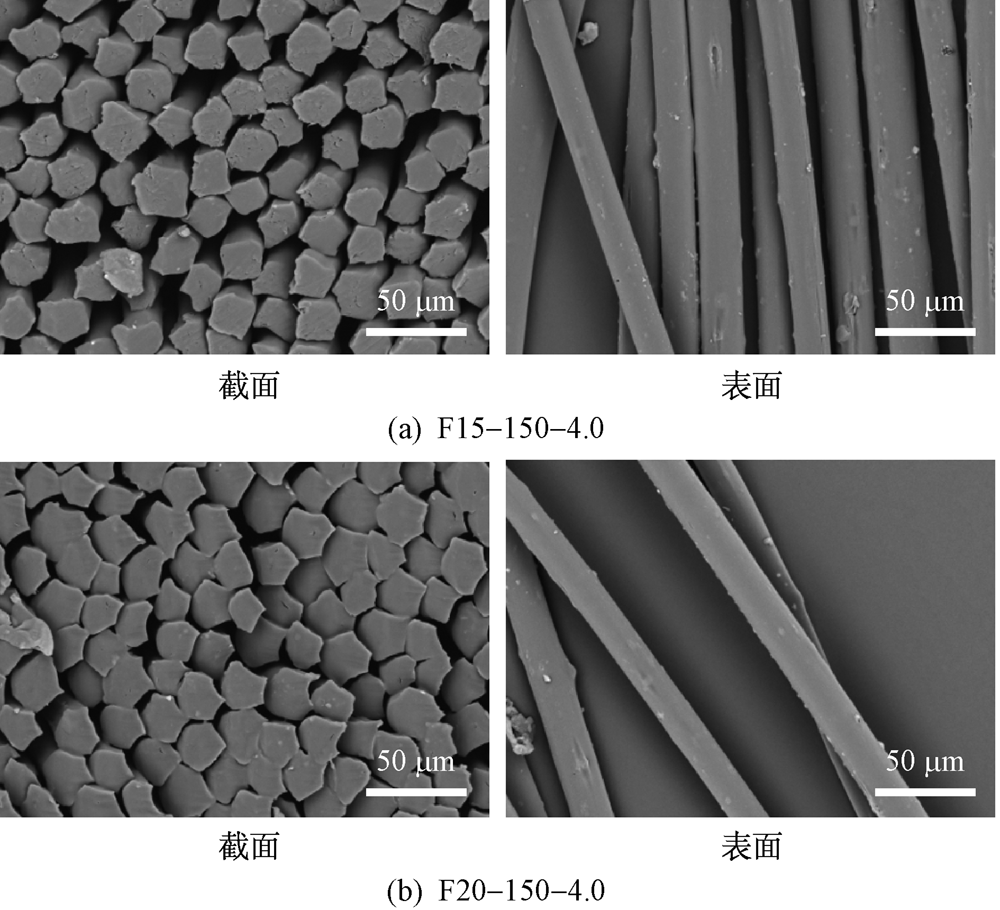
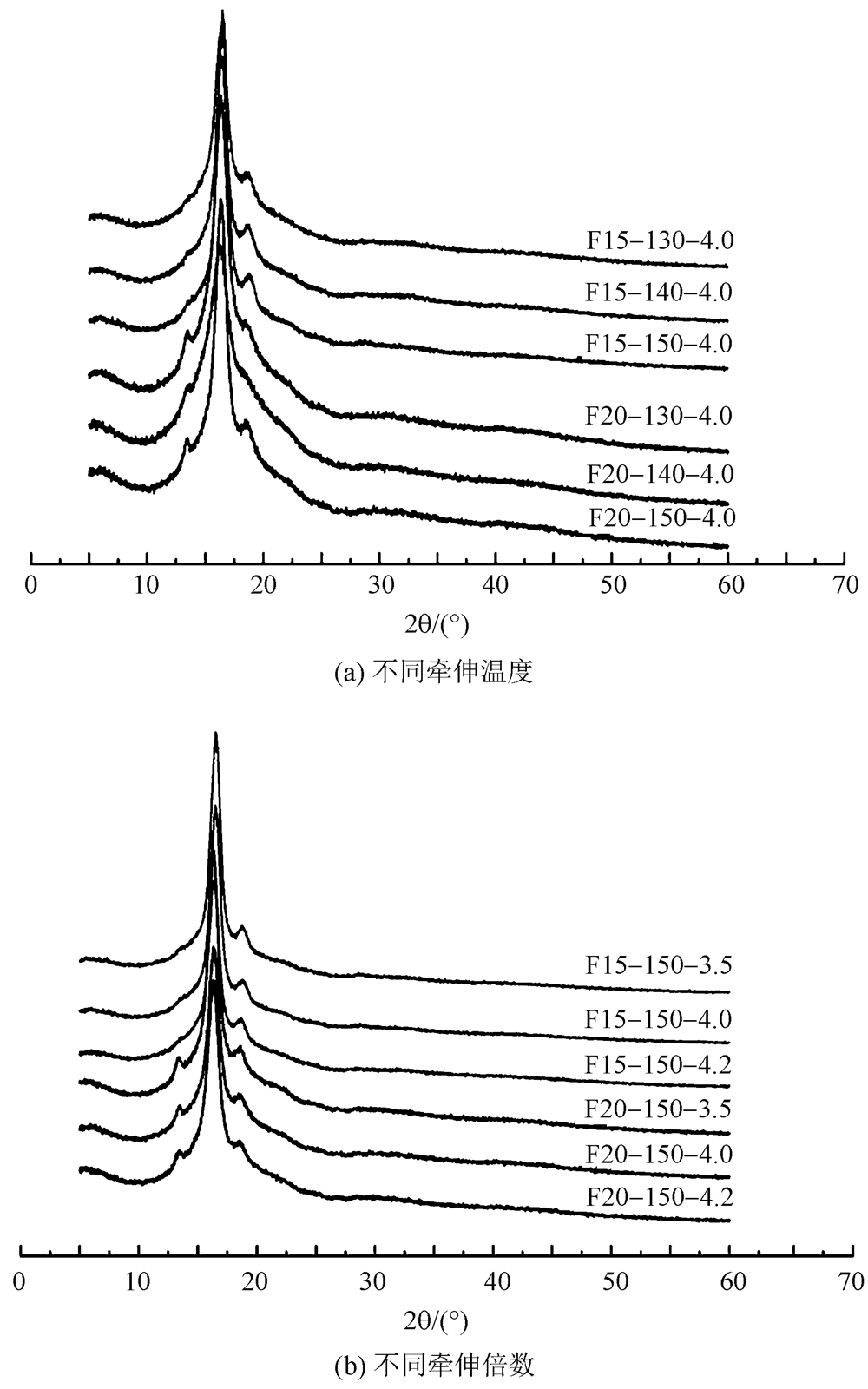
Results The apparent viscosity of photochromic PLA/PHB blends decreased with the increase of temperature and shear rate, and the decrease was more obvious with the increase of PHB content. The blend is an incompatible system and the PHB is thermally degraded during processing. The cross section and surface of the fibers were smooth, with no obvious structural defects, and the diameter was about 20 μm.When the drafting multiple was 4.0 times, with the increase of the drafting temperature, the breaking strength of the fiber basically remained unchanged, the elongation at break increased, the initial modulus decreased somewhat, and the thermal shrinkage of the fiber decreased. XRD results showed that the addition of PHB and PCMs did not produce new crystal types, and the crystallinity of the fiber decreases and the grain size of the (200 & 110) crystal plane of PLA showed a downward trend. With the increase of the drafting ratio, the breaking strength of the fiber was increased, the elongation at break decreased, and the initial modulus increased. When the drafting ratio was 4.2, the fracture strength of F15-150-4.2 (the PHB mass fraction was 15%, the drafting temperature was 150 ℃, and the drafting multiple was 4.2 times) reached (3.79±0.40) cN/dtex, the elongation at break (25.51±1.72)%, and the initial modulus (20.19±2.51) cN/dtex, indicating the good mechanical properties. The thermal shrinkage rate of blended fiber showed an increasing trend. The crystallinity and grain size of the fibers was increasd, so the fracture strength and initial modulus increase with the increase of the drafting ratio. The fibers began to change color in the first second under the sunlight, from white to light green, and are responsive. After 50 times of ultraviolet illumination, the color difference value hardly changed, and the fiber returned to a color that was difficult to be distinguished by the naked eye in 10 min.

Conclusion The photochromic PLA/PHB blend fibers were successfully prepared by melt spinning technology. The breaking strength of the fibers was (3.09-3.79) cN/dtex, the elongation at break was 21.78%-29.13%, and the initial modulus was (14.29-24.62) cN/dtex. The improvement of fiber properties is closely related to the post-drafting process. With the increase of drafting temperature, PHB forms a large amorphous region inside the fiber and entangles seriously with PLA macromolecular chains. The crystallinity and grain size of the fiber decrease, the thermal shrinkage rate decreases, the fracture strength remains unchanged, the initial modulus decreases, and the fiber flexibility improves. With the increase of the drafting ratio, the axial orientation of the macromolecular chain increases, the crystallinity and grain size increase, the fracture strength of the fiber increases, and the thermal shrinkage of the fiber increases. Photochromic PLA/PHB blend fiber can change color from white to light green in 1 s under the sunlight, and has a sensitive response. After 50 times of ultraviolet illumination, it can still maintain acceptable color difference, and has good light stability and good light recovery. It provides a scientific basis for developing functional bio-based synthetic fibers and expanding the application of PHB in textiles.

Key words: functional fiber, poly3-hydroxybutyrate, polylactic acid, photochromic, melt spinning, blended fibre

中图分类号: 

  • TS102.52

表1

光致变色微胶囊成分表"

成分 质量分数/% 用途
三聚氰胺甲醛树脂 1~5 外壳材料
螺噁嗪类隐形染料 1~5 变色材料
1,2-二甲基-4-(1-苯乙基)苯 80~95 脂肪酸溶剂

表2

光致变色PLA/PHB共混物成分表"

样品编号 PHB质量分数/% PLA质量分数/%
B0 0 96.3
B5 5 91.3
B10 10 86.3
B15 15 81.3
B20 20 76.3
B25 25 71.3
B30 30 66.3
B40 40 56.3
B100 96.3 0

表3

光致变色PLA/PHB共混纤维牵伸工艺表"

纤维试样编号 PHB质量分数/% 牵伸温度/℃ 牵伸倍数
F15-130-4.0 15 130 4.0
F15-140-4.0 15 140 4.0
F15-150-4.0 15 150 4.0
F15-150-3.5 15 150 3.5
F15-130-4.2 15 150 4.2
F20-130-4.0 20 130 4.0
F20-140-4.0 20 140 4.0
F20-150-4.0 20 150 4.0
F20-150-3.5 20 150 3.5
F20-130-4.2 20 150 4.2

图1

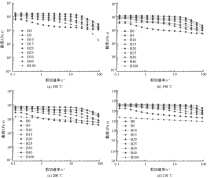
不同测试温度下光致变色PLA/PHB共混物的流变特性曲线"

图2

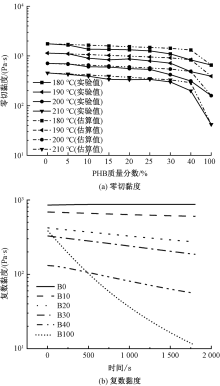
190 ℃下光致变色PLA/PHB共混物的零切黏度与复数黏度曲线"

图3

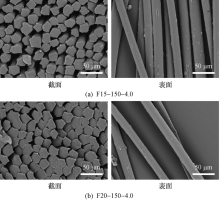
光致变色PLA/PHB共混纤维的形貌结构"

表4

光致变色PLA/PHB共混纤维力学性能测试数据"

纤维试样
编号
断裂强度/
(cN·dtex-1)
断裂伸长
率/%
初始模量/
(cN·dtex-1)
F15-130-4.0 3.58±0.29 23.57±1.43 18.32±2.48
F15-140-4.0 3.60±0.47 24.44±1.83 17.46±3.19
F15-150-4.0 3.60±0.57 25.21±1.88 15.76±2.61
F20-130-4.0 3.65±0.87 21.78±2.31 24.62±6.03
F20-140-4.0 3.71±0.63 22.34±2.59 18.18±4.12
F20-150-4.0 3.76±0.77 23.98±1.80 16.38±3.77
F15-150-3.5 3.09±0.19 29.13±1.44 14.97±1.50
F15-150-4.2 3.79±0.40 25.51±1.72 20.19±2.51
F20-150-3.5 3.13±0.76 27.60±2.40 14.29±4.63
F20-150-4.2 3.78±0.74 24.26±1.82 18.66±3.66

表5

光致变色PLA/PHB共混纤维的热收缩率"

纤维试样编号 沸水热收缩率 干热收缩率
F15-130-4.0 30.20±0.91 21.00±0.16
F15-140-4.0 27.10±0.25 19.53±0.09
F15-150-4.0 27.10±0.74 16.73±0.25
F20-130-4.0 25.27±0.50 13.73±0.47
F20-140-4.0 25.40±0.66 14.80±0.16
F20-150-4.0 22.40±0.65 12.40±0.28
F15-150-3.5 25.60±0.33 15.07±0.25
F15-150-4.2 26.80±0.16 19.20±0.16
F20-150-3.5 21.40±0.33 10.50±0.19
F20-150-4.2 23.30±0.25 13.33±0.25

表6

光致变色PLA/PHB共混纤维的热学数据"

纤维试样编号 Tm/℃ ΔHm/(J·g-1) Xc/%
F15-130-4.0 166.14 51.517 53.66
F15-140-4.0 165.88 50.685 52.80
F15-150-4.0 166.76 49.291 51.34
F20-130-4.0 165.33 51.065 52.73
F20-140-4.0 165.13 49.414 51.03
F20-150-4.0 165.48 49.051 51.16
F15-130-3.5 166.59 47.297 49.27
F15-150-4.2 166.26 49.811 51.44
F20-130-3.5 165.56 48.283 49.85
F20-150-4.2 165.54 50.311 51.95

图4

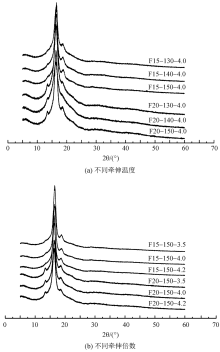
不同牵伸温度和不同牵伸倍数光致变色PLA/PHB共混纤维的XRD曲线"

表7

光致变色PLA/PHB共混纤维的结晶参数"

纤维试样编号 结晶度/% 晶粒尺寸/nm
F15-130-4.0 49.98 8.317 30
F15-140-4.0 48.86 7.455 40
F15-150-4.0 46.81 7.048 62
F20-130-4.0 48.87 7.691 99
F20-140-4.0 47.63 6.935 13
F20-150-4.0 46.08 6.718 79
F15-150-3.5 45.00 6.819 40
F15-150-4.2 47.80 8.391 08
F20-150-3.5 44.12 6.515 53
F20-150-4.2 47.32 7.314 69

图5

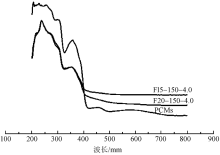
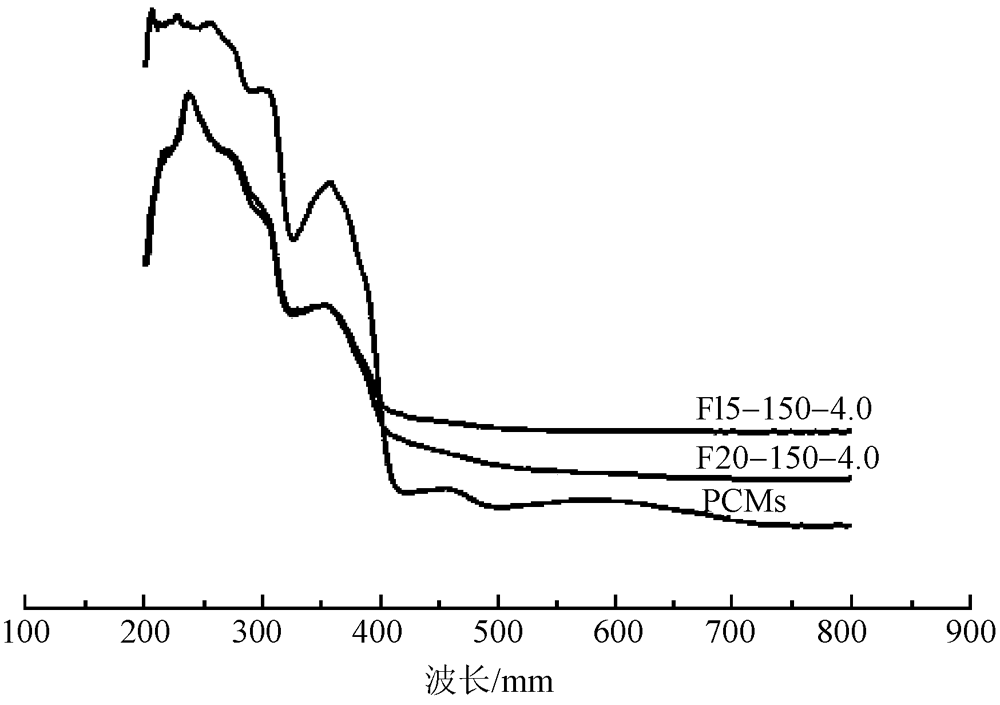
光致变色微胶囊以及光致变色PLA/PHB共混纤维的UV吸收值"

图6

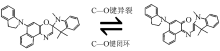
光致变色微胶囊变色机制"

图7

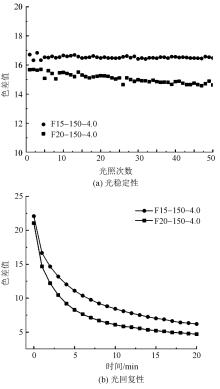
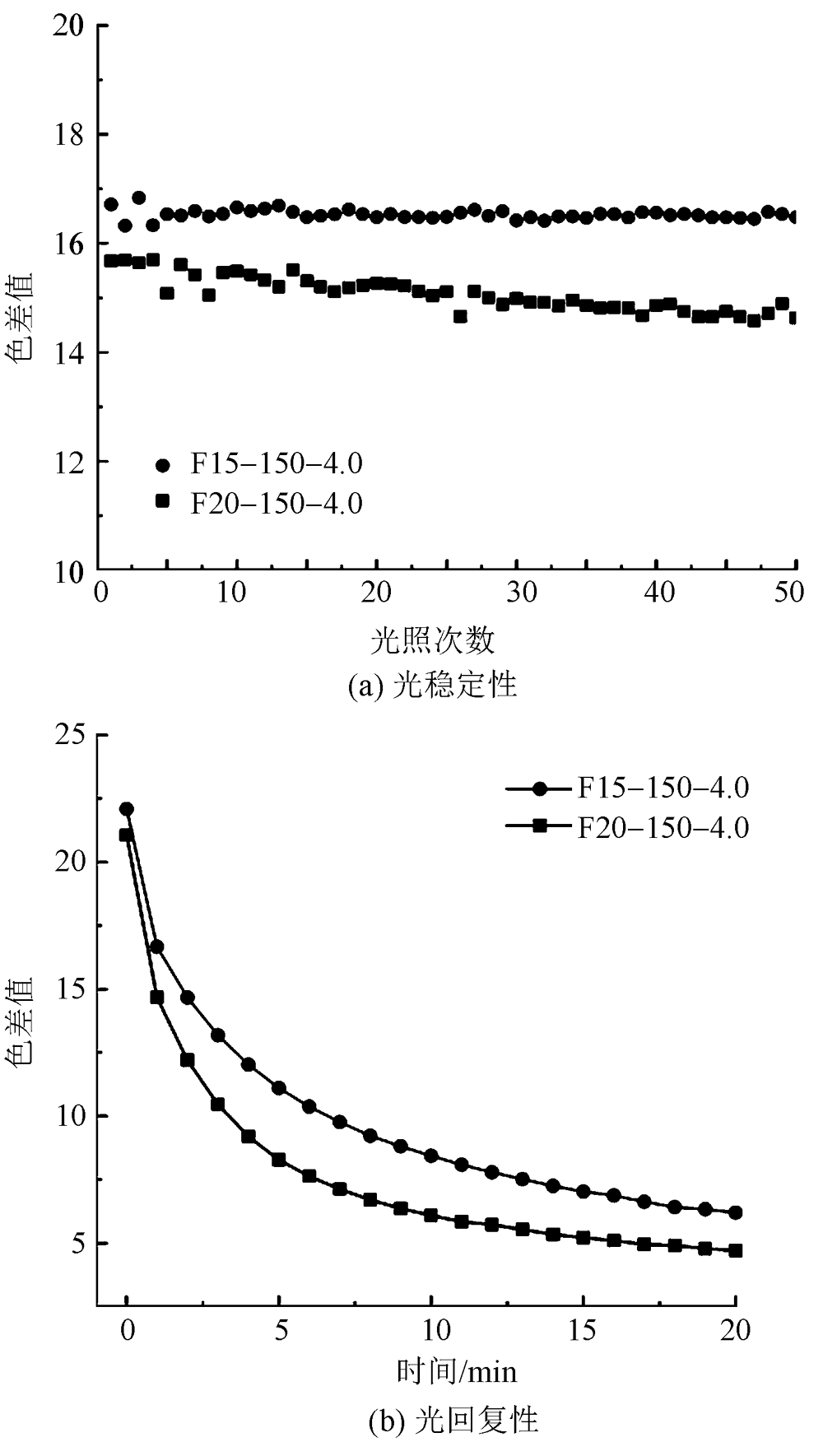
光致变色PLA/PHB共混纤维的光稳定性及光回复性"

图8

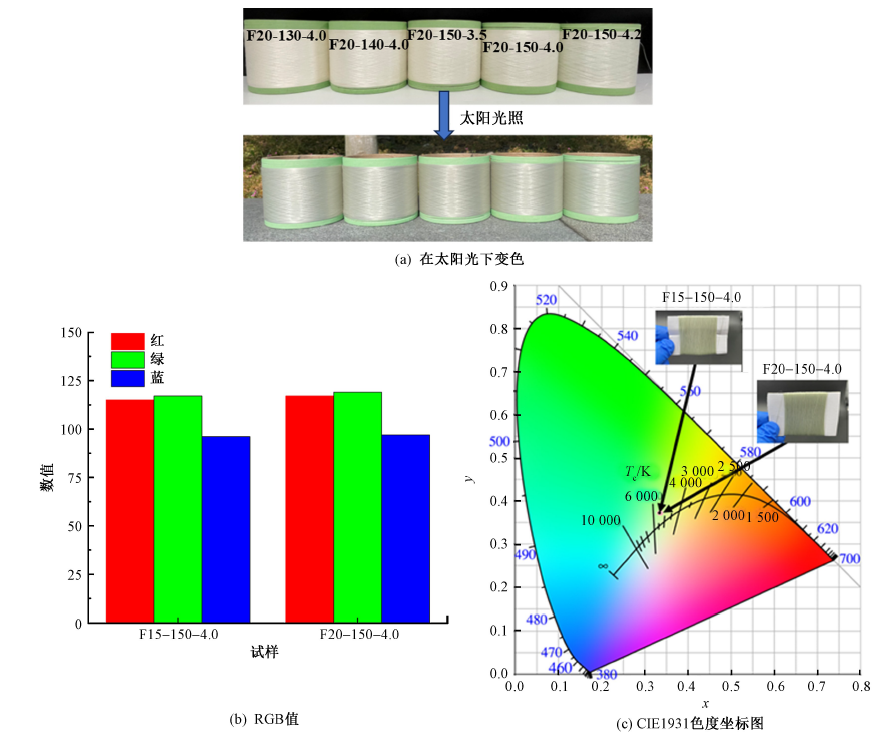
光致变色PLA/PHB共混纤维的光致变色性能"

[1] ARDO R, ZAYAT M, LEVY D. Photo chromic organic-inorganic hybrid materials[J]. Chemical Society Reviews, 2011, 40(2):672-687.
[2] FAN J, BAO B, WANG Z, et al. Hightri-stimulus response photochromic cotton fabrics based on spiropyrandyebythiol-eneclick chemistry[J]. Cellulose, 2020, 27(1):493-510.
[3] SUN D X, ZHANG J, LU X, et al. Mechano chromic photonic-crystal fibers based on continuous sheets of aligned carbon nanotubes[J]. Angewandte Chemie International Edition, 2015,54:3630-3634.
[4] 程博闻, 西鹏, 庄旭品. 光致发光与变色纤维发展趋势[J]. 纺织科学研究, 2020(4):70-71.
CHENG Bowen, XI Peng, ZHUANG Xupin. Development trend of photoluminescent and color-changing fibers[J]. Textile Science Research, 2020(4):70-71.
[5] 张曼. 光致发光/变色的PA6纳微米复合纤维的制备与性能研究[D]. 天津: 天津工业大学,2019:15-16.
ZHANG Man. Preparation and properties of photoluminescent/discolored PA6 nanomicron composite fibers[D]. Tianjin:Tiangong University,2019:15-16.
[6] AURAS R A, SINGH S P, SINGH J J. Evaluation of oriented poly(lactide) polymers vs existing PET and oriented PS for fresh food service containers[J]. Packaging Technology and Science, 2005, 18(4): 207-216.
[7] CAI S Y, HU G, REN J. Processing, properties and application of poly lactic acid (PLA) fiber[J]. Chinese Journal of Biotechnology, 2016, 32(6) : 786-797.
[8] CHEN X X, YU J C, CHEN K, et al. Facile and large-scale fabrication of biodegradable thermochromic fibers based on poly (lactic acid)[J]. Chinese Journal of Polymer Science, 2022(40):1242-1251.
[9] BALAKRISHNAN H, HASSAN A, WAHIT M U, et al. Novel toughened polylactic acid nanocomposite: mechanical, thermal and morphological properties[J]. Materials and Design, 2010, 31(7) : 3289-3298.
[10] 赵明顺, 陈枭雄, 于金超, 等. 光致变色聚乳酸纤维的纺制及其微观结构与性能[J]. 纺织学报, 2023, 44(7):10-17.
ZHAO Mingshun, CHEN Xiaoxiong, YU Jinchao, et al. Photochromic fiber spinning of poly (lactic acid) (PLA) and its microstructure and prope-rties[J]. Journal of Textile Research, 2023, 44 (7) : 10-17.
[11] ZEMBOUAI I, KACI M, BRUZAUD S, et al. A study of morphological, thermal, rheological and barrier properties of PHBV/polylactide blends prepared by melt mixing[J]. Polymer Testing, 2013, 32(5): 842-851.
[12] CHEN Z, ZHAO Z, HONG J, et al. Novel bioresource-based poly (3-hydroxybutyrate-co-4-hydroxybutyrate)/poly (lactic acid) blend fibers with high strength and toughness via melt-spinning[J]. Journal of Applied Polymer Science, 2020, 137(32): 48956.
[13] GERARD T, BUDTOVA T. Morphology and molten-state rheology of polylactide and polyhydroxyalkanoate blends[J]. European Polymer Journal, 2012, 48(6): 1110-1117.
[14] GRASSIE N, MURRAY E J, HOLMES P A. The thermal degradation of poly(-D)-β-hydroxybutyric acid): part 2:Changes in molecular weight[J]. Polymer Degradation & Stability, 1984, 6(2): 95-103.
[15] UTRAKI L A, WILKIE C A. Polymer blends hand-book[M]. Berlin: Springer, 2002: 725-875.
[16] ZHANG M, THOMAS N L. Blending polylactic acid with polyhydroxybutyrate:the effect on thermal,mechani-cal,and biodegradation properties[J]. Advances in Polymer Technology, 2011, 30(2):67-79.
[17] KUNIOKA M, DOI Y. Thermal degradation of microbial copolyesters:poly(3-hydroxybutyrate-co-3-hydroxyvalerate) and poly(3-hydroxybutyrate-co-4-hydroxybutyrate[J]. Macromolecules, 1990, 23(7):1933-1936.
[18] KIM K J, DOI Y, ABE H. Effects of residual metal compounds and chain-end structure on thermal degradation of poly(3-hydroxybutyric acid)[J]. Polymer Degradation and Stability, 2006, 91(4):769-777.
[19] ZEMBOUAI I, KACI M, BRUZAUD S, et al. A study of morphological, thermal, rheological and barrier properties of poly(3-hydroxybutyrate-co-3-hydroxyvalerate)/polylactide blends prepared by melt mixing[J]. Polymer Testing, 2013, 32(5): 842-851.
[20] LI L, HUANG W, WANG B, et al. Properties and structure of (PLA/PHBV) blend fibers[J]. Polymer, 2015(68): 183-194.
[21] ZHAO M, YU J, OU Z, et al. Facile fabrication of photochromic PLA/PHBV fibers via a scalable melt-spinning process[J]. ACS Applied Polymer Materials, 2023, 5(7): 4811-4819.
[22] CRANO J C, GUGLIELMETTI R J. Main photochromic families[M]. New York: Springer, 1999.
[23] 冯长根, 王建营. 螺噁嗪光致变色反应机理研究进展[J]. 有机化学, 2006(7): 1012-1023.
FENG Changgen, WANG Jianying. Research progress of photochromic reaction mechanism of spiroxazine[J]. Organic Chemistry, 2006(7): 1012-1023.
[1] 刘霞, 吴改红, 闫子豪, 王彩柳. 智能相变调温聚乳酸纤维膜的制备及其性能[J]. 纺织学报, 2024, 45(12): 18-24.
[2] 闫迪, 王雪芳, 谭文萍, 高国金, 明津法, 宁新. 富咪唑型多孔左旋聚乳酸纳米纤维膜制备及其双重净水性能[J]. 纺织学报, 2024, 45(08): 116-126.
[3] 于承浩, 王元非, 于腾波, 吴桐. 热致自卷曲左旋聚乳酸/聚乳酸-羟基乙酸共聚物纳米纤维血管支架制备及其性能[J]. 纺织学报, 2024, 45(07): 18-23.
[4] 翟倩, 张恒, 赵珂, 朱文辉, 甄琪, 崔景强. 仿生竹节纤维基加湿材料的叠层设计及其导湿快干性能[J]. 纺织学报, 2024, 45(02): 1-10.
[5] 杨奇, 刘高慧, 黄琪帏, 胡睿, 丁彬, 俞建勇, 王先锋. 熔喷聚乳酸/聚偏氟乙烯电晕驻极空气过滤材料电荷存储与过滤性能相关性研究[J]. 纺织学报, 2024, 45(01): 12-22.
[6] 王镕琛, 张恒, 翟倩, 刘瑞焱, 黄鹏宇, 李霞, 甄琪, 崔景强. 聚乳酸超细纤维敷料的熔喷成形工艺及其快速导液特性[J]. 纺织学报, 2024, 45(01): 30-38.
[7] 戎成宝, 孙辉, 于斌. 银-铜双金属纳米粒子/聚乳酸复合纳米纤维膜的制备及其抗菌性能[J]. 纺织学报, 2024, 45(01): 48-55.
[8] 孙辉, 崔小港, 彭思伟, 丰江丽, 于斌. 聚乳酸/磁性金属有机框架材料复合熔喷布的制备及其空气过滤性能[J]. 纺织学报, 2023, 44(12): 26-34.
[9] 张广知, 杨甫生, 方进, 杨顺. 聚乳酸非织造布植酸/壳聚糖/硼酸一浴法阻燃整理[J]. 纺织学报, 2023, 44(10): 120-126.
[10] 孙明涛, 陈成玉, 闫伟霞, 曹珊珊, 韩克清. 针刺加固频率对黄麻纤维/聚乳酸短纤复合板性能的影响[J]. 纺织学报, 2023, 44(09): 91-98.
[11] 谷英姝, 朱燕龙, 汪滨, 董振峰, 谷潇夏, 杨昌兰, 崔萌, 张秀芹. 聚乳酸/驻极体熔喷非织造材料的制备及其性能[J]. 纺织学报, 2023, 44(08): 41-49.
[12] 赵明顺, 陈枭雄, 于金超, 潘志娟. 光致变色聚乳酸纤维的纺制及其微观结构与性能[J]. 纺织学报, 2023, 44(07): 10-17.
[13] 唐奇, 柴丽琴, 徐天伟, 王成龙, 王直成, 郑今欢. 聚乳酸/聚3-羟基丁酸-戊酸酯共混纤维及其雪尼尔纱的染色动力学[J]. 纺织学报, 2023, 44(06): 129-136.
[14] 秦益民. 含锌和含铜医用敷料的研究进展[J]. 纺织学报, 2023, 44(05): 213-219.
[15] 夏榆, 姚菊明, 周杰, 毛梦慧, 张玉梅, 姚勇波. 聚丁二酸丁二醇酯/丝胶蛋白共混纤维的制备及其性能[J]. 纺织学报, 2023, 44(04): 1-7.
Viewed
Full text


Abstract

Cited

  Shared   
  Discussed   
No Suggested Reading articles found!