纺织学报 ›› 2025, Vol. 46 ›› Issue (04): 11-19.doi: 10.13475/j.fzxb.20240505201
李亿鸿1, 蔡君怡1, 诸葛晓洁1, 吴东芮1, 滕德英1, 俞建勇2, 丁彬2, 李召岭1,2( )
)
LI Yihong1, CAI Junyi1, ZHUGE Xiaojie1, WU Dongrui1, TENG Deying1, YU Jianyong2, DING Bin2, LI Zhaoling1,2()
摘要:
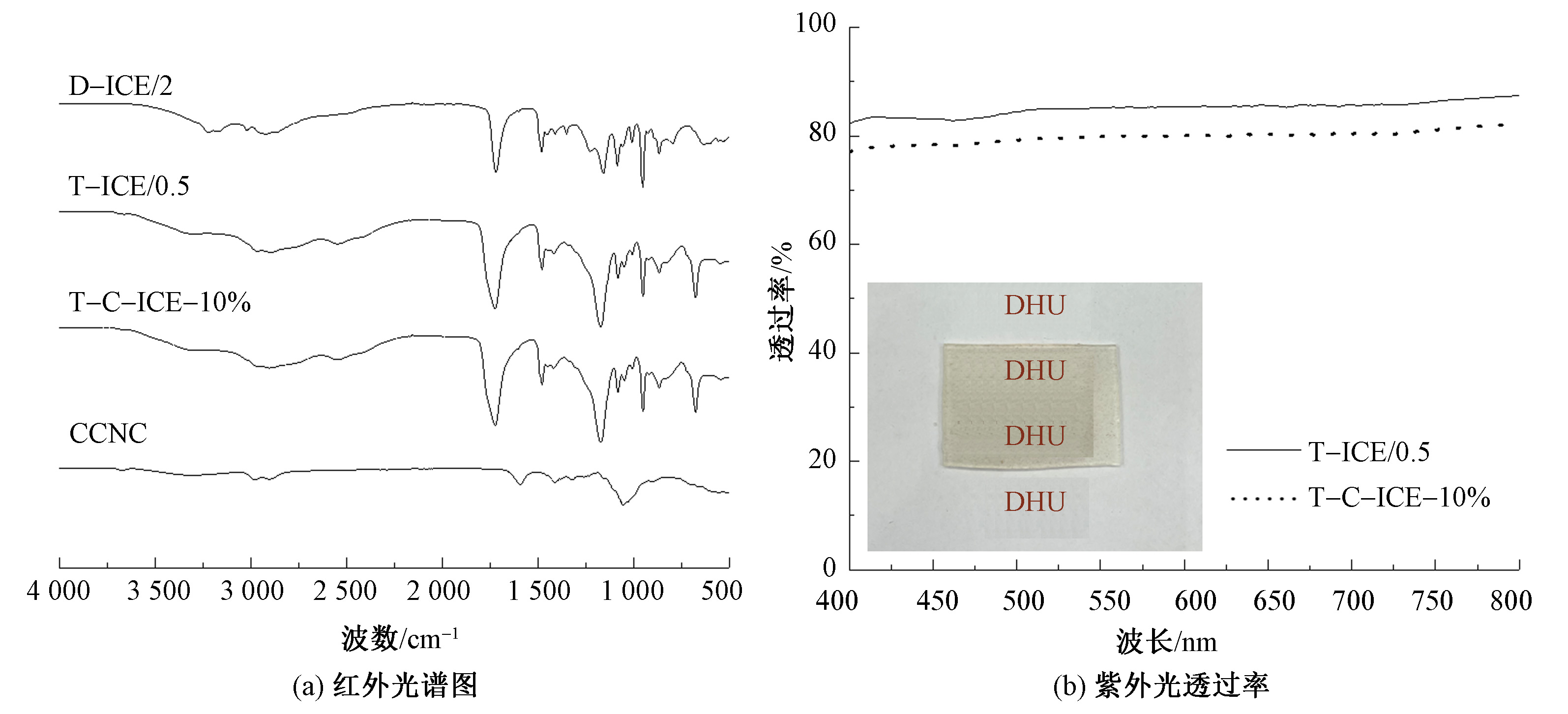
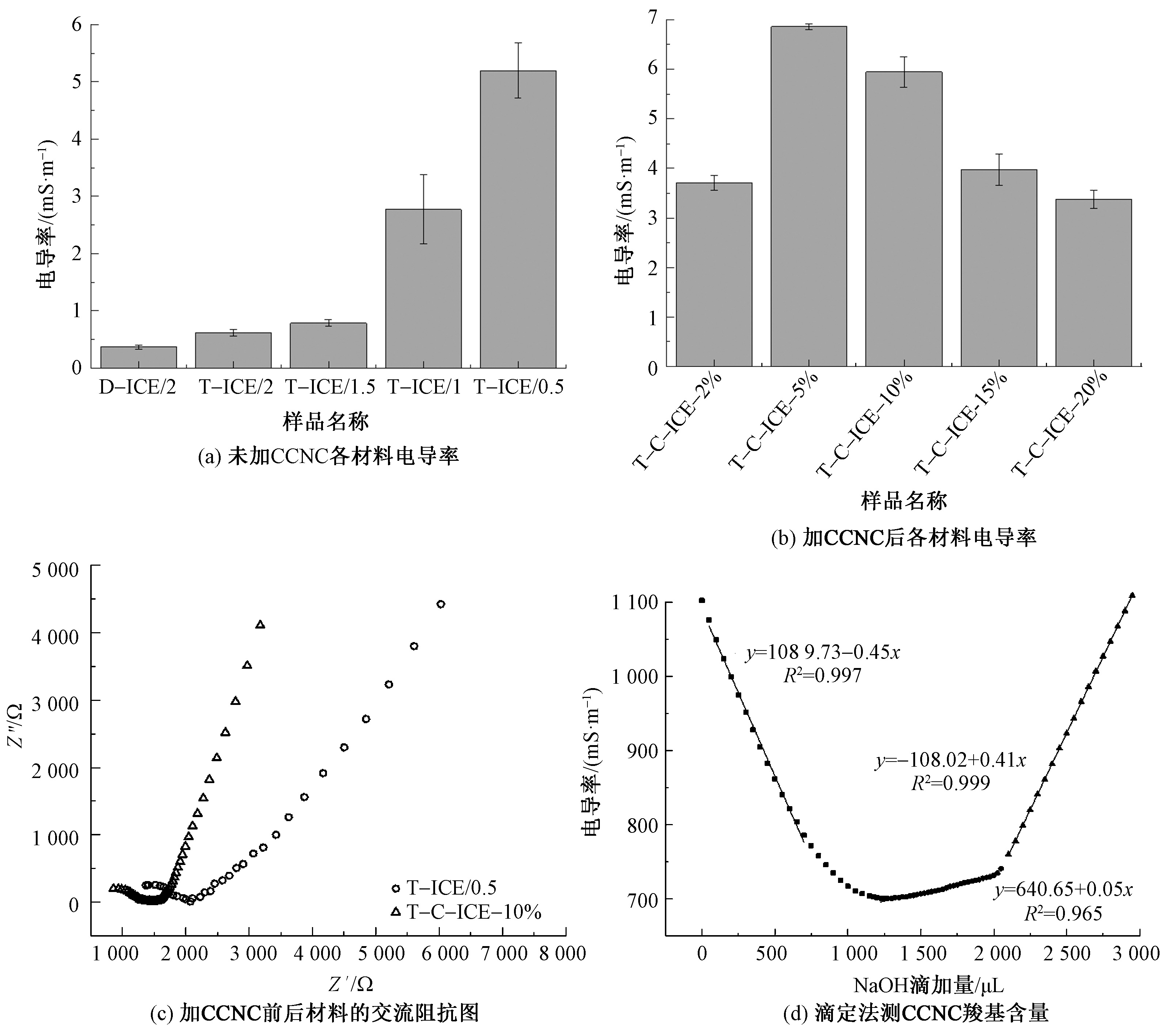
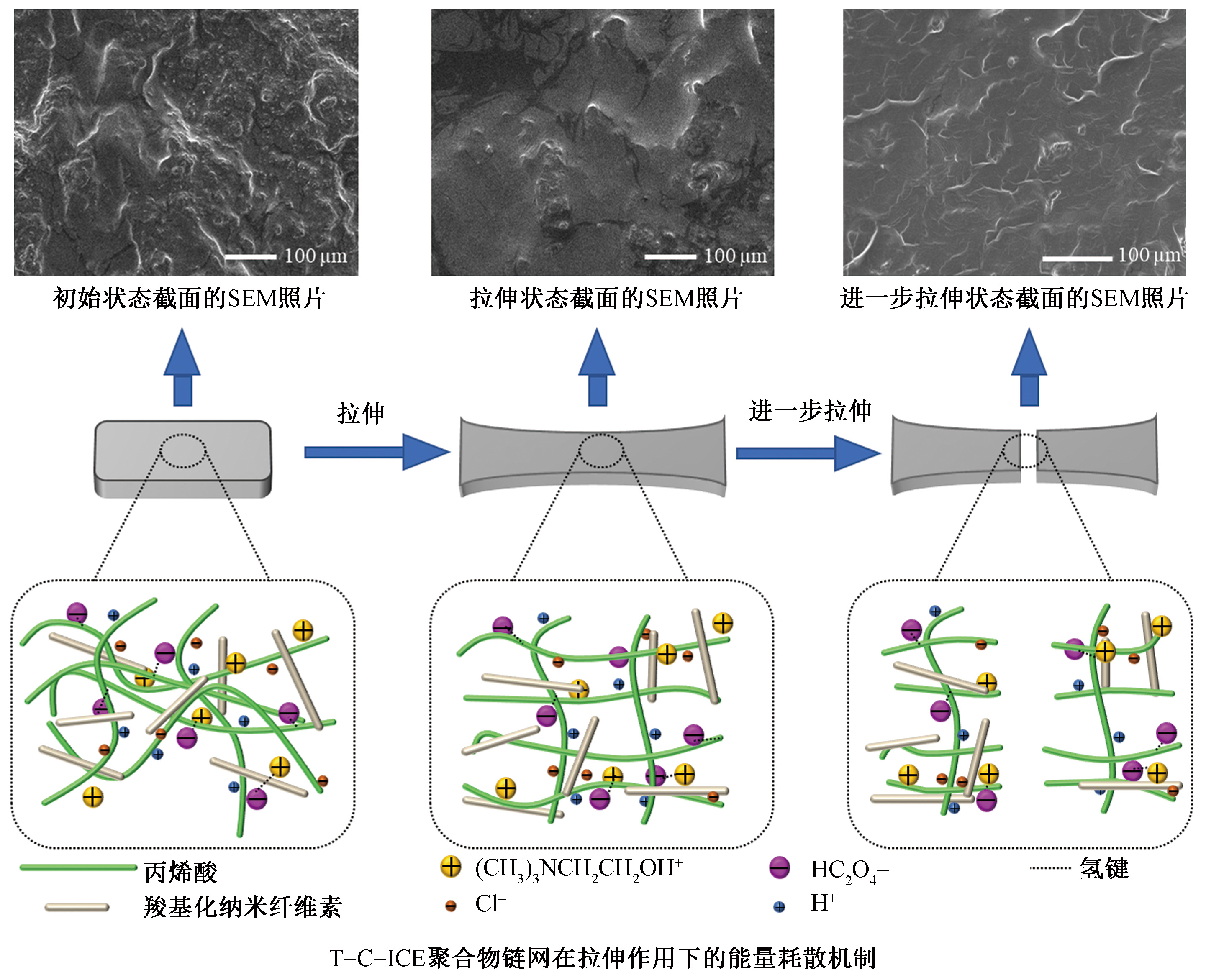
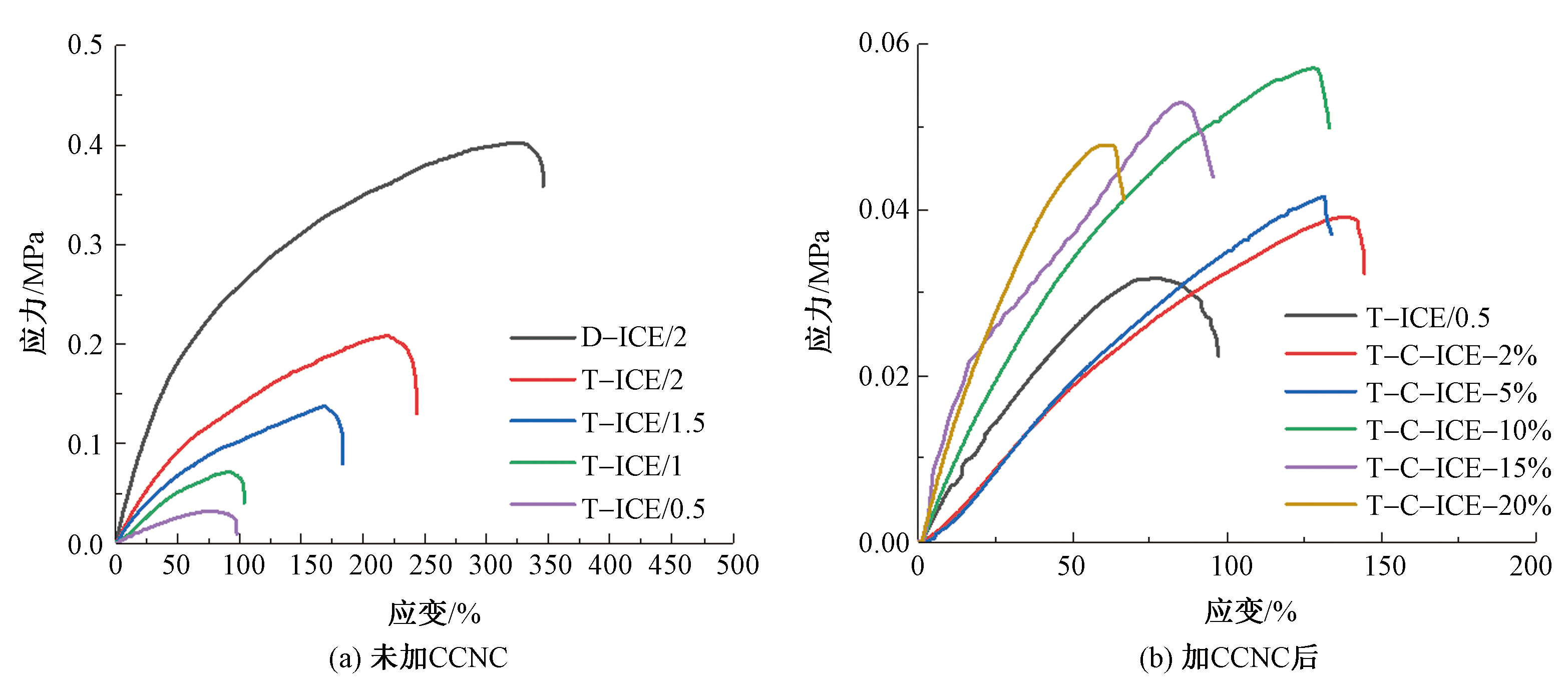
针对现有离子导电弹性体(ICE)存在的离子泄露或潮解的问题,受到珍珠母微米尺度的“砖-泥”结构的启发,设计了一种新型的无液体本征离子导电弹性体,通过三元可聚合低共熔溶剂(T-PDES)和羧基化纳米纤维素纤维(CCNC)的原位聚合,CCNC表面电离的离子增加了离子迁移数量(电导率5.94 mS/m)。实验结果表明三维纤维素纤维网络和T-PDES之间的界面相互作用赋予ICE良好的力学性能,最大应力为0.06 MPa,最大应变为130%,且ICE具有良好的光学透明性,透光率约为80%。本研究为纤维素基可持续功能性离子导体的制备提供了一种有效的策略。
中图分类号:
| [1] | 张团慧, 范萌琦, 王晋, 等. 导电材料的分类及其研究进展[J]. 化工新型材料, 2016, 44(10): 22-24. |
| ZHANG Tuanhui, FAN Mengqi, WANG Jin, et al. Classification and research progress of conductive materials[J]. New Chemical Materials, 2016, 44(10): 22-24. | |
| [2] | ZHANG P, GUO W, GUO Z, et al. Dynamically crosslinked dry ion-conducting elastomers for soft iontronics[J]. Advanced Materials (Deerfield Beach, Fla.), 2021. DOI:10.1002/adma.202101396. |
| [3] | RYOTA T, KEI H, TATSUHIRO H, et al. Self-healing micellar ion gels based on multiple hydrogen bonding[J]. Advanced Materials, 2018. DOI:10.1002/adma.201802792. |
| [4] | 张庆, 黄继军. 离子导电弹性体黏合剂的进展及应用[J]. 中国胶粘剂, 2024, 33(2): 1-21. |
| ZHANG Qing, HUANG Jijun. The progress and application of ion conductive elastomer binder[J]. China Adhesives, 2024, 33(2): 1-21. | |
| [5] | FENG B, ZHANG Y, ZEN N, et al. A mechanically robust and highly stretchable cross-linked dual-ionic conductive elastomer[J]. Chemical Engineering Journal, 2023. DOI: 10.1016/j.cej.2023.145497. |
| [6] | 李楠, 高党鸽, 吕斌, 等. 皮胶原在柔性智能可穿戴领域的研究进展[J/OL]. 化工进展, 2024, 43(5): 2645-2660. |
| LI Nan, GAO Dangge, LV Bin, et al. References on research progress in the field of intelligent flexible wearable[J/OL]. Chemical Engineering Progress, 2024, 43(5): 2645-2660. | |
| [7] | LI S, SHUAI P, WANG A, et al. Tailoring the interfacial interaction of collagen fiber/waterborne polyurethane composite via plant polyphenol for mechanically robust and breathable wearable sub-strate[J]. Composites Part A, 2023. DOI: 10.1016/j.compositesa.2023.107810. |
| [8] | 程斌, 陈家祥, 曹凌云, 等. 柔性触觉传感电子皮肤研究进展[J]. 科学通报, 2024, 69(20): 2978-2999. |
| CHENG Bin, CHEN Jiaxiang, CAO Lingyun, et al. Flexible tactile sensor electronic skin research pro-gress[J]. Chinese Science Bulletin, 2024, 69(20): 2978-2999. | |
| [9] | LIU J, WANG W, LI H, et al. Recent progress in fabrications, properties and applications of multifunctional conductive hydrogels[J]. European Polymer Journal, 2024. DOI: 10.1016/j.eurpolymj.2024.112895. |
| [10] | WAN Z, QU R, SUN Y, et al. Physically crosslinked polyvinyl alcohol, phytic acid and glycerol hydrogels for wearable sensors with biocompatibility, antimicrobial stability and anti-freezing[J]. European Polymer Journal, 2024. DOI: 10.1016/j.eurpolymj.2024.112974. |
| [11] | HANSEN B, SPITTLE S, CHEN B, et al. Deep eutectic solvents: a review of fundamentals and applications[J]. Chemical Reviews, 2020, 121(3): 1232-1285. |
| [12] |
ABBOTT A, CAPPER G, DAVIES D, et al. Novel solvent properties of choline chloride/urea mixtures[J]. Chemical Communications, 2003(1):70-71.
pmid: 12610970 |
| [13] | LI X, LIU J, GUO Q, et al. Polymerizable deep eutectic solvent-based skin-like elastomers with dynamic schemochrome and self-healing ability[J]. Small, 2022. DOI: 10.1002/smll.202201012. |
| [14] | LI R, CHEN G, FAN T, et al. Transparent conductive elastomers with excellent autonomous self-healing capability in harsh organic solvent environments[J]. Journal of Materials Chemistry A, 2020, 8(10): 5056-5061. |
| [15] | LI X, NING C, LI L, et al. Fabricating lignin-containing cellulose nanofibrils with unique properties from agricultural residues with assistance of deep eutectic solvents[J]. Carbohydrate Polymers, 2021. DOI: 10.1016/j.carbpol.2021.118650. |
| [16] | 严忠杰, 丁世杰, 李维浩, 等. 纳米纤维素增强双网络介导水凝胶的制备及性能[J]. 纺织高校基础科学学报, 2022, 35(4): 16-22. |
| YAN Zhongjie, DING Shijie, LI Weihao, et al. Preparation and properties of nanocellulose enhanced double network mediated hydrogels[J]. Journal of Basic Science of Textile Universities, 2022, 35(4): 16-22. | |
| [17] | 王春芬, 胡香玉, 庄晓莎. 纳米纤维素在柔性电子器件的应用进展[J]. 纤维素科学与技, 2024, 32(1): 77-83. |
| WANG Chunfen, HU Xiangyu, ZHUANG Xiaosha. Application progress of nano cellulose in flexible electronics[J]. Journal of Cellulose Science and Technology, 2024, 32(1): 77-83. | |
| [18] | YUAN Z, ZHOU B, YUAN K, et al. High-aligned oppositely-charged nanocellulose/MXene aerogel membranes through synergy of directional freeze-casting and structural densification for osmotic-energy harves-ting[J]. Nano Energy, 2024. DOI: 10.1016/j.nanoen.2024.109450. |
| [19] | LAI C, YU S. 3D printable strain sensors from deep eutectic solvents and cellulose nanocrystals[J]. ACS Applied Materials Interfaces, 2020, 12(30): 34235-34244. |
| [20] | 林涛, 李杰, 殷学风, 等. 纤维素纳米晶体改性及应用研究进展[J]. 中国造纸, 2023, 42(9): 113-124,144. |
| LIN Tao, LI Jie, YIN Xuefeng, et al. Research progress on modification and application of cellulose nanocrystals[J]. China Paper, 2023, 42(9): 113-124,144. | |
| [21] | 吴坤泽. 纳米纤维素基复合碳气凝胶在柔性电子器件中的应用[D]. 广东: 华南理工大学, 2020: 8-15. |
| WU Kunze. Application of nanocellulosic composite carbon aerogel in flexible electronic devices[D]. Guangdong: South China University of Technology, 2020: 8-15. | |
| [22] |
朱顺顺, 木泰华, 孙红男. 纤维素纳米晶制备方法及应用研究进展[J]. 核农学报, 2022, 36(1): 174-182.
doi: 10.11869/j.issn.100-8551.2022.01.0174 |
| ZHU Shunshun, MU Taihua, SUN Hongnan. Research progress on preparation methods and application of cellulose nanocrystals[J]. Chinese Journal of Nuclear Agriculture, 2022, 36(1): 174-182. | |
| [23] | DAI S, CHU Y, LIU D, et al. Intrinsically ionic conductive cellulose nanopapers applied as all solid dielectrics for low voltage organic transistors[J]. Nature Communications, 2018, 9(1): 1-10. |
| [24] | 岑钰. 柠檬酸水解结合高压微射流优化制备纳米纤维素的研究[D]. 广东: 华南理工大学, 2022: 21-24. |
| CEN Yu. Study on preparation of nanocelluloses by citric acid hydrolysis combined with high pressure microjet[D]. Guangdong: South China University of Technology, 2022: 21-24. | |
| [25] | 宁晨汐, 张潇, 江闯, 等. 纳米纤维素-可聚合低共熔溶剂离子导电弹性体的制备及性能研究[J]. 中国造纸, 2023, 42(5):43-49. |
| NING Chenxi, ZHANG Xiao, JIANG Chuang, et al. Preparation and properties of nanocellulose ionic conductive elastomer with polymerizable eutectic sol-vent[J]. Chinese Paper Making, 2023, 42(5):43-49. | |
| [26] | 丛晓波, 华一新, 吴振, 等. 乙酰胺-氯化锌新型离子液体的合成及物化性质[J]. 化学研究, 2011, 22(4): 41-45. |
| CONG Xiaobo, HUA Yixin, WU Zhen, et al. Acetamide-new zinc chloride synthesis and physical and chemical properties of ionic liquid[J]. Journal of Chemical Research, 2011, 22(4): 41-45. |
| [1] | 佘叶美, 彭阳阳, 王法猛, 潘如如. 基于经编间隔织物的柔性压力传感器制备及其性能[J]. 纺织学报, 2025, 46(03): 158-166. |
| [2] | 张蕊, 叶苏娴, 王建, 邹专勇. 全织物型离电式柔性压力传感器的制备及其性能[J]. 纺织学报, 2025, 46(02): 113-121. |
| [3] | 梁雯宇, 季东晓, 覃小红. 微纳米纤维包芯纱制备及其电致发光性能[J]. 纺织学报, 2025, 46(01): 42-51. |
| [4] | 张曼, 权英, 冯宇, 李甫, 张爱琴, 刘淑强. 纺织基可穿戴柔性应变传感器的研究进展[J]. 纺织学报, 2024, 45(12): 225-233. |
| [5] | 贾笑娅, 王蕊宁, 侯宵, 何彩婷, 刘杰, 孙润军, 王秋实. 多相剪切增稠液增强柔性层合结构防刺材料的制备及其性能[J]. 纺织学报, 2024, 45(10): 113-121. |
| [6] | 肖渊, 童垚, 胡呈安, 武贤军, 杨磊鹏. 导电复合材料涂覆式全织物基柔性压阻传感器制备[J]. 纺织学报, 2024, 45(10): 152-160. |
| [7] | 李露红, 罗天, 丛洪莲. 针织一体成形电容传感器设计及其性能[J]. 纺织学报, 2024, 45(10): 80-88. |
| [8] | 王文, 张乐乐, 黄阳杰, 谭浩, 方舒婷, 向晨雪, 王栋. 聚乙烯醇-乙烯/SiO2复合柔性驱动膜的制备及其性能[J]. 纺织学报, 2024, 45(07): 10-17. |
| [9] | 徐振凯, 马鸣, 蔺多佳, 刘航, 张剑峰, 夏鑫. 自支撑聚吡咙基碳纤维负极材料的制备及其电化学性能[J]. 纺织学报, 2024, 45(06): 23-31. |
| [10] | 鞠宇, 王朝晖, 李博一, 叶勤文. 基于机器学习的服装生产线员工效率预测[J]. 纺织学报, 2024, 45(05): 183-192. |
| [11] | 卢妍, 洪岩, 方剑. 智能背景下机器学习在柔性应变传感器中的应用研究进展[J]. 纺织学报, 2024, 45(05): 228-238. |
| [12] | 梁文静, 吴俊贤, 何崟, 刘皓. 基于复合纳米纤维膜的离子传感器制备及其性能[J]. 纺织学报, 2024, 45(04): 15-23. |
| [13] | 王馨雨, 田明伟. 具有距离监测与辅助提示功能的自闭症儿童智能服装设计[J]. 纺织学报, 2024, 45(03): 156-162. |
| [14] | 何崟, 邓凌, 林美霞, 李倩倩, 肖爽, 刘皓, 刘莉. 冬季运动智能柔性人台关键技术开发[J]. 纺织学报, 2024, 45(02): 221-230. |
| [15] | 管图祥, 吴健, 暴宁钟. 微流控纺丝制备石墨烯纤维基柔性超级电容器的研究进展[J]. 纺织学报, 2023, 44(12): 205-215. |
|
||
 京公网安备11010502044800号