纺织学报 ›› 2025, Vol. 46 ›› Issue (07): 193-201.doi: 10.13475/j.fzxb.20240805001

• 服装工程 • 上一篇    下一篇

基于三维虚拟模特转换的女士连体长裤参数化纸样生成

陈晓真1, 吴莹1,2(), 杨叶1, 鲁礼豪1   

  1. 1 浙江理工大学 服装学院, 浙江 杭州 310018
    2 浙江理工大学 浙江省丝绸与时尚文化研究中心, 浙江 杭州 310018
  • 收稿日期:2024-08-27 修回日期:2025-04-10 出版日期:2025-07-15 发布日期:2025-08-14
  • 通讯作者: 吴莹(1988—),女,讲师,博士。主要研究方向为数字技术在纺织服装的应用。E-mail:ying012688@zstu.edu.cn
  • 作者简介:陈晓真(2001—),女,硕士生。主要研究方向为服装数字化技术。
  • 基金资助:
    浙江理工大学基本科研业务费青年创新专项项目(22076229-Y);浙江省大学生科技创新活动计划(新苗人才计划)项目(2024R406A017)

Parameterized pattern generation of women's jumpsuit based on three-dimensional virtual model transformation

CHEN Xiaozhen1, WU Ying1,2(), YANG Ye1, LU Lihao1   

  1. 1 School of Fashion Design & Engineering, Zhejiang Sci-Tech University, Hangzhou, Zhejiang 310018, China
    2 Zhejiang Silk and Fashion Culture Research Center, Zhejiang Sci-Tech University, Hangzhou, Zhejiang 310018, China
  • Received:2024-08-27 Revised:2025-04-10 Published:2025-07-15 Online:2025-08-14

摘要:

面对合体纸样要求高、定制流程繁琐等问题,提出一种基于三维建模软件和参数化设计的个性化合体纸样快速生成方法。以连体长裤为例,针对其着装不合体、合体度差等问题,首先对1名女性进行非接触式三维人体扫描,获得全方位数据信息和人体模型,平滑补洞处理后,结合CLO3D虚拟模特转换功能,将其转换为可调整的个性化人体模特。其次,基于转换后的模特获取契合人体体型的基础纸样,然后利用AutoCAD的参数化功能构建连体长裤参数化结构约束模型。在此过程中,通过调整原始用户参数,将适量的松量有效分布于纸样中,以使其能够满足实际穿着的需要。结果表明,所提纸样生成方法稳定快速;真实试穿评价和虚拟压力仿真结果显示以个性化人体体型为基础构建的参数纸样,穿着舒适效果好;相比其它参数化生成方法,从三维视角出发,为合体服装纸样生成提供了一种新的方法。

关键词: 服装纸样自动生成技术, 虚拟模特, 服装制版, 连体长裤, AutoCAD参数化

Abstract:

Objective With the rapid advancement of digital technology, the technology of automatic garment pattern generation is facing more tests and challenges. The method of two-dimensional parameter drawing is more accurate, more stable and less computational, but the operation process is lack of intuitive visualization, and the degree of integration of three-dimensional concepts is not enough, so it is difficult to achieve the effect of high fit for garment with high degree of fitting. Aiming at the problems such as misfit and poor fit, a method is put forward to automatically generate the pattern of fit trousers.

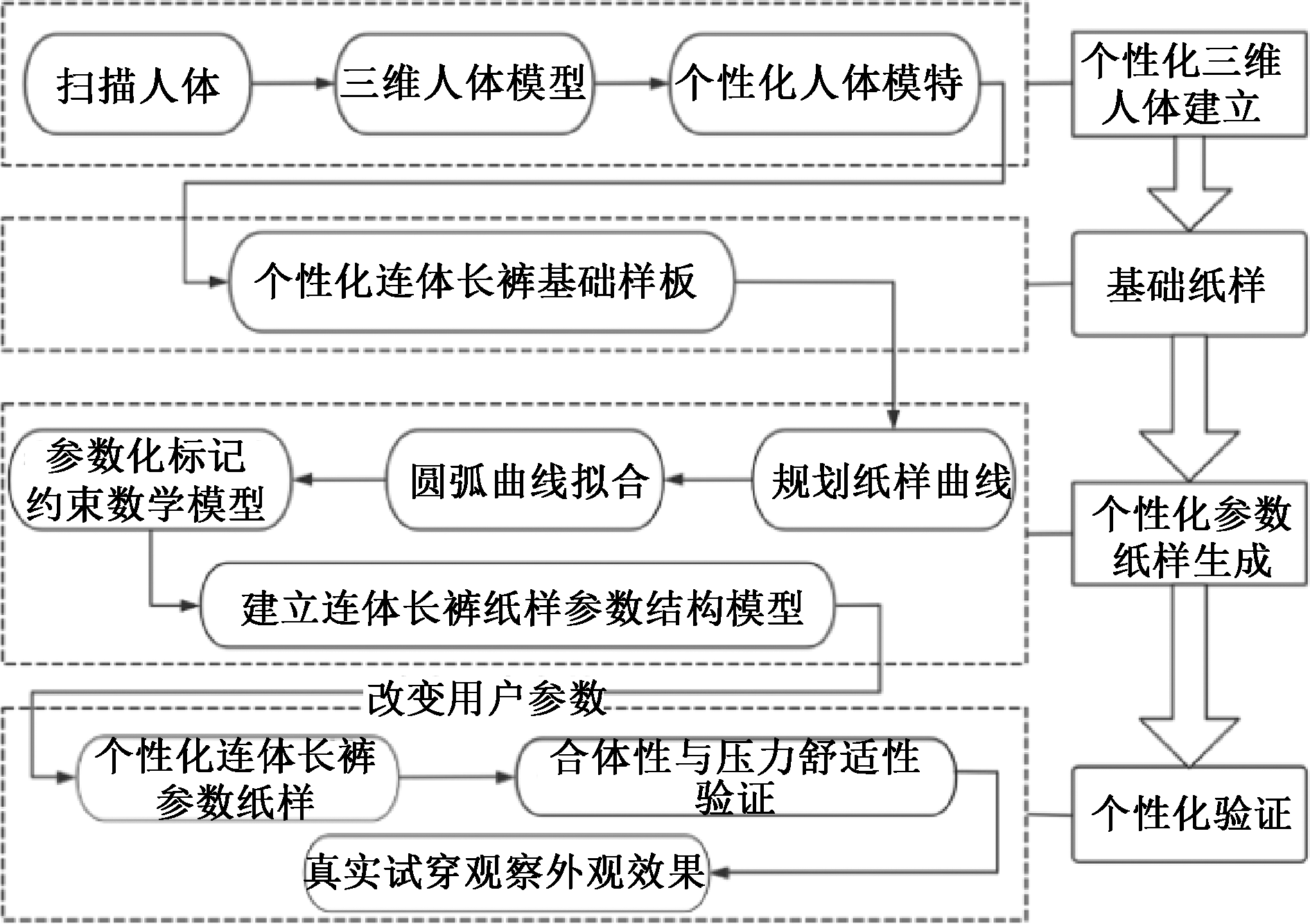
Method Focusing on women's jumpsuits, a method is established for the automatic generation of conjoined trouser patterns using the parameter constraint function of AutoCAD alongside three-dimensional design principles. Firstly, a three-dimensional human model is captured using a 3-D scanner, which is then transformed into an adjustable personalized virtual model using CLO3D. Subsequently, a parameterized constraint structure model of the jumpsuit is developed through AutoCAD's parameterization functions, enabling the rapid generation of customized one-piece trouser templates suitable for various body sizes.

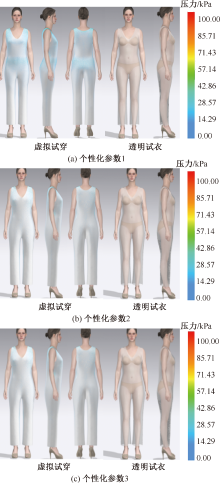
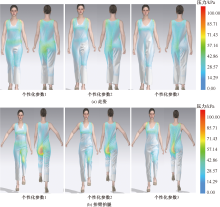
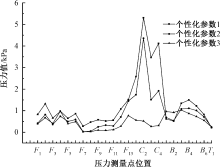
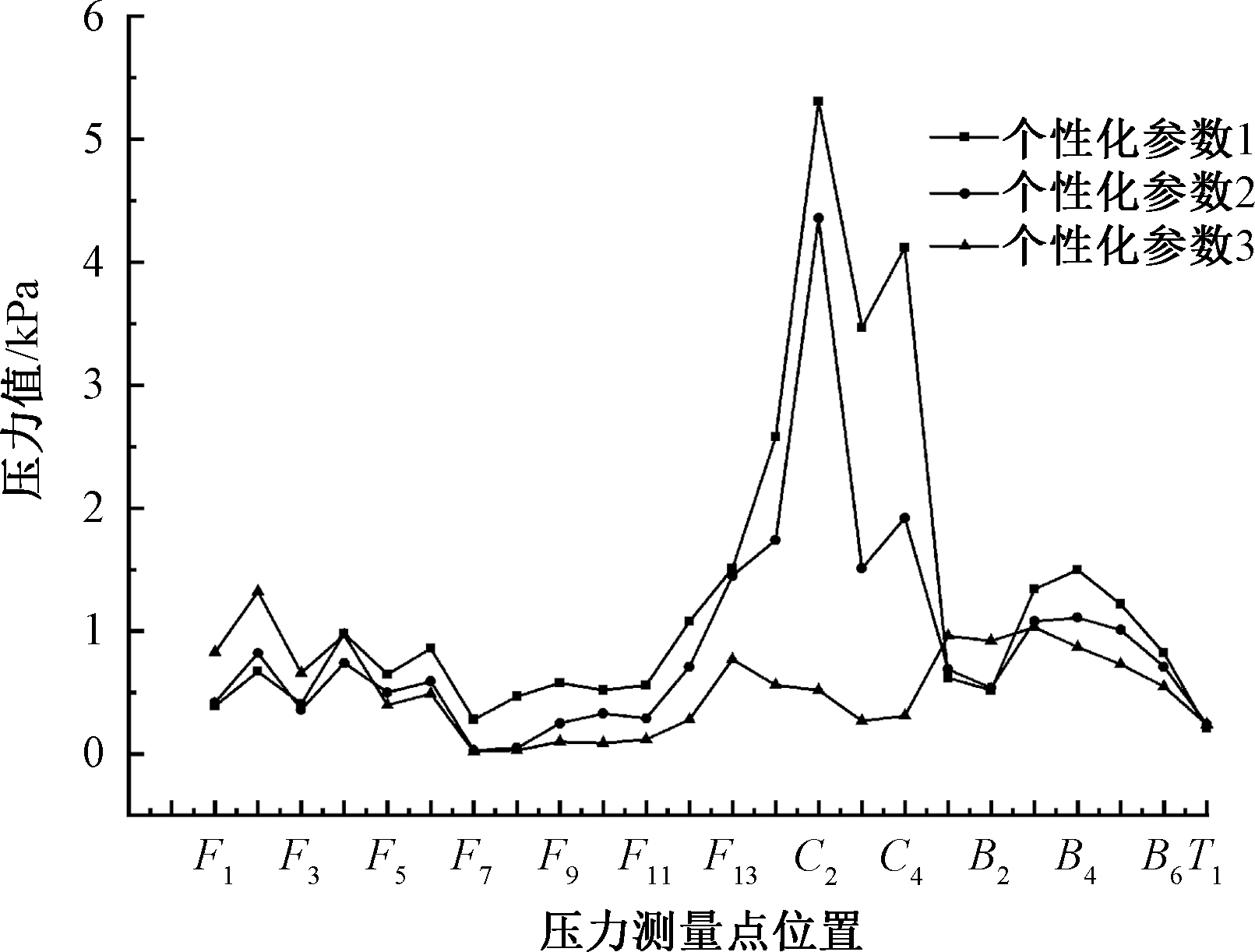
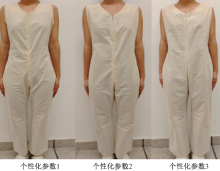
Results CLO3D virtual modeling software is utilized to perform virtual stitching on garment patterns generated from three parametric structural models of jumpsuits. A comprehensive analysis was conducted, focusing on both the virtual aesthetic appearance and the pressure simulation during fitting to evaluate the comfort of the three groups of parametric samples. The results from the virtual fittings indicated that the personalized jumpsuits exhibited an appropriate level of looseness, with a smooth surface and no slack. The garment pressure maps showed that during standing, walking, and significant arm and leg movements, the pressure on all virtual garments remained between 0 kPa and 16 kPa, except in minor areas such as the knees and hips, where the garment experienced some pulling. When the model's arms and legs were raised, the pressure exerted by the garment on the human body at the measurement points for the three groups of personalized jumpsuits was generally below 5 kPa, which meets comfort requirements for human pressure distribution. Subsequently, the patterns generated based on the established parameters were produced in accordance with garment construction standards, followed by actual virtual fittings that allowed users to provide subjective feedback regarding their wearing experience. The results indicated that the ratings for all three samples were concentrated between 3.5 and 4.7, reflecting a positive try-on experience. However, the jumpsuit patterns generated using personalized parameters were found to be better aligned with user needs and preferences, resulting in a greater perception of comfort during wear. In conclusion, the parametric pattern generation method grounded in three-dimensional concepts effectively addresses fit and provides a refined solution for the complexities of garment fitting.

Conclusion The proposed automatic generation method for jumpsuit patterns effectively derives basic patterns from the surfaces of personalized virtual molds, fulfilling the demands for pattern visualization and customization. By adjusting user parameters, jumpsuit patterns with varying degrees of looseness can be generated automatically in accordance with specific constraints. The results demonstrate accuracy and efficacy in pattern generation. Unlike convenitional parametric programming, this approach enhances interactivity and simplicity, serving as a reference for developing parametric templates for a broader range of garment styles.

Key words: garment pattern automatic generation technology, virtual model, garment pattern making, jumpsuits, AutoCAD parameterization

中图分类号: 

  • TS941.2

图1

连体长裤参数化纸样生成方法流程图"

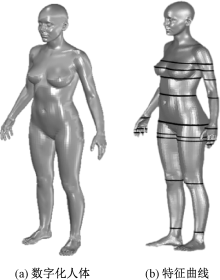
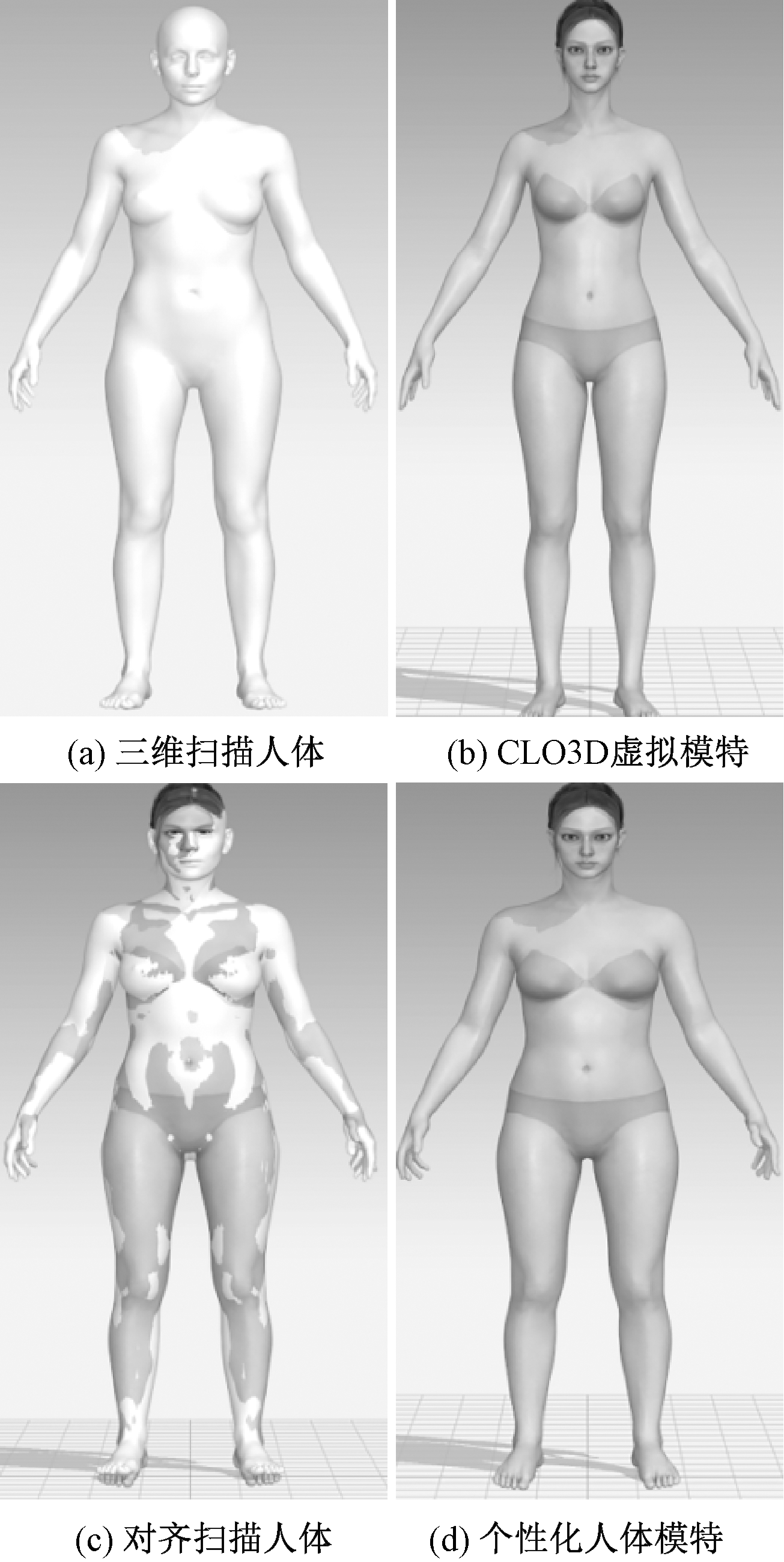
图2

三维人体模型建立与特征分析"

表1

关键部位尺寸对比"

关键部位 尺寸/cm
数字化人体(转换前) 个性化人体(转换后)
背长 38.42 38.77
肩宽 39.02 38.22
胸围 88.51 88.46
腰围 69.53 70.96
臀围 96.88 96.69
膝围 33.23 33.04
脚踝围 21.25 21.21
立裆长 20.45 21.08
大腿根围 53.91 55.07

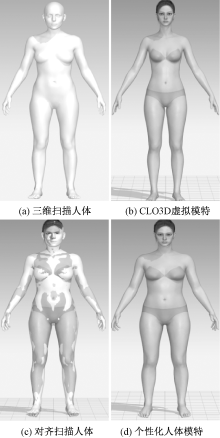
图3

个性化人体模特生成过程"

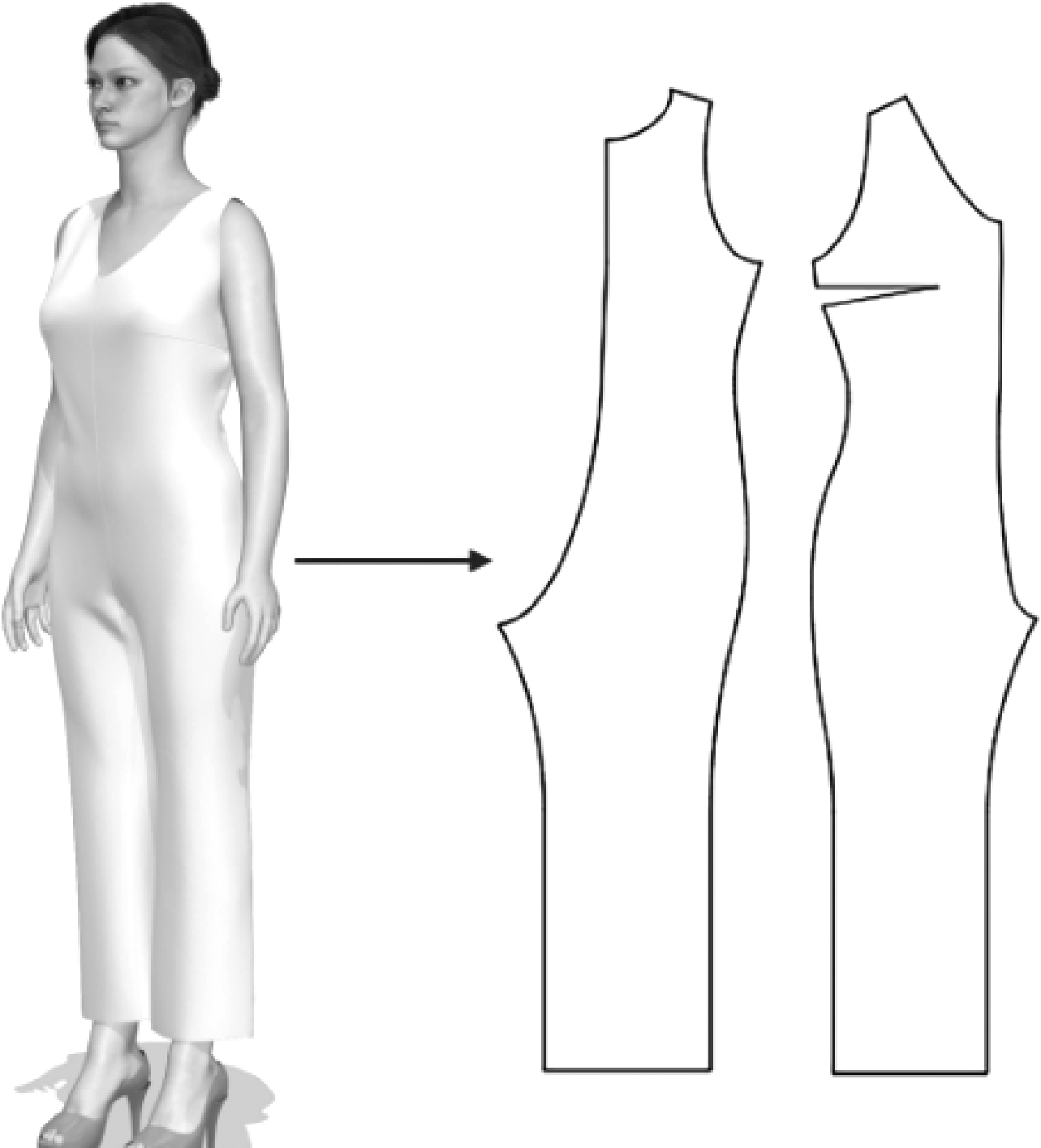
图4

个性化连体长裤基础纸样生成"

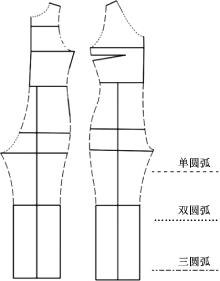
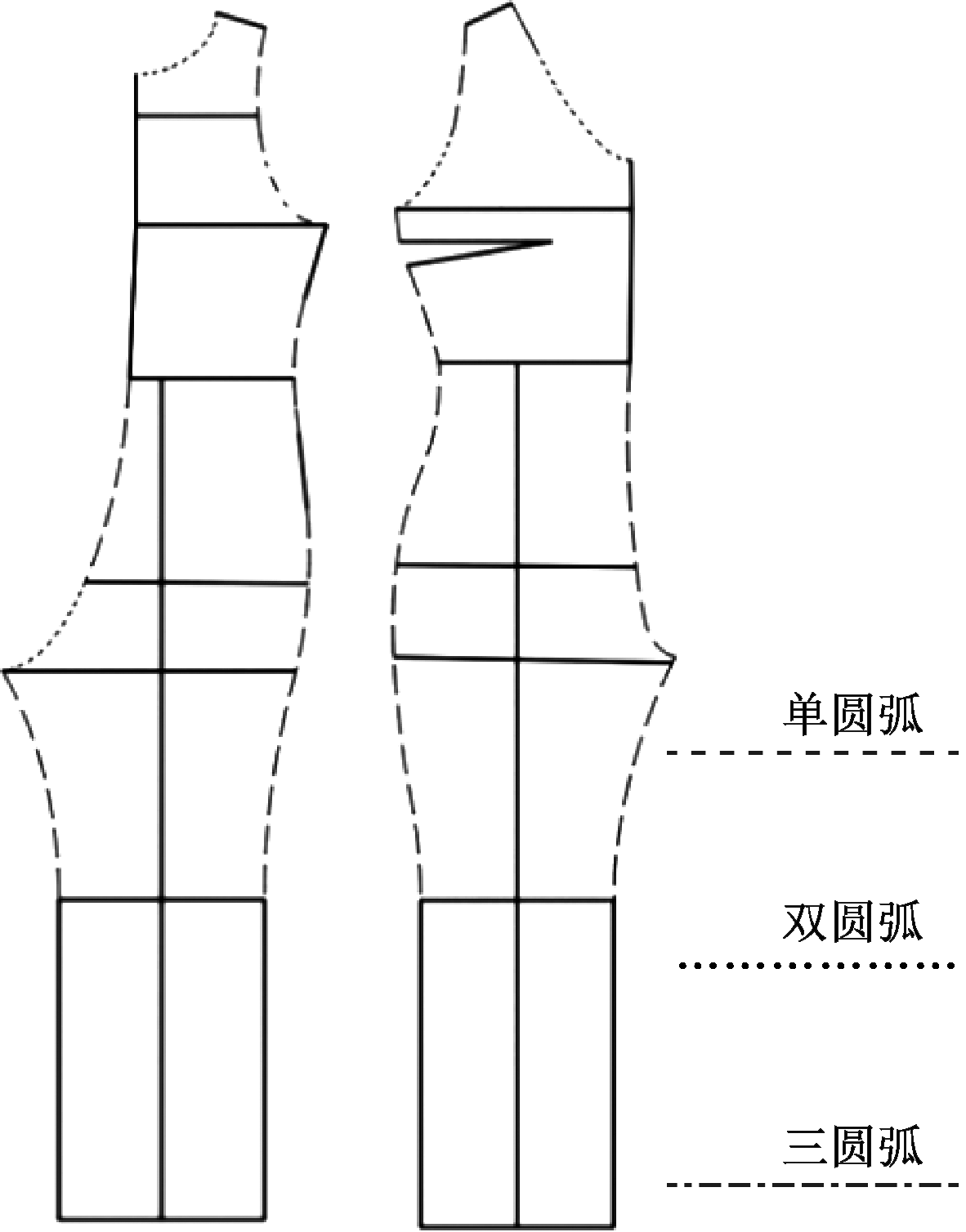
图5

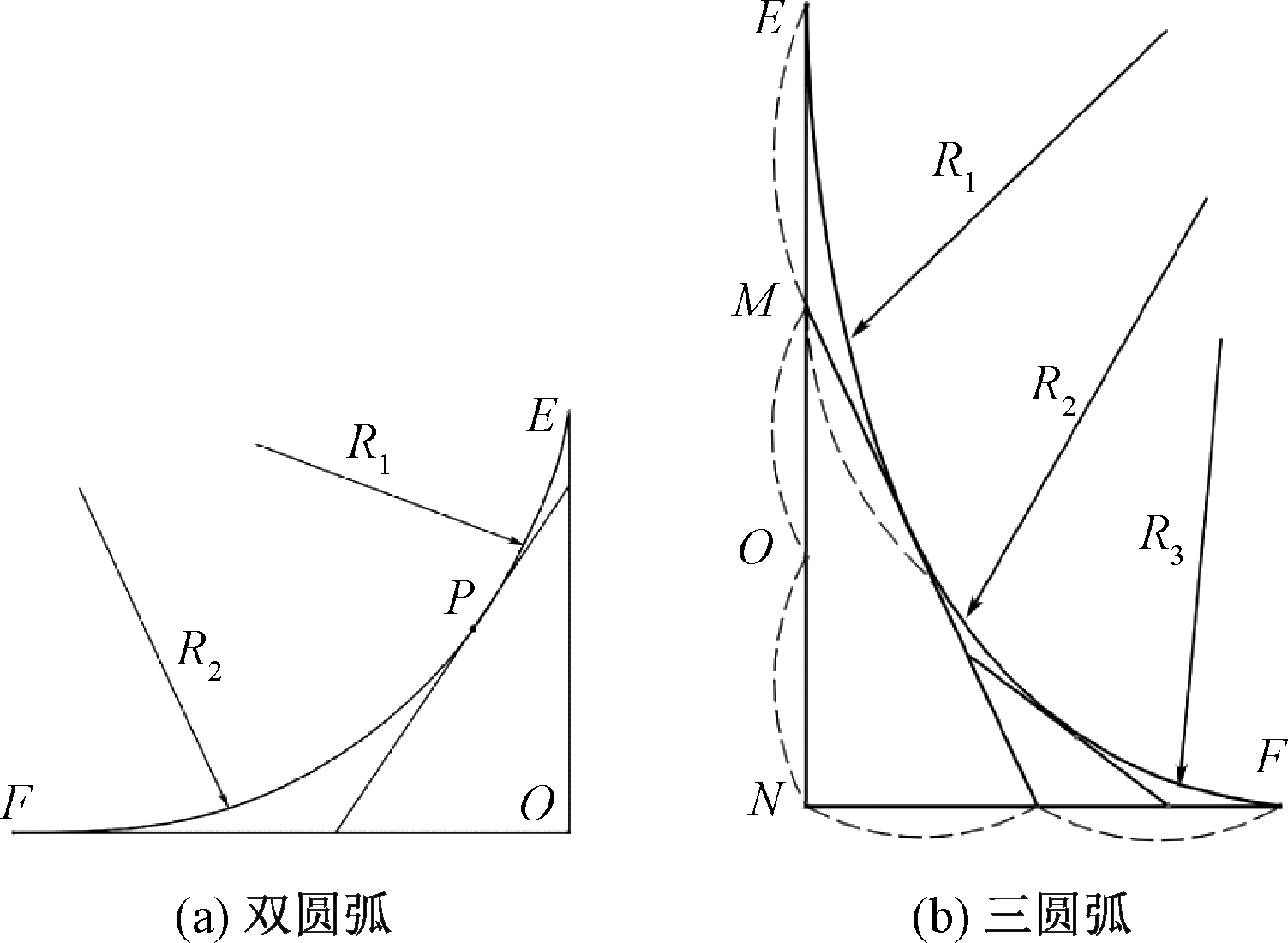
连体长裤纸样曲线圆弧规划示意图"

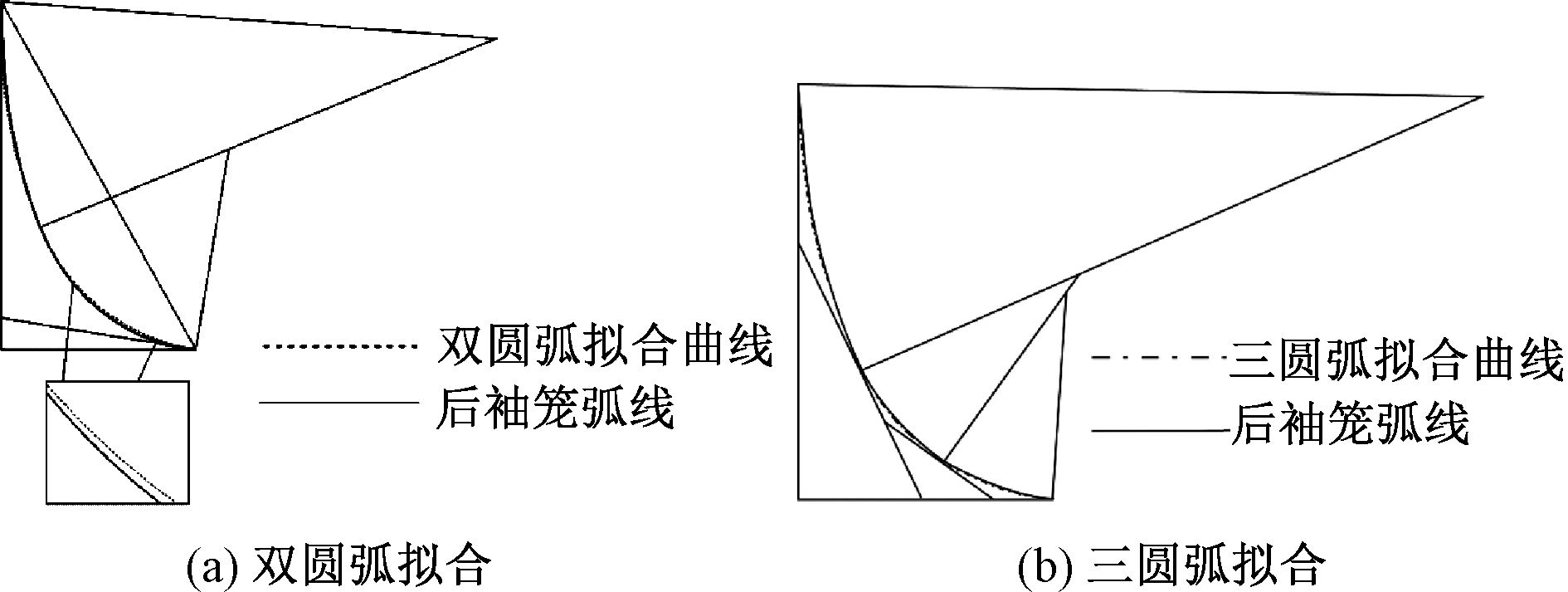
图6

双圆弧与三圆弧拟合效果对比"

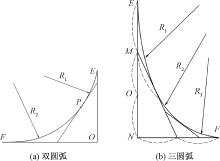
图7

双圆弧与三圆弧示意图"

图8

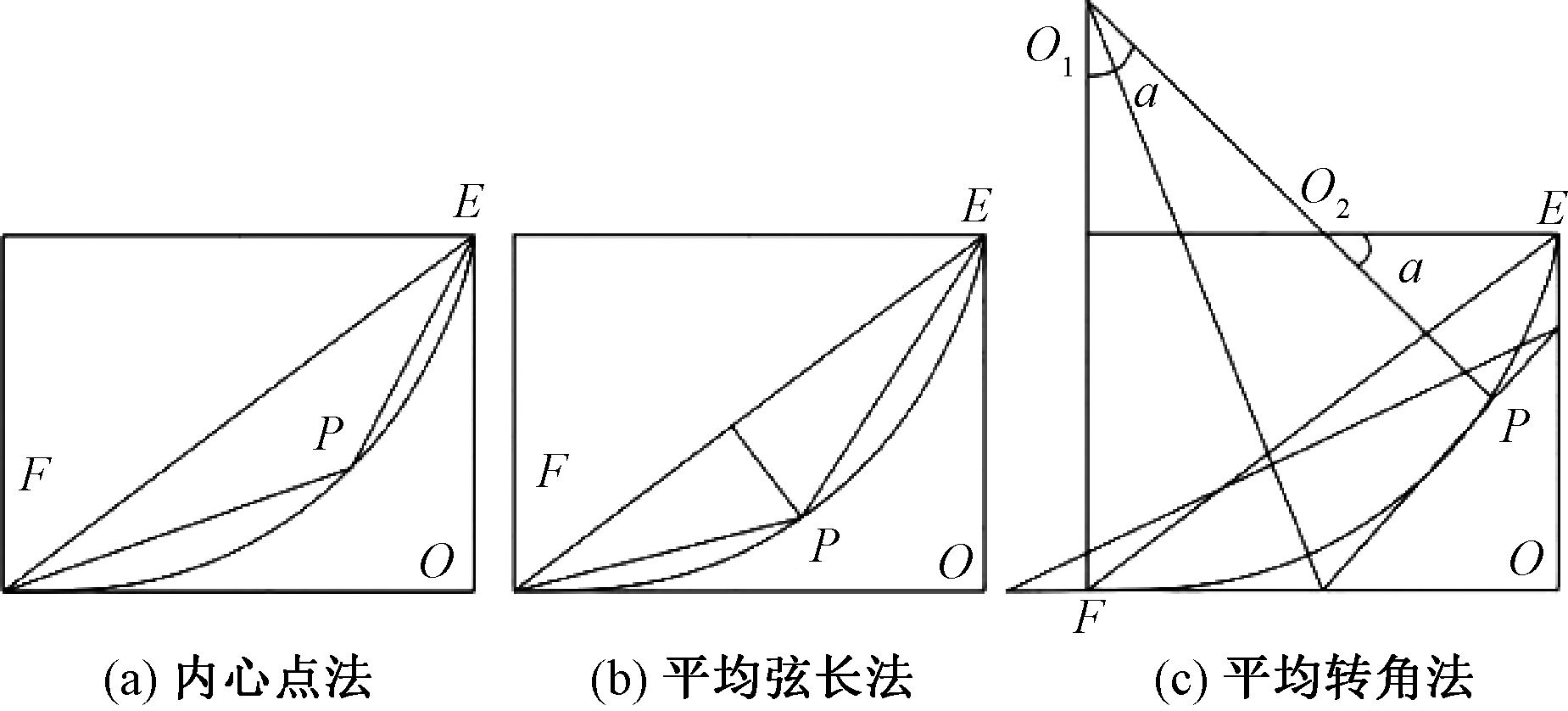
双圆弧画法"

图9

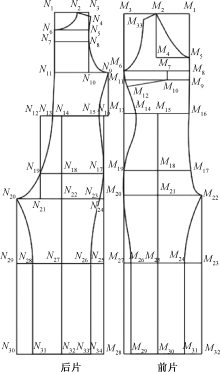
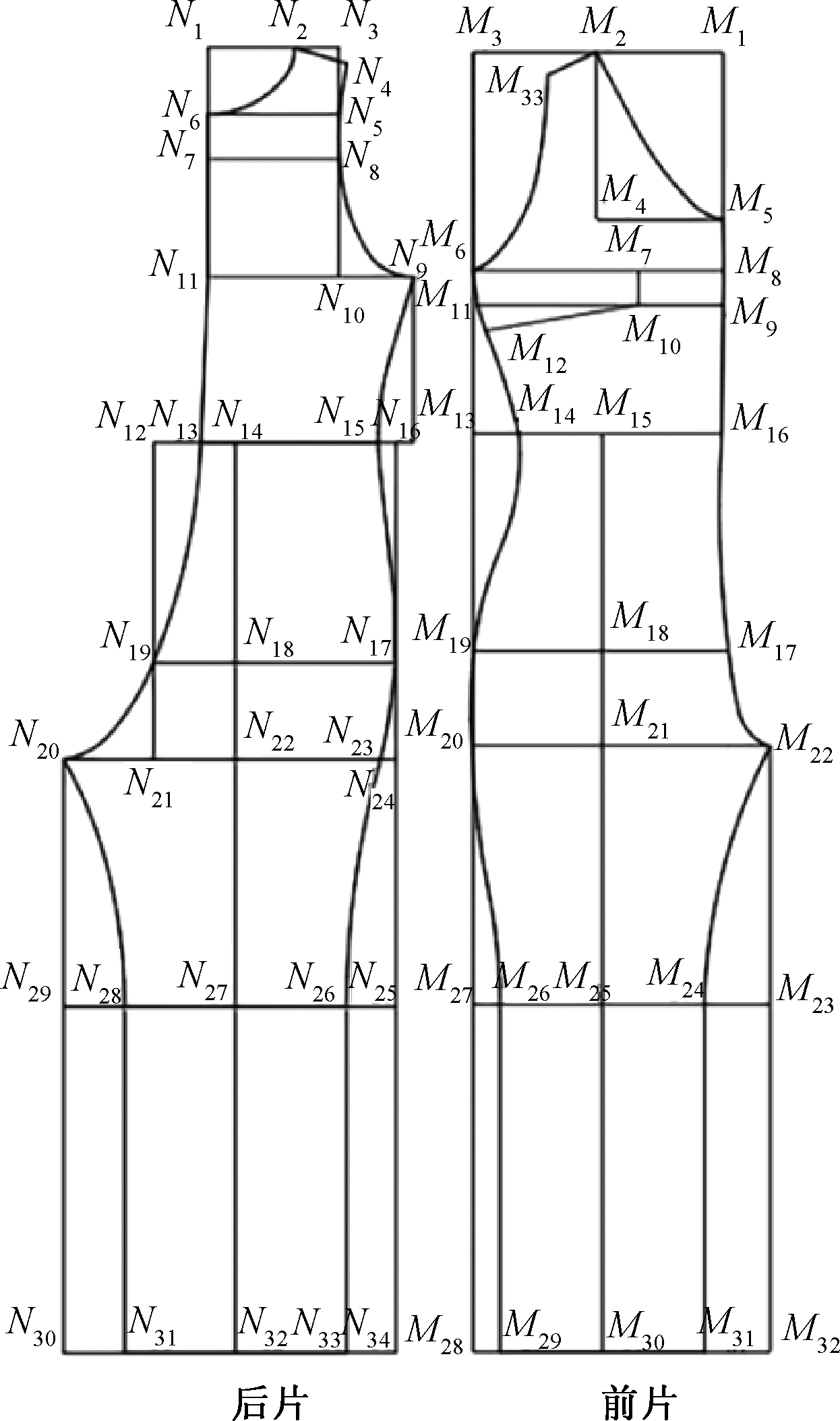
连体服参数化约束标记图"

表2

连体长裤参数化结构模型的尺寸约束"

参数类型 参数符号 含义 表达式 参考值 约束指令
尺寸
约束
参数
N1N2 后领宽 B/12+1.10 8.48 cm 水平
N1N6 后领深 N1N2-2.00 6.47 cm 竖直
N1N7 背宽线位置 N1N6+4.55 11.01 cm 竖直
N7N8 后背宽 B/6-2.00 12.75 cm 水平
N1${{N}_{1}}_{1}$ 后胸围线位置 B/6+7.96 22.71 cm 竖直
N9N11 后胸围宽 B/4-2.24 19.89 cm 水平
N1${{N}_{1}}_{3}$ 腰围线位置 L+1.77 40.15 cm 竖直
${{N}_{1}}_{3}$N16 后腰围宽 W/4-1.89 20.24 cm 水平
N16N17 臀围线位置 C+2 22.40 cm 竖直
N17N19 后臀围宽 H/4-0.92 23.32 cm 水平
N16${{N}_{2}}_{4}$ 后横档线位置 1.5N16N17-1.11 32.49 cm 竖直
${{N}_{2}}_{0}$N24 后横档宽 17/12N17N19-0.77 32.27 cm 水平
${{N}_{2}}_{4}{{N}_{3}}_{4}$ 下裆长 0.55h-N16${{N}_{2}}_{4}$ 60.44 cm 竖直
${{N}_{2}}_{4}$N25 中裆线位置 (${{N}_{2}}_{4}{{N}_{3}}_{4}$/2)-5 25.22 cm 竖直
∠N3N2N4 后肩斜线角度 16.72 16.72° 角度
N2N4 后肩斜线长 (N7N8-N1N2)/cos∠N3N2N4+1.1 5.44 cm 对齐
N3N8 后袖笼弧切线 N1${{N}_{1}}_{1}$-N1N6 16.24 cm 竖直
M1M2 前领宽 B/7-0.35 12.29 cm 水平
M1M5 前领深 B/6+1.61 16.36 cm 竖直
M8M9 BP点关键位置1 3.50 3.50 cm 竖直
M9${{M}_{1}}_{0}$ BP点关键位置2 B/12+1.25 8.63 cm 水平
M9${{M}_{1}}_{1}$ 腋下省关键位置1 M6M8-0.4 23.98 cm 水平
${{M}_{1}}_{1}{{M}_{1}}_{2}$ 腋下省大 2.73 2.73 cm 对齐
M1M8 胸围线位置 B/6+6.56 21.31 cm 竖直
M6M8 前胸围宽 B/4+2.25 24.38 cm 水平
M1${{M}_{1}}_{6}$ 腰围线位置 L+0.34 38.74 cm 竖直
M14M16 前腰围宽 W/4+2.44 19.81 cm 水平
${{M}_{1}}_{3}$M19 臀围线位置 C+1.55 21.95 cm 竖直
${{M}_{1}}_{7}$M19 前臀围宽 H/4+0.94 25.18 cm 水平
${{M}_{1}}_{3}{{M}_{2}}_{0}$ 前横裆线位置 1.5${{M}_{1}}_{3}$M19-1.52 31.41 cm 竖直
${{M}_{2}}_{0}$M22 前横裆宽 5/4${{M}_{1}}_{7}$M19-2.35 29.13 cm 水平
${{M}_{2}}_{0}$M28 下裆长 0.55h-M13M20+1.49 61.49 cm 竖直
${{M}_{2}}_{0}{{M}_{2}}_{7}$ 中裆线位置 M20M28/2-4.46 26.29 cm 竖直
∠M2M3M33 前肩斜线角度 25.20 25.20° 角度
M2M33 前肩斜线长度 5.42 5.42 cm 对齐
用户
参数
B 胸围 88.52 cm 实时
S 肩宽 39.00 cm 实时
W 腰围 69.50 cm 实时
H 臀围 96.96 cm 实时
h 身高 166.20 cm 实时
L 背长 38.40 cm 实时
C 立裆长 20.40 cm 实时

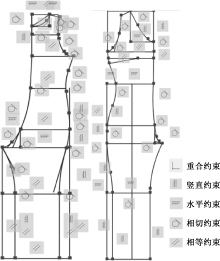
图10

连体服几何约束图"

表3

个性化用户调试参数"

参数 胸围 腰围 臀围 背长 肩宽 立裆长 身高
原始参数 88.52 69.50 96.96 38.40 39.00 20.40 166.20
个性化参数1 92.00 72.00 100.0 39.00 39.00 20.40 166.20
个性化参数2 96.00 74.00 104.00 39.00 39.00 21.40 168.00
个性化参数3 106.00 76.00 108.00 39.50 39.00 21.40 168.00

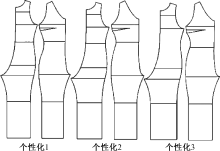
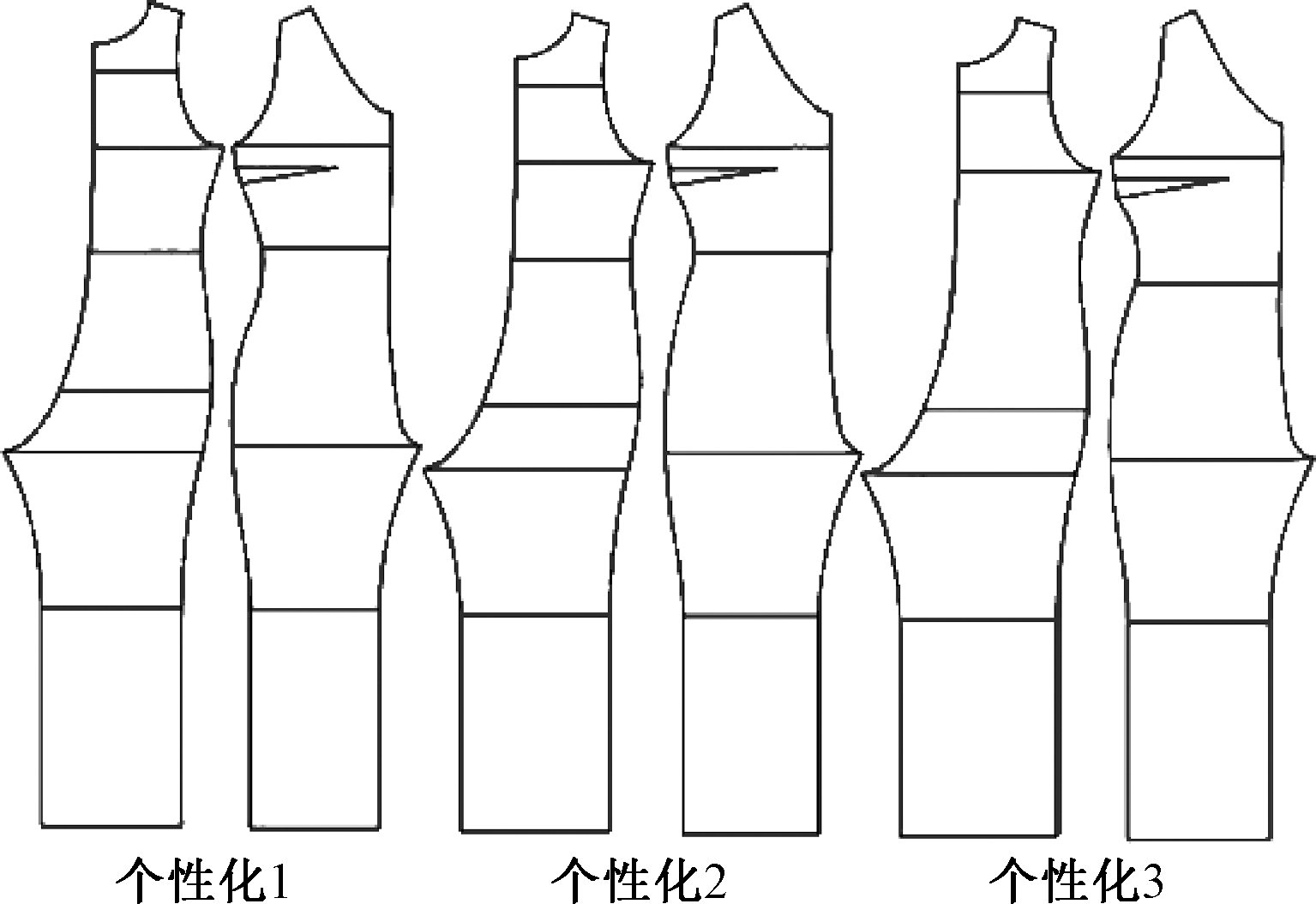
图11

个性化连体服纸样"

图12

虚拟试衣外观效果"

图13

虚拟服装压力分布图"

图14

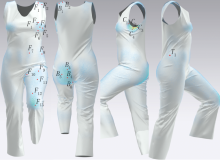
压力测量点位置"

图15

压力测量点的压力值"

图16

个性化连体长裤纸样穿着效果"

表4

样衣评价表"

姿势 个性化参数1 个性化参数2 个性化参数3
肩部 腰部 臀部 肩部 腰部 臀部 肩部 腰部 臀部
站立 4.6 4.5 4.3 4.5 4.4 4.6 4.6 4.3 4.7
走动 4.2 4.1 4.4 4.3 4.3 4.2 4.2 4.5 4.4
抬臂抬腿 3.8 3.9 3.9 4.0 3.8 3.8 4.1 4.0 4.2
下蹲 3.3 3.2 2.8 3.4 3.3 3.2 3.6 3.5 3.4
[1] 程明, 赵燕辉, 余卫华, 等. 面向实际工程应用的参数化旗袍纸样构建[J]. 丝绸, 2022, 59(3): 7-19.
CHENG Ming, ZHAO Yanhui, YU Weihua, et al. Construction of parameterized cheongsam pattern for practical engineering application[J]. Journal of Silk, 2022, 59(3): 7-19.
[2] WANG, Zhujun, XING Yingmei, WANG Jianping, et al. A knowledge-supported approach for garment pattern design using fuzzy logic and artificial neural net-works[J]. Multimed Tools Apply, 2022, 81: 19013-19033.
[3] 雷鸽, 李小辉. 数字化服装结构设计技术的研究进展[J]. 纺织学报, 2022, 43 (4): 203-209.
LEI Ge, LI Xiaohui. Review of digital pattern-making technology in garment production[J]. Journal of Textile Research, 2022, 43 (4): 203-209.
[4] 周艳红, 江红霞, 陈玲. 基于AutoCAD参数化中式嫁衣纸样的自动生成[J]. 纺织学报, 2022, 43 (9): 175-181.
ZHOU Yanhong, JIANG Hongxia, CHENG Ling. Automatic pattern-making of Chinese wedding dress based on AutoCAD parameterization[J]. Journal of Textile Research, 2022, 43 (9): 175-181.
[5] 娄少红. 基于AutoCAD参数化功能的A型裙纸样自动化生成[J]. 纺织学报, 2020, 41(1): 131-138.
LOU Shaohong. Automatic generation of A-type skirt model based on AutoCAD parametric function[J]. Journal of Textile Research, 2020, 41(1): 131-138.
[6] 叶勤文, 张皋鹏. 基于AutoCAD参数化的个性化服装纸样生成[J]. 纺织学报, 2019, 40 (4): 103-110.
YE Qinwen, ZHANG Gaopeng. Generation of personalized garment pattern based on AutoCAD parameterization[J]. Journal of Textile Research, 2019, 40 (4): 103-110.
[7] 张伶俐, 张皋鹏. 应用MatLab的服装纸样参数化平面制版[J]. 纺织学报, 2019, 40(1): 130-135.
ZHANG Lingli, ZHANG Gaopeng. Parametric plate design for clothing based on MatLab[J]. Journal of Textile Research, 2019, 40(1): 130-135.
[8] 段欣瑜, 吴巧英. 基于MatLab的女裤参数化制版方法[J]. 浙江理工大学学报(自然科学), 2024, 51(2): 220-228.
DUAN Xinyu, WU Qiaoying. Parameterized plate making method for women's pants based on Matlab[J]. Journal of Zhejiang Sci-Tech University(Natural Sciences), 2024, 51(2): 220-228.
[9] 凌雅丽, 朱凌轩, 邵晓煊, 等. 亚洲男士西服基本纸样自动生成系统的建立[J]. 纺织学报, 2020, 41(9): 108-113.
LING Yali, ZHU Lingxuan, SHAO Xiaoxuan, et al. Development of automatic pattern generation system for Asian men's suits[J]. Journal of Textile Research, 2020, 41(9): 108-113.
[10] 王诗潭, 汪秀花, 王云仪. 连体服衣下间隙特征指标的确定及其在服装合体性评价中的应用[J]. 纺织学报, 2021, 42(9): 137-143.
WANG Shitan, WANG Xiuhua, WANG Yunyi. Determination and application of air gap parameters in coverall fit analysis[J]. Journal of Textile Research, 2021, 42(9): 137-143.
[11] 叶勤文, 王维杰, 陈咪, 等. 基于AutoCAD以及圆弧拟合曲线的参数化服装制版[J]. 毛纺科技, 2019, 47(9): 57-65.
YE Qinwen, WANG Weijie, CHEN Mi, et al. Parametric apparel pattern-making based on AutoCAD and curve fitting with arc[J]. Wool Textile Journal, 2019, 47(9): 57-65.
[12] 叶勤文, 陈咪, 张皋鹏. 双圆弧拟合曲线在参数化服装制版中的应用[J]. 东华大学学报(自然科学版), 2019, 45(6): 851-857.
YE Qinwen, CHEN Mi, ZHANG Gaopeng. Application of double arc fitting curve in parametric garment plate making[J]. Journal of Donghua University(Natural Sciences), 2019, 45(6): 851-857.
[1] 施佳, 李梦珠, 肖伯祥. 竞速滑冰功能性服装技术研究进展[J]. 纺织学报, 2025, 46(06): 250-260.
[2] 纪梦琪, 何瑛, 马咏倩. 基于三维试衣的凸肚体男西裤样板的优化[J]. 纺织学报, 2025, 46(06): 187-195.
[3] 刘蓉, 谢红. 基于服装结构特征识别的相似样板匹配技术[J]. 纺织学报, 2023, 44(10): 134-142.
[4] 任泽, 钟安华. 基于男性腰臀裆部NURBS曲面模型的内裤数字化制版[J]. 纺织学报, 2023, 44(08): 167-173.
[5] 周艳红, 江红霞, 陈玲. 基于AutoCAD参数化中式嫁衣样板的自动生成[J]. 纺织学报, 2022, 43(09): 175-181.
[6] 娄少红. 基于AutoCAD参数化功能的A型裙样板自动化生成[J]. 纺织学报, 2020, 41(01): 131-138.
[7] 叶勤文, 张皋鹏. 基于AutoCAD参数化的个性化服装纸样生成[J]. 纺织学报, 2019, 40(04): 103-110.
[8] 周莉莉;陈善峰;李仁旺;刘海霞;应卫平. 基于模糊综合评判的虚拟模特匹配算法[J]. 纺织学报, 2007, 28(9): 118-121.
Viewed
Full text


Abstract

Cited

  Shared   
  Discussed   
No Suggested Reading articles found!