纺织学报 ›› 2025, Vol. 46 ›› Issue (08): 102-110.doi: 10.13475/j.fzxb.20240903001

• 纺织工程 • 上一篇    下一篇

结合纹理基元对比感知的织物纹理规则度表征

郭彦池, 潘如如, 周建()   

  1. 生态纺织教育部重点实验室(江南大学), 江苏 无锡 214122
  • 收稿日期:2024-09-18 修回日期:2025-04-22 出版日期:2025-08-15 发布日期:2025-08-15
  • 通讯作者: 周建(1985—),男,副教授,博士。主要研究方向为纺织智能制造。E-mail:jzhou@jiangnan.edu.cn
  • 作者简介:郭彦池(2000—),女,硕士生。主要研究方向为数字化纺织技术。
  • 基金资助:
    国家自然科学基金项目(61501209)

Fabric texture regularity characterization based on contrast perception of texture primitives

GUO Yanchi, PAN Ruru, ZHOU Jian()   

  1. Key Laboratory of Eco-Textiles(Jiangnan University), Wuxi, Jiangsu 214122, China
  • Received:2024-09-18 Revised:2025-04-22 Published:2025-08-15 Online:2025-08-15

摘要: 为对织物纹理规则度进行客观有效评价,结合人眼视觉感知特征和基元排列整齐度、基元灰度对比度、基元结构对称度和边缘一致度,提出了一种新的织物纹理规则度表征方法。首先在自相关Pearson系数基础上进行基元空间排列整齐度的度量;其次在距离匹配函数曲线基础上进行基元感知对比度的计算;接着利用自相关Pearson系数对基元结构对称情况进行计算;最后在纹理梯度的基础上对边缘特征进行度量,并最终提出织物纹理规则度的综合表征指标,并使用典型机织物纹理图像和Brodatz图像库样本进行应用。结果表明:相比于同类方法,所提出的方法能够更好符合人类视觉对不同纹理规则度的感知规律,同时为织物纹理检索及评价应用提供了表征基础。

关键词: 织物纹理, 纹理规则度, 对比度, 自相关Pearson系数, 人类视觉特征

Abstract:

Objective Regularity (periodicity), as one of the most important attribute features of texture images, is a key index for classifying and describing texture images. Relating to the unique production process of woven fabrics, the texture of woven fabric images exhibits a high degree of regularity, which is a typical structural texture. Therefore, utilizing regularity to describe the surface attributes of fabric textures is of great practical significance in the fields of fabric classification, fabric retrieval, and fabric apparent quality detection and evaluation.

Method This paper first proposes four metrics for characterizing the regularity of fabric textures based on the spatial arrangement of primitive elements and human visual perception factors (grey scale contrast, structural symmetry and edge consistency). Then, significant peaks and valleys are extracted by threshold division on autocorrelation Pearson coefficients and distance matching function curves, and the relationship between peaks and valleys is used to achieve the characterization of the above metrics. Finally, the weighted summation is used to perform the comprehensive characterization of texture regularity.

Results The overall regularity metrics are validated using different types of fabric samples and some structured textures from the Brodatz Album. The results show that for fabric texture, the proposed metric is able to achieve the characterization of the regularity of fabric texture and distinguish effectively textures with different degrees of regularity. In addition, the comparison with other methods shows that the proposed metric is more in line with the visual perception law of the human eye and has a higher accuracy rate. Under the understanding that the textures in the Brodatz Album usually show a high degree of regularity and have a relatively large and unique size of the periodic unit, two different combinations of the weights are discussed in order to find the most suitable weights, and calculate the overall degree of regularity of the texture with the proposed metric under the weight. It is concluded from the discussion that the proposed metric can also achieve the characterization of the regularity of fabric textures. The results show that the proposed metrics are capable of extracting structural textures other than near-regular fabric textures.

Conclusion The texture regularity index is subdivided from the perspective of the visual perception of the human eye, so as to achieve the characterization of texture regularity in a more comprehensive and detailed way. The experimental results show that the proposed metrics are not only applicable to fabric textures with small and soft sizes, but can also characterize the regularity of various specific types of texture images by combining the importance of different metrics and applying different weights. In the future, the proposed metrics can be considered to be combined with other attribute features of texture images for practical applications such as texture classification and defect detection.

Key words: fabric texture, texture regularity, contrast, autocorrelation Pearson coefficient, human visual feature

中图分类号: 

  • TS111

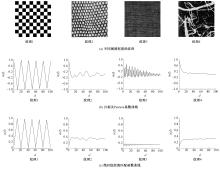
图1

不同规则程度纹理对应的自相关Pearson系数和绝对值距离匹配函数曲线图"

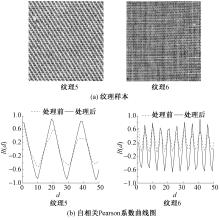
图2

基元空间排列整齐度Rpos的计算示意图"

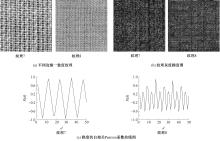
图3

边缘一致度Rmag计算示例图"

表1

织物纹理规则度计算结果"

样本
编号
按行方向展开 按列方向展开 R
Rpos Rcon Rsym Rmag Rx Rpos Rcon Rsym Rmag Ry
T1 0.911 0.748 0.605 0.906 0.830 0.874 0.719 0.576 0.812 0.788 0.809
T2 0.898 0.649 0.877 0.898 0.797 0.946 0.650 0.942 0.964 0.830 0.814
T3 0.909 0.721 0.646 0.883 0.816 0.871 0.711 0.757 0.783 0.788 0.802
T4 0.933 0.667 0.705 0.919 0.812 0.945 0.693 0.895 0.442 0.766 0.789
P1 0.506 0.466 0.000 0.570 0.474 0.434 0.435 0.000 0.627 0.441 0.458
P2 0.441 0.421 0.000 0.721 0.452 0.473 0.383 0.000 0.704 0.448 0.450
P3 0.899 0.405 0.000 0.851 0.650 0.792 0.556 0.673 0.916 0.710 0.680
P4 0.895 0.299 0.000 0.539 0.558 0.923 0.387 0.386 0.537 0.524 0.591
P5 0.769 0.410 0.000 0.936 0.612 0.416 0.488 0.477 0.871 0.516 0.564
P6 0.459 0.358 0.000 0.526 0.406 0.457 0.280 0.000 0.595 0.384 0.395
P7 0.906 0.310 0.000 0.691 0.590 0.875 0.336 0.488 0.436 0.574 0.582
P8 0.486 0.341 0.302 0.511 0.423 0.504 0.367 0.375 0.448 0.434 0.429
S1 0.916 0.540 0.949 0.950 0.772 0.978 0.540 0.957 0.804 0.776 0.774
S2 0.813 0.711 0.951 0.612 0.749 0.936 0.740 0.827 0.365 0.767 0.758
C1 0.905 0.602 0.000 0.720 0.711 0.918 0.682 0.651 0.766 0.787 0.749
C2 0.842 0.597 0.766 0.898 0.749 0.942 0.609 0.629 0.845 0.779 0.764

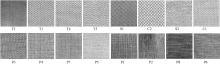
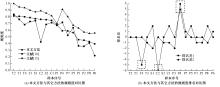
图4

织物按照最终规则度值降序依次排列"

图5

本文方法与其它方法的对比结果"

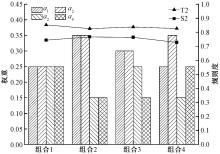
图6

样本T2和S2在不同权重组合下的规则度变化情况"

表2

样本T2和S2在不同权重组合下的排名变化表"

序号 权重 T2的排
名变化
S2的排
名变化
α1 α2 α3 α4
组合1 0.25 0.25 0.25 0.25 0 0
组合2 0.35 0.35 0.15 0.15 0 1
组合3 0.30 0.30 0.25 0.15 0 1
组合4 0.25 0.35 0.15 0.25 0 0

表3

Brodatz中纹理规则度计算结果"

样本
名称
权重1 权重2
Rx Ry R Rx Ry R
D20 0.724 0.859 0.792 0.715 0.580 0.647
D22 0.788 0.551 0.670 0.666 0.476 0.571
D53 0.866 0.661 0.763 0.796 0.540 0.668
D67 0.625 0.514 0.570 0.472 0.388 0.430
D101 0.898 0.910 0.904 0.724 0.737 0.730
D102 0.868 0.882 0.875 0.726 0.722 0.724
D103 0.794 0.748 0.771 0.564 0.534 0.549
D104 0.745 0.715 0.730 0.559 0.521 0.540

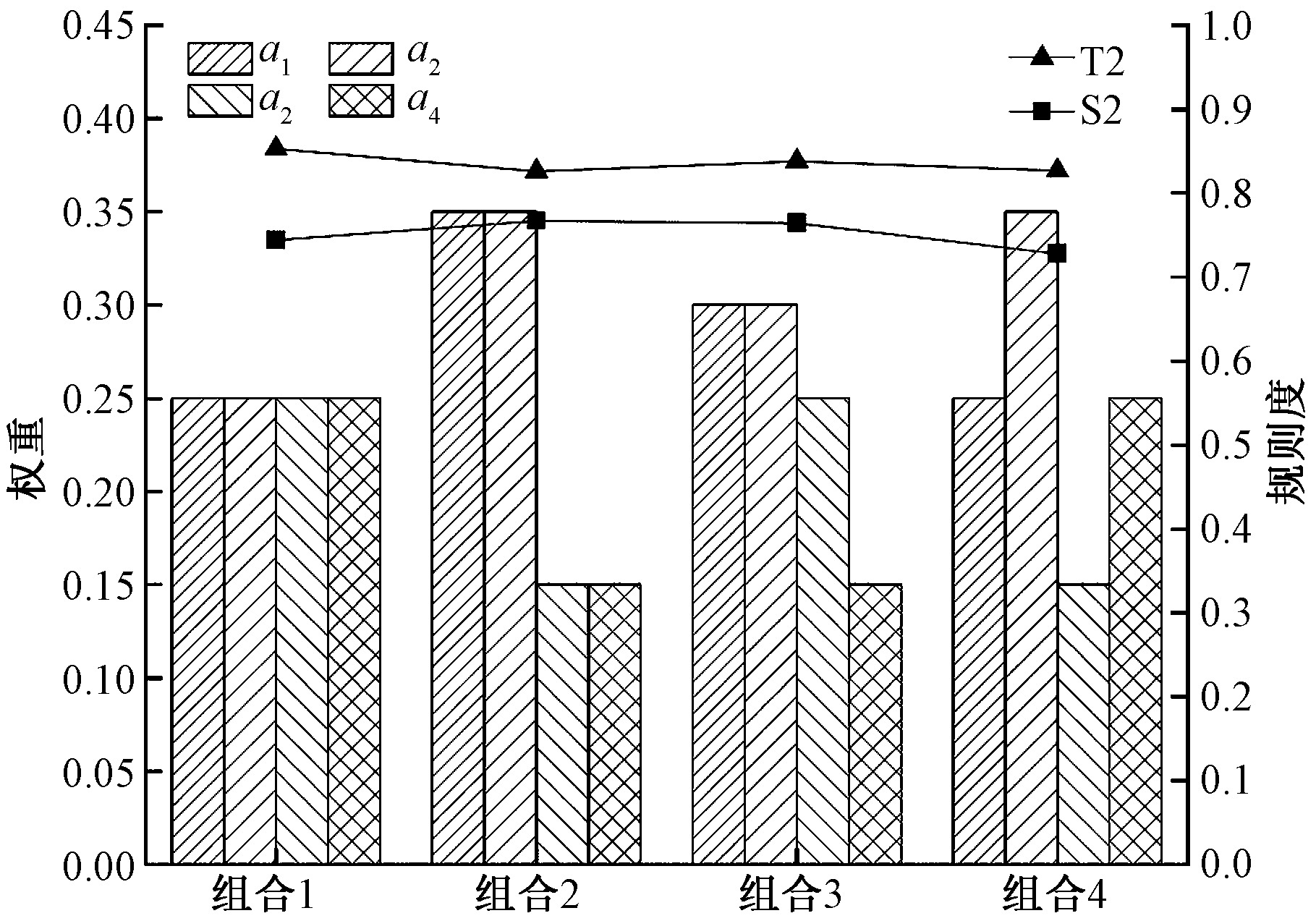
图7

Brodatz中的纹理样本按照规则度降序排列"

[1] PROTONOTARIOS E D, GRIFFIN L D, JOHNSTON A, et al. A spatial frequency spectral peakedness model predicts discrimination performance of regularity in dot patterns[J]. Vision Research, 2018, 149: 102-114.
doi: S0042-6989(18)30107-X pmid: 29958873
[2] ZHIVAGO K A, ARUN S P. Texture discriminability in monkey inferotemporal cortex predicts human texture perception[J]. Journal of Neurophysiology, 2014, 112(11): 2745-55.
doi: 10.1152/jn.00532.2014 pmid: 25210165
[3] LEU J G. On indexing the periodicity of image textures[J]. Image and Vision Computing, 2001, 19(13): 987-1000.
[4] HARALICK R M. Statistical and structural approaches to texture[J]. Proceedings of the IEEE, 1985, 2: 304-322.
[5] HUANG Y, DE B V, ZHOU F G, et al. Review of wavelet-based unsupervised texture segmentation, advantage of adaptive wavelets[J]. Iet Image Processing, 2018, 12 (9): 1626-1638.
[6] 朱浩, 丁辉, 尚媛园, 等. 多纹理分级融合的织物缺陷检测算法[J]. 纺织学报, 2019, 40 (6): 118-125.
ZHU Hao, DING Hur, SHANG Yuanyuan, et al. Defect detection algorithm for multiple texture hierarchical fusion fabric[J]. Journal of Textile Research, 2019, 40(6): 118-125.
[7] 吴莹, 占竹, 汪军. 基于通用字典的局部机织物纹理稳定表征[J]. 纺织学报, 2019, 40 (11): 45-49.
doi: 10.13475/j.fzxb.20181100806
WU Ying, ZHAN Zhu, WANG Jun. Local fabric texture stability characterization using general dictionary[J]. Journal of Textile Research, 2019, 40 (11): 45-49.
doi: 10.13475/j.fzxb.20181100806
[8] SUN H C, KINGDOM F A A, BAKER C L. Perceived regularity of a texture is influenced by the regularity of a surrounding texture[J]. Scientific Reports, 2019, 9(1): 1637.
[9] SUN H C, ST-AMAND D, BAKER C, et al. Visual perception of texture regularity: Conjoint measurements and a wavelet response-distribution model[J]. Plos Computational Biology, 2021, 17 (10): e1008802.
[10] CHETVERIKOV D. Pattern regularity as a visual key[J]. Image and Vision Computing, 2000, 18 (12): 975-985.
[11] DO M N, VETTERLI M. Wavelet-based texture retrieval using generalized gaussian density and kullback-leibler distance[J]. IEEE Transactions on Image Processing, 2002, 11 (2): 146-158.
doi: 10.1109/83.982822 pmid: 18244620
[12] LEE K L, CHEN L H. An efficient computation method for the texture browsing descriptor of MPEG-7[J]. Image and Vision Computing, 2005, 23 (5): 479-489.
[13] NGAN H Y T, PANG G K H. Regularity analysis for patterned texture inspection[J]. IEEE Transactions on Automation Science and Engineering, 2009, 6 (1): 131-144.
[14] CHETVERIKOV D, HANBURY A. Finding defects in texture using regularity and local orientation[J]. Pattern Recognition, 2002, 35 (10): 2165-2180.
[15] 蒋圣, 汤国安, 刘凯. 利用累加距离匹配函数的纹理规则度计算方法[J]. 计算机辅助设计与图形学学报, 2015, 27 (10): 1874-1880.
JIANG Sheng, TANG Guoan, LIU Kai. A computation method of texture regularity using summed-up distance matching function[J]. Journal of Computer-Aided Design & Computer Graphics, 2015, 27 (10): 1874-1880.
[16] VARADARAJAN S, KARAM L J. A no-reference texture regularity metric based on visual saliency[J]. IEEE Transactions on Image Processing, 2015, 24(9): 2784-2796.
[17] 姜丰, 朱家玲, 胡开永, 等. Pearson相关系数评价ORC系统蒸发器特性的应用研究[J]. 太阳能学报, 2019, 40 (10): 2732-2738.
JIANG Feng, ZHU Jialing, HU Kaiyong, et al. Applied research to assess envapopator performances in ORC system by pearson correlation coefficient[J]. Acta Energiae Solaris Sinica, 2019, 40 (10): 2732-2738.
[18] OH G, LEE S, SHIN S Y. Fast determination of textural periodicity using distance matching function[J]. Pattern Recognition Letters, 1999, 20 (2): 191-197.
[19] DONG X H, DONG J Y, CHANTLER M J. Perceptual texture similarity estimation: an evaluation of computational features[J]. IEEE Transactions on Pattern Analysis and Machine Intelligence, 2021, 43(7): 2429-2448.
[20] CHEN S C, CHIU C C. Texture construction edge detection algorithm[J]. Applied Sciences, 2019, 9(5): 897.
[1] 吴莹, 占竹, 汪军. 基于通用字典的局部机织物纹理稳定表征[J]. 纺织学报, 2019, 40(11): 45-49.
[2] 朱浩, 丁辉, 尚媛园, 邵珠宏. 多纹理分级融合的织物缺陷检测算法[J]. 纺织学报, 2019, 40(06): 117-124.
[3] 吴莹 汪军. 基于K-SVD学习字典的机织物纹理表征及应用[J]. 纺织学报, 2018, 39(02): 165-170.
[4] 薛乐 李立轻 汪军. 应用频谱图的机织物纹理分析[J]. 纺织学报, 2015, 36(07): 55-60.
[5] 师红宇 管声启 吴宁. 棉花中异性纤维的图像多分辨率差分检测方法[J]. 纺织学报, 2014, 35(5): 13-0.
[6] 汪秀琛, 李晓久. 基于复合条件的织物纹理模糊识别[J]. 纺织学报, 2012, 33(8): 55-58.
[7] 徐琪. 一种支持快速响应的服装供应链补货策略[J]. 纺织学报, 2009, 30(12): 129-133.
[8] 刘哲;李晓久. 织物纹理均匀度的计算机评价[J]. 纺织学报, 2009, 30(12): 125-128.
[9] 诸葛振荣;徐利祥. 利用纹理几何约束进行织物场景模拟[J]. 纺织学报, 2007, 28(6): 55-58.
Viewed
Full text


Abstract

Cited

  Shared   
  Discussed   
No Suggested Reading articles found!