纺织学报 ›› 2025, Vol. 46 ›› Issue (08): 183-190.doi: 10.13475/j.fzxb.20250202401
刘金灵1, 何雅婷1, 顾冰菲1,2,3( )
)
LIU Jinling1, HE Yating1, GU Bingfei1,2,3()
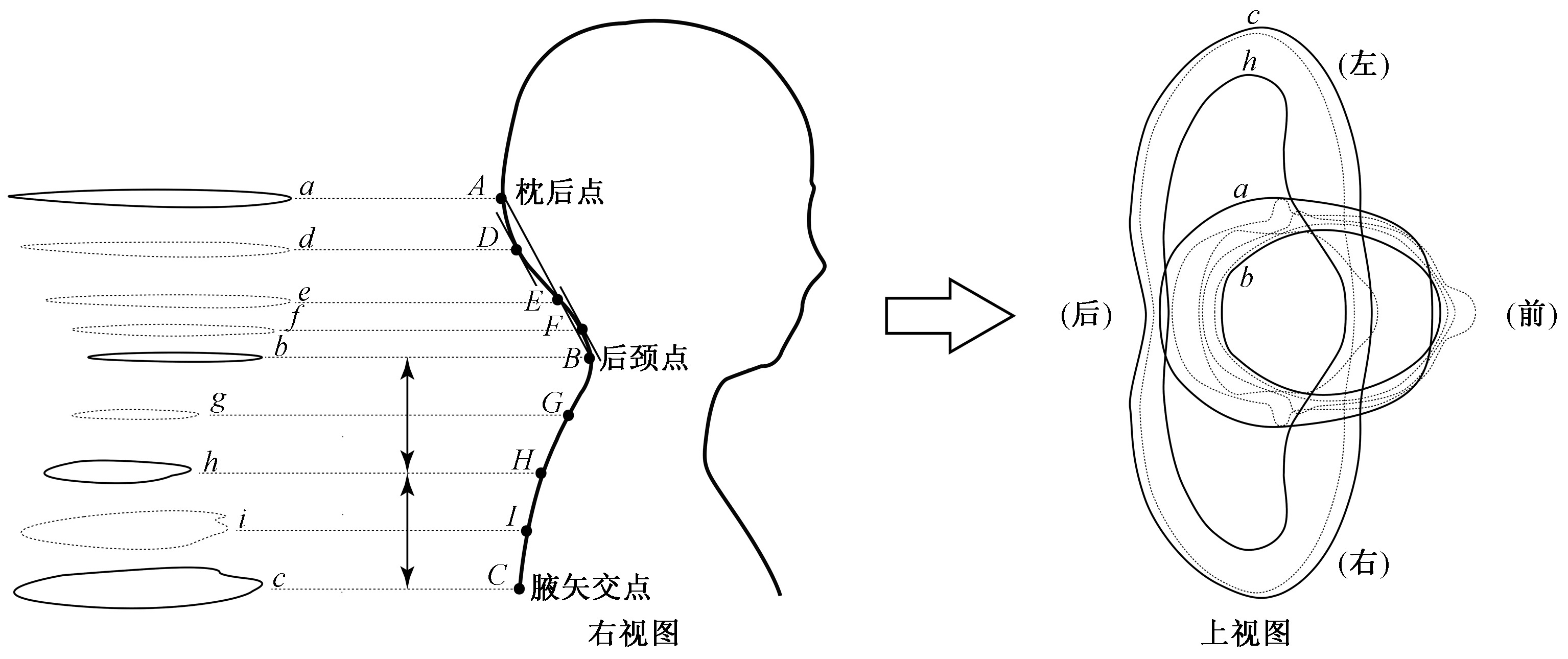
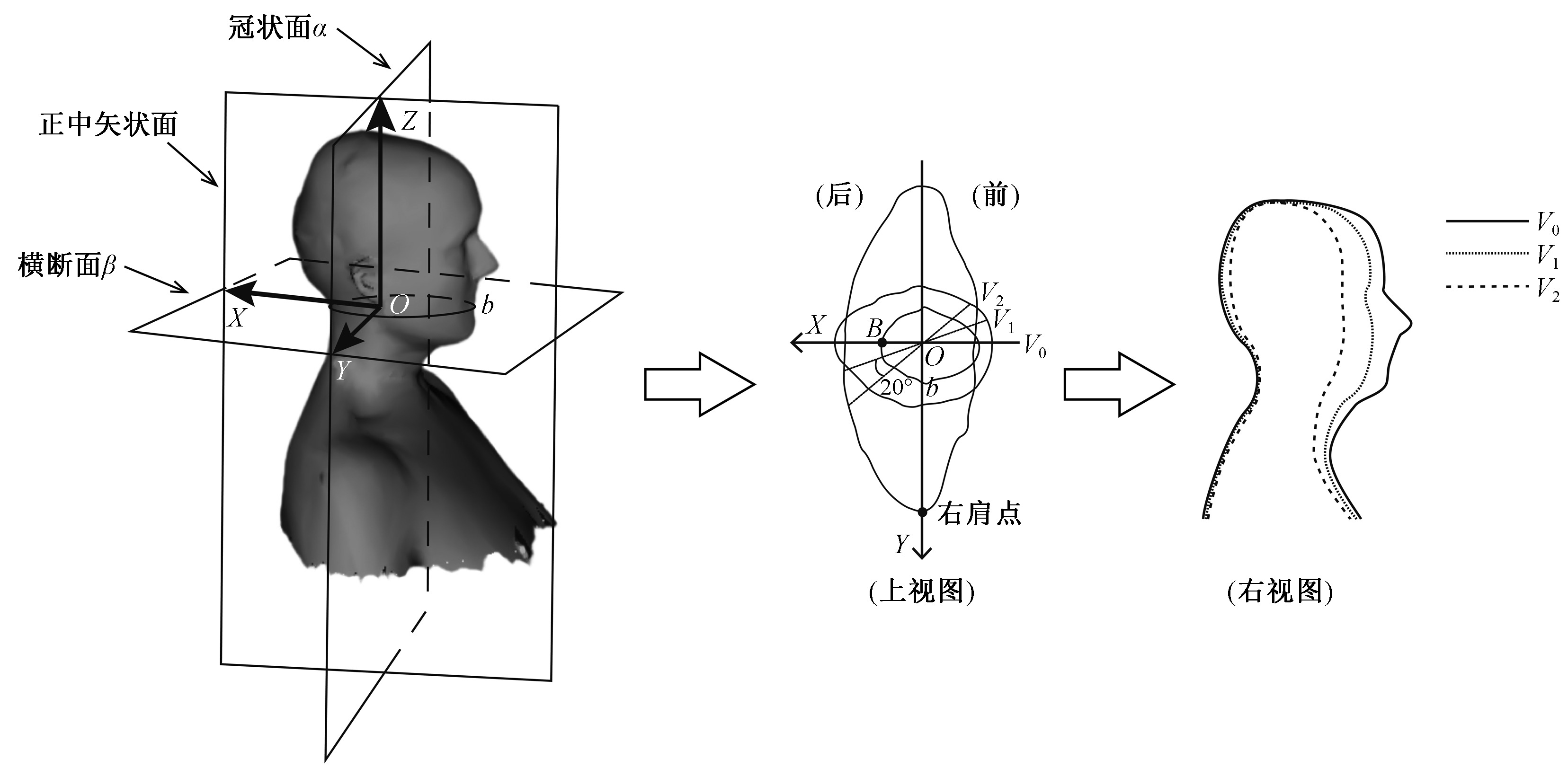
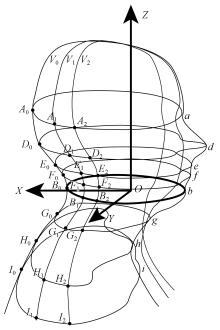
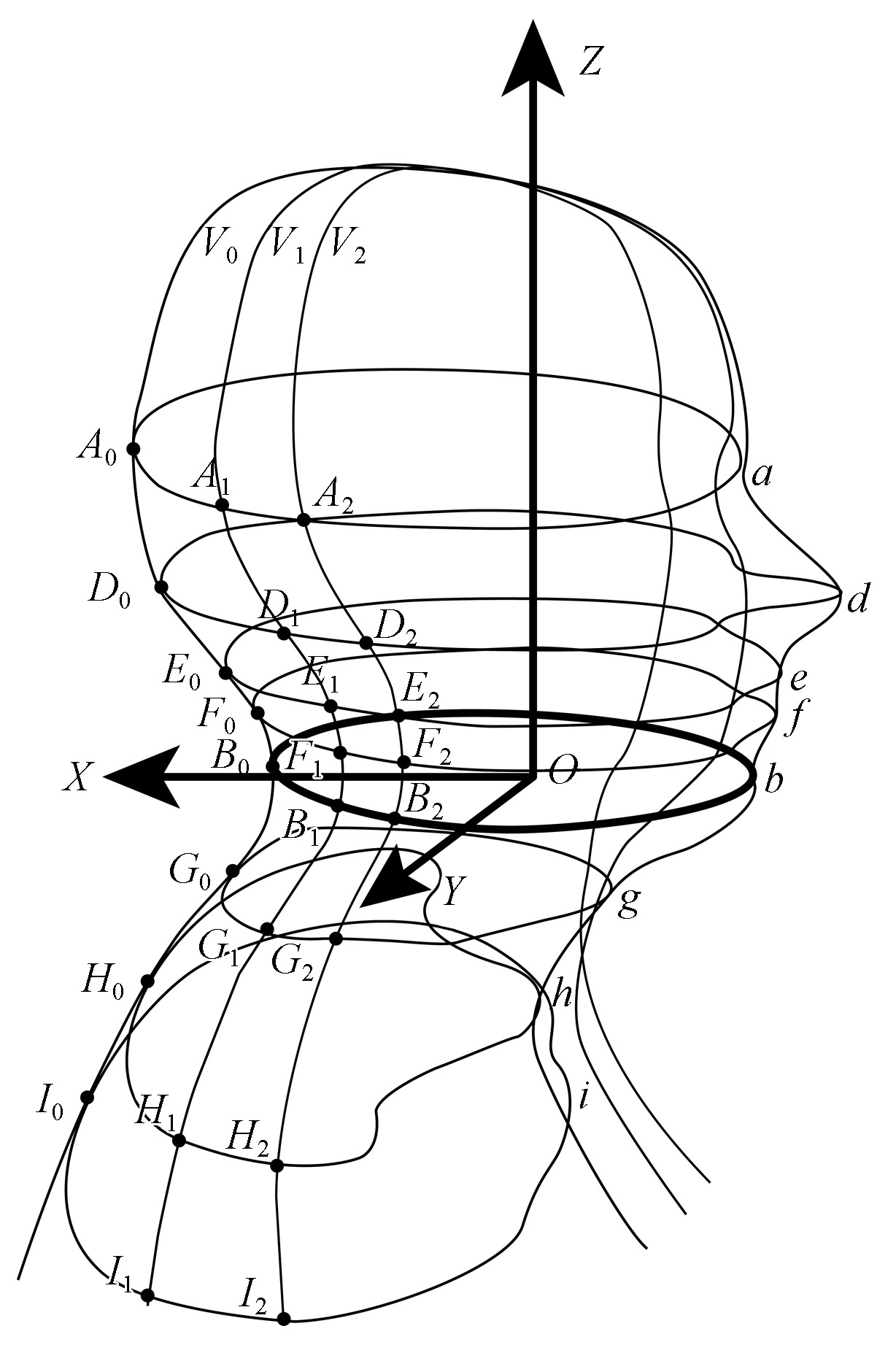
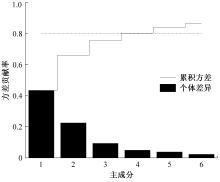
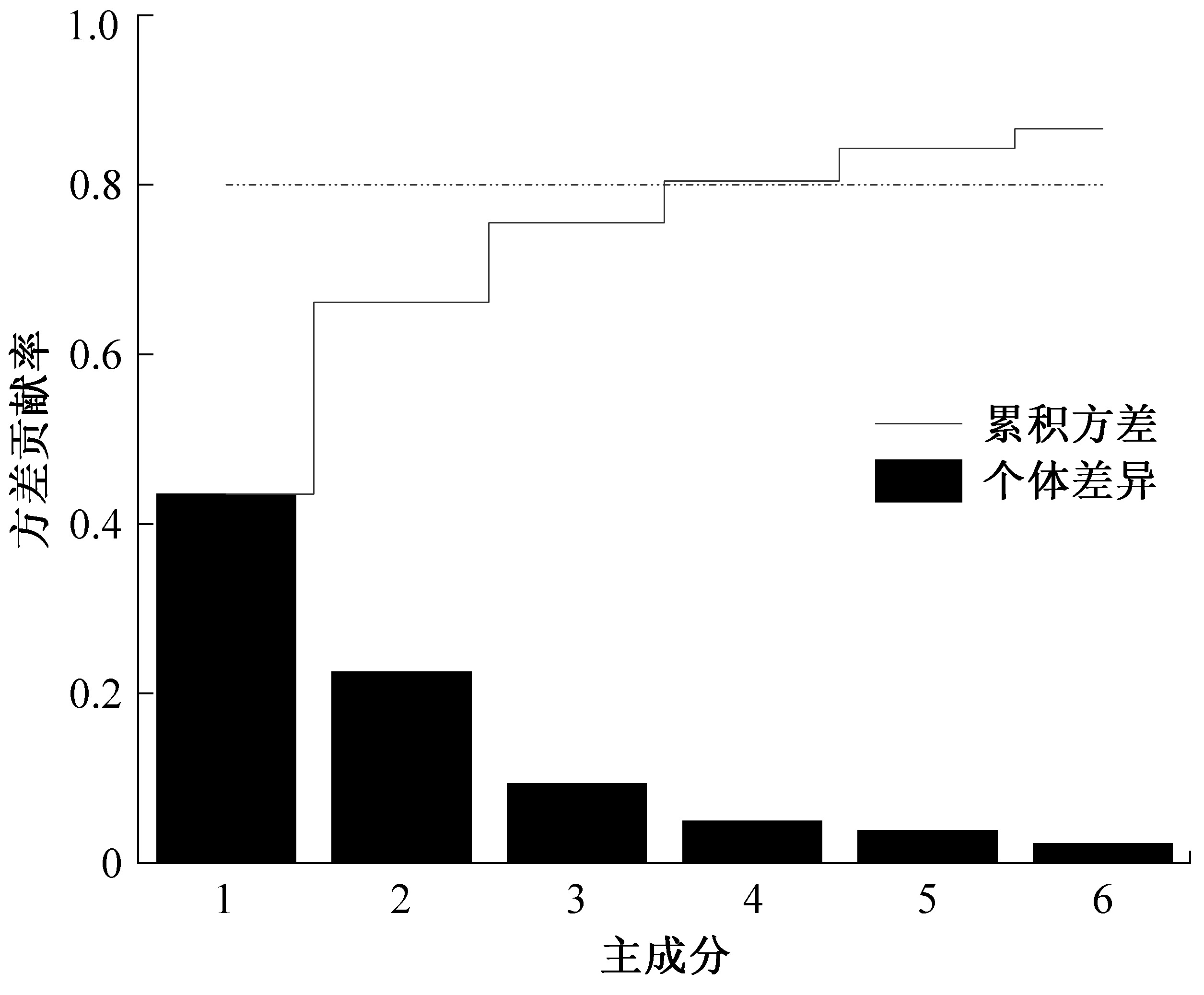
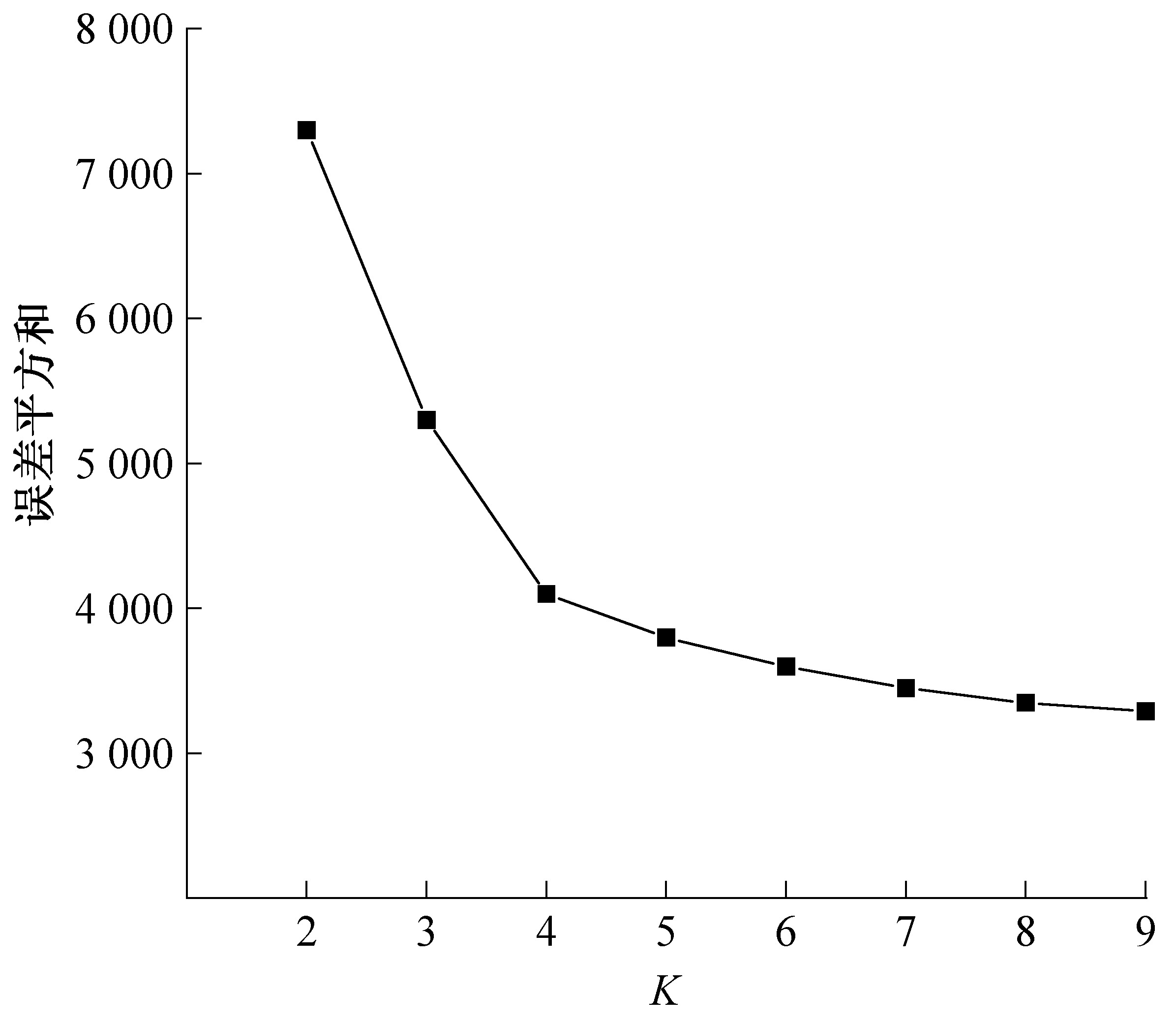
摘要: 随着人们对睡眠质量的关注度不断提升,枕头形态设计的科学性越来越重要。为探究青年人体头颈背部曲面形态区别,提出一种基于三维点云数据的“点-线-面-曲率”头颈背部曲面形态分类方法。以252名18~25岁在校大学生为对象,采用三维人体扫描仪获取人体三维点云数据以提取其头颈背部三维正中矢状面。基于矢状面轮廓特征点建立三维坐标系,确定出枕后点、颈后点、腋矢交点等 9 个关键特征点,从水平和冠状2个视角共截取11条曲面并形成24个曲面交点,提取其三维坐标值及正中矢状面纵向曲率作为形态分类特征参数。经主成分分析和聚类分析,将人体头颈背部曲面形态最终分为 4类,采用判别分析建立出分类规则并进行精确度验证。结果表明:圆润型枕骨部位较圆顺;颈深型的颈窝较深;缓平型枕骨部位较扁平;前倾型的头颈背部有前倾趋势。基于形态判别规则对初始样本数据整体回判的准确率高达95.58%。该研究方法为曲面枕的个性化定制提供了数据支撑以及分类参考。
中图分类号:
| [1] | 侯梦婕. 基于三维人体扫描枕型的结构研究[D]. 西安: 西安工程大学, 2019:1-81. |
| HOU Mengjie. Research on the structure of pillow based on 3D human body scanning[D]. Xi'an: Xi'an Polytechnic University, 2019: 1-81. | |
| [2] | 田山, 姚成鸿, 曹学鹏, 等. 个性化最佳枕型的生物力学与工效学研究[J]. 医用生物力学, 2024, 39(S1):162. |
| TIAN Shan, YAO Chenghong, CAO Xuepeng, et al. Biomechanical and ergonomic research on personalized optimal pillow shape[J]. Journal of Medical Biomechanics, 2024, 39(S1): 162. | |
| [3] | KURAMOTO Akisue, INUI Yuma, ICHIKAWA Tomu, et al. Comfortable pillow design based on individual basis[J]. Information (Japan), 2017, 20(9):6627-6644. |
| [4] | SON Juhyun, JUNG Sungwook, SONG Haseung, et al. A survey of koreans on sleep habits and sleeping symptoms relating to pillow comfort and support[J]. International Journal of Environmental Research and Public Health, 2020, 17(1):302-302. |
| [5] | 郭仲华. 枕头没选好,颈椎病来找[J]. 中医健康养生, 2022, 8(9):60-62. |
| GUO Zhonghua. If the pillow is poorly chosen, cervical spondylosis will follow[J]. Traditional Chinese Medi- cine Health Preservation, 2022, 8(9): 60-62. | |
| [6] | 杜一明. 基于头颈部生理结构分析的睡枕压缩舒适性研究[D]. 上海: 东华大学, 2019:1-85. |
| DU Yiming. Research on the compression comfort of sleeping pillows based on the analysis of head and neck physiological structures[D]. Shanghai: Donghua University, 2019:1-85. | |
| [7] | 葛苏敏, 林瑞冰, 徐平华, 等. 基于机器视觉的曲面枕个性化定制方法[J]. 纺织学报, 2024, 45(2):214-220. |
| GE Sumin, LIN Ruibing, XU Pinghua, et al. Personalized customization method of curved pillows based on machine vision[J]. Journal of Textile Research, 2024, 45(2): 214-220. | |
| [8] | TIAN Shan, YAO Chenghong, WANG yawei, et al. The individualized optimal pillow height and neck support design for side sleepers[J]. Medical & Biological Engineering & Computing, 2025, 63(2):535-544. |
| [9] | LIU Kristie, GREENCORN David J, APONTE Daniel I, et al. Comparison of surrogate 50th percentile human headforms to an adult male sample using three-dimensional modeling and principal component analy-sis[J]. Proceedings of the Institution of Mechanical Engineers, Part P. Journal of Sports Engineering and Technology, 2019, 233(3):432-442. |
| [10] | 王珊珊, 王鸿博. 基于三维人体测量的江浙在职男青年颈部形态[J]. 纺织学报, 2013, 34(10):133-135. |
| WANG Shanshan, WANG Hongbo. Neck morphology of working young men in Jiangsu and Zhejiang Provinces based on 3D anthropometry[J]. Journal of Textile Research, 2013, 34(10): 133-135. | |
| [11] | 张健, 徐凯忆, 赵崧灵, 等. 基于二维照片的青年男性颈肩部形态分类与识别[J]. 纺织学报, 2022, 43(5):145-148. |
| ZHANG Jian, XU Kaiyi, ZHAO Songling, et al. Classification and recognition of neck and shoulder morphologies of young males based on two-dimensional photographs[J]. Journal of Textile Research, 2022, 43(5): 145-148. | |
| [12] | SONG Hwa Kyung, BAYTAR Fatma, ASHDOWN Susan, et al. 3D anthropometric analysis of women's aging bodies:upper body shape and posture changes[J]. Fashion Practice-the Journal of Design Creative Process & the Fashion Industry, 2022, 14(1):26-48. |
| [13] | WANG Ting, GU Bingfei. Automatic recognition and 3D modeling of the neck-shoulder human shape based on 2D images[J]. International Journal of Clothing Science and Technology, 2021, 33(5):780-794. |
| [14] | YAN Song, WIRTA Johan, KAMARAINEN Joni-Kristian, et al. Anthropometric clothing measurements from 3D body scans[J]. Machine Vision and Applications, 2020, 31(1/2):7-7. |
| [15] | 王婷. 青年女性颈肩部形态自动识别与建模研究[D]. 杭州: 浙江理工大学, 2021:1-44. |
| WANG Ting. Research on automatic recognition and modeling of neck and shoulder morphologies of young females[D]. Hangzhou: Zhejiang Sci-Tech University, 2021: 1-44. | |
| [16] | 蔡佳含, 曹欢. 点云数据虚拟场景图像智能展示仿真研究[J]. 计算机仿真, 2024, 41(10):448-452. |
| CAI Jiahan, CAO Huan. Research on intelligent display simulation of point cloud data virtual scene images[J]. Computer Simulation, 2024, 41(10): 448-452. | |
| [17] | LI Leihui, WANG Riwei, ZHANG Xuping, et al. A tutorial review on point cloud registrations: principle, classification, comparison, and technology chall-enges[J]. Mathematical Problems in Engineering: Theory, Methods and Applications, 2021, 2021(34):1-32. |
| [18] | HU P, MUNTEANU A, VRIJE Unv Brussel, et al. VRIJE Unv Brusselet al.Method for registration of 3D shapes without overlap for known 3D priors[J]. Electronics Letters, 2021, 57(9):357-359. |
| [19] | SUKILOVIC Tijana. UNIV Beigrade, Curvature based shape detection[J]. Computational Geometry-theory and Applications, 2015, 48(3): 180-188. |
| [20] | REN Sicong, WONG Duo Wai Chi, YANG Hui, et al. Effect of pillow height on the biomechanics of the head-neck complex: investigation of the cranio-cervical pressure and cervical spine alignment[J]. PeerJ Inc, 2016. DOI:10.7717/PEERJ.2397. |
| [21] | CAI Dengchuan, CHEN Hsiap-Lin, NATI Yunlin. Ergonomic approach for pillow concept design[J]. Applied Ergonomics, 2016,52:142-150. |
| [22] | XU Y, YANG JY, JIN Z. A novel method for Fisher discriminant analysis[J]. Pattern Recognition, 2004, 37(2):381-384. |
| [1] | 丛洪莲, 方蕾妹, 姜菲, 李慧建, 俞旭良. 基于功能分区的横编防护外套模块化设计[J]. 纺织学报, 2025, 46(05): 227-235. |
| [2] | 肖伯祥, 张悦, 胡志远, 赵欲晓, 刘莉. 速度滑冰比赛服个性化样板生成方法[J]. 纺织学报, 2024, 45(09): 146-153. |
| [3] | 葛苏敏, 林瑞冰, 徐平华, 吴思熠, 罗芊芊. 基于机器视觉的曲面枕个性化定制方法[J]. 纺织学报, 2024, 45(02): 214-220. |
| [4] | 刘玉叶, 王萍. 基于纹理特征学习的高精度虚拟试穿智能算法[J]. 纺织学报, 2023, 44(05): 177-183. |
| [5] | 肖伯祥, 刘正东, 郭昱成, 王渊霞. 基于三维人体扫描模型的衬衣版型生成方法[J]. 纺织学报, 2022, 43(12): 151-159. |
| [6] | 刘雪艳, 蒋高明. 基于ABAQUS的运动压力袜编织尺寸预测[J]. 纺织学报, 2022, 43(06): 79-85. |
| [7] | 张健, 徐凯忆, 赵崧灵, 顾冰菲. 基于二维照片的青年男性颈肩部形态分类与识别[J]. 纺织学报, 2022, 43(05): 143-149. |
| [8] | 朱伟明 卫杨红. 不同情景下服装个性化定制体验价值差异研究[J]. 纺织学报, 2018, 39(10): 115-119. |
| [9] | 赖军 张梦莹 张华 李俊. 消防服衣下空气层的作用与测定方法研究进展[J]. 纺织学报, 2017, 38(06): 151-156. |
| [10] | 李祖华. 服装设计用三维人体扫描系统[J]. 纺织学报, 2014, 35(1): 144-. |
| [11] | 张爱萍, 王云仪, 姚怡. 服装胸围截面上距离松量的分配关系[J]. 纺织学报, 2012, 33(6): 76-80. |
| [12] | 王云仪 张雪 李小辉 李俊. 基于Geomagic软件的燃烧假人衣下空气层特征提取[J]. 纺织学报, 2012, 33(11): 102-106. |
| [13] | 李晓志;李晓久;王玉秀. 基于人体扫描线点云的光顺去噪[J]. 纺织学报, 2010, 31(3): 133-138. |
| [14] | 杨允出;陈敏之;邹奉元. 基于三维扫描数据的女性体型特征参数分析[J]. 纺织学报, 2009, 30(08): 117-122. |
|
||
 京公网安备11010502044800号