纺织学报 ›› 2025, Vol. 46 ›› Issue (08): 80-88.doi: 10.13475/j.fzxb.20241107101
李晗1, 钱建华1( ), 翁可欣1, 王澳1, 戴宏祥2, 单江音1
LI Han1, QIAN Jianhua1(), WENG Kexin1, WANG Ao1, DAI Hongxiang2, SHAN Jiangyin1
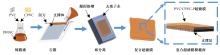
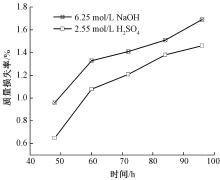
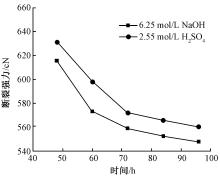
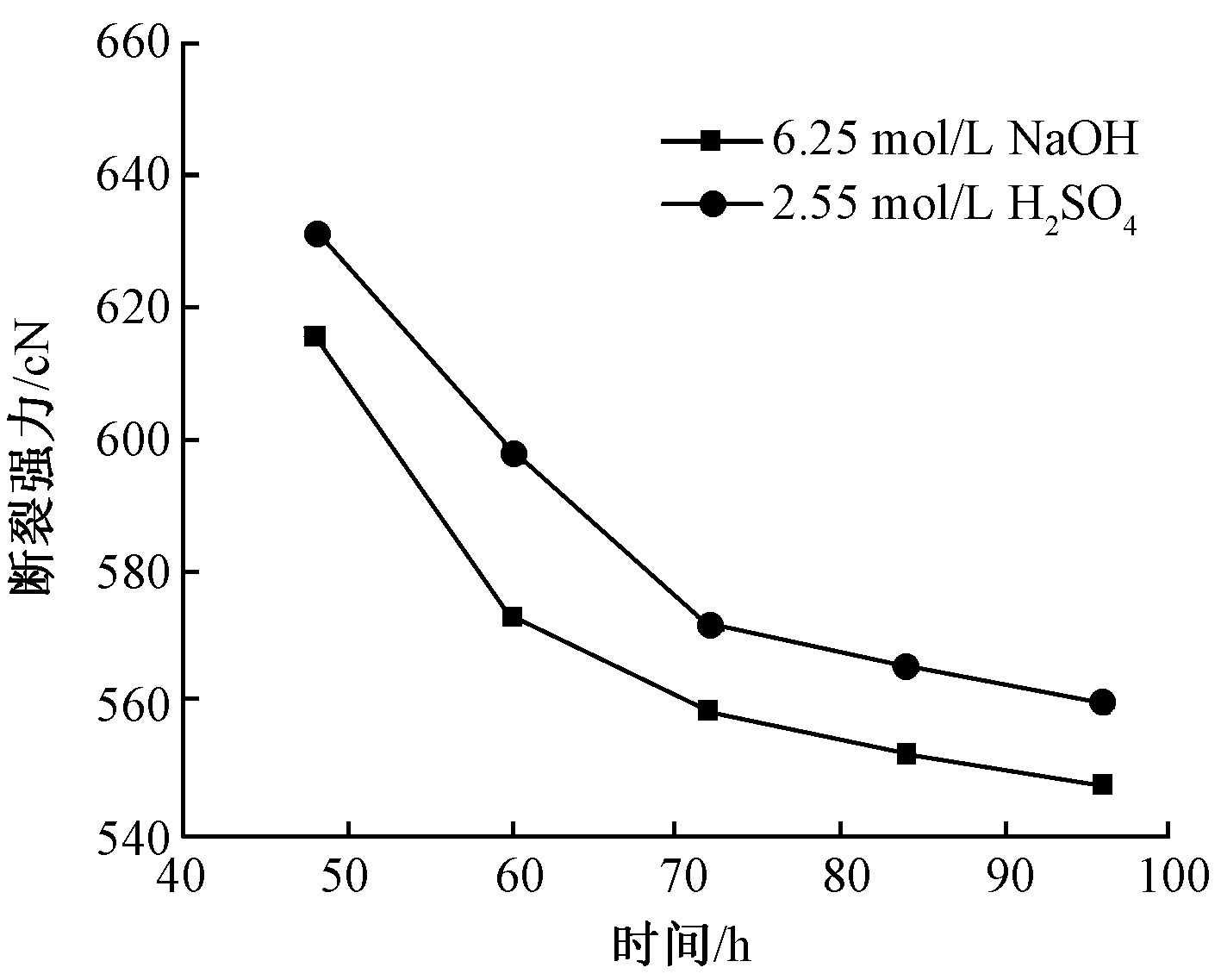
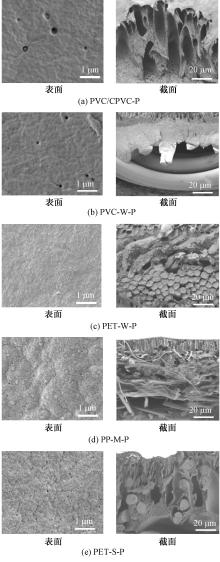
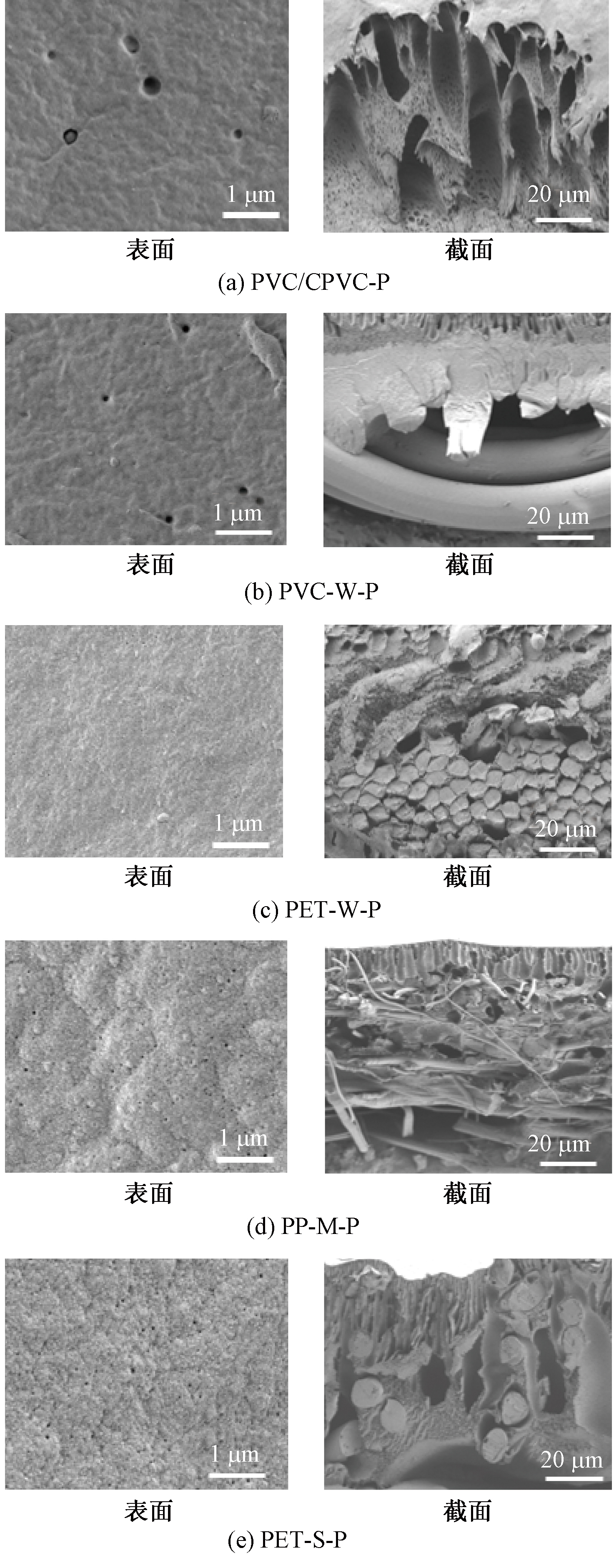
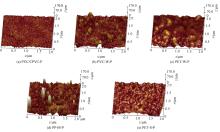
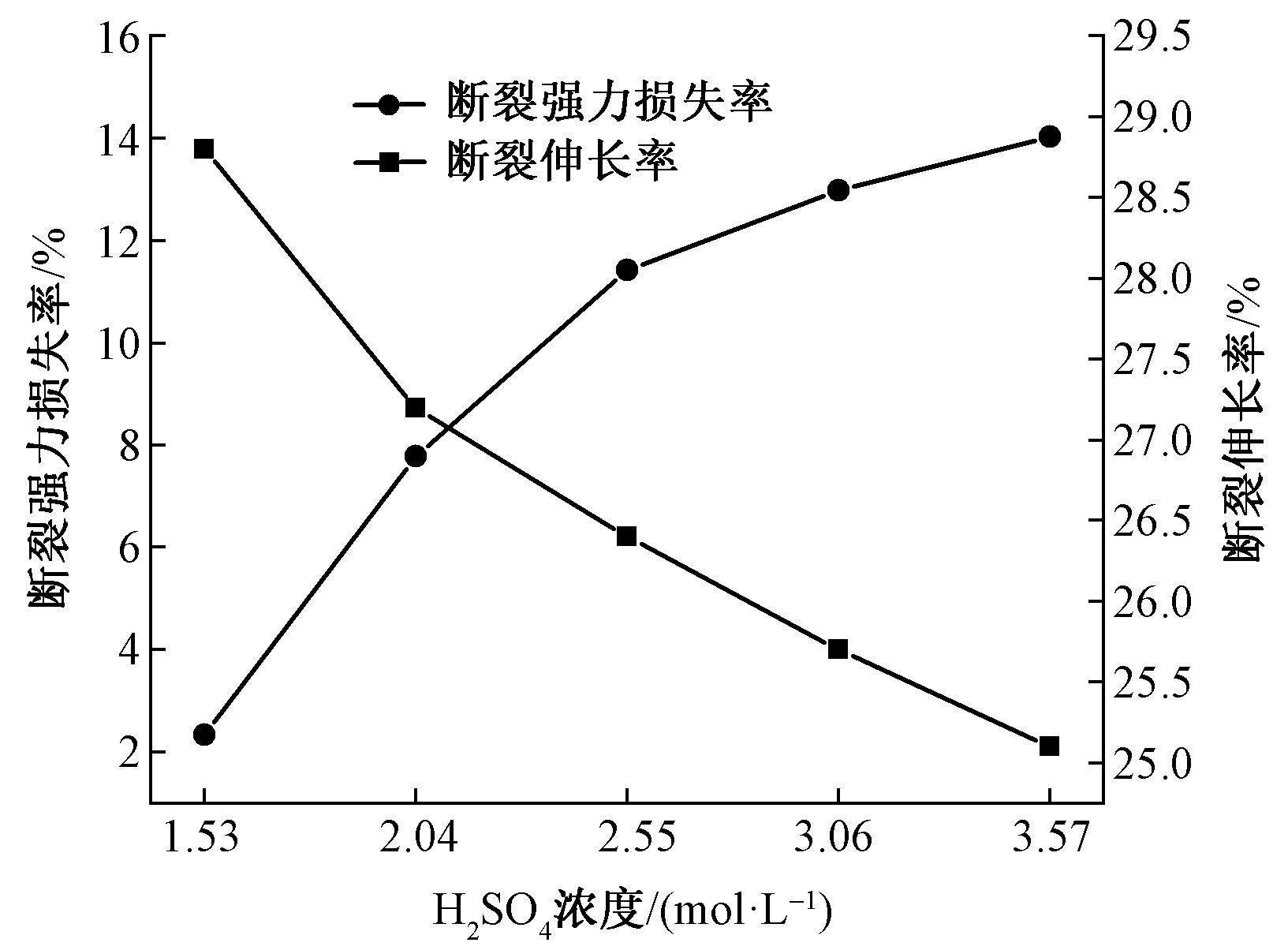
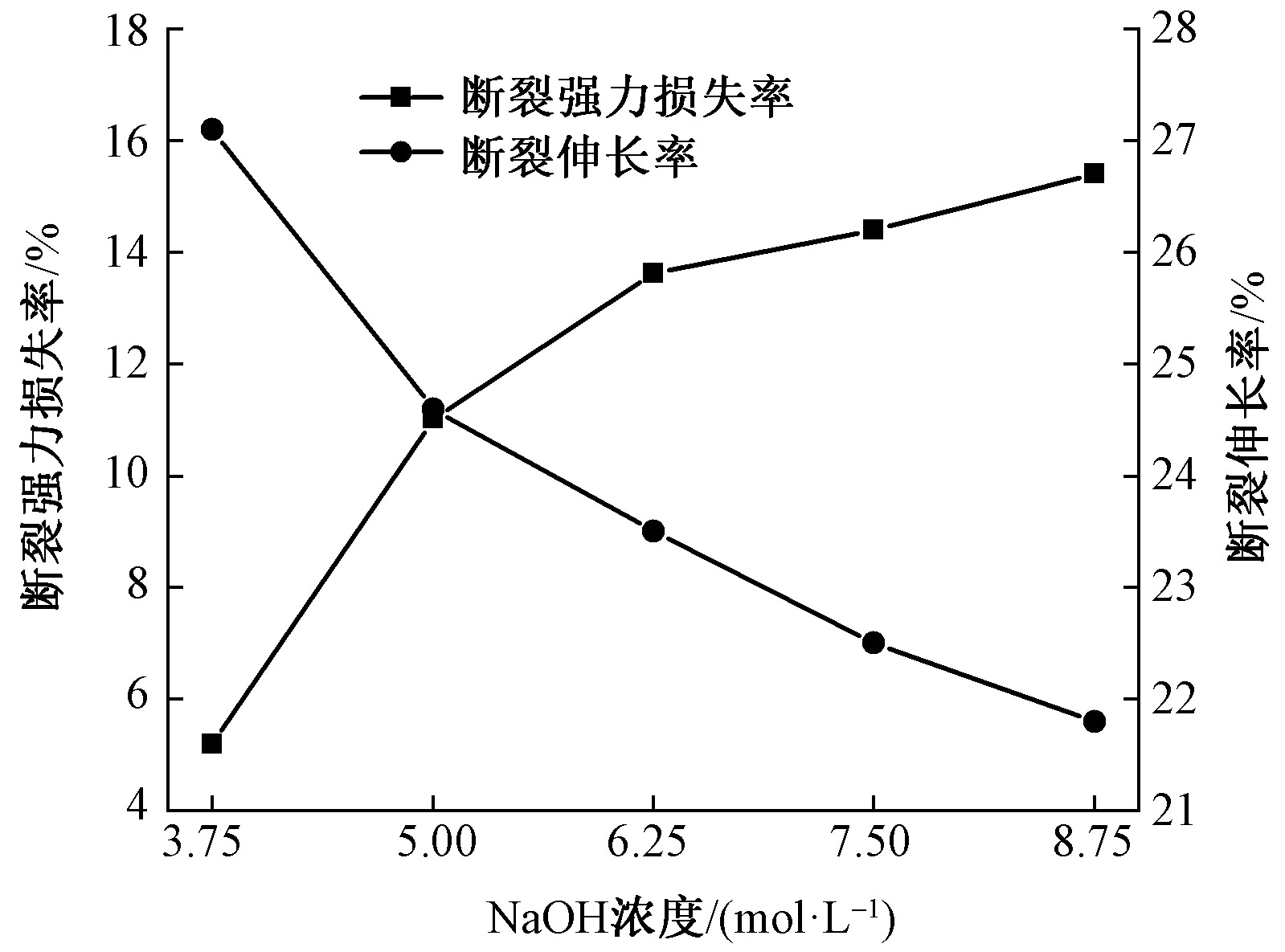
摘要: 为提高聚氯乙烯(PVC)平板膜的力学性能和耐腐蚀性能,采用熔融纺丝工艺,纺制PVC长丝,并通过机织工艺制成PVC纤维机织物;以聚氯乙烯(PVC)为原材料,氯化聚氯乙烯(CPVC)为共混膜材料,N,N-二甲基乙酰胺(DMAc)为溶剂,聚乙二醇(PEG)2000为成孔剂制备PVC/CPVC平板膜;分别采用PVC机织物(PVC-W)、涤纶(PET)机织物、聚丙烯(PP)熔喷非织造布、PET纺黏非织造布为支撑层,涂覆上述铸膜液构建具有非对称性的复合膜。借助扫描电子显微镜、原子力显微镜表征复合膜形貌,同时测试样品的亲水性能、力学性能、耐酸碱腐蚀性能等。结果表明:以PVC-W为支撑层的复合膜(PVC-W-P)具有致密的微孔过滤层,表层与支撑层之间连接紧密,形成了机械互锁结构,增强了界面结合力,水接触角降低至50°,纯水通量增大1.5倍,蛋白截留率提高4.6%。PVC-W-P的断裂强力是原膜(PVC/CPVC-P)的17.6倍,经2.55 mol/L的H2SO4和6.25 mol/L的NaOH溶液腐蚀72 h,其断裂强力分别是PVC/CPVC-P的15.1倍和15.6倍。通过综合分析PVC-W对PVC-W-P性能的影响,为制备高性能的复合膜支撑体提供了理论参考。
中图分类号:
| [1] | 崔忠超. 城市水污染的现状及治理措施分析[J]. 资源节约与环保, 2022, 252(11): 74-77. |
| CUI Zhongchao. Analysis of the current situation of urban water pollution and treatment measures[J]. Resources Economization & Environmental Protection, 2022, 252(11):74-77. | |
| [2] | LI Jingfeng, XU Zhenjiang, HU Yang. Microporous polyether sulfone membranes prepared under the combined precipitation conditions with non-solvent additives[J]. Polymers for Advanced Technologies, 2008, 19(4):251-257. |
| [3] |
王静, 张雨山. 超滤膜和微滤膜在污(废)水处理中的应用研究现状及发展趋势[J]. 工业水处理, 2001(3): 4-8.
doi: 11894/1005-829x.2001.21(3).4 |
|
WANG Jing, ZHANG Yushan. Present state of the application of the ultrafiltration membrane and microfiltration membrane to wastewater treatment and its development trend[J]. Industrial Water Treatment, 2001(3):4-8.
doi: 11894/1005-829x.2001.21(3).4 |
|
| [4] | 张永波. 苦咸水淡化用聚偏氟乙烯微孔蒸馏膜的研制[D]. 天津: 天津工业大学, 2002: 98-108. |
| ZHANG Yongbo. Development of polyvinylidene fluoride microporous distillation membrane for brackish water desalination[D].Tianjin: Tiangong University, 2002:98-108. | |
| [5] | 刘倩男. 分离膜支撑体用湿法非织造材料的制备及性能研究[D]. 天津: 天津工业大学, 2021: 46-56. |
| LIU Qiannan. Preparation and properties of wet nonwoven materials for separation membrane support body[D]. Tianjin: Tiangong University, 2021:46-56. | |
| [6] | 张渠平. 热轧涤纶湿法非织造材料及其对聚砜支撑膜的影响[D]. 天津: 天津工业大学, 2020: 53-63. |
| ZHANG Quping. Hot-rolled polyester wet nonwoven materials and their effect on polysulfone-supported membranes[D]. Tianjin: Tiangong University, 2020:53-63. | |
| [7] | 杨惠娣. 聚氯乙烯及其热稳定剂现状与发展趋势[J]. 中国塑料, 2019, 33(4): 111-119. |
| YANG Huidi. Current situation and development trends of PVC and its stabilizers[J]. China Plastics, 2019, 33(4):111-119. | |
| [8] | 苏星瑞, 白时兵, 杨双桥. 聚氯乙烯热稳定剂的行业现状与发展趋势[J]. 塑料工业, 2023, 51(4): 8-12,65. |
| SU Xingrui, BAI Shibing, YANG Shuangqiao. Status and development trends of PVC thermal stabilizer[J]. China Plastics Industry, 2023, 51(4):8-12,65. | |
| [9] | 汤超, 刘四华, 张仁伟, 等. 改性CNC对聚氯乙烯超滤膜性能的影响[J]. 膜科学与技术, 2020, 40(5): 9-15,22. |
| TANG Chao, LIU Sihua, ZHANG Renwei, et al. Effect of modified CNC on the performance of polyvinyl chloride ultrafiltration membrane[J]. Membrane Science and Technology, 2020, 40(5):9-15,22. | |
| [10] | BEHBOUDI A, JAFARZADEH Y, YEGANI R. Polyvinyl chloride/polycarbonate blend ultrafiltration membranes for water treatment[J]. Journal of Membrane Science, 2017,534:18-24. |
| [11] | 吴仲孝, 孟扬, 苏娟娟, 等. 氮化硼表面改性及其对PVC膜耐碱性能的影响[J]. 浙江理工大学学报(自然科学版), 2021, 45(6): 736-743. |
| WU Zhongxiao, MENG Yang, SU Juanjuan, et al. Surface modification of boron nitride and its effect on alkali resistance property of polyvinyl chloride membranes[J]. Journal of Zhejiang Sci-Tech University (Natural Sciences), 2021, 45(6):736-743. | |
| [12] | 石磊, 张琳炜, 刘亚, 等. 分离膜湿法非织造支撑体的结构设计与应用[J]. 纺织学报, 2022, 43(6): 15-21. |
| SHI Lei, ZHANG Linwei, LIU Ya, et al. Structural design and application of wet-laid nonwovens for separating membrane support[J]. Journal of Textile Research, 2022, 43(6):15-21. | |
| [13] | MCCUTCHEON J R, ELIMELECH M. Influence of membrane support layer hydrophobicity on water flux in osmotically driven membrane processes[J]. Journal of Membrane Science, 2008, 318(1/2):458-466. |
| [14] | 杨园园, 秦青青, 雷婷, 等. 两种支撑材料对PVDF膜微观结构和性能的影响[J]. 塑料, 2023, 52(5): 31-35. |
| YANG Yuanyuan, QIN Qingqing, LEI Ting, et al. Effect of the two supporting materials on the structure and properties of the PVDF membranes[J]. Plastics, 2023, 52(5):31-35. | |
| [15] | 李成胜, 李雪梅, 何涛. 支撑型复合高分子膜材料的制备与表征[J]. 南京工业大学学报(自然科学版), 2012, 34(1): 85-90. |
| LI Chengsheng, LI Xuemei, HE Tao. Preparation and characterization of reinforced polymeric membrane with fabric support[J]. Journal of Nanjing University of Technology (Natural Science Edition), 2012, 34(1):85-90. |
| [1] | 刘金鑫, 周雨萱, 朱柏融, 吴海波, 张克勤. 热黏合聚乙烯/聚丙烯双组分纺黏非织造材料性能及其过滤机制[J]. 纺织学报, 2024, 45(01): 23-29. |
| [2] | 杨奇, 刘高慧, 黄琪帏, 胡睿, 丁彬, 俞建勇, 王先锋. 熔喷聚乳酸/聚偏氟乙烯电晕驻极空气过滤材料电荷存储与过滤性能相关性研究[J]. 纺织学报, 2024, 45(01): 12-22. |
| [3] | 谭晶, 石鑫, 于景超, 程礼盛, 杨涛, 杨卫民. 聚合物热解制备玻璃纤维表面碳纳米涂层及其导电性[J]. 纺织学报, 2023, 44(11): 36-44. |
| [4] | 柳敦雷, 陆佳颖, 薛甜甜, 樊玮, 刘天西. 超疏水隔热聚酯纳米纤维/二氧化硅气凝胶复合膜的制备及其性能[J]. 纺织学报, 2023, 44(07): 18-25. |
| [5] | 范洋瑞, 钱建华, 徐凯杨, 王澳, 陶正龙. 基于氯化聚氯乙烯/聚乙烯醇缩丁醛共混膜的界面聚合改性[J]. 纺织学报, 2023, 44(07): 33-41. |
| [6] | 杨潇东, 于斌, 孙辉, 朱斐超, 刘鹏. 聚乙烯三氟氯乙烯熔喷非织造材料的制备及其过滤性能[J]. 纺织学报, 2023, 44(02): 19-26. |
| [7] | 周文, 俞建勇, 张世超, 丁彬. 基于绿色溶剂的聚酰胺纳米纤维膜制备及其空气过滤性能[J]. 纺织学报, 2023, 44(01): 56-63. |
| [8] | 尹喆, 赵海浪, 徐红, 毛志平, 谭玉静. 纺织品中喹啉含量的快速测定[J]. 纺织学报, 2022, 43(12): 125-130. |
| [9] | 郭珊珊, 郝恩全, 李宏杰, 王霖琳, 蒋金华, 陈南梁. 聚氯乙烯膜结构复合材料的光氧老化行为及评价[J]. 纺织学报, 2022, 43(06): 1-8. |
| [10] | 陈锋, 姬忠礼, 于文瀚, 董伍强, 王倩琳, 王德国. 纳米纤维膜润湿性对三明治结构复合过滤材料气液过滤性能的影响[J]. 纺织学报, 2022, 43(05): 63-69. |
| [11] | 王艳萍, 陈晓倩, 夏伟, 傅佳佳, 高卫东, 王鸿博, ARTUR Cavaco-Paulo. 角质酶在涤纶织物表面改性中的应用[J]. 纺织学报, 2022, 43(05): 136-142. |
| [12] | 高强, 王晓, 郭亚杰, 陈茹, 魏菊. 棉基Ti3C2Tx油水分离膜的制备及其性能[J]. 纺织学报, 2022, 43(01): 172-177. |
| [13] | 许仕林, 杨世玉, 张亚茹, 胡柳, 胡毅. 热塑性聚氨酯/特氟龙无定形氟聚物超疏水纳米纤维膜制备及其性能[J]. 纺织学报, 2021, 42(12): 42-42. |
| [14] | 普丹丹, 傅雅琴. 涤纶织物/聚氯乙烯-中空微珠复合材料的制备及其隔声性能[J]. 纺织学报, 2021, 42(11): 77-83. |
| [15] | 汪泽幸, 李帅, 谭冬宜, 孟硕, 何斌. 循环加载处理对聚氯乙烯涂层膜材料蠕变性能的影响[J]. 纺织学报, 2021, 42(07): 101-107. |
|
||
 京公网安备11010502044800号