纺织学报 ›› 2025, Vol. 46 ›› Issue (10): 86-94.doi: 10.13475/j.fzxb.20250201201
张红霞1, 齐芳汐2, 赵静1, 邢毅2, 吕治家1,3( )
)
ZHANG Hongxia1, QI Fangxi2, ZHAO Jing1, XING Yi2, LÜ Zhijia1,3()
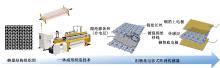
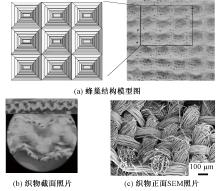
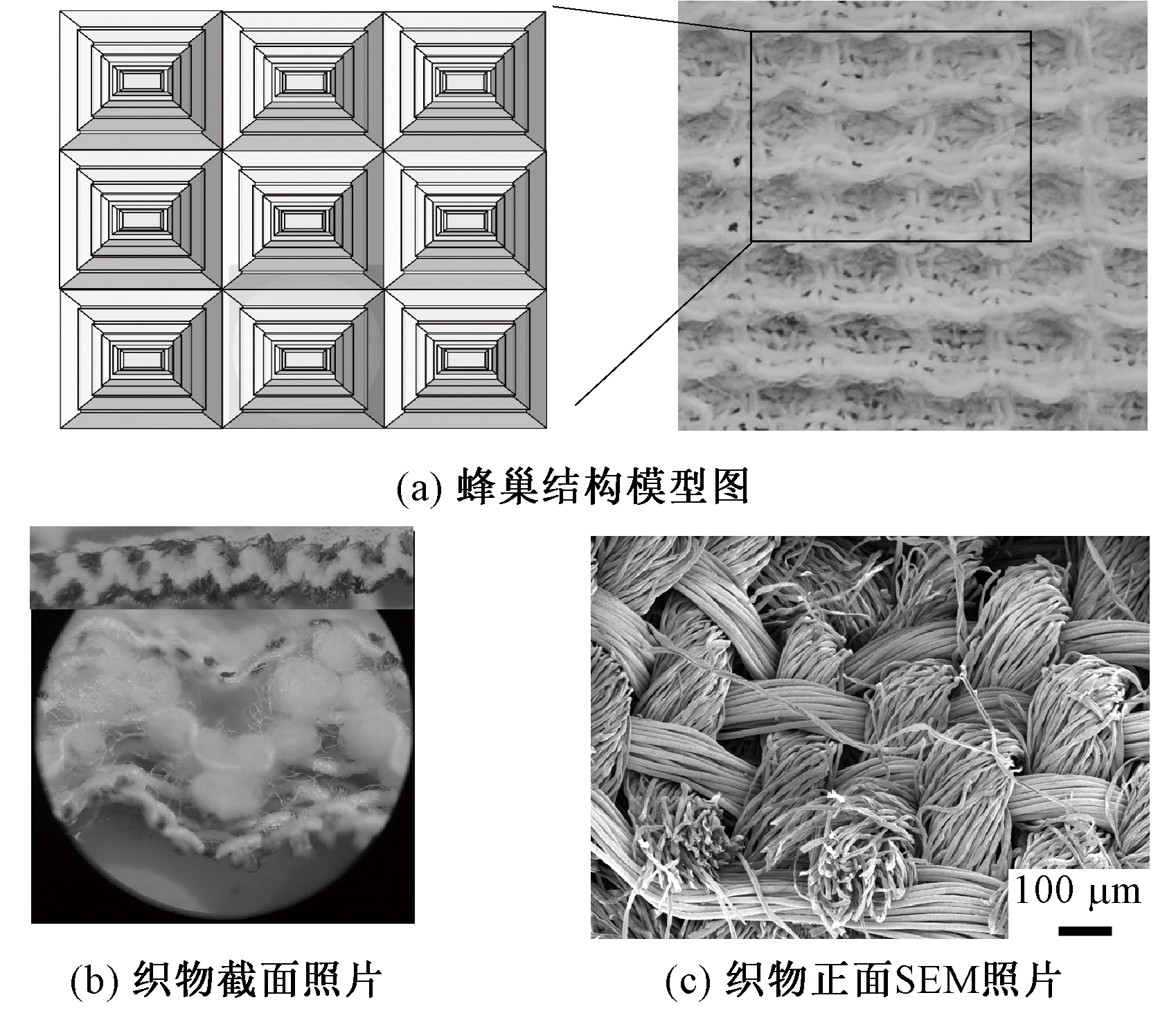
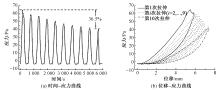
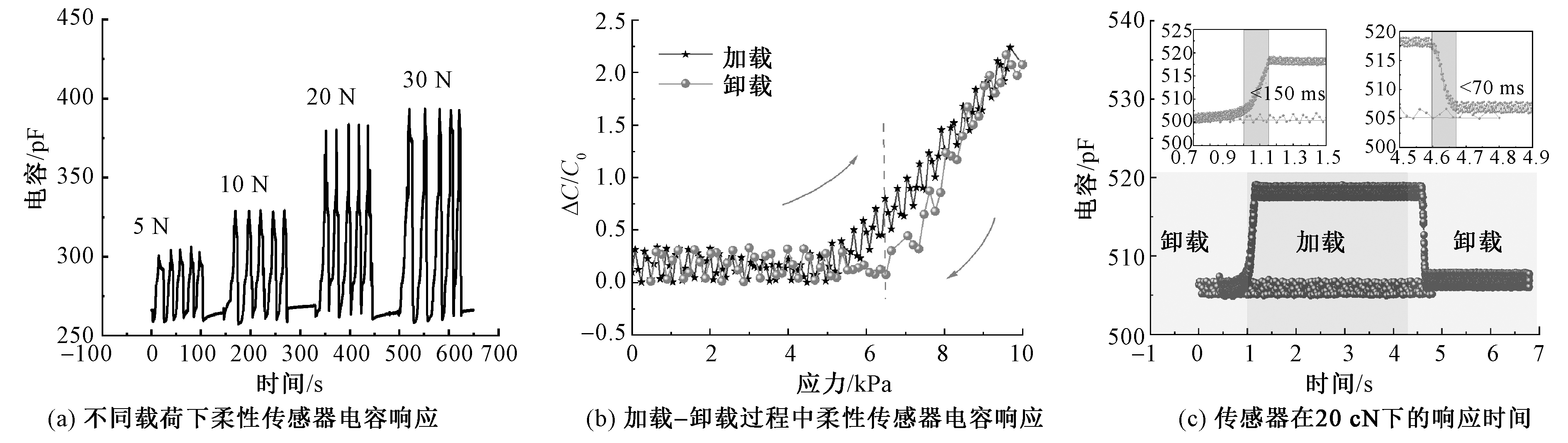
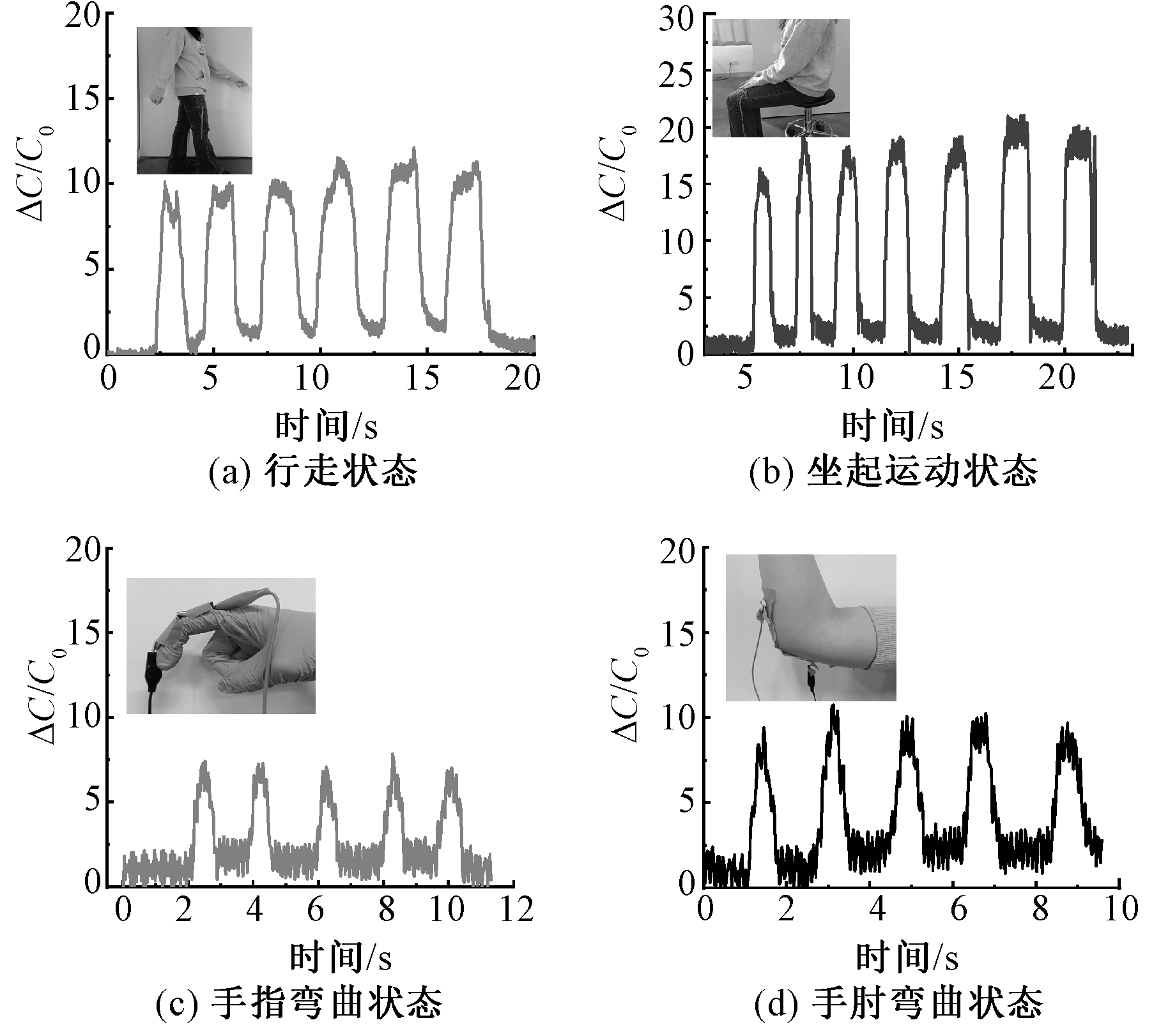
摘要: 高性能、低成本且便于大规模生产的织物基压力传感器具有形状适应性好、与传统纺织品集成能力强的优势,但其在施压过程中滞后性大、回复性差的问题限制了其在可穿戴电子领域的应用。为此,通过编织技术,一体成形织造了全织物基电容式阵列压力传感器。研究了织物基电容传感器的结构对性能的影响,分析了该传感器的表面形貌、传感性能、水洗性能等,并进行了应用测试。结果表明:该织物基电容传感器中的介电层具有独特的立体三维蜂巢编织结构,其在0~10 kPa区间实现了0.086 kPa-1的高灵敏度和小于150 ms的快速响应时间;此外,织物基传感器在保持良好透气性(平均透气率约为464.98 mm/s)的同时表现出良好的双向传感性能,在 2 000次的拉伸和压缩下仍具有较好的耐久性和稳定性,在不同负载压力下仍具有优异的区分度及稳定性。基于以上优异的性能,该织物基阵列传感器可用于各种体态监测,如行走、坐起、手指/手肘弯曲等,验证了其在智能健康监测领域的应用潜力。
中图分类号:
| [1] | 汤健, 闫涛, 潘志娟. 导电复合纤维基柔性应变传感器的研究进展[J]. 纺织学报, 2021, 42(5): 168-177. |
| TANG Jian, YAN Tao, PAN Zhijuan. Research progress of flexible strain sensors based on conductive composite fibers[J]. Journal of Textile Research, 2021, 42(5): 168-177. | |
| [2] |
WU D, WENG L, ZHANG X R, et al. Flexible, wearable multilayer piezoresistive sensor based on mulberry silk fabric for human movement and health detection[J]. Journal of Materials Science: Materials in Electronics, 2023, 34(16): 1313.
doi: 10.1007/s10854-023-10691-5 |
| [3] |
ZHANG E Y, CAO X L, WEI X L, et al. A flexible, wearable, and interference-resistant self-powered sensor for body motion assessment[J]. ACS Applied Electronic Materials, 2024, 6(11): 7720-7727.
doi: 10.1021/acsaelm.4c01209 |
| [4] |
HOSSAIN I Z, KHAN A, HOSSAIN G. A piezoelectric smart textile for energy harvesting and wearable self-powered sensors[J]. Energies, 2022, 15(15): 5541.
doi: 10.3390/en15155541 |
| [5] |
MAO A Q, LU W Y, JIA Y G, et al. Flexible piezoelectric devices and their wearable applica-tions[J]. Journal of Inorganic Materials, 2023, 38(7): 717.
doi: 10.15541/jim20220549 |
| [6] | 张蕊, 叶苏娴, 王建, 等. 全织物型离电式柔性压力传感器的制备及其性能[J]. 纺织学报, 2025, 46(2): 113-121. |
|
ZHANG Rui, YE Suxian, WANG Jian, et al. Preparation and performance of all-fabric iontronic flexible pressure sensor[J]. Journal of Textile Research, 2025, 46(2): 113-121.
doi: 10.1177/004051757604600206 |
|
| [7] | 岳欣琰, 邵剑波, 王小虎, 等. 基于镀银锦纶/锦纶/水性聚氨酯复合纱的一维结构柔性电容传感器[J]. 纺织学报, 2025, 46(3): 82-89. |
|
YUE Xinyan, SHAO Jianbo, WANG Xiaohu, et al. One-dimensional structured flexible capacitive sensors based on silver coated polyamide fiber/polyamide fiber/waterborne polyurethane composite yarns[J]. Journal of Textile Research, 2025, 46(3): 82-89.
doi: 10.1177/004051757604600202 |
|
| [8] |
WANG M, LI Y H, SHI Y Y, et al. A new planar capacitive sensor with high sensitivity for proximity sensing of an approaching conductor[J]. Sensor Review, 2024, 44(2): 90-99.
doi: 10.1108/SR-10-2023-0562 |
| [9] | HE Z F, CHEN W J, LIANG B H, et al. Capacitive pressure sensor with high sensitivity and fast response to dynamic interaction based on graphene and porous nylon networks[J]. ACS Applied Materials & Interfaces, 2018, 10(15): 12816-12823. |
| [10] |
YE X R, TIAN M W, LI M, et al. All-fabric-based flexible capacitive sensors with pressure detection and non-contact instruction capability[J]. Coatings, 2022, 12(3): 302.
doi: 10.3390/coatings12030302 |
| [11] |
DÍAZ-FERNÁNDEZ A, DE-LOS-SANTOS-ÁLVAREZ N, LOBO-CASTAÑÓN M J. Capacitive spectroscopy as transduction mechanism for wearable biosensors: opportunities and challenges[J]. Analytical and Bioanalytical Chemistry, 2024, 416(9): 2089-2095.
doi: 10.1007/s00216-023-05066-y |
| [12] |
XU Z W, ZHENG S D, WU X T, et al. High actuated performance MWCNT/Ecoflex dielectric elastomer actuators based on layer-by-layer structure[J]. Composites Part A: Applied Science and Manufacturing, 2019, 125: 105527.
doi: 10.1016/j.compositesa.2019.105527 |
| [13] |
LI S M, LI R Q, CHEN T J, et al. Highly sensitive and flexible capacitive pressure sensor enhanced by weaving of pyramidal concavities staggered in honeycomb matrix[J]. IEEE Sensors Journal, 2020, 20(23): 14436-14443.
doi: 10.1109/JSEN.7361 |
| [14] | YANG J C, KIM J O, OH J, et al. Microstructured porous pyramid-based ultrahigh sensitive pressure sensor insensitive to strain and temperature[J]. ACS Applied Materials & Interfaces, 2019, 11(21): 19472-19480. |
| [15] |
肖渊, 童垚, 胡呈安, 等. 导电复合材料涂覆式全织物基柔性压阻传感器制备[J]. 纺织学报, 2024, 45(10): 152-160.
doi: 10.13475/j.fzxb.20230705701 |
|
XIAO Yuan, TONG Yao, HU Cheng'an, et al. Preparation of all-fabric flexible piezoresistive sensors based on conductive composite coating[J]. Journal of Textile Research, 2024, 45(10): 152-160.
doi: 10.13475/j.fzxb.20230705701 |
|
| [16] |
XIAO Y, HU H C, GUO D Y, et al. A jet printing highly sensitive cotton/MWCNT fabric-based flexible capacitive sensor[J]. Sensors and Actuators A: Physical, 2023, 351: 114152.
doi: 10.1016/j.sna.2023.114152 |
| [17] |
CHEN Y X, WANG Z H, XU R, et al. A highly sensitive and wearable pressure sensor based on conductive polyacrylonitrile nanofibrous membrane via electroless silver plating[J]. Chemical Engineering Journal, 2020, 394: 124960.
doi: 10.1016/j.cej.2020.124960 |
| [18] | SU Z Y, XU D, LIU Y C, et al. All-fabric tactile sensors based on sandwich structure design with tunable responsiveness[J]. ACS Applied Materials & Interfaces, 2023, 15(26): 32002-32010. |
| [19] |
ZHAO B Y, DONG Z J, CONG H L. A wearable and fully-textile capacitive sensor based on flat-knitted spacing fabric for human motions detection[J]. Sensors and Actuators A: Physical, 2022, 340: 113558.
doi: 10.1016/j.sna.2022.113558 |
| [20] |
ZHANG Q, WANG Y L, XIA Y, et al. Textile-only capacitive sensors with a lockstitch structure for facile integration in any areas of a fabric[J]. ACS Sensors, 2020, 5(6): 1535-1540.
doi: 10.1021/acssensors.0c00210 pmid: 32515186 |
| [21] | 李悦. 自组装分子膜镀银纱线的制备及在电加热织物上的应用[D]. 天津: 天津工业大学, 2022: 3-15. |
| LI Yue. Preparation of self-assembled molecular membrane silver-plated yarn and its application to electrically heated fabrics[D]. Tianjin: Tiangong University, 2022: 3-15. | |
| [22] |
EMELYANENKO K A, CHULKOVA E V, SEMILETOV A M, et al. The potential of the superhydrophobic state to protect magnesium alloy against corrosion[J]. Coatings, 2022, 12(1): 74.
doi: 10.3390/coatings12010074 |
| [23] | 孔令杰, 高晓红, 贾雪平. 纳米银负载对棉织物活性染料染色的影响[J]. 纺织学报, 2015, 36(7): 61-65. |
| KONG Lingjie, GAO Xiaohong, JIA Xueping. Influence of nano silver loading on dyeing property of cotton fabric[J]. Journal of Textile Research, 2015, 36(7): 61-65. | |
| [24] | PALANISAMY S, TUNAKOVA V, TUNAK M, et al. Textile-based weft knit strain sensor: experimental investigation of the effect of stretching on electrical conductivity and electromagnetic shielding[J]. Journal of Industrial Textiles, 2022, 52: 15280837221142825. |
| [25] |
RAJABOV I. Development of a theoretical model for the breathability of textile fabrics[J]. Journal of Applied Data Sciences, 2024, 5(4): 1925-1938.
doi: 10.47738/jads |
| [26] |
YANG Y, YU X, WANG X G, et al. Thermal comfort properties of cool-touch nylon and common nylon knittedfabrics with different fibre fineness and cross-section[J]. Industria Textila, 2021, 72(2): 217-224.
doi: 10.35530/IT |
| [27] |
MEYER P M, FORRESTER M, COCHRAN E W. Synthesis of laboratory nylon: a scale-up method for high molecular weight polyamides[J]. Industrial & Engineering Chemistry Research, 2024, 63(45): 19506-19514.
doi: 10.1021/acs.iecr.4c03175 |
| [1] | 方剑, 任松, 张传雄, 陈钱, 夏广波, 葛灿. 智能可穿戴纺织品用电活性纤维材料[J]. 纺织学报, 2021, 42(09): 1-9. |
| [2] | 檀江涛, 蒋高明, 高哲, 郑培晓. 抗低速冲击纺织复合材料头盔壳体研究进展[J]. 纺织学报, 2021, 42(08): 185-193. |
| [3] | 肖渊, 李红英, 李倩, 张威, 杨鹏程. 棉织物/聚二甲基硅氧烷复合介电层柔性压力传感器制备[J]. 纺织学报, 2021, 42(05): 79-83. |
| [4] | 冀鹤 蒋高明 吕建国. 基于人体足部特征的织袜模型设计及一体成形算法[J]. 纺织学报, 2018, 39(12): 53-58. |
|
||
 京公网安备11010502044800号