纺织学报 ›› 2025, Vol. 46 ›› Issue (11): 86-93.doi: 10.13475/j.fzxb.20241207301
李诗蕴1, 温润1,2( ), 沈华1,3, 吴建华3
LI Shiyun1, WEN Run1,2(), SHEN Hua1,3, WU Jianhua3
摘要:
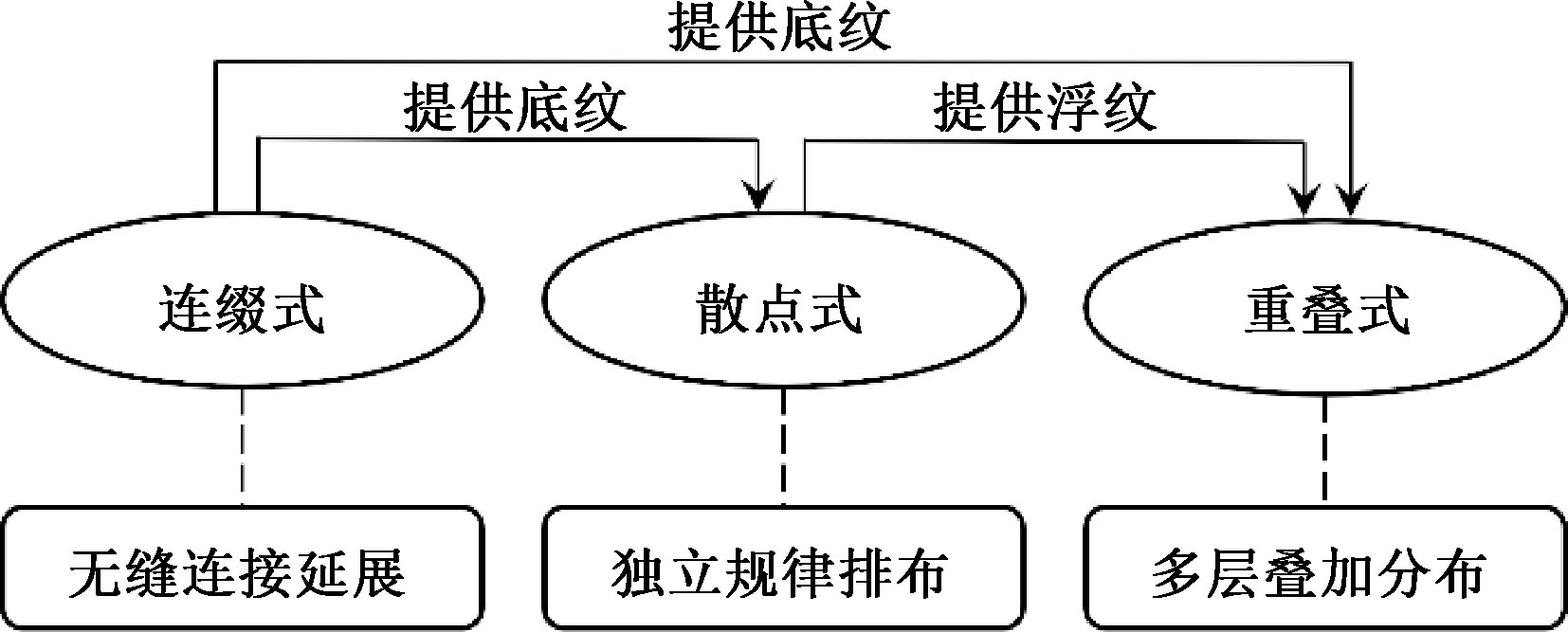
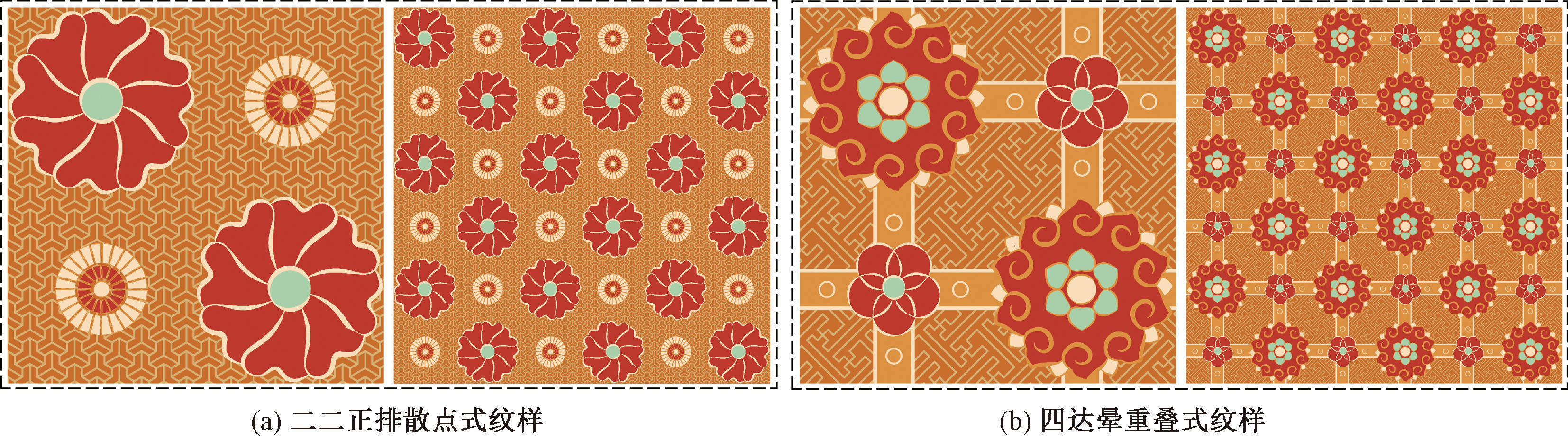
为突破传统织锦四方连续纹样数字化创新与高效传承的瓶颈,将纹样依结构特征模块化,归纳连缀式、散点式、重叠式三类纹样排布及共性规律,基于面向对象编程技术建立自动生成程序,精确控制纹样元素形状、比例与布局参数,进而复现经典纹样并依参数生成重构纹样,有效传承与发扬传统织锦四方连续纹样的美学与韵律。结果表明:该方法可对纹样形状、大小、位置等参数进行细节化控制与快速调整,提升了纹样设计的自由度与精准度,实现了纹样从传统手工绘制与布局模式向数字化构建与创新生成模式的有效转换,为传统织锦艺术在当代传承与发展提供了技术支撑与实践参照。
中图分类号:
| [1] | 钱小萍. 蜀锦、宋锦和云锦的特点剖析[J]. 丝绸, 2011, 48(5): 1-6. |
| QIAN Xiaoping. Analysis on characteristics of Shu brocade, song brocade and Yun brocade[J]. Journal of Silk, 2011, 48(5): 1-6. | |
| [2] | 周赳. 中国古代三大名锦的品种梳理及美学特征分析[J]. 丝绸, 2018, 55(4): 93-105. |
| ZHOU Jiu. Analysis on variety and aesthetic characteristics of three famous brocades in ancient China[J]. Journal of Silk, 2018, 55(4): 93-105. | |
| [3] | 吴玉青. 苏州宋锦的美学风格及其文化成因研究[D]. 南京: 南京艺术学院, 2013:10-15. |
| WU Yuqing. Study on the aesthetic style and cultural causes of Suzhou Song brocade[D]. Nanjing: Nanjing University of the Arts, 2013:10-15. | |
| [4] | 顾春华. 古书画装裱中八达晕锦图案的研究与设计[J]. 丝绸, 2013, 50(8): 36-42. |
| GU Chunhua. Study and design of badayun brocade pattern used for mounting traditional Chinese calligraphy and painting[J]. Journal of Silk, 2013, 50(8): 36-42. | |
| [5] | 李叶红, 吴洪. 传统“八达晕” 图案的多元化创新设计研究[J]. 丝绸, 2022, 59(4): 102-109. |
| LI Yehong, WU Hong. Research on diversified innovation and design of the traditional “Badayun” pattern[J]. Journal of Silk, 2022, 59(4): 102-109. | |
| [6] | 徐海鹏. 基于几何美学的壮锦纹样创新应用研究[D]. 柳州: 广西科技大学, 2023:7-28. |
| XU Haipeng. Research on innovative application of Zhuang brocade patterns based on geometric aesth-etics[D]. Liuzhou: Guangxi University of Science and Technology, 2023:7-28. | |
| [7] | 杨芳芳, 刘力佳, 郭丽. 西兰卡普传统几何纹样的重构设计探究[J]. 轻纺工业与技术, 2025, 54(1):50-55. |
| YANG Fangfang, LIU Lijia, GUO Li. Research on the reconstruction design of traditional geometric patterns in Xilankapu[J]. Light and Textile Industry and Technology, 2025, 54(1):50-55. | |
| [8] | 项子丰. 中国古代丝绸纹样骨架结构研究与设计实践[D]. 杭州: 浙江理工大学, 2021:3-8. |
| XIANG Zifeng. Research and design practice of Chinese ancient silk patterns skeleton[D]. Hangzhou: Zhejiang Sci-Tech University, 2021:3-8. | |
| [9] | 张玉杰, 李欣华. 八答晕纹样研究与现代设计传播平台构建[J]. 丝绸, 2021, 58(5): 130-139. |
| ZHANG Yujie, LI Xinhua. A study on Badayun patterns and modern design communication platform construction[J]. Journal of Silk, 2021, 58(5): 130-139. | |
| [10] | 张素雅, 崔荣荣, 王志成, 等. 八达晕纹样结构参数化解构与再生设计[J]. 纺织学报, 2024, 45(6): 165-172. |
| ZHANG Suya, CUI Rongrong, WANG Zhicheng, et al. Parametric and regeneration design of badayun patterns[J]. Journal of Textile Research, 2024, 45(6): 165-172. | |
| [11] | 苏燕, 刘畅, 华佳. 基于风格迁移算法的苏州宋锦图案的数字化设计研究[J]. 包装工程, 2025, 46(6): 286-293. |
| SU Yan, LIU Chang, HUA Jia. Digital design of Suzhou song brocade patterns based on image style transfer algorithm[J]. Packaging Engineering, 2025, 46(6): 286-293. | |
| [12] | 潘末雨. 基于参数化技术的南京云锦创新设计研究[D]. 南京: 南京艺术学院, 2023:1-20. |
| PAN Moyu. Research on innovative design of Nanjing Yunjin based on parametric technology[D]. Nanjing: Nanjing University of the Arts, 2023:1-20. | |
| [13] | 吴思熠, 高松, 罗芊芊, 等. 宝相花纹样参数化建模与衍生设计研究[J]. 北京服装学院学报(自然科学版), 2024, 44(4):98-105. |
| WU Siyi, GAO Song, LUO Qianqian, et al. Research on parametric modeling and derivative design of Baoxiang flower pattern[J]. Journal of Beijing Institute of Fashion Technology (Natural Science Edition), 2024, 44(4):98-105. | |
| [14] |
XU S C, ZHANG Y, YAN S M. Automatic mandala pattern design and generation based on COOM framework[J]. Journal of Computer Languages, 2022, 72: 101138.
doi: 10.1016/j.cola.2022.101138 |
| [15] |
王迪, 柯莹, 王宏付. Voronoi图形在参数化服装造型构建中的应用[J]. 纺织学报, 2021, 42(12):131-137.
doi: 10.13475/j.fzxb.20210503707 |
|
WANG Di, KE Ying, WANG Hongfu. Parametric fashion design based on Voronoi graphics[J]. Journal of Textile Research, 2021, 42(12): 131-137.
doi: 10.13475/j.fzxb.20210503707 |
|
| [16] |
张晓含, 包怡云, 吴继辉, 等. 定制旗袍纸样的自动生成[J]. 纺织学报, 2024, 45(10): 177-183.
doi: 10.13475/j.fzxb.20231204701 |
|
ZHANG Xiaohan, BAO Yiyun, WU Jihui, et al. Automatic generation of customized cheongsam pattern[J]. Journal of Textile Research, 2024, 45(10): 177-183.
doi: 10.13475/j.fzxb.20231204701 |
|
| [17] |
龙颖, 吕叶馨, 郭子翊, 等. 基于自适应模板匹配的四方连续花型最小单元提取[J]. 现代纺织技术, 2022, 30(2): 191-196.
doi: 10.19398/j.att.202103018 |
|
LONG Ying, LÜ Yexin, GUO Ziyi, et al. Extraction of minimum units of four-consecutive pattern based on adaptive template matching[J]. Advanced Textile Technology, 2022, 30(2): 191-196.
doi: 10.19398/j.att.202103018 |
|
| [18] | 李敏, 白寒, 殷果. 以形状文法为导向的参数化传统纹样设计技术研究[J]. 包装工程, 2023, 44(22):242-251. |
| LI Min, BAI Han, YIN Guo. Parametric design technology of traditional patterns based on Shape Grammar[J]. Packaging Engineering, 2023, 44(22):242-251. |
| [1] | 邱俊, 李际军. 机织物的三维真实感建模与参数化设计[J]. 纺织学报, 2025, 46(10): 95-102. |
| [2] | 陈晓真, 吴莹, 杨叶, 鲁礼豪. 基于三维虚拟模特转换的女士连体长裤参数化纸样生成[J]. 纺织学报, 2025, 46(07): 193-201. |
| [3] | 王一品, 李小辉. 服装褶皱形态的参数化表征方法[J]. 纺织学报, 2024, 45(06): 149-154. |
| [4] | 张素雅, 崔荣荣, 王志成, 蒋汶秦, 徐平华. 八达晕纹样结构参数化解构与再生设计[J]. 纺织学报, 2024, 45(06): 165-172. |
| [5] | 周艳红, 江红霞, 陈玲. 基于AutoCAD参数化中式嫁衣样板的自动生成[J]. 纺织学报, 2022, 43(09): 175-181. |
| [6] | 雷鸽, 李小辉. 数字化服装结构设计技术的研究进展[J]. 纺织学报, 2022, 43(04): 203-209. |
| [7] | 王迪, 柯莹, 王宏付. Voronoi图形在参数化服装造型构建中的应用[J]. 纺织学报, 2021, 42(12): 131-137. |
| [8] | 凌雅丽, 朱凌轩, 邵晓煊, 李泽辉, 钟安华. 亚洲男士西服基本纸样自动生成系统的建立[J]. 纺织学报, 2020, 41(09): 108-113. |
| [9] | 李涛, 杜磊, 黄振华, 蒋玉萍, 邹奉元. 服装款式图识别与样板转换技术研究进展[J]. 纺织学报, 2020, 41(08): 145-151. |
| [10] | 陈咪, 叶勤文, 张皋鹏. 斜裁裙参数化结构模型的构建[J]. 纺织学报, 2020, 41(07): 135-140. |
| [11] | 娄少红. 基于AutoCAD参数化功能的A型裙样板自动化生成[J]. 纺织学报, 2020, 41(01): 131-138. |
| [12] | 王旭, 杜增锋, 王翠娥, 倪庆清, 刘新华. 贯穿正交机织物结构的参数化三维建模[J]. 纺织学报, 2019, 40(11): 57-63. |
| [13] | 张芳芳, 段永川. 二维三轴编织复合材料预压单胞模型建立及其弹性规律数值预测[J]. 纺织学报, 2019, 40(10): 85-91. |
| [14] | 娄少红. 双圆弧的图解及其在衣缝轮廓线设计中的应用[J]. 纺织学报, 2019, 40(09): 150-158. |
| [15] | 叶勤文, 张皋鹏. 基于AutoCAD参数化的个性化服装纸样生成[J]. 纺织学报, 2019, 40(04): 103-110. |
|
||
 京公网安备11010502044800号