纺织学报 ›› 2025, Vol. 46 ›› Issue (12): 39-48.doi: 10.13475/j.fzxb.20250601602
• 纺织科技新见解学术沙龙专栏:纤维基功能过滤材料 • 上一篇 下一篇
刘青青1,2, 毛晓卉1, 姚焰1, 孙颖1, 陈鱼1, 张霄喆1, 朱丽萍1,2( ), 王雪芬1
LIU Qingqing1,2, MAO Xiaohui1, YAO Yan1, SUN Ying1, CHEN Yu1, ZHANG Xiaozhe1, ZHU Liping1,2(), WANG Xuefen1
摘要:
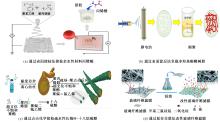
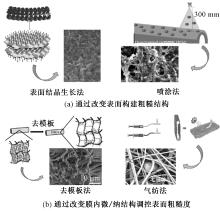
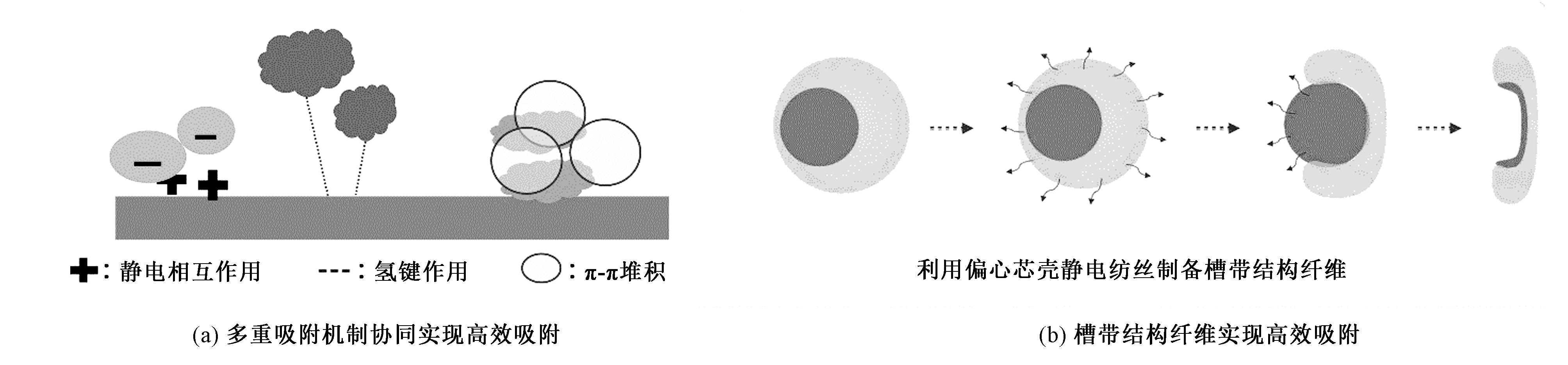
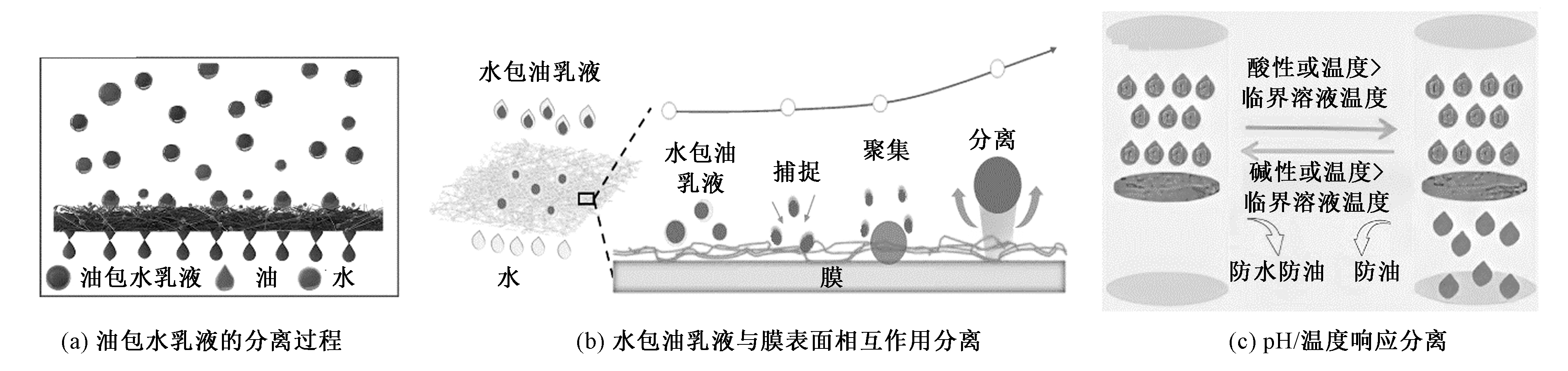
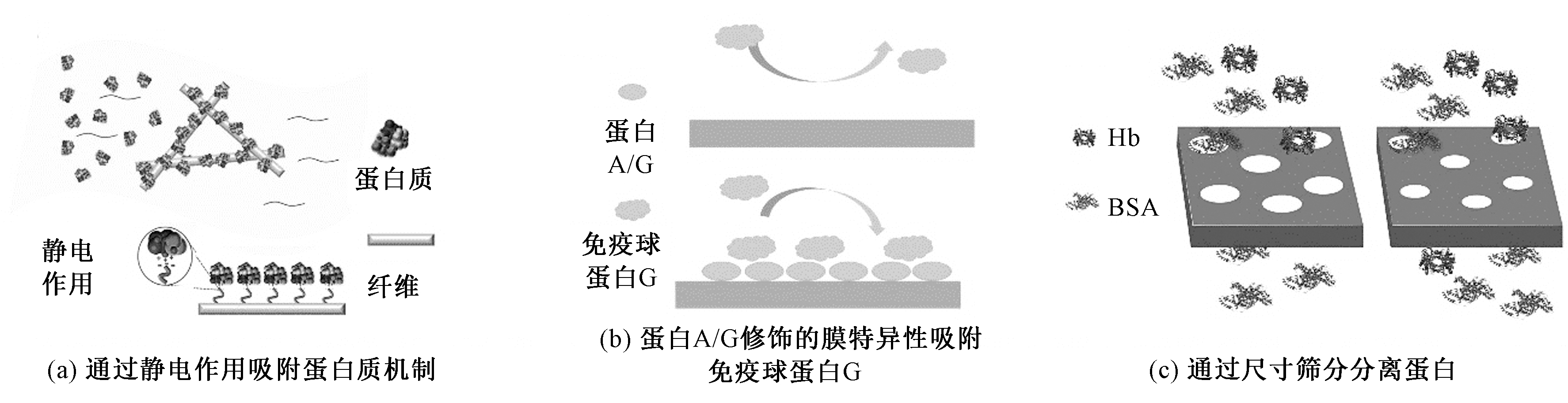
纤维基分离膜作为一种高效低能耗的分离材料,在环境治理、生物医药及资源回收等领域展现出广阔应用前景。系统综述了纤维基分离膜的功能改性策略,重点探讨表面化学性质及表面物理结构调控与膜分离效率、选择性和稳定性的相互关系,表面化学性质调控方法主要包括接枝、点击反应、官能化反应、缩合反应和原位交联改性,表面物理结构调控方法包括表面结晶生长法、喷涂法、去模板法;介绍了改性对超亲水、超疏水、智能响应润湿性、抗污、耐腐蚀等功能的影响,并从染料吸附、油水分离及蛋白分离等应用角度剖析了改性与膜分离吸附机制的关系。后续针对纤维基分离膜在应用中的瓶颈问题,仍需从材料创新和结构优化等方向进行突破,开发智能响应材料、设计多功能集成是纤维基分离膜的重要发展趋势。
中图分类号:
| [1] |
CHOI W, KWON Y, YU W R, et al. Graphite fiber electrode by continuous wet-spinning[J]. ACS Applied Energy Materials, 2022, 5(7): 8963-8972.
doi: 10.1021/acsaem.2c01446 |
| [2] |
LUISO S, HENRY J J, POURDEYHIMI B, et al. Fabrication and characterization of meltblown poly(vinylidene difluoride) membranes[J]. ACS Applied Polymer Materials, 2020, 2(7): 2849-2857.
doi: 10.1021/acsapm.0c00395 |
| [3] |
LIU F Y, PAN L, LIU Y F, et al. Biobased fibers from natural to synthetic: processing, manufacturing, and application[J]. Matter, 2024, 7(6): 1977-2010.
doi: 10.1016/j.matt.2024.04.006 |
| [4] |
HASSAN M A, YEOM B Y, WILKIE A, et al. Fabrication of nanofiber meltblown membranes and their filtration properties[J]. Journal of Membrane Science, 2013, 427: 336-344.
doi: 10.1016/j.memsci.2012.09.050 |
| [5] |
MENG Z Y, ZHU L P, WANG X F, et al. Electrospun nanofibrous composite membranes for separations[J]. Accounts of Materials Research, 2023, 4(2): 180-192.
doi: 10.1021/accountsmr.2c00219 |
| [6] |
LU J L, LIU S Y, ZOU L, et al. Graphene oxide-polydopamine loaded uniform fibrous membranes via robust multi-channel microfluidic-electrospinning method[J]. Separation and Purification Technology, 2025, 357: 130014.
doi: 10.1016/j.seppur.2024.130014 |
| [7] |
HIMMA N F, PRASETYA N, ANISAH S, et al. Superhydrophobic membrane: progress in preparation and its separation properties[J]. Reviews in Chemical Engineering, 2019, 35(2): 211-238.
doi: 10.1515/revce-2017-0030 |
| [8] |
LUO W, CHI R Y, ZENG F K, et al. Multilayer structure ammoniated collagen fibers for fast adsorption of anionic dyes[J]. ACS Omega, 2021, 6(41): 27070-27079.
doi: 10.1021/acsomega.1c03643 pmid: 34693127 |
| [9] |
ZHANG L Y, LI Y M, LIU F, et al. Nylon-6/SiO2 composite fiber membranes with 2D narrow pore but 3D fluffy structure for high-efficiency and comfortable PM0.1 filter[J]. Journal of Membrane Science, 2025, 718: 123714.
doi: 10.1016/j.memsci.2025.123714 |
| [10] |
YUE X J, LI Z D, ZHANG T, et al. Design and fabrication of superwetting fiber-based membranes for oil/water separation applications[J]. Chemical Engineering Journal, 2019, 364: 292-309.
doi: 10.1016/j.cej.2019.01.149 |
| [11] |
ALZAHRANI S O, ALQARNI S A, ALESSA H, et al. Electrospun nanofibers membrane of carbon quantum dots loaded onto chitosan-polyvinyl alcohol for removal of rhodamine B dye from aqueous solutions: adsorption isotherm, kinetics, thermodynamics and optimization via Box-Behnken design[J]. International Journal of Biological Macromolecules, 2025, 304: 140951.
doi: 10.1016/j.ijbiomac.2025.140951 |
| [12] |
UPADHYAYA L, QIAN X H, RANIL WICKRAMASINGHE S. Chemical modification of membrane surface: overview[J]. Current Opinion in Chemical Engineering, 2018, 20: 13-18.
doi: 10.1016/j.coche.2018.01.002 |
| [13] |
NIE Y L, ZHANG S H, HE Y, et al. One-step modification of electrospun PVDF nanofiber membranes for effective separation of oil-water emulsion[J]. New Journal of Chemistry, 2022, 46(10): 4734-4745.
doi: 10.1039/D1NJ05436H |
| [14] |
YI Y, TU H, ZHOU X, et al. Acrylic acid-grafted pre-plasma nanofibers for efficient removal of oil pollution from aquatic environment[J]. Journal of Hazardous Materials, 2019, 371: 165-174.
doi: S0304-3894(19)30228-6 pmid: 30849571 |
| [15] |
HAO Y J, GUO X Y, LI J, et al. Polyhydroxy phenolic resin coated polyetherimide membrane with biomimetic super-hydrophily for high-efficient oil-water separa-tion[J]. Separation and Purification Technology, 2024, 336: 126278.
doi: 10.1016/j.seppur.2024.126278 |
| [16] |
YUAN J J, YIN X, QIU Z L, et al. Fabricating superhydrophobic surfaces via coating amine-containing fluorinated emulsion and Michael addition reaction[J]. Journal of Coatings Technology and Research, 2022, 19(4): 1187-1198.
doi: 10.1007/s11998-021-00600-y |
| [17] |
LUO J C, HUO L Y, WANG L, et al. Superhydrophobic and multi-responsive fabric composite with excellent electro-photo-thermal effect and electromagnetic interference shielding performance[J]. Chemical Engineering Journal, 2020, 391: 123537.
doi: 10.1016/j.cej.2019.123537 |
| [18] |
ZHANG Z, ZHOU J, HOU T, et al. Centrifugally spun superhydrophobic fibrous membranes with core-sheath structure assisted by hyper branched polymer and via click chemistry for high efficiency oil-water separa-tion[J]. Separation and Purification Technology, 2024, 346: 127480.
doi: 10.1016/j.seppur.2024.127480 |
| [19] |
ZHOU Y J, HE L T, WANG L X, et al. A facile and effective strategy to develop a super-hydrophobic/super-oleophilic fiberglass filter membrane for efficient micron-scale water-in-oil emulsion separation[J]. RSC Advances, 2022, 12(6): 3227-3237.
doi: 10.1039/d1ra08841f pmid: 35425375 |
| [20] |
ZHANG P P, MAO H Y, ZHOU S Y, et al. Robust Fe3O4@attapulgite-intercalated carboxylated graphene oxide composite membrane for efficient and stable oil-in-water emulsion separation[J]. Colloids and Surfaces A: Physicochemical and Engineering Aspects, 2025, 715: 136605.
doi: 10.1016/j.colsurfa.2025.136605 |
| [21] |
HAO Y J, LIU F, GUO X Y, et al. Super-hydrophilic polyetherimide membrane with surface amino exposed for highly efficient oil-water separation[J]. Fibers and Polymers, 2024, 25(3): 817-828.
doi: 10.1007/s12221-024-00483-x |
| [22] |
ZHOU Y, WU J X, LI Y Y, et al. Fabrication of sulfated silk fibroin-based blend nanofibrous membranes for lysozyme adsorption[J]. Advanced Fiber Materials, 2022, 4(1): 89-97.
doi: 10.1007/s42765-021-00104-9 |
| [23] |
SHI S, BAI W L, CHEN X Y, et al. Advances in nanofiber filtration membranes: from principles to intelligent applications[J]. Advanced Functional Materials, 2025, 35(27): 2423284.
doi: 10.1002/adfm.v35.27 |
| [24] |
YUE X J, LI J X, ZHANG T, et al. In situ one-step fabrication of durable superhydrophobic-superoleophilic cellulose/LDH membrane with hierarchical structure for efficiency oil/water separation[J]. Chemical Engineering Journal, 2017, 328: 117-123.
doi: 10.1016/j.cej.2017.07.026 |
| [25] |
ABD AZIZ M H, PAUZAN M A B, MOHD HISAM N A S, et al. Superhydrophobic ball clay based ceramic hollow fibre membrane via universal spray coating method for membrane distillation[J]. Separation and Purification Technology, 2022, 288: 120574.
doi: 10.1016/j.seppur.2022.120574 |
| [26] |
WU Z C, HAO X T, WU M Y, et al. Superhydrophilic modification of polytetrafluoroethylene (PTFE) hollow fiber membrane by a novel miniemulsion template method[J]. Journal of Membrane Science, 2025, 722: 123920.
doi: 10.1016/j.memsci.2025.123920 |
| [27] |
JAAFAR A, EL-HUSSEINI S, PLATAS-IGLESIAS C, et al. Zeolitic imidazolate framework (AMCD-ZIF) functionalised membrane for the removal of dyes from water[J]. Journal of Environmental Chemical Engineering, 2022, 10(3): 108019.
doi: 10.1016/j.jece.2022.108019 |
| [28] | 邱月, 杨询, 李昊, 等. 聚琥珀酰亚胺纳米纤维膜改性及其染料吸附性能[J]. 纺织学报, 2025, 46(6): 88-95. |
| QIU Yue, YANG Xun, LI Hao, et al. Modification of polysuccinimide nano fibrous membrane and its dye adsorption properties[J]. Journal of Textile Research, 2025, 46(6): 88-95. | |
| [29] |
JUANG R S, LIU C G, FU C C. Polyaminated electrospun chitosan fibrous membranes for highly selective removal of anionic organics from aqueous solutions in continuous operation[J]. Separation and Purification Technology, 2023, 319: 124043.
doi: 10.1016/j.seppur.2023.124043 |
| [30] |
FAN M, ZHANG B, FAN L, et al. Adsorbability of Modified PBS Nanofiber Membrane to Heavy Metal Ions and Dyes[J]. Journal of Polymers and the Environment, 2021, 29(9): 3029-39.
doi: 10.1007/s10924-021-02086-6 |
| [31] |
LI M, LUO J W, LU J J, et al. A novel nanofibrous PAN ultrafiltration membrane embedded with ZIF-8 nanoparticles for effective removal of Congo red, Pb(II), and Cu(II) in industrial wastewater treat-ment[J]. Chemosphere, 2022, 304: 135285.
doi: 10.1016/j.chemosphere.2022.135285 |
| [32] |
WANG X, DONG J R, GONG C Y, et al. Bendable poly(vinylidene fluoride)/polydopamine/β-cyclodextrin composite electrospun membranes for highly efficient and bidirectional adsorption of cation and anion dyes from aqueous media[J]. Composites Science and Technology, 2022, 219: 109256.
doi: 10.1016/j.compscitech.2021.109256 |
| [33] |
CHEN D Q, UNIVERSITY D, DING Z Z, et al. Fabrication of porous fibrous membranes with rough surfaces via PAN-H/PVP for cation dye removal and oil/water emulsion separation[J]. Langmuir, 2025, 41(7): 4941-4952.
doi: 10.1021/acs.langmuir.5c00049 |
| [34] |
TENG D F, XU Y Q, ZHAO T N, et al. Zein adsorbents with micro/nanofibrous membrane structure for removal of oils, organic dyes, and heavy metal ions in aqueous solution[J]. Journal of Hazardous Materials, 2022, 425: 128004.
doi: 10.1016/j.jhazmat.2021.128004 |
| [35] | 张娇娇, 左晓飞, 覃小红, 等. 聚多巴胺涂覆改性聚丙烯腈纳米纤维膜及其油水分离性能[J]. 东华大学学报(自然科学版), 2018, 44(1): 10-17, 32. |
| ZHANG Jiaojiao, ZUO Xiaofei, QIN Xiaohong, et al. Properties of polydopamine-coated electrospun polyacylonitrile membrane in oil/water separation[J]. Journal of Donghua University (Natural Science), 2018, 44(1): 10-17, 32. | |
| [36] | 王洪杰, 王闻宇, 王赫, 等. 用于油水分离的静电纺纳米纤维膜研究进展[J]. 材料导报, 2017, 31(19): 144-151. |
| WANG Hongjie, WANG Wenyu, WANG He, et al. Progress in electrospun nanofibrous membranes used for oil-water separation[J]. Materials Review, 2017, 31(19): 144-151. | |
| [37] |
CHENG B B, YAN S, LI Y S, et al. In-situ growth of robust and superhydrophilic nano-skin on electrospun Janus nanofibrous membrane for oil/water emulsions separation[J]. Separation and Purification Technology, 2023, 315: 123728.
doi: 10.1016/j.seppur.2023.123728 |
| [38] |
SHAKIBA M, ABDOUSS M, MAZINANI S, et al. Super-hydrophilic electrospun PAN nanofibrous membrane modified with alkaline treatment and ultrasonic-assisted PANI in situ polymerization for highly efficient gravity-driven oil/water separation[J]. Separation and Purification Technology, 2023, 309: 123032.
doi: 10.1016/j.seppur.2022.123032 |
| [39] |
ZHANG M J, MA W J, WU S T, et al. Electrospun frogspawn structured membrane for gravity-driven oil-water separation[J]. Journal of Colloid and Interface Science, 2019, 547: 136-144.
doi: S0021-9797(19)30405-9 pmid: 30952075 |
| [40] |
CHEN Y, TANG N, ZHU W Y, et al. Biomimetic nanonet membranes with UV-driven self-cleaning performance for water remediation[J]. Journal of Membrane Science, 2023, 687: 122047.
doi: 10.1016/j.memsci.2023.122047 |
| [41] |
TANG N, SI Y, YU J Y, et al. Leaf vein-inspired microfiltration membrane based on ultrathin nanonetworks[J]. Environmental Science: Nano, 2020, 7(9): 2644-2653.
doi: 10.1039/D0EN00644K |
| [42] |
FENG S Z, XU M J, LENG C Y, et al. Bio-inspired superhydrophobic fiber membrane for oil-water separation and non-destructive transport of liquids in corrosive environments[J]. Journal of Membrane Science, 2024, 705: 122852.
doi: 10.1016/j.memsci.2024.122852 |
| [43] |
GE J L, ZONG D D, JIN Q, et al. Biomimetic and superwettable nanofibrous skins for highly efficient separation of oil-in-water emulsions[J]. Advanced Functional Materials, 2018, 28(10): 1705051.
doi: 10.1002/adfm.v28.10 |
| [44] |
LIU Q Q, LI Z D, LU T Y, et al. High-density polyethylene Janus fibrous membrane with enhanced breathability and moisture permeability via PDA assisted hydrophilic modification[J]. Macromolecular Rapid Communications, 2025, 46(11): 2400854.
doi: 10.1002/marc.v46.11 |
| [45] |
ZHU W Y, TANG N, JIA C, et al. A superwetting rough structured nanofibrous membrane with enhancing anti-fouling performance for oil-water separation[J]. Separation and Purification Technology, 2025, 359: 130800.
doi: 10.1016/j.seppur.2024.130800 |
| [46] |
FANG X B, DU Y H, NAWAZ H, et al. Electrospun cellulose nanofibers membranes with photothermal/pH-induced switchable wettability for oil-water separation and elimination of bacteria[J]. Chemical Engineering Journal, 2025, 518: 164394.
doi: 10.1016/j.cej.2025.164394 |
| [47] |
WANG X L, FU Q X, WANG X Q, et al. In situ cross-linked and highly carboxylated poly(vinyl alcohol) nanofibrous membranes for efficient adsorption of proteins[J]. Journal of Materials Chemistry B, 2015, 3(36): 7281-7290.
doi: 10.1039/C5TB01192B |
| [48] |
LI Y, CHUNG T S. Exploration of highly sulfonated polyethersulfone (SPES) as a membrane material with the aid of dual-layer hollow fiber fabrication technology for protein separation[J]. Journal of Membrane Science, 2008, 309(1/2): 45-55.
doi: 10.1016/j.memsci.2007.10.006 |
| [49] | 孙颖, 王伟杰, 姚焰, 等. 高分子材料在蛋白分离应用中的研究进展[J]. 高分子学报, 2025, 56(8): 1313-1332. |
| SUN Ying, WANG Weijie, YAO Yan, et al. Advances in polymer materials for protein separation applica-tions[J]. Acta Polymerica Sinica, 2025, 56(8): 1313-1332. | |
| [50] |
SÃO PEDRO M N, AZEVEDO A M, AIRES-BARROS M R, et al. Minimizing the influence of fluorescent tags on IgG partition in PEG-salt aqueous two-phase systems for rapid screening applications[J]. Biotechnology Journal, 2019, 14(8): 1800640.
doi: 10.1002/biot.v14.8 |
| [51] | 校迎军, 张玉忠, 李泓. 阳离子树脂填充EVAL中空纤维膜吸附剂对牛血清/牛血红蛋白质混合物的分离性能[J]. 天津工业大学学报, 2010, 29(4): 5-9. |
| XIAO Yingjun, ZHANG Yuzhong, LI Hong. Separation of BSA/Hb protein mixture by cation resin filled EVAL hollow-fiber membrane adsorbents[J]. Journal of Tianjin Polytechnic University, 2010, 29(4): 5-9. | |
| [52] |
JIANG Y G, LU J W, GUO L. Fabrication of highly carboxylated thermoplastic nanofibrous membranes for efficient absorption and separation of protein[J]. Colloids and Surfaces A: Physicochemical and Engineering Aspects, 2023, 665: 131203.
doi: 10.1016/j.colsurfa.2023.131203 |
| [53] |
MA Z W, LAN Z W, MATSUURA T, et al. Electrospun polyethersulfone affinity membrane: membrane preparation and performance evaluation[J]. Journal of Chromatography B, 2009, 877(29): 3686-3694.
doi: 10.1016/j.jchromb.2009.09.019 pmid: 19775944 |
| [54] | 陈飞勇, 刘坤, 李文祚, 等. 静电纺丝纤维材料在太阳能海水淡化领域的应用进展[J]. 材料导报, 2025, 39(14): 228-235. |
| CHEN Feiyong, LIU Kun, LI Wenzuo, et al. Progress of research into electrospun fibrous materials for solar-driven seawater desalination[J]. Materials Reports, 2025, 39(14): 228-235. | |
| [55] | CHEN Z C, LI Q, CHEN X M. Porous graphene/polyimide membrane with a three-dimensional architecture for rapid and efficient solar desalination via interfacial evaporation[J]. ACS Sustainable Chemistry & Engineering, 2020, 8(36): 13850-13858. |
| [56] |
AZHAR O, JAHAN Z, SHER F, et al. Cellulose acetate-polyvinyl alcohol blend hemodialysis membranes integrated with dialysis performance and high biocompatibility[J]. Materials Science and Engineering: C, 2021, 126: 112127.
doi: 10.1016/j.msec.2021.112127 |
| [57] | BI G S, TANG X F, LIU X Y, et al. Sustainable APTES-modified nano-TiO2/PVA composite nanofibrous separators for thermally stable lithium-ion battery[J]. Advanced Functional Materials, 2025, n/a(n/a): 2504826. |
| [58] | 卿星, 肖晴, 陈斌, 等. 纤维晶体管器件研究进展[J]. 纺织学报, 2024, 45(4): 33-40. |
| QING Xing, XIAO Qing, CHEN Bin, et al. Research progress in fiber-based transistors[J]. Journal of Textile Research, 2024, 45(4): 33-40. |
| [1] | 刘劲扬, 李成才, 朱海霖, 郭玉海, 姜学梁. 非对称结构聚四氟乙烯中空管式纤维膜的制备及油水分离性能[J]. 纺织学报, 2025, 46(12): 11-18. |
| [2] | 刘东方, 任李培, 徐卫林, 肖杏芳. 灯心草负载活性炭材料的制备及其对染料吸附性能[J]. 纺织学报, 2025, 46(10): 159-166. |
| [3] | 任天翔, 陈江炳, 房涛荣, 詹莹韬, 洪玉洁, 许志强, 徐煜东, 占海华. 聚苯硫醚薄膜的制备与改性及其应用研究进展[J]. 纺织学报, 2025, 46(08): 245-253. |
| [4] | 王薇, 高建南, 裴笑涵, 陆鑫, 孙银银, 吴建兵. 纤维素/甲基三甲氧基硅烷气凝胶的制备及其油水分离效能[J]. 纺织学报, 2025, 46(05): 135-142. |
| [5] | 金汝诗, 陈万明, 刘国金, 刘承海, 戚栋明, 翟世民. 生物炭在印染废水处理中的应用研究进展[J]. 纺织学报, 2025, 46(04): 235-243. |
| [6] | 林伟嘉, 冀大伟, 田徐泳, 王春蕾, 薛昊龙, 肖长发. 增强型聚丙烯中空纤维膜制备及其油水分离性能[J]. 纺织学报, 2025, 46(04): 38-46. |
| [7] | 宇平, 王海跃, 汪毅, 孙钦超, 王彦, 胡祖明. 聚酯织物的直接氟修饰疏水改性及其作用机制[J]. 纺织学报, 2024, 45(10): 137-144. |
| [8] | 闫迪, 王雪芳, 谭文萍, 高国金, 明津法, 宁新. 富咪唑型多孔左旋聚乳酸纳米纤维膜制备及其双重净水性能[J]. 纺织学报, 2024, 45(08): 116-126. |
| [9] | 杨硕, 赵朋举, 程春祖, 李晨暘, 程博闻. 非对称润湿性纤维复合膜的制备及其油水分离性能[J]. 纺织学报, 2024, 45(08): 10-17. |
| [10] | 肖昊, 孙辉, 于斌, 朱祥祥, 杨潇东. 壳聚糖-SiO2气凝胶/纤维素/聚丙烯复合水刺材料的制备及其吸附染料性能[J]. 纺织学报, 2024, 45(02): 179-188. |
| [11] | 王玉周, 周梦洁, 姜圆金, 陈家本, 李玥. 偕胺肟化聚丙烯腈纳米纤维膜的制备与油水乳液分离性能[J]. 纺织学报, 2023, 44(07): 42-49. |
| [12] | 谢爱玲, 乐昱含, 艾馨, 王亚辉, 王义容, 陈新彭, 陈国强, 邢铁玲. 茶多酚改性超疏水涤纶织物制备及其在油水分离中的应用[J]. 纺织学报, 2022, 43(02): 162-170. |
| [13] | 高强, 王晓, 郭亚杰, 陈茹, 魏菊. 棉基Ti3C2Tx油水分离膜的制备及其性能[J]. 纺织学报, 2022, 43(01): 172-177. |
| [14] | 李维斌, 张程, 刘军. 超疏水棉织物制备及其在油水过滤分离中应用[J]. 纺织学报, 2021, 42(08): 109-114. |
| [15] | 余钰骢, 史晓龙, 刘琳, 姚菊明. 用于油水分离的超润湿性纺织品研究进展[J]. 纺织学报, 2020, 41(11): 189-196. |
|
||
 京公网安备11010502044800号