纺织学报 ›› 2025, Vol. 46 ›› Issue (04): 38-46.doi: 10.13475/j.fzxb.20240603001
林伟嘉1,2, 冀大伟1,2( ), 田徐泳1,2, 王春蕾1,2, 薛昊龙1,2, 肖长发1,2
LIN Weijia1,2, JI Dawei1,2(), TIAN Xuyong1,2, WANG Chunlei1,2, XUE Haolong1,2, XIAO Changfa1,2
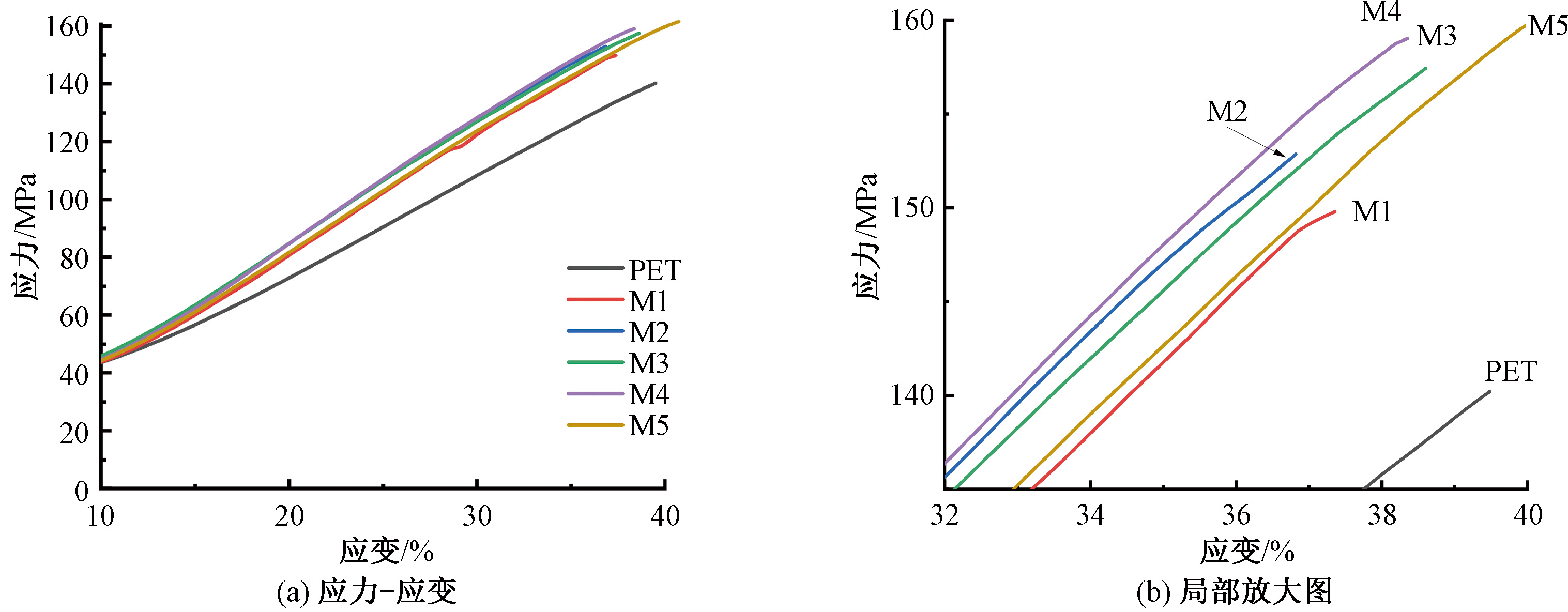
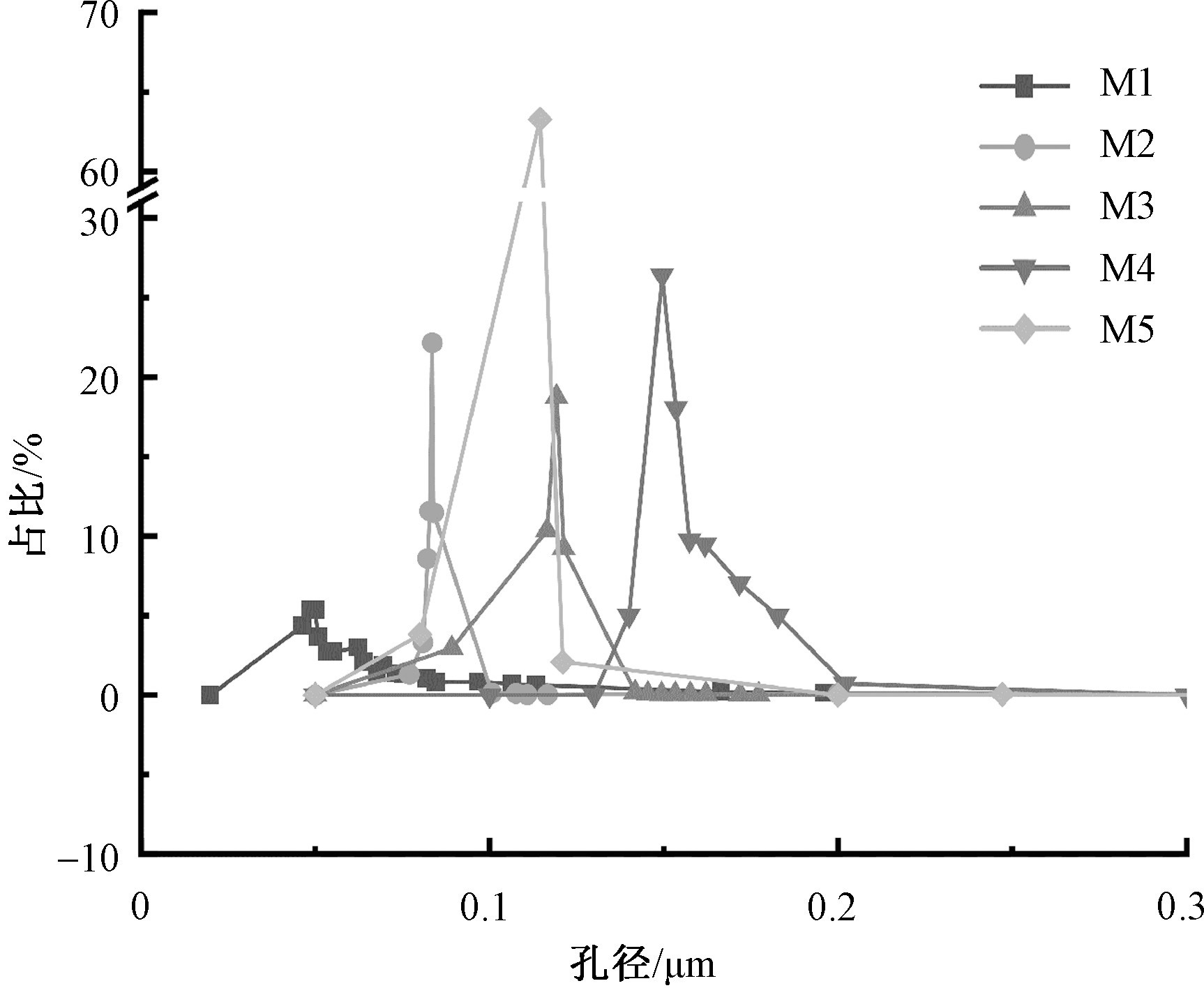
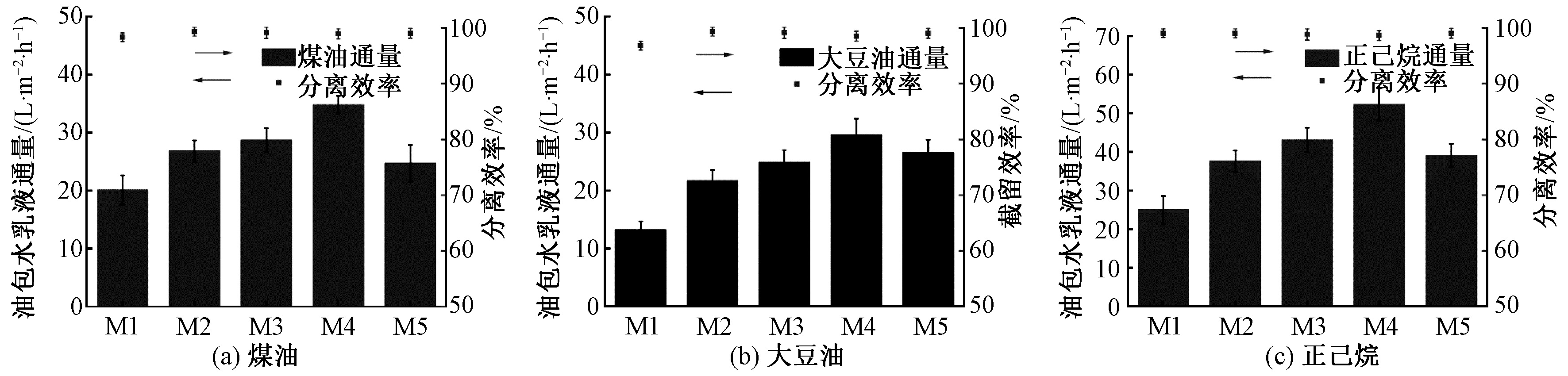
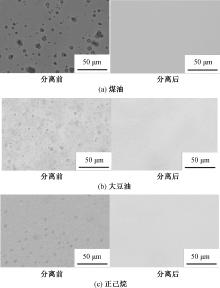
摘要: 为有效从油水混合物及乳液中分离油或水,以聚丙烯(PP)为成膜聚合物,大豆油为稀释剂,二氧化硅(SiO2)和二维片层结构石墨烯(GE)为疏水添加剂,采用编织管增强/热致相分离(TIPS)联用法制备了增强型疏水PP中空纤维膜。通过改变GE添加量研究了其对膜形貌、疏水性能、渗透及分离性能等的影响。结果表明:随着GE质量分数的提高,膜的孔隙率、平均孔径和油通量呈现先增大后减小的趋势;膜表面疏水性、亲油性和爆破强度随GE添加量的增加而提高;当GE质量分数为0.5%时,膜的水接触角达132.4 °,平均孔径为0.16 μm,断裂强度达159 MPa,对煤油包水、大豆油包水、正己烷包水3种乳液的分离效率分别为98.9%、98.4%、98.6%,对应的通量为34.8、29.6、52.3 L/(m2·h)。
中图分类号:
| [1] | LI X, ZHU Y, ABBASSI R, et al. A probabilistic framework for risk management and emergency decision-making of marine oil spill accidents[J]. Process Safety and Environmental Protection, 2022, 162: 932-943. |
| [2] |
LI S, DONG R, MUSTEATA V E, et al. Hydrophobic polyamide nanofilms provide rapid transport for crude oil separation[J]. Science, 2022, 377(6614): 1555-1561.
doi: 10.1126/science.abq0598 pmid: 36173852 |
| [3] | SANKARANARAYANAN S, LAKSHMI D S, VIVEKANANDHAN S, et al. Biocarbons as emerging and sustainable hydrophobic/oleophilic sorbent materials for oil/water separation[J]. Sustainable Materials and Technologies, 2021. DOI: 10.1016/j.susmat.2021.e00268. |
| [4] | 王玉周, 周梦洁, 姜圆金, 等. 偕胺肟化聚丙烯腈纳米纤维膜的制备与油水乳液分离性能[J]. 纺织学报, 2023, 44(7): 42-49. |
| WANG Yuzhou, ZHOU Mengjie, JIANG Yuanjin, et al. Preparation and oil-water emulsion separation performance of amidoximated polyacrylonitrile nanofiber membrane[J]. Journal of Textile Research, 2023, 44(7): 42-49. | |
| [5] | ARIONO D, WARDANI A K. Modification and applications of hydrophilic polypropylene membrane[J]. IOP Conference Series: Materials Science and Engineering, 2017. DOI: 10.1088/1757-899X/214/1/012014. |
| [6] |
LIU M, LIU S, XU Z, et al. Formation of microporous polymeric membranes via thermally induced phase separation: a review[J]. Frontiers of Chemical Science and Engineering, 2016, 10(1): 57-75.
doi: 10.1007/s11705-016-1561-7 |
| [7] | TANG Y H, HE Y D, WANG X L. Effect of adding a second diluent on the membrane formation of polymer/diluent system via thermally induced phase separation: dissipative particle dynamics simulation and its experimental verification[J]. Journal of Membrane Science, 2012, 409/410: 164-172. |
| [8] | YAVE W, QUIJADA R, ULBRICHT M, et al. Syndiotactic polypropylene as potential material for the preparation of porous membranes via thermally induced phase separation (TIPS) process[J]. Polymer, 2005, 46(25): 11582-11590. |
| [9] | YANG S, WU C, JI D, et al. Preparation and characterization of fiber braided tube reinforced polyethylene hollow fiber membranes via thermally induced phase separation[J]. Journal of Environmental Chemical Engineering, 2023. DOI. 10.1016/j.jece.2023.109375. |
| [10] | FENG H, JI D, ZHANG X, et al. Preparation of high-flux polyethylene hollow fiber microfiltration membranes with multiple pore structure through the combination technology of braided tube reinforcement and TIPS method[J]. Separation and Purification Technology, 2024. DOI. 10.1016/j.seppur.2024.127335. |
| [11] | REN Y, YU F, LI X G, et al. Recent progress on adsorption and membrane separation for organic contaminants on multi-dimensional graphene[J]. Materials Today Chemistry, 2021, DOI. 10.1016/j.mtchem.2021.100603. |
| [12] | ZHANG T, XIAO C, ZHAO J, et al. One-step facile fabrication of PVDF/graphene composite nanofibrous membrane with enhanced oil affinity for highly efficient gravity-driven emulsified oil/water separation and selective oil absorption[J]. Separation and Purification Technology, 2021. DOI:/10.1016/j.seppur.2020.117576. |
| [13] | JI D, GAO Y, WANG W, et al. Green preparation of PVDF hollow fiber membranes with multiple pore structure via melt spinning method for oil/water separation[J]. Journal of Environmental Chemical Engineering, 2022. DOI: 10.1016/j.jece.2022.108337. |
| [14] | RAJABZADEH S, MARUYAMA T, OHMUKAI Y, et al. Preparation of PVDF/PMMA blend hollow fiber membrane via thermally induced phase separa-tion (TIPS) method[J]. Separation and Purification Technology, 2009, 66(1): 76-83. |
| [15] | HUANG C L, LOU C W, LIU C F, et al. Polypropylene/graphene and polypropylene/carbon fiber conductive composites: mechanical, crystallization and electromagnetic properties[J]. Applied Sciences, 2015, 5(4): 1196-1210. |
| [16] | MATSUYAMA H, YUASA M, KITAMURA Y, et al. Structure control of anisotropic and asymmetric polypropylene membrane prepared by thermally induced phase separation[J]. Journal of Membrane Science, 2000, 179(1): 91-100. |
| [17] | ZHU X, YAN D, FANG Y. In Situ FTIR Spectroscopic Study of the conformational change of isotactic polypropylene during the crystallization process[J]. The Journal of Physical Chemistry B, 2001, 105(50): 12461-12463. |
| [18] | SUN F, LI T T, ZHANG X, et al. In situ growth polydopamine decorated polypropylen melt-blown membrane for highly efficient oil/water separation[J]. Chemosphere, 2020. DOI:10.1016/j.chemosphere.2020.126873. |
| [19] | LI J, DING H, ZHANG H, et al. Superhydrophobic methylated silica sol for effective oil-water sepa-ration[J]. Materials, 2020. DOI:10.3390/ma13040842. |
| [20] | ZHANG J, WANG L, ZHANG C, et al. MnO-mineralized oxidized-polypropylene membranes for highly efficient oil/water separationx[J]. Separation and Purification Technology, 2021. DOI:10.1016/j.seppur.2021.119343. |
| [21] | LI Z, DENG L, KINLOCH I A, et al. Raman spectroscopy of carbon materials and their composites: Graphene, nanotubes and fibres[J]. Progress in Materials Science, 2023. DOI: 10.1016/j.pmatsci.2023.101089. |
| [22] |
HAVENER R W, ZHUANG H, BROWN L, et al. Angle-resolved raman imaging of interlayer rotations and interactions in twisted bilayer graphene[J]. Nano Letters, 2012, 12(6): 3162-3167.
doi: 10.1021/nl301137k pmid: 22612855 |
| [23] | MATSUYAMA H, MAKI T, TERAMOTO M, et al. Effect of polypropylene molecular weight on porous membrane formation by thermally induced phase separation[J]. Journal of Membrane Science, 2002, 204(1): 323-328. |
| [24] | WANG F, ZHAO Y, WANG X, et al. Preparation and evaluation of iPP/GO microfiltration membrane with enhanced antifouling property[J]. Chemical Research in Chinese Universities, 2018, 34(5): 833-838. |
| [25] | ZHOU B, TANG Y, LI Q, et al. Preparation of polypropylene microfiltration membranes via thermally induced (solid-liquid or liquid-liquid) phase separation method[J]. Journal of Applied Polymer Science, 2015. DOI:10.1002/app.42490. |
| [26] | KIM E, KIM D, KWAK K, et al. Wettability of graphene, water contact angle, and interfacial water structure[J]. Chem, 2022, 8(5): 1187-1200. |
| [27] | LI N, XIAO C, AN S, et al. Preparation and properties of PVDF/PVA hollow fiber membranes[J]. Desalination, 2010, 250(2): 530-537. |
| [1] | 赵登, 张燚, 郑梦杰, 毕曙光, 冉建华. 基于液相剥离石墨烯的可见-近红外光隐身锦纶织物[J]. 纺织学报, 2025, 46(02): 153-160. |
| [2] | 赵超, 金欣, 王闻宇, 朱正涛. 自充电超级电容器用聚丙烯腈纳米纤维隔膜的制备及其性能[J]. 纺织学报, 2025, 46(02): 20-25. |
| [3] | 王容容, 周洲, 冯祥, 申莹, 刘峰, 邢剑. 聚酯纤维与聚乙烯/聚丙烯双组分纤维多孔吸声材料的制备及其性能[J]. 纺织学报, 2025, 46(02): 61-68. |
| [4] | 左红梅, 高敏, 阮芳涛, 邹梨花, 徐珍珍. MXene-氧化石墨烯改性碳纤维/聚乳酸复合材料制备及其力学性能[J]. 纺织学报, 2025, 46(01): 9-15. |
| [5] | 刘延波, 高鑫羽, 郝铭, 胡晓东, 杨波. 基于光热改性的复合纤维毡及其在高黏度油吸附中的应用[J]. 纺织学报, 2024, 45(11): 55-64. |
| [6] | 李韩, 王海霞, 张旭, 刘丽萍, 刘小琨. 基于聚乙烯醇缩丁醛/聚乙二醇的同轴纳米纤维膜储热织物制备及其热管理性能[J]. 纺织学报, 2024, 45(11): 37-45. |
| [7] | 张蕊, 应迪, 陈冰冰, 田欣, 郑莹莹, 王建, 邹专勇. 碳纳米管修饰三维纤维网非织造布传感器的制备及其性能[J]. 纺织学报, 2024, 45(11): 46-54. |
| [8] | 宇平, 王海跃, 汪毅, 孙钦超, 王彦, 胡祖明. 聚酯织物的直接氟修饰疏水改性及其作用机制[J]. 纺织学报, 2024, 45(10): 137-144. |
| [9] | 王浩然, 于影, 左雨欣, 顾志清, 卢海龙, 陈洪立, 柯俊. 聚乙烯亚胺/聚丙烯腈复合纤维薄膜的制备及其功能化应用[J]. 纺织学报, 2024, 45(09): 26-32. |
| [10] | 杨硕, 赵朋举, 程春祖, 李晨暘, 程博闻. 非对称润湿性纤维复合膜的制备及其油水分离性能[J]. 纺织学报, 2024, 45(08): 10-17. |
| [11] | 王永政, 黄林涛, 宋付权. 石油沥青/聚丙烯腈静电纺碳纳米纤维的制备工艺优化及其性能[J]. 纺织学报, 2024, 45(08): 107-115. |
| [12] | 闫迪, 王雪芳, 谭文萍, 高国金, 明津法, 宁新. 富咪唑型多孔左旋聚乳酸纳米纤维膜制备及其双重净水性能[J]. 纺织学报, 2024, 45(08): 116-126. |
| [13] | 吴帆, 梁凤玉, 肖奕葶, 杨智博, 王文婷, 樊威. 聚(3,4-乙撑二氧噻吩):聚苯乙烯磺酸基复合导电纤维的制备及其性能[J]. 纺织学报, 2024, 45(08): 99-106. |
| [14] | 张诗雨, 姚依婷, 董晨珊, 张如全, 杨红军, 顾绍金, 黄菁菁, 杜杰毫. 金属有机框架/聚丙烯纤维基复合材料对化学战剂模拟物的快速降解[J]. 纺织学报, 2024, 45(06): 134-141. |
| [15] | 时吉磊, 陈廷彬, 付少海, 张丽平. 低红外发射率控温热红外伪装材料的制备与性能[J]. 纺织学报, 2024, 45(06): 32-38. |
|
||
 京公网安备11010502044800号