纺织学报 ›› 2026, Vol. 47 ›› Issue (02): 73-83.doi: 10.13475/j.fzxb.20250800301

• 纤维材料 • 上一篇    下一篇

基于三阶段残差动态聚焦网络的羽绒图像分类

吕泽彬1, 李子印1(), 汪小东2, 叶飞2, 刘伟红2   

  1. 1 中国计量大学 光学与电子科技学院, 浙江 杭州 310018
    2 湖州市质量技术监督检测研究院(湖州市纤维质量监测中心), 浙江 湖州 313099
  • 收稿日期:2025-08-04 修回日期:2025-11-06 出版日期:2026-02-15 发布日期:2026-04-24
  • 通讯作者: 李子印(1978—),男,副教授,博士。主要研究方向为机器视觉。E-mail:liziyin@cjlu.edu.cn
  • 作者简介:吕泽彬(2001—),男,硕士生。主要研究方向为机器视觉。
  • 基金资助:
    浙江省市场监督管理局科技计划项目(ZC2025032)

Classification of down images based on tri-stage residual dynamic focusing network

LÜ Zebin1, LI Ziyin1(), WANG Xiaodong2, YE Fei2, LIU Weihong2   

  1. 1 College of Optical and Electronics Technology, China Jiliang University, Hangzhou, Zhejiang 310018, China
    2 Huzhou Institute of Quality and Technical Supervision and Inspection(Huzhou Fiber Quality Monitoring Center), Huzhou, Zhejiang 313099, China
  • Received:2025-08-04 Revised:2025-11-06 Published:2026-02-15 Online:2026-04-24

摘要:

针对羽绒品质检测中的色泽、形态以及新鲜度等细粒度分类难题,提出了一种三阶段残差动态聚焦网络Tri-RDFNet,其核心骨架残差动态聚焦网络RDFNet以残差模型ResNet为主干网络,引入改进的卷积块注意力机制进行特征聚焦以及动态间隙关注损失函数对易混淆羽绒样本进行动态加权训练,同时在RDFNet的基础上引入预热训练、加权训练和样本精调训练3个不同阶段的级联训练策略,构成Tri-RDFNet网络模型,实现对复杂羽绒图像样本的高精度识别。通过采集白色新鲜绒、异色新鲜绒、白色回收绒与异色回收绒4种类型羽绒图像并进行数据增强操作,构建成8 000张羽绒图像数据集进行分类训练和测试。最终,模型在羽绒图像验证集上的结果显示,所提出的RDFNet网络在羽绒图像分类任务中取得95.28%的准确率,相比于目前经典的分类模型准确率至少提升1.11%,同时,引入三阶段级联训练策略的Tri-RDFNet模型,使得模型对于羽绒数据集的识别准确率进一步提升至97.01%,增强了模型的泛化能力,为羽绒品质检测提供了高效创新的解决方案。

关键词: 羽绒, 羽绒图像分类, 动态聚焦网络, 注意力机制, 动态间隙关注损失函数, 三阶段级联训练, 残差网络

Abstract:

Objective In down quality evaluation systems, key indicators such as color and freshness are decisive factors for product grading and market value. For fine-grained quality classification tasks involving down characteristics like color and freshness, traditional manual inspection methods exhibit low efficiency and strong subjectivity, while existing computational approaches demonstrate inadequate capability in recognizing the intricate texture patterns of down materials. To battle these challenges, this study proposes a Tri-phase residual dynamic focus network (Tri-RDFNet) to enhance the classification accuracy of down images, thereby advancing automated quality assessment in the down industry.

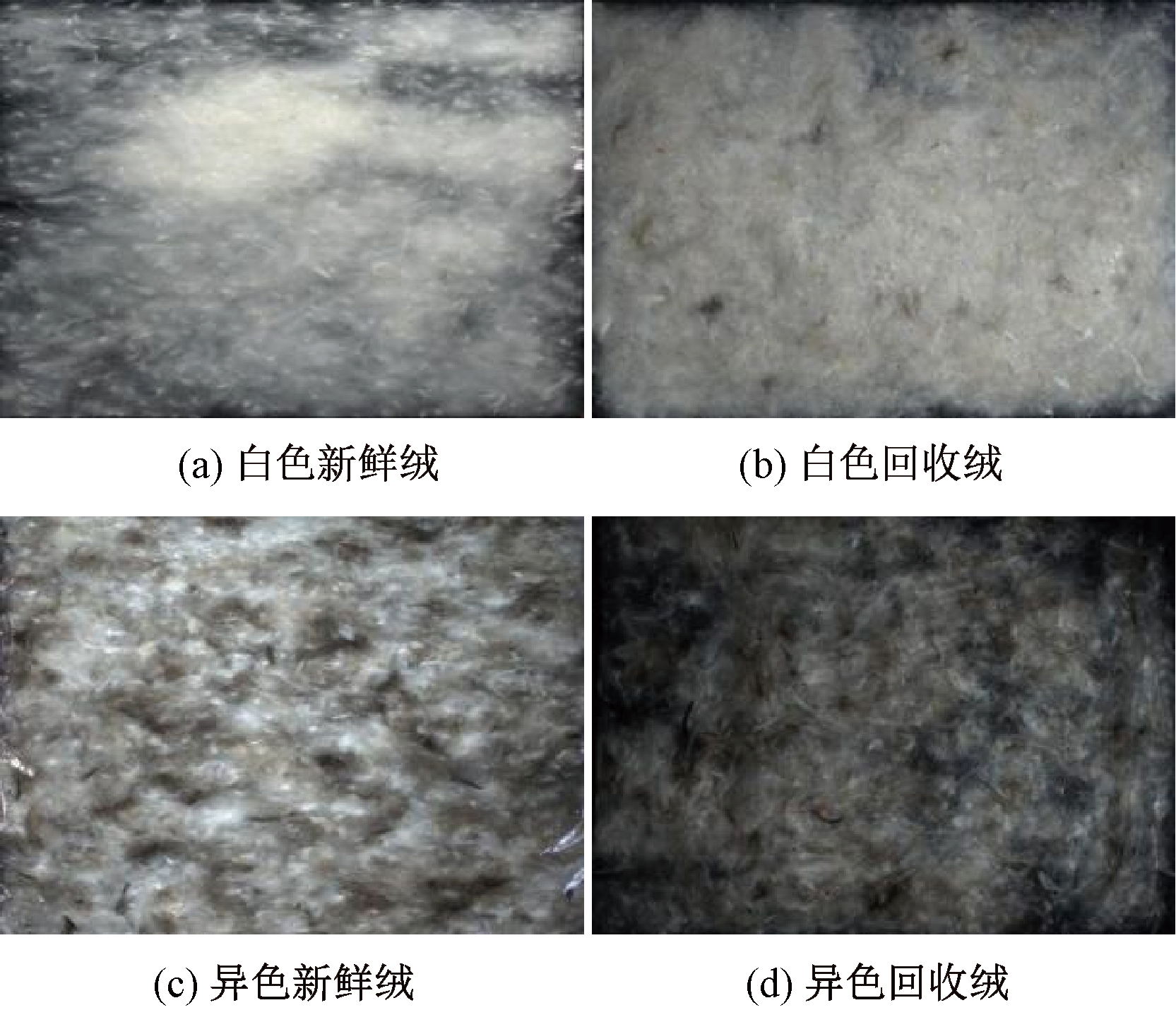
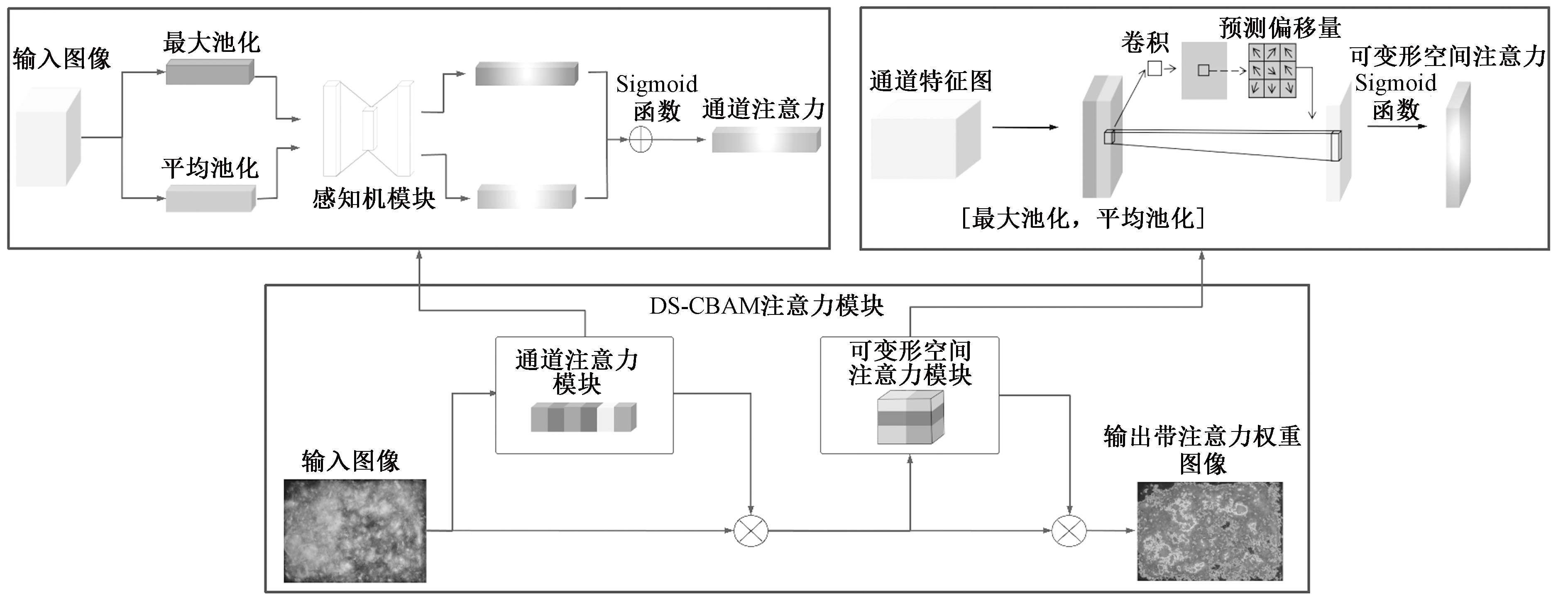
Method Building upon an enhanced ResNet architecture, a novel three-stage residual dynamic focus network was developed for fine-grained classification of down feather images. The network incorporated dilated convolution modules, deformable spatial-convolutional block attention module (DS-CBAM), and dynamic gap-aware attention loss (DGALoss) function to enable in-depth feature learning of down images. Furthermore, a three-stage cascaded training strategy was introduced to significantly improve the model's generalization capability. The experimental dataset, collected using industrial camera systems with a bar-shaped white light source, comprised four categories, i.e. white fresh down, white recycled down, colored fresh down, and colored recycled down. Comprehensive experiments were carried out using the established model.

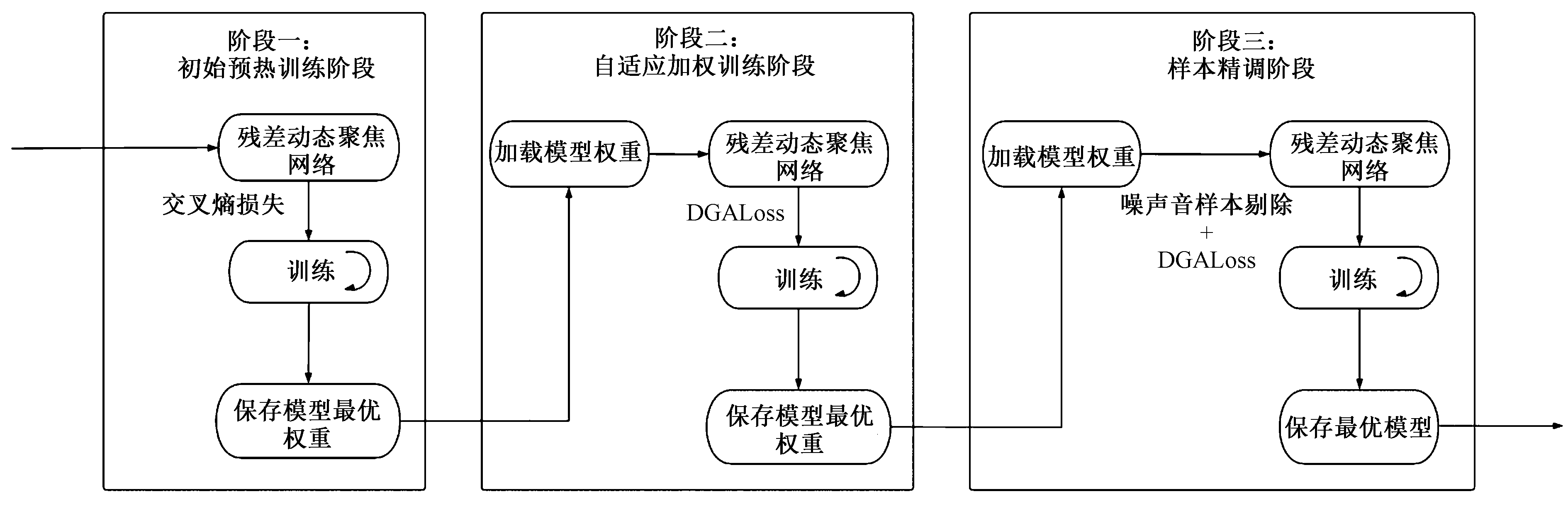
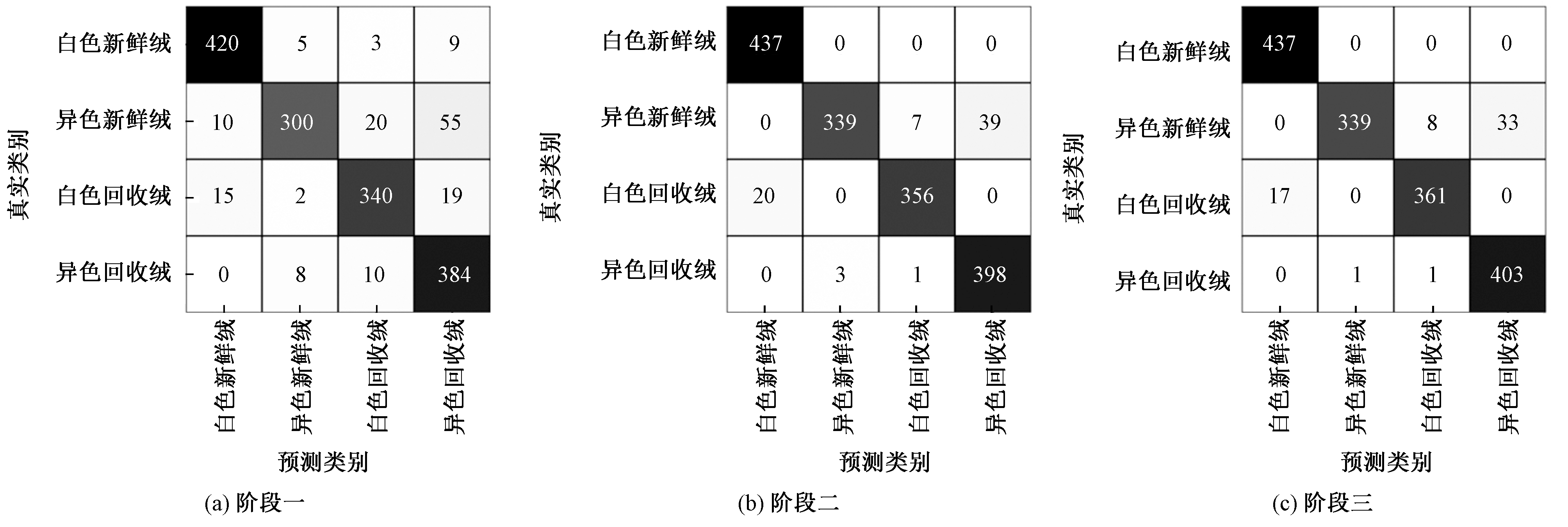
Result Comparative experimental results demonstrated that traditional CNN models, such as AlexNet and VGG, exhibited certain performance bottlenecks in this task, achieving accuracy rates of only 89.32% and 90.26%, respectively. These models struggled to capture the fine-grained differences inherent in down feather images. Although Transformer-based models possess strong global modeling capabilities, they suffer from overfitting due to the limited dataset size and architectural complexity. The backbone model RDFNet enhanced the learning focus on down image features by incorporating atrous convolution modules, DS-CBAM, and DGALoss. As a result, it achieved a classification accuracy of 95.28% on the collected down image dataset, representing an improvement of 1.11%-5.96% compared to traditional models such as AlexNet, VGG, ResNet, ViT, and Swin Transformer. Furthermore, based on this RDFNet backbone, a three-stage cascaded training strategy was introduced. In the first stage, the model was trained globally using the cross-entropy loss function. The second stage employed DGALoss to reweight and train on easily confused samples, yielding a 1.02% increase in accuracy over the first stage. In the third stage, noise samples were filtered, and sample weights were reassigned to further train the retained samples. This final phase enhanced the model accuracy by an additional 0.71%, achieving a final accuracy of 97.01%. This three-stage process reduced the risk of overfitting while improving precision and generalization. Ablation studies confirmed the effectiveness of each component. The atrous convolution module improved the model's ability to perceive multi-scale features in down images, raising the validation accuracy by 0.99%. The DS-CBAM module enhanced the model's feature selection capability by integrating channel attention with deformable spatial convolution, leading to further improvement in accuracy while introducing minor overfitting. When combined, DS-CBAM and atrous convolution boosted accuracy to 95.28%. Introducing the three-stage training scheme and applying FocalLoss during the second stage to focus on hard examples increased accuracy to 96.11%, thus improving model robustness and stability. Replacing FocalLoss with DGALoss for better focus on confusing samples led to the highest validation accuracy of 97.01%, demonstrating DGALoss's superior capability in distinguishing ambiguous down categories.

Conclusion To address the challenge of fine-grained classification in down feather images, this paper proposes an innovative three-stage residual dynamic focusing network. The core backbone model, RDFNet, enhances feature extraction capabilities by improving the ResNet architecture through the integration of DS-CBAM and atrous convolution modules. Based on RDFNet, a three-stage training strategy is designed, consisting of warm-up training, adaptive weighted training using the novel DGALoss function, and refined sample training, collectively forming the Tri-RDFNet model. This approach effectively improves the recognition of easily confused down feather image samples and enhances the model's generalization ability. Experimental results demonstrate that the proposed method achieves a classification accuracy of 97.01% on a self-constructed dataset of 8 000 down feather images, significantly outperforming traditional methods. This provides an efficient solution for automated down quality assessment and offers a valuable reference for fine-grained image classification tasks.

Key words: down, down image classification, dynamic focusing network, attention mechanism, DGALoss, Tri-stage cascaded training, residual network

中图分类号: 

  • TS107.2

图1

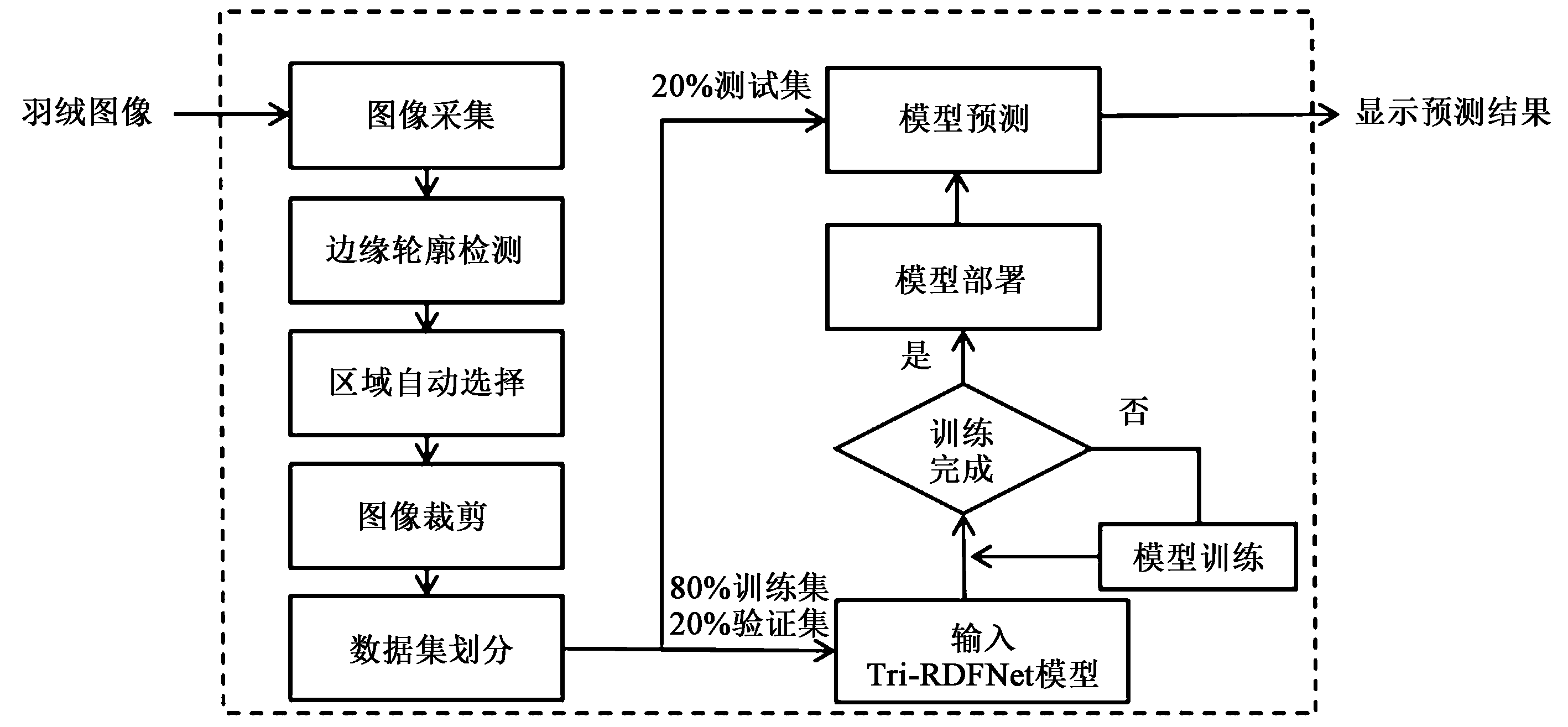
羽绒图像分类检测流程"

图2

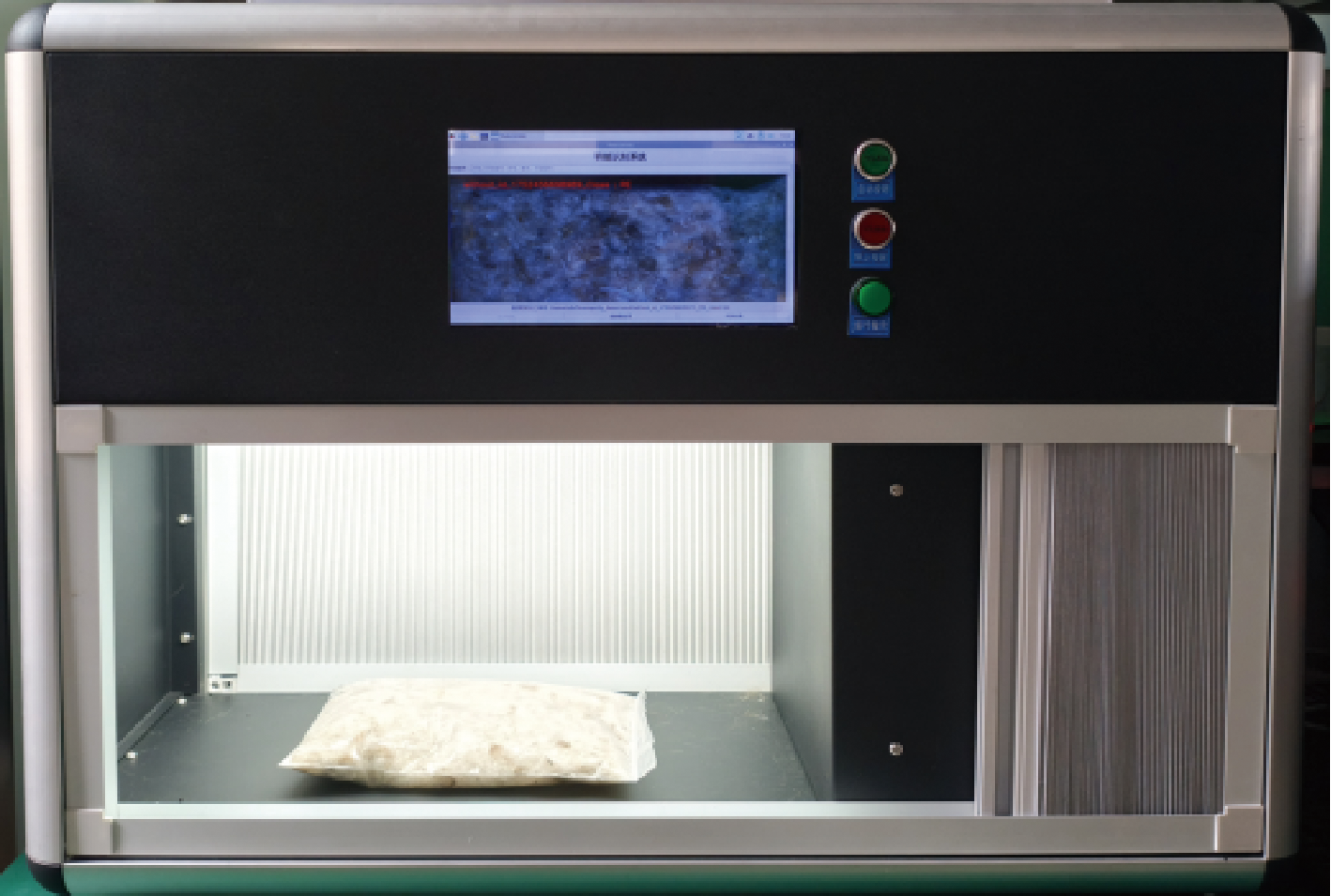
图像采集装置"

图3

4类羽绒对比图"

图4

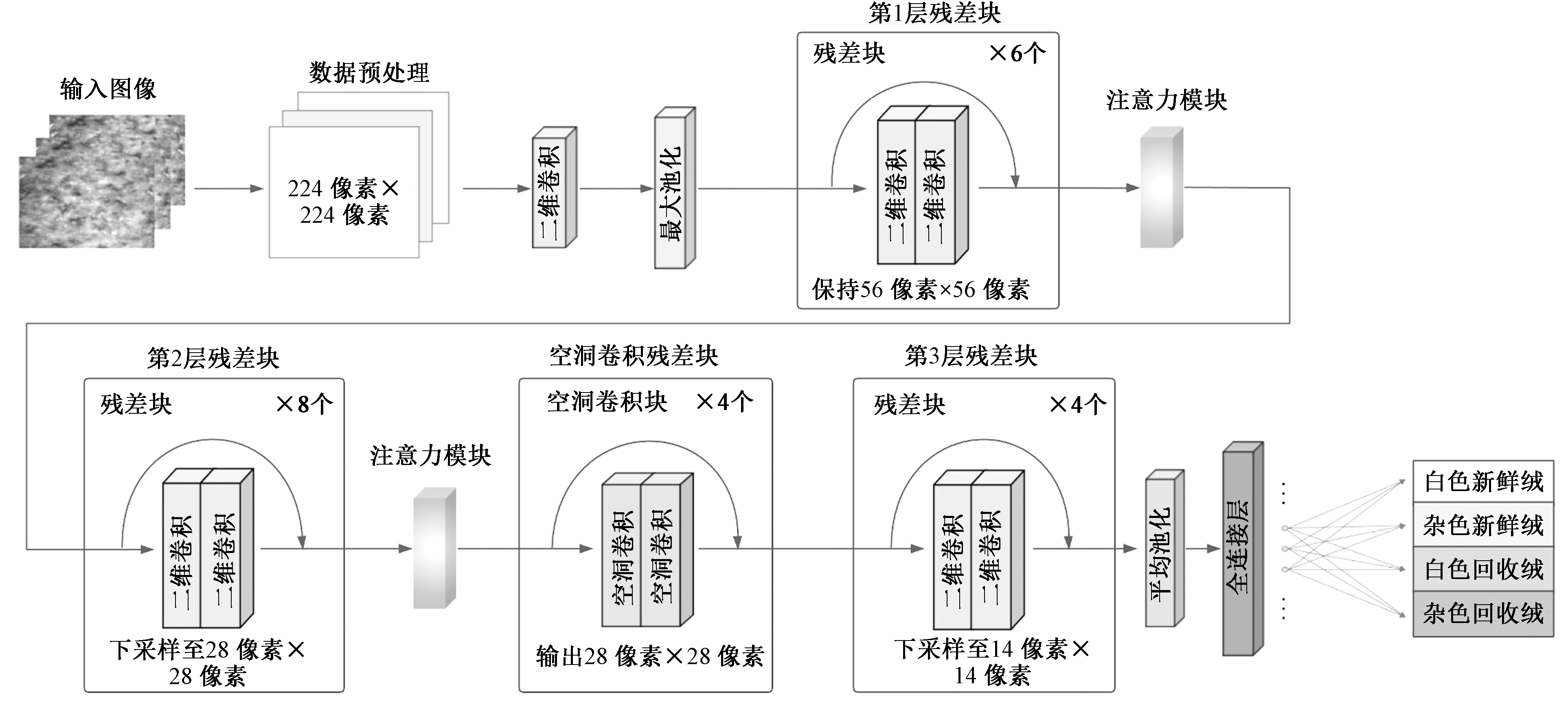
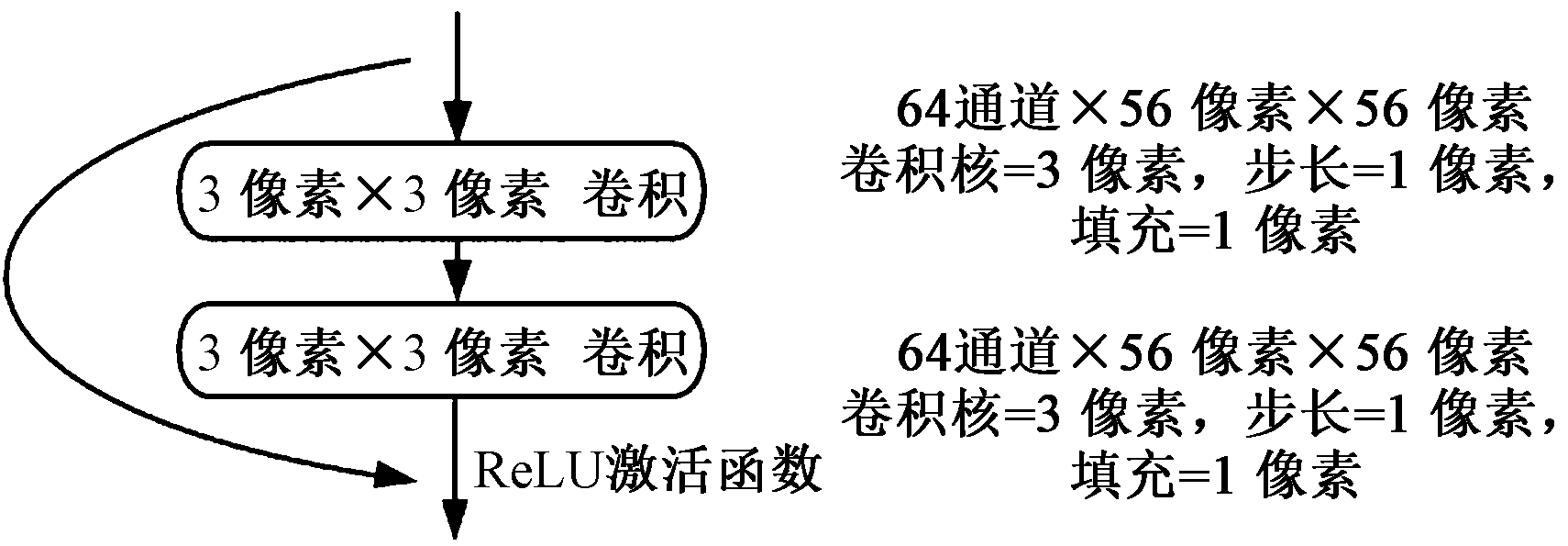
RDFNet网络结构图"

图5

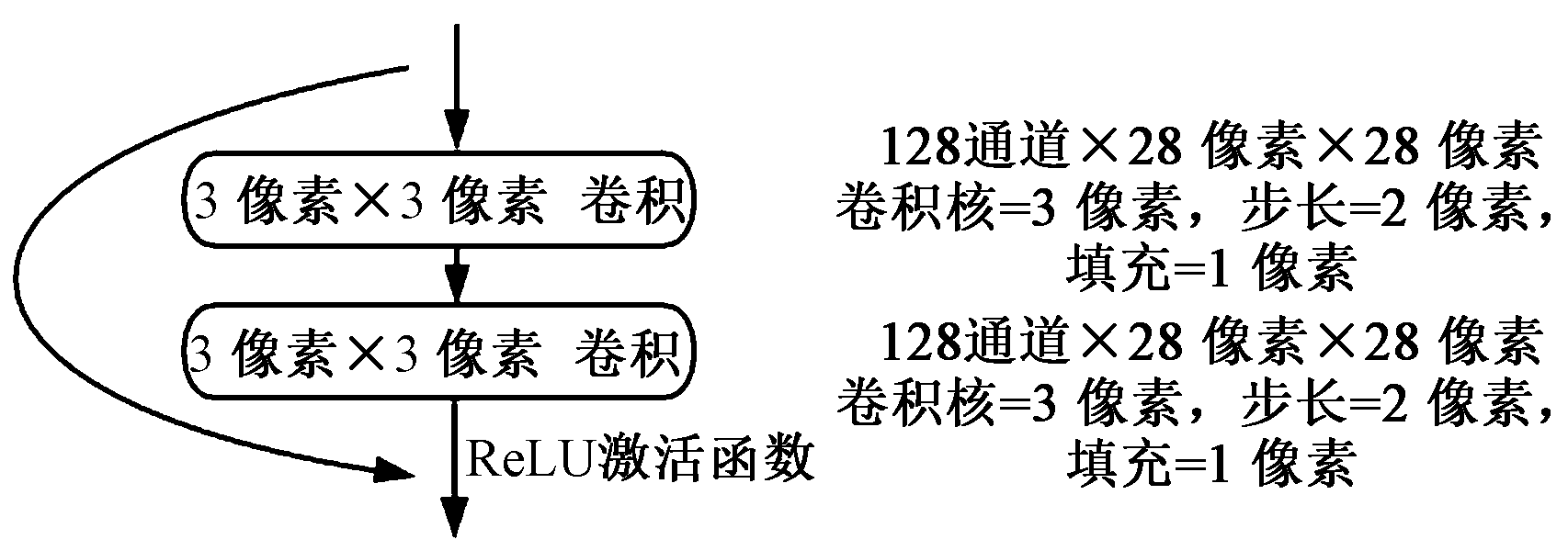
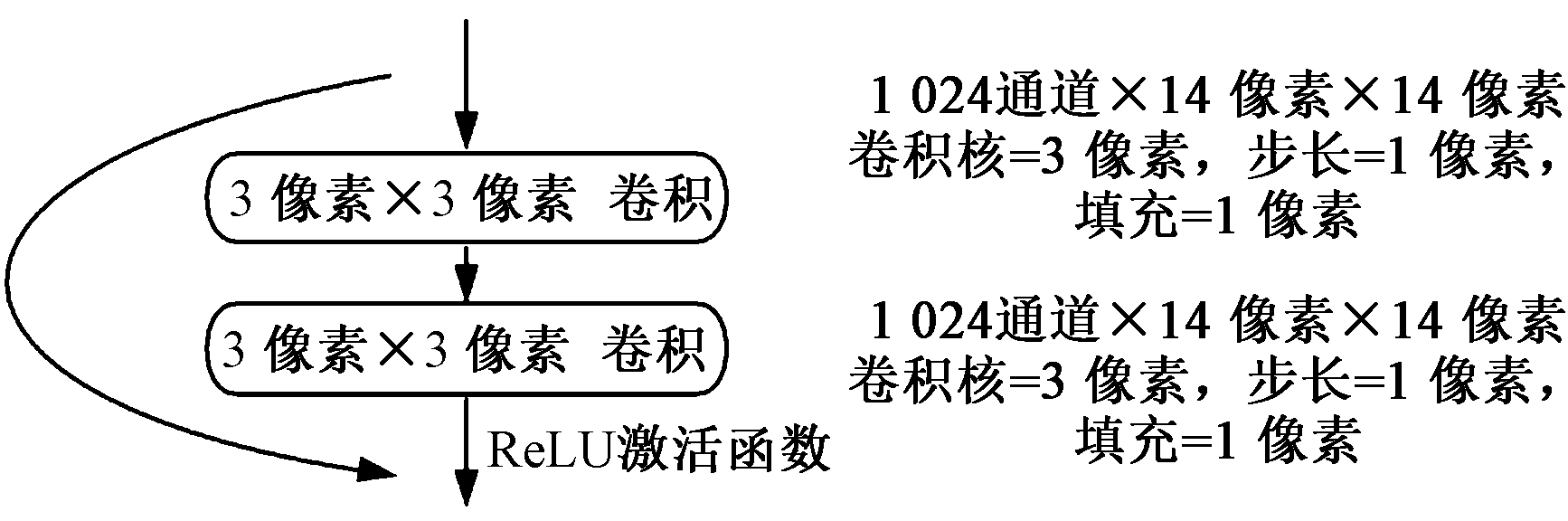
第1层残差块结构"

图6

DS-CBAM注意力机制"

图7

第2层残差块结构"

图8

空洞卷积块结构"

图9

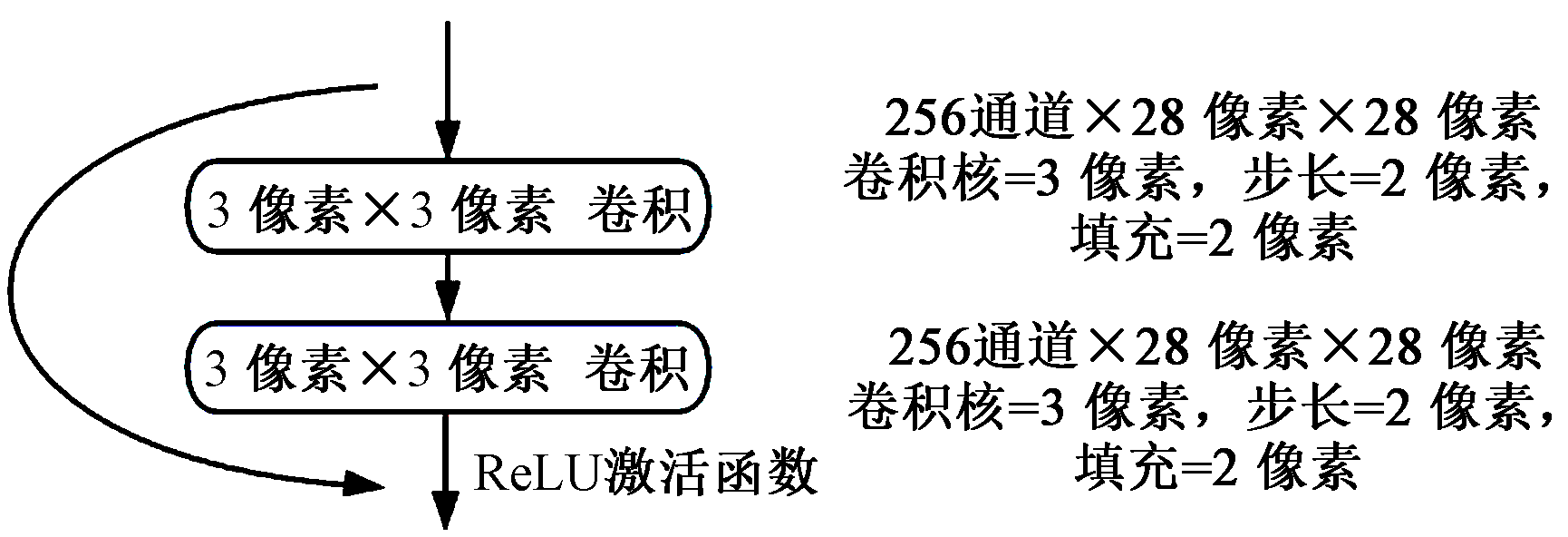
第3层残差块结构"

图10

Tri-RDFNet架构"

图11

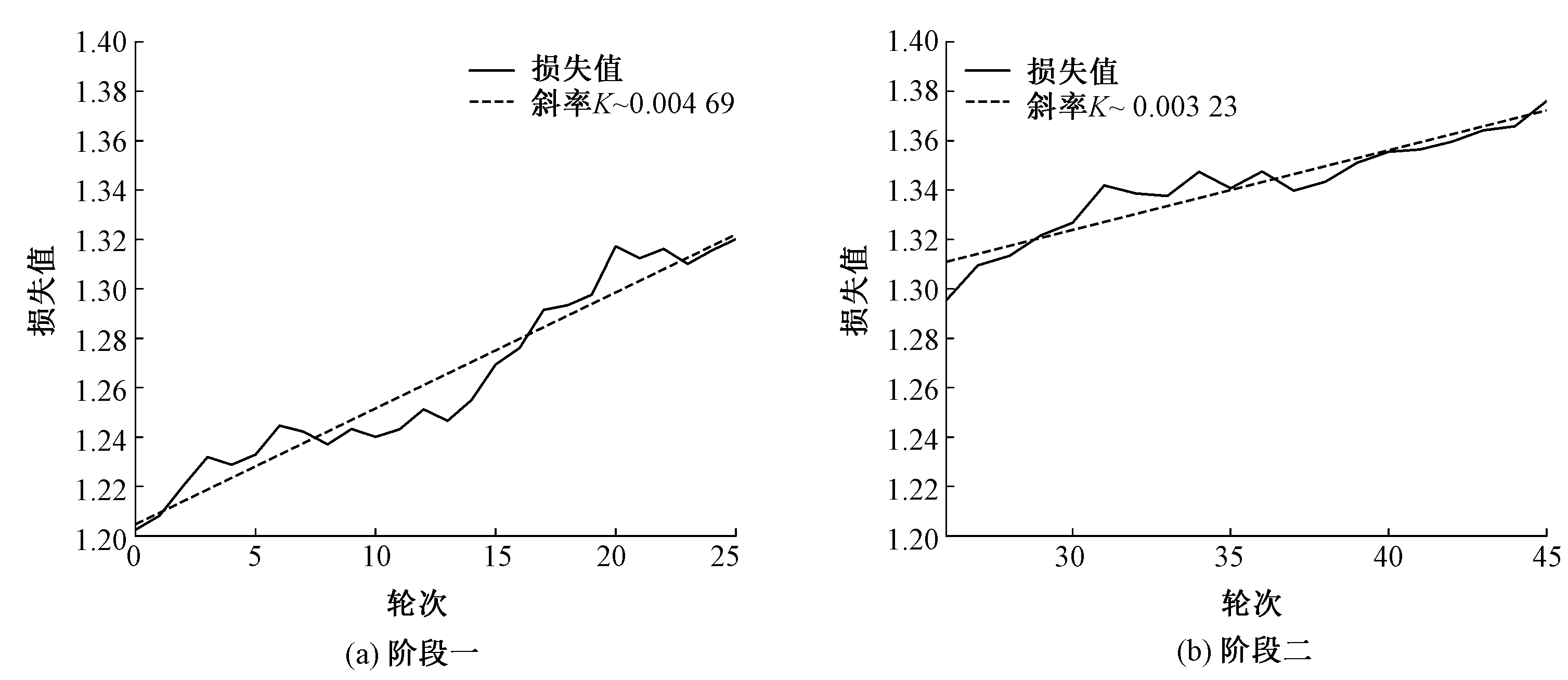
某羽绒样本前2阶段训练损失变化曲线"

表1

模型对比实验"

模型 准确率/% 参量M
训练集 验证集
AlexNet 90.38 89.32 61
VGG19 92.26 90.26 143
ResNet18 92.09 91.78 11.7
ResNet24 93.16 92.06 12.36
ResNet50 93.67 92.56 25.6
Vision Transformer 95.81 93.77 ≥86
Swin Transformer 95.38 94.17 ≥29
RDFNet 95.69 95.28 23.3

表2

模型消融实验"

模型结构组合 准确率/%
训练集 验证集
ResNet24 93.16 92.06
ResNet24+空洞卷积 93.76 93.05
ResNet24+CBAM 94.33 93.09
ResNet24+DS-CBAM 95.09 93.56
ResNet24+空洞卷积+DS-CBAM (RDFNet) 95.69 95.28
Tri-RDFNet+FocalLoss 96.55 96.11
Tri-RDFNet+DGALoss 97.11 97.01

图12

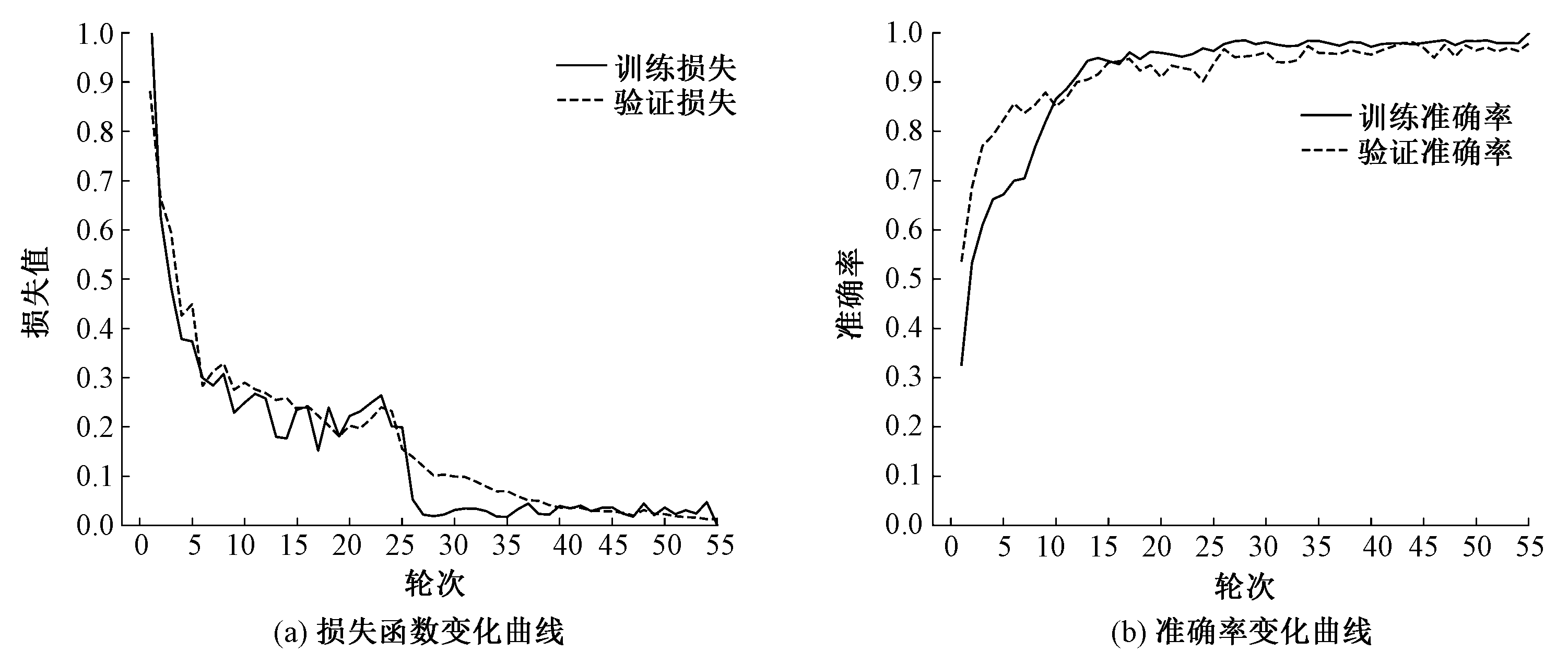
损失函数和准确率变化曲线"

图13

3阶段混淆矩阵"

[1] 魏军望. 梭织羽绒服填充材料的保暖性能与可持续发展研究[J]. 西部皮革, 2025, 47(4): 12-14.
WEI Junwang. Research on the thermal performance and sustainable development of woven down jacket filling material[J]. West Leather, 2025, 47(4): 12-14.
[2] 宋庆强. 基于机器视觉的异色羽绒在线分拣硬件系统研制[D]. 上海: 东华大学, 2016: 1-54.
SONG Qingqiang. The development of colored eiderdown online sorting hardware system based on machine vision[D]. Shanghai: Donghua University, 2016: 1-54.
[3] KIM S, KIM E, PARK Y. Thermal insulation and morphology of natural and synthetic filled outdoor sportswear by repeated water washing and dry cleaning[J]. International Journal of Clothing Science and Technology, 2018, 30(3): 428-443.
doi: 10.1108/IJCST-09-2017-0149
[4] OHTA N, IWAMOTO R, AIBA S, et al. Microscopical identification of goose and downs[J]. Textile Science, 2004, 9(2):95-102.
[5] 单婷婷. 基于统计特征值对异色羽绒的识别[D]. 上海: 东华大学, 2016: 1-50.
SHAN Tingting. Detection of color fluff based on statistical characteristic values[D]. Shanghai: Donghua University, 2016: 1-50.
[6] 孙近, 赵瑞方, 宋晨, 等. 近红外光谱法在羽绒羽毛种类鉴别的研究应用[J]. 中国纤检, 2024(12): 50-53.
SUN Jin, ZHAO Ruifang, SONG Chen, et al. Application research on the identification of down feather by near infrared spectroscopy[J]. China Fiber Inspection, 2024(12): 50-53.
[7] 张克和, 陈宇, 俞旭霞, 等. 鹅鸭羽毛羽绒结构特征分析[J]. 中国纤检, 2011(5): 50-52.
ZHANG Kehe, CHEN Yu, YU Xuxia, et al. Study on structrual characterization of down and feather of the duck and goose[J]. China Fiber Inspection, 2011(5): 50-52.
[8] 王艳秋. 羽绒图像阈值分割算法研究[J]. 计算机工程与应用, 2008, 44(34): 246-248.
WANG Yanqiu. Research of image segmentation algorithm of feather and down[J]. Computer Engineering and Applications, 2008, 44(34): 246-248.
doi: 10.3778/j.issn.1002-8331.2008.34.074
[9] 葛洪伟, 杨小艳. 组合内核与优化算法在羽绒识别系统中的应用[J]. 数据采集与处理, 2008, 23(2): 219-223.
GE Hongwei, YANG Xiaoyan. Application of hybrid kernel and optimization algorithm in down category recognition system[J]. Journal of Data Acquisition & Processing, 2008, 23(2): 219-223.
[10] 邢笛, 葛洪伟, 李志伟. 模糊支持张量机图像分类算法及其应用[J]. 计算机应用, 2012, 32(8): 2227-2229, 2234.
XING Di, GE Hongwei, LI Zhiwei. Research and application of fuzzy tensor machine image classification algorithm[J]. Journal of Computer Applications, 2012, 32(8): 2227-2229, 2234.
doi: 10.3724/SP.J.1087.2012.02227
[11] 杨文柱, 刘晴, 王思乐, 等. 基于深度卷积神经网络的羽绒图像识别[J]. 郑州大学学报(工学版), 2018, 39(2): 11-17.
YANG Wenzhu, LIU Qing, WANG Sile, et al. Down image recognition based on deep convolution neural networks[J]. Journal of Zhengzhou Univer-sity (Engineering Science), 2018, 39(2): 11-17.
[12] 郭文, 黄中浩, 龙俊超, 等. 智能识别技术在羽毛羽绒种类鉴别的应用研究[J]. 中国纤检, 2024(8): 56-59.
GUO Wen, HUANG Zhonghao, LONG Junchao, et al. Research on intelligent recognition for identification of feather and down species[J]. China Fiber Inspection, 2024(8): 56-59.
[13] HE K M, ZHANG X Y, REN S Q, et al. Deep residual learning for image recognition[C]// 2016 IEEE Conference on Computer Vision and Pattern Recognition (CVPR). New York: IEEE, 2016: 770-778.
[14] WOO S, PARK J, LEE J Y, et al. CBAM: convolutional block attention module[C]// Computer Vision - ECCV 2018. Cham: Springer, 2018: 3-19.
[15] YU F, KOLTUN V. Multi-scale context aggregation by dilated convolutions[EB/OL]. 2015: arXiv: 1511.07122. https://arxiv.org/abs/1511.07122.
[16] LIN T Y, GOYAL P, GIRSHICK R, et al. Focal loss for dense object detection[C]// 2017 IEEE International Conference on Computer Vision (ICCV). New York: IEEE, 2017: 2999-3007.
[1] 冯峥嵘, 刘贝芬, 陈孟元. 基于多尺度特征融合的花卉类印花图案风格迁移模型[J]. 纺织学报, 2026, 47(02): 264-272.
[2] 冯采伶, 于施佳, 韩曙光. 基于深度学习的服装关键点实时检测模型[J]. 纺织学报, 2026, 47(01): 196-206.
[3] 周小叶, 曹爱玲, 苏日娜, 石文军, 赵仙梅, 杜达生, 蔡路昀. 未水洗与粗水洗羽毛绒快速检测方法[J]. 纺织学报, 2025, 46(10): 46-53.
[4] 张晓婷, 赵鹏宇, 潘如如, 高卫东. 基于深度特征融合的格子织物图像检索方法[J]. 纺织学报, 2025, 46(08): 89-95.
[5] 张莎莎, 蔡牧航, 吕晓静, 胡丹, 刘娟, 吉星照, 曹根阳, 王浩娜. 静电场协同构象羽绒/二氧化硅气凝胶保暖材料[J]. 纺织学报, 2025, 46(07): 10-18.
[6] 罗瑞奇, 常大顺, 胡新荣, 梁金星, 彭涛, 陈佳, 李丽. 基于改进外观流网络的跨体态虚拟试衣[J]. 纺织学报, 2025, 46(06): 203-211.
[7] 陆寅雯, 侯珏, 杨阳, 顾冰菲, 张宏伟, 刘正. 基于姿态嵌入机制和多尺度注意力的单张着装图像视频合成[J]. 纺织学报, 2024, 45(07): 165-172.
[8] 顾梅花, 花玮, 董晓晓, 张晓丹. 基于上下文提取与注意力融合的遮挡服装图像分割[J]. 纺织学报, 2024, 45(05): 155-164.
[9] 胡旭东, 汤炜, 曾志发, 汝欣, 彭来湖, 李建强, 王博平. 基于轻量化卷积神经网络的纬编针织物组织结构分类[J]. 纺织学报, 2024, 45(05): 60-69.
[10] 陆伟健, 屠佳佳, 王俊茹, 韩思捷, 史伟民. 基于改进残差网络的空纱筒识别模型[J]. 纺织学报, 2024, 45(01): 194-202.
[11] 师红宇, 位营杰, 管声启, 李怡. 基于残差结构的棉花异性纤维检测算法[J]. 纺织学报, 2023, 44(12): 35-42.
[12] 黄玥玥, 陈晓, 王海燕, 姚海洋. 基于ClothResNet模型的人体衣物颜色识别[J]. 纺织学报, 2023, 44(10): 143-148.
[13] 卜凡, 应丽丽, 李长龙, 王宗乾. 羽绒在乳酸/半胱氨酸低共熔溶剂中的溶解行为及其机制[J]. 纺织学报, 2023, 44(10): 24-30.
[14] 马创佳, 齐立哲, 高晓飞, 王子恒, 孙云权. 基于改进YOLOv4-Tiny的缝纫线迹质量检测方法[J]. 纺织学报, 2023, 44(08): 181-188.
[15] 付晗, 胡峰, 龚杰, 余联庆. 面向织物疵点检测的缺陷重构方法[J]. 纺织学报, 2023, 44(07): 103-109.
Viewed
Full text


Abstract

Cited

  Shared   
  Discussed   
No Suggested Reading articles found!