Journal of Textile Research ›› 2024, Vol. 45 ›› Issue (12): 98-108.doi: 10.13475/j.fzxb.20231102401

• Textile Engineering • Previous Articles     Next Articles

Process design and verification of tapered axisymmetric preform with variable thickness

GUO Qi1,2, WU Ning1,2(), MENG Ying1,2, AN Da1,2, HUANG Jianlong1,2, CHEN Li1,2   

  1. 1. College of Textile Science and Engineering, Tiangong University, Tianjin 300387, China
    2. Key Laboratory ofAdvanced Textile Composite Materials of Ministry of Education, Tiangong University, Tianjin 300387, China
  • Received:2023-11-14 Revised:2024-04-15 Online:2024-12-15 Published:2024-12-31
  • Contact: WU Ning E-mail:wuning@tiangong.edu.cn

Abstract:

Objective In order to form near-net tapered axisymmetric preform for radome using three-dimensional angular interlocking structure, a layer calculation model and a warp yarn adding model under the assumption of elliptical yarn cross section are put forward based on the analysis of the characteristics of variable thickness and variable cross section of the radome, and a fabric preform of variable thickness rotary cover is woven by combining the three-dimensional weaving technology.

Method The three-dimensional characteristics of tapered axisymmetric body with variable thickness were analyzed, and the mathematical model for calculating thickness (weft skew) and number of layers and the warp yarn adding model were established. Firstly, the simulation experiment of warp and weft extrusion state was established, and the regression equations for yarn long and short diameter (a, b) were obtained by response surface analysis. The unit thickness (single layer warp and weft thickness) model along the weft oblique direction was modified. Then, the mathematical model of layers and the model of warp yarn addition were established. Finally, the two models were used to design the number of layers, layer reduction scheme and warp yarn adding scheme of the radome fabric, and the fabric was practically woven to verify the feasibility of the fabric structure design scheme.

Results According to the analysis and calculation of the three-dimensional structure of the radome and the fineness as well as density of the selected warp and weft, four symmetrical 2.5D looms were used for weaving. In the weaving process, the regression equations of the long and short axes a and b of the yarn are obtained by determining the working conditions and inputting the horizontal coding of the corresponding factors, and then the number of weft layers was calculated according to the modified unit cell thickness model. When calculating the number of layers, it was determined that the position where the fineness of the warp yarn was reduced was the second weft according to the warp yarn difference rate f, and the number of layers after the thinning of the warp yarn needs to be equal to or less than that of the previous weft yarn due to the difficulty in adding layers. In the case that the predicted value of fabric fiber volume content is much different from the specified value, the yarn fineness would be redesigned. The warp and weft yarns with varying fineness gradient were used to improve the phenomena of "tight inside and loose outside" and uneven density of the fabric with variable thickness, and to reduce the friction at the yarn connection and reduce the fuzzing phenomenon. After weaving, the cover fabric was scanned in three coordinates, and the obtained three-coordinate scanning map showed 97.36% similarity with the cover model, and the error between the measured value and the predicted value of fabric fiber volume content was as small as 1.84%. The cured fabric was cut to obtain yarn sections in the variable thickness area and the equal thickness area.

Conclusion Based on the assumption of elliptical yarn cross-section, this paper makes a geometric analysis of the radome fabric preform with diagonal interlocking structure according to the two characteristics of variable thickness and variable cross-section. Combined with the regression equations of long and short diameters of yarns, the unit thickness model along the weft skew direction is modified, and then establishes the mathematical calculation model of thickness (weft skew) and number of layers and the warp and weft yarn adding model are established, dividing the warp and weft yarn distribution in detail. Through the actual weaving on the machine, the design effect of the model is verified, and the results show the feasibility of the structure and process design of the fabric preform with variable thickness. It can realize the integrated near-shape weaving of the radome of hypersonic aircraft and improve the overall performance of the radome.

Key words: tapered axisymmetric body, structural design, variable thickness, variable cross section, three-dimensional angular interlocking fabric, integrated forming, textile composite material

CLC Number: 

  • TS105.1

Fig.1

Three-dimensional model of head cone"

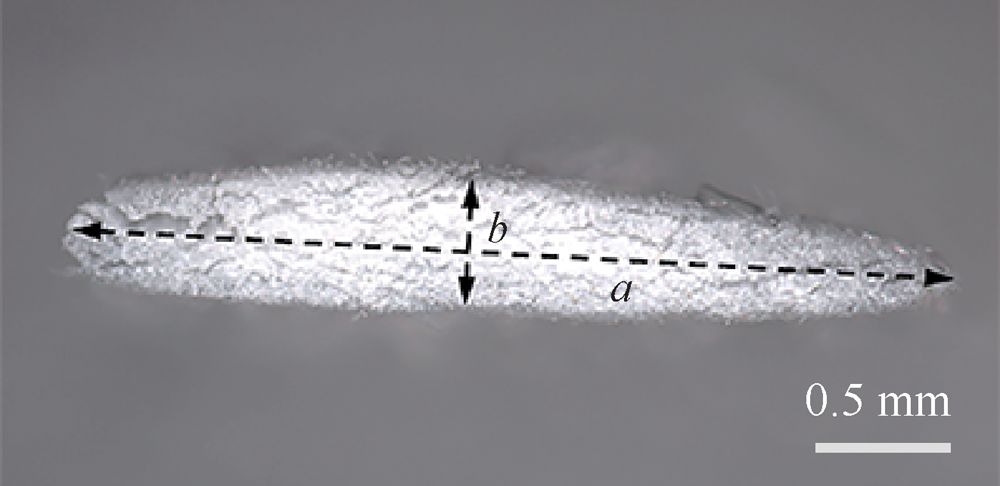
Fig.2

Approximate elliptical yarn cross section"

Tab.1

Factors and levels in response surface design"

水平 衬底A B C D
-1 双层气泡膜 0 570 4
0 塑料薄膜 0.24 950 42
1 3层玻璃纤维布 0.48 1 330 80

Fig.3

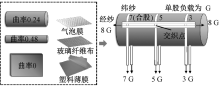
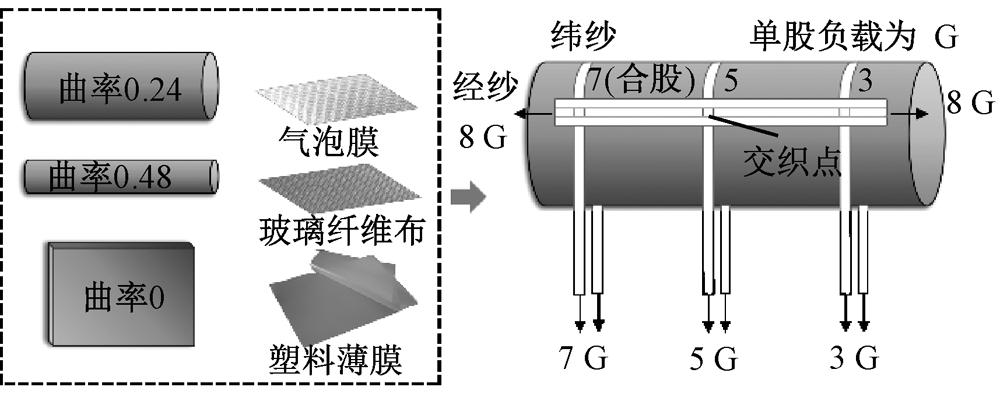
Schematic diagram of yarn-cross-sectional morphology experiment"

Tab.2

ANOVA table for a"

来源 自由度 平方和 均方差 F P
回归 14 8.70 0.620 43.34 <0.000 1
残差 14 0.20 0.014
失效拟合 10 0.18 0.018 4.04 0.095 3
纯误差 4 0.018 0.004 522
总平方和 28 8.9

Tab.3

ANOVA table for b"

来源 自由度 平方和 均方差 F P
回归 14 0.064 0.004 601 23.06 <0.000 1
残差 14 0.002 793 0.001 995
失效拟合 10 0.002 486 0.002 486 3.24 0.134 5
纯误差 4 0.000 307 0.000 076
总平方和 28 0.067

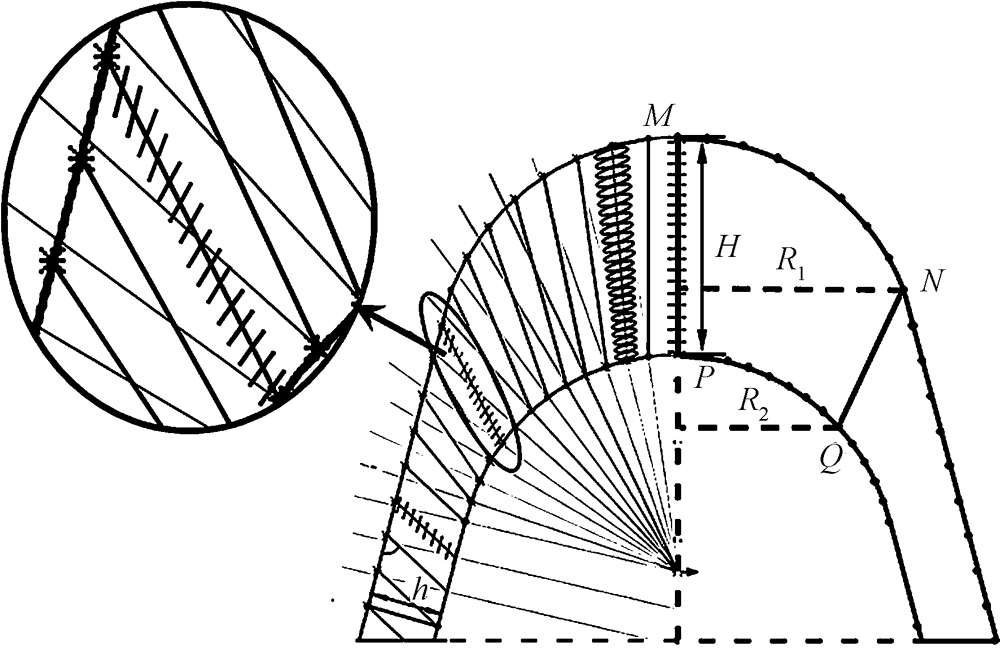
Fig.4

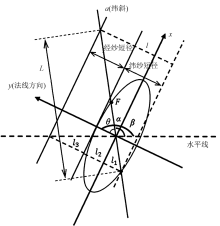
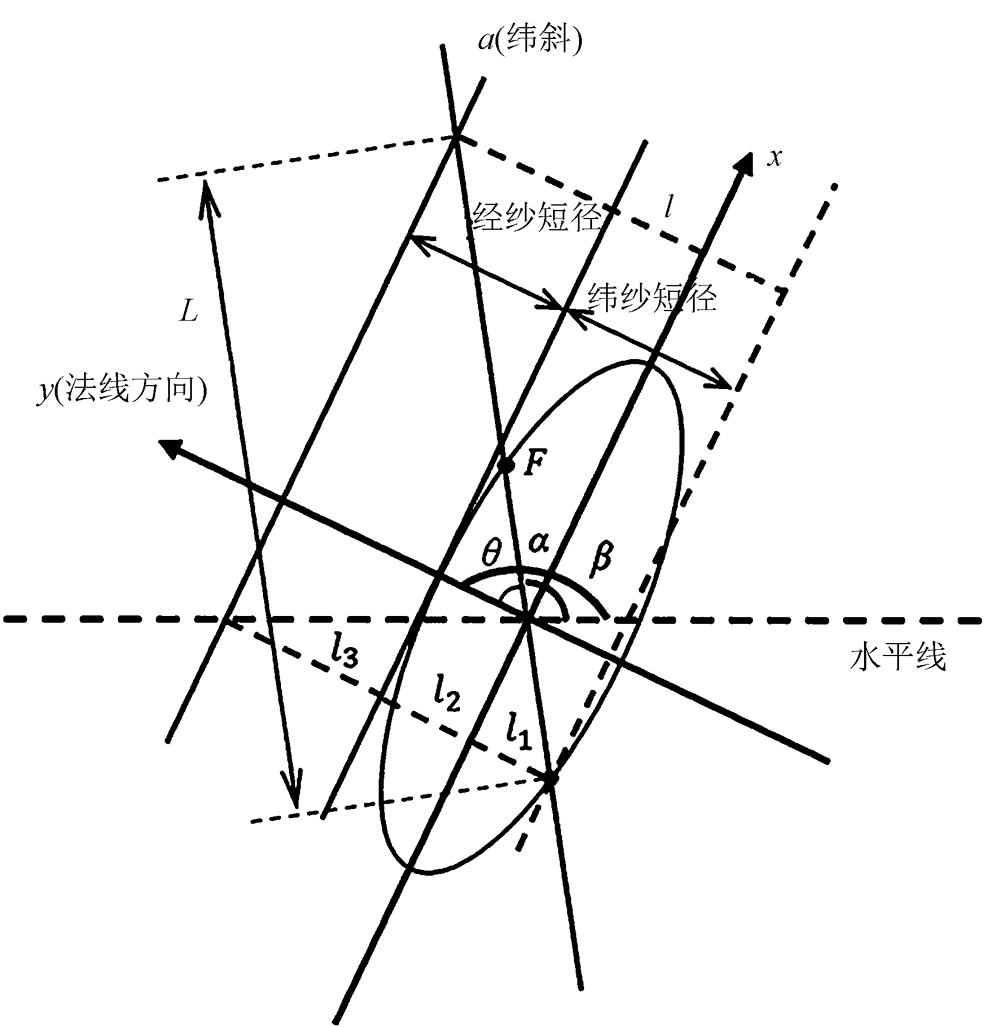
Geometric analysis diagram of single cell"

Tab.4

Calculation result of slope"

纬 数 tan (90° - θ)
υ = 0 υ = 1 υ = 2 υ = 3
1 7.077 7.463 7.893 8.375
2 5.697 5.374 5.085 4.824
3 4.983 4.360 3.870 3.474
4 4.266 3.504 2.981 2.584
5 3.612 2.879 2.375 2.005
6 3.285 2.510 2.004 1.644
7 2.800 2.103 1.650 1.328
8 2.336 1.744 1.352 1.067
9 1.916 1.588 1.335 1.131
10 1.732 1.546 1.387 1.249
11 1.604 1.553 1.503 1.456
12 1.598 1.663 1.732 1.805
13 1.827
14 1.827
15 1.827
16 1.827
17 1.827

Fig.5

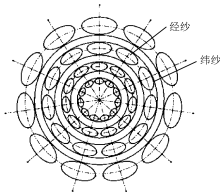
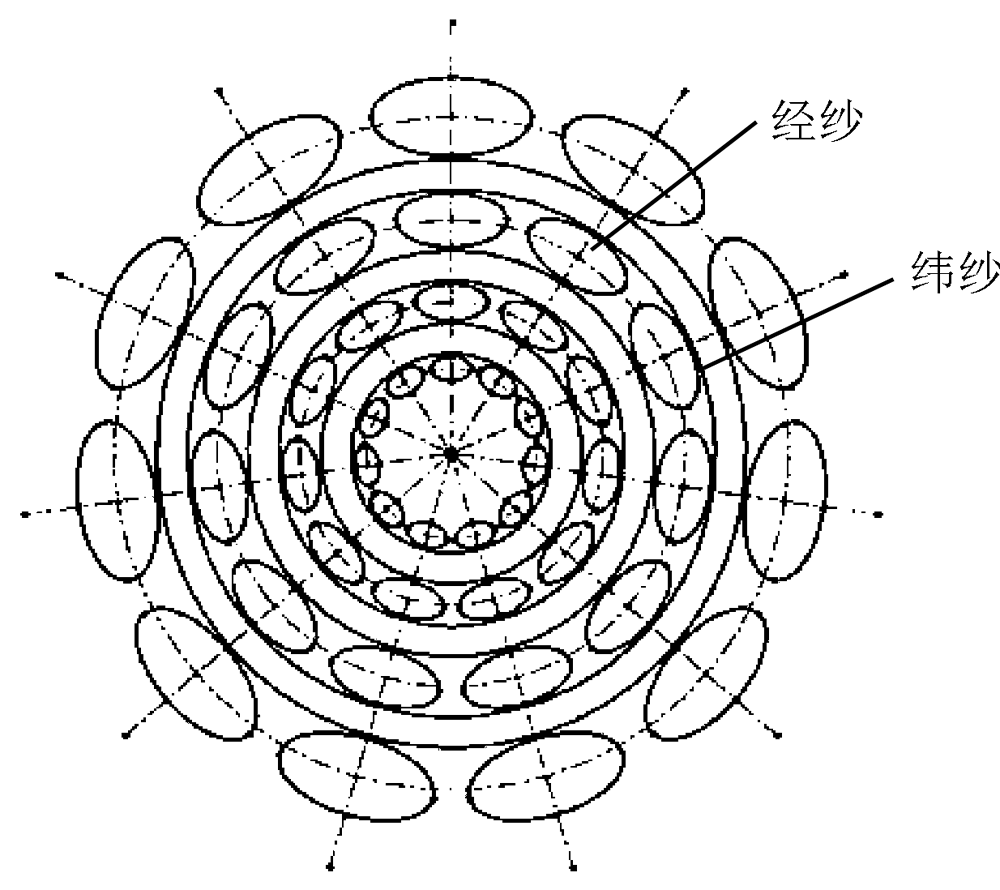
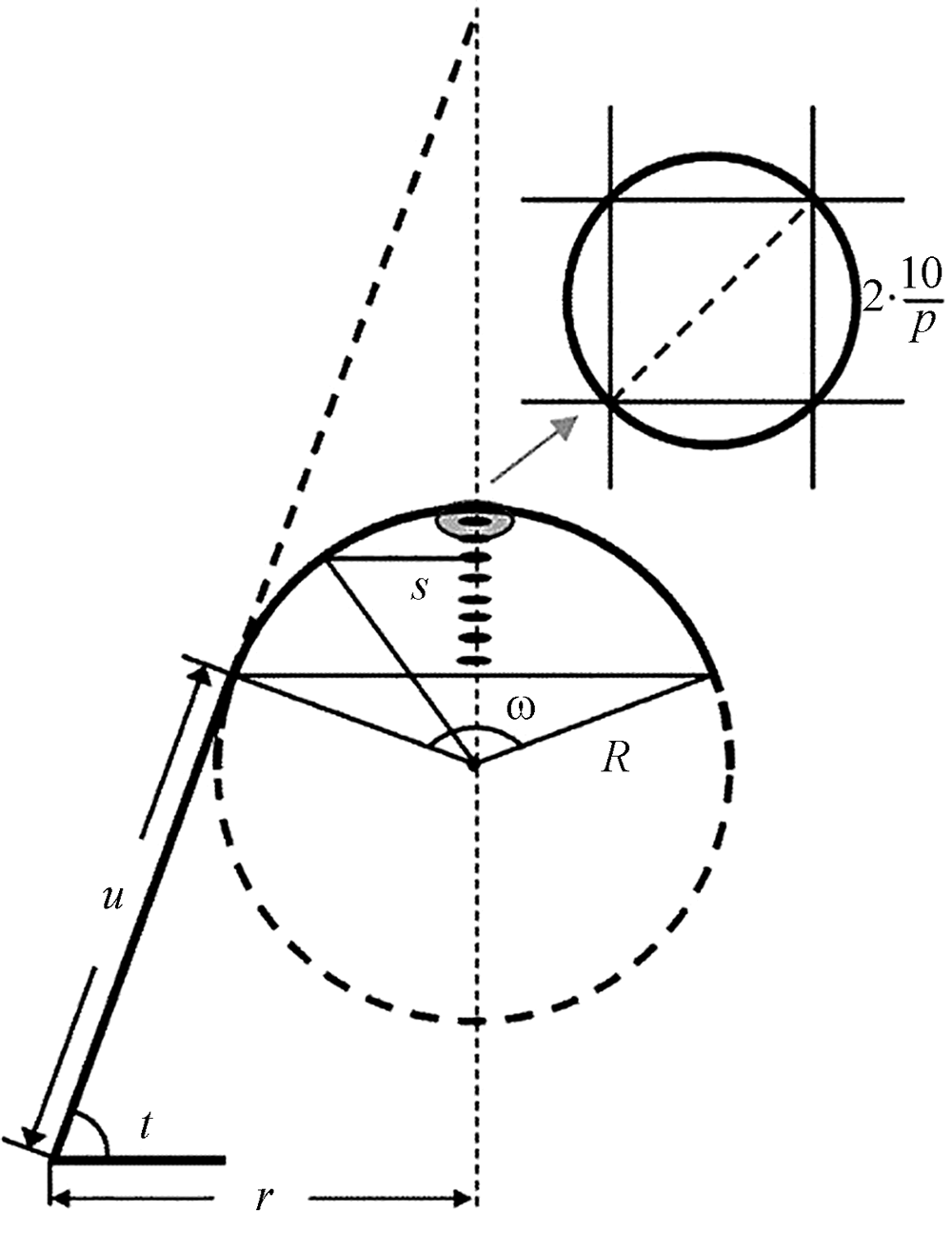
Concentric circle segmentation method"

Tab.5

Warp difference rate"

纬数 R 1 R 2 Δ R f
1 3.940 3.851 0.089 0.022 59
2 8.955 6.806 2.149 0.239 98
3 13.701 9.851 3.850 0.281 00
4 18.403 12.597 5.806 0.315 49
5 22.254 15.194 7.060 0.317 25
6 25.970 17.761 8.209 0.316 10
7 28.881 20.015 8.866 0.306 98
8 31.075 22.119 8.956 0.288 21
9 32.418 24.045 8.373 0.258 28
10 33.582 25.701 7.881 0.234 68
11 34.925 27.179 7.746 0.221 79
12 36.358 28.254 8.104 0.222 90
13 37.433 29.284 8.149 0.217 70
14 38.687 30.448 8.239 0.212 97
15 39.851 31.612 8.239 0.206 75
16 41.194 32.866 8.328 0.202 17

Tab.6

L after change of warp fineness"

纬 数 第1梯度 第2梯度 第3梯度 第4梯度
1 0.853 5 0.871 6 0.886 9 0.904 2
2 0.810 2 0.848 6 0.884 4 0.916 8
3 0.814 0 0.854 9 0.896 1 0.934 0
4 0.820 0 0.866 5 0.915 1 0.962 4
5 0.827 9 0.881 9 0.941 1 1.002 6
6 0.833 9 0.896 7 0.969 1 1.049 8
7 0.847 0 0.922 0 1.013 5 1.122 1
8 0.867 5 0.959 5 1.077 5 1.227 1
9 0.899 1 0.983 5 1.082 5 1.195 7
10 0.920 1 0.990 9 1.068 1 1.147 9
11 0.938 5 0.989 9 1.041 0 1.087 8
12 0.939 9 0.971 2 1.001 1 1.025 5
13 0.969 0 0.988 9 1.008 9 1.022 5
14 0.969 0 0.988 9 1.008 9 1.022 5
15 0.969 0 0.988 9 1.008 9 1.022 5
16 0.969 0 0.988 9 1.008 9 1.022 5
17 0.969 0 0.988 9 1.008 9 1.022 5

Tab.7

Estimation result of number of layers"

纬 数 各梯度层数 总计
第1梯度 第2梯度 第3梯度 第4梯度
0 9 9 8 8 34
1 9 9 8 8 34
2 9 9 8 8 34
3 9 8 8 8 33
4 8 8 8 7 31
5 8 7 7 7 29
6 7 7 6 6 26
7 6 6 6 5 23
8 5 5 5 5 20
9 5 4 4 4 17
10 4 4 4 3 15
11 4 3 3 3 13
12 3 3 3 3 12
13 3 3 3 3 12
14 3 3 3 3 12
15 3 3 3 3 12
16 3 3 3 3 12
17 3 3 3 3 12

Fig.6

Schematic diagram of warp yarn addition"

Fig.7

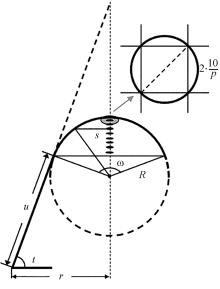
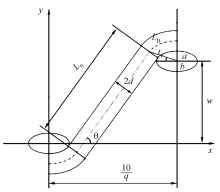
Schematic diagram of Geometric analysis of warp addition"

Fig.8

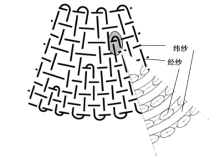
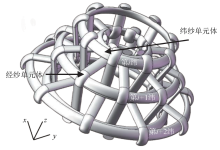
Meso-structure of yarn of head cone fabric"

Fig.9

Schematic diagram of microstructure of warp unit"

Fig.10

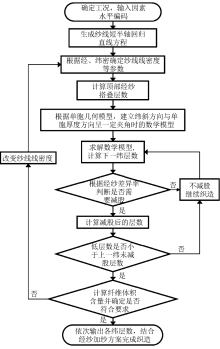
Process design flow chart"

Fig.11

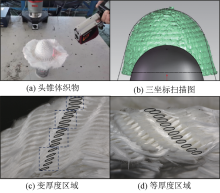
Final figure of fabric preform. (a) Head cone fabric; (b) Three-coordinate scan figure; (c) Variable thickness zone; (d) Equal thickness zone"

[1] 王旭, 闵尔君, 李少聪, 等. 基于平织机的管状三维机织物设计及其矩阵模型[J]. 纺织学报, 2023, 44(8):103-109.
WANG Xu, MIN Erjun, LI Shaocong, et al. Tubular 3D woven fabric design based on flat loom and its matrix model[J]. Journal of Textile Research, 2023, 44(8):103-109.
[2] LI Z, LI D, ZHU H, et al. Mechanical properties prediction of 3D angle-interlock woven composites by finite element modeling method[J]. Materials Today Communications, 2020. DOI: 10.1016/j.mtcomm.2019.100769.
[3] HUANG T, WANG Y, WANG G. Review of the mechanical properties of a 3D woven composite and its applications[J]. Polymer-Plastics Technology and Engineering, 2018, 57(8):740-756.
[4] REN Y, ZHANG B, ZHONG Z, et al. Reusable, high specific surface areas, and excellent thermal stability Al2O3-SiO2 aerogel composites as high-temperature thermal insulators for radome applications[J]. Journal of alloys and compounds, 2024. DOI: 10.1016/j.jallcom.2024.173990.
[5] 刘菁, 靖逸凡. 圆锥壳体三维织物的织造及其性能[J]. 棉纺织技术, 2018, 46(5):37-40.
LIU Jing, JING Yifan. Weaving and properties of three-dimensional fabric with conical shell[J]. Cotton Textile Technology, 2018, 46(5):37-40.
[6] 张长龙, 陈利, 王静, 等. 防弹头盔用三维机织预制体的曲面成型性研究[J]. 兵工学报, 2024, 45(6):2017-2024.
ZHANG Changlong, CHEN Li, WANG Jing, et al. Study on surface formability of three-dimensional woven preform for bulletproof helmet[J]. Defence Technology, 2024, 45(6):2017-2024
[7] 刘俊岭. 减纱对2.5D织物变形性及其复合材料力学性能的影响[D]. 天津: 天津工业大学, 2018:9-16.
LIU Junling. Influence of yarn reduction on deformability of 2.5D fabric and mechanical properties of its composites[D]. Tianjin:Tiangong University, 2018:9-16.
[8] WANG N, WEN W, CHANG Y, et al. Quasi-static mechanical behavior of 2.5D woven variable thickness composites[J]. Composite Structures, 2024. DOI: 10.1016/j.compstruct.2023.117759.
[9] LI M, ZHANG B, LIU K, et al. Study on the shear-pretension coupling behavior of 3D uniform and variable thickness woven fabrics[J]. Polymer Testing, 2023. DOI: 10.1016/j.polymertesting.2023.107963.
[10] LIU A, ZHOU X, GAO Y, et al. Bending property of novel 3D woven variable thickness composites: Experiment and finite element analysis[J]. Polymer Composites, 2023, 44(3):1993-2004.
[11] ZHOU Y, WEN W, CUI H. Spatial modelling of 3D woven variable thickness composite plate at the mesoscopic scale[J]. Composite Structures, 2020. DOI: 10.1016/j.compstruct.2020.111946.
[12] 窦宏通, 王晓旭, 刘晓东, 等. 三维异型纺织复合材料的预制体织造技术及材料力学性能研究进展[J]. 材料工程, 2023, 51(4):88-102.
DOU Hongtong, WANG Xiaoxu, LIU Xiaodong, et al. Research progress on weaving technology and mechanical properties of three-dimensional profiled textile composites[J]. Materials Engineering, 2023, 51(4):88-102.
[13] KUNDAK H, BILISIK K. Development of three-dimensional (3D) biodegradable polyglycolic acid fiber (PGA) preforms for scaffold applications: experimental patterning and fiber volume fraction-porosity modeling study[J]. Polymers, 2023. DOI:10.3390/polym15092083.
[14] NASSER S, HALLAL A, HAMMOUD M, et al. Geometrical modeling of yarn's cross-section towards a realistic unit cell of 2D and 3D woven composites[J]. Journal of The Textile Institute, 2021, 112(5):767-782.
[15] AGWU N, OZOEGWU C G. Critical investigation on the effect of fiber geometry and orientation on the effective mechanical properties of fiber-reinforced polymer composites[J]. Mechanics of Advanced Materials and Structures, 2023, 30(15):3051-3060.
[16] 周光明, 王新峰, 王鑫伟, 等. 三维机织复合材料的力学模型与实验验证[J]. 南京航空航天大学学报, 2004(4):444-448.
ZHOU Guangming, WANG Xinfeng, WANG Xinwei, et al. Mechanical model and experimental verification of 3D woven composites[J]. Journal of Nanjing University of Aeronautics and Astronautics, 2004(4):444-448.
[17] 李磊, 容治军, 仇普霞, 等.一种回转壳体织物的封顶织造方法及回转壳体织物的织造方法:110258003A[P]. 2020-12-01.
LI Lei, RONG Zhijun, QIU Puxia, et al. A top-capping weaving method of rotary shell fabric and the weaving method of rotary shell fabric: 110258003A[P]. 2020-12-01.
[1] LÜ Lihua, PANG Xianke, LIU Ao. Impact properties of three-dimensional woven composites with variable thickness [J]. Journal of Textile Research, 2024, 45(09): 91-96.
[2] WANG Zunqin, LIU Dongyan, WANG Xiaoxu, ZHANG Diantang. Out-of-plane compression properties of angle interlock composites with variable densities [J]. Journal of Textile Research, 2024, 45(07): 63-71.
[3] WANG Yipin, LI Xiaohui. Parametric characterization method of clothing fold morphology [J]. Journal of Textile Research, 2024, 45(06): 149-154.
[4] WANG Yutao, CONG Honglian, GU Hongyang. Structural design and thermal-moist comfort of weft knitted knee pads [J]. Journal of Textile Research, 2023, 44(10): 68-74.
[5] ZHOU Jiu, HU Yili. Design and application of equal float length on full-color weave in triple-weft jacquard fabric structures [J]. Journal of Textile Research, 2023, 44(06): 78-84.
[6] CHEN Yifei, LIU Chi, YANG Meng. Emotion measurement of one-piece swimsuit structure based on response surface analysis [J]. Journal of Textile Research, 2022, 43(10): 161-168.
[7] XU Mingtao, JI Yu, ZHONG Yue, ZHANG Yan, WANG Ping, SUI Jianhua, LI Yuanyuan. Review on toughening modification of carbon fiber/epoxy resin composites [J]. Journal of Textile Research, 2022, 43(09): 203-210.
[8] DONG Zhijia, SUN Fei, CONG Honglian, YU Xuliang. Structural design and modeling of low-waste weft knitting fully fashioned female vests [J]. Journal of Textile Research, 2022, 43(07): 129-134.
[9] LU Shuangyi, ZHOU Jiu. Balanced interlacement characteristics of compound full-color jacquard structure with single warp and double wefts [J]. Journal of Textile Research, 2021, 42(09): 59-65.
[10] TAN Jiangtao, JIANG Gaoming, GAO Zhe, ZHENG Peixiao. Research progress of textile composite helmet shell against low-velocity impact [J]. Journal of Textile Research, 2021, 42(08): 185-193.
[11] WANG Weirong, CONG Honglian. Structural design of weft-knitted seamless yoga pants based on leg motion characteristics [J]. Journal of Textile Research, 2021, 42(06): 140-145.
[12] JIN Peng, XUE Zhebin, GE Yao. New intelligent mining clothing design with real-time gas monitoring function [J]. Journal of Textile Research, 2020, 41(11): 143-149.
[13] WANG Rui;ZHANG Shujie;GAO Yanzhang;WANG Huan. Mechanical properties of tubular textile composite material for pipeline rehabilitation [J]. JOURNAL OF TEXTILE RESEARCH, 2007, 28(6): 70-74.
[14] LUO Qin. Prototype design and usage of weft knit women′s wear [J]. JOURNAL OF TEXTILE RESEARCH, 2007, 28(3): 92-95.
[15] ZHOU Jiu;Frankie Ng;SHEN Gan. One to one corresponding principle on structure design of jacquard fabric [J]. JOURNAL OF TEXTILE RESEARCH, 2006, 27(7): 4-7.
Viewed
Full text


Abstract

Cited

  Shared   
  Discussed   
No Suggested Reading articles found!