Journal of Textile Research ›› 2025, Vol. 46 ›› Issue (02): 244-250.doi: 10.13475/j.fzxb.20240302001

• Apparel Engineering • Previous Articles     Next Articles

Structural modeling and process implementation of fully formed protective hat based on characteristic region of head

LUO Xuan1, ZHOU Yi1, LI Duan2(), LIU Bo3   

  1. 1. School of Arts and Design, Changzhou University, Changzhou, Jiangsu 213164, China
    2. College of Design, Jiaxing University, Jiaxing, Zhejiang 314001, China
    3. Wuxi Wei Rui Textile Technology Co., Ltd., Wuxi, Jiangsu 214037, China
  • Received:2024-03-08 Revised:2024-10-08 Online:2025-02-15 Published:2025-03-04
  • Contact: LI Duan E-mail:jxxy_ld@zjxu.edu.cn

Abstract:

Objective The existing protective hats primarily rely on cutting and sewing methods to accommodate the protection of the human head and face. It is important to make the protective hats better fit the contour curves of the human head, face and neck, to improve wearing comfort, and to combine functional yarns in order to enhance the added value of the protective hats and expand its application areas. This research is carried out to explore the three-dimensional structure of the protective hat based on the use of full-forming knitting technology.

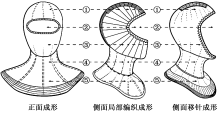
Method The research took the human head-and-neck model as the starting point, aiming to determine the relevant feature size parameters. The protective hat was divided into five main characteristic areas according to the functional requirements. Based on the full-forming knitting process, the structural model of the front and side knit protective hat was constructed, and the process model of the knit requirements was achieved through two-dimensional template conversion.

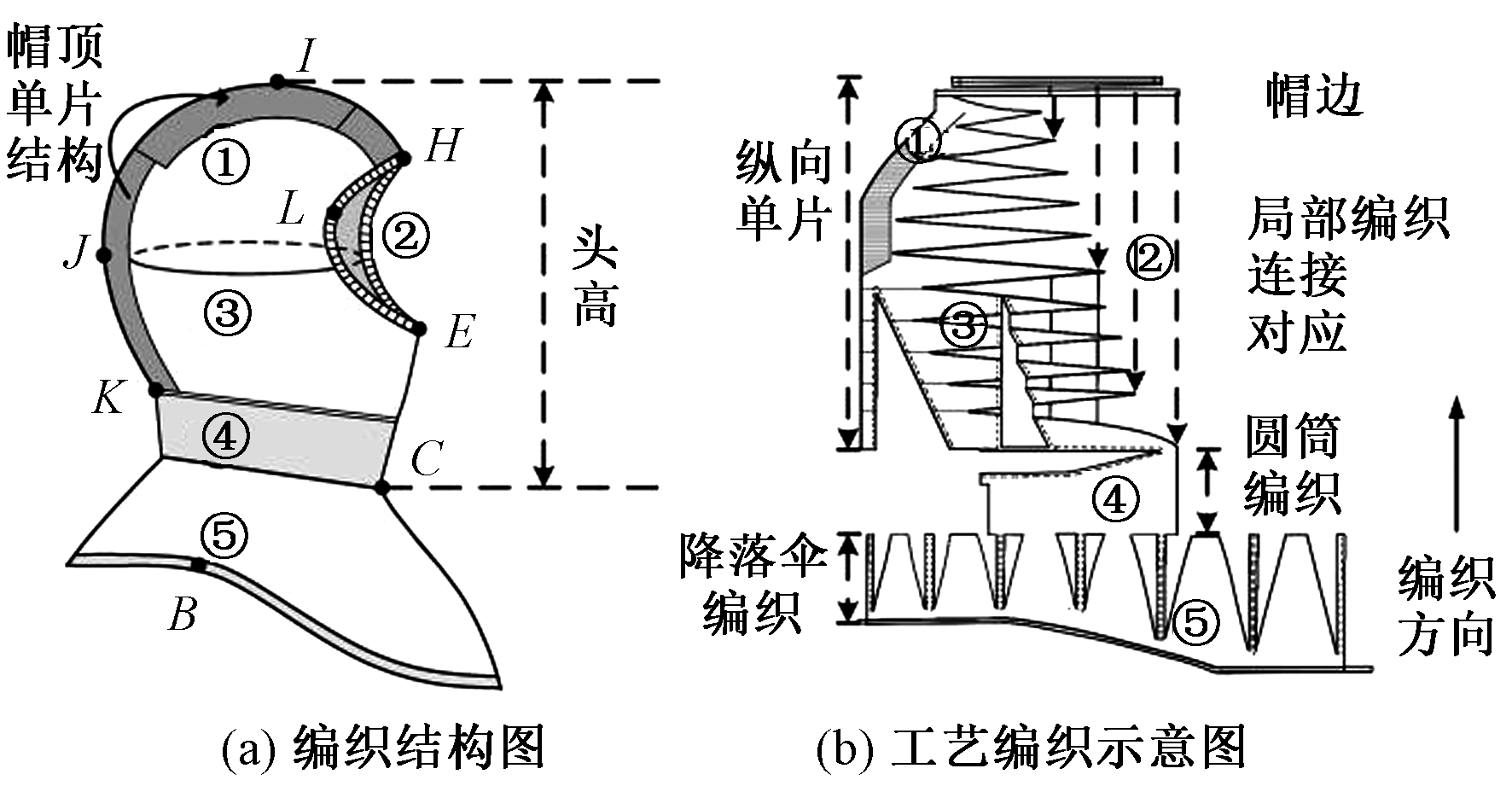
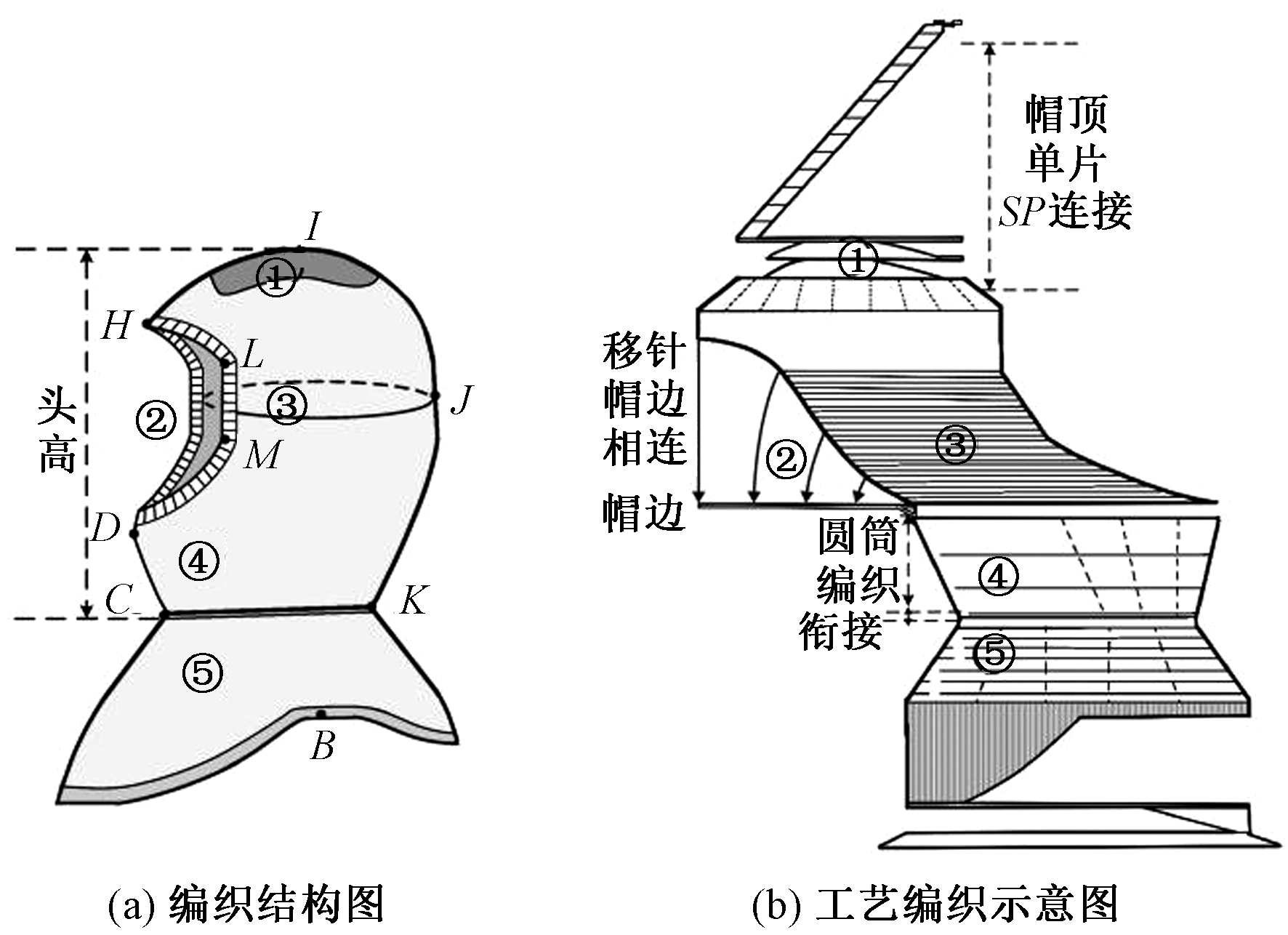
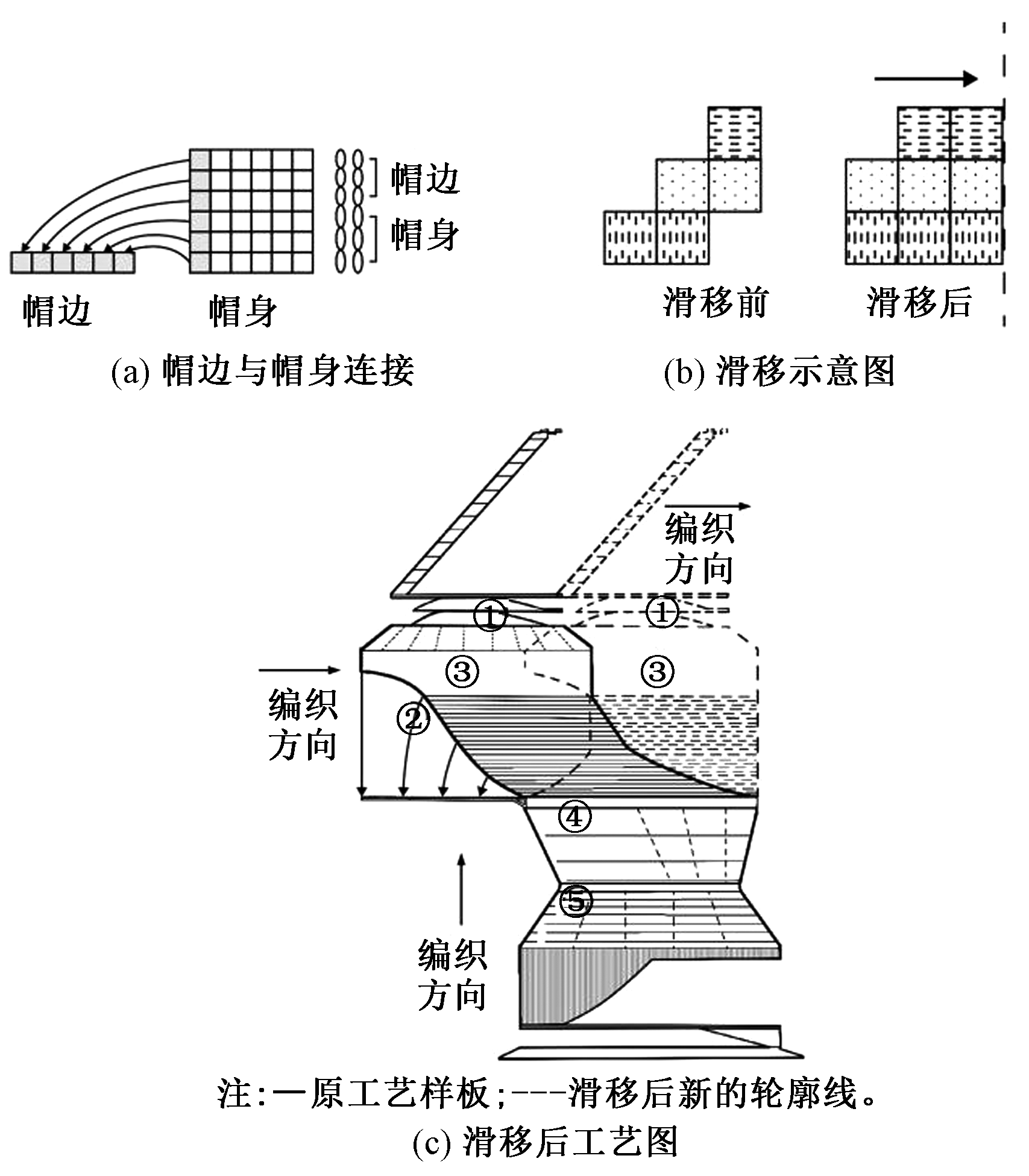
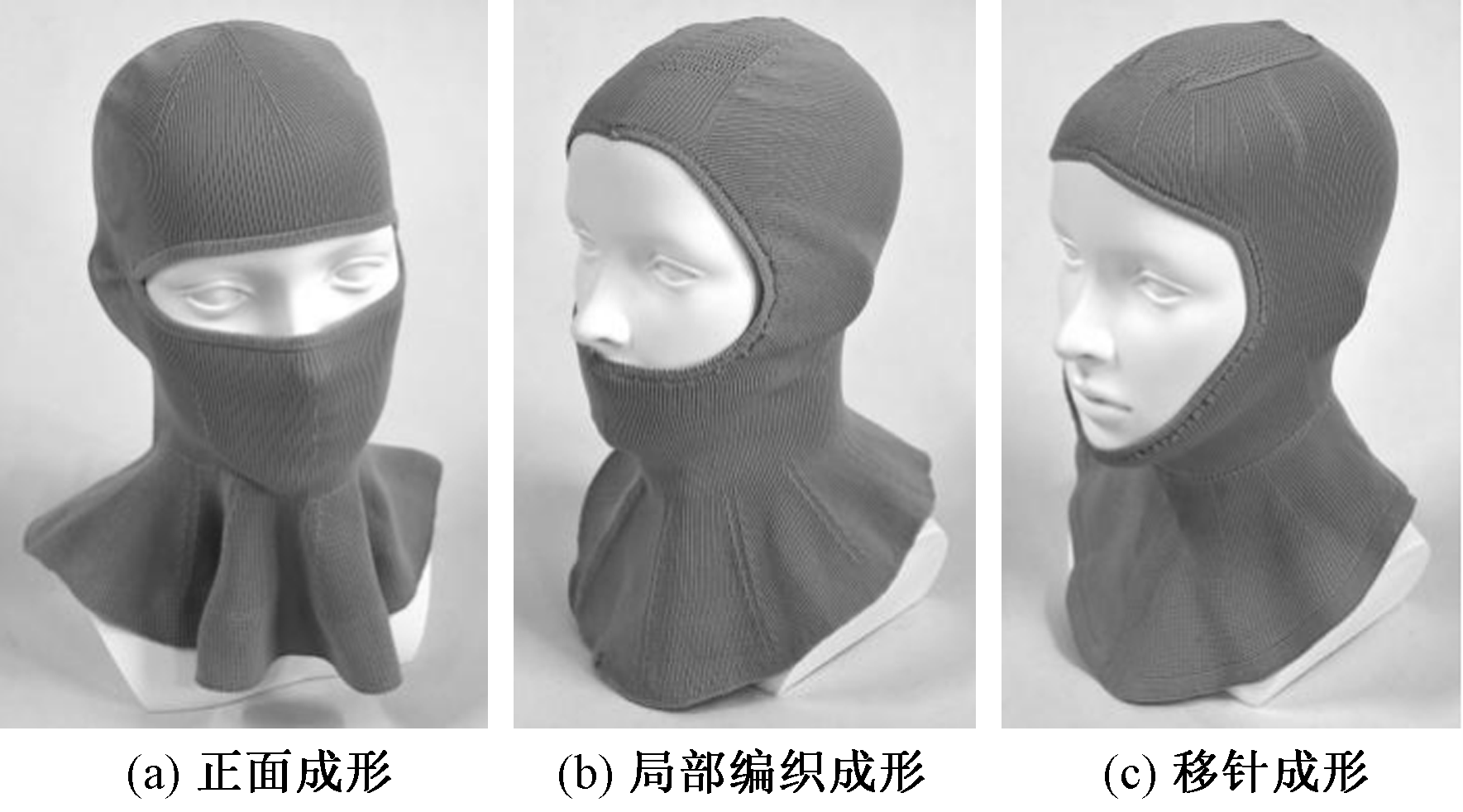
Results Three types of protective hats were made through trial knitting on a four-needle-bed computerized flatbed knitting machine. This state-of-the-art equipment allows precise control of the knitting parameters and ensures high-quality knitting results. Front knitting made use of a partial knitting technique, whereby knitting was done selectively on certain needles to create a specific pattern or opening. This technique was used to manufacture the eye openings to ensure functionality and ergonomics for the wearer. In addition, the neck had a cylindrical structure which was optimized to enhance the fit of the neck, ensuring that the hat is comfortable and secure to wear so as to provide better protection without compromising on comfort. The side knitting was carried out based on the same partial knit technique to achieve a single longitudinal knit from the top of the head to the back of the neck. This design approach ensures that the hat would fit more naturally to the contours of the head, providing a seamless fit with improved comfort and protection. In general, the use of needle shifting technology played a vital role in the overall design. This technique enabled intricate designs and better fit. Combined with multi-size process calculations, this method ensured that the connection between the hat rim and the body of the hat is precise and tight. This meticulous approach made it certain that the face-wrapping area would fit closely to the contours of the face, providing superior protection and a more aesthetically pleasing appearance. By utilizing advanced seamless knitting technology, the front and side knitting process not only improved the performance of the protective hat but also met the specific needs of various protection scenarios.

Conclusion The structural design and knitting of the three-dimensional fully formed protective hat were investigated based on a four-needle bed computer flat knitting machine, and the application of front and side knitting technology in three-dimensional structure shaping of protective hat was deeply analyzed. Through the integrated forming technology, the knitted hat was made to fit the human head and face curves, which not only solves the problem of reduced comfort due to excessive sewing and splicing of the traditional hat, but also optimizes the adaptability of the hat body to the head features, which significantly improves the wearing experience and protection effectiveness. The added value of the protective hat can be added by introducing functional yarns and designing fabric structures for specific areas. The knitting material can be adjusted according to different use scenarios to meet the functional and safety requirements of the protective hat.

Key words: full-fashioned protective hat, head characteristic, structural model, transfer needle to shape, partial knitting to shape

CLC Number: 

  • TS184.5

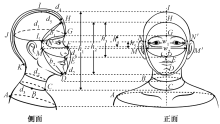
Fig.1

Model of human head features"

Tab.1

Fabric specification parameters"

特征参数 编号 定义
头围 d1 G到点J水平1周的围度
颈中围 d2 颈中部水平1周的围度
颈根围 d3 颈根部水平1周的围度
上帽围 d4 正面编织中,点GHIJ到点K的围度
上帽围 d5 侧面编织中,点HIJ到点K的围度
下帽围 d6 正面编织中,点D到点F的围度
下帽围 d7 侧面编织中,点D到点E的围度
头颈高 h1 I到点C的长度
开口高 h2 侧面编织中,点H到点D的长度
开口高 h3 侧面编织中,点H到点E的长度
开口高 h4 正面编织中,点G到点F的长度
LM
垂直距离
h5 侧面编织中,点L到点M的长度
开口宽 w1 正面编织中,点NN'之间的水平距离
颧骨宽 w2 侧面编织中,点M到点M'的水平距离
开口斜度 b1 侧面编织中,点H到点L的斜向长度
开口斜度 b2 侧面编织中,点D到点M的斜向长度

Fig.2

Protective hat structure diagram"

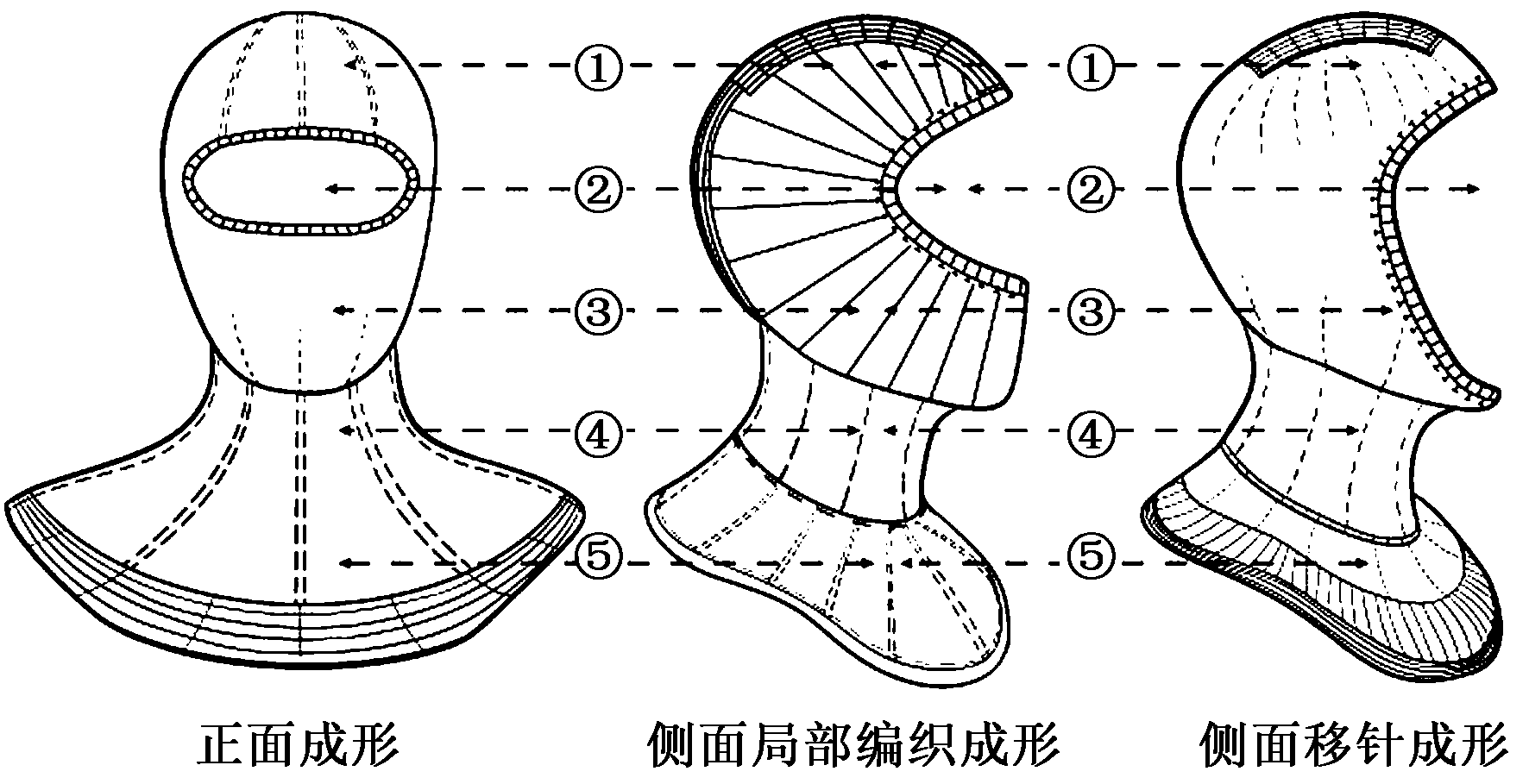
Fig.3

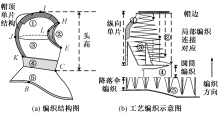
Schematic diagram of front knitting. (a) Diagram of knitting structure; (b) Schematic diagram of process knitting"

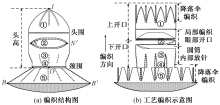
Fig.4

Schematic diagram of side partial knitting and shaping. (a) Diagram of knitting structure; (b) Schematic diagram of process knitting"

Fig.5

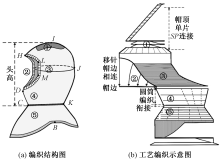
Schematic diagram of side needle transfer shaping.(a) Diagram of knitting structure; (b) Schematic diagram of process knitting"

Fig.6

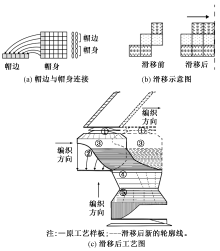
Schematic diagram of side needle slid transform. (a) Brim to body connection ; (b) Slip diagram;(c) Post-slip process diagram"

Fig.7

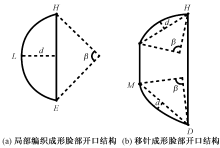
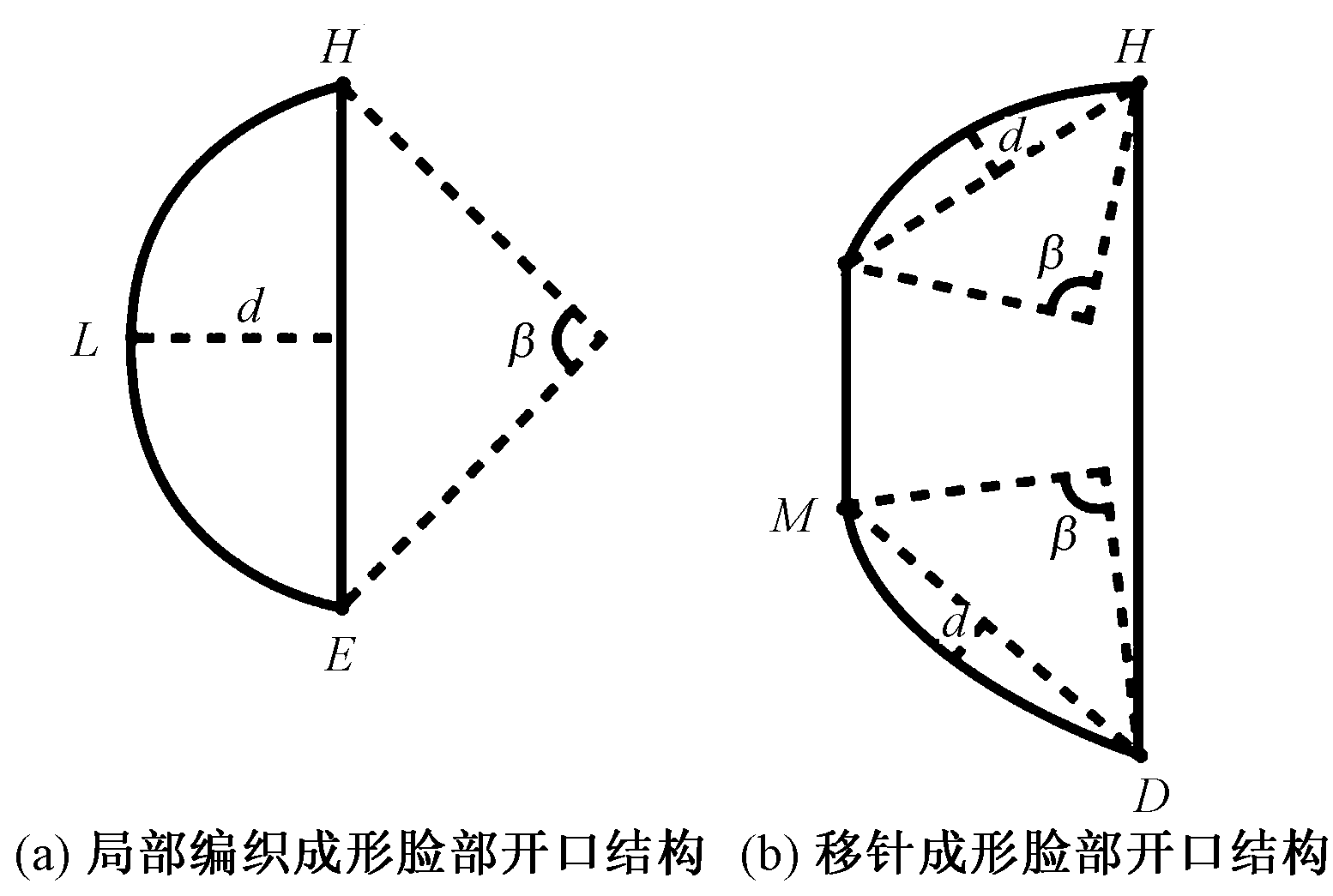
Schematic diagram of side knit brim constriction. (a) Partial knit shaped face opening structure; (b) Needle transfer shaped face opening structure"

Tab.2

Table of process parameters"

项目 编织
针数
编织
行数
编织时
间/min
贴合度 编织
局限
编织
优势
正面编织 622 4 027 55.27 整体较
宽松
帽顶不
够圆润
编织效
率优
侧面局部
成形
532 5 400 68.18 头到脖
颈贴合
机器工艺
要求高
编织设
计优
侧面移针
成形
690 4 339 83.02 面部包
裹贴合
机器工艺
要求高
脸部包
裹优

Fig.8

Finished knitted protective hat. (a) Front shaping;(b) Partial knitting shaping;(c) Needle transfer shaping"

[1] 赵博宇, 梁鑫花, 丛洪莲. 电脑横机编织三维全成形口罩结构建模与工艺实践[J]. 纺织学报, 2020, 41(12): 59-65.
doi: 10.13475/j.fzxb.20200505507
ZHAO Boyu, LIANG Xinhua, CONG Honglian. Structural modelling and process practice of computerized flat knitting three-dimensional fully formed mask[J]. Journal of Textile Research, 2020, 41(12): 59-65.
doi: 10.13475/j.fzxb.20200505507
[2] 邹亚男, 夏风林, 董智佳, 等. 经编全成形脖套的结构设计与工艺实现[J]. 纺织学报, 2021, 42(12): 76-80.
doi: 10.13475/j.fzxb.20210306705
ZOU Yanan, XIA Fenglin, DONG Zhijia, et al. Structural design and process realisation of warp knitting full-form collar[J]. Journal of Textile Research, 2021, 42(12): 76-80.
[3] 邹亚男, 夏风林, 董智佳, 等. 经编全成形触屏手套结构设计与工艺实现[J]. 针织工业, 2021(8):1-4.
ZOU Yanan, XIA Fenglin, DONG Zhijia, et al. Structural design and process realisation of warp knitting fully formed touch screen gloves[J]. Knitting Industries, 2021(8):1-4.
[4] 王菡珠, 孙宁宁, 唐魏魏, 等. 全成形经编提花手套产品的织造工艺设计[J]. 纺织导报, 2020(12):42-44.
WANG Hanzhu, SUN Ningning, TANG Weiwei, et al. Weaving process design of fully formed warp knit jacquard glove products[J]. China Textile Leader, 2020(12):42-44.
[5] 吴志明, 张丽荣. 全成形提花组织针织帽的设计开发[J]. 针织工业, 2020(9): 5-8.
WU Zhiming, ZHANG Lirong. Design and development of knitted hats with fully formed jacquard tissue[J]. Knitting Industries, 2020(9): 5-8.
[6] JUN J, RYOO Y, CHOI K, et al. Development of prototype hat patterns for elderly women based on three-dimensional modeling[J]. Fashion and Textiles, 2021. DOI: 10.1186/s40691-021-00258-5.
[7] 李艺. 基于人体测量学数据的头戴式产品设计辅助系统设计[D]. 长沙: 湖南大学, 2020: 26-30.
LI Yi. Design of head-mounted product design assistance system based on anthropometric data[D]. Changsha: Hunan University, 2020: 26-30.
[8] 李泽尧. 头盔内衬曲面造型设计及舒适性评价方法研究[D]. 徐州: 中国矿业大学, 2022: 17-22.
LI Zeyao. Research on helmet liner curved surface modelling design and comfort evaluation method[D]. Xuzhou: China University of Mining and Technology, 2022: 17-22.
[9] 赖安琪, 蒋高明, 李炳贤. 基于空间变换的全成形毛衫三维虚拟展示[J]. 毛纺科技, 2023, 51(7):83-90.
LAI Anqi, JIANG Gaoming, LI Bingxian. Three-dimensional virtual display of fully formed jumpers based on spatial transformation[J]. Wool Textile Journal, 2023, 51(7):83-90.
[10] 路丽莎, 蒋高明. 全成形针织服装三维款式向二维样板转化方法[J]. 纺织学报, 2022, 43(10): 133-140.
doi: 10.13475/j.fzxb.20210808508
LU Lisha, JIANG Gaoming. Transformation method of three-dimensional styles to two-dimensional samples for whole garment knitted garments[J]. Journal of Textile Research, 2022, 43(10): 133-140.
doi: 10.13475/j.fzxb.20210808508
[11] 邹亚男, 夏风林, 董智佳, 等. 经编全成形脖套的结构设计与工艺实现[J]. 纺织学报, 2021, 42(12): 76-80.
doi: 10.13475/j.fzxb.20210306705
ZOU Yanan, XIA Fenglin, DONG Zhijia, et al. Structural design and process realisation of warp knitting full-form collar[J]. Journal of Textile Research, 2021, 42(12): 76-80.
[12] 刘博, 丛洪莲. 全成形西服横向编织技术的工艺模型与实现[J]. 纺织学报, 2020, 41(7): 53-58.
LIU Bo, CONG Honglian. Process modelling and implementation of transverse knitting technology for fully formed suits[J]. Journal of Textile Research, 2020, 41(7): 53-58.
[13] 毛思尧. 基于横机ADF技术的汽车座椅套面料与成形工艺研究[D]. 上海: 东华大学, 2021:50-56.
MAO Siyao. Research on the fabric and forming process of automotive seat cover based on ADF technology of flat bed machine[D]. Shanghai: Donghua University, 2021:50-56.
[14] 赵俊杰, 蒋高明, 程碧莲, 等. 毛衫绞花织物的三维仿真与实现[J]. 纺织学报, 2023, 44(12):81-87.
doi: 10.13475/j.fzxb.20220700901
ZHAO Junjie, JIANG Gaoming, CHENG Bilian, et al. Three-dimensional simulation and realisation of jumper twisted fabric[J]. Journal of Textile Research, 2023, 44(12):81-87.
doi: 10.13475/j.fzxb.20220700901
[15] 刘博. 全成形针织休闲西服的工艺研究[D]. 无锡: 江南大学, 2020: 41.
LIU Bo. Research on the process of fully-formed knitted casual suits[D]. Wuxi: Jiangnan University, 2020: 41.
[1] ZHAO Boyu, LIANG Xinhua, CONG Honglian. Structural modeling and process practice of three-dimensional fully fashioned face masks woven by computerized flat knitting machine [J]. Journal of Textile Research, 2020, 41(12): 59-65.
[2] CHEN Jin-xiang;NI Qing-qing;XU Ying-lian. Achievements in biomimetic composite structures with fore-wing of beetle [J]. JOURNAL OF TEXTILE RESEARCH, 2006, 27(10): 108-111.
Viewed
Full text


Abstract

Cited

  Shared   
  Discussed   
No Suggested Reading articles found!