Journal of Textile Research ›› 2025, Vol. 46 ›› Issue (02): 145-152.doi: 10.13475/j.fzxb.20240907601

• Dyeing and Finishing Engineering • Previous Articles     Next Articles

Reaction mechanism between α-trifluoromethyl phenyl diazo ester dye and synthetic fiber

XIE Xiaokang, JIANG Hua(), WANG Ye, SHI Lulu   

  1. Engineering Research Center for Eco-Dyeing & Finishing of Textiles, Ministry of Education, Zhejiang Sci-Tech University, Hangzhou, Zhejiang 310018, China
  • Received:2024-09-29 Revised:2024-11-04 Online:2025-02-15 Published:2025-03-04
  • Contact: JIANG Hua E-mail:jh@zstu.edu.cn

Abstract:

Objective The carbene-type dye that emerged in recent years could achieve strong covalent bonding between dyes and fibers, which is expected to solve the thermal migration problem of conventional disperse dyes. To date, the carbene dyes are still not widely available, and the reaction mechanism between dyes and fibers is yet to be fully understood. This research developed a novel carbene-type dye based on the structure of α-(trifluoromethyl)phenyl diazo ester, which was used for dyeing and fixing various synthetic fibers. This paper article aims to reveal the reaction mechanism between dyes and fibers by further simulation experiments and theoretical calculations.

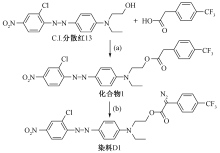
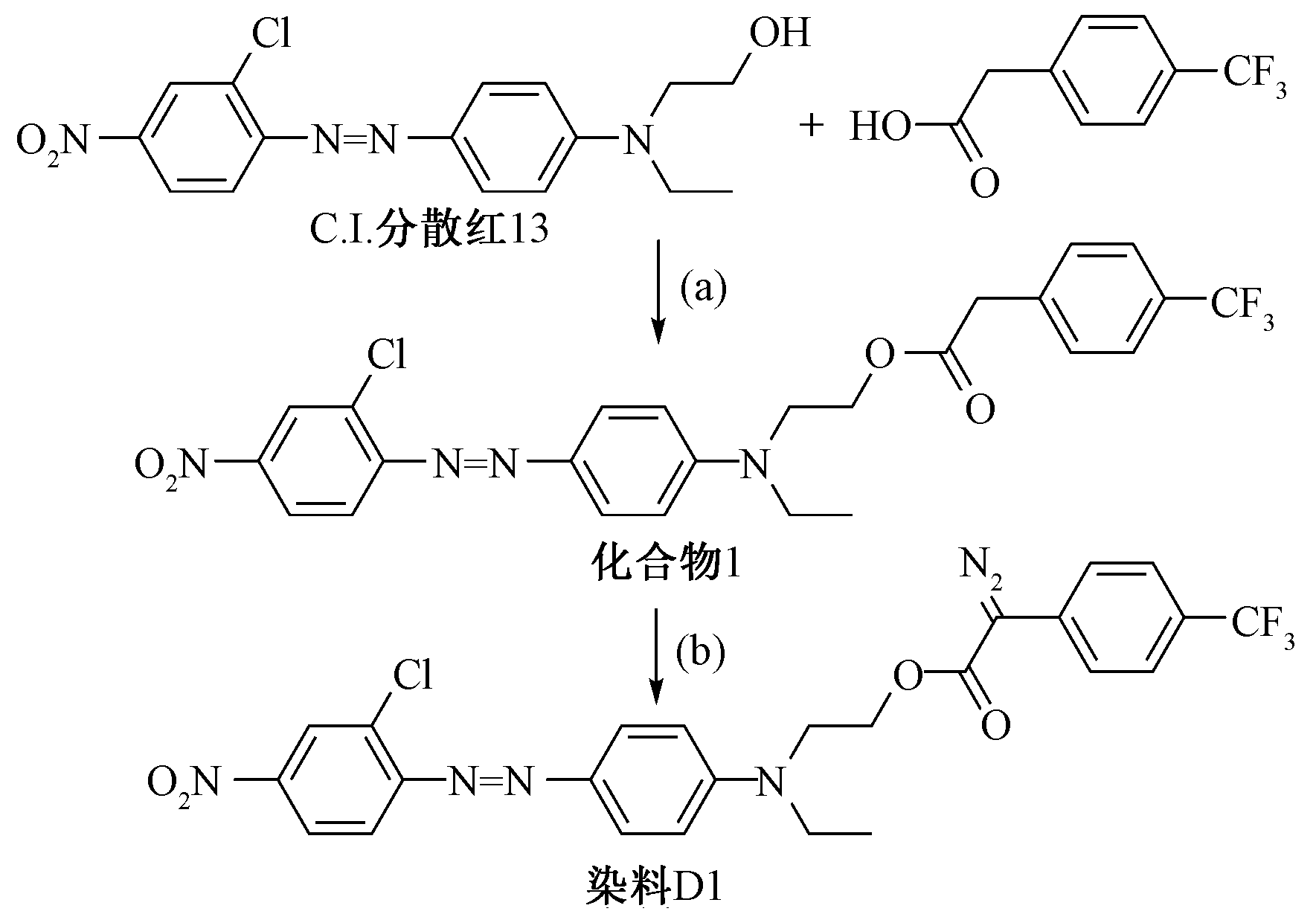
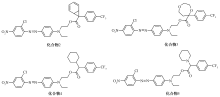
Method Dye D1 was synthesized through a two-step post-modification of an azo dye containing one hydroxyl group. The absorption and thermal properties of dye D1 were studied. Then, dye D1 was applied to dyeing polyester, polypropylene, polyurethane and polyamide fibers. The color firmness was confirmed by testing fixation, dye migration and fastness properties. Simulation reactions between D1 and small molecule analogues, such as benzene, dioxane, cyclohexane, and piperidine, were used to clarify the reaction site on fibers. Theoretical calculations of reactions between 4-(trifluoromethyl)phenyldiazoacetic acid methyl ester and methane or methylamine were performed. Based on the above, the reaction mechanism between the dye and fiber was speculated.

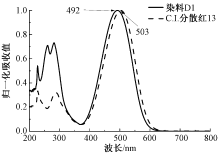
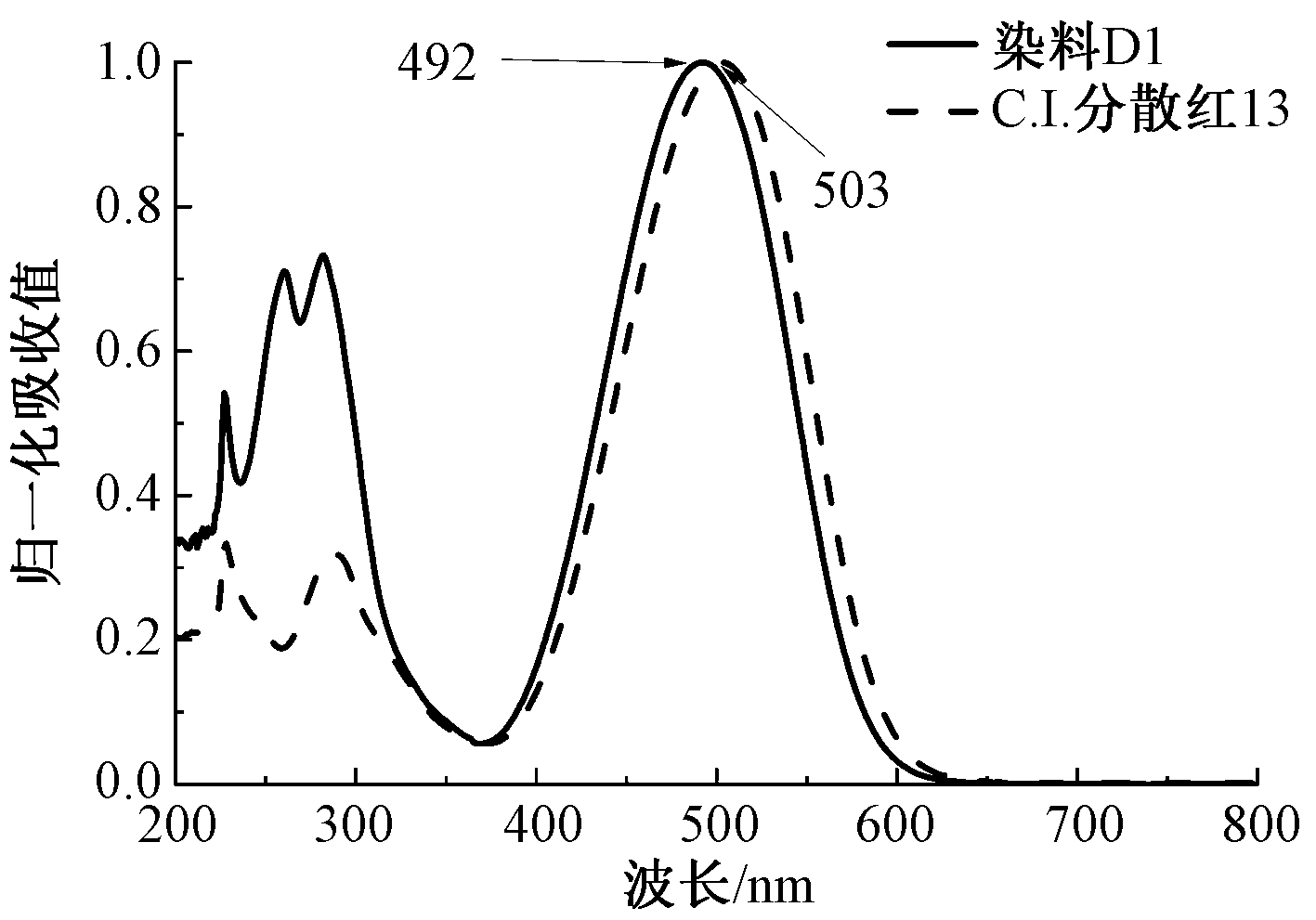
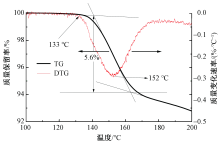
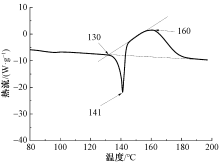
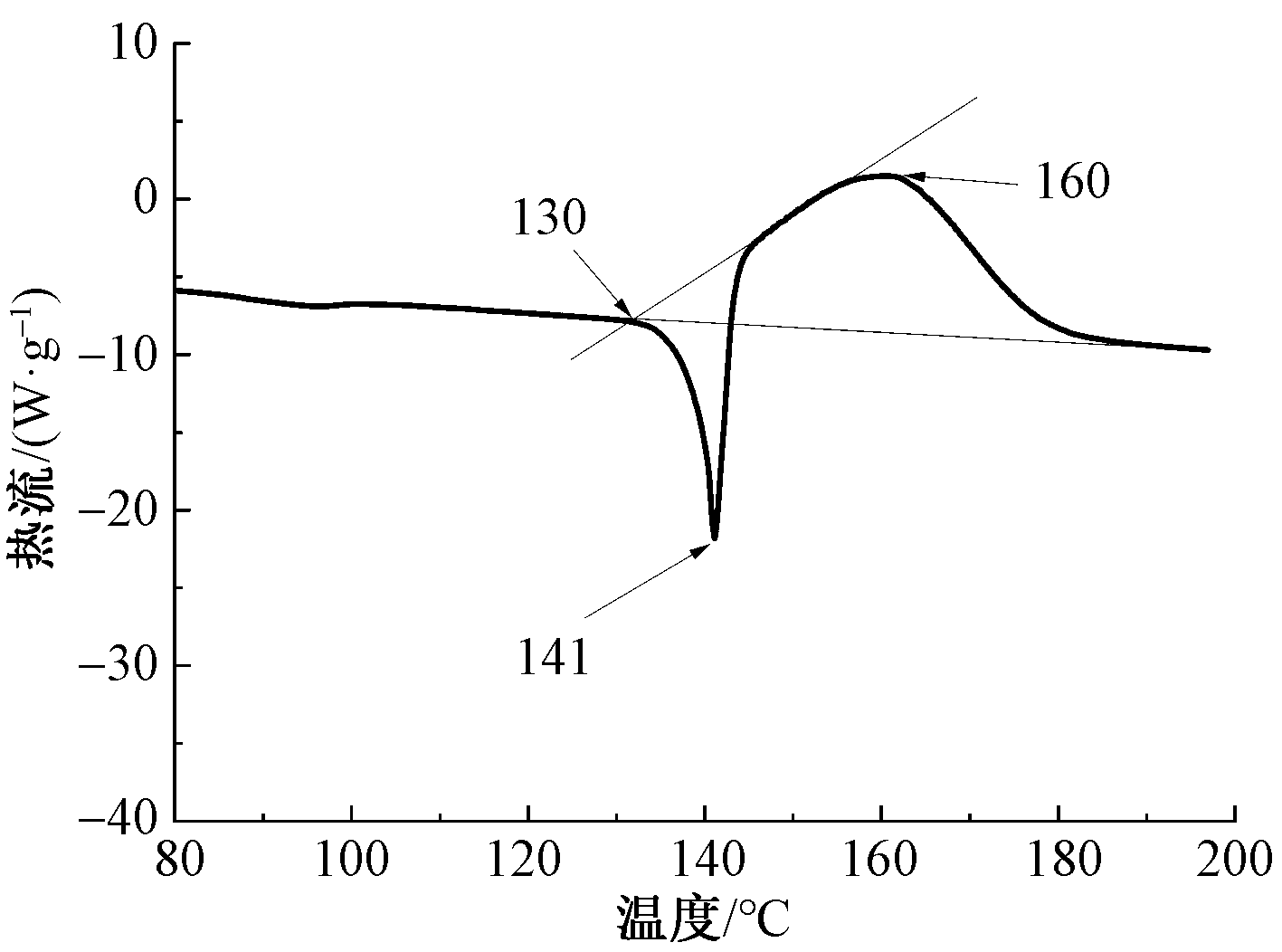
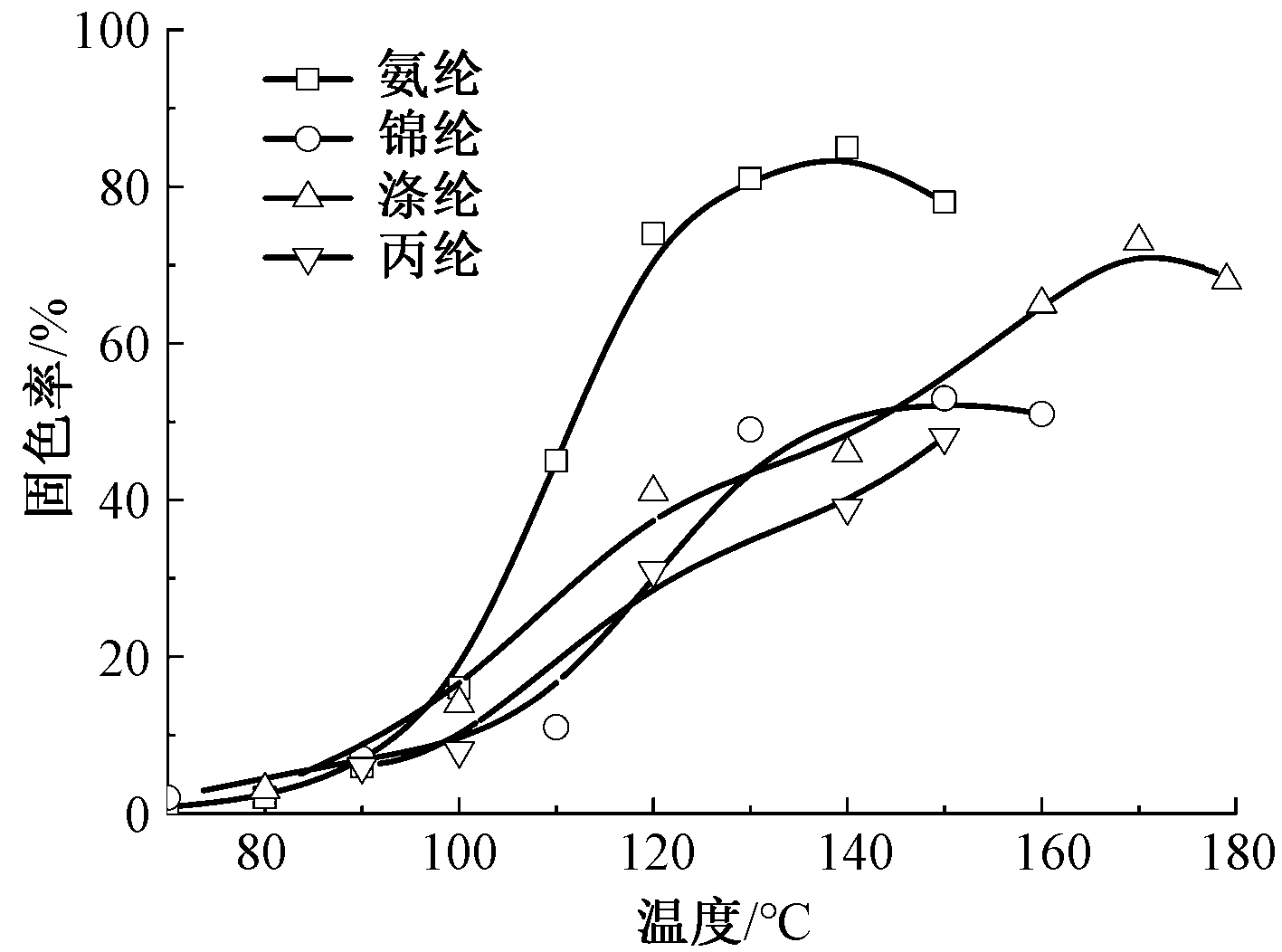
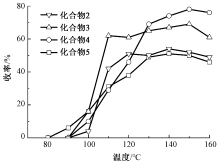
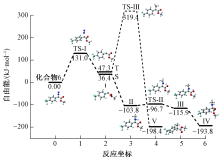
Results Dye D1 with an overall yield of 79% was obtained through the two-step post-modification of azo dye. The color of dye D1 was red and its maximum absorption wavelength in UV-vis absorption spectrum located at 492 nm, with a molar extinction coefficient of 35 300 L/(mol·cm). The thermogravimetric curve of dye D1 showed a weight loss of 5.6% at 100-200 ℃, with a quickest weight loss temperature of 152 ℃. The weight loss at this stage was related to the dissociation of the diazo group by releasing nitrogen gas. The DSC curve indicated one endothermic peak with the temperature of 141 ℃, and one exothermic peak corresponding to a temperature of 160 ℃. During the heating process, dye D1 converted into carbene intermediates, accompanied with the removal of nitrogen gas. Highly active carbenes would undergo insertion reactions with C—H or N—H bonds on fibers. Four types of synthetic fibers dyed with dye D1 showed good fixation values of 73% for polyester, 48% for polypropylene, 85% for polyurethane and 53% for polyamide. Dye migrations of dyed fibers were only 12%-14%, and the color fastnesses to soaping, rubbing and sublimation reached level 4 or above. Simulation reaction results demonstrated that dye D1 and benzene underwent an additional reaction with an optimal yield of 54% at the temperature of 140 ℃. Dye D1 and dioxane underwent ring expansion reaction, and the optimal yield is 62% when the reaction temperature was 110 ℃. A C—H bond insertion reaction between D1 and cyclohexane occurred at an optimal reaction temperature of 150 ℃ in a 78% yield, and an N—H bond insertion reaction between D1 and pyridine took place at an optimal reaction temperature of 130 ℃ in a 50% yield. The reaction of dyes in a mixed solvent of benzene and dioxane produced cycloaddition product with a yield of 12% and ring expansion reaction product with a yield of 51%. The reaction of dyes in a mixed solvent of cyclohexane and piperidine produced cyclohexane C—H insertion product with a yield of only 6%, and piperidine N—H insertion product with a yield of 35%. Theoretical calculations showed a potential barrier of 31.3 kJ/mol for the conversion of 4-(trifluoromethyl)phenyldiazoacetic acid methyl ester to carbenes. N—H bond insertion reactions was mainly dominated by singlet—state carbenes. C—H bond insertion reactions was initiated from triplet carbenes with a potential barrier of 65 kJ/mol.

Conclusion The carbene-type dye based on α-(trifluoromethyl)phenyl diazo ester structure could react with synthetic fibers. The dyed synthetic fibers exhibited remarkable color firmness with the fixation values between 48%-85%, good resistance to dye migration and excellent color fastnesses to soaping, rubbing and sublimation. For polyester fiber, ethylene glycol ester units could react with carbene intermediates through C—H bond insertion reaction, and benzene ring could react with carbene intermediates through addition reaction. For polypropylene fiber, C—H bond insertion reaction was the main reaction type between dyes and fibers. For polyurethane and polyamide fibers, the insertion reaction between carbene intermediates and N—H bonds on fiber macromolecules was the main reaction type.

Key words: diazo compound, disperse dye, synthetic fiber, dyeing property, reaction mechanism

CLC Number: 

  • TQ613.1

Fig.1

Structures of dyes D1 and its synthetic route"

Fig.2

Structures of compounds 2-5"

Fig.3

UV-vis absorption spectra of D1 and C.I. Disperse Red 13"

Fig.4

Thermogravimetric curve of dye D1"

Fig.5

DSC curve of dye D1"

Fig.6

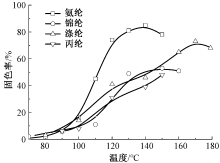
Variation curves of fixation value with fixing temperature for various dyed fibers"

Tab.1

Migration data of dyed synthetic fibers"

纤维种类 (K/S)A (K/S)B 移染率/%
涤纶 4.0 0.53 13
丙纶 4.3 0.50 12
氨纶 6.3 0.89 14
锦纶 5.6 0.65 12

Tab.2

"

种类
纤维
耐皂洗色牢度 耐摩擦色牢度 耐升华色牢度
变色 沾色 棉沾 湿 变色 沾色 棉沾
涤纶 5 5 5 4~5 4~5 5 5 5
丙纶 5 5 5 4 4 5 4~5 5
氨纶 4~5 4 5 5 4~5 5 4~5 5
锦纶 4~5 4 5 5 5 4~5 4 4~5

Fig.7

Variation curves of yields of compounds 2-5 with reaction temperature"

Fig.8

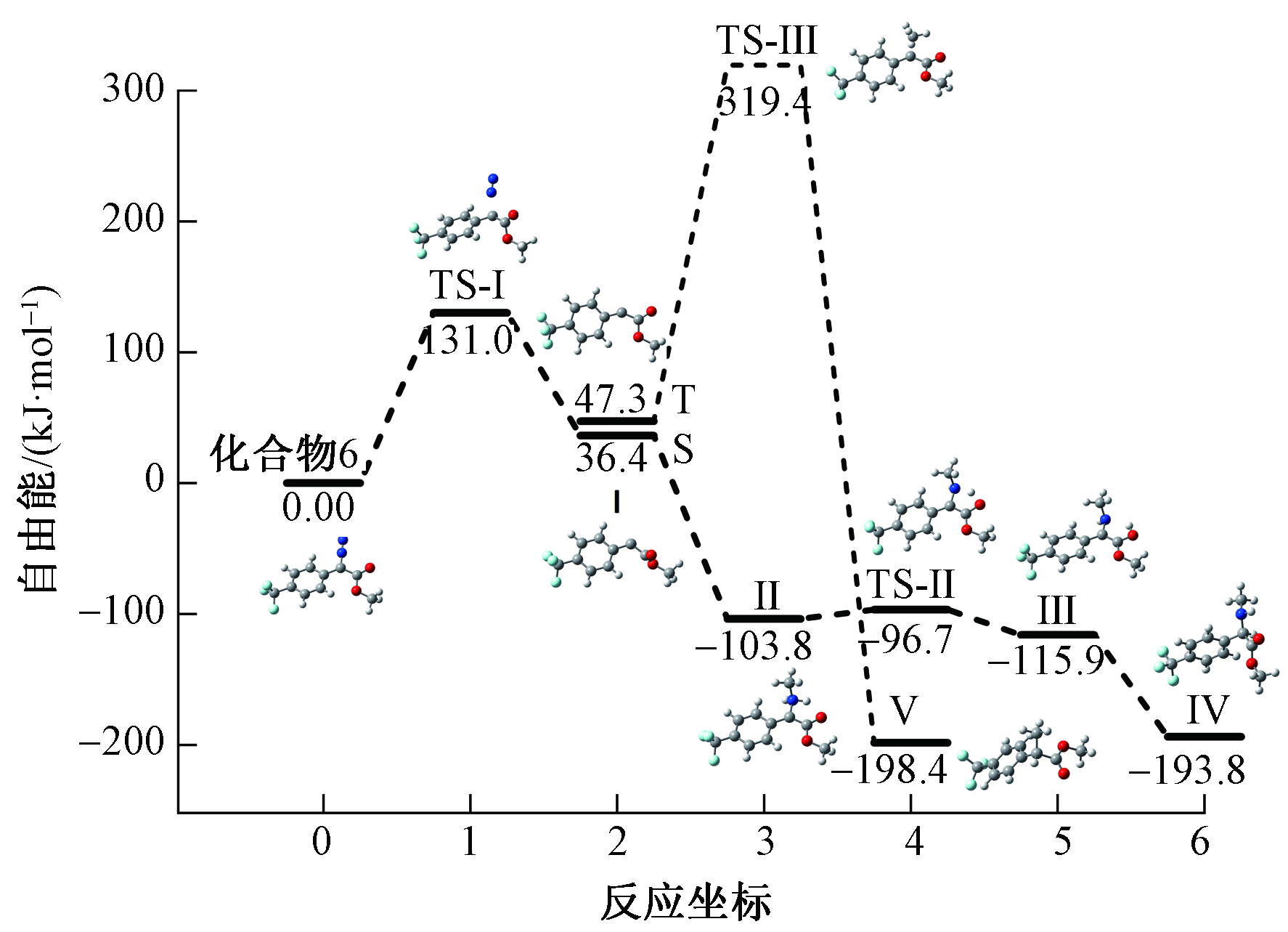
Gas-phase free-energy reaction coordinate diagram for gas-phase reaction between compound 6 and methylamine or methane"

Fig.9

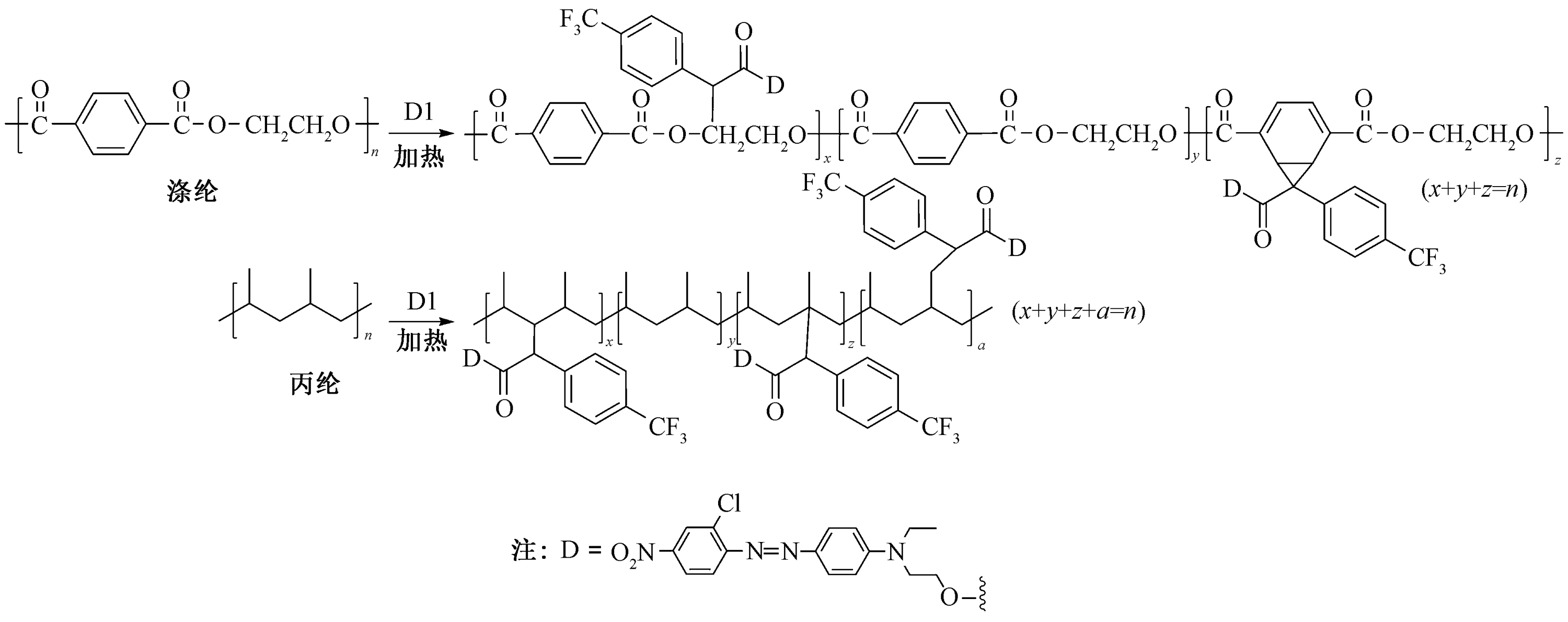
Proposed mechanism for reactions between D1 and polyester/polypropylene fibers"

Fig.10

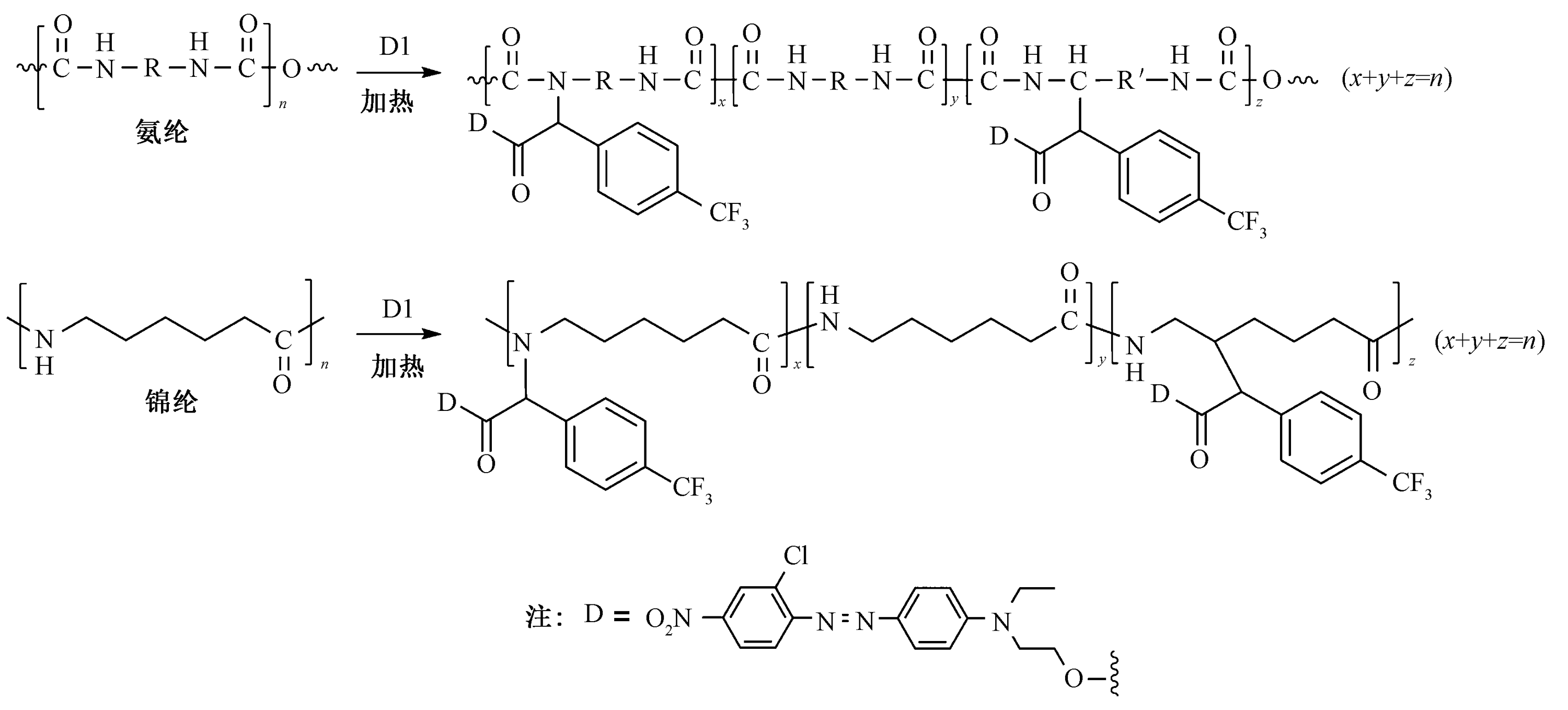
Proposed mechanism for reactions between D1 and polyurethane/polyamide fibers"

[1] 熊友根, 谭全胜, 刘海兵. 分散染料热迁移对聚酯纤维染色牢度的影响与改善方法[J]. 印染助剂, 2024, 41(4): 42-45.
XIONG Yougen, TAN Quansheng, LIU Haibing. Effect of thermal migration of disperse dyes on dyeing fastness of polyester fibers and its improvement method[J]. Textile Auxiliaries, 2024, 41(4): 42-45.
[2] 阮光栋, 陆根发, 袁利琴. 分散染料染二醋/涤纶/氨纶混纺织物工艺研究[J]. 染料与染色, 2023, 60(2): 27-31.
RUAN Guangdong, LU Genfa, YUAN Liqin. Study on dyeing diacetate/polyester/spandex blended fabric with disperse dyes[J]. Dyestuffs and Coloration, 2023, 60(2): 27-31.
[3] QIAN L, FANG S J, SONG X Y, et al. An alternative strategy for the synthesis of disazo disperse dyes and their application on polyester fabric[J]. Dyes and Pigments, 2023. DOI: 10.1016/j.dyepig.2023.111188.
[4] 何思佳, 蔡金芳, 江华, 等. 取代基效应对双亚芴基醌式噻吩类染料性能的影响[J]. 浙江理工大学学报(自然科学版), 2022, 47(3): 283-292.
HE Sijia, CAI Jinfang, JIANG Hua, et al. The impact of substituent effect on properties of difluorenylidene quinoidal thiophene dyes[J]. Journal of Zhejiang Sci-Tech University(Natural Scionces Edition), 2022, 47(3): 283-292.
[5] JIANG H, GUO G L, CHEN W G, et al. Reactive dyeing of synthetic fibers employing dyes containing a diazirine moiety[J]. Dyes and Pigments, 2021. DOI: 10.1016/j.dyepig.2021.109555.
[6] WANG Y P, ZHAO T, BI X Y, et al. Synthesis of novel carbene dyes and investigation of their dyeing properties and reacion mechanism for various fab-rics[J]. Dyes and Pigments, 2024. DOI: 10.1016/j.dyepig.2023.111784.
[7] HOVEIZAVI N B, FEIZ M. Synthesis of novel dyes containing a dichlorotriazine group and their applications on nylon 6 and wool[J]. Dyes and Pigments, 2023. DOI:10.1016/j.dyepig.2023.111086.
[8] KOTRADE P F, RÜHE J. Malonic acid diazoesters for C—H insertion crosslinking (CHic) reactions: a versatile method for the generation of tailor-made surfaces[J]. Angewandte Chemie International Edition, 2017, 56(46): 14405-14410.
[9] HANSEN S R, SPANGLER J E, HANSEN J H, et al. Metal-free N—H insertions of donor/acceptor car-benes[J]. Organic Letters, 2012, 14(17): 4626-4629.
[10] TORTORETO C, RACKL D, DAVIES H M L. Metal-free C—H functionalization of alkanes by aryldiazoacetates[J]. Organic Letters, 2017, 19(4): 770-773.
[11] MAITI D, DAS R, SEN S. Photolytic amino etherification reactions of aryl diazoacetates with N-heterocycles and a stoichiometric amount of dioxane/tetrahydropyran in aqueous medium: synthesis of 1,4-dioxepane/1,4,7-dioxazonan-6-one systems[J]. Green Chemistry, 2021, 23(21): 8533-8544.
[1] GUAN Fanglan, WANG Jianming, CHEN Jiaying, LI Shumin. Non-steaming digital printing process of diacetate fabric with disperse dyes [J]. Journal of Textile Research, 2024, 45(12): 137-143.
[2] GUAN Yu, ZHANG Hengwei, FU Zheng, FU Shaohai. Preparation and properties of disperse dye nanocapsule inkjet printing ink [J]. Journal of Textile Research, 2024, 45(11): 136-144.
[3] ZHAO Xiangyang, YAN Kai, LONG Jiajie. Investigation on solubility of SCFX-AYRL dye in supercritical carbon dioxide [J]. Journal of Textile Research, 2024, 45(06): 98-104.
[4] FAN Bo, WU Wei, WANG Jian, XU Hong, MAO Zhiping. Diffusion behavior of disperse dyes in supercritical CO2 fluid polyester fibers dyeing [J]. Journal of Textile Research, 2024, 45(02): 134-141.
[5] GE Huaifu, WU Wei, WANG Jian, XU Hong, MAO Zhiping. Application of methyl 5-(dimethylamino)-2-methyl-5-oxopentanoate in supercritical carbon dioxide fluid dyeing with disperse dyes [J]. Journal of Textile Research, 2024, 45(01): 120-127.
[6] LIAN Dandan, WANG Lei, YANG Yaru, YIN Lixin, GE Chao, LU Jianjun. Preparation and properties of polyphenylene sulfide composite fiber for clothing [J]. Journal of Textile Research, 2023, 44(08): 1-8.
[7] TANG Qi, CHAI Liqin, XU Tianwei, WANG Chenglong, WANG Zhicheng, ZHENG Jinhuan. Dyeing kinetics of polylactide/poly(3-hydroxybutyrate-co-valerate) blended fibers and their chenille yarns [J]. Journal of Textile Research, 2023, 44(06): 129-136.
[8] GUAN Zhenhong, LI Dan, SONG Jinling, LENG Xiangyang, SONG Xiquan. Preparation and properties of dyeable meta-aramid fiber [J]. Journal of Textile Research, 2023, 44(06): 28-32.
[9] WU Wei, JI Bolin, MAO Zhiping. Review of new dyeing technologies for reactive dyes and disperse dyes [J]. Journal of Textile Research, 2023, 44(05): 1-12.
[10] AI Li, ZHU Yawei. Technology progress and application prospects of liquid disperse dyes [J]. Journal of Textile Research, 2023, 44(05): 220-227.
[11] YI Jingyuan, PEI Liujun, ZHU He, ZHANG Hongjuan, WANG Jiping. Study on disperse dye staining on polyester/cotton blended fabrics in non-aqueous medium dyeing system [J]. Journal of Textile Research, 2023, 44(05): 29-37.
[12] WANG Xiaoyan, MA Ziting, XU Changhai. One-bath process for bleaching and dyeing of polyester-covered cotton fabric using disperse dye with high resistance to alkalis and peroxides [J]. Journal of Textile Research, 2023, 44(05): 38-45.
[13] SONG Jie, CAI Tao, ZHENG Fuer, ZHENG Huanda, ZHENG Laijiu. Research on supercritical CO2 waterless dyeing property of polyester knitted shoe materials [J]. Journal of Textile Research, 2023, 44(05): 46-53.
[14] QIAN Hongfei, KOBIR MD. Foysal, CHEN Long, LI Linxiang, FANG Shuaijun. Structure of polylactide/poly(3-hydroxybutyrate-co-3-hydroxylvalerate) blend fibers and dyeing properties for their fabrics [J]. Journal of Textile Research, 2023, 44(03): 104-110.
[15] WANG Jinkun, LIU Xiuming, FANG Kuanjun, QIAO Xiran, ZHANG Shuai, LIU Dongdong. Enhancement of anti-wrinkle properties of cotton fabrics by reactive dyeing with two vinyl sulphone groups [J]. Journal of Textile Research, 2023, 44(02): 207-213.
Viewed
Full text


Abstract

Cited

  Shared   
  Discussed   
No Suggested Reading articles found!