Journal of Textile Research ›› 2025, Vol. 46 ›› Issue (12): 216-223.doi: 10.13475/j.fzxb.20250104201

• Machinery & Equipment • Previous Articles     Next Articles

Analysis of initial backlash of spur gears in transmission of detaching roller for cotton comber

WANG Biao1,2,3, LI Xinrong1,2,3(), LIU Rongfang1,2,3, LI Li1,2,3   

  1. 1. School of Mechanical Engineering, Tiangong University, Tianjin 300387, China
    2. Tianjin Key Laboratory of Advanced Mechatronics Equipment Technology, Tianjin 300387, China
    3. Shaoxing Keqiao Institute of Tiangong University,Shaoxing, Zhejiang 312030, China
  • Received:2025-01-16 Revised:2025-03-29 Online:2025-12-15 Published:2026-02-06
  • Contact: LI Xinrong E-mail:lixinrong7505@hotmail.com

Abstract:

Objective The separating roller gear transmission mechanism in most combing machine consists of differential wheel system and spur gear system, with spur gear system as its main input. With the increase of combing machine speed, under the influence of time-varying parameters (backlash and pressure angle) of spur gear system, its vibration and noise would also increase, resulting in the reduction of stability and precision of the transmission mechanism, which in turn leads to the increase of vibration of the combing machine. Therefore, in order to reduce the vibration of the combing machine, it is necessary to study the effect of the initial backlash of the driving spur gear of the separating roller differential wheel system on the vibration and noise of the system.

Method First, by analysing existing separated roller gear transmission mechanisms, a dynamic model of the spur gear system was established using the concentrated mass method. Based on Newton's second law, its dynamic differential equations were derived, yielding a backlash vibration model that relates initial backlash, vehicle speed, and vibration. Subsequently, the backlash vibration model was solved using the Runge-Kutta method. The accuracy of the relationship model was verified experimentally using a laser vibrometer, with varying carriage speeds and initial backlash as variables. Finally, analysis of the relationship model and experimental results determined the optimal initial backlash corresponding to the minimum vibration displacement at each speed for carding machines operating between 450 and 550 strokes per minute. This resolves the requirement for matching straight gear initial installation backlash to different carding machine speeds to achieve minimal vibration.

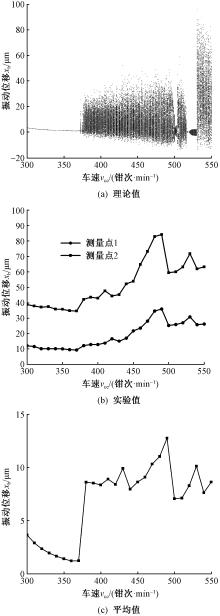
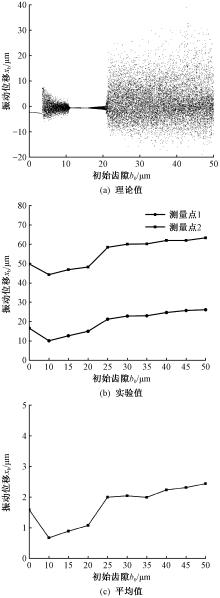
Results Firstly, to address the issue of exacerbated precision machinery vibration caused by mismatched initial backlash adjustment and vehicle speed in hybrid drive mechanisms. Considering the impact of initial backlash on vibration and noise within spur gear systems, a dynamic model was derived for the spur gear system using Newton's second law. The resulting differential equations for spur gear dynamics enable optimisation of the relationship between initial backlash, vehicle speed, and vibration.Secondly, with the fixed spur gear initial backlash set at b0 = 50 μm, the cutting speed was varied in increments of 10 cuts per minute from 300 to 550 cuts per minute. The vibration displacement was measured and recorded at different cutting speeds. With the combing machine speed fixed at 550 strokes per minute, the initial backlash b0 was varied in increments of 5 μm within the range of 5-50 μm. Vibration displacement data was calculated and collected for different initial backlash values. By comparing theoretical and experimental vibration displacement values across varying speeds and initial backlashes, the derived dynamic differential equation demonstrated excellent accuracy in characterising the relationship between initial backlash, speed, and vibration.Finally, employing the Runge-Kutta method to solve the dynamic differential equations at increments of 10 strokes per minute, and integrating experimental results of vibration displacement at varying speeds and initial backlashes, the optimal initial backlash corresponding to the minimum vibration displacement was determined for carding machine speeds ranging from 450 to 550 strokes per minute.

Conclusion In this paper, the dynamic model of spur gear system is established by using the concentrated mass method, and its power differential equation is deduced according to Newton's second law, which shows the relationship between initial backlash, vehicle speed and vibration, and the experiments are carried out by using laser vibration meter with different vehicle speeds and initial backlashes as the variables, which verifies that the power differential equations can accurately show the relationship between the three, and the analytical analysis obtains the initial tooth gap corresponding to the minimum vibration displacement under the vehicle speed of combing machine of 450-550. The initial tooth gap corresponding to the minimum vibration displacement of the combing machine is analyzed and obtained.

Key words: comber, separating roller, spur gear, initial backlash, time-varying backlash, gear transmission mechanism

CLC Number: 

  • TS112.2

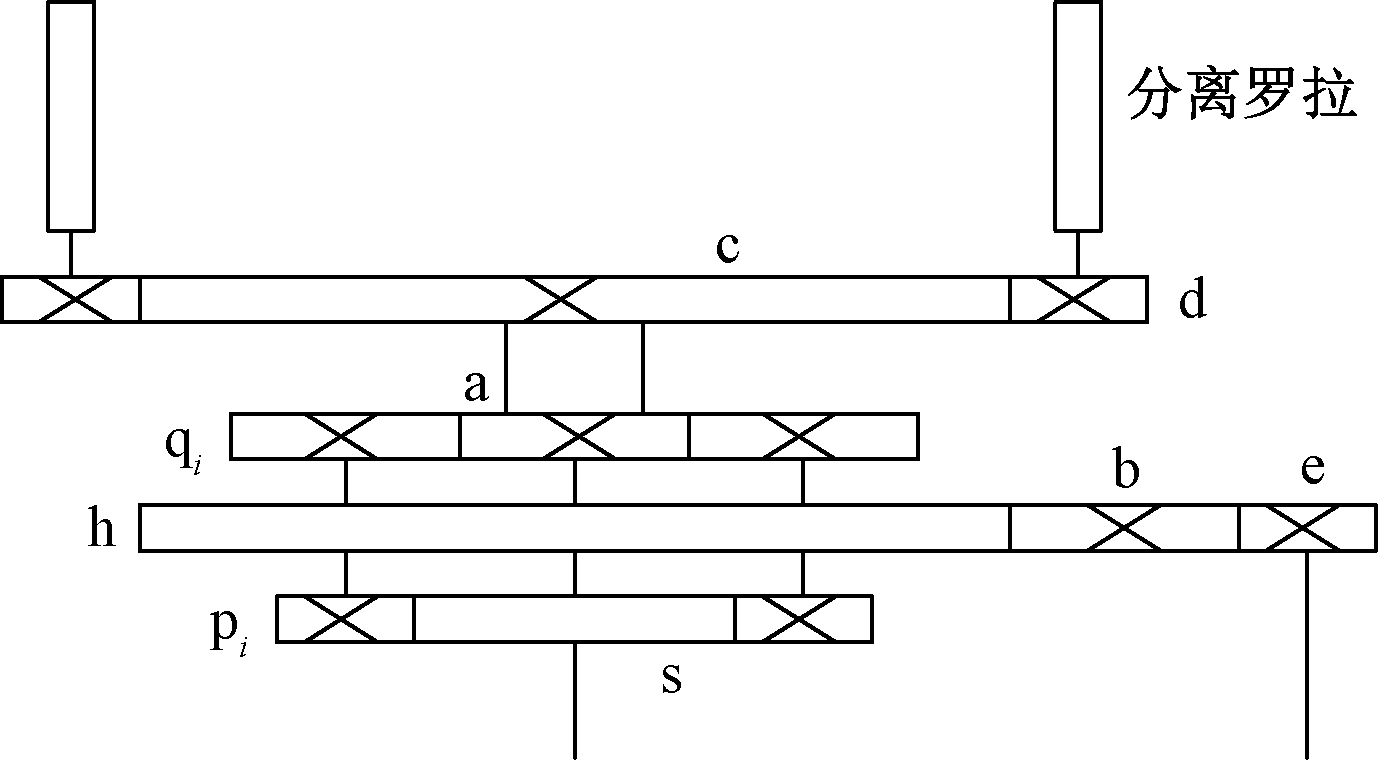
Fig.1

Schematic diagram of gear transmission mechanism of detaching roller"

Tab.1

Basic parameters of each component in gear transmission mechanism of detaching roller"

构件 齿数
z
模数
m/mm
质量
mm/kg
齿宽
b/mm
压力角/
(°)
太阳轮s 39 2.5 1.48 35 20
行星轮pi 21 2.5 0.44 34.5 20
行星轮qi 28 2.5 0.49 34.5 20
太阳轮a 32 2.5 1.13 35 20
环行轮h 95 2.5 13.15 40 20
齿轮b 56 2.5 6.50 40 20
齿轮c 87 1.25 2.51 30 20
齿轮d 28 1.25 0.14 30 20
齿轮e 15 2.5 1.74 40 20

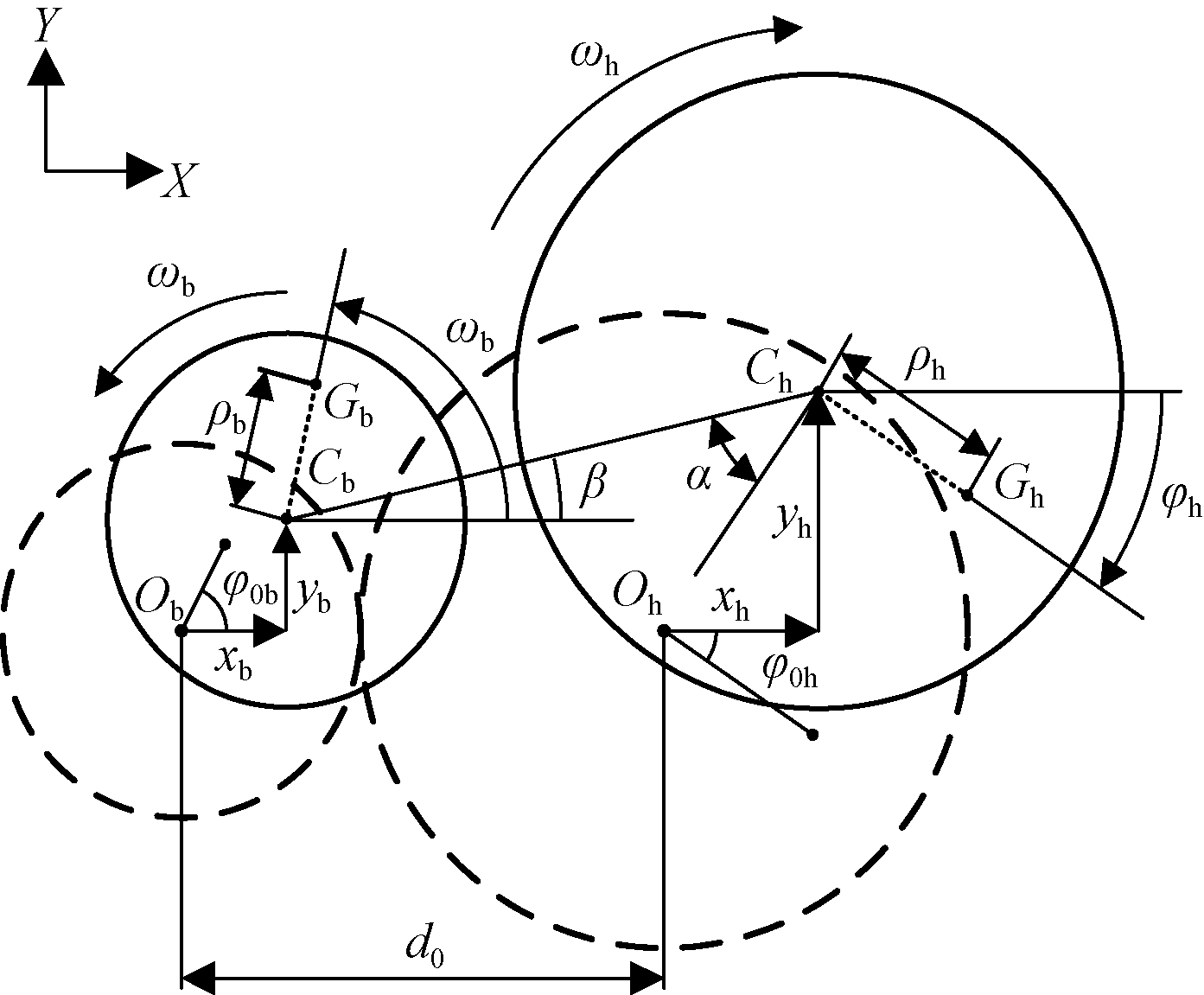
Fig.2

Generalized coordinates of a spur gear system"

Fig.3

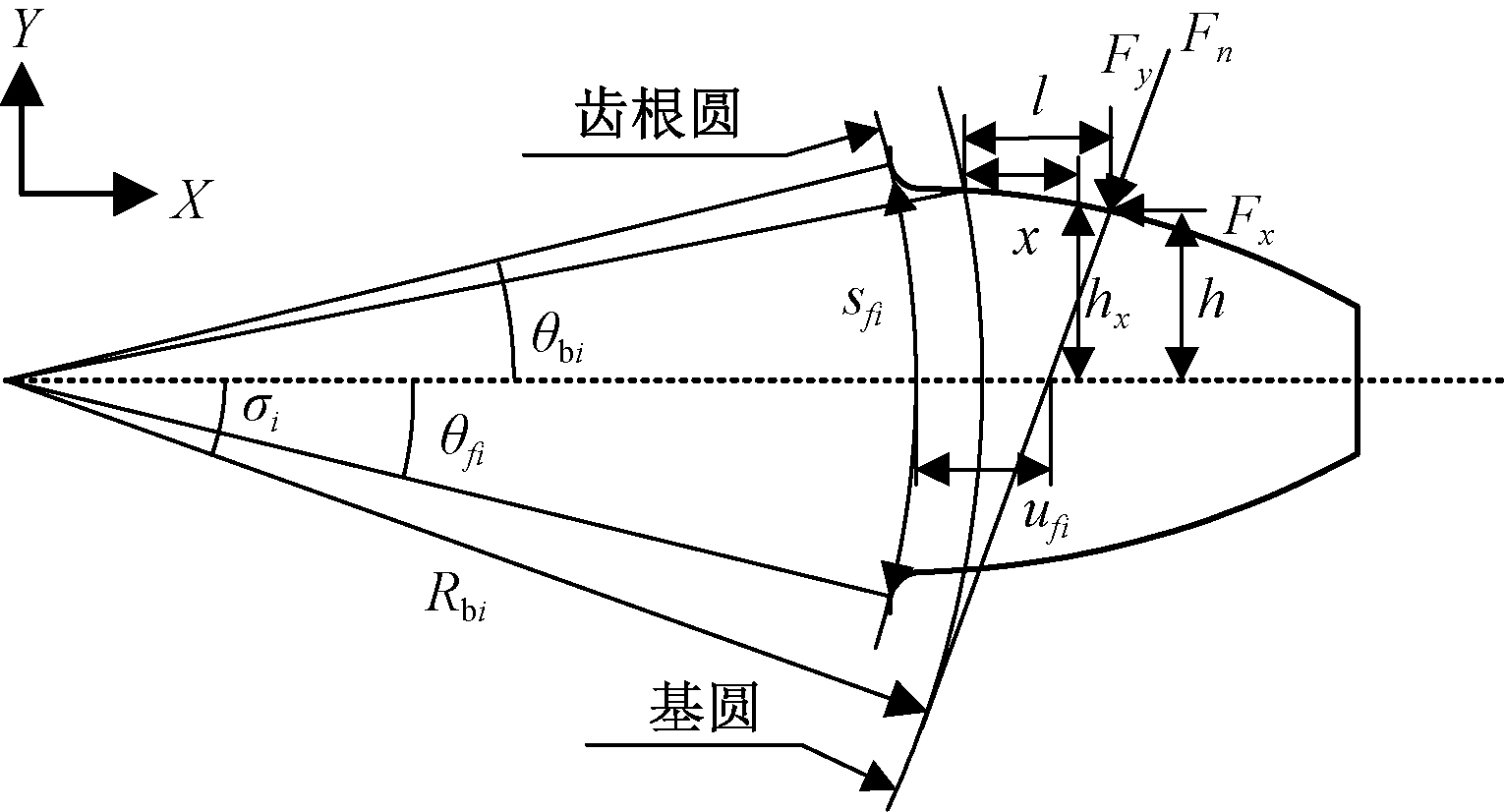
Tooth profile and force analysis of spur gear system"

Fig.4

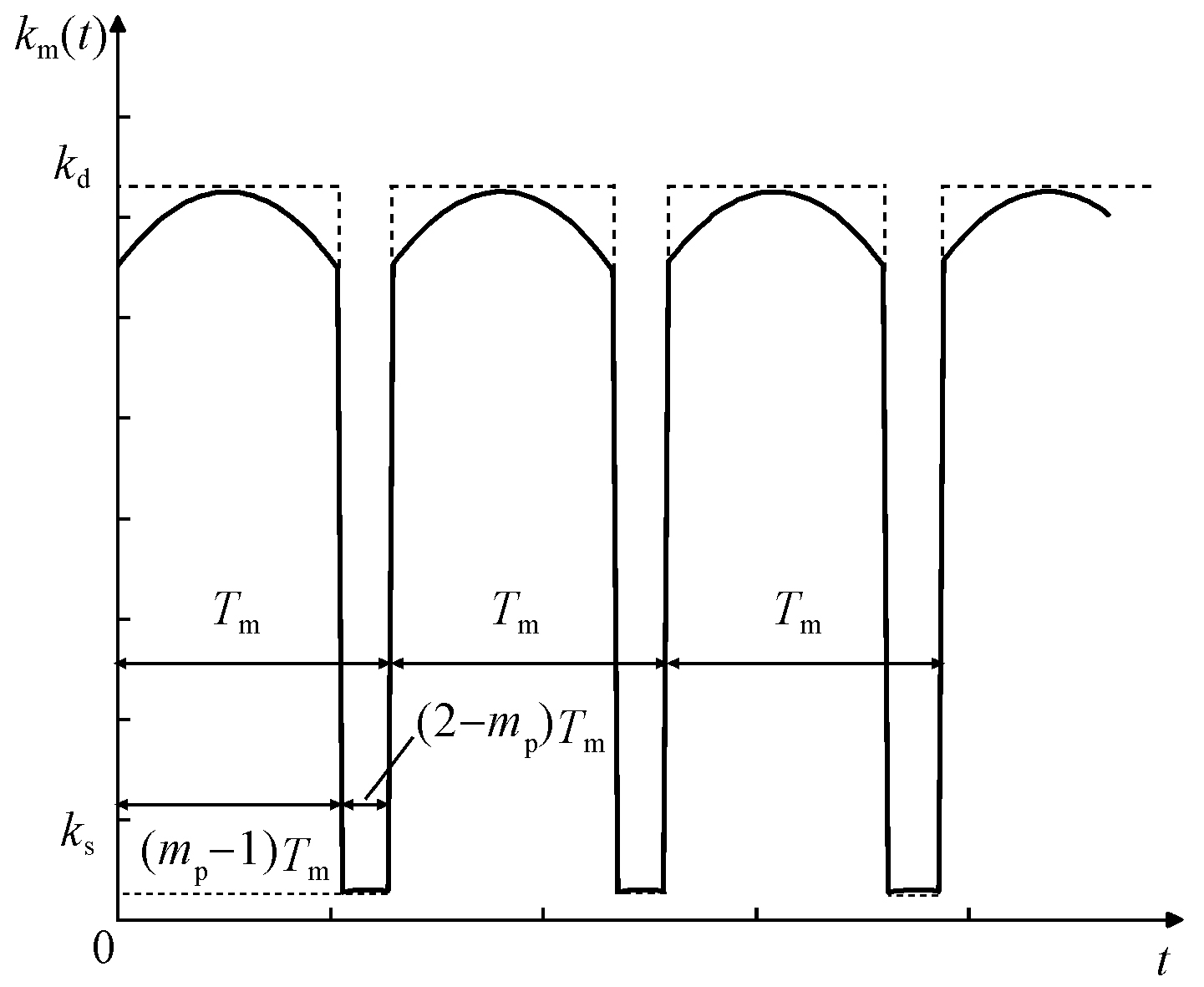
Time-varying meshing stiffness of spur gear system"

Fig.5

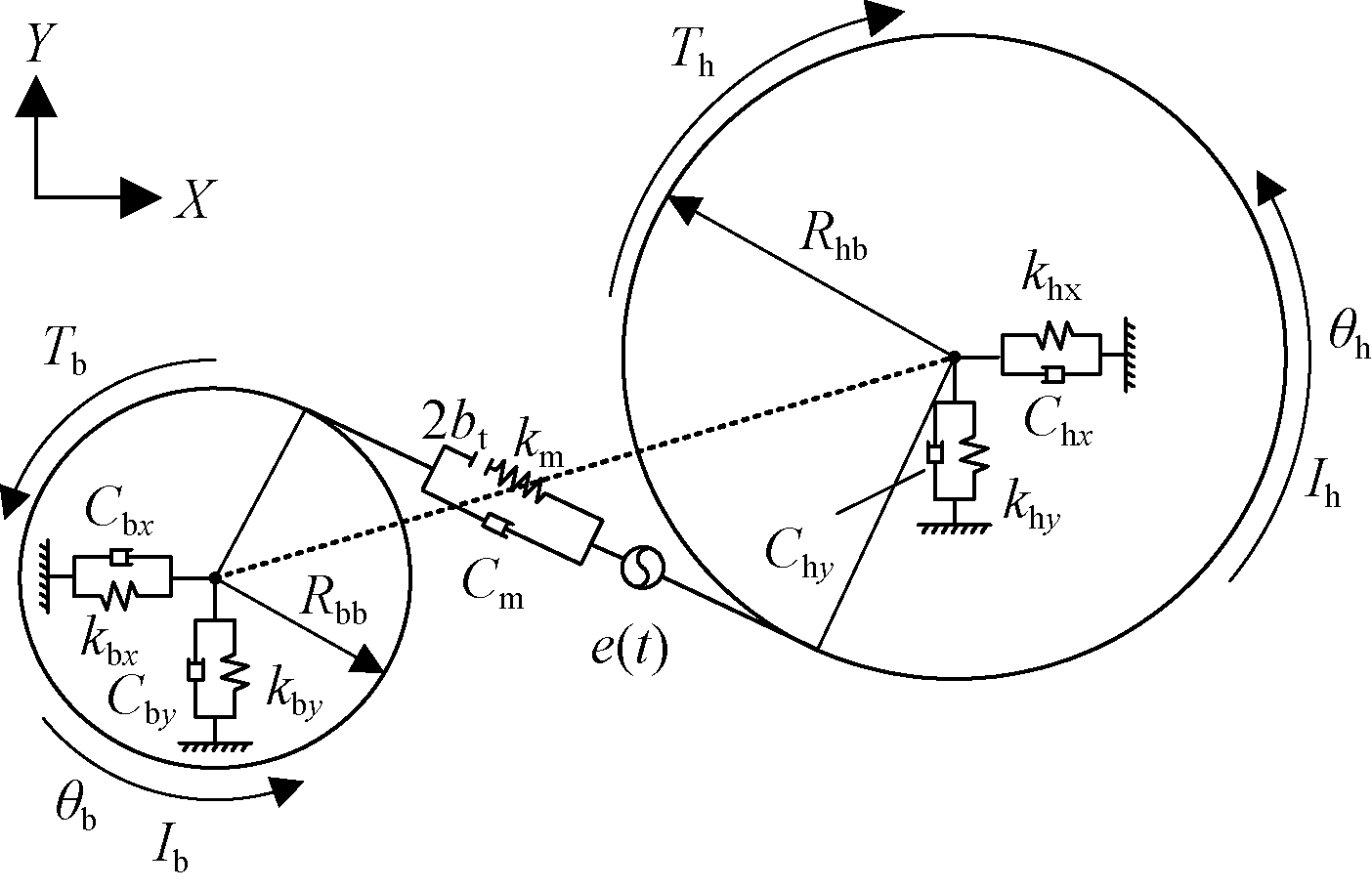
Dynamic modelling of spur gear systems"

Fig.6

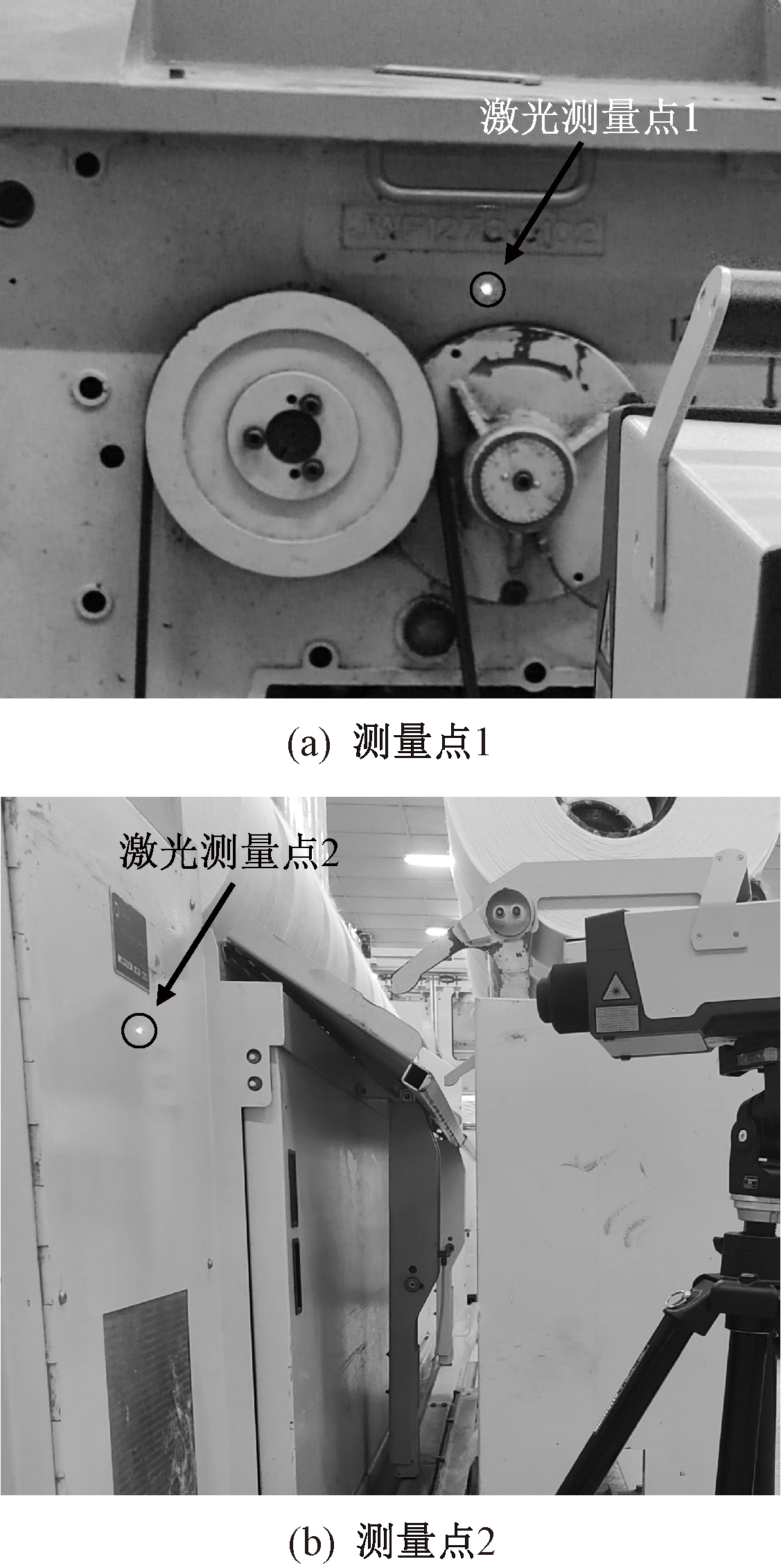
Position of vibration measurement point 1 (a) and point 2(b)"

Fig.7

Vibration displacement at different vehicle speeds. (a) Theoretical value; (b) Experimental value;(c) Average value"

Tab.2

Other parameters of spur gear system"

初始中心
d0/mm
轴承刚度/
(N·m-1)
轴承阻尼/
(N·s·m-1)
初始重
合度
误差幅度
ea/μm
188.75 1.0×10⁸ 512.64 1.810 22 20

Fig.8

Vibration displacement for different initial tooth backlash. (a) Theoretical value; (b) Experimental value; (c) Average value"

Tab.3

Initial tooth backlash at minimum vibration displacement"

车速/
(钳次·min-1)
初始齿隙
b0/μm
车速/
(钳次·min-1)
初始齿隙
b0/μm
450 6.0~6.5 510 2.0~3.5
460 4.5~6.5 520 1.5~4.5
470 3.5~6.0 530 12.5~24
480 3.0~5.5 540 11.5~22
490 2.5~5.5 550 10.5~21
500 2.0~5.0
[1] 任家智, 马驰, 张一风, 等. 高速节能精梳技术的研究与应用[J]. 纺织学报, 2013, 34(2): 141-145.
REN Jiazhi, MA Chi, ZHANG Yifeng, et al. Research and application of high-speed and energy-saving combing technology[J]. Journal of Textile Research, 2013, 34(2): 141-145.
[2] 李留涛, 贾国欣, 任家智. 精梳机分离罗拉传动机构的平衡优化[J]. 纺织学报, 2015, 36(8): 133-138.
LI Liutao, JIA Guoxin, REN Jiazhi. Balance optimization based on detaching roller transmission mechanism of combing machine[J]. Journal of Textile Research, 2015, 36(8): 133-138.
[3] 任家智, 高卫东, 谢春萍, 等. 棉精梳机分离罗拉顺转定时对棉网均匀度的影响[J]. 纺织学报, 2014, 35(3): 127-131.
REN Jiazhi, GAO Weidong, XIE Chunping, et al. Influence of forward motion timing of comber detaching roller on evenness of cotton web[J]. Journal of Textile Research, 2014, 35(3): 127-131.
[4] 陈宇恒, 高卫东, 任家智. 精梳机分离牵伸力在线检测与规律分析[J]. 纺织学报, 2022, 43(8): 1-6.
CHEN Yuheng, GAO Weidong, REN Jiazhi. On-line detection and pattern analysis of separation drafting force in comber[J]. Journal of Textile Research, 2022, 43(8): 1-6.
doi: 10.1177/004051757304300101
[5] LI X R, JIANG X M, YANG J C, et al. Study on flock detaching motion of a cotton comber[J]. The Journal of the Textile Institute, 2014, 105(8): 789-793.
doi: 10.1080/00405000.2013.861150
[6] MENG Z, SHI G X, WANG F L. Vibration response and fault characteristics analysis of gear based on time-varying mesh stiffness[J]. Mechanism and Machine Theory, 2020, 148: 103786.
doi: 10.1016/j.mechmachtheory.2020.103786
[7] CHEN Z, JIANG Y B, LI S, et al. Effect of lubricant viscosity on dynamics of high-precision gear considering lubricant-induced backlash reduction[J]. Tribology International, 2022, 168: 107447.
doi: 10.1016/j.triboint.2022.107447
[8] CHEN Z, JIANG Y B, LI S, et al. Uncertainty propagation of correlated lubricant properties in gear tribodynamic system[J]. Tribology International, 2023, 179: 107812.
doi: 10.1016/j.triboint.2022.107812
[9] LU R X, TANG W C. Analytical calculation models for mesh stiffness and backlash of spur gears under temperature effects[J]. Proceedings of the Institution of Mechanical Engineers, Part C: Journal of Mechanical Engineering Science, 2022, 236(8): 4450-4462.
doi: 10.1177/09544062211049860
[10] SHI J F, GOU X F, ZHU L Y. Calculation of time-varying backlash for an involute spur gear pair[J]. Mechanism and Machine Theory, 2020, 152: 103956.
doi: 10.1016/j.mechmachtheory.2020.103956
[11] LEI D C, KONG X N, CHEN S Y, et al. Numerical and experimental investigation of a spur gear pair with unloaded static transmission error[J]. Engineering Computations, 2021, 38(6): 2461-2480.
doi: 10.1108/EC-02-2020-0072
[12] YANG D C H, LIN J Y. Hertzian damping, tooth friction and bending elasticity in gear impact dyna-mics[J]. Journal of Mechanisms, Transmissions, and Automation in Design, 1987, 109(2): 189-196.
doi: 10.1115/1.3267437
[13] SAINSOT AND P, VELEX P, DUVERGER O. Contribution of gear body to tooth deflections: a new bidimensional analytical formula[J]. Journal of Mechanical Design, 2004, 126(4): 748-752.
doi: 10.1115/1.1758252
[1] CHANG Boyan, HAN Fangxiao, ZHOU Yang, GUAN Xin. Modeling and simulation of contact collision dynamics for nipper mechanism in comber [J]. Journal of Textile Research, 2025, 46(01): 179-186.
[2] LIU Jinru, LI Xinrong, WANG Jiankun, WANG Hao, SHI Shuaixing, WANG Biao. Optimization of gear transmission mechanism of detaching roller for comber [J]. Journal of Textile Research, 2024, 45(03): 177-184.
[3] LIU Jinru, LI Xinrong, WANG Hao, SHI Shuaixing. Optimization of detaching roller hybrid drive system for cotton comber [J]. Journal of Textile Research, 2023, 44(11): 190-198.
[4] FENG Qingguo, WU Aofei, REN Jiazhi, CHEN Yuheng. Dynamic simulation and finite element analysis of detaching roller linkage drive mechanism for cotton comber machines [J]. Journal of Textile Research, 2023, 44(09): 197-204.
[5] CHEN Yuheng, GAO Weidong, REN Jiazhi. On-line detection and pattern analysis of separation drafting force in comber [J]. Journal of Textile Research, 2022, 43(08): 1-6.
[6] LI Jinjian, REN Jiazhi, LIANG Zhuo, JIA Guoxin. Dynamic analyses on nipper pendulum shaft in cotton combers [J]. Journal of Textile Research, 2021, 42(06): 160-165.
[7] YANG Haipeng, LI Xinrong, LÜ Pengfei, WANG Zhenyu. Detaching roller drive mechanism of a comber based on hybrid-driven [J]. Journal of Textile Research, 2019, 40(04): 122-128.
[8] . Nipper opening-closing time of cotton comber [J]. Journal of Textile Research, 2015, 36(07): 121-125.
[9] Yu-Heng CHEN. Influence of foward motion timing of comber detaching roller on evenness of cotton web [J]. JOURNAL OF TEXTILE RESEARCH, 2014, 35(3): 127-0.
[10] . Research and application of high-speed and energy-saving combing technology [J]. JOURNAL OF TEXTILE RESEARCH, 2013, 34(2): 141-145.
[11] limin mao. Comber for cotton fiber based on new parallel combing concept [J]. JOURNAL OF TEXTILE RESEARCH, 2013, 34(12): 113-0.
[12] MA Qinghong;XU Bojun;Wang Xiaoxu;Wu Biyun;Xu Jin. Dynamic balance optimization of middle shaft system of cotton comber based on ADAMS [J]. JOURNAL OF TEXTILE RESEARCH, 2010, 31(10): 121-123.
[13] JIA Guoxin;REN Jiazhi;YANG Yuguang. Influence of nipper machine parameter of E62 comber on nipper holding process performance [J]. JOURNAL OF TEXTILE RESEARCH, 2008, 29(12): 83-86.
[14] REN Jia-zhi;JIA Guo-xin. Influence of dropping scales of E7/6 comber on process performance [J]. JOURNAL OF TEXTILE RESEARCH, 2006, 27(6): 78-80.
Viewed
Full text


Abstract

Cited

  Shared   
  Discussed   
No Suggested Reading articles found!