Journal of Textile Research ›› 2025, Vol. 46 ›› Issue (10): 217-226.doi: 10.13475/j.fzxb.20250300301

• Machinery & Equipment • Previous Articles     Next Articles

Design of weft insertion motion with variable-stroke and variable-speed for narrow channels in soft-hard blended preforms

XING Lipeng1,2, DONG Jiuzhi1,2(), MEI Baolong1,2, CHEN Yunjun3, LI Rui1,2   

  1. 1. College of Mechanical Engineering, Tiangong University, Tianjin 300387, China
    2. Tianjin Key Laboratory of Advanced Mechatronics Equipment Technology, Tiangong University, Tianjin 300387, China
    3. College of Control Science and Engineering, Tiangong University, Tianjin 300387, China
  • Received:2025-03-03 Revised:2025-06-16 Online:2025-10-15 Published:2025-10-15
  • Contact: DONG Jiuzhi E-mail:dongjiuzhi@tiangong.edu.cn

Abstract:

Objective Electronic weft insertion mechanisms can significantly enhance both stability and flexibility in the weft insertion process. However, current electronic weft insertion systems maintain a constant input motion, which fails to meet the requirements for regulating variable-stroke weft insertion motion characteristics. Therefore, this study proposes a variable-speed motion model based on an asymmetric modified cycloid function for optimizing the weft insertion process. This model is expected to enable precise control of weft insertion motion characteristics while improving insertion efficiency, thereby providing critical technical support for the development of high-speed weaving equipment.

Method This study adopts an integrated approach combining theoretical modeling, numerical simulation, and experimental validation to systematically investigate weft insertion motion in narrow channels. First, an asymmetric modified cycloid function model with dual control variables (κ and k) is established based on variable-stroke weft insertion requirements. Subsequently, MatLab simulations verify the model capability to maintain consistent dwell time across different channel lengths. To validate practical application, an electronic weft insertion platform is developed using electronic cam technology for motion control, demonstrating superior performance in both motion smoothness and speed enhancement compared to conventional pulse control. Furthermore, comparative analysis between encoder-collected trajectory data and simulation results further confirms the model's accuracy and engineering feasibility.

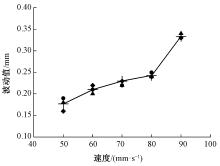
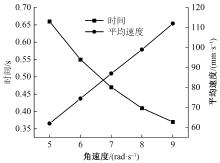
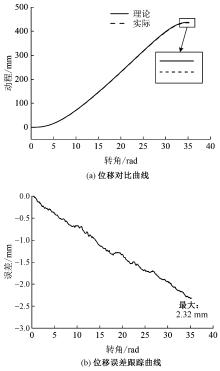
Results Comparative experimental results based on the electromechanical system platform demonstrate that the proposed variable-speed motion exhibits significant performance advantages over traditional pulse control in actual weft insertion operations. During the first phase of experiments, the optimal operating parameters for constant-speed motion were determined. When the rapier head travel distance reached 30 mm, measurements within the 50-90 mm/s speed range revealed that the displacement fluctuation in the thickness direction increased with speed. In the 70-80 mm/s range, the fluctuation stabilized near the critical value of 0.25 mm, which ultimately confirmed 75 mm/s as the optimal constant-speed for weft insertion. In the second phase, by applying electronic cam technology to increase the cam spindle angular velocity from 5 rad/s to 9 rad/s, experimental data showed that a dwell time of 0.47 s could be achieved at ω = 7 rad/s, corresponding to an average speed increase to 87 mm/s. Theoretical calculations demonstrated that the variable-speed motion could increase the average weft insertion speed by 16% across all weft insertion channels while reducing weft insertion time by 13.8%. For experimental validation, high-precision servo motor encoders were used to collect real-time motion trajectory data. Under the extreme channel condition (i = 54), the maximum measured end displacement error was 2.32 mm, with a relative error of 0.53%.

Conclusion The variable-speed motion model developed in this study dynamically regulates motion characteristics during variable-stroke weft insertion by adjusting the speed ratio coefficient (κ) and the asymmetry coefficient (k). Numerical simulations and experimental results was used to validate the model's accuracy and feasibility. Specifically, for shorter channels, the rapier head enters with higher velocity and acceleration, while these parameters are proportionally reduced for longer channels. Compared to traditional constant-speed pulse motion, this model significantly increases weft insertion speed, reduces insertion time, and improves preform forming efficiency. Moreover, this technology is not limited to blended soft-hard preforms but can also be extended to other 3-D fabric forming processes involving rapier weft insertion.

Key words: soft-hard blended preform, electronic weft insertion, variable-stroke, variable-speed law, motion characteristic control

CLC Number: 

  • TS103

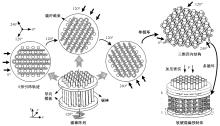
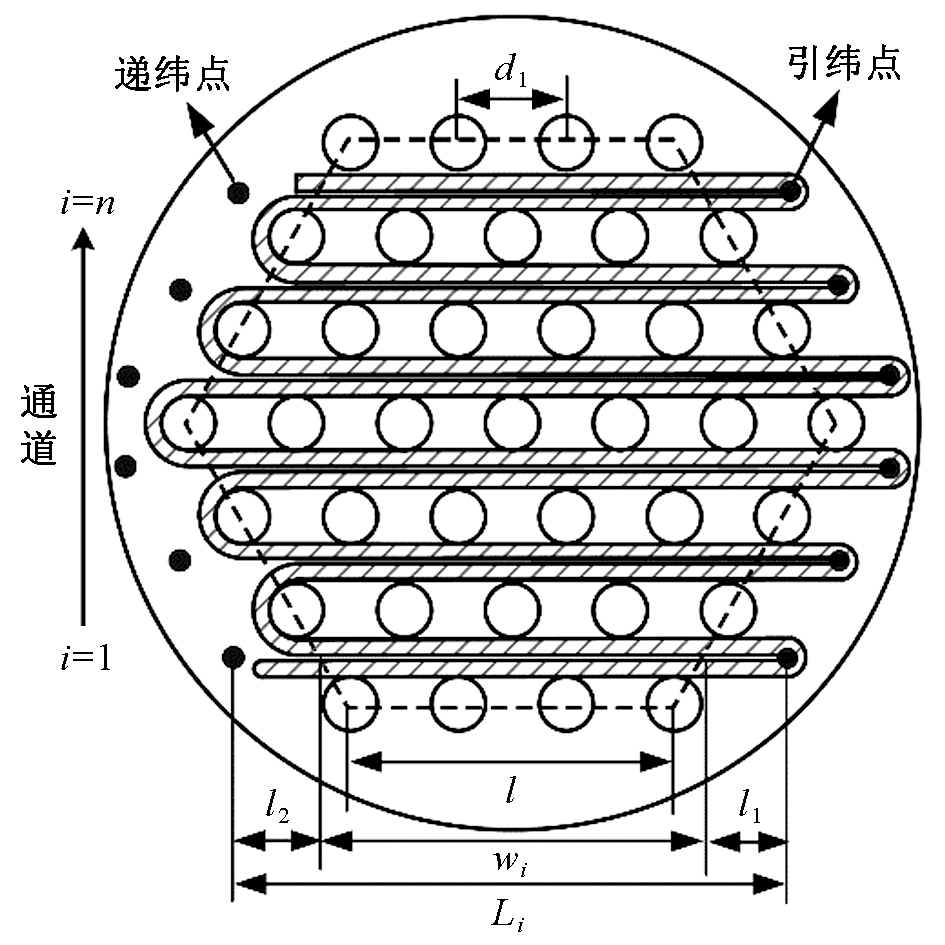
Fig.1

Weft insertion process for soft-hard blended preform"

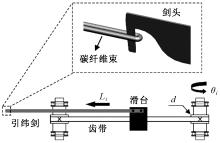
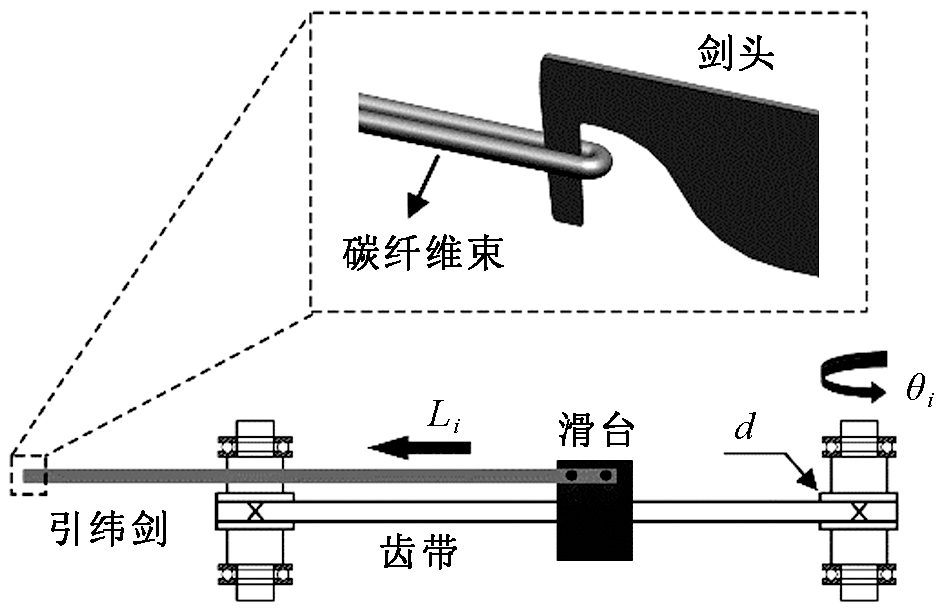
Fig.2

Schematic diagram of electronic weft insertion mechanism"

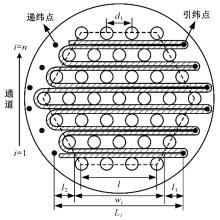
Fig.3

Calculation model of weft insertion stroke parameters"

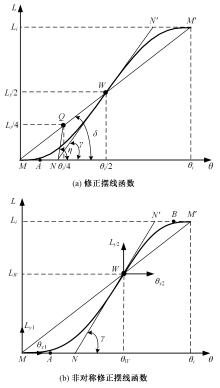
Fig.4

Regulation of motion characteristics during rapier insertion process.(a)Modified cycloidal function;(b)Asymmetric modified cycloidal function"

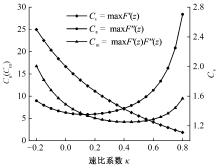
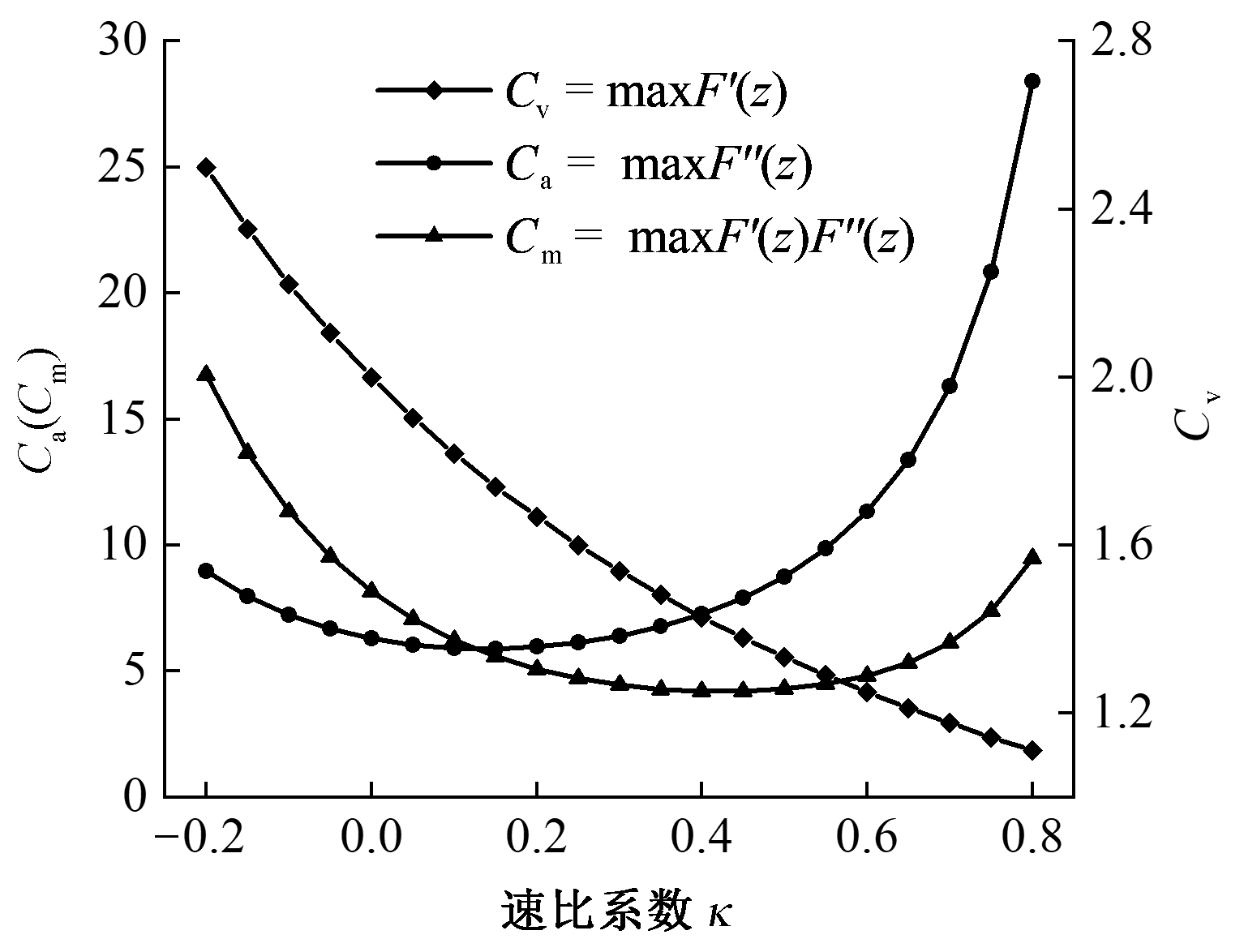
Fig.5

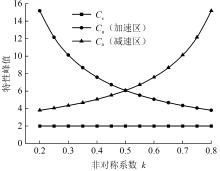
Peak characteristic curves of motion under different κ values"

Fig.6

Peak characteristic curves of motion under different k values"

Fig.7

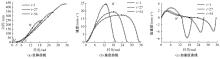
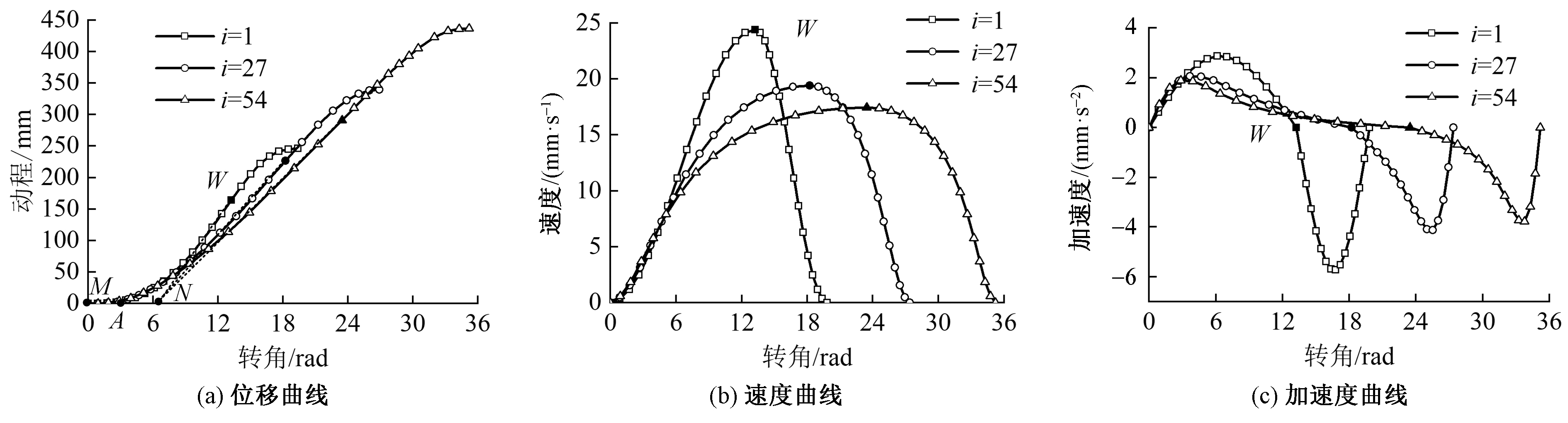
Simulation verification of motion curves.(a)Displacement curve; (b)Velocity curve;(c)Acceleration curve"

Fig.8

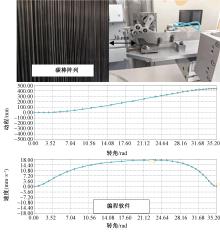
Experimental platform"

Fig.9

Displacement fluctuation in thickness direction"

Tab.1

Experimental datas"

通道i T i 1 T i 2 T i 3 1 3 j = 1 3 T i j T - i Δt
1 3.75 3.76 3.74 3.75 3.29 0.46
27 5.02 4.99 5.01 5.01 4.53 0.48
54 6.30 6.30 6.29 6.30 5.83 0.47

Fig.10

Variation of t and v - with different ω"

Fig.11

Comparison between theoretical simulation and experimental results.(a)Displacement comparison curve;(b)Displacement error tracking curve"

[1] 徐竹, 郑佳文. 固体火箭发动机C/C复合材料喷管喉衬的成型工艺研究[J]. 化工新型材料, 2021, 49(9): 222-225.
doi: 10.19817/j.cnki.issn 1006-3536.2021.09.048
XU Zhu, ZHENG Jiawen. Molding technology of solid rocket motor C/C throat liner[J]. New Chemical Materials, 2021, 49(9): 222-225.
doi: 10.19817/j.cnki.issn 1006-3536.2021.09.048
[2] 梅宝龙, 董九志, 任洪庆, 等. 基于多维度建模的碳/碳软硬混编预制体孔隙分析与单胞模型[J]. 纺织学报, 2023, 44(9): 108-115.
MEI Baolong, DONG Jiuzhi, REN Hongqing, et al. Unit modeling and pore analysis of C/C soft-hard blended preform based on multi-dimensional mode-ling[J]. Journal of Textile Research, 2023, 44(9): 108-115.
[3] MEI Baolong, DONG Jiuzhi, REN Hongqing, et al. Research and modelling of fiber deformation mechanism of 3D four-direction preform under compression loading[J]. Textile Research Journal, 2023, 93(17/18): 4329-4341.
doi: 10.1177/00405175231170315
[4] 张军, 严科飞, 樊哲, 等. 喷管碳/碳复合材料喉衬工程化问题探讨[J]. 炭素, 2023(3): 26-29.
ZHANG Jun, YAN Kefei, FAN Zhe, et al. Discussion on engineering of carbon/carbon composite pipe lining for nozzle[J]. Carbon, 2023(3): 26-29.
[5] 袁汝旺, 刘瑀, 周国庆, 等. 高速剑杆织机共轭凸轮引纬机构运动精度分析[J]. 天津工业大学学报, 2019, 38(3): 82-88.
YUAN Ruwang, LIU Yu, ZHOU Gongqing, et al. Analysis of kinematics accuracy for conjugate cam weft insertion mechanism of high-speed rapier loom[J]. Journal of Tianjin Polytechnic University, 2019, 38(3): 82-88.
[6] 李博, 刘旭柠, 郭杰, 等. 空间连杆引纬机构的刚柔耦合磨损分析[J]. 纺织学报, 2024, 45(6): 186-192.
LI Bo, LIU Xuning, GUO Jie, et al. Rigid-flexible coupling wear analysis of spatial linkage weft insertion mechanism[J]. Journal of Textile Research, 2024, 45(6): 186-192.
[7] 詹雄烽, 赵世海, 袁汝旺. 变导程螺旋引纬机构运动特性分析[J]. 毛纺科技, 2023, 51(5): 108-114.
ZHAN Xiongfeng, ZHAO Shihai, YUAN Ruwang. Motion characteristics analysis of variable lead screw weft insertion mechanism[J]. Wool Textile Journal, 2023, 51(5): 108-114.
[8] 喻陈楠, 贾江鸣, 陈之威, 等. 新型剑杆织机引纬机构的反求建模与运动学仿真[J]. 纺织学报, 2021, 42(1): 154-161.
YU Chennan, JIA Jiangming, CHEN Zhiwei, et al. Reverse modeling and kinematics simulation of new weft insertion mechanism for rapier looms[J]. Journal of Textile Research, 2021, 42(1): 154-161.
[9] XI Menglu, ZHOU Kaihong, ZHANG Xueqian, et al. Optimization of motion parameters and structural stiffness of spatial four-bar weft insertion mechanism of rapier loom[J]. Mechanics, 2023, 29(6): 511-517.
doi: 10.5755/j02.mech.33658
[10] 蔡志城, 房家惠, 马颜雪, 等. 段纬自动引纬技术的研发[J]. 产业用纺织品, 2021, 39(1): 20-23,43.
CAI Zhicheng, FANG Jiahui, MA Yanxue, et al. Research and development of automatic segment filling insertion technology[J]. Technical Textiles, 2021, 39(1): 20-23,43.
[11] 周展. 三维织物织机关键技术设计与研究[J]. 机电工程技术, 2023, 52(4): 231-235.
ZHOU Zhan. Design and research of key technologies of three-dimensional fabric looms[J]. Mechanical and Electrical Engineering Technology, 2023, 52(4): 231-235.
[12] ANBALAGAN A, SUNDARSINGH F, RAMALINGAM S. Realization of a novel weaving framework in looms for manufacturing of e-textiles[J]. Packaging and Manufacturing Technology, 2022, 12(2): 199-208.
doi: 10.1109/TCPMT.2022.3144366
[13] WEI Shimin, YANG Zheng, GUO Lei, et al. A new type of AODF based on an imitation of the weft insertion of a rapier loom[J]. Electronics, 2019, 8(2): 157.
doi: 10.3390/electronics8020157
[14] 蔡军, 王生泽. 剑杆织机新型引纬运动规律研究[J]. 毛纺科技, 2017, 45(4): 50-54.
CAI Jun, WANG Shengze. Research on the new weft insertion motion of rapier loom[J]. Wool Textile Journal, 2017, 45(4): 50-54.
[15] 袁汝旺, 车一骋. 变速引纬规律驱动下剑带变长度非线性振动建模及其响应[J]. 纺织学报, 2022, 43(11): 172-178.
doi: 10.13475/j.fzxb.20210800207
YUAN Ruwang, CHE Yicheng. Modeling and response of variable longitudinal nonlinear vibration of rapier belt driven by variable-speed weft insertion patterns[J]. Journal of Textile Research, 2022, 43(11): 172-178.
doi: 10.13475/j.fzxb.20210800207
[16] HE Yong, FEI Shengwei, CHEN Yicong, et al. Research on electric weft insertion method for the rapier loom[J]. Applied Mechanics and Materials, 2012, 249-250: 739-746.
doi: 10.4028/www.scientific.net/AMM.249-250
Viewed
Full text


Abstract

Cited

  Shared   
  Discussed   
No Suggested Reading articles found!