Journal of Textile Research ›› 2024, Vol. 45 ›› Issue (11): 65-72.doi: 10.13475/j.fzxb.20230301101

• Textile Engineering • Previous Articles     Next Articles

Finite element modeling and simulation of cotton fiber assembly carding process based on 3-D braided and fractal theory

ZHU Lei1, LI Yong2, CHEN Xiaochuan1(), WANG Jun3   

  1. 1. College of Mechanical Engineering, Donghua University, Shanghai 201620, China
    2. College of Mechanical and Electronic Engineering, Tarim University, Alar, Xinjiang 843300, China
    3. College of Textiles, Donghua University, Shanghai 201620, China
  • Received:2023-04-01 Revised:2024-08-09 Online:2024-11-15 Published:2024-12-30
  • Contact: CHEN Xiaochuan E-mail:xcchen@dhu.edu.cn

Abstract:

Objective Carding is the core step of cotton carding process. Its principle is to separate the fiber bundles in cotton roll into a single fiber by means of needle surface movement. In order to achieve the carding effect and prevent cotton fiber from being damaged due to excessive force at the same time, it is essential to control the carding force of cotton fiber within a reasonable range. To study the stress of cotton fiber assembly in carding process and improve the quality of cotton sliver, a new model of cotton fiber assembly was built.

Method The cotton fiber units were established based on the fractal theory, combined with the modeling idea of three-dimensional braided composite materials. The fractal cotton fiber units were arranged according to the fiber distribution in the internal single unicellular structure of three-dimensional four-way braided composite. The model was applied to simulate the carding process of cotton fiber assembly. The stress and strain variation of cotton fiber was studied by finite element method, the change of carding force over time was analyzed.

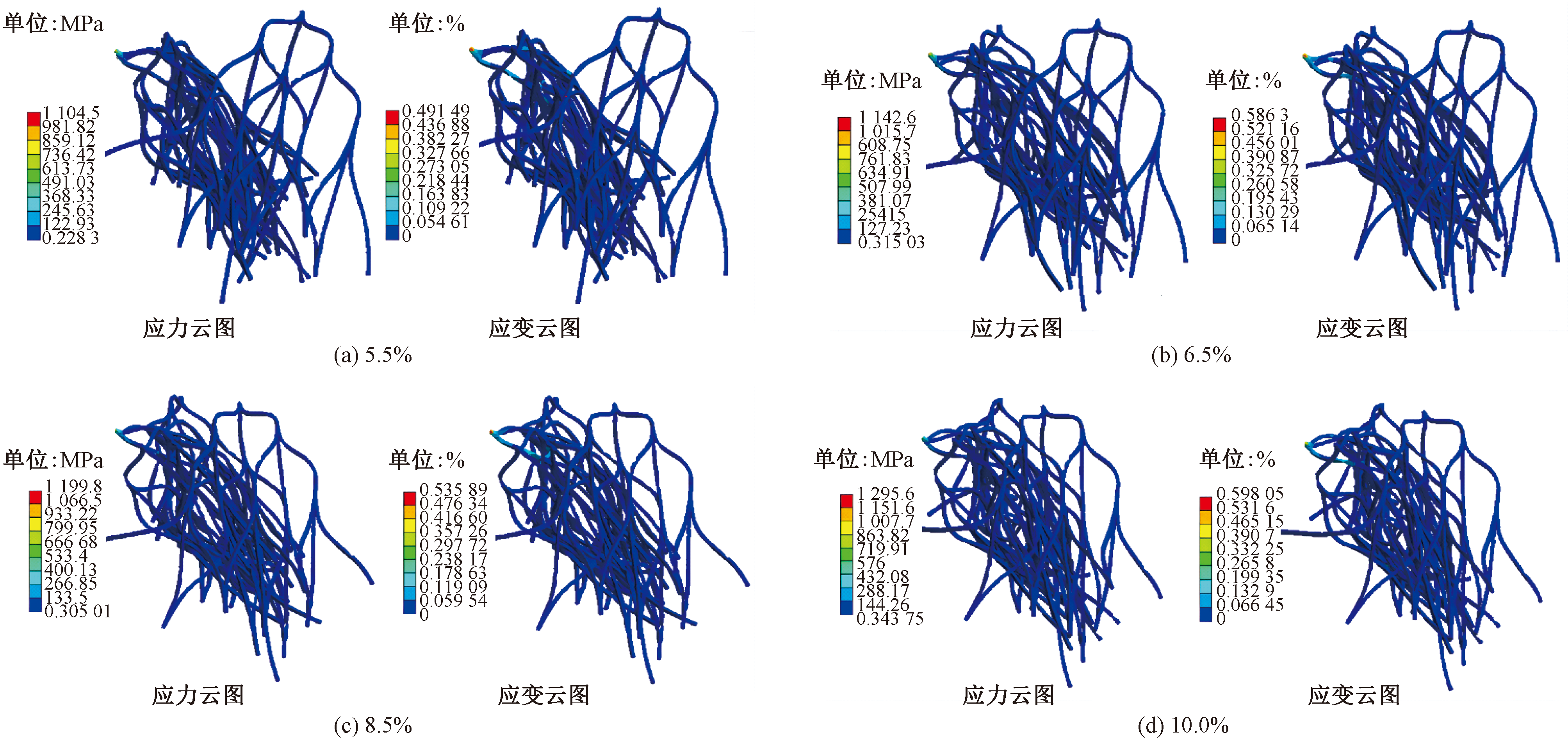
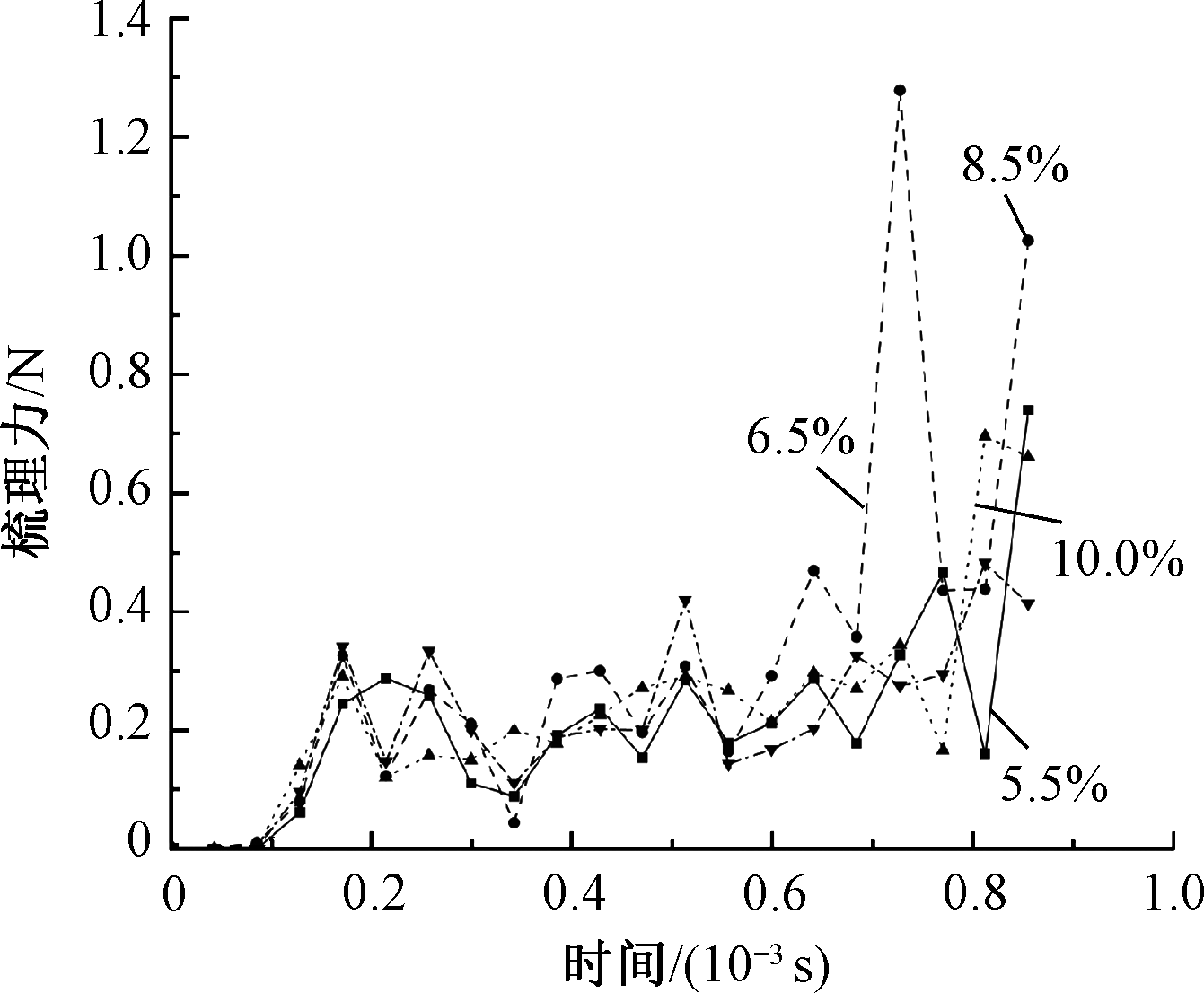
Results The carding process of cotton fiber under the fixed moisture regain was simulated by using finite element software. The cotton fiber was in the working area between cylinder and plate of the carding machine. In this process, cotton fiber was held by the needle teeth of cylinder and sorted by the needle of plate. The carding force of cotton fiber assembly, the stress and strain variation of cotton fiber over time were studied. Stress relaxation parameters shows that the stress and strain of cotton fiber first increases and then decreases as time goes on. It can be seen from assembly diagram that the stress of cotton fiber mostly occurs in the part directly in contact with the needle of plate and the part held by the needle teeth of cylinder. The effect of cotton fiber moisture regain on carding process was analyzed. The simulation parameters of cotton fiber under different moisture regain conditions were determined. The change of moisture regain will cause the change of friction coefficient of cotton fiber surface, and then affect the carding force. On the basis of the existing friction coefficient values of cotton fiber surface, the interpolation polynomial of friction coefficient and moisture regain was determined by method of undetermined coefficients. The friction coefficient values of cotton fiber under different moisture regain conditions were obtained. With the rise of moisture regain, static friction coefficient between cotton fiber and metal decreases, while dynamic friction coefficient increases. Both static friction coefficient and dynamic friction coefficient between cotton fibers increase. The stress of cotton fiber and the carding force on cotton fiber assembly increase first and then decrease with the rise of moisture regain.

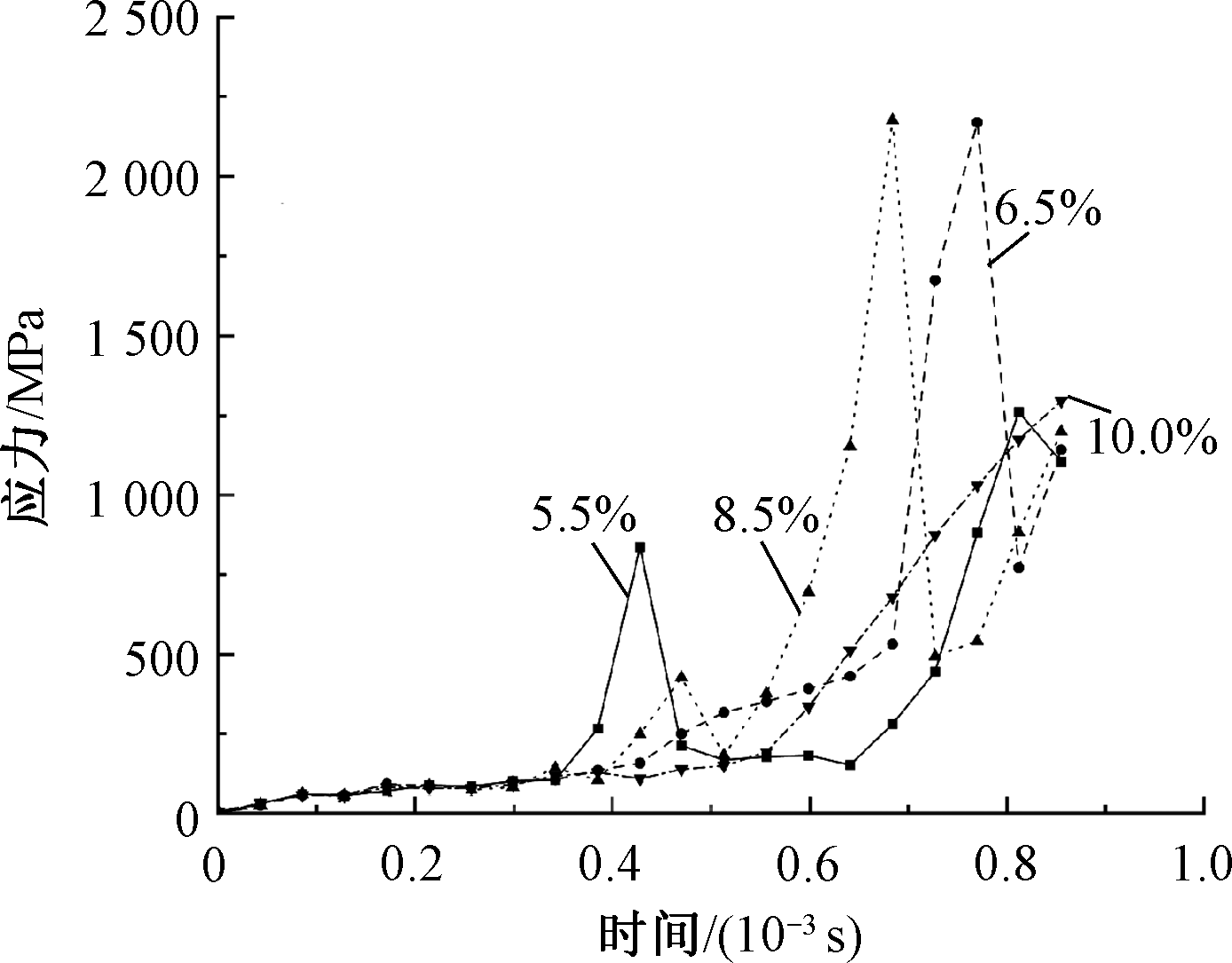
Conclusion The simulation results of carding force are in agreement with the experimental results, indicating that the model of cotton fiber assembly is reasonable. As moisture regain increases, both the stress of cotton fiber and the carding force of cotton fiber assembly generally increases first and then decreases. According to the stress cotton fiber assembly under different moisture regain conditions, when the moisture regain is 6.5% and 8.5%, the stresses in both conditions are not very different and are relatively large. But the carding force is greater when the moisture regain is 6.5%, in this condition the carding effect is the best. The finite element method can better analyze the process of cotton carding, provide reference for the parameter setting of each part of the carding machine, and improve the carding efficiency and quality.

Key words: cotton fiber assembly, carding process, finite element model, sliver quality, carding force, moisture regain

CLC Number: 

  • TS11

Tab.1

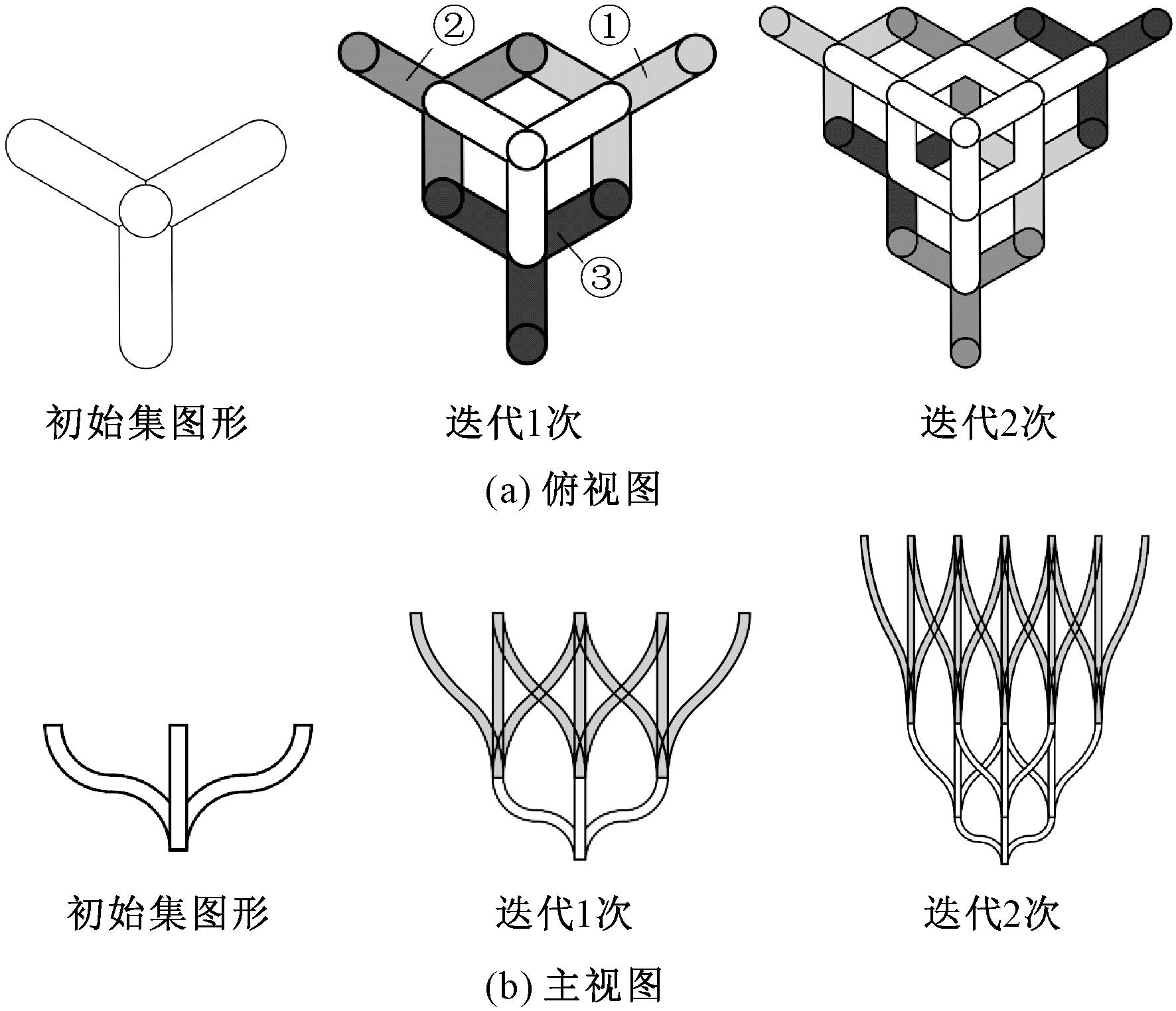
IFS transform of top view of fractal cotton fiber"

i 俯视图 主视图
ωi ωi
1 x'=x+1.30 y'=y+0.75 x'=x+1.30 y'=2y+1.50
2 x'=x-1.30 y'=y+0.75 x'=x-1.30 y'=2y+1.50
3 x'=x y'=y-1.50 x'=x y'=2y

Tab.2

IFS code for top view of fractal cotton fiber"

i 俯视图 主视图
ai bi ci di ei fi ai bi ci di ei fi
1 1 0 0 1 1.30 0.75 1 0 0 2 1.30 0
2 1 0 0 1 -1.30 0.75 1 0 0 2 -1.30 0
3 1 0 0 1 0 -1.50 1 0 0 2 0 0

Fig.1

Fractal cotton fiber top view transformation process. (a)Top view; (b) Main view"

Fig.2

Fractal cotton fiber unit model"

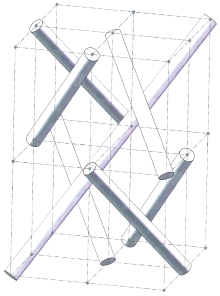
Fig.3

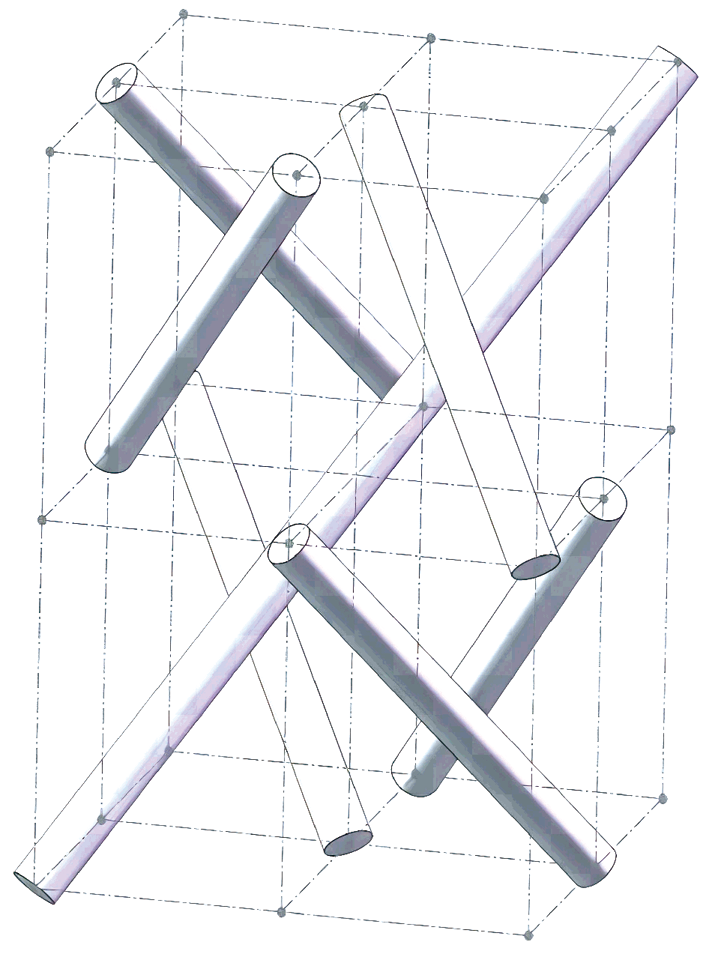
Internal unicellular structure of three dimensional four-directional braided composites"

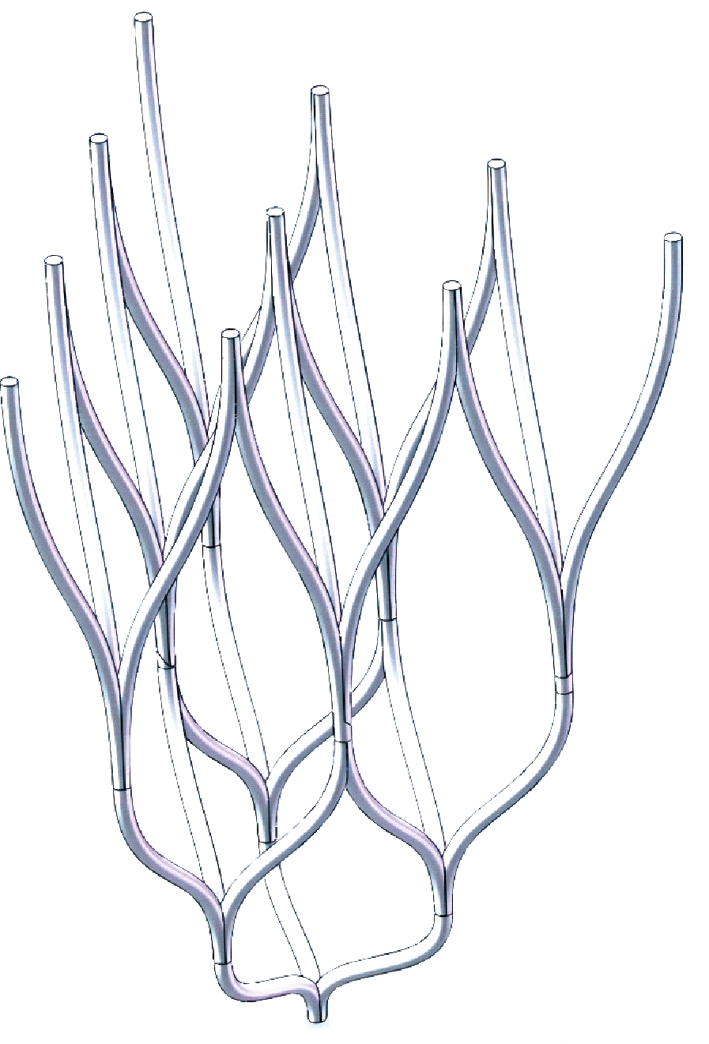
Fig.4

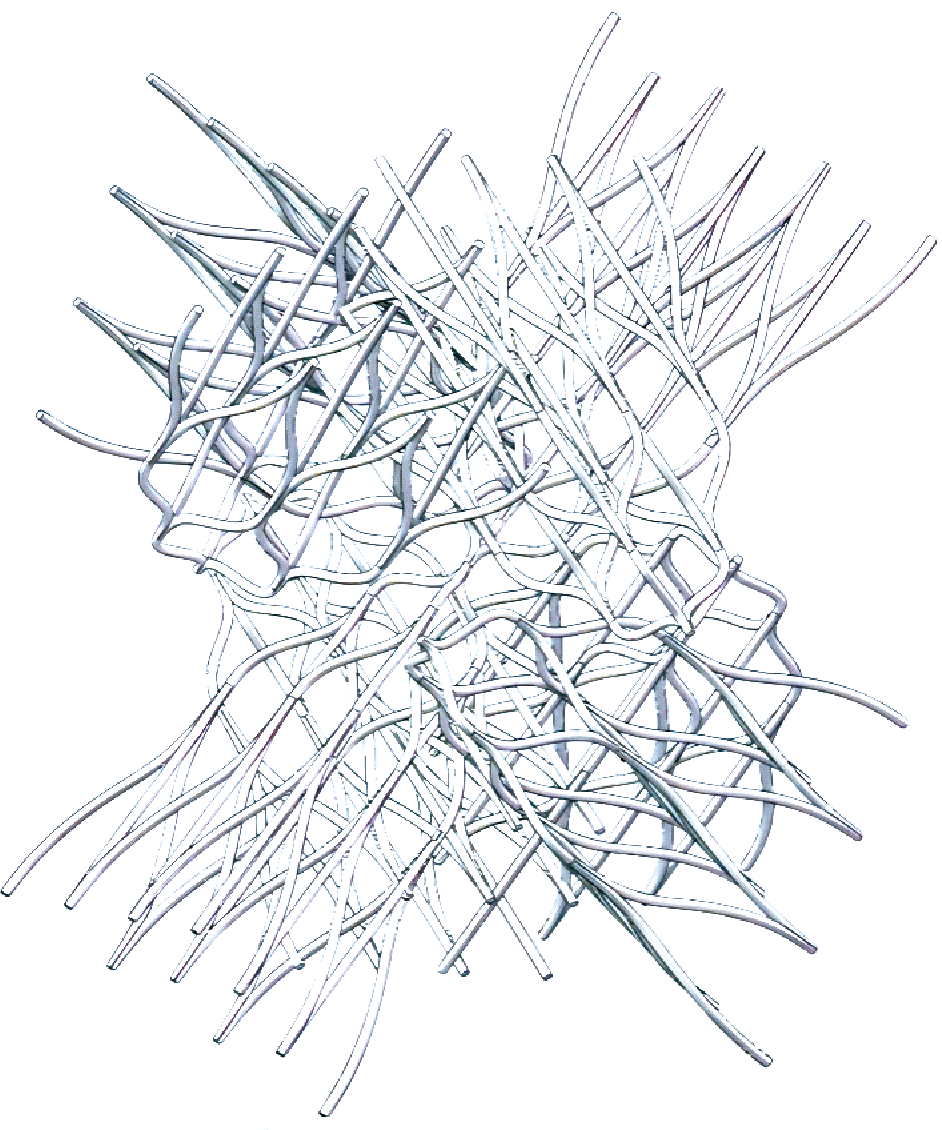
Solid model of cotton fiber assembly based on fractal and three-dimensional braided theory"

Fig.5

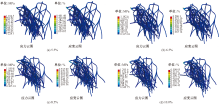
Cotton fiber assembly diagram at different times"

Tab.3

Stress and strain of cotton fiber assembly at different times"

时间/s 棉纤维应力/MPa 棉纤维应变/%
8.55×10⁻⁵ 0~60.471 0~3.794
6.84×10⁻⁴ 0.184~2 176 0~96.091
8.55×10⁻⁴ 0.305~1 199.800 0~53.589

Tab.4

Change of carding force at different times"

时间/s 梳理力/N 时间/s 梳理力/N
1.18×10-38 0 4.70×10⁻⁴ 0.272 36
4.28×10⁻⁵ 0 5.13×10⁻⁴ 0.290 47
8.55×10⁻⁵ 0 5.56×10⁻⁴ 0.267 17
1.28×10⁻⁴ 0.140 72 5.99×10⁻⁴ 0.215 45
1.71×10⁻⁴ 0.291 39 6.41×10⁻⁴ 0.297 43
2.14×10⁻⁴ 0.120 31 6.84×10⁻⁴ 0.270 38
2.57×10⁻⁴ 0.157 69 7.27×10⁻⁴ 0.344 44
2.99×10⁻⁴ 0.150 29 7.70×10⁻⁴ 0.166 59
3.42×10⁻⁴ 0.199 98 8.12×10⁻⁴ 0.696 19
3.85×10⁻⁴ 0.178 00 8.55×10⁻⁴ 0.661 46
4.28×10⁻⁴ 0.225 62

Tab.5

Stress relaxation parameters of cotton fibers under different moisture regain conditions"

回潮率/
%
E1/
(cN·
dtex-1)
E2/
(cN·
dtex-1)
η1/
(cN·s·
dtex-1)
η2/
(cN·s·
dtex-1)
5.5 158.295 27.037 681.715 19 880.471
6.5 164.095 25.883 691.573 29 091.795
8.5 159.873 25.439 671.215 27 103.253
10 150.915 24.346 608.535 21 348.383

Tab.6

Viscoelastic material parameters of cotton fibers under different moisture regain conditions"

回潮率/% 松弛时间/s G0/(cN·dtex-1) β/(s-1)
5.5 3.676 13.518 0.272 1
6.5 3.639 12.941 0.274 8
8.5 3.620 12.719 0.276 2
10 3.470 12.173 0.288 2

Tab.7

Effect of moisture regain on friction coefficient of cotton fiber"

回潮率/
%
纤维与金属之间 纤维与纤维之间
μs μd μs μd
3.98 0.282 3 0.245 3 0.307 3 0.263 5
7.23 0.297 5 0.262 5 0.315 3 0.276 4
8.97 0.284 2 0.275 3 0.314 2 0.282 1
12.57 0.294 2 0.286 3 0.303 1 0.284 2
16.39 0.325 4 0.336 4 0.354 2 0.325 3

Tab.8

Effect of moisture regain on friction coefficient of cotton fiber"

回潮率/
%
纤维与金属之间 纤维与纤维之间
μs μd μs μd
5.5 0.306 6 0.246 3 0.308 8 0.267 0
6.5 0.303 4 0.255 4 0.313 1 0.272 5
8.5 0.287 0 0.272 6 0.315 4 0.281 1
10.0 0.281 5 0.279 2 0.310 1 0.283 0

Fig.6

Stress-strain diagram of cotton fiber assembly under different moisture regain conditions"

Fig.7

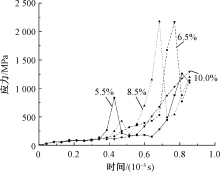
Stress variation of cotton fiber assembly under different moisture regain conditions"

Fig.8

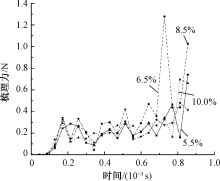
Change of carding force with time under different moisture regain conditions"

[1] 费青. 棉束梳理力测定在棉纺中的应用[J]. 纺织科技进展, 2009(1):1-6.
FEI Qing. Applicatin of determination of cotton bundle carding force in cotton spinning[J]. Progress in Textile Science and Technology, 2009(1): 1-6.
[2] 马亮, 王新厚, 郁崇文, 等. 纤维束梳理力动态检测装置[J]. 实验室研究与探索, 2009, 28(3): 39-41.
MA Liang, WANG Xinhou, YU Chongwen, et al. Dynamic testing device for fiber bundle carding force[J]. Laboratory Research and Exploration, 2009, 28(3): 39-41.
[3] SENGUPTA A K, VIJAYARAGHAVAN N, SINGH A. Studies on carding force between cylinder and flats in a card: part I-effect of machine variables on carding force[J]. Indian Journal of Fibre & Textile Research, 1983, 8(3):59-63.
[4] SENGUPTA A K, VIJAYARAGHAVAN N, SINGH A. Studies on carding force between cylinder and flats in a card: part II: effect of fibre and process factors[J]. Indian Journal of Fibre & Textile Research, 1983, 8(3):64-67.
[5] 胡文. 基于分形理论的锯齿轧花机中棉朵模型的构建与有限元分析[D]. 上海: 东华大学,2020:11-13.
HU Wen. Construction and finite element analysis of cotton model in sawtooth gin based on fractal theory[D]. Shanghai: Donghua University, 2020:11-13.
[6] 吴帆, 李勇, 陈晓川, 等. 基于三维编织模型的棉纤维集合体压缩过程有限元建模与仿真[J]. 纺织学报, 2022, 43(9):89-94.
WU Fan, LI Yong, CHEN Xiaochuan, et al. Finite element simulation on the compression process of cotton fiber assembly based on three-dimensional braided model[J]. Journal of Textile Research, 2022, 43(9):89-94.
[7] 高绪珊, 童俨, 庄毅, 等. 天然纤维的分形结构和分形结构纤维的开发[J]. 合成纤维工业, 2000(4):35-38.
GAO Xushan, TONG Yan, ZHUANG Yi, et al. The fractal structure of natural fibers and the development of fiber with fractal structure[J]. China Synthetic Fiber Industry, 2000(4):35-38.
[8] 杨树, 李玛莎. 羊毛纤维集合体的分形结构与其保暖性的关系[J]. 纺织学报, 2017, 38(8):11-15.
YANG Shu, LI Masha. Relationship between fractal structure and warmth retention properties of wool fiber assembly[J]. Journal of Textile Research, 2017, 38(8):11-15.
[9] FAN Jie, YANG Xue, LIU Yong. Fractal calculus for analysis of wool fiber: mathematical insight of its biomechanism[J]. Journal of Engineered Fibers and Fabrics, 2019,14:1-4.
[10] WANG Di, CHEN Xiaochuan, LI Yong, et al. Finite element analysis of cotton serrated ginning state based on three-dimensional braided modeling[J]. Journal of Natural Fibers, 2019(2):1-4.
[11] 朱海祥. 基于IFS法的分形图形生成及优化设计[J]. 高师理科学刊, 2016, 36(4):28-31.
ZHU Haixiang. Fractal graph generation and optimization design based on IFS method[J]. Journal of Normal Science, 2016, 36(4):28-31.
[12] 孙炜, 陈锦昌. 应用迭代函数系统获得分形图形的简易方法[J]. 工程图学学报, 2001(3):109-113.
SUN Wei, CHEN Jinchang. The simple way of using iteration function system to obtain the fractal graphics[J]. Journal of Engineering Graphics, 2001(3): 109-113.
[13] WANG Di, CHEN Xiaochuan, LI Yong, et al. Finite-element analysis of cotton serrated ginning state based on three-dimensional braided modeling[J]. Journal of Natural Fibers, 2019, 18(7):1-4.
[14] 陈利, 李嘉禄, 李学明. 细观单胞元分析三维编织复合材料的力学性能[C]// Composites: Life, Environment and High Technology: Proceedings of the 12th National Conference on Composites. 天津: 中国复合材料学会,2002:834-837.
CHEN Li, LIJialu,LI Xueming. Analysis of mechanical properties of three-dimensional braided composites by microcellular element[C]// Composites: Life, Environment and High Technology: Proceedings of the 12th National Conference on Composites. Tianjin: Chinese Society for Composite Meterials, 2002:834-837.
[15] 张曙光. 现代棉纺技术[M]. 3版. 上海: 东华大学出版社,2017:97-99.
ZHANG Shuguang. Modern cotton spinning technology[M]. 3rd ed. Shanghai: Donghua University Press, 2017:97-99.
[16] 王迪. 锯齿轧花机中棉纤维的有限元模型的改进与提高[D]. 上海: 东华大学, 2018:19-20.
WANG Di. Improvement of the finite element model of cotton fiber in sawtooth cotton gin process[D]. Shanghai: Donghua University, 2018:19-20.
[17] 何丽云. 废旧纺织品开松前上油预处理工艺研究[D]. 北京: 北京服装学院,2014:41.
HE Liyun. Oiling preteatment process for waste textiles before opening.[D] Beijing: Beijing Institute of Fashion Technology,2014:41.
[1] GAO Bo, WU Juming, ZHU Bo, WANG Jing'an, GAO Weidong. A method for sizing hairiness reduction during drying and effect analysis [J]. Journal of Textile Research, 2023, 44(12): 67-72.
[2] SUN Yue, ZHOU Lingfang, ZHOU Qixuan, ZHANG Shichen, YICK Kit-lun. Finite element analysis of supportive performance and dynamic comfort of sports bra [J]. Journal of Textile Research, 2023, 44(09): 180-187.
[3] LU Haojie, LI Manli, JIN Enqi, ZHANG Hongwei, ZHOU Jiu. Online measurement of moisture regains of sized yarns based on arc capacitance sensor [J]. Journal of Textile Research, 2023, 44(01): 201-208.
[4] WU Fan, LI Yong, CHEN Xiaochuan, WANG Jun, XU Minjun. Finite element modeling and simulation of cotton fiber assembly compression based on three-dimensional braided model [J]. Journal of Textile Research, 2022, 43(09): 89-94.
[5] YU Pengju, WANG Lili, ZHANG Wenqi, LIU Yang, LI Wenbin. Effect of moisture regain on strength of quartz yarns before and after weaving [J]. Journal of Textile Research, 2022, 43(05): 92-96.
[6] LI Jinjian, REN Jiazhi, LIANG Zhuo, JIA Guoxin. Dynamic analyses on nipper pendulum shaft in cotton combers [J]. Journal of Textile Research, 2021, 42(06): 160-165.
[7] HU Wen, WANG Di, CHEN Xiaochuan, WANG Jun, LI Yong. Finite element simulation of cotton serrated ginning state based on cottonseed modeling [J]. Journal of Textile Research, 2020, 41(09): 27-32.
[8] SHAO Yinghai, ZHANG Mingguang, CAO Jipeng, GUO Xin, HAN Xianguo. Effect of speed ratio between cylinder and taker-in on carding quality [J]. Journal of Textile Research, 2020, 41(01): 39-44.
[9] . Finite element model for evaluating pressure distribution of men's basic pattern on upper body [J]. Journal of Textile Research, 2018, 39(11): 116-121.
[10] . Simulation of fiber trajectory in jet vortex spinning based on finite element model [J]. JOURNAL OF TEXTILE RESEARCH, 2018, 39(02): 32-37.
[11] . Moisture absorption and liberation regularities of textile sizes [J]. Journal of Textile Research, 2016, 37(3): 72-77.
[12] . Research on compressive force transmission properties and densities-mechanical properties model of cotton fiber assembly [J]. JOURNAL OF TEXTILE RESEARCH, 2016, 37(11): 19-25.
[13] . Periodic boundary conditions for mechanical property analysis of 2-D woven fabric composite [J]. JOURNAL OF TEXTILE RESEARCH, 2016, 37(09): 70-77.
[14] . Preparation of silk fibroin modified polyacrylonitrile fiber by coating method [J]. JOURNAL OF TEXTILE RESEARCH, 2016, 37(01): 6-10.
[15] . Design and application of resistance moisture regain measuring meter [J]. JOURNAL OF TEXTILE RESEARCH, 2014, 35(6): 130-0.
Viewed
Full text


Abstract

Cited

  Shared   
  Discussed   
No Suggested Reading articles found!