Journal of Textile Research ›› 2026, Vol. 47 ›› Issue (04): 88-95.doi: 10.13475/j.fzxb.20250707101

• Textile Engineering • Previous Articles     Next Articles

Unevenness and periodicity of ramie combed sliver

JIANG Jiahao1, CAO Qiaoli1,2, ZHOU Yuyang1, YU Chongwen1,2()   

  1. 1 College of Textiles, Donghua University, Shanghai 201620, China
    2 Key Laboratory of Textile Science & Technology, Ministry of Education, Donghua University, Shanghai 201620, China
  • Received:2025-07-29 Revised:2026-02-25 Online:2026-04-15 Published:2026-06-24
  • Contact: YU Chongwen E-mail:yucw@dhu.edu.cn

Abstract:

Objective Combing is a key process in the ramie spinning system. However, the periodic unevenness in the combed web and sliver output by ramie combers not only severely restricts end product quality but also leads to an increase in the number of subsequent drawing passages, hindering improvements in production efficiency and cost control. Systematic research on this issue is of great significance for optimizing the combing process, realizing the integration of combing and drawing, and promoting the ramie spinning system towards higher production efficiency, better product quality, and lower cost.

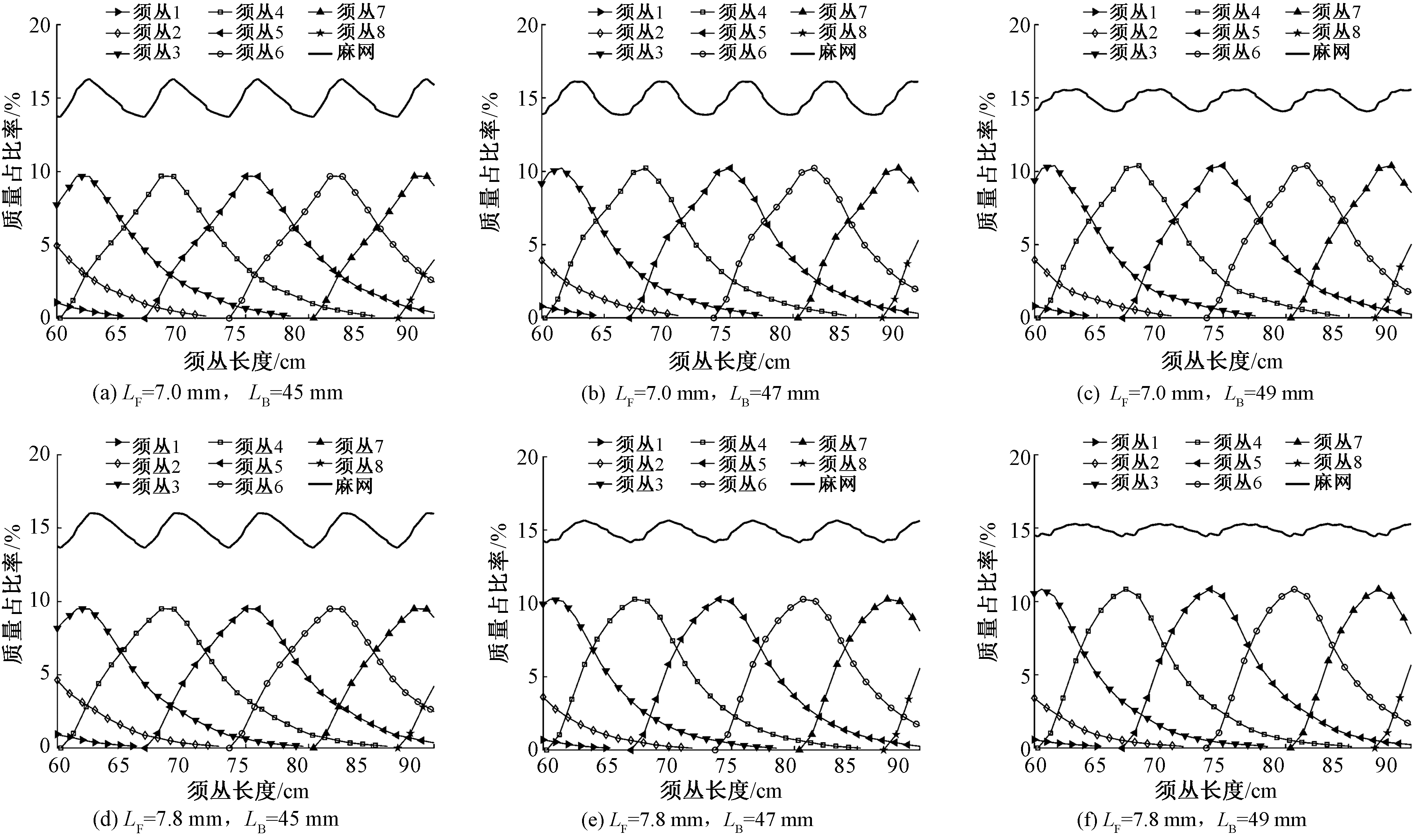
Method The influence of process parameters, such as feed length and drafting gauge, on the weight distribution of fiber clusters were explored. A mathematical model for fiber clusters lapping into a web was constructed, and MatLab software was used to simulate and generate weight distribution curves as well as calculate unevenness characteristic, so as to conduct in-depth analysis on the correlation between effective output length and web uniformity. The method combining theoretical derivation and actual testing was adopted to verify the periodic wavelength characteristics of combed sliver unevenness.

Results Under the process condition where the effective output length of the comber was 6.7 cm, the study found that the feed length and drafting gauge have a significant impact on the weight distribution of fiber clusters and the uniformity of the web. Increasing the drafting gauge led to reduction of the length of fiber clusters and caused the overall weight distribution shifting toward the front end of the clusters, and increasing the feed length, on the other hand, resulted in length increase of fiber clusters, with weight distribution also shifting toward the front end. Further research indicated that when the feed length was fixed, increasing the drafting gauge would significantly improve the uniformity of the web, and similarly, with a fixed drafting gauge, increasing the feed length would also help to enhance the uniformity of the web. In particular, using a combination of 7.8 mm feed length and 49 mm drafting gauge was found effective to minimize the unevenness of the web.

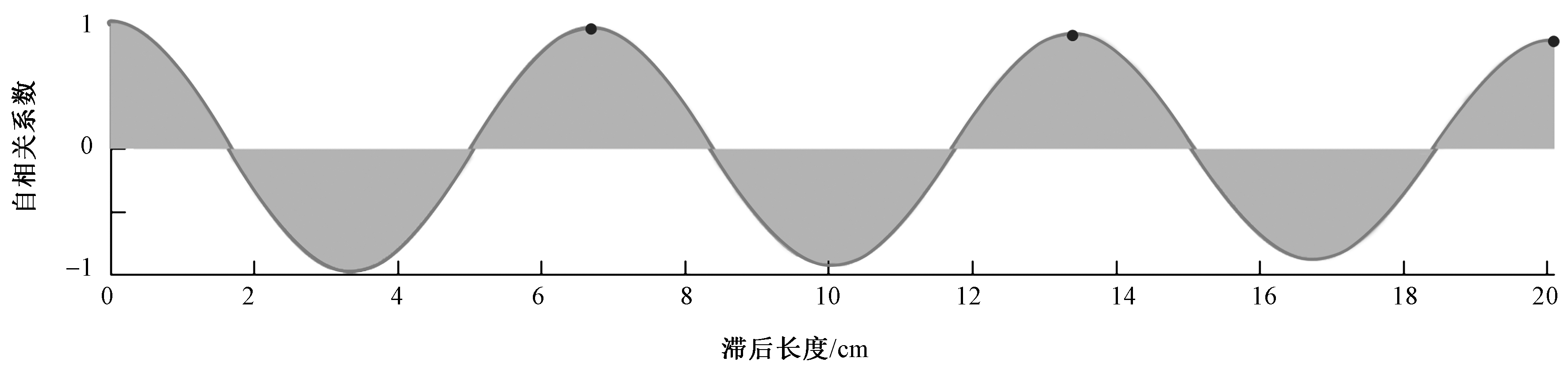
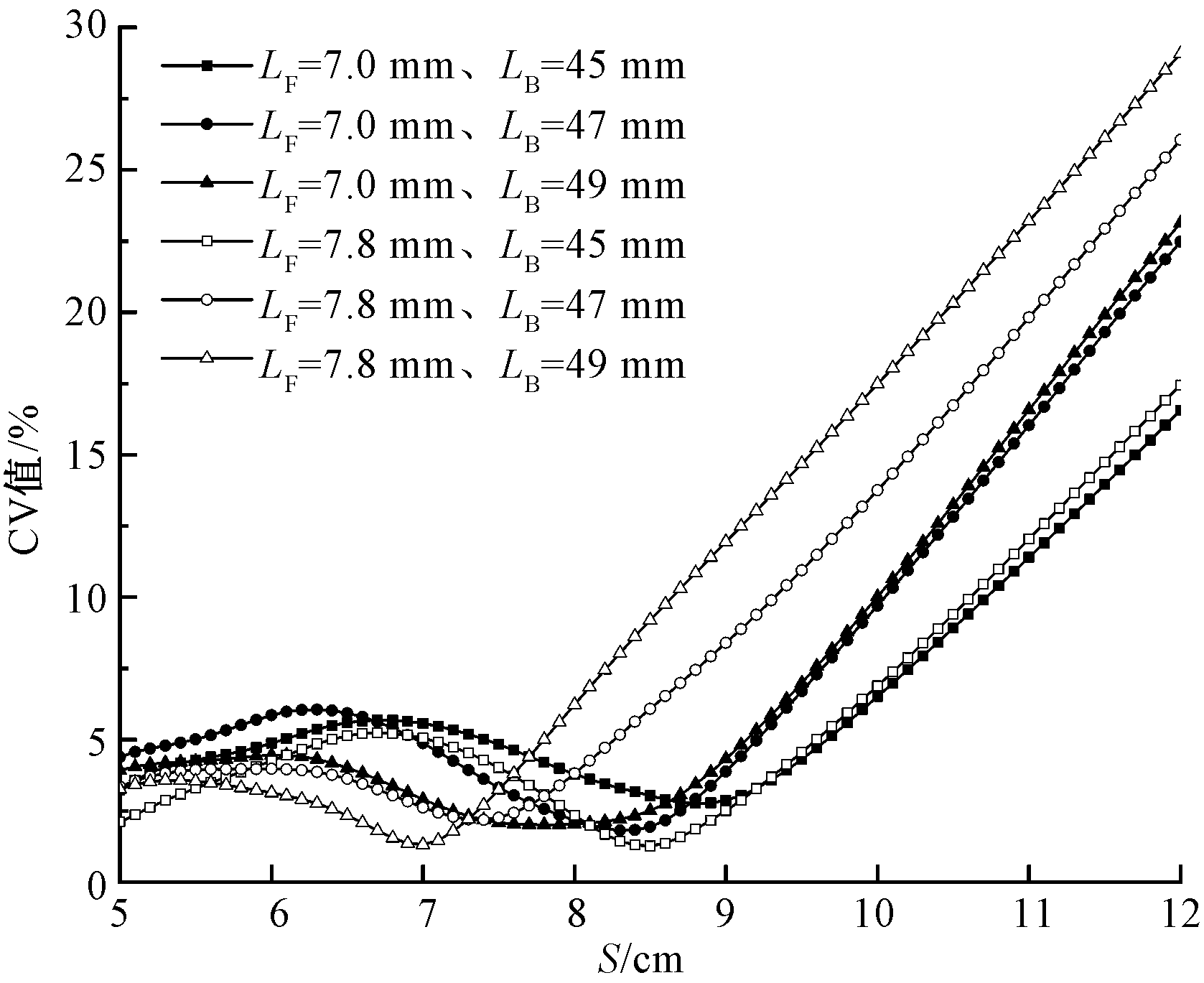
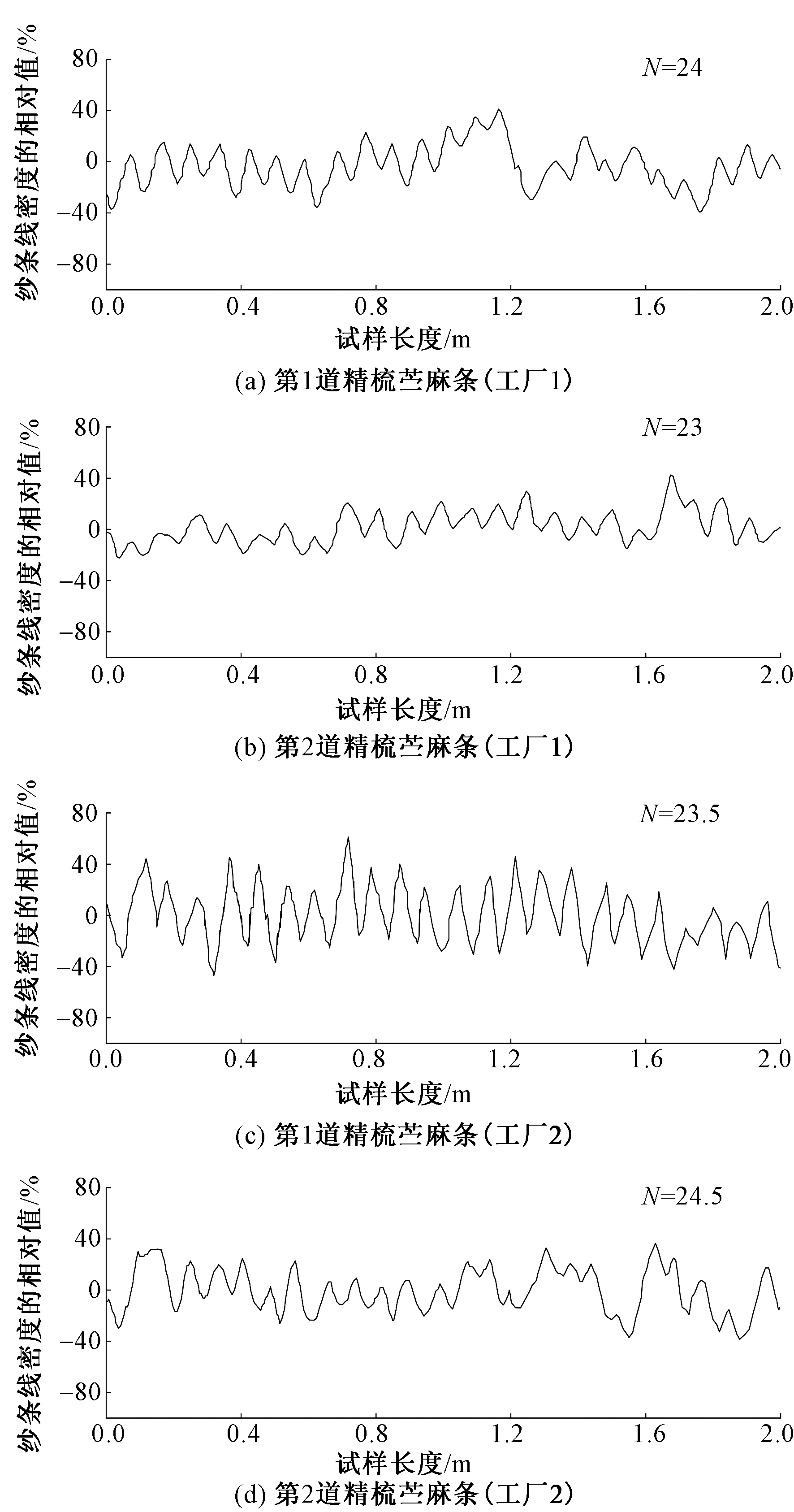
It was also found in the study that the unevenness of the web was jointly affected by the weight distribution of fiber clusters and the effective output length. There were significant differences in the uniformity of the combed web under different effective output lengths. When the effective output length was approximately one-third of the length of the fiber clusters, the uniformity of the web remained at a relatively optimal level. However, it was necessary to combine the coordinated adjustment of the feed length and the drafting gauge to approach the theoretical optimal uniformity. In addition, both theoretical derivation and experimental verification confirmed that the periodic wavelength of the combed sliver unevenness was equal to the ratio of the delivery roller speed to the comber speed, with a maximum deviation of less than 0.6%. The above results clearly indicate the correlation characteristics between various process parameters and the unevenness of the web, as well as the internal connections and influence laws of periodic unevenness.

Conclusion This study clarifies the influence mechanism of combing process parameters, such as feed length and drafting gauge, on the weight distribution of fiber clusters and the unevenness of combed web, reveals the quantitative correlation between effective output length and the unevenness of combed web, and meanwhile elaborates the relationship between the periodic wavelength of combed sliver unevenness and the delivery roller speed as well as the comber speed. The research results provide reliable theoretical support for the accurate prediction and efficient regulation of the unevenness of combed web and combed sliver.

Key words: combing process, ramie combed sliver, periodic unevenness, fiber cluster, effective output length, feed length, drafting gauge

CLC Number: 

  • TS124.1

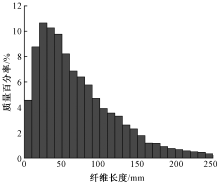
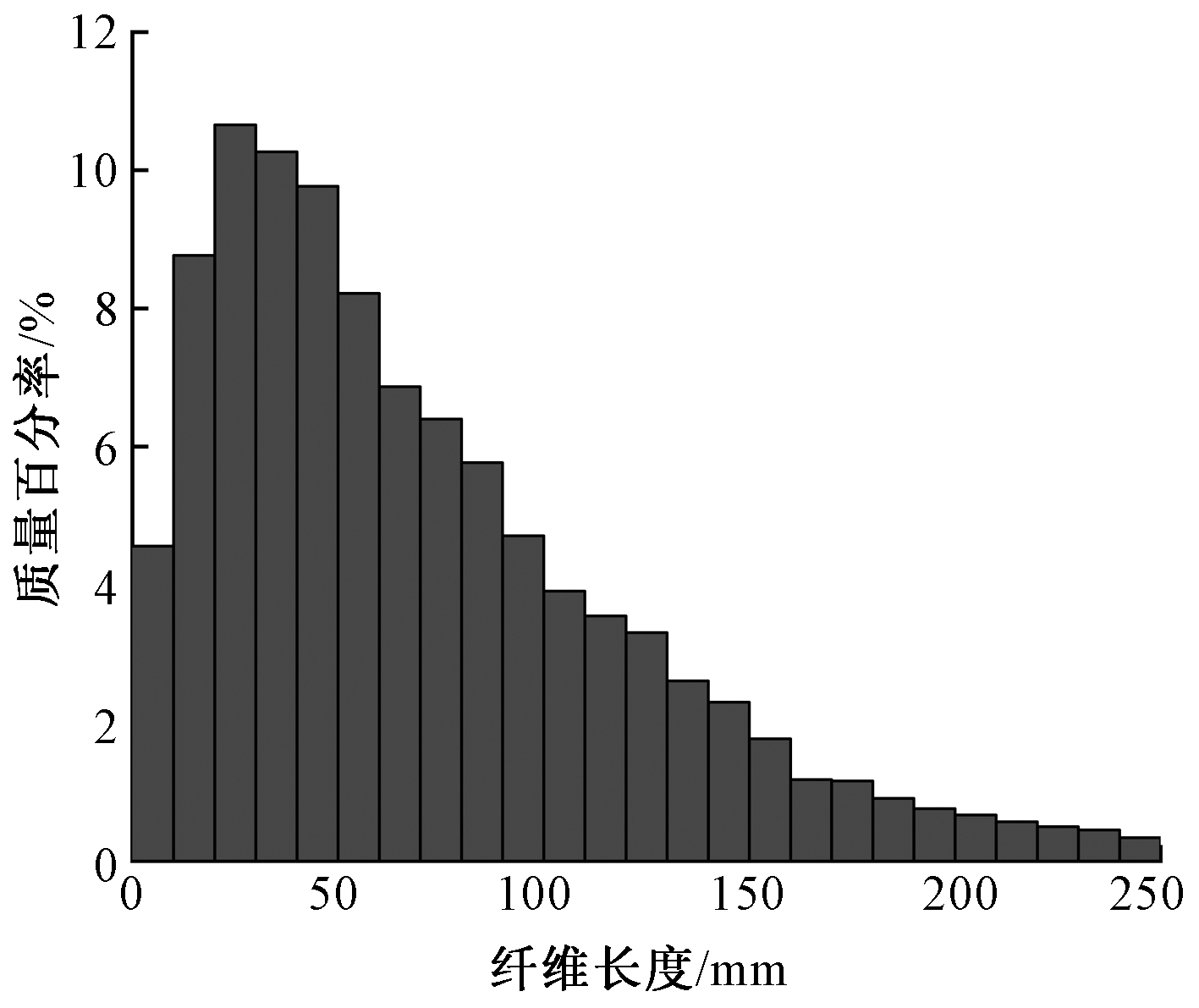
Fig.1

Histogram of ramie fiber length distribution"

Fig.2

Schematic diagram of capacitive strip dryer detection"

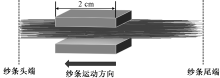
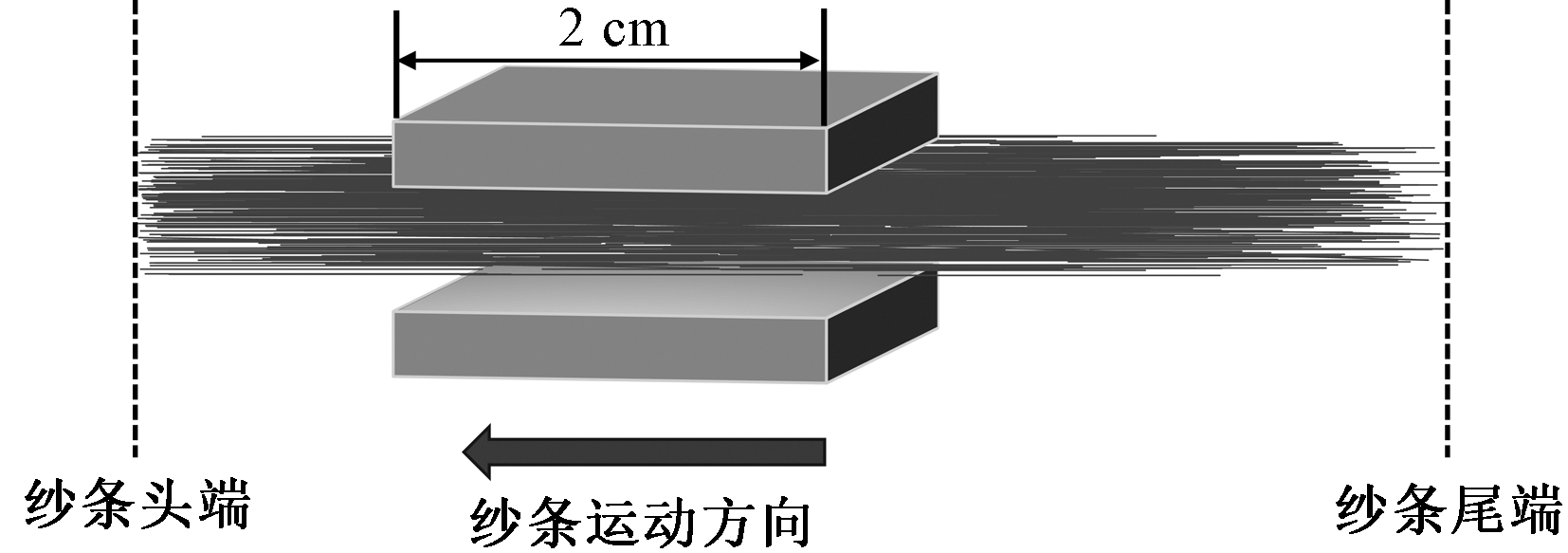
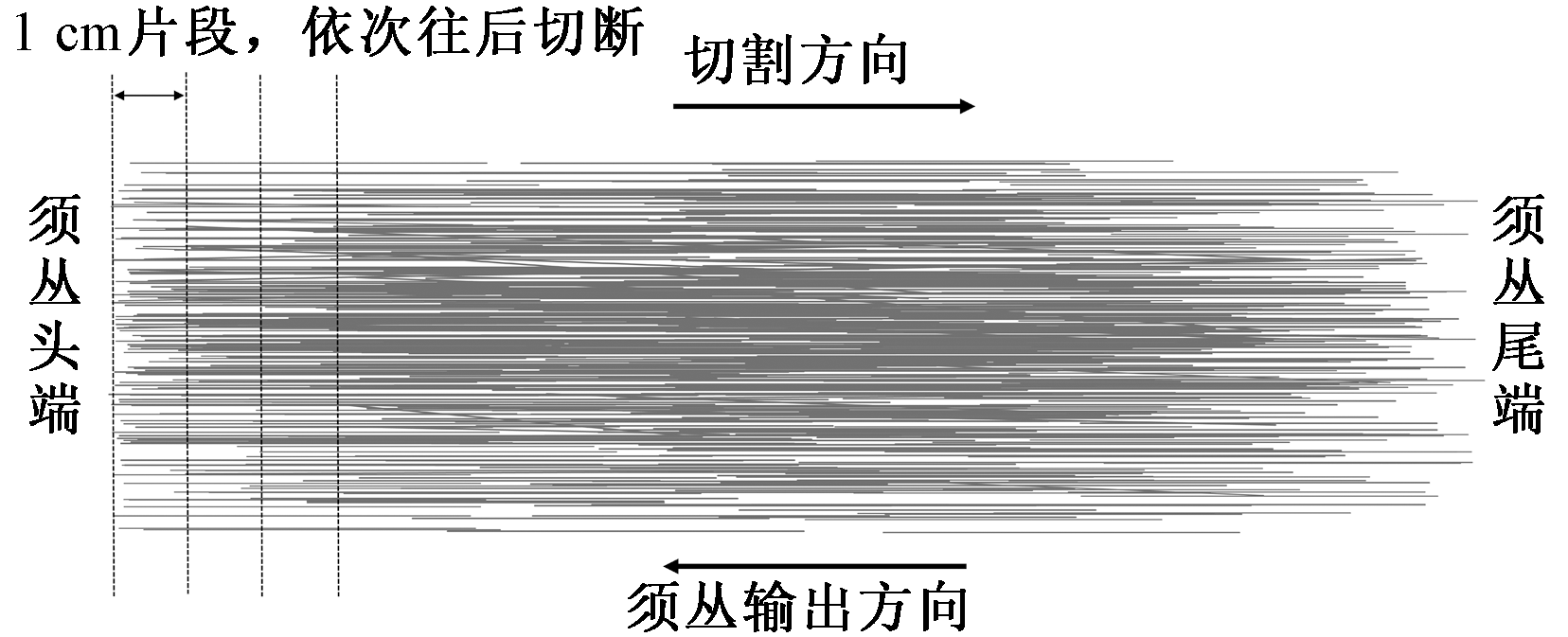
Fig.3

Schematic diagram of cutting 1 cm segment of fiber cluster"

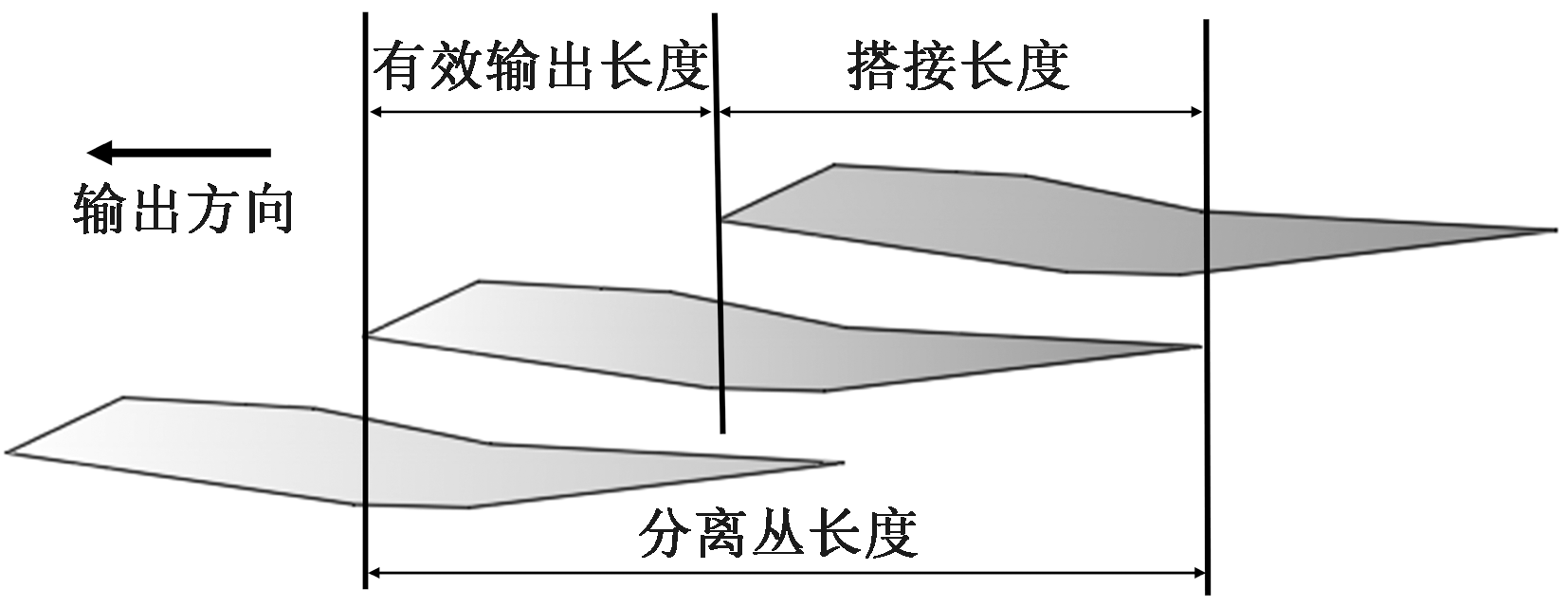
Fig.4

Simulation of fiber clusters overlap"

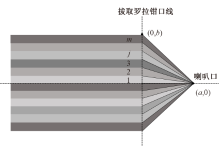
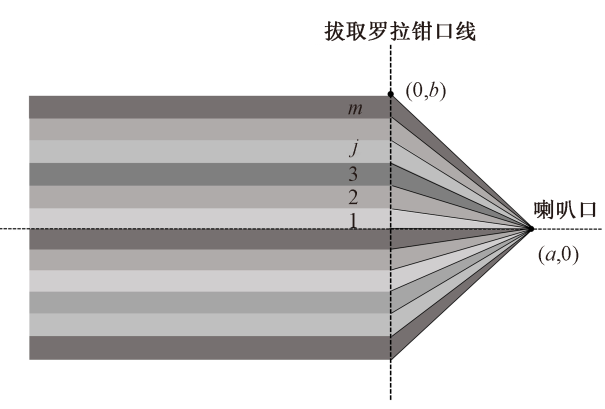
Fig.5

Model of ramie fiber web condensing into sliver"

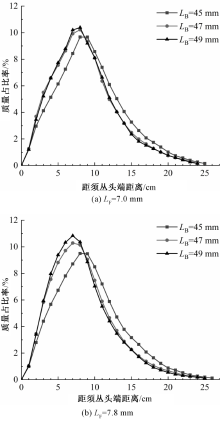
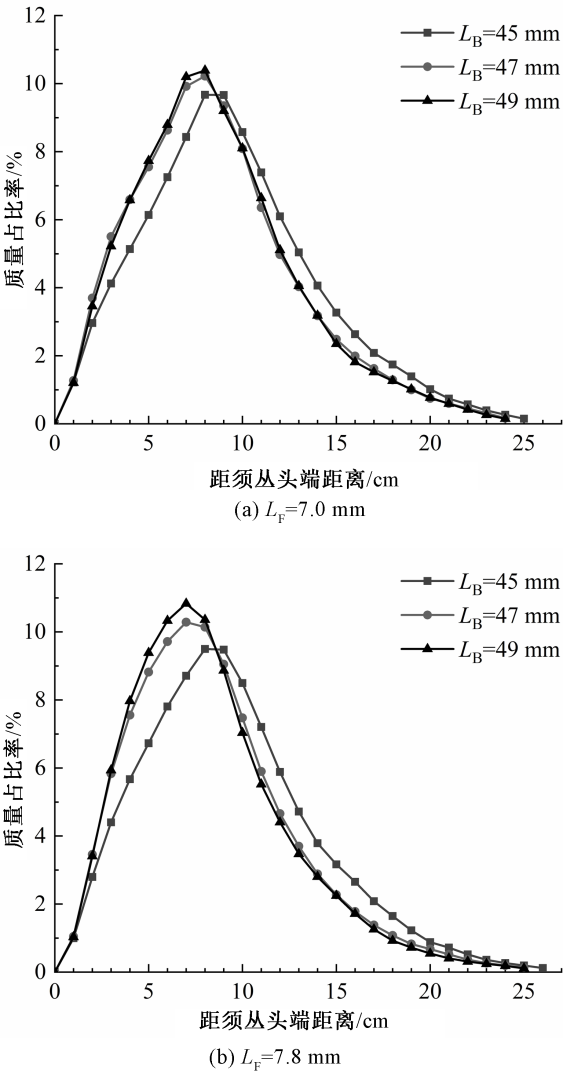
Fig.6

Mass distribution of fiber clusters under different drawing gauges"

Tab.1

Mass distribution characteristics of 2 cm segments of fiber clusters under different process parameters"

LF/
mm
LB/
mm
峰值离头
端距离/cm
0~8 cm质量
占比/%
纤维须丛
长度/cm
7.0 45 8 44.92 25
47 8 53.38 24
49 8 53.57 24
7.8 45 8 46.60 26
47 7 56.85 25
49 7 59.25 25

Fig.7

Mass distribution curves of simulated ramie fiber web formed by fiber tuft overlapping under different feed lengths and drafting gauges"

Tab.2

Mass distribution characteristics of output ramie fiber web under different feed lengths and drafting gauges (S=6.7 cm)"

LF/
mm
LB/
mm
质量占比/% CV值/
%
最小值 最大值 平均值 标准差
7.0 45 13.712 16.297 14.297 0.8476 5.68
47 13.842 16.118 14.913 0.838 7 5.62
49 14.077 15.597 14.914 0.537 5 3.60
7.8 45 13.651 16.013 14.916 0.7814 5.24
47 14.145 15.659 14.915 0.484 5 3.25
49 14.414 15.287 14.917 0.269 1 1.80

Fig.8

Autocorrelation function analysis of uneven ramie fiber web"

Fig.9

Relationship between effective output length and unevenness of ramie fiber web under different processes"

Fig.10

Actual measurement curve of evenness of combed ramie sliver. (a) First-combed ramie sliver (factory 1); (b) Second-combed ramie sliver (factory 1); (c) First- combed ramie sliver (factory 2); (d) Second-combed ramie sliver (factory 2)"

Tab.3

Comparison of theoretical calculations and actual measurements of combed yarn periodic wavelengths"

精梳工序 r/
(钳次·
min-1)
v/
(cm·
min-1)
理论周
期性波长
λ1/cm
实测周
期性波长
λ2/cm
相对误
差/%
第1道精梳
(工厂1)
99 830 8.383 8.333 0.600
第2道精梳
(工厂1)
101 880 8.713 8.696 0.195
第1道精梳
(工厂2)
98 832 8.511 8.490 0.247
第2道精梳
(工厂2)
86 705 8.198 8.163 0.429
[1] 徐祥伍, 曲湘明. 巴斯噶蜗线齿轮驱动导条机构设计与分析[J]. 毛纺科技, 2025, 53(5): 110-114.
XU Xiangwu, QU Xiangming. Design and analysis of Pascal worm gear-driven sliver guide mechanism[J]. Wool Textile Journal, 2025, 53(5): 110-114.
[2] 任家智, 高卫东, 谢春萍, 等. 棉精梳机分离罗拉顺转定时对棉网均匀度的影响[J]. 纺织学报, 2014, 35(3): 127-131.
REN Jiazhi, GAO Weidong, XIE Chunping, et al. Influence of forward motion timing of comber detaching roller on evenness of cotton web[J]. Journal of Textile Research, 2014, 35(3): 127-131.
[3] 刘荣清. 精梳棉条条干不匀率探析[J]. 现代纺织技术, 2007, 15(1): 14-16, 20.
LIU Rongqing. The analysis and discusion of evenness on cotton combed sliver[J]. Advanced Textile Technology, 2007, 15(1): 14-16, 20.
[4] 徐浩贻. 纯苎麻织物再生毛羽研究与对策[J]. 现代纺织技术, 2014, 22(6): 37-42.
XU Haoyi. Research and countermeasures on regenerative hairiness of pure ramie fabrics[J]. Advanced Textile Technology, 2014, 22(6): 37-42.
[5] 任家智, 张海洋, 陈宇恒, 等. 精梳机给棉长度对输出棉网均匀度的影响[J]. 棉纺织技术, 2015, 43(5): 17-20.
REN Jiazhi, ZHANG Haiyang, CHEN Yuheng, et al. Influence of comber feed length on output web uniformity[J]. Cotton Textile Technology, 2015, 43(5): 17-20.
[6] 马驰, 陈宇恒, 任家智, 等. 精梳机落棉隔距对棉网均匀度的影响[J]. 棉纺织技术, 2015, 43(7): 5-7, 31.
MA Chi, CHEN Yuheng, REN Jiazhi, et al. Influence of comber noil gauge on web uniformity[J]. Cotton Textile Technology, 2015, 43(7): 5-7, 31.
[7] 肖雨晴. 精梳分离接合过程模拟[D]. 上海: 东华大学, 2020: 34-37.
XIAO Yuqing. Simulation of combing separation and joint process[D]. Shanghai: Donghua University, 2020: 34-37.
[8] 李李. HC500型精梳机分离接合工艺研究[D]. 郑州: 中原工学院, 2014: 18-28.
LI Li. HC500 comber separation and bonding process research[D]. Zhengzhou: Zhongyuan University of Technology, 2014: 18-28.
[9] 贾国欣, 任家智, 巫鳌飞, 等. 基于棉纺精梳机纤维长度适纺性的相关工艺参数选择探讨[J]. 纺织导报, 2019(4): 59-61.
JIA Guoxin, REN Jiazhi, WU Aofei, et al. Discussion of related technological parameters based on suitable fiber length on cotton comber[J]. China Textile Leader, 2019(4): 59-61.
[10] 姜繁昌, 邵宽, 周岩. 苎麻纺纱学[M]. 北京: 纺织工业出版社, 1986:226.
JIANG Fanchang, SHAO Kuan, ZHOU Yan. Ramie spinning[M]. Beijing: Textile Industry Press, 1986: 226.
[11] 郁崇文. 纺纱学[M]. 北京: 中国纺织出版社, 2023:109.
YU Chongwen. Spinning[M]. Beijing: China Textile & ApparelPress, 2023: 109.
[12] 任家智. 纺纱工艺学[M]. 上海: 东华大学出版社, 2010:72-73.
REN Jiazhi. Spinning technology[M]. Shanghai: Donghua University Press, 2010: 72-73.
[13] 贾国欣, 任家智, 李金键. 精梳机输出棉网集聚喇叭口位置的优化[J]. 现代纺织技术, 2022, 30(1): 90-95.
doi: 10.19398/j.att.202006028
JIA Guoxin, REN Jiazhi, LI Jinjian. Optimization of the position of the flared mouth to converge fleece output by the combing machine[J]. Advanced Textile Technology, 2022, 30(1): 90-95.
doi: 10.19398/j.att.202006028
[14] 姜繁昌. 基本知识讲座: 第三讲: 精梳工程精梳及精梳前的准备工程[J]. 麻纺织技术, 1982, 5(3): 25-37.
JIANG Fanchang. Lecture on basic knowledge: lecture 3: combing engineering combing and preparation engineering before combing[J]. Ramie Textile Science Technology, 1982, 5(3): 25-37.
[15] 上海纺织工学院毛纺组. 精梳机叠合问题的探讨[J]. 毛纺科技, 1978, 6(1): 1-9.
Wool Spinning Group of Shanghai Textile Engineering Institute. Discussion on the superposition of comber[J]. Wool Textile Journal, 1978, 6(1): 1-9.
[1] REN Yi, FENG Qingguo, CHEN Yuheng, WANG Yanyan. Impact of combing processing on comfort properties of polyester/cotton blended fabrics [J]. Journal of Textile Research, 2026, 47(02): 103-110.
[2] WANG Xuzhen, REN Jiazhi, JIA Guoxin, YANG Tianqi, LI Jiping. Mechanism and experimental study of short fiber elimination during combing process [J]. Journal of Textile Research, 2025, 46(10): 54-61.
Viewed
Full text


Abstract

Cited

  Shared   
  Discussed   
No Suggested Reading articles found!