Journal of Textile Research ›› 2026, Vol. 47 ›› Issue (06): 159-169.doi: 10.13475/j.fzxb.20251105401

• Apparel Engineering • Previous Articles     Next Articles

Automated generation of pant patterns with personalized tapering based on body dimension mapping

YANG Xinxin1, CAI Liling2(), JI Xiaofen2,3   

  1. 1 School of Fashion Design and EngineeringZhejiang Sci-Tech University, HangzhouZhejiang 310018, China
    2 Fashion Design College of Istituto MarangoniZhejiang Sci-Tech University, HangzhouZhejiang 310018, China
    3 China National Silk MuseumHangzhouZhejiang 310002, China
  • Received:2025-11-21 Revised:2026-04-18 Online:2026-06-15 Published:2026-08-19
  • Contact: CAI Liling E-mail:caililing@zstu.edu.cn

Abstract:

Objective This research addresses the core challenge of rapid and precise generation of garment patterns conforming to target body characteristics in apparel structural research. Focusing on the personalized digital customization of tapered trousers, it aims to tackle the limitations of single-body-type pattern generation by developing a multi-body-type adaptive intelligent method. By establishing an accurate mapping between body dimensions and pattern structures, the research sets out to resolve issues of insufficient comfort and lack of personalization in traditional pattern-making, caused by body curve complexity and individual variations.

Method A parametric pattern-making approach was adopted, leveraging MatLab's digital image processing capability to establish a "human image-body dimension-pattern generation" digital customization system. Firstly, a direct mapping between body measurements and trouser structural dimensions was established to optimize traditional pattern making and develop a personalized method for tapered pants. Subsequently, two-dimensional body measurement technology was used to extract body dimensions from images and convert them into pattern parameters, with corresponding mathematical model constructed for each structural point coordinate. Additionally, the curve-fitting constraint was introduced for tapered pants patterns, and the optimal fitting method of various curves was explored to improve the accuracy of complex curve fitting. Finally, case validation through simulation and virtual try-on tests ensures the method's reliability and practicality.

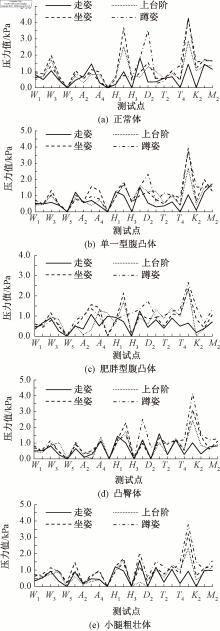
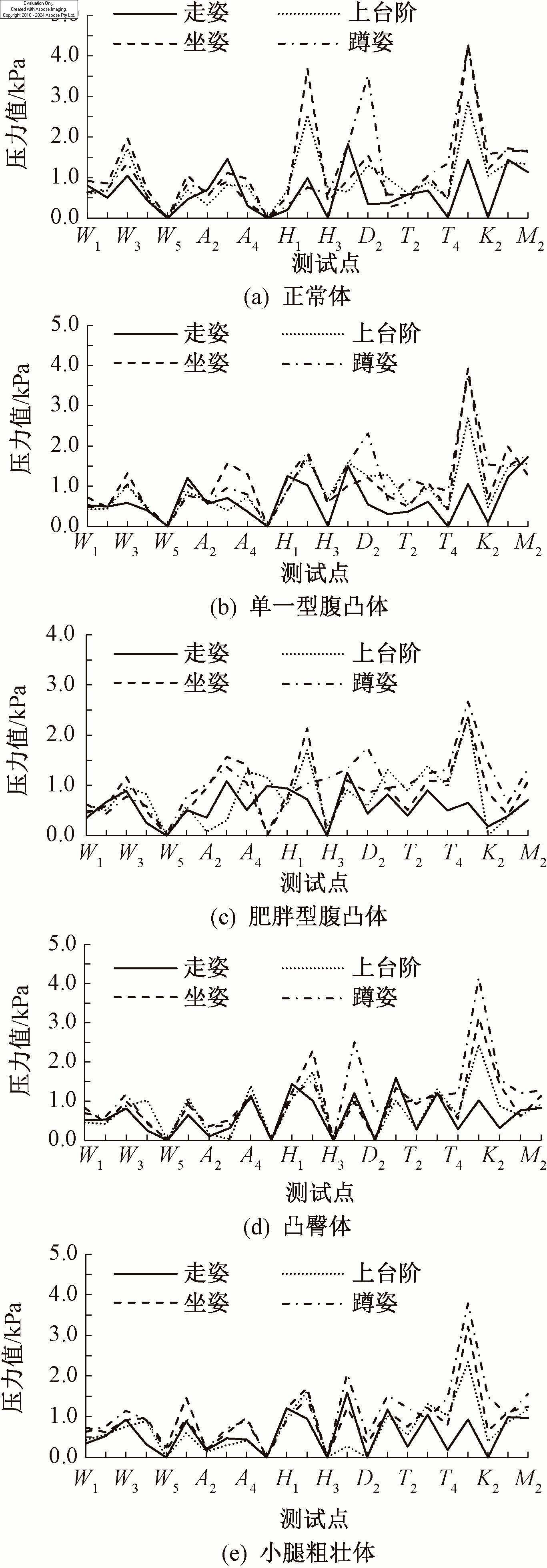
Results In developing the pattern-making method for personalized tapered-pants, the optimal front-to-rear crotch width ratios for different styles were investigated, and the best proportions were determined as 2∶5 for tight-fit, 1∶2 for regular-fit, and 3∶5 for both slim-fit and loose-fit tapered pants. At the same time, the personalized pattern adjustment mechanism was constructed for the protruding abdomen body, the highlight hip body and the thick calf body. Through the virtual try-on experiment, the adjusted pattern was significantly better than the pre-adjusted pattern in terms of pressure comfort and appearance. Within the digital customization system, 2-D body measurement technology was employed to acquire eight circumferential dimensions, seven length dimensions, and two angular dimensions below the waist. Based on these anthropometric data, mathematical expressions for all structural points in the tapered trouser pattern were established. Additionally, the optimal fitting models were determined: a quintic Bezier curve for the front/rear crotch arc, a Bezier curve for the inner seam, and Hermite curves for both the outer seam and pocket division lines. To validate the automatic generation of personalized patterns, patterns of different styles were generated using human body images of varying physiques and followed by sew-ability verification. The resulting patterns exhibited length discrepancies of less than 1 cm between seams, meeting industrial sewing requirements. Additionally, virtual try-on tests assessed both the visual appearance and pressure distribution during various movements. The results confirmed that all samples maintained pressure values below 4.5 kPa at all test points, ensuring comfort and compliance with ergonomic standards. The tapered pants appeared smooth and well-fitted, demonstrating excellent overall wearability. This study successfully bridged the gap between parametric design and practical garment production, offering a reliable, data-driven approach to personalized tailoring. The findings not only enhanced the precision of pattern generation but also ensured wearer comfort, paving the way for scalable digital customization in the apparel industry.

Conclusion The proposed method ach

Key words: tapered pant, pattern generation, parameterized pattern making, personalized customization, 2-D anthropometry

CLC Number: 

  • TS941

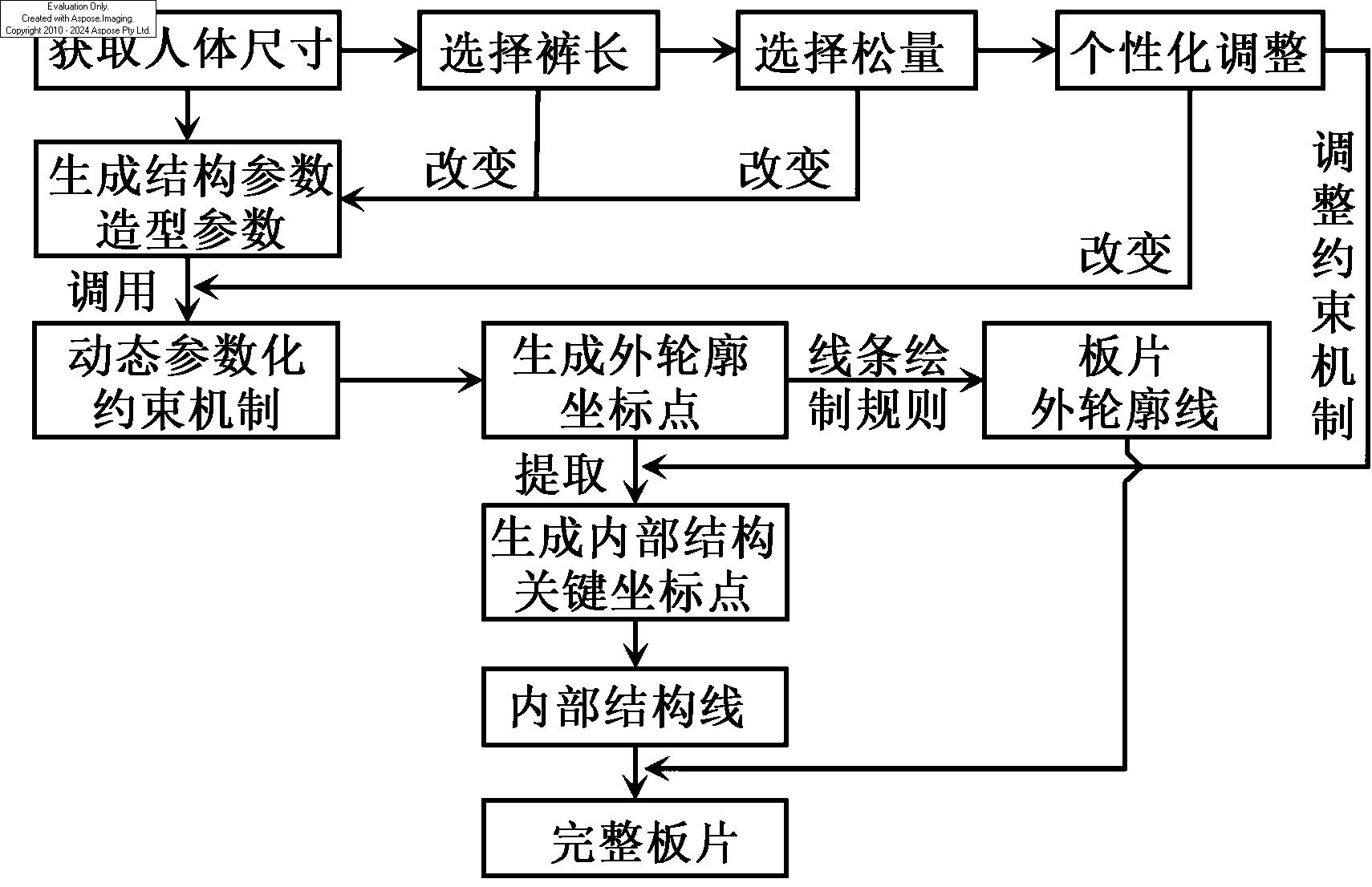
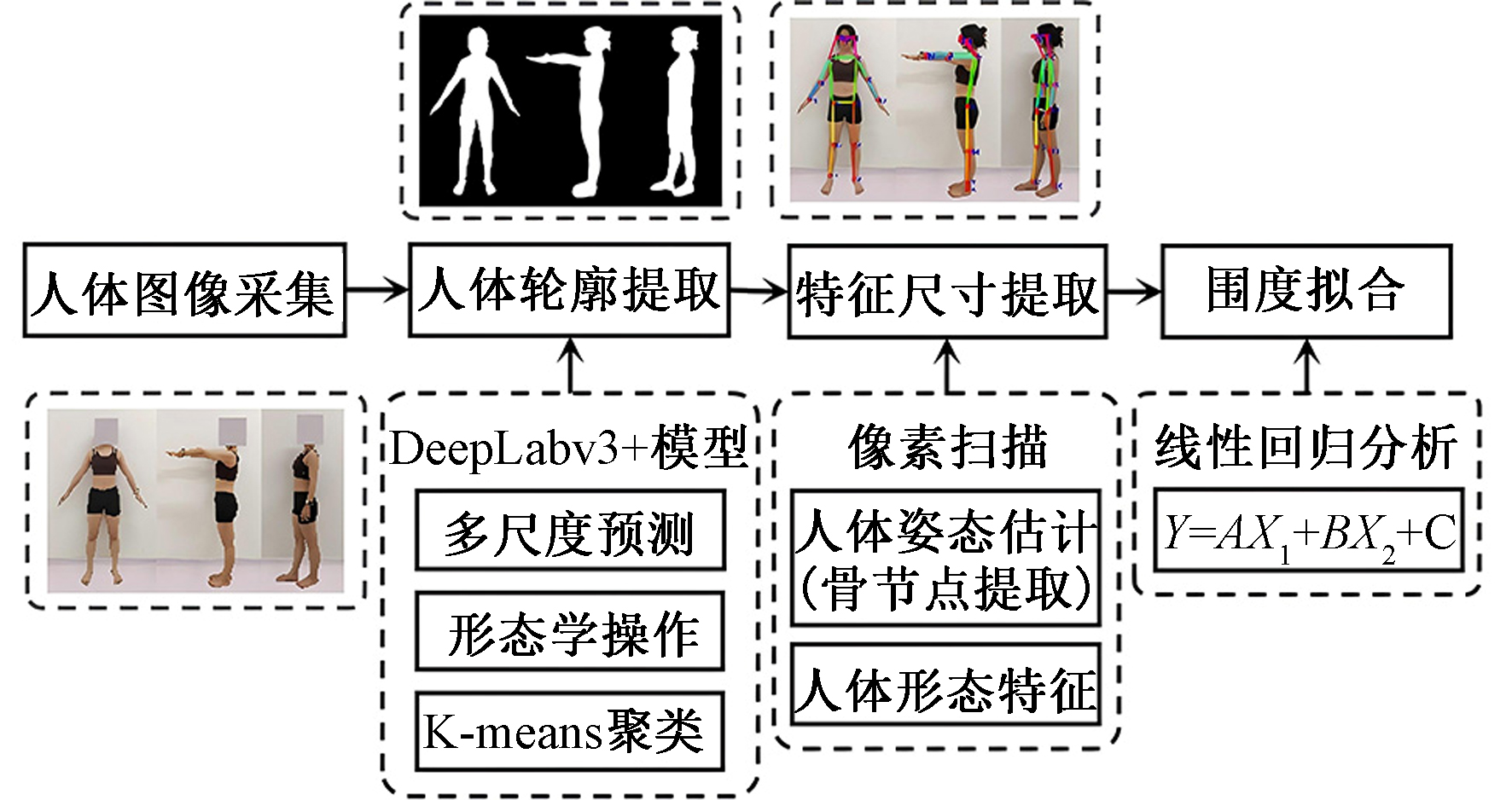
Fig.1

Automatic generation process for tapered pants template"

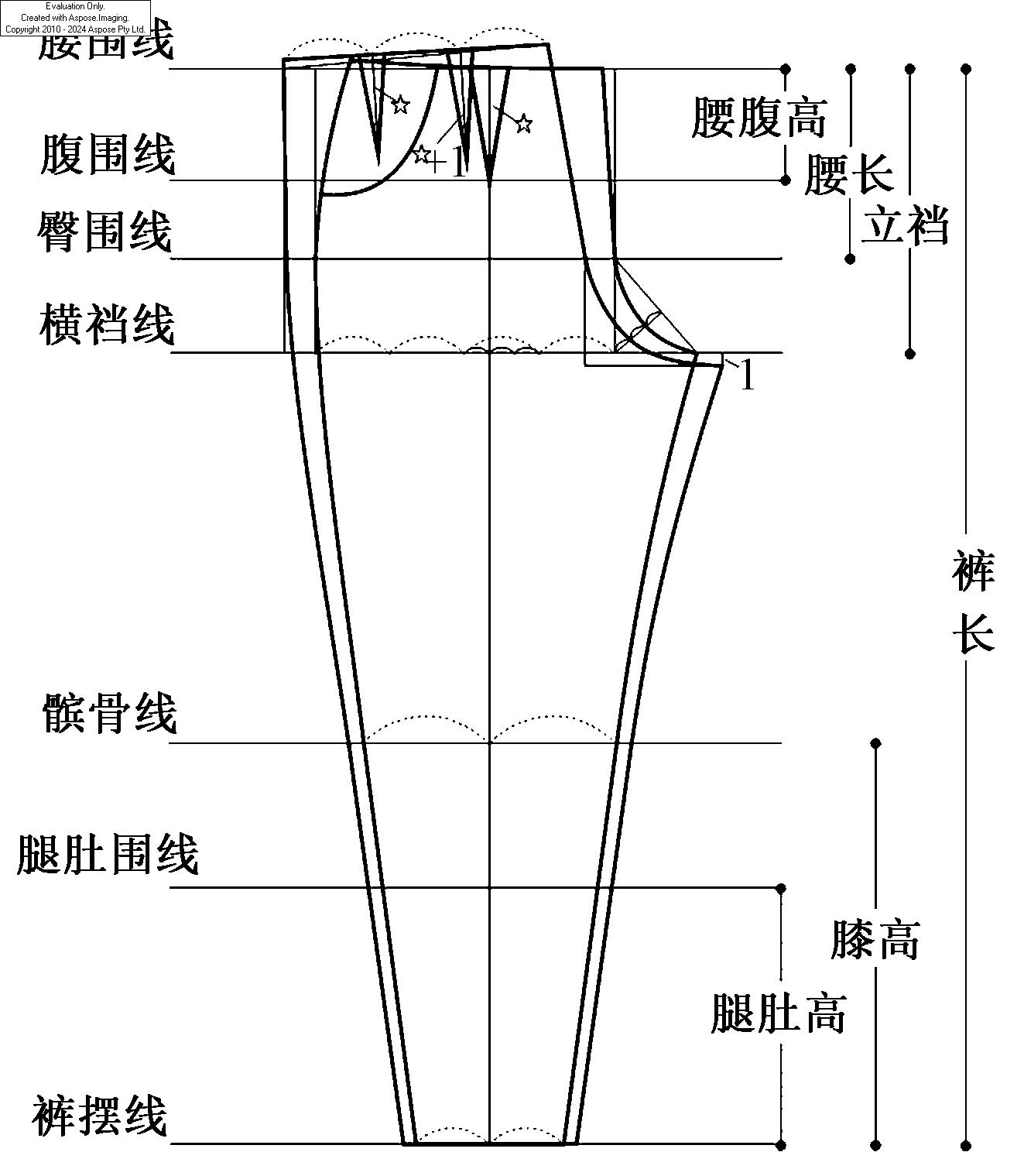
Fig.2

Personalized tapered pants pattern drawing method"

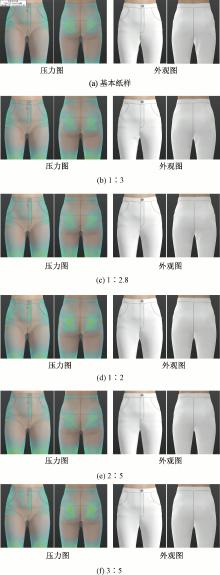
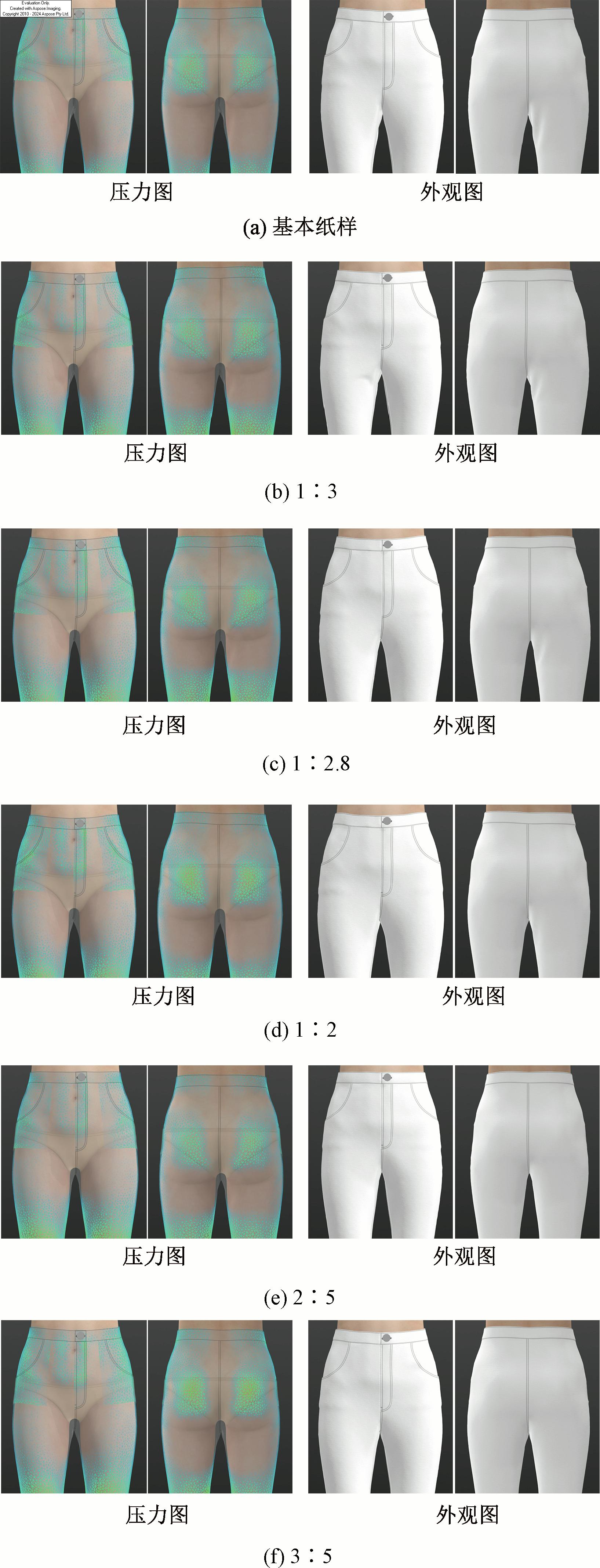
Fig.3

Fitted style virtual try-on effects with different crotch width ratios.(a) Block pattern; (b) 1∶3; (c) 1∶2.8; (d) 1∶2; (e) 2∶5; (f) 3∶5"

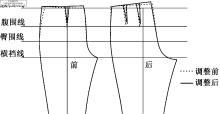
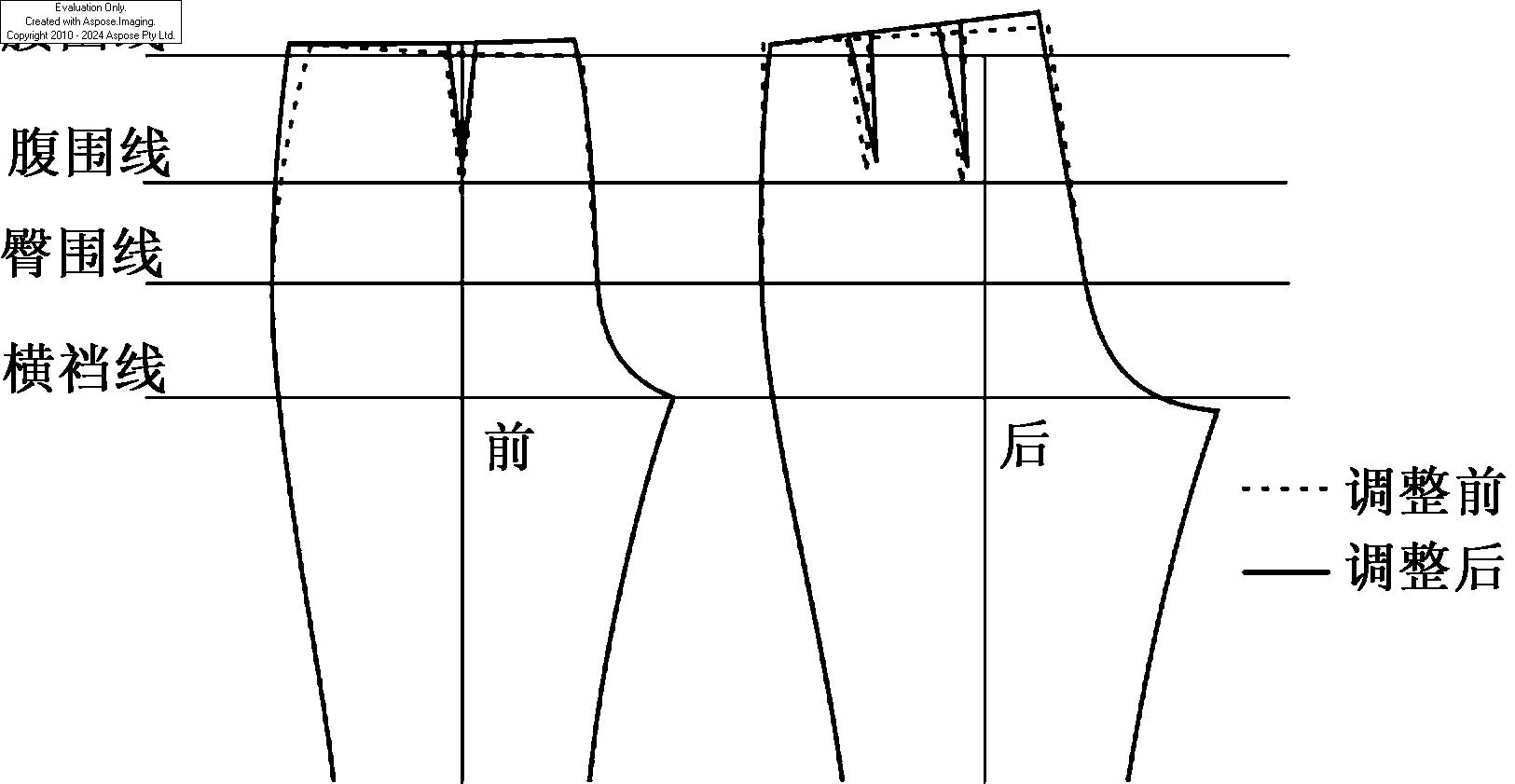
Fig.4

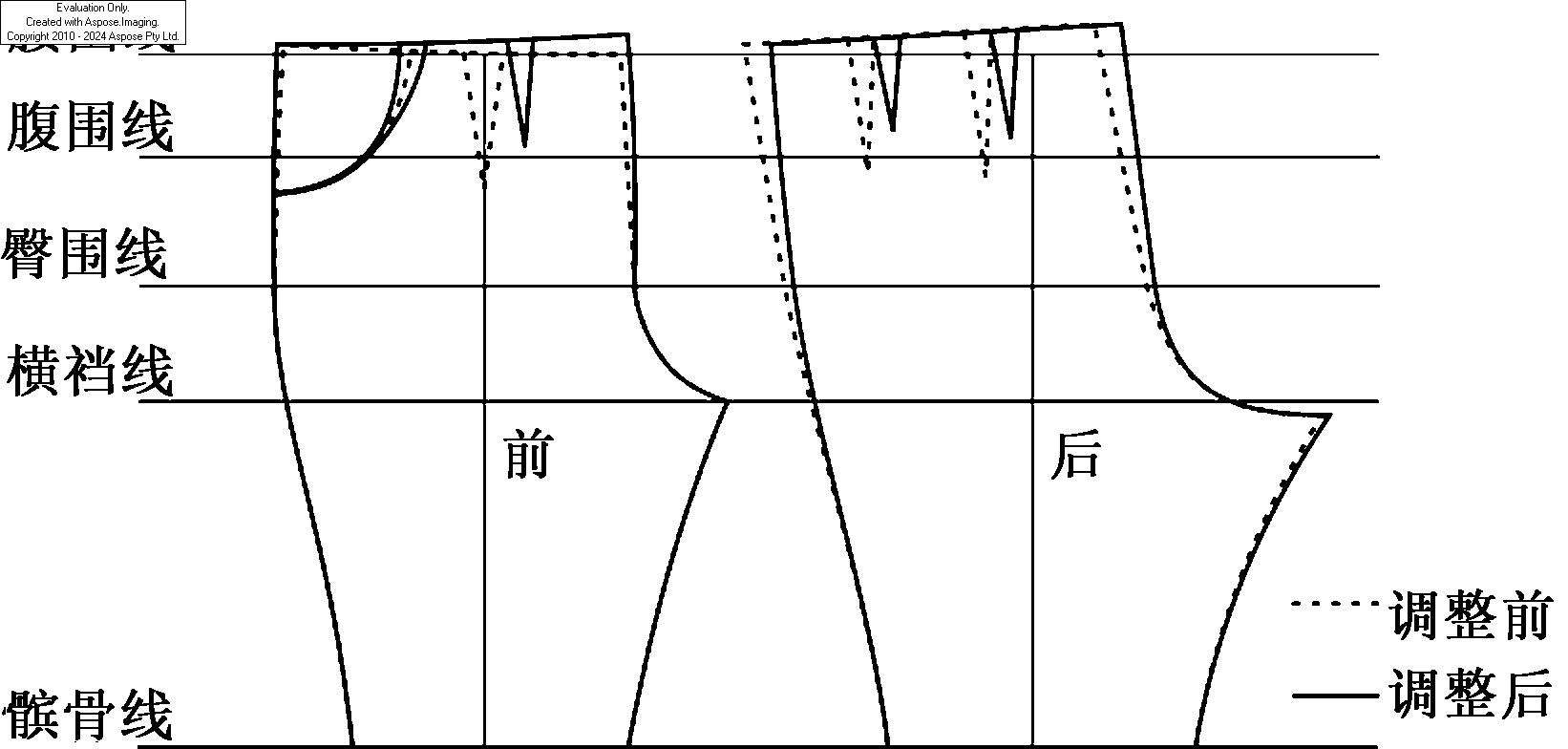
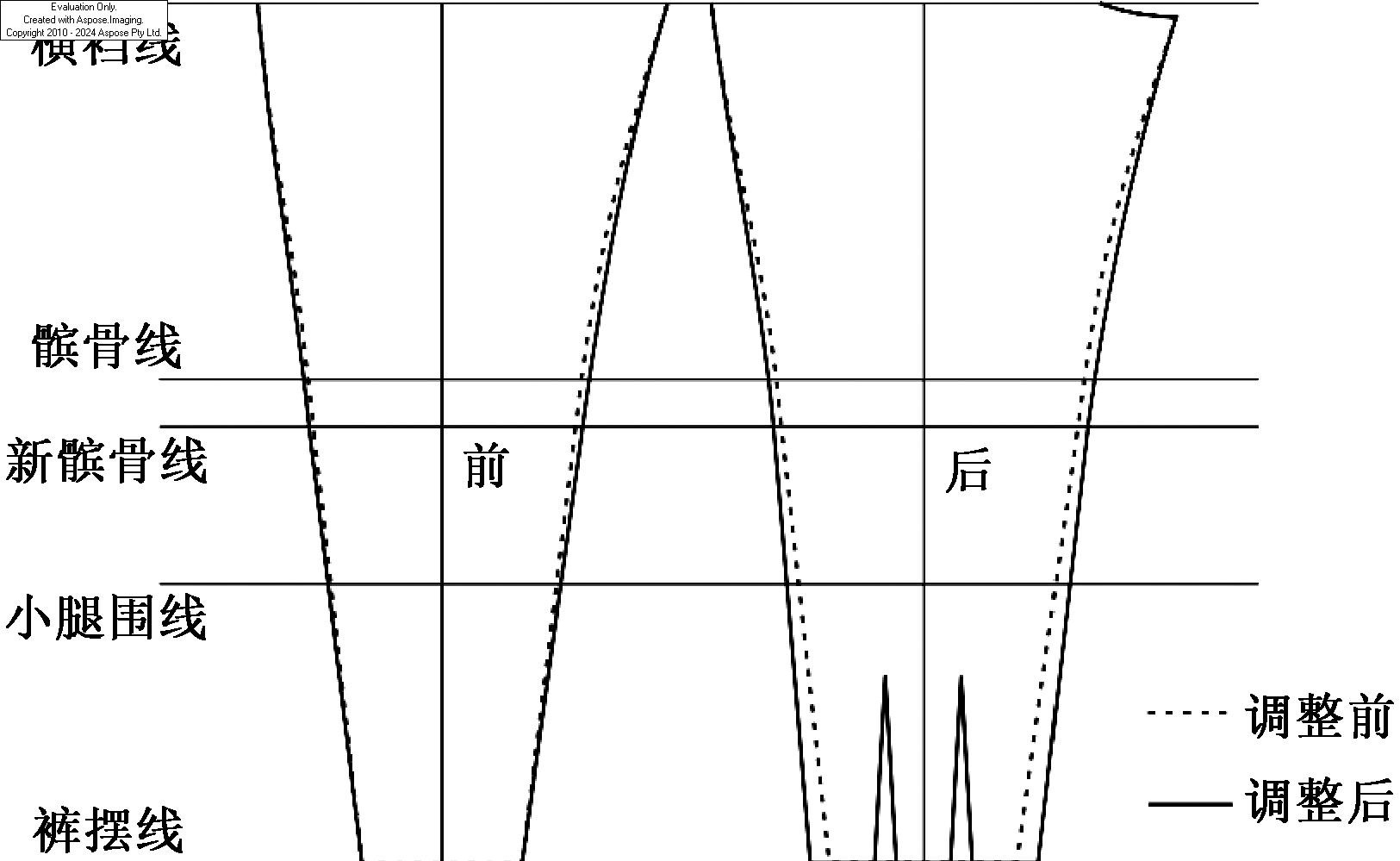
Comparison of single type abdominal convex body template before and after adjustment"

Fig.5

Obesity-type abdominal protrusion sample comparison before and after adjustment"

Fig.6

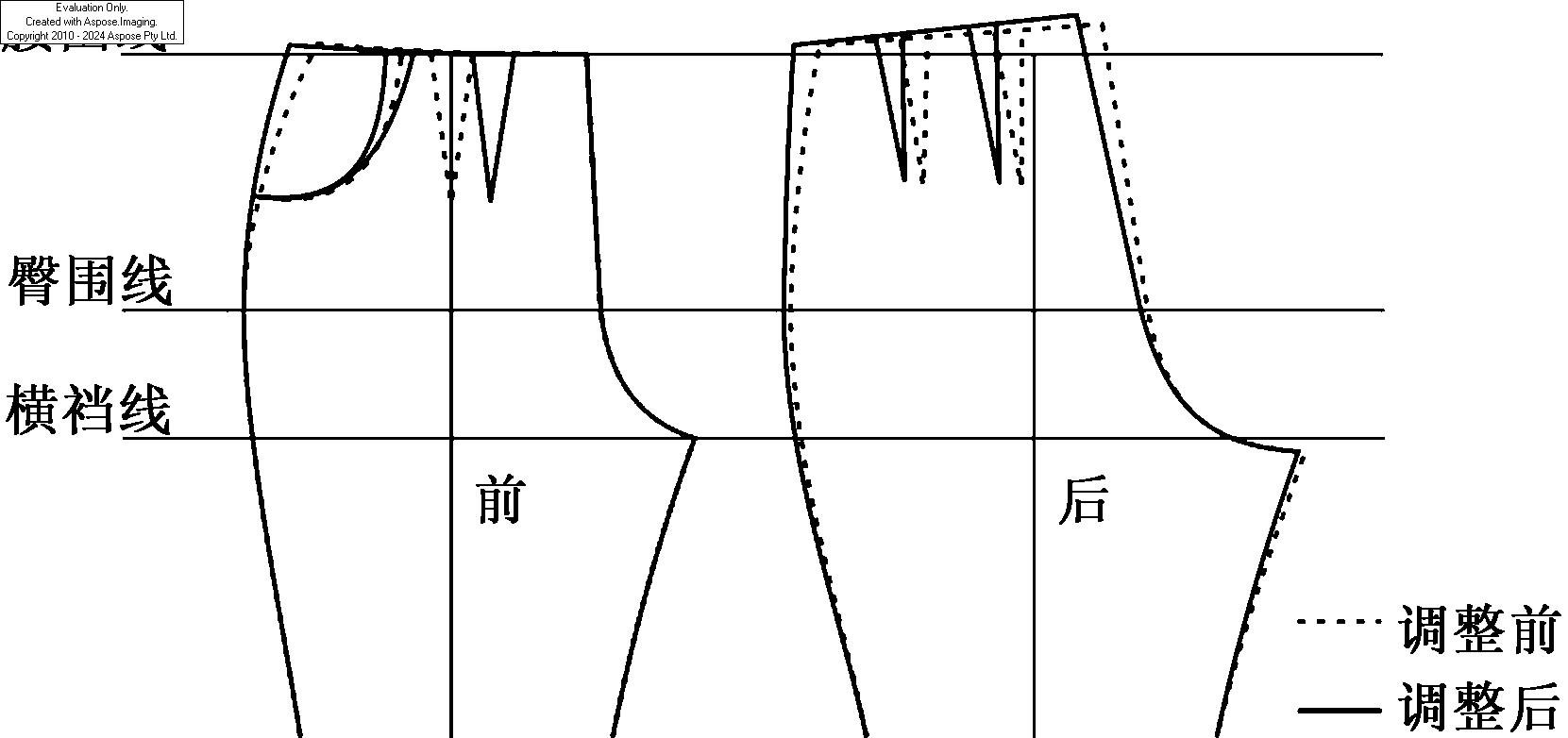
Comparison of convex hip body template before and after adjustment"

Fig.7

Thick calf body sample board adjustment before and after comparison"

Fig.8

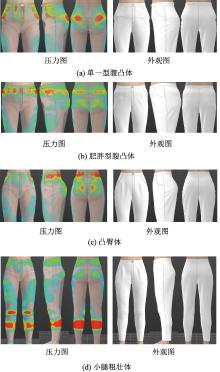
Virtual fitting effect before pattern adjustment. (a) Single abdominous type; (b) Obese abdominous type; (c) Large buttocks;(d) Calf hypertrophy"

Fig.9

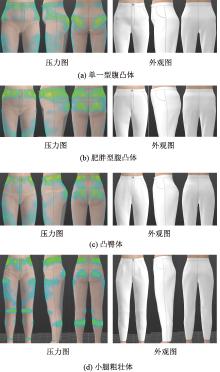
Virtual fitting effect after pattern adjustment. (a) Single abdominous type; (b) Obese abdominous type; (c) Large buttocks; (d) Calf hypertrophy"

Tab.1

Body size parameter details table"

序号 部位名称 序号 部位名称 序号 部位名称
1 腰踝长 7 踝高 13 大腿围
2 股上长 8 腰臀角 14 膝围
3 腰长 9 腹凸角 15 腿肚围
4 腰腹高 10 腰围 16 踝上围
5 膝高 11 腹围 17 足跟围
6 腿肚高 12 臀围

Fig.10

Body size measurement methods"

Tab.2

Sample parameter details table"

类型 参数名称 符号 类型 参数名称 符号
体型参数 人体腰围 W1 结构参数 纸样腰围 W
人体腹围 M1 纸样臀围 H
人体臀围 H1 纸样膝围 K
人体膝围 K1 立裆深 D
腿肚围 C 前裆宽 R1
足跟围 F 后裆宽 R2
腰腹高 L1 造型参数
腰踝长 L2 裤长 L
股上长 L3 脚口 B
腰长 L4 前腰省 x1
腿肚高 L5 后腰省 x2
膝高 L6 裤摆省 x3
踝高 L7 口袋宽 x4
大腿根厚 T 口袋长 x5
腰臀角 a

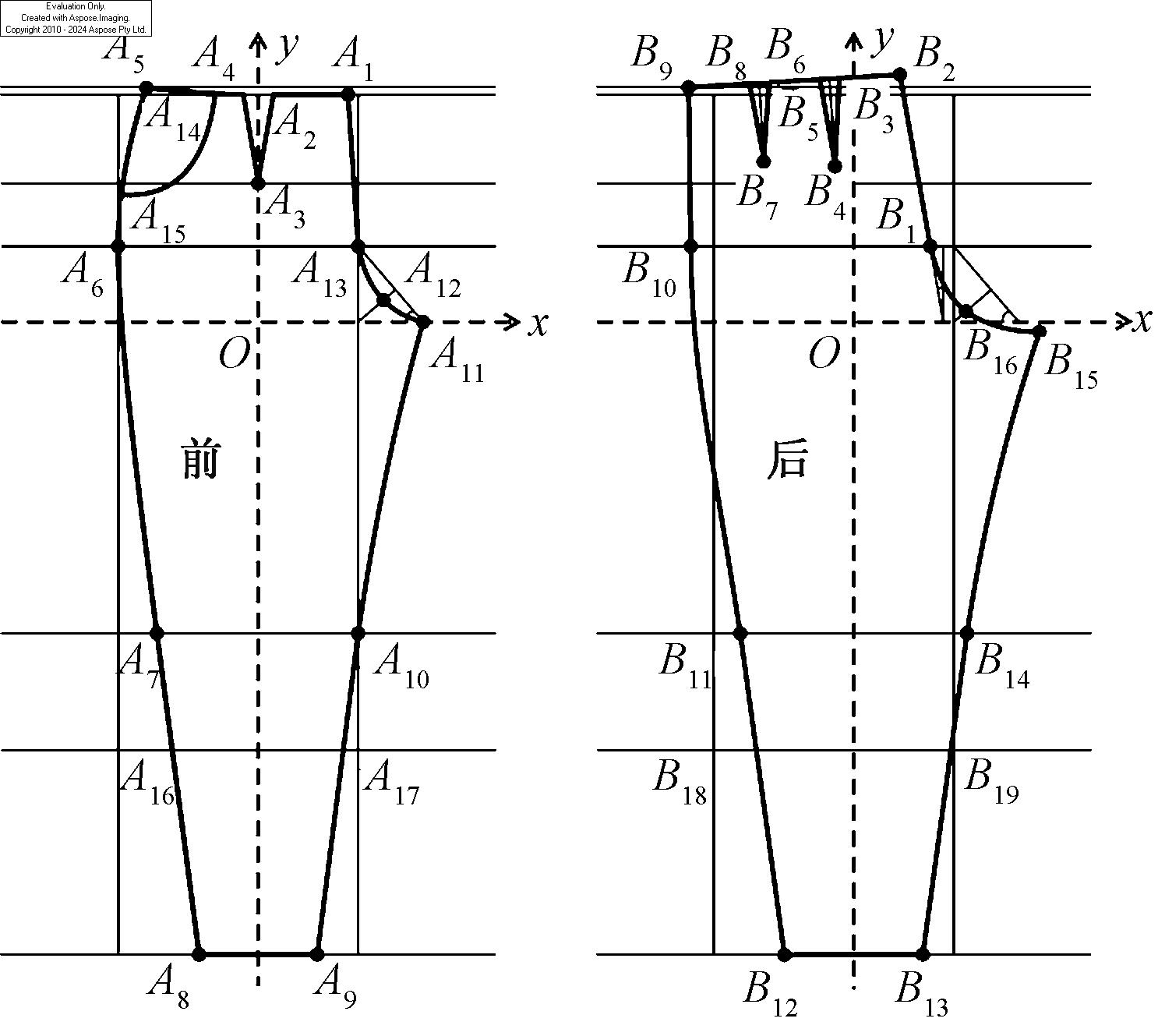
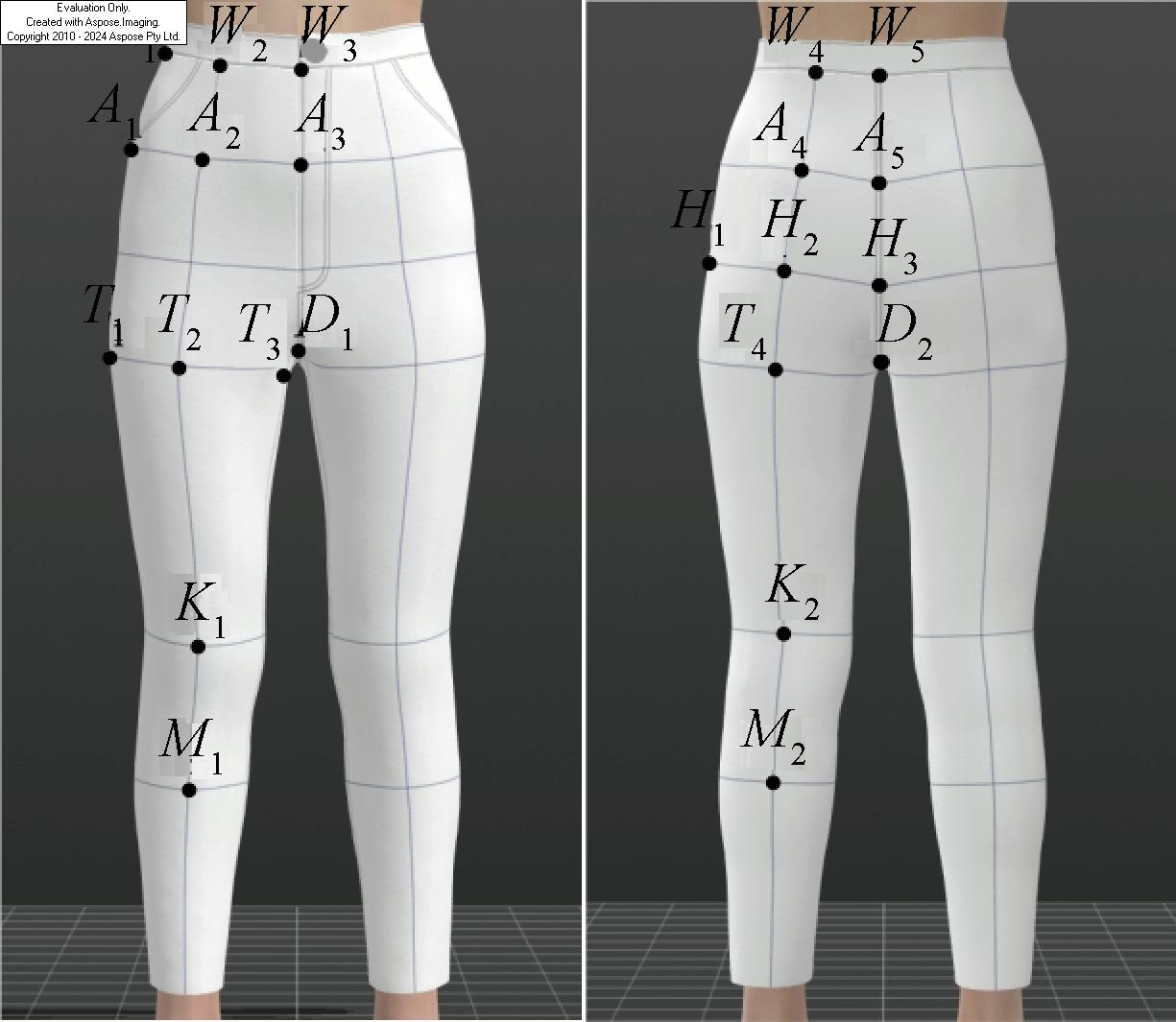
Fig.11

Front and back trouser piece key point labeling"

Tab.3

Coordinates of each structural point on tapered pants template"

关键点 坐标 后片关键点
A1 (5H/48-1,D
A5 (5H/48-W/4-x1-1,D+0.7)
A6 (-7H/48,D -L4
A7 (1-K/4,D -L +L6
A8 (1-B/4,D -L
前片 A9 B/4-1,D -L
A10 K/4-1,D -L+L6
A11 (5H/48+R1,0)
α arctan[(D -L4/R1]
A12 (5H/48+2R1(sin α2/3,R1(sin2α)/3)
A13 (5H/48,D -L4
B17 (5H/48-1,0)
β arctan(5H/96D
B1 (5H/48-1-(D -L4)tanβD -L4
B2 (5H/48-Hsinβ/48-Dtanβ -1,D+Hcosβ/48)
θ arcsin[(Hcosβ/48-0.7)/W/4+x2)]
后片 B9 (5H/48-Hsinβ/48-Dtanβ-
W/4+x2)cosθ -1,D+0.7)
B10 (-7H/48-1-(D -L4)tanβD -L4
B11 (-K/4-1,D -L +L6
B12 (-B/4-1,D -L
B13 B/4+1,D -L
B14 K/4+1,D -L +L6
B15 (5H/48-1-(D -L4)tanβ+R2,-1)
B16 (5H/48+R1(sinα2/3,R1(sin2α)/6)

Tab.4

Adjusted key point coordinates"

类型 关键点 坐标
A1 (5H/48-1.5,D+1)
单一型
腹凸体
A5 (5H/48-W/4-x1-2.5,D+0.7)
θ arcsin{(3cosβ-0.7)/W/4+x2-1)}
B2 (5H/48-3sinβ-Dtanβ -1,D+3cosβ
B9 (5H/48-3sinβ-Dtanβ-
W/4+x2-1)cosθ -1,D+0.7)
肥胖型
腹凸体
A1 (5H/48-0.5,D+1.5)
A5 (5H/48-W/4-x1-0.5,D+0.7)
凸臀体 β arctan(5H/96D)+a/10
B2 (5H/48-(H/48+1)sinβ -Dtanβ -1,
D+(H/48+1)cosβ
B12 (-(B/4+x3/2),D -L
小腿粗
壮体
B13 B/4+x3/2,D -L
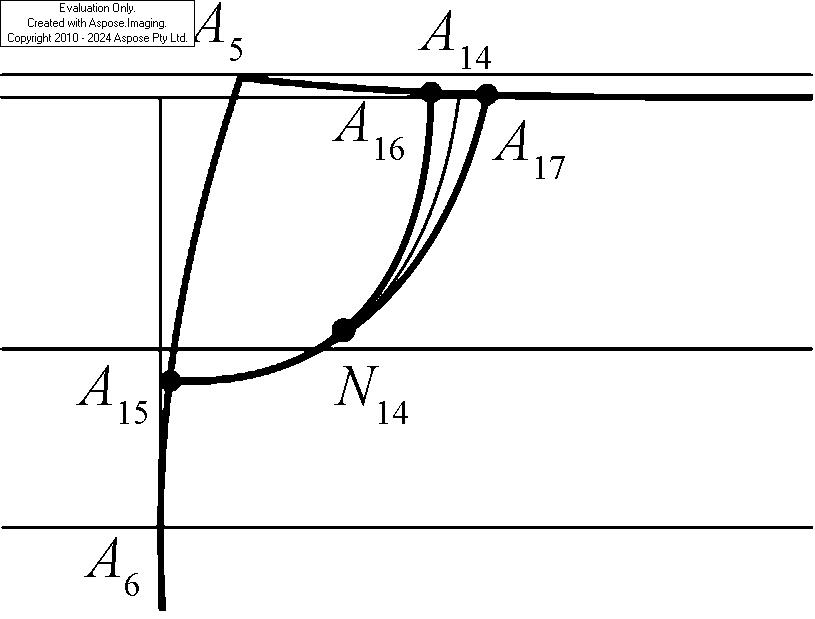
B18 (-(C-LA16A17)/2-1,D -L+L5
B19 ((C-LA16A17/2+1,D -L+L5

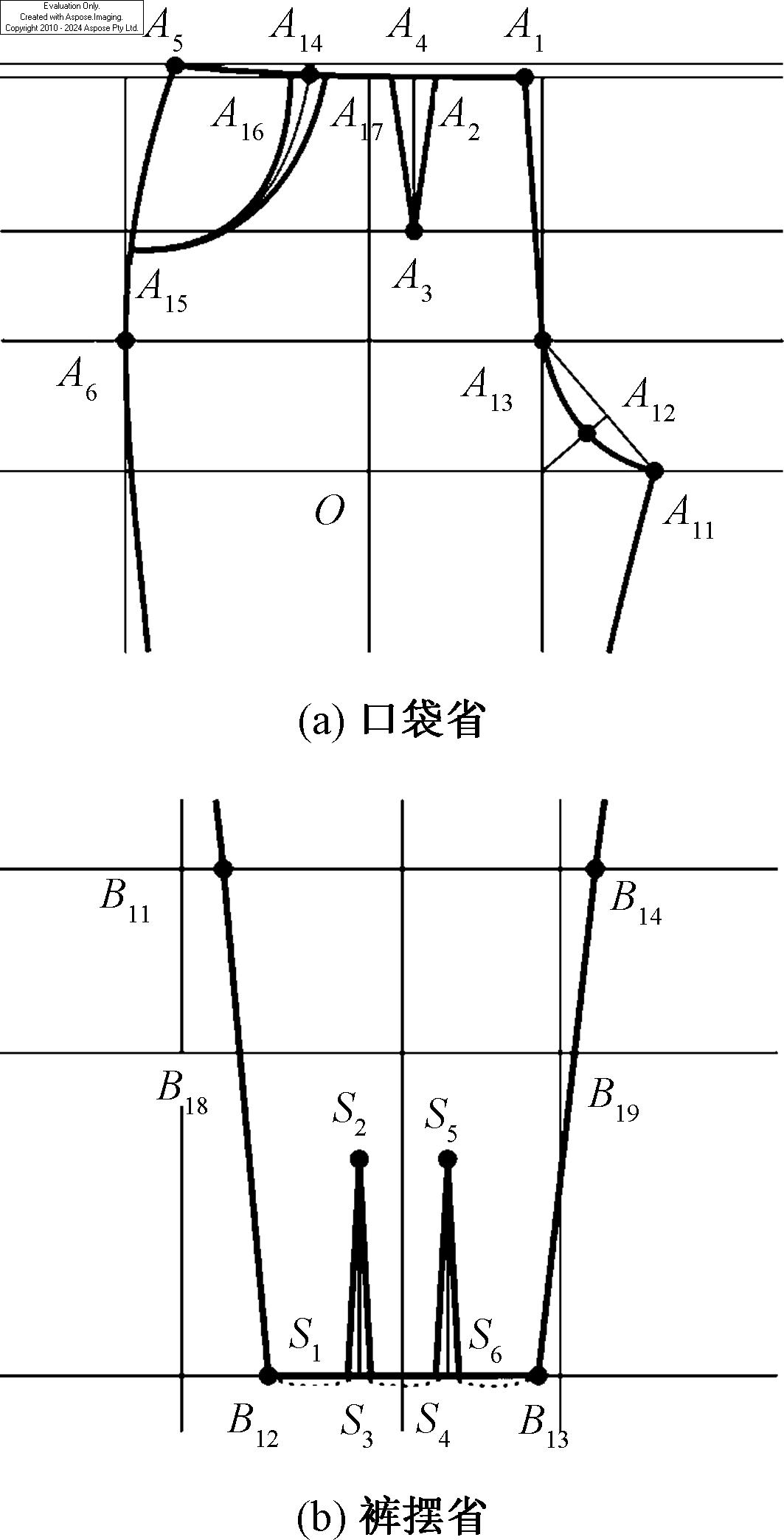
Fig.12

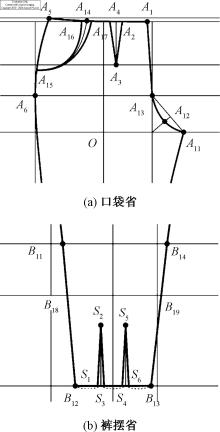
Added parametric constraint annotations. (a) Pocket dart; (b) Bottom dart"

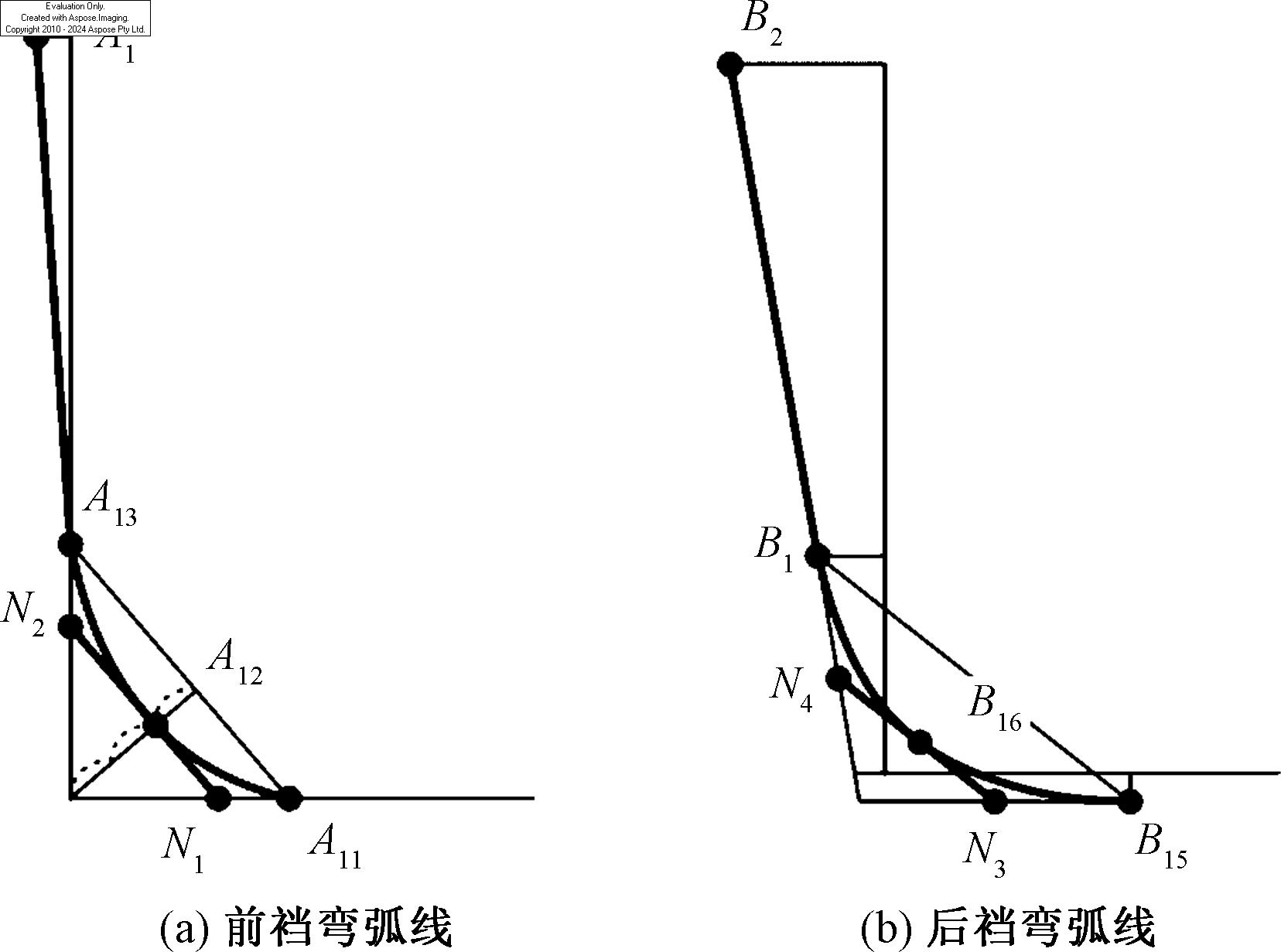
Fig.13

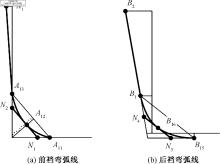
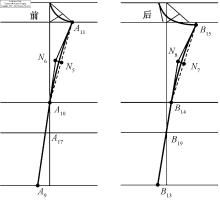
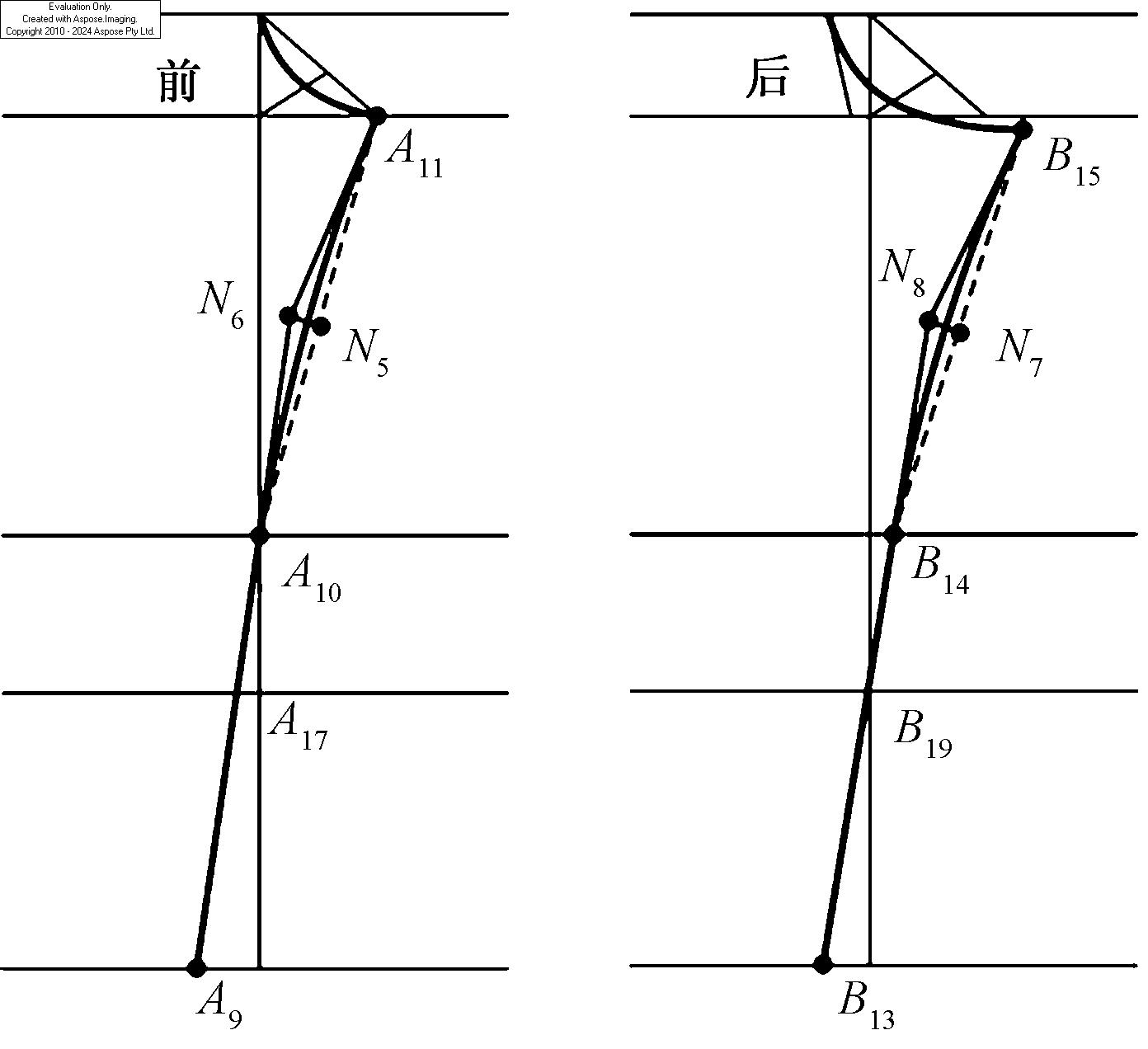
Front and back crotch curve fitting with new constraints. (a) Front crotch curve; (b)Back crotch curve"

Fig.14

Inner seam fitting constraint rules"

Fig.15

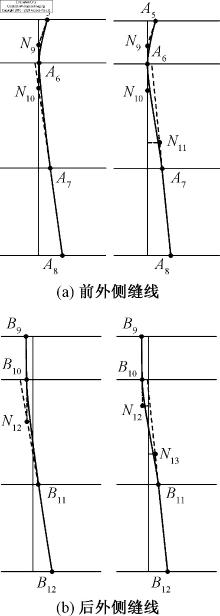
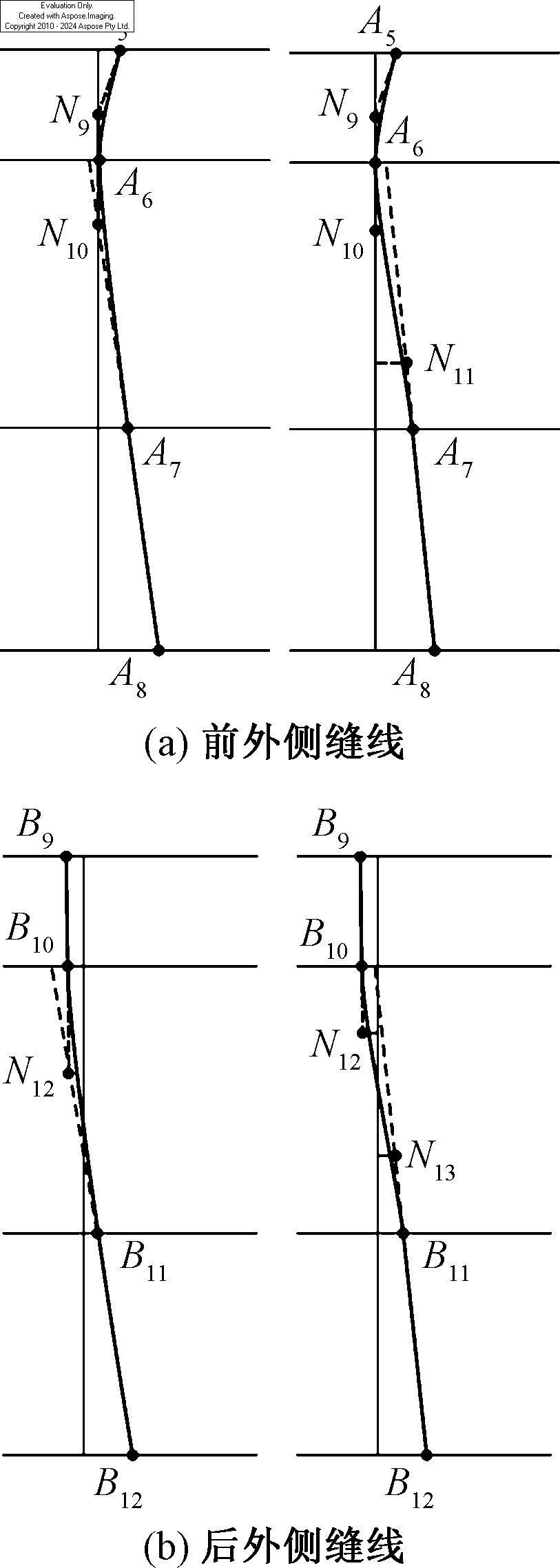
Outer seam fitting constraint rules. (a) Front outseam; (b) Back outseam"

Fig.16

Pocket curve fitting constraint rules"

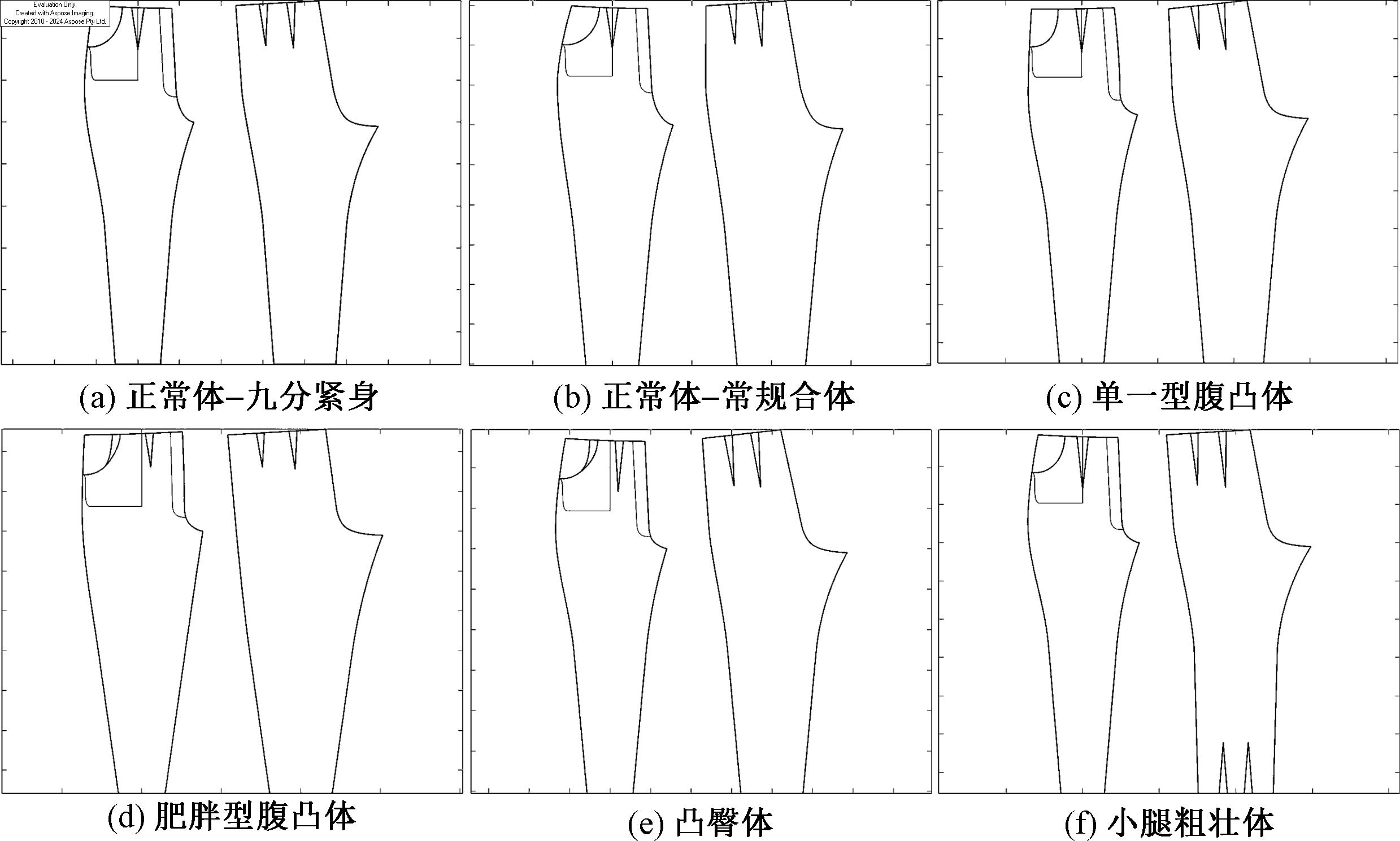
Fig.17

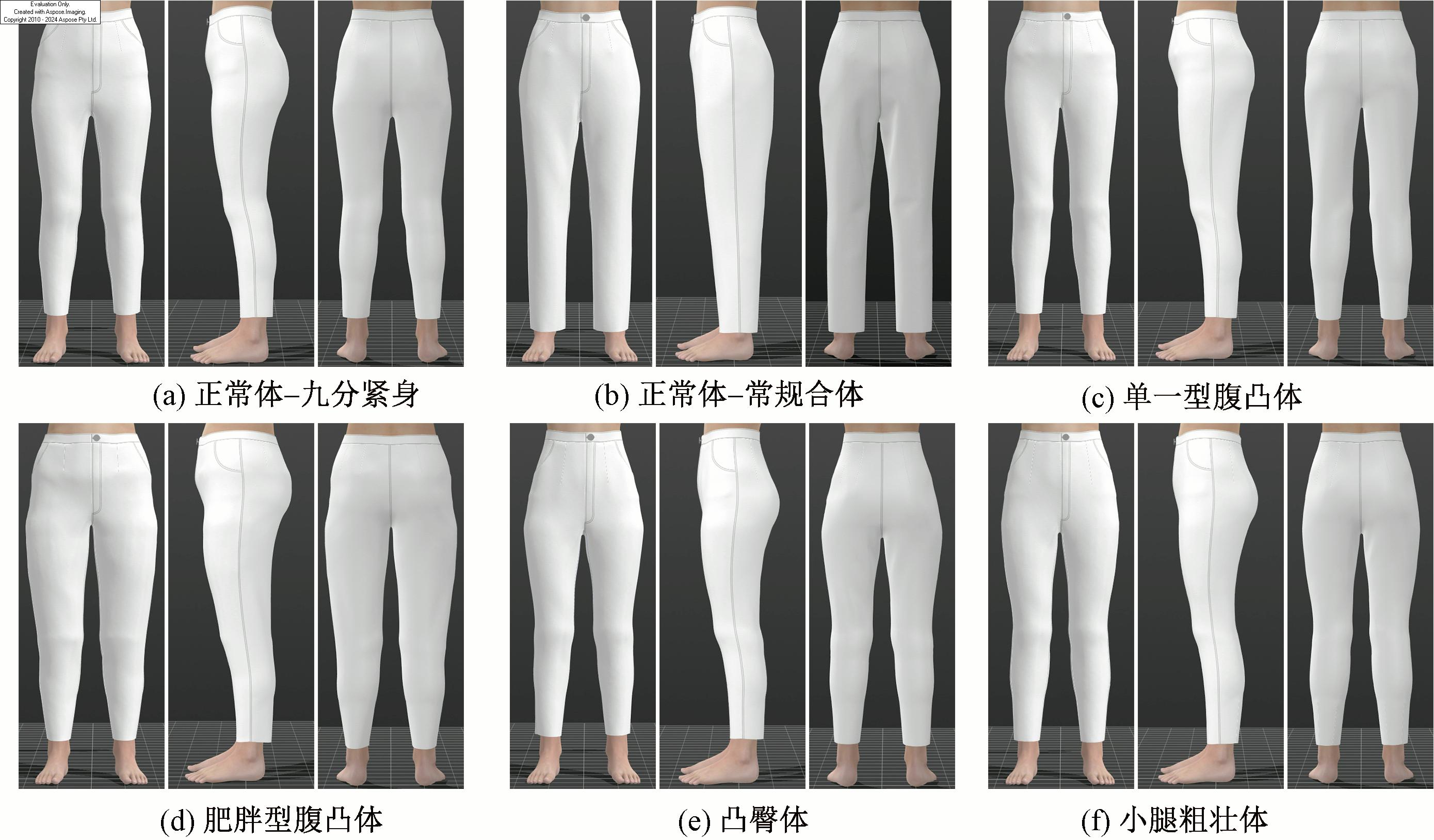
Automatically generated trouser patterns. (a) Standard body type-nine point tight; (b) Standard body type-regular fitting;(c) Single abdominous type; (d) Obese abdominous type; (e) Large buttocks; (f) Calf hypertrophy"

Tab.5

Comparison of seam length between front and back trouser panels"

类型 内侧缝线/cm 外侧缝线/cm
差值 差值
正常
九分紧身 58.58 58.30 0.28 86.33 86.29 0.04
常规合体 61.11 60.33 0.78 91.01 90.75 0.26
腹凸
单一型 66.15 66.04 0.11 93.77 93.75 0.02
肥胖型 66.47 66.19 0.28 90.63 90.63 0
凸臀体 61.21 61.00 0.21 88.39 88.27 0.12
小腿粗壮体 66.34 66.19 0.15 94.53 94.25 0.28

Fig.18

Virtual try-on effect. (a) Standard body type-Nine point tight; (b) Standard body type-regular fitting;(c) Single abdominous type; (d) Obese abdominous type; (e) Large buttocks; (f) Calf hypertrophy"

Fig.19

Stress test point schematic diagram"

Fig.20

Pressure maps of each sample. (a) Standard body type; (b) Single abdominous type; (c) Obese abdominous type;(d) Large buttocks; (e) Calf hypertrophy"

[1] 刘为敏, 谢红. BP神经网络下的智能化合体服装样板生成[J]. 纺织学报, 2018, 39(7): 116-121.
LIU Weimin, XIE Hong. Generation of intelligent fitting pattern based on BP neural network[J]. Journal of Textile Research, 2018, 39(7): 116-121.
[2] 周艳红, 江红霞, 陈玲. 基于AutoCAD参数化中式嫁衣样板的自动生成[J]. 纺织学报, 2022, 43(9): 175-181.
ZHOU Yanhong, JIANG Hongxia, CHEN Ling. Automatic pattern-making of Chinese wedding dress based on AutoCAD parameterization[J]. Journal of Textile Research, 2022, 43(9): 175-181.
[3] PENG W, QIAO K, BAO Y D, et al. Free-form surface flattening based on rigid registration and energy optimization[J]. International Journal of Precision Engineering and Manufacturing, 2022, 23(8): 921-927.
[4] ZHOU X Z, WANG Z H, WANG B H, et al. Development of a personalized female trouser pattern based on three-dimensional measurements[J]. AATCC Journal of Research, 2021, 8(1_suppl): 229-236.
[5] 姚怡, 彭颢善. 个性化服装纸样生成方法的研究与应用[J]. 上海纺织科技, 2020, 48(6): 5-7, 22.
YAO Yi, PENG Haoshan. Research and application of individualized garment pattern generation[J]. Shanghai Textile Science & Technology, 2020, 48(6): 5-7, 22.
[6] 迟瑞芹, 金菡, 亓延. 裤裙结构的取值参数及规律性[J]. 纺织学报, 2015, 36(4): 120-123.
CHI Ruiqin, JIN Han, QI Yan. Parameter values and regularity of culottes structure[J]. Journal of Textile Research, 2015, 36(4): 120-123.
[7] 王红歌, 张巧玲, 张文斌, 等. 基于裤装结构因子的贴体女裤结构的优化[J]. 北京服装学院学报(自然科学版), 2012, 32(3): 7-15.
WANG Hongge, ZHANG Qiaoling, ZHANG Wenbin, et al. Structure optimization of fitting women’s trousers based on structure factors of trousers[J]. Journal of Beijing Institute of Fashion Technology (Natural Science Edition), 2012, 32(3): 7-15.
[8] 武利利, 常丽霞. 锥形裤造型结构分析[J]. 服装学报, 2016, 1(2): 187-189, 199.
WU Lili, CHANG Lixia. Analysis on the shape and structure of tapered trousers[J]. Journal of Clothing Research, 2016, 1(2): 187-189, 199.
[9] 余国兴, 陈冰. 女子下体与裤装结构设计[J]. 东华大学学报(自然科学版), 2007, 33(6): 769-773, 821.
YU Guoxing, CHEN Bing. Female lower parts and pants pattern design[J]. Journal of Donghua Univer-sity (Natural Science), 2007, 33(6): 769-773, 821.
[10] CHEN L C, ZHU Y K, PAPANDREOU G, et al. Encoder-decoder with atrous separable convolution for semantic image segmentation[M]//Computer Vision-ECCV 2018. Cham: Springer International Publishing, 2018: 833-851.
[11] XIAO B, WU H P, WEI Y C. Simple baselines for human pose estimation and tracking[C]//Computer Vision - ECCV 2018. Cham: Springer, 2018: 472-487.
[12] 张伶俐, 张皋鹏. 应用MatLab的服装纸样参数化平面制版[J]. 纺织学报, 2019, 40(1): 130-135.
ZHANG Lingli, ZHANG Gaopeng. Parametric flat pattern design for clothing based on MatLab[J]. Journal of Textile Research, 2019, 40(1): 130-135.
[13] 谢沂真. 基于青年女性下半身体型分析的合体牛仔裤结构设计研究[D]. 北京: 北京服装学院, 2019: 36-40.
XIE Yizhen. Research on the fitted jeans baesd on the type of women lower body[D]. Beijing: Beijing Institute of Fashion Technology, 2019: 36-40.
[14] 王苑静. 腹凸女性服装造型修正研究[D]. 北京: 北京服装学院, 2023: 8-16.
WANG Yuanjing. Research on the modification of clothing modeling for women with bulge belly[D]. Beijing: Beijing Institute of Fashion Technology, 2023: 8-16.
[15] 姚怡, 俞静. 基于三维测量青年女性凸臀体评价指标[J]. 服装学报, 2016, 1(2): 147-151.
YAO Yi, YU Jing. Research on assessment system of young women's highlight hip based on 3D body measurement[J]. Journal of Clothing Research, 2016, 1(2): 147-151.
[16] 庄倩. 基于女性臀部形态差异的裤装裆部结构设计研究[D]. 长沙: 湖南师范大学, 2016: 17-22.
ZHUANG Qian. Research on the crotch design based on female hip shape variations[D]. Changsha: Hunan Normal University, 2016: 17-22.
[17] 王嫣然, 孙玉钗. 基于压力袜测量点数据的青年女性腿型分类[J]. 针织工业, 2024(7): 67-70.
WANG Yanran, SUN Yuchai. Classification of young women's leg shape based on compressive stockings nominal measurement point data[J]. Knitting Industries, 2024(7): 67-70.
[1] SUN Weibin, QIAN Juan, YUAN Chengxiao, DU Jinsong. Model construction for parametric pattern automatic generation based on Python [J]. Journal of Textile Research, 2026, 47(01): 186-195.
[2] HU Anni, WANG Jie, YANG Wushi, ZHONG Yueqi. Pattern generation from 3-D scanned garments for virtual display [J]. Journal of Textile Research, 2025, 46(08): 209-216.
[3] LIU Jinling, HE Yating, GU Bingfei. Classification and recognition of human head-neck-back curvature morphology for personalized curved-pillow design [J]. Journal of Textile Research, 2025, 46(08): 183-190.
[4] HUANG Xiaoyuan, HOU Jue, YANG Yang, LIU Zheng. Automatic generation of high-precision garment patterns based on improved deep learning model [J]. Journal of Textile Research, 2025, 46(02): 236-243.
[5] GE Sumin, LIN Ruibing, XU Pinghua, WU Siyi, LUO Qianqian. Personalized customization of curved surface pillows based on machine vision [J]. Journal of Textile Research, 2024, 45(02): 214-220.
[6] CHEN Jinwen, WANG Xin, LUO Weihao, MEI Chennan, WEI Jingyan, ZHONG Yueqi. VR-oriented personalized head and face texture generation technology of dressed human body [J]. Journal of Textile Research, 2023, 44(09): 188-196.
[7] CAI Liling, REN Qianbin, JI Xiaofen, XIAO Zengrui, ZHANG Yiling. Leg style perception evaluation and personalized customization of women's sports trousers [J]. Journal of Textile Research, 2023, 44(04): 165-171.
[8] ZHANG Jian, XU Kaiyi, ZHAO Songling, GU Bingfei. Classification and recognition of young males' neck-shoulder shape based on 2-D photos [J]. Journal of Textile Research, 2022, 43(05): 143-149.
[9] LEI Ge, LI Xiaohui. Review of digital pattern-making technology in garment production [J]. Journal of Textile Research, 2022, 43(04): 203-209.
[10] SONG Ying. Interactive design of cheongsam personalized customization and display system [J]. Journal of Textile Research, 2021, 42(04): 144-148.
[11] LI Liang, NI Junfang. Automatic generation algorithm for pattern processing codes of quilting machines [J]. Journal of Textile Research, 2020, 41(11): 162-167.
[12] . Experiential value differences of clothing personalized customization under different situations [J]. Journal of Textile Research, 2018, 39(10): 115-119.
[13] . Pattern design method based on reconstruction of parts in blouse [J]. JOURNAL OF TEXTILE RESEARCH, 2015, 36(08): 116-120.
Viewed
Full text


Abstract

Cited

  Shared   
  Discussed   
No Suggested Reading articles found!