Journal of Textile Research ›› 2025, Vol. 46 ›› Issue (01): 111-118.doi: 10.13475/j.fzxb.20240203001

• Dyeing and Finishing Engineering • Previous Articles     Next Articles

Preparation of multi-colorant photochromic microcapsules and their photochromic properties in fabrics

LU Hui1, CAI Qinze1, ZHANG Guoqing1, ZHOU Lan1,2, LIU Guojin2,3, SHAO Min1()   

  1. 1. Zhejiang Provincial Key Laboratory of Fiber Materials and Manufacturing Technology, Zhejiang Sci-Tech University,Hangzhou, Zhejiang 310018, China
    2. Zhejiang Provincial Innovation Center of Advanced Textile Technology, Shaoxing, Zhejiang 312000, China
    3. Key Laboratory of Advanced Textile Materials and Manufacturing Technology,Ministry of Education, Zhejiang Sci-Tech University, Hangzhou, Zhejiang 310018, China
  • Received:2024-02-26 Revised:2024-09-18 Online:2025-01-15 Published:2025-01-15
  • Contact: SHAO Min E-mail:shaom@zstu.edu.cn

Abstract:

Objective Photochromic dye is a type of intelligent material with reversible photochromic function. Most organic photochromic dyes have single color-changing color spectra, which are difficult to meet the needs of diverse color changes. In order to solve the problem that the color-changing range of photochromic dyes is narrow and the color is limited to reversible changes from colorless to colored, a method for widening the color range of photochromic microcapsules is proposed.

Method Multi-colorant photochromic microcapsules were prepared by in-situ polymerization with the composite of photochromic dye spiroxazine and phase change solvent butyl stearate as the initial core material, acid dye as the extended dye, and melamine resin as the wall material. The surface morphology, characteristic functional groups and thermal properties of microcapsules were characterized using scanning electron microscope, infrared spectrometer, differential scanning calorimeter and thermogravimetric analyzer. The photochromic fabrics were prepared by screen printing using multi-colorant photochromic microcapsules as main components and fabrics as substrates, and the related color-changing properties were studied.

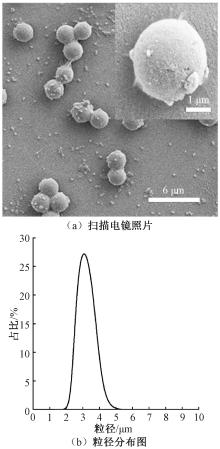
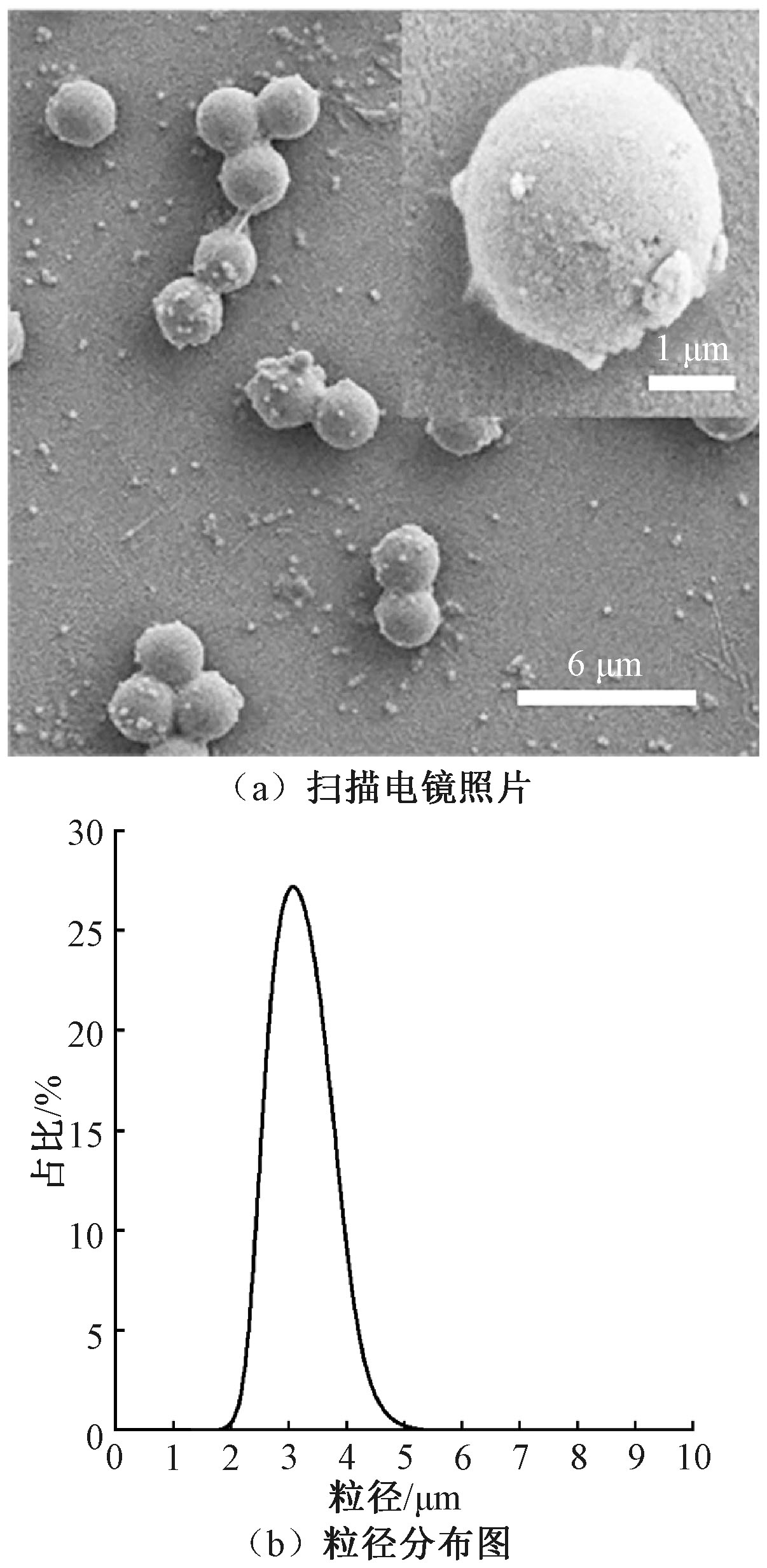
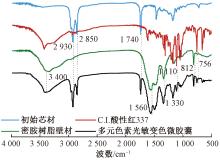
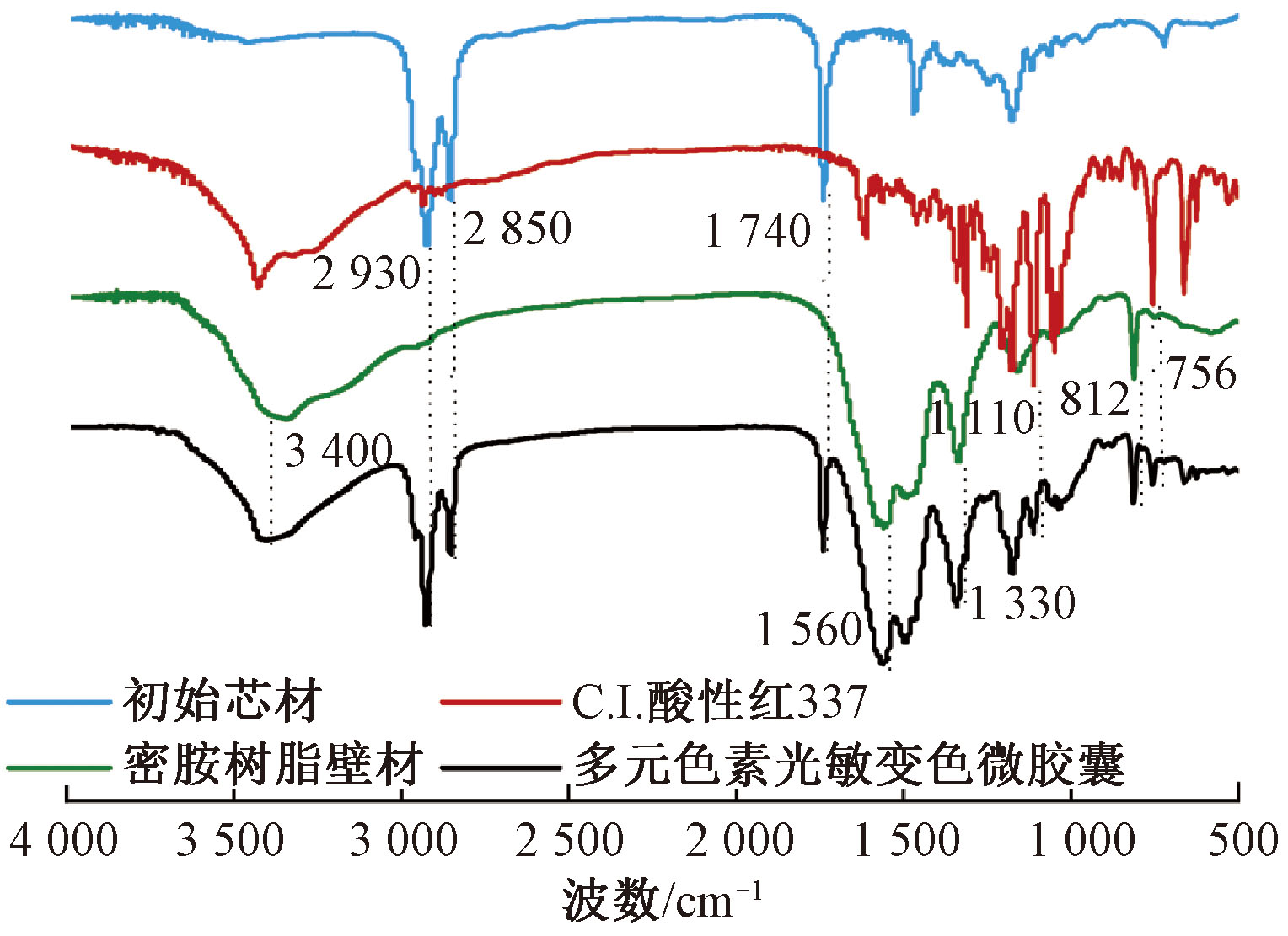
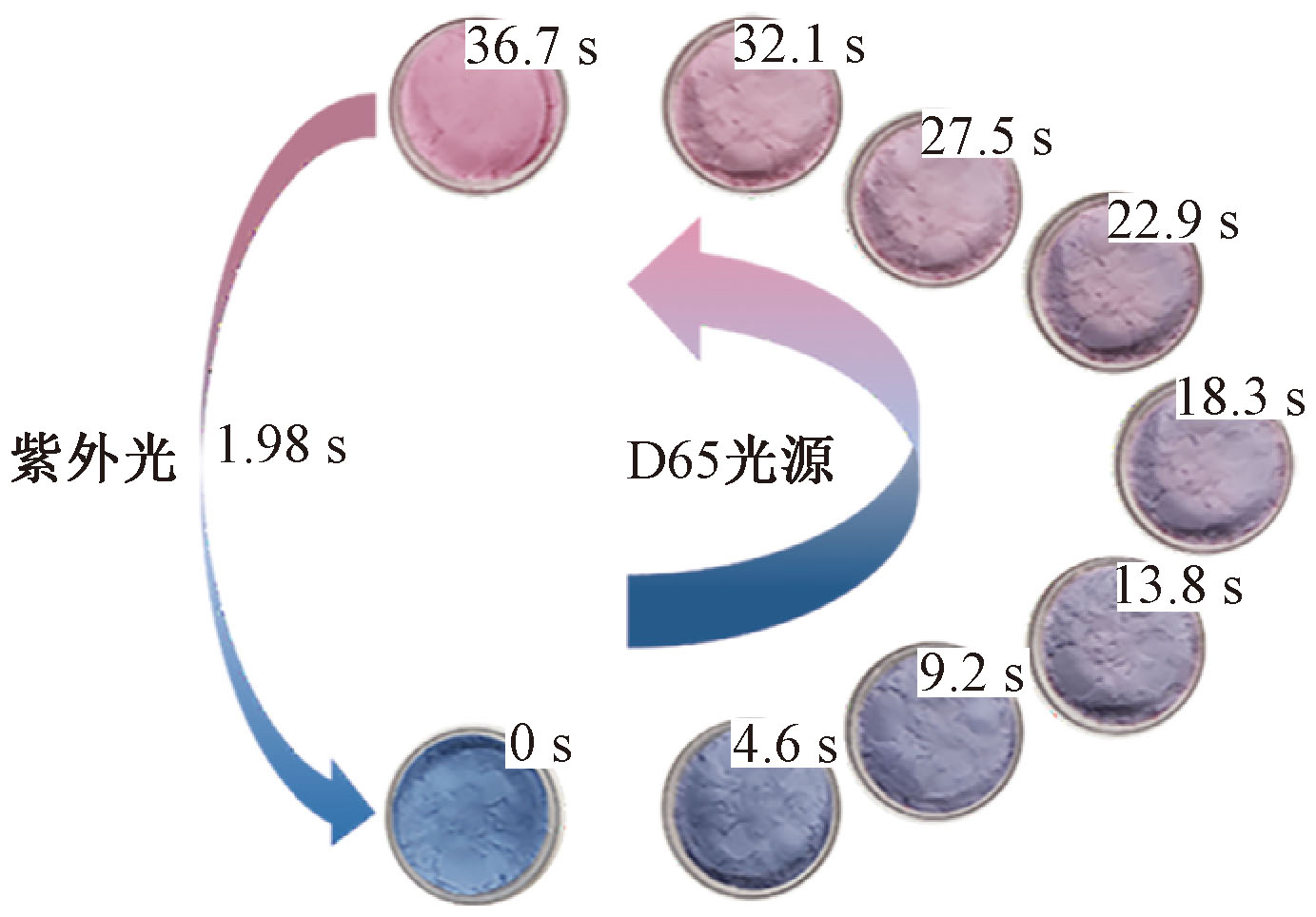
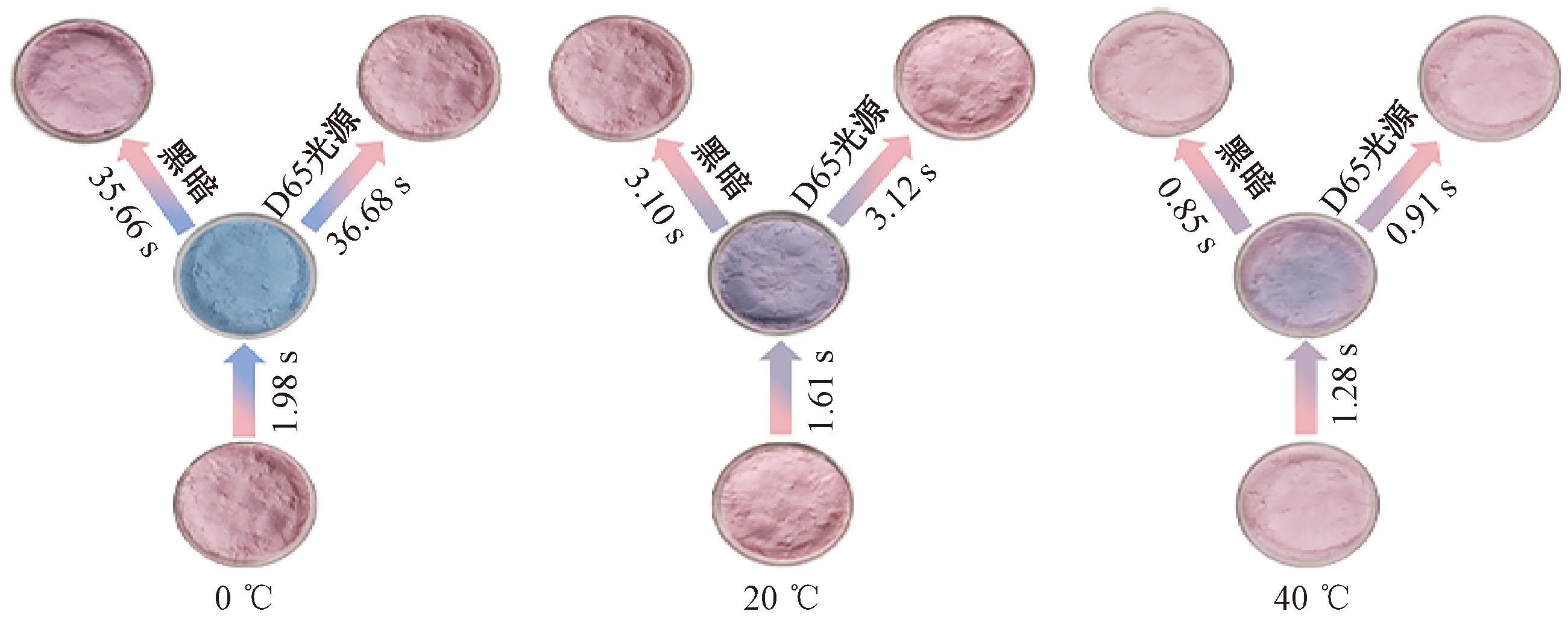
Results The photochromic microcapsules prepared by in-situ polymerization were spherical and had good encapsulation integrity. A small number of irregular particles on the surface was self-polymerized melamine resin, and no obvious agglomeration occered between the microcapsules. The microcapsule particle size was relatively uniform, with an average particle size of about 3 μm. The core material with the mass ratio of spioxazine to butyl stearate to acid dye of 0.05:50:0.1 was selected, and the mass ratio of the core to wall material was adjusted. When the core to wall ratio is 1:1, the encapsulation rate of photochromic microcapsules reached 73.4%. Through the infrared spectrum analysis of the photochromic microcapsule and its components, it could be inferred that there is no chemical reaction between the core material, the extended dye and the wall material. The photochromic microcapsule contained only the initial core material, C.I. Acid Red 337 and the wall material of melamine resin. The thermogravimetric analysis showed that the thermal degradation temperature of the core material was about 190 ℃, while the thermal degradation temperature of the photochromic microcapsule under the coating of melamine resin arrived at about 370 ℃, indicating that the thermal stability of the core material was improved by the microencapsulation. The photochromic microcapsules achieved reversible color change between pink and blue when irradiated by UV and D65 light source at 0 ℃. At the same ambient temperature, dark and D65 light sources showed little effect on the color recovery time of the photochromic microcapsules. Even without visible light irradiation, the photochromic microcapsules still demonstrated good color recovery. The printed patterns on fabrics achieved reversible color change under the irradiation UV and D65 light sources. No significant difference existed in the re-color state of cotton fabrics under different temperatures and color-changing cycles.

Conclusion This paper introduced a method to broaden the photochromic microcapsule chromatography. Multi-colorant photochromic microcapsules were prepared by in-situ polymerization with the compound of photochromic dye spiroxazine, phase change solvent butyl stearate and extended dye C.I. Acid Red 337 as the initial core material, and melamine resin as the wall material. The controlled mass ratio of spiroxazine to butyl stearate to extended dye C.I. Acid Red 337 is 0.05:50:0.1. When the core to wall ratio is 1:1, the prepared microcapsules have a spherical appearance with an average particle size of about 3 μm, and then capsulation rate can reach 73.4%. The photochromic microcapsules have excellent thermal stability and color-changing sensitivity. By adding acid dyes as extended colorants with different color shades and mass ratios, the photochromic microcapsules can achieve color changes between different colors, which significantly expands the color-change range of photochromic microcapsules. The microcapsules can be applied to cotton, polyester and other fabrics through screen printing process, which can give fabrics good color sensitivity and stability.

Key words: photochromic dye, extended dye, color-changing microcapsule, screen printing, photochromic fabric

CLC Number: 

  • TS194.5

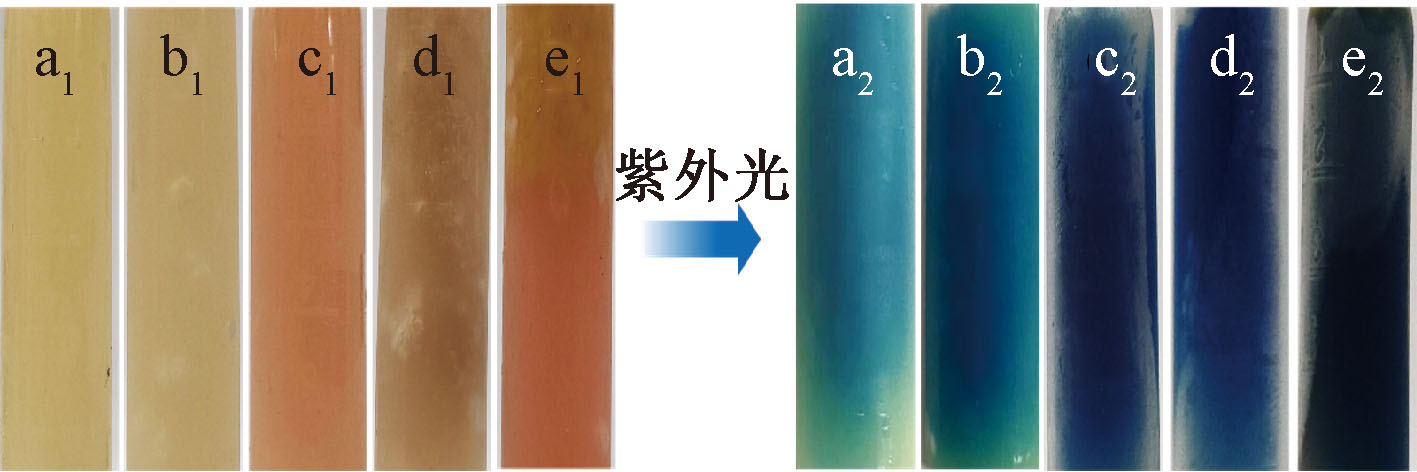
Fig.1

Color changes of initial core material before and after ultraviolet irradiation at 0 ℃ at different mass ratios of photosensitive dye to butyl stearate a—0.03:50; b—0.04:50; c—0.05:50;d—0.06:50;e—0.07:50。"

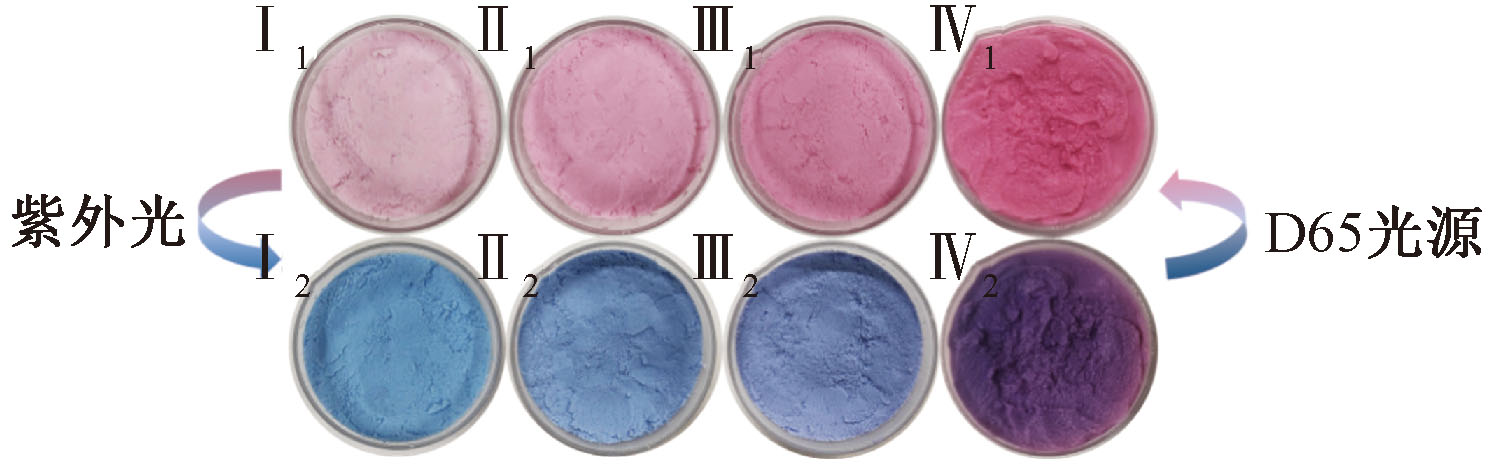
Fig.2

Color changes of photochromic microcapsules before and after ultraviolet irradiation at 0 ℃ at different mass ratio of photosensitive dye to butyl stearate to acid dye Ⅰ—0.05:50:0.02; Ⅱ—0.05:50:0.05; Ⅲ—0.05:50:0.1; Ⅳ—0.05:50:0.2。"

Fig.3

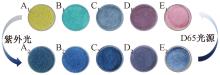
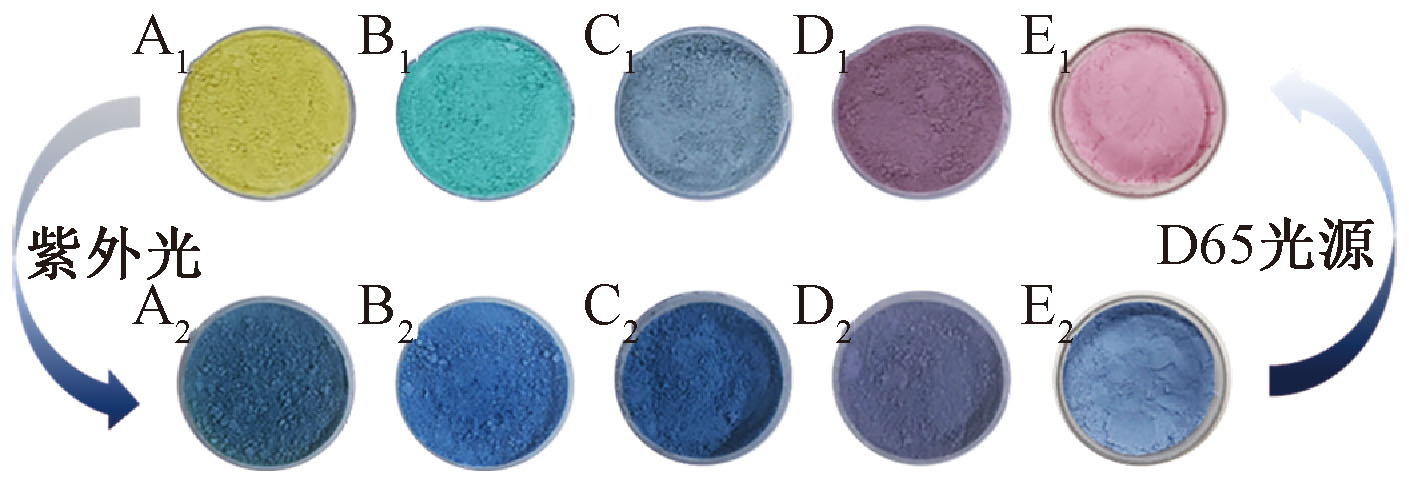
Color changes of photochromic microcapsules prepared by acid dyes of different hues before and after ultraviolet irradiation at 0 ℃"

Fig.4

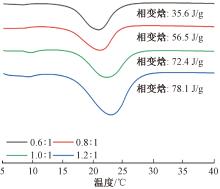
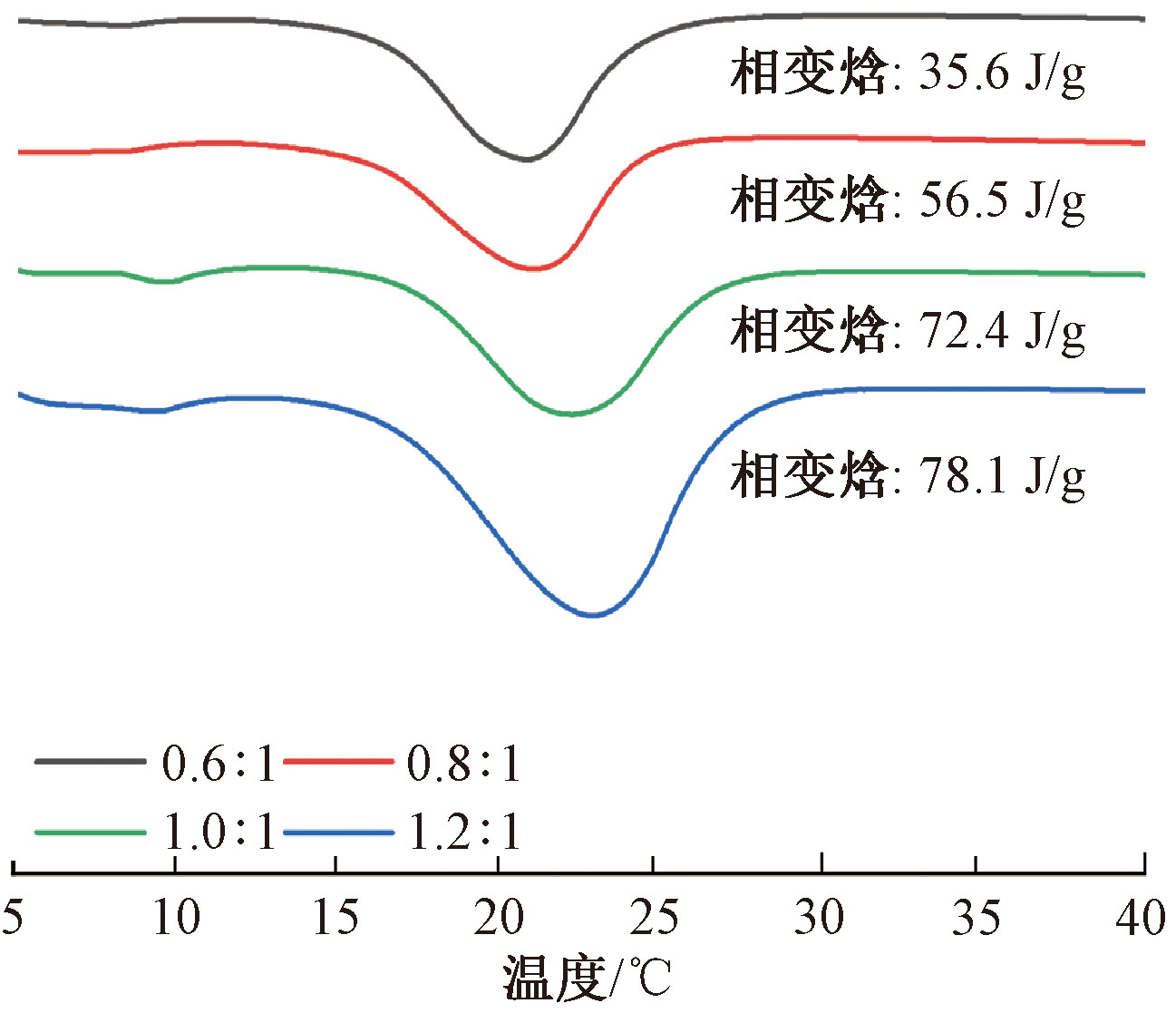
DSC curves of photochromic microcapsules at different core to wall ratios"

Fig.5

SEM image (a)and particle size distribution(b) of photochromic microcapsules"

Fig.6

FT-IR spectra of photochromic microcapsules and their components"

Fig.7

Thermogravimetric analysis curves of photochromic microcapsules and their components"

Fig.8

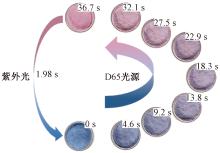
Color changes of photochromic microcapsules under ultraviolet and D65 light sources at 0 ℃"

Fig.9

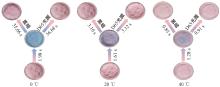
Color sensitivities of photochromic microcapsules under dark and D65 light sources at different ambient temperatures"

Fig.10

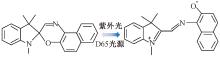
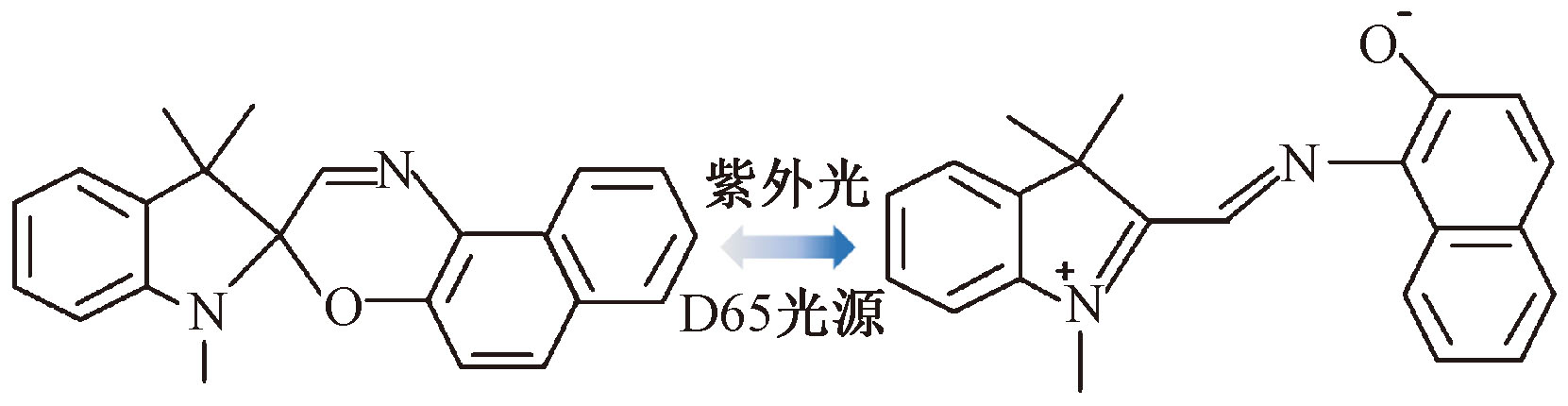
Photochromic process of spiroxazine dye"

Fig.11

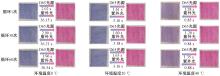
Color-changing sensitivities of photochromic microcapsule printed cotton fabrics at different ambient temperatures after 1, 30 and 60 color-changing cycles"

[1] SUN S F, GAO Y, HAN N, et al. Reversible photochromic energy storage polyurea microcapsules via in-situ polymerization[J]. Energy, 2021, 219: 119630-119642.
[2] MARYAM Raeesi, ZEINAB Alinejad, VAHID Hamrang, et al. Solid-state photochromism of spironaphthoxazine loaded microcapsules with photo-patterning and thermo-regulating features[J]. Journal of Colloid and Interface Science, 2020, 578: 379-389.
[3] HAN Y, YAN X X, ZHAO W T. Effect of thermochromic and photochromic microcapsules on the surface coating properties for metal substrates[J]. Coatings, 2022, 12: 1642-1657.
[4] HUANG N, YAN X X, ZHAO W T. Influence of photochromic microcapsules on properties of waterborne coating on wood and metal substrates[J]. Coatings, 2022, 12: 1750-1767.
[5] FAN F, WU Y Z. Photochromic properties of color-umatching, double-shelled microcapsules covalently bonded onto cotton fabric and applications to outdoor clothing[J]. Journal of Applied Polymer Science, 2017, 134(15): 44698-44711.
[6] GAO Y, ZHANG W H, HAN N, et al. Cotton fabric containing photochromic microcapsules combined thermal energy storage features[J]. Colloids and Surfaces A: Physicochemical and Engineering Aspects, 2022, 648: 129249-129260.
[7] CHEN J J, PENG X Y, XIAO C C, et al. Rewritable polymer materials for ultraviolet laser based on photochromic microcapsules[J]. Industrial & Engineering Chemistry Research, 2022, 61(17): 5833-5842.
[8] SHEN X Y, GE M Q, JIN Y. Facile development of novel photochromic luminescent composite fiber for anticounterfeiting and wearable UV detector[J]. Journal of Luminescence, 2022, 252: 119373-119382.
[9] 金玲, 裴广玲, 赵国樑, 等. 光致变色微胶囊的制备与性能[J]. 化学研究, 2009, 20(1): 15-19.
JIN Ling, PEI Guangling, ZHAO Guoliang, et al. Preparation and properties of photochromic micro-capsules[J]. Chemical Research, 2009, 20(1): 15-19.
[10] ZHOU Y H, YAN Y F, DU Y, et al. Preparation and application of melamine-formaldehyde photochromic microcapsules[J]. Sensors and Actuators B: Chemical, 2013, 188: 502-512.
[11] 周华建. 基于光热变色储能功能的微胶囊性能研究及应用[D]. 天津: 天津工业大学, 2017: 1-20.
ZHOU Huajian. Research and application of microcapsules based on photothermochromic energy storage function[D]. Tianjin:Tiangong University, 2017: 1-20.
[12] ZHOU L, YE J P, CAI Q Z, et al. Study on preparation, characterization and application of mixed-colorants thermochromic microcapsules[J]. Particuology, 2024, 88: 89-97.
[13] 叶景鹏. 热敏变色微胶囊的制备及其在纺织品上的应用研究[D]. 杭州: 浙江理工大学, 2023:3-23.
YE Jingpeng. Preparation of thermochromic microcapsules and their application in textiles[D]. Hangzhou: Zhejiang Sci-Tech University, 2023:3-23.
[14] 冯长根, 王建营. 螺噁嗪光致变色反应机理研究进展[J]. 有机化学, 2006(7): 1012-1023.
FENG Changgen, WANG Jianying. Progress in the photochromic mechanism of spirooxazine[J]. Chinese Journal of Organic Chemistry, 2006 (7): 1012-1023.
[1] ZHANG Zhe, WANG Rui, CAI Tao. Efficient and economical preparation of patterned durable waterborne polyurethane/carbon nanotube multifunctional antistatic composite fabrics [J]. Journal of Textile Research, 2025, 46(02): 207-217.
[2] CHEN Kun, XU Jingying, ZHENG Yiqian, LI Jialin, HONG Xinghua. Conductivity and electrical heating properties of reduced graphene oxide modified silk fabric by screen printing [J]. Journal of Textile Research, 2024, 45(03): 122-128.
[3] HU Anzhong, WANG Chengcheng, ZHONG Ziheng, ZHANG Liping, FU Shaohai. Preparation and properties of fast response thermochromic textiles doped with boron nitride nanosheets [J]. Journal of Textile Research, 2023, 44(05): 164-170.
[4] ZHANG Xingyue, HAN Pengshuai, WANG Yimeng, ZHANG Yunxiao, ZHOU Lan, LIU Guojin. Construction of highly stable photonic crystals on textile substrates with asymmetric wetting characteristics [J]. Journal of Textile Research, 2022, 43(08): 88-94.
[5] SHEN Ruichao, CHI Xinfu, SUN Yize. Redundant actuation control strategy of positioning platform for 3-D additive printing machine [J]. Journal of Textile Research, 2020, 41(10): 164-169.
[6] WANG Xiaohui, LIU Yuegang, MENG Zhuo, SUN Yize. Optimization of process parameters for 3D additive screen printing based on genetic algorithm and neural network [J]. Journal of Textile Research, 2019, 40(11): 168-174.
[7] Huaizhong CHEN. Design of networked and electric control system for flat screen printing unit [J]. JOURNAL OF TEXTILE RESEARCH, 2014, 35(2): 78-0.
[8] JING Jun-Feng, LI Guang-Yan, LI Peng-Fei. Curve matching algorithm and its application in fabric automatic register detection [J]. JOURNAL OF TEXTILE RESEARCH, 2012, 33(8): 145-148.
[9] LI Peng;HAO Kuangrong;DING Yongsheng. Fast matching algorithm and its application to rotary screen printing machines [J]. JOURNAL OF TEXTILE RESEARCH, 2008, 29(7): 112-116.
Viewed
Full text


Abstract

Cited

  Shared   
  Discussed   
No Suggested Reading articles found!