Journal of Textile Research ›› 2025, Vol. 46 ›› Issue (10): 152-158.doi: 10.13475/j.fzxb.20250201601

• Dyeing and Finishing Engineering • Previous Articles     Next Articles

L-cysteine/bromelain synergistic one-bath process anti-shrinkage finishing of wool fabrics

WANG Siyu1, WANG Feng2, WANG Hongbo1, SU Jing1()   

  1. 1. College of Textile Science and Engineering, Jiangnan University, Wuxi, Jiangsu 214122, China
    2. Jiangyin Xiangfei Textile Technology Co., Ltd., Wuxi, Jiangsu 214413, China
  • Received:2025-02-12 Revised:2025-06-26 Online:2025-10-15 Published:2025-10-15
  • Contact: SU Jing E-mail:sujing@jiangnan.edu.cn

Abstract:

Objective Wool fibers feature a scaly cuticle layer, rendering wool fabrics prone to felting shrinkage during washing, wet-heat treatment, or mechanical action. This felting results in dimensional shrinkage, stiff hand feel, and reduced elasticity, significantly compromising fabric quality. To overcome limitations of traditional methods, such as complex two-bath processes and significant fiber damage, this study explores a simplified, low-damage one-bath finishing approach. Specifically, we developed a novel, eco-friendly single-bath finishing process utilizing green agents L-cysteine and bromelain under mild conditions. This single-step process efficiently disrupts the wool scale structure, effectively balancing anti-felting performance with tensile strength retention. It also enhances functional properties like dyeability and wettability, while substantially streamlining processing and reducing chemical consumption.

Method Fabrics were initially degreased using sodium dodecyl sulfate. Subsequently, the degreased wool fabrics underwent a novel one-bath, one-step anti-felting treatment employing a solution containing L-cysteine and bromelain. To evaluate the treatment efficacy and potential fiber damage, we measured: felting shrinkage using an automatic shrinkage tester; breaking strength with a fabric strength tester; alkali solubility; and surface thiol content. Additionally, surface morphology was examined by scanning electron microscopy, and chemical structural changes were analyzed by Fourier transform infrared spectroscopy. Furthermore, fabric wettability, hand feel, and dyeing properties were characterized using a contact angle meter, fabric style tester, and computer color matching system, respectively.

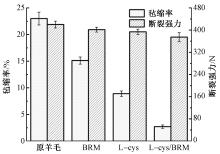
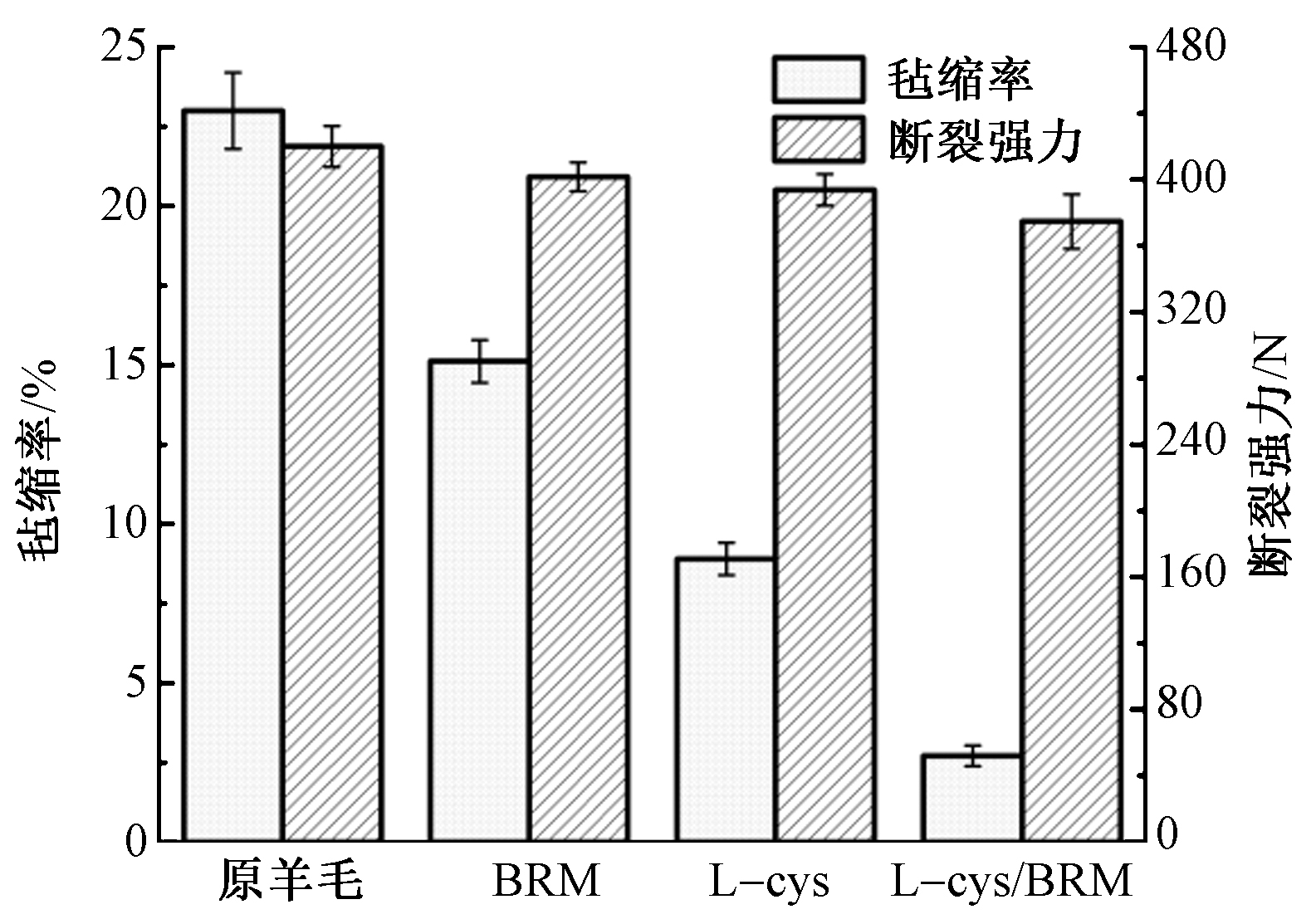
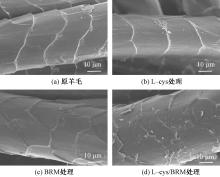
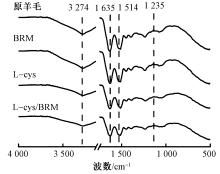
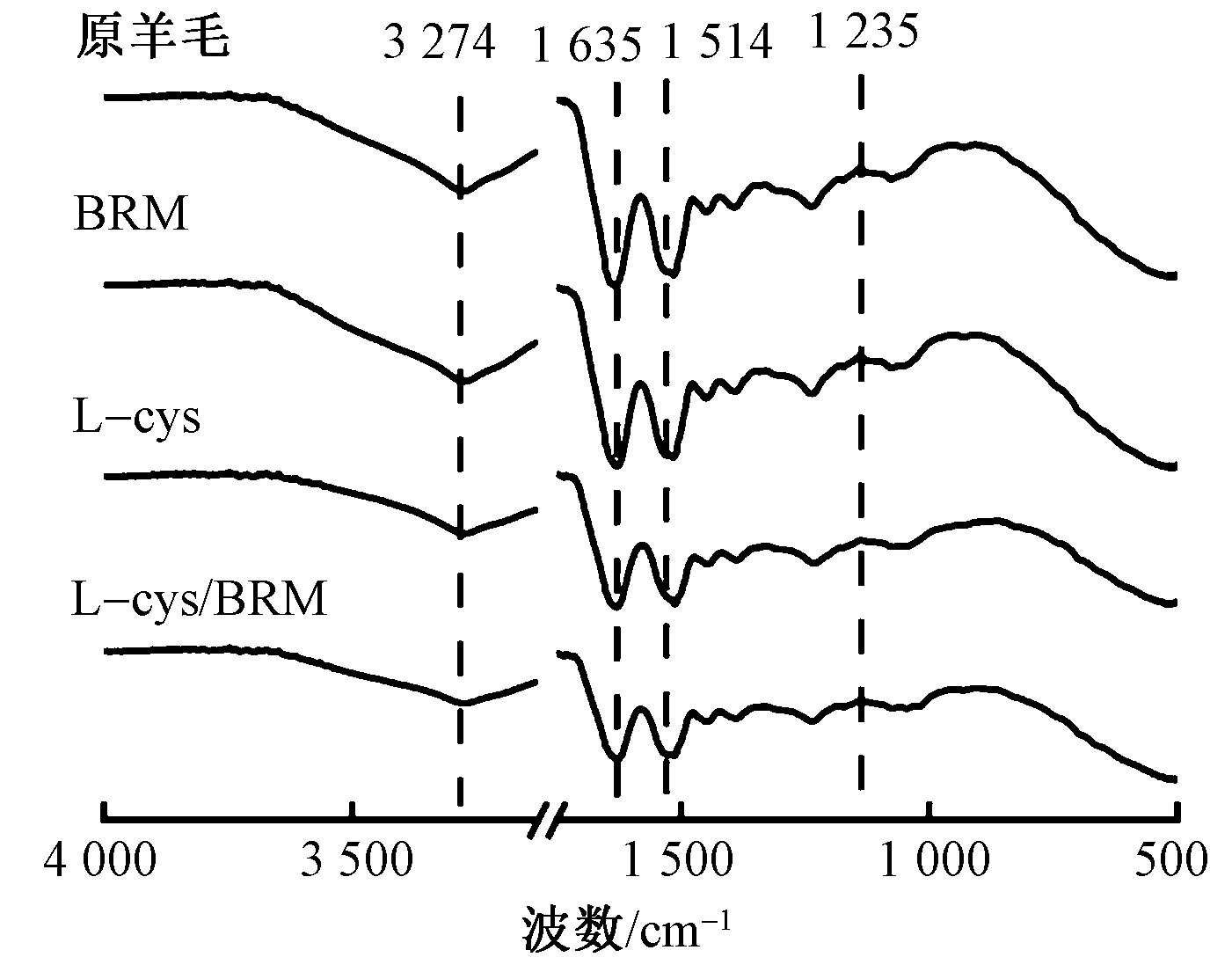
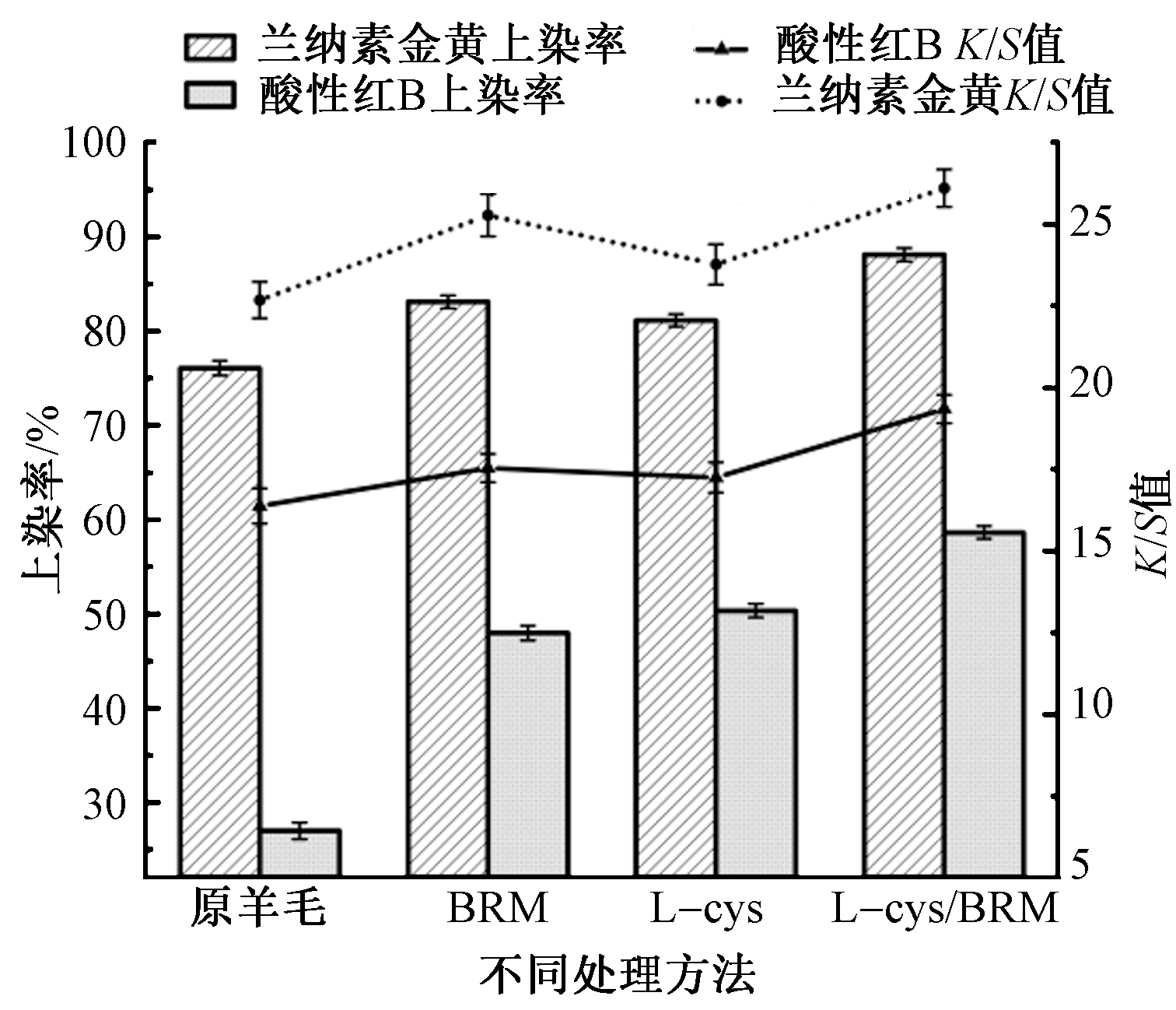
Results The synergistic one-bath one-step system integrating L-cysteine (L-cys) and bromelain (BRM) effectively addressed the limitations of low efficiency in single-protease systems and operational complexity in conventional two-bath bio-anti-felting processes. Mechanistic studies confirmed that L-cys selectively cleaves disulfide bonds within the scale layer, creating reactive sites that significantly enhance the proteolytic accessibility of BRM. This sequential mechanism (disulfide reduction followed by peptide hydrolysis) enables thorough scale exfoliation of cuticle scales while preserving the wool fiber integrity. Performance metrics indicated that felting shrinkage decreased dramatically from 23.12% in untreated fabric to 2.98% in treated samples, accompanied by a controlled breaking strength loss of merely 10.80%. Quantitative biochemical analyses further validated the mechanism, where alkali solubility was increased from 13.41% to 18.30%, indicating modified keratin solubility due to structural disruption, while surface thiol content surged from (1.43 ± 0.05) μmol/mg to (3.42 ± 0.06) μmol/mg, providing direct evidence of disulfide bond cleavage and cooperative interaction between the agents. Morphological characterization via scanning electron microscopy corroborated efficient and uniform scale removal, with no observable fibrillation or cortical damage. Fourier transform infrared spectroscopy analysis confirmed that the treatment exclusively targeted disulfide bonds and surface-exposed peptide linkages with no irreversible hydrolysis of the keratin polypeptide backbone, thereby minimizing core fiber damage. Functionally, the process enhanced multiple fabric properties, with wettability improved markedly (contact angle reduced from 136° to 80° and wetting time shortened to 120 s), and dyeing performance intensified (dye uptake rates reached 88.11% for Lanasol Golden Yellow and 58.64% for Acid Red B, with corresponding K/S values substantially exceeding untreated controls). Tactile attributes were optimized (softness increased to 87.53, smoothness elevated to 79.04, stiffness reduced to 14.41). These multidimensional improvements demonstrate the system's capacity to deliver high-efficiency anti-felting with minimal fiber compromise while concurrently upgrading functional performance.

Conclusion This study establishes a synergistic L-cysteine/bromelain one-bath system that achieves low-damage anti-felting finishing for wool textiles. The mechanism involves L-cysteine-mediated selective disulfide bond cleavage in the scale layer, which exposes reactive sites for bromelain to hydrolyze peptide bonds. This sequential action enables profound scale exfoliation while maintaining the structural integrity of the fiber cortex, reducing felting shrinkage to 2.98% with only 10.80% breaking strength loss. Optimal parameters (3.0 g/L L-cysteine, 60 U/mL bromelain, pH 7.0, 55 ℃, 90 min) balance anti-felting efficacy and mechanical integrity. The treatment concurrently enhances functional properties of wool fabric, where alkali solubility is increased and thiol content confirms structural modification, while scale removal improves dye uptake and wettability with elevated softness and smoothness indicating improved hand feel. Compared to traditional two-bath or chemical-intensive methods, this one-bath approach simplifies production flows, eliminates hazardous reagents, and reduces environmental footprint. Consequently, the L-cysteine/bromelain system establishes an eco-efficient industrial bio-anti-felting strategy that delivers superior performance with minimal fiber damage, demonstrating strong potential for green textile applications.

Key words: anti-shrinkage finishing, wool fabric, L-cysteine, bromelain, bio-enzyme, one-bath process

CLC Number: 

  • TS195.56

Fig.1

Influence of different finishing processes on felt shrinkage and strength of fabric"

Tab.1

Influence of different finishing processes on alkaline solubility of fabric"

织物整理工艺 碱溶解度/%
原羊毛 13.41±0.23
BRM处理 13.93±0.31
L-cys处理 15.16±0.22
L-cys/BRM处理 18.30±0.41

Tab.2

Influence of different finishing processes on surface thiol content of wool"

织物整理工艺 巯基含量/(μmol·mg-1)
原羊毛 1.43±0.05
BRM处理 1.53±0.04
L-cys处理 2.16±0.04
L-cys/BRM处理 3.42±0.06

Fig.2

SEM images of wool fabrics. (a) Raw wool; (b) L-cys treated fabric; (c) BRM treated fabric; (d) L-cys/BRM co-treated fabric"

Fig.3

FT-IR spectra of wool fabric with different finishing processes"

Fig.4

Influence of different finishing processes on dye-uptake rate and K/S value of wool fabric"

Tab.3

Influence of different finishing processes on wettability of wool fabric"

织物整理工艺 接触角/(°) 润湿时间/s
原羊毛 136 >1 800
L-cys处理 118 210
BRM处理 108 220
L-cys/BRM处理 80 120

Tab.4

Influence of different finishing processes on hand feel of wool fabric"

织物整理工艺 柔软度 光滑度 硬挺度
原羊毛 80.18 77.64 21.39
L-cys处理 84.71 77.99 17.93
BRM处理 84.69 77.73 17.09
L-cys/BRM处理 87.53 79.04 14.41
[1] 陶林敏. 无AOX防毡缩羊毛织物的研发[D]. 江苏: 苏州大学, 2022: 1-16.
TAO Linmin. Study on non-Aox anti-felting finishing of wool fabric[D]. Jiangsu: Soochow University, 2022: 1-16.
[2] 张腾飞. 基于蛋白酶K的羊毛剥鳞技术研究[D]. 上海: 东华大学, 2023: 23-26.
ZHANG Tengfei. Research on wool scale-peeling technology based on protease K[D]. Shanghai: Donghua University, 2023: 23-26.
[3] 范雪荣, 黄庞惠, 王强. 羊毛的酶法防毡缩整理综述[J]. 针织工业, 2015(3): 30-35.
FAN Xuerong, HUANG Panghui, WANG Qiang. Review on enzymatic anti-shrinking finishing of wool[J]. Knitting Industries, 2015(3): 30-35.
[4] 骆坚城, 栾文辉, 余圆圆, 等. 基于角蛋白酶-蛋白酶协同增效的酶法羊毛防缩加工[J]. 毛纺科技, 2023, 51(9): 43-50.
LUO Jiancheng, LUAN Wenhui, YU Yuanyuan, et al. Enzymatic anti-felting processing of wool based on keratin-protease synergism[J]. Wool Textile Journal, 2023, 51(9): 43-50.
[5] KAUR A, CHAKRABORTY J N. Controlled eco-friendly shrink-resist finishing of wool using bromelain[J]. Journal of Cleaner Production, 2015, 108: 503-513.
doi: 10.1016/j.jclepro.2015.07.147
[6] 王玉霞, 王强, 余圆圆, 等. 羊毛织物酶法与化学法防毡缩整理效果比较[J]. 毛纺科技, 2020, 48(5): 33-37.
WANG Yuxia, WANG Qiang, YU Yuanyuan, et al. Comparison of enzymatic and chemical anti-felting finishing effects on wool fabrics[J]. Wool Textile Journal, 2020, 48(5): 33-37.
[7] 黄庞慧. 多酶协同处理的羊毛防毡缩整理研究[D]. 无锡: 江南大学, 2014: 9-14.
HUANG Panghui. Study on anti-felting finishing of wool by multi-enzyme synergistic treatment[D]. Wuxi: Jiangnan University, 2014: 9-14.
[8] 李宇. 基于漆酶催化的酪氨酸接枝/交联羊毛改性及机理研究[D]. 无锡: 江南大学, 2022: 17-44.
LI Yu. Study on tyrosine grafting/crosslinking modification of wool and its mechanism based on laccase catalysis[D]. Wuxi: Jiangnan University, 2022: 17-44.
[9] ZHANG N, WANG Q, YUAN J, et al. Highly efficient and eco-friendly wool degradation by L-cysteine-assisted esperase[J]. Journal of Cleaner Production, 2018, 192: 433-442.
doi: 10.1016/j.jclepro.2018.05.008
[10] 余雪满. 氧化蛋白酶防毡缩整理对羊毛染色性能的影响[J]. 纺织科技进展, 2024, 46(4): 24-27.
YU Xueman. The influence of oxidative protease anti-felting treatment on wool dyeing performance[J]. Textile Science and Technology Progress, 2024, 46(4): 24-27.
[11] 沈之懿. 羊毛织物生物酶/等离子体处理比较及羊毛复合织物洗后性能研究[D]. 上海: 东华大学, 2022: 12-21.
SHEN Zhiyi. Comparison of bioenzyme/plasma treatment and post-wash performance of wool composite fabrics[D]. Shanghai: Donghua University, 2022: 12-21.
[12] 钟晨雅. 棉织物纤维素酶抛光技术研究[D]. 无锡: 江南大学, 2023: 10-24.
ZHONG Chenya. Study on cellulase polishing technology for cotton fabrics[D]. Wuxi: Jiangnan University, 2023: 10-24.
[13] 王佳忻. 化学辅助酶法羊毛织物防毡缩整理研究[D]. 无锡: 江南大学, 2024: 35-57.
WANG Jiaxin. Research on anti-shrinking finishing of wool fabrics by enzymatic method assisted by chemicals[D]. Wuxi: Jiangnan University, 2024: 35-57.
[1] GUO Qing, MAO Yangshun, REN Yajie, LIU Jimin, WANG Huaifang, ZHU Ping. Simultaneous in-situ dyeing and flame retardant functionalization of wool fabrics based on laccase catalysis [J]. Journal of Textile Research, 2025, 46(02): 161-169.
[2] LIANG Zhijie, LUO Zhengzhi, CHENG Haibing, JIA Weini, MAO Qinghui. Oxidation of caffeic acid and in-situ dyeing performance of wool fabrics catalyzed by polyoxovanadate [J]. Journal of Textile Research, 2023, 44(10): 98-103.
[3] WANG Xiaoyan, MA Ziting, XU Changhai. One-bath process for bleaching and dyeing of polyester-covered cotton fabric using disperse dye with high resistance to alkalis and peroxides [J]. Journal of Textile Research, 2023, 44(05): 38-45.
[4] HUANG Hongbo, HAN Zongbao, GUO Heng, YAO Jinbo, JIANG Huiyu, XIA Zhigang, WANG Yunli. Influence of thermal and moist treatments on shape retention performance of anti-creasing wool fabrics [J]. Journal of Textile Research, 2021, 42(12): 119-124.
[5] ZHOU Huiling, ZHU Lisha, WU Xiongying, DING Xuemei. Effect of electro-spraying treatment on anti-pilling performance of wool fabrics [J]. Journal of Textile Research, 2021, 42(10): 120-125.
[6] YU Jia, XIN Binjie, ZHUO Tingting, ZHOU Xi. Preparation and characterization of Cu/polypyrrole-coated wool fabrics for high electrical conductivity [J]. Journal of Textile Research, 2021, 42(01): 112-117.
[7] ZHANG Yue, HU Danling, REN Jinna, LI Qing. Scouring and bleaching of cotton fabric by low temperature near neutrality one-bath one-step process [J]. Journal of Textile Research, 2019, 40(09): 83-90.
[8] YU Fang, LIU Chengxia. Measurement for bending behavior by bowknot method [J]. Journal of Textile Research, 2019, 40(08): 35-39.
[9] WANG Wencong, FAN Jingjing, DING Chao, WANG Hongbo. Preparation and properties of multifunctional composite conductive wool fabric [J]. Journal of Textile Research, 2019, 40(08): 117-123.
[10] AN Fangfang, FANG Kuanjun, LIU Xiuming, CAI Yuqing, HAN Shuang, YANG Haizhen. Effect of wool fabric protease modification on droplet spreading and color performance [J]. Journal of Textile Research, 2019, 40(06): 58-63.
[11] CHEN Jingjing, WANG Biqi, WANG Xueqin. Innovation design and performance test of needle composite wool fabric [J]. Journal of Textile Research, 2019, 40(03): 49-53.
[12] ZHANG Wenjuan, JI Feng, ZHANG Ruiyun, ZHAO Xiaojie, WANG Ni, WANG Junli, ZHANG Jianxiang. Study on relationship between capillary characteristics and moisture permeability of wool fabrics [J]. Journal of Textile Research, 2019, 40(01): 67-72.
[13] . Biological enzyme combined anti-felting finishing of wool fibers [J]. Journal of Textile Research, 2018, 39(11): 85-90.
[14] . Antibacterial dyeing of wool fabric with nano prodigiosins produced by microorganism [J]. JOURNAL OF TEXTILE RESEARCH, 2018, 39(02): 91-96.
[15] . Synthesis and performance evaluation of mothproof naphthoquinone pigments for wool fabrics [J]. JOURNAL OF TEXTILE RESEARCH, 2017, 38(10): 70-74.
Viewed
Full text


Abstract

Cited

  Shared   
  Discussed   
No Suggested Reading articles found!