Journal of Textile Research ›› 2026, Vol. 47 ›› Issue (04): 1-8.doi: 10.13475/j.fzxb.20250900701

• Fiber Materials •     Next Articles

Preparation and properties of anti-pilling polyester fibers

GUO Chengzhi1,2, LI Zhong3, LIU Yongsheng3, QIAO Xiaolan1,2(), ZHU Meifang1,2   

  1. 1 State Key Laboratory of Advanced Fiber Materials, Donghua University, Shanghai 201620, China
    2 College of Materials Science and Engineering, Donghua University, Shanghai 201620, China
    3 Jiangsu Xinzhanjiang Fiber Technology Co., Ltd., Changzhou, Jiangsu 213127, China
  • Received:2025-09-02 Revised:2026-02-24 Online:2026-04-15 Published:2026-06-24
  • Contact: QIAO Xiaolan E-mail:xlqiao@dhu.edu.cn

Abstract:

Objective To maintain the appearance quality during service, this work aims to improve the pilling resistance of polyester (PET) fibers and further expand the application potential of PET fibers while promoting the textile industry toward a green, low-carbon, and sustainable development direction.

Method Silicone powder and PET were melt-blended and extruded using a twin-screw extruder to prepare silicone-modified PET masterbatch. The modified PET fibers with varying silicone content were then prepared using a melt-spinning system. The rheology and melt flow rate of the modified and unmodified PET masterbatch, as well as the microstructure, chemical structure, breaking strength, pilling resistance, static and dynamic friction coefficients of the fiber samples, were thoroughly measured and discussed.

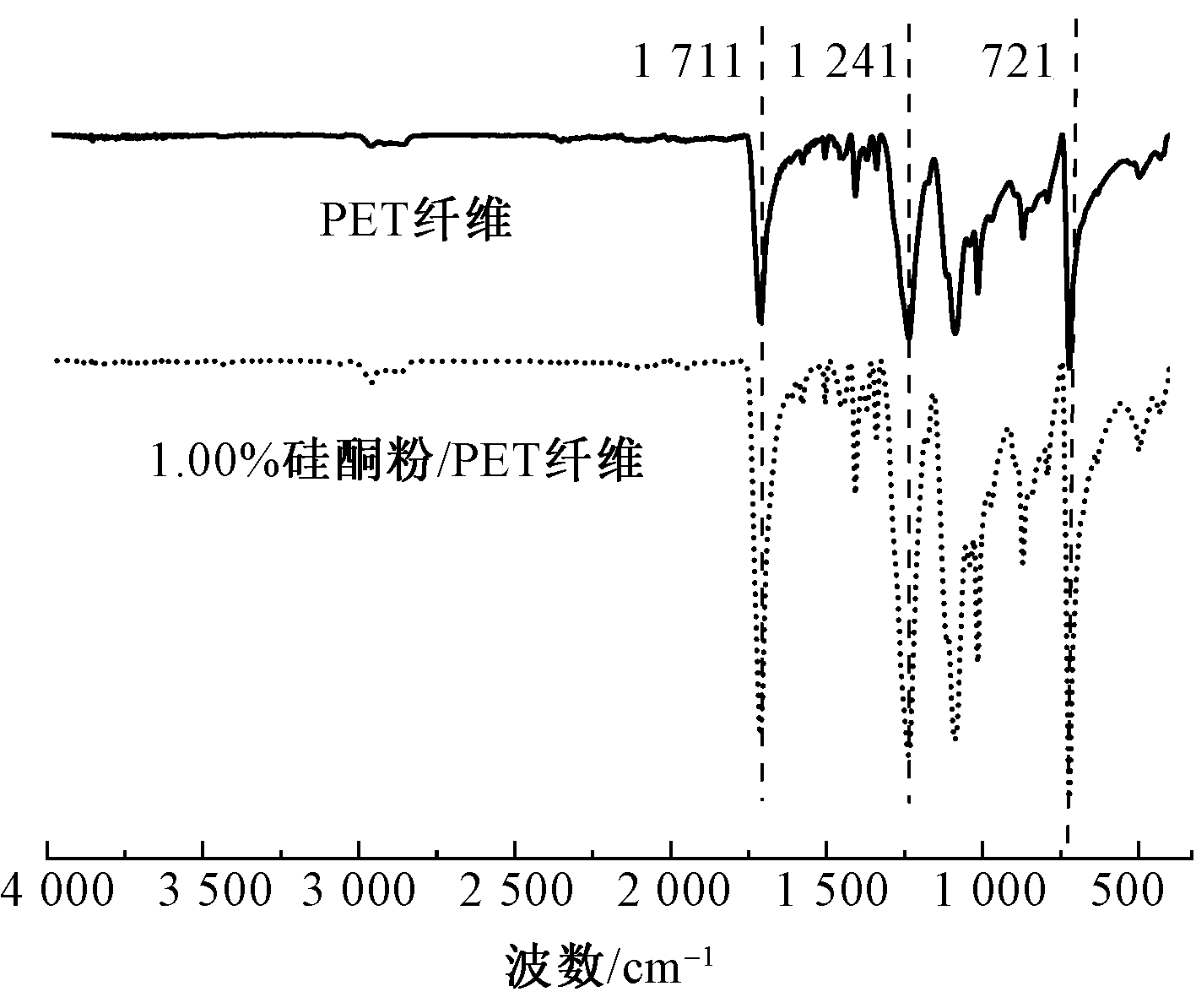
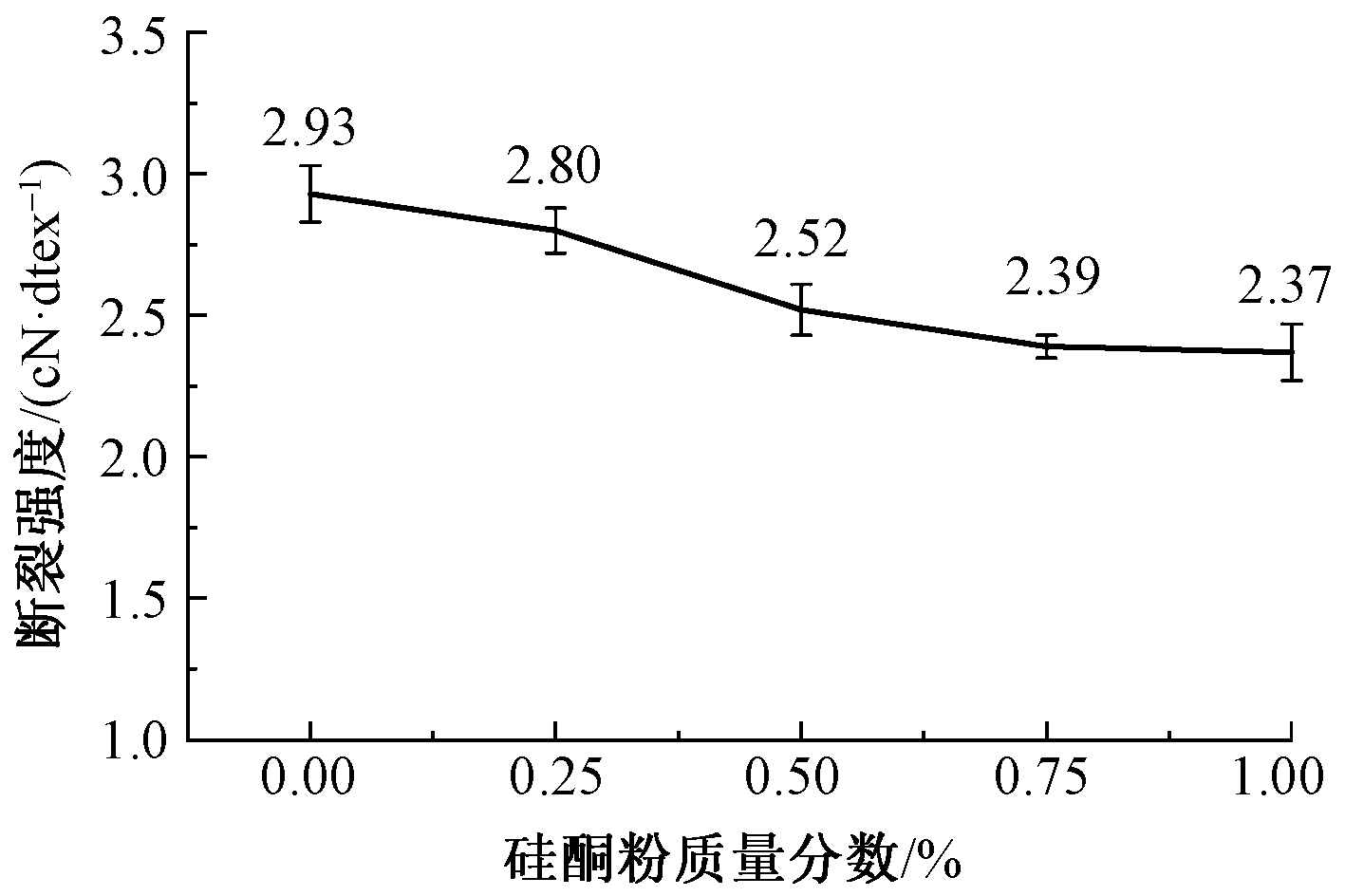
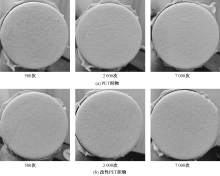
Results The results showed that silicone powder was substantially uniformly distributed in the PET masterbatch without significant aggregation. Due to the excellent lubricating properties of the silicone powder and its uniform distribution in the PET matrix, the introduction of silicone powder improved the rheology and melt flow rate of the PET masterbatch, enhancing its processability. The addition of silicone powder did not affect the microstructure and chemical structure of the final modified PET fibers. Although the mechanical properties of the modified PET fibers slightly decreased when increasing of silicone powder content, the breaking strength of the 1.00% silicone powder-modified PET fibers was still 2.37 cN/dtex, which was less than one-fifth lower than that of pure PET fibers. With the increase of silicone powder content, the pilling resistance of modified PET fabrics showed a trend of increasing first, then decreasing, and further increasing. This was due to the synergistic effect of the lubricating function of the silicone powder and the mechanical properties of the modified PET fibers. When the silicone powder content was very low (0.25%), the mechanical properties of the modified PET fibers were nearly unchanged compared to pure PET. The small amount of silicone powder provided lubricating effects, making the modified PET fibers more resistant to breakage and pilling during the friction test. As a result, the pilling resistance reached grade 3-4, an improvement of 1 grade compared to pure PET, which had grade 2-3. When the silicone powder content increased to 0.50% and 0.75%, the fiber's mechanical properties slightly declined, resulting in a pilling resistance grade of 3 just 0-1 grade higher than pure PET. However, when the silicone powder content reached 1.00%, the lubricating function of the silicone powder became dominant, improving the lubrication during fiber friction. The fibers, which were subjected to force during testing, were less likely to entangle and break. As a result, the pilling resistance of the modified PET fabric increased significantly, reaching grade 4, which was 1-2 grades higher than pure PET. This is consistent with the lower friction coefficient of modified PET fibers. During the pilling test, the pure PET fabric showed noticeable pilling after 500 friction cycles, while the 1.00% silicone powder-modified PET fabric showed no significant pilling even after 7 000 cycles, only slight fuzzing.

Conclusion By modifying the PET masterbatch by adding silicone powder, the processability of the PET masterbatch and the pilling resistance of PET fabrics were significantly enhanced, achieving a pilling resistance grade of 4. This excellent performance can improve the appearance quality of traditional PET fabrics during long-term use, further potentially expanding their application scenarios. At the same time, this modification method aligns with current PET fiber production processes. The silicone powder used is cost-effective, light-colored, and facilitates subsequent dyeing, finishing, and other processing techniques, making it highly suitable for industrial applications. This approach provides important guidance for the development of polymer fibers with wear and pilling resistance.

Key words: silicone powder, melt blending, masterbatch, modified PET fiber, anti-pilling and anti-fuzzing performance

CLC Number: 

  • TS156

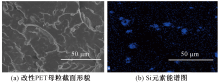
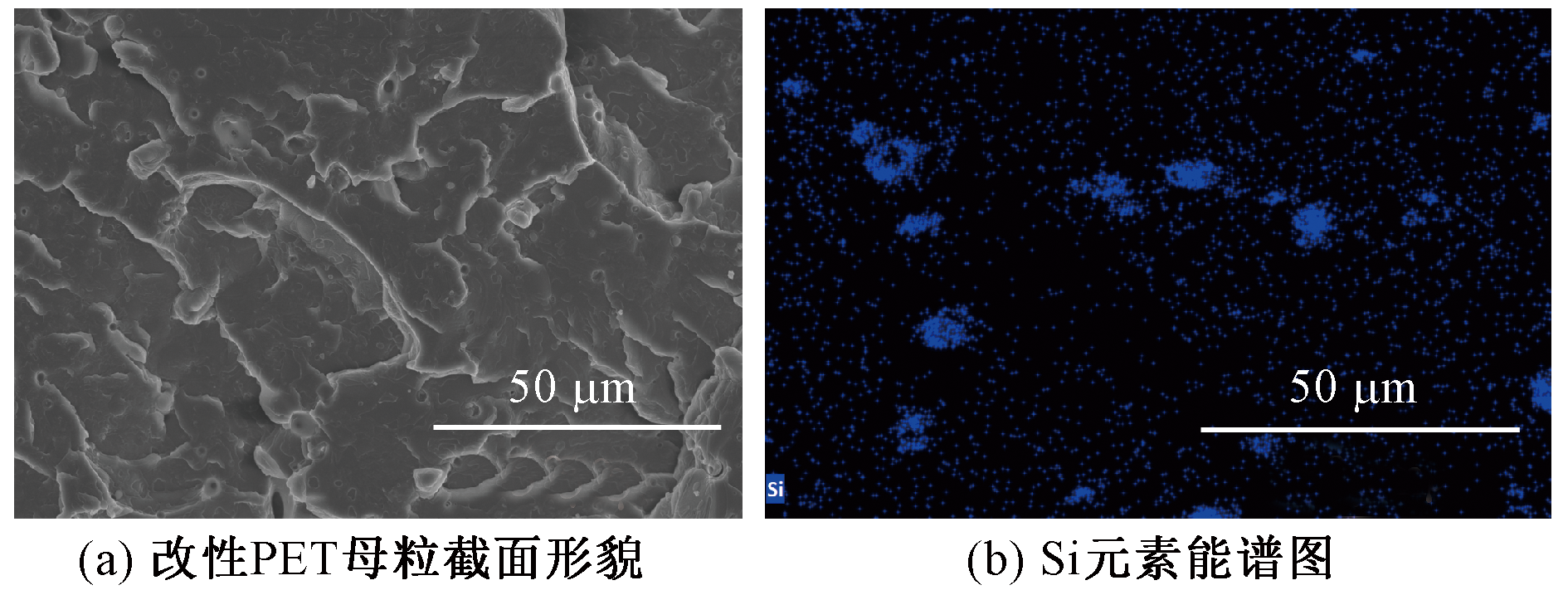
Fig.1

Cross-sectional SEM image(a) and silicon elemental energy spectra(b) of PET masterbatch modified with a silicone powder mass fraction of 5%"

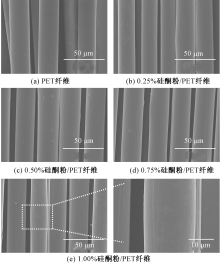
Fig.2

SEM images of PET fibers and PET fibers modified with different contents of silicone powder. (a) PET fiber; (b) 0.25% silicone powder/PET fiber; (c) 0.50% silicone powder/PET fiber; (d) 0.75% silicone powder/PET fiber; (e) 1.00% silicone powder/PET fiber"

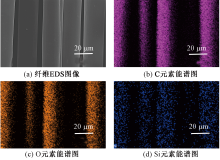
Fig.3

EDS image(a) and corresponding C(b), O(c), and Si(d) elemental energy spectra of modified PET fibers with a silicone powder mass fraction of 1.00%"

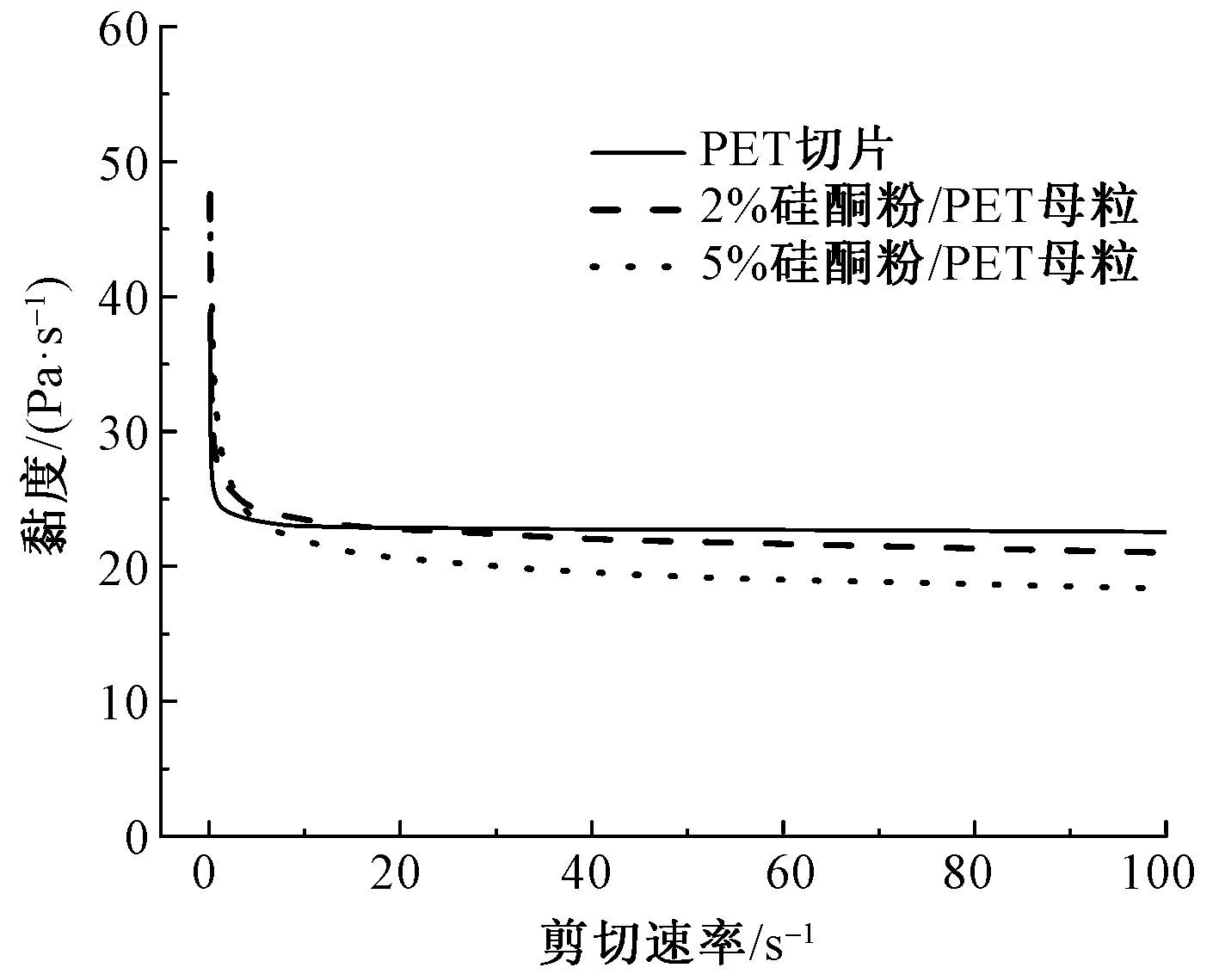
Fig.4

Rheological curves of PET masterbatches modified with different silicone powder contents"

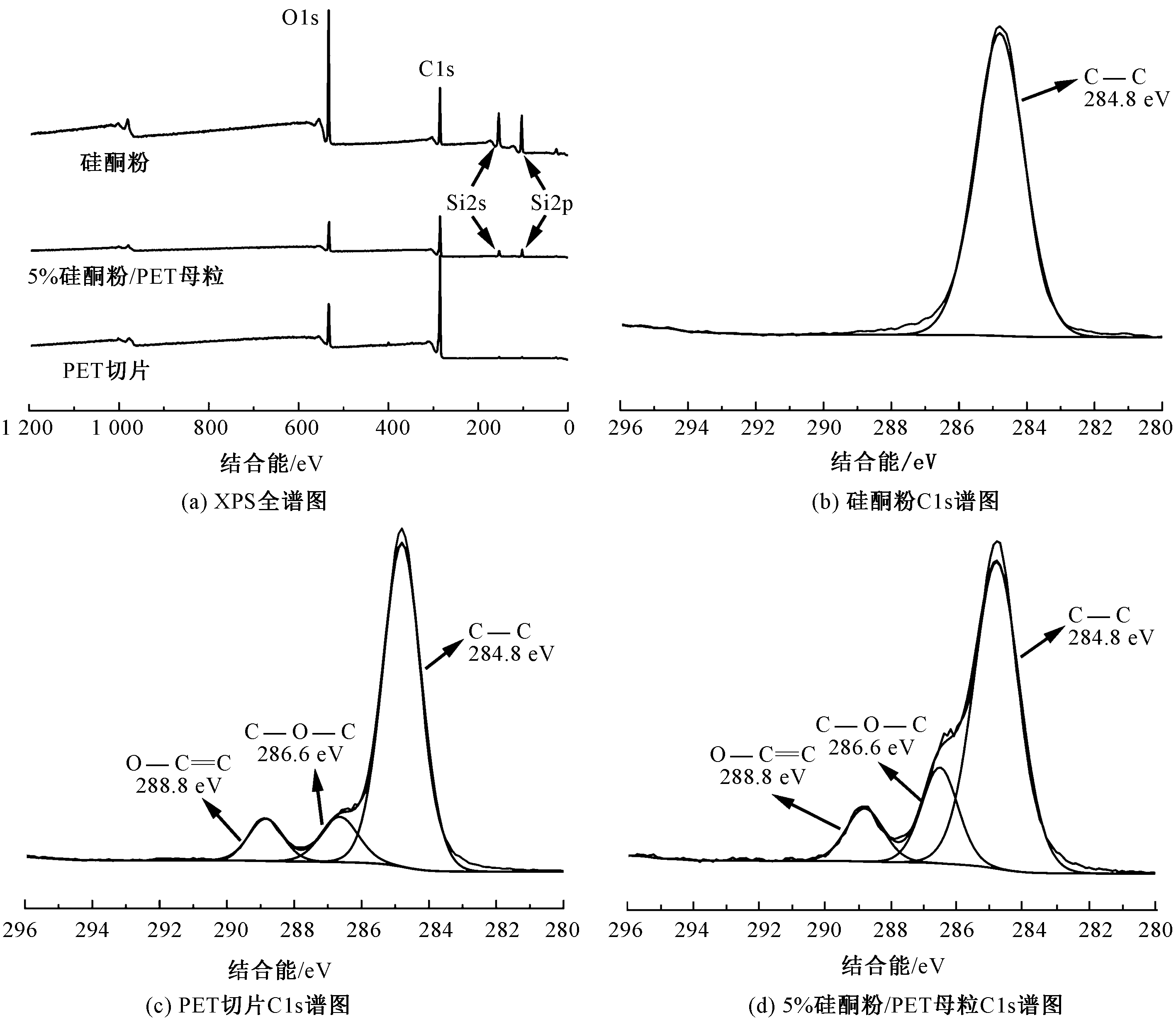
Fig.5

XPS survey spectra and high-resolution C1s spectra of silicone powder, PET pellet, and modified PET masterbatch with a silicone powder mass fraction of 5%. (a) XPS survey spectra; (b) C1s spectrum of silicone powder; (c) C1s spectrum of PET pellet; (d) C1s spectrum of 5% silicone powder/PET masterbatch"

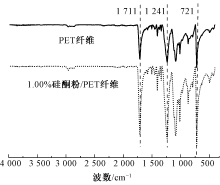
Fig.6

Infrared spectra of pure PET and modified PET fibers with a silicone powder mass fraction of 1.00%"

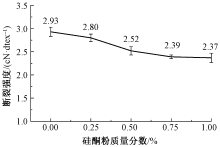
Fig.7

Breaking strength of PET fibers modified with different silicone powder contents"

Tab.1

Anti-pilling and fiber friction coefficient for PET fabrics modified with different contents of silicone powder"

硅酮粉质量
分数/%
起毛起球
等级
静摩擦因数 动摩擦因数
0 2~3 0.15±0.02 0.14±0.01
0.25 3~4 0.11±0.02 0.10±0.02
0.50 3 0.10±0.01 0.10±0.01
0.75 3 0.10±0.01 0.09±0.01
1.00 4 0.09±0.01 0.08±0.01

Fig.8

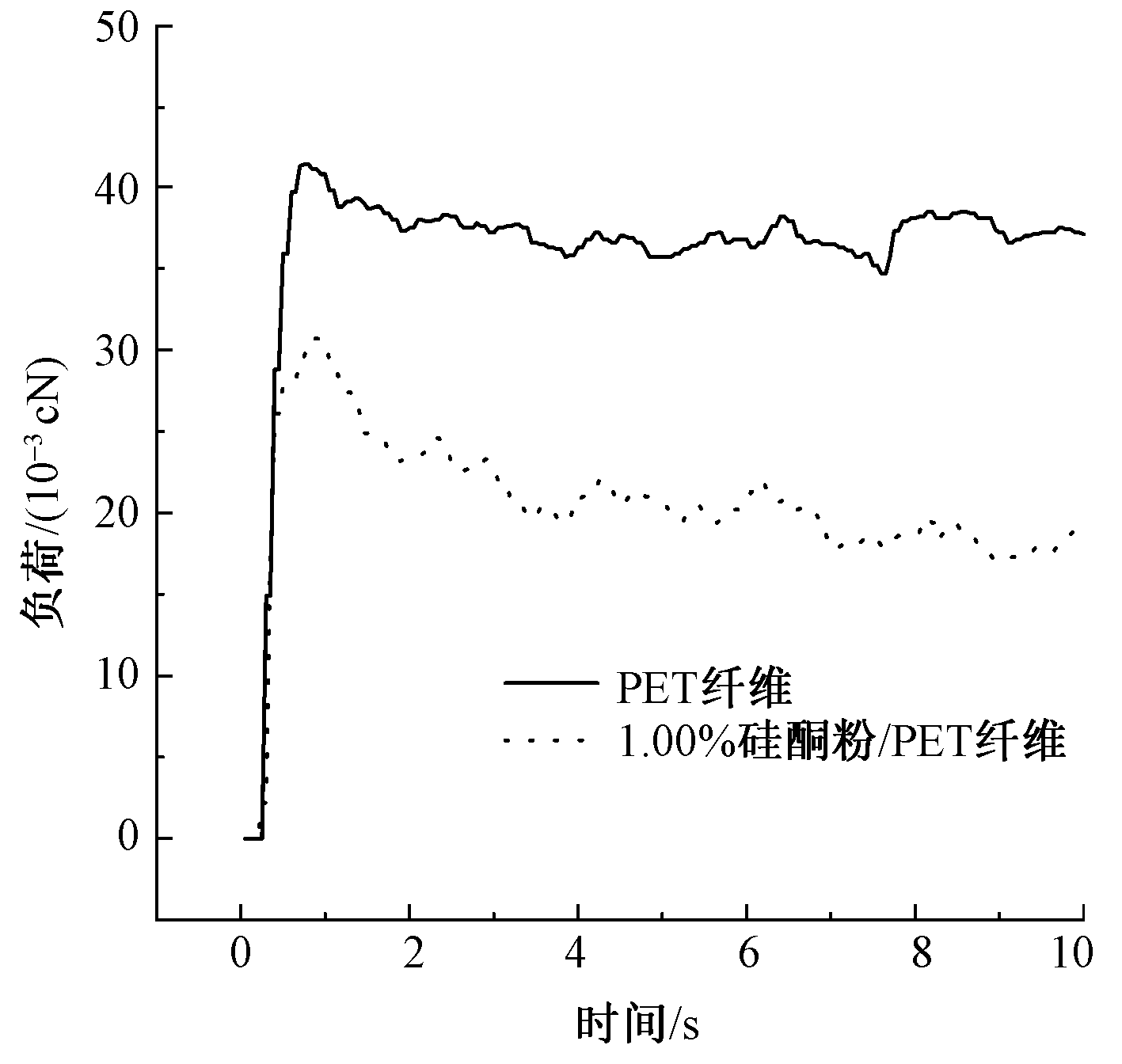
Friction coefficient test curves of PET and modified PET fibers with a silicone powder mass fraction of 1.00%"

Fig.9

Optical images of PET fabric(a) and modified PET fabric(b) with a silicone powder mass fraction of 1.00% after 500, 2 000, and 7 000 rubbing cycles"

[1] 顾镓渝. 合成纤维性能优势及其在运动领域的应用[J]. 塑料助剂, 2023(1): 39-43.
GU Jiayu. Performance advantages of synthetic fiber and its application in sports field[J]. Plastic Additives, 2023(1): 39-43.
[2] 龚杜弟, 李梦楠. 汽车用纺织品的应用现状及发展趋势[J]. 纺织导报, 2021(8): 22-27.
GONG Dudi, LI Mengnan. Application status and trends of automotive textiles[J]. China Textile Leader, 2021(8): 22-27.
[3] GAO K Z, HU D, WANG S W, et al. Application of cerium phosphate in preparing anti-ultraviolet PET fibers with masterbatch method[J]. Journal of Polymer Research, 2020, 27(12): 361.
doi: 10.1007/s10965-020-02324-w
[4] ZHU Y M, WANG Y, SHA L, et al. Preparation of antimicrobial fabric using magnesium-based PET masterbatch[J]. Applied Surface Science, 2017, 425: 1101-1110.
doi: 10.1016/j.apsusc.2017.07.044
[5] DASTJERDI R, MOJTAHEDI M R M, TAVANAIE M A. High-speed spun PET nanocomposites for smart multifunctional approaches[J]. Advances in Polymer Technology, 2018, 37(1): 84-93.
doi: 10.1002/adv.2018.37.issue-1
[6] 邬淑芳, 张亭亭, HASAN Md Rokibul, 等. 涤纶网络丝仿麻织物的摩擦性能[J]. 纺织学报, 2019, 40(10): 134-140.
doi: 10.13475/j.fzxb.20180605107
WU Shufang, ZHANG Tingting, HASAN Md Rokibul, et al. Improvement of friction performance of polyester interlacement yarn linen-like fabric[J]. Journal of Textile Research, 2019, 40(10): 134-140.
doi: 10.13475/j.fzxb.20180605107
[7] 熊知智, 温润, 徐广标. 涤纶仿真丝织物起毛起球性能及其影响因素[J]. 丝绸, 2020, 57(9): 22-26.
XIONG Zhizhi, WEN Run, XU Guangbiao. Pilling performance and influencing factors of polyester silk-like fabric[J]. Journal of Silk, 2020, 57(9): 22-26.
[8] 徐炜, 周向东. 有机硅改性聚氨酯抗起毛起球整理剂的合成及应用[J]. 印染助剂, 2018, 35(2): 18-22.
XU Wei, ZHOU Xiangdong. Synthesis and application of polysiloxane modified polyurethane anti-pilling finishing agent[J]. Textile Auxiliaries, 2018, 35(2): 18-22.
[9] 周华. 一种抗起球的聚酯长丝的生产方法: CN111575809A[P]. 2020-08-25.
ZHOU Hua. A method for producing anti-pilling polyester filament: CN111575809A[P]. 2020-08-25.
[10] 安踏(中国)有限公司. 一种耐磨的抗起球纤维、其制备工艺及面料: CN202410783794.7[P]. 2024-09-10.
ANTA (China) Co., Ltd.. A wear-resistant, pilling-resistant fiber, its preparation process, and fabric: CN202410783794.7[P]. 2024-09-10.
[11] 唐帅, 钱志国, 王海强, 等. 有机硅PDMS对PBT/IFR/GF复合材料性能的影响[J]. 塑料工业, 2019, 47(2): 59-63.
TANG Shuai, QIAN Zhiguo, WANG Haiqiang, et al. Effect of organosilicon PDMS on properties of PBT/IFR/GF composites[J]. China Plastics Industry, 2019, 47(2): 59-63.
[12] 李会, 吴国忠, 杨俊杰, 等. 聚四氟乙烯微粉与硅酮粉在尼龙66中的耐磨效果比较[J]. 有机氟工业, 2018(1): 16-19, 64.
LI Hui, WU Guozhong, YANG Junjie, et al. Comparison of the wear resistance performance of PTFE powder and silicone powder in nylon 66[J]. Organo-Fluorine Industry, 2018(1): 16-19, 64.
[13] 柳毅琨, 邱志成, 刘静, 等. 易染色聚酯熔体的流变性能[J]. 纺织学报, 2015, 36(7): 1-6.
LIU Yikun, QIU Zhicheng, LIU Jing, et al. Rheological behavior of dyeable polyester melt[J]. Journal of Textile Research, 2015, 36(7): 1-6.
doi: 10.1177/004051756603600101
[14] 刘杰, 高阳, 秦升学, 等. 硅酮粉改性超高分子量聚乙烯及其熔体纺丝加工性能[J]. 工程塑料应用, 2024, 52(3): 28-32.
LIU Jie, GAO Yang, QIN Shengxue, et al. Silicone powder modified ultra-high molecular weight polyethylene and its melt-spinning processability[J]. Engineering Plastics Application, 2024, 52(3): 28-32.
[15] MAMUN KABIR S M, RAHMAN M M, HONG I, et al. Comparative characterization and dyeing properties of poly(ethylene terephthalate-co-polyethylene glycol) fibers and poly(ethylene terephthalate) fibers[J]. Polymer, 2024, 311: 127488.
doi: 10.1016/j.polymer.2024.127488
[16] 明贺娜, 赵鹏, 张宝予, 等. 抗菌聚酯纤维的制备及性能[J]. 印染, 2024, 50(12): 51-54.
MING Hena, ZHAO Peng, ZHANG Baoyu, et al. Preparation and properties of antibacterial polyester fiber[J]. China Dyeing & Finishing, 2024, 50(12): 51-54.
[17] 宋玲玲. 毛纺产品起毛起球现象的影响因素及检测方法[J]. 纺织检测与标准, 2024, 10(1): 4-7.
SONG Lingling. Influencing factors and detection methods of pilling in wool textile products[J]. Textile Testing and Standard, 2024, 10(1): 4-7.
[1] QIAO Sijie, XING Tonghe, TONG Aixin, SHI Zhicheng, PAN Heng, LIU Keshuai, YU Hao, CHEN Fengxiang. Comparison of properties of different polylactic acid materials [J]. Journal of Textile Research, 2025, 46(03): 27-33.
[2] WEI Yi, XU Hong, ZHONG Yi, ZHANG Linping, MAO Zhiping. Synthesis and application of poly(cyclotriphosphazene-phloroglucinol) microspheres for enhancing flame retardancy of poly(ethylene terephthalate) [J]. Journal of Textile Research, 2025, 46(01): 119-129.
[3] WANG Wen, ZHANG Lele, HUANG Yangjie, TAN Hao, FANG Shuting, XIANG Chenxue, WANG Dong. Preparation and properties of polyvinyl alcohol-ethylene/SiO2 composite flexible actuation membrane [J]. Journal of Textile Research, 2024, 45(07): 10-17.
[4] ZHANG Wenqi, LI Lili, HU Zexu, WEI Lifei, XIANG Hengxue, ZHU Meifang. Preparation method of and anti-dripping and flame retardant properties of polycaprolactam 6 composite resin based on homotriazine ring structure [J]. Journal of Textile Research, 2023, 44(11): 1-8.
[5] LI Baojie, ZHU Yuanzhao, ZHONG Yi, XU Hong, MAO Zhiping. Preparation and application of polyphosphazene modified zeolite imidazolate framework materials for flame retardancy of poly(ethylene terephthalate) [J]. Journal of Textile Research, 2022, 43(11): 104-112.
[6] LI Xiaochuan, QU Qianqian, LI Xuming. Preparation and properties of polylactic acid/polypropylene blend fiber by melt spinning [J]. Journal of Textile Research, 2019, 40(03): 8-12.
[7] . Hydrophilic modification of polypropylene fibers prepared by melt electrospinning [J]. JOURNAL OF TEXTILE RESEARCH, 2016, 37(10): 13-18.
[8] . Preparation and performance of biodegradable slice of poly (propylene carbonate) / polypropylene for nonwoven fabrics [J]. JOURNAL OF TEXTILE RESEARCH, 2013, 34(7): 15-21.
[9] LIU Ya;LI Jing;ZHU Zhengxiao. Development and performance study of PP anti- photooxidation aging spunbonds [J]. JOURNAL OF TEXTILE RESEARCH, 2009, 30(05): 48-51.
Viewed
Full text


Abstract

Cited

  Shared   
  Discussed   
No Suggested Reading articles found!