Journal of Textile Research ›› 2025, Vol. 46 ›› Issue (01): 119-129.doi: 10.13475/j.fzxb.20240304801

• Dyeing and Finishing Engineering • Previous Articles     Next Articles

Synthesis and application of poly(cyclotriphosphazene-phloroglucinol) microspheres for enhancing flame retardancy of poly(ethylene terephthalate)

WEI Yi1, XU Hong1,2,3, ZHONG Yi1,2,3, ZHANG Linping1,2,3, MAO Zhiping1,2,3()   

  1. 1. Key Laboratory of Science & Technology of Eco-Textile, Ministry of Education, Donghua University, Shanghai 201620, China
    2. Shanghai Belt and Road Joint Laboratory of Textile Intelligent Manufacturing, Shanghai 201620, China
    3. Shandong Zhongkang Guochuang Research Institute of Advanced Dyeing & Finishing Technology Co., Ltd.,National Innovation Center of Advanced Dyeing & Finishing Technology, Taian, Shandong 271000, China
  • Received:2024-03-20 Revised:2024-05-20 Online:2025-01-15 Published:2025-01-15
  • Contact: MAO Zhiping E-mail:zhpmao@dhu.edu.cn

Abstract:

Objective Poly(ethylene terephthalate) (PET) is a semi-aromatic polyester known for its high performance and low cost. When considering fire safety requirements,the high flammability and serious melt-dripping behaviors during PET combustion restrict its application in many fields. In order to overcome these shortcomings, various types of flame retardants are added to PET. In recent years, various non-halogen flame retardants and high-temperature resistant materials have been developed using hexachlorocyclotriphosphazene(HCCP). The proposed method is put forward for addressing the issues of flammability and droplet melting of PET.

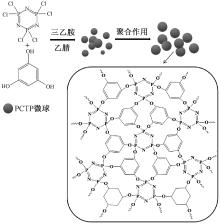
Methods HCCP and phloroglucinol as monomers were selected to synthesize highly crosslinked poly(cyclotriphosphazene-phloroglucinol) (PCTP) microspheres through the precipitation polymerization method. PCTP microspheres containing flame retardant elements P and N were incorporated into the PET matrix through melt blending. The influences on flame retardancy, mechanical properties, and the flame retardancy mechanism of PCTP/PET composite were investigated.

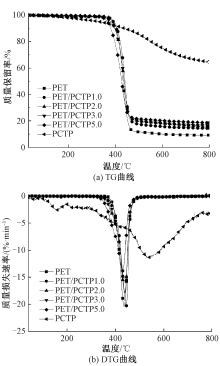
Results The synthesized PCTP microspheres was characterized. For PET, its temperature of initial decomposition (T5%) is 402 ℃. After incorporating various components of PCTP microspheres into PET, the T5% of the composites decreased to 390.9, 384.8, 379.2 and 365.6 ℃, respectively, indicating that PCTP microspheres can catalyze the thermal degradation of PET. PET has the lowest limit oxygen index (LOI value), and the UL-94 grade is the worst, with 24.4% and V-2, respectively. A significant phenomenon of melt dripping can be observed during combustion. After adding PCTP microsphere flame retardant, the flame retardant performance of the material was enhanced. Starting from PET/PCTP2.0(adding 2% of PCTP), all flame retardant composites with UL-94 grade achieved V-0, and the droplet phenomenon during combustion was minimized. By incorporating 2% PCTP microspheres into PET, the LOI value of the composite was rapidly increased to 31.1%, which is higher than that of PET (24.4%), and that of PET/PCTP5.0 (adding 5% of PCTP) increased to 33.9%. The peak heat release rate (PHRR) value of PET is very high at 775.24 kW/m2, and the total heat release (THR) value is 125.47 MJ/m2. Among these composites, PET/PCTP5.0 exhibited the best performance, showing a significant decrease in PHRR and THR values by 40% and 21.7%. Adding 2% of PCTP to PET, PCTP increased the release of CO2, while its concentration increased from 9.1% in PET to 14.0%. PET/PCTP composites released fewer combustible gases during pyrolysis, and the combustion process was slowed down by reducing the fuel. In addition, limiting CO release significantly reduced the toxicity of pyrolysis. Results showed that reducing the release of aromatic compounds not only postponed the availability of combustion sources, but also delayed the generation of smoke. Images of char residuces showed that with the increased PCTP content, the surface pores of char residuces in the composites became smaller, and the char layer became denser. PET exhibited the lowest area ratio of the D-band to the G-band (ID/IG value), at only 1.54. Compared to PET, the ID/IG values of various types of flame retardants were enhanced. The PET/PCTP composites proved that flame retardant elements phosphorus and nitrogen remained in the char residue.

Conclusion The polyphosphazene derivative microspheres (PCTP) were synthesized by precipitation polymerization using HCCP and phloroglucinol as raw materials, which have excellent thermal stability. Subsequently, it was melted and blended with PET to improve fire retardancy. By adding 2% of PCTP microspheres, the LOI value of PET/PCTP2.0 composite was increased to 31.1%, which also passed the V-0 of UL-94 and had good fire resistance. The LOI value of PET/PCTP5.0 increased to 33.9%. The cone calorimeter (CCT) results indicate that during the combustion process, the smoke and heat release of PET/PCTP composites is suppressed, while the char residues increases. The addition of PCTP hinders the pyrolysis of PET, thereby reducing the release of combustible gases such as CO and aromatic compounds. The role of PCTP in the condensed and gaseous phases is the reason for improving fire safety. Most importantly, the mechanical properties of the PET/PCTP2.0 composite are damaged by 13.3%, which is within the acceptable range. In summary, the PET/PCTP composites displayed comprehensive performance, offering great application value for the investigation of green flame-retardant PET.

Key words: flame retardant agent, melt blending, poly(ethylene terephthalate), polyphosphazene, poly (cyclotriphosphazene-phloroglucinol) microsphere

CLC Number: 

  • TS195.2

Fig.1

Synthetic route of PCTP microspheres"

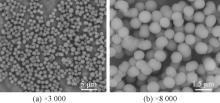
Fig.2

SEM images of PCTP microspheres at different magnification"

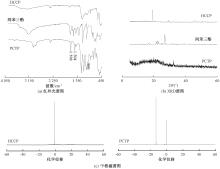
Fig.3

Chemical and crystalline structures of HCCP, phloroglucinol and PCTP microspheres.(a) FT-IR spectra; (b) XRD patterns; (c) 31P NMR patterns"

Fig.4

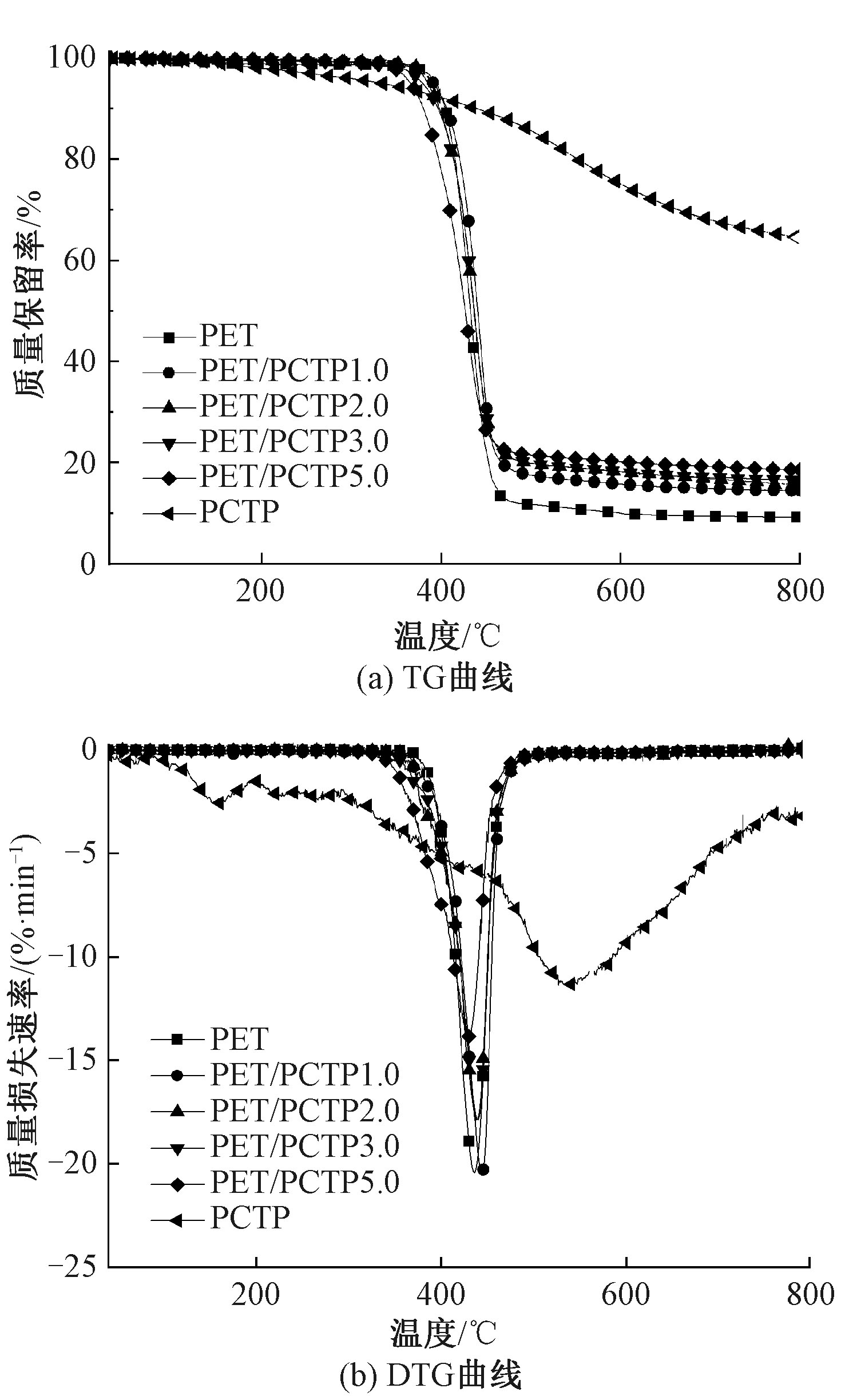
TG (a) and DTG (b) curves of PET and PET/PCTP composites in N2 atmosphere"

Tab.1

TGA data in N2 atmosphere"

样品名称 T5%/℃ Tmax/℃ 800 ℃时的残炭量/%
PCTP 334.6 532.6 64.65
PET 402.9 438.6 9.74
PET/PCTP1.0 390.9 443.4 14.60
PET/PCTP2.0 384.8 437.8 16.00
PET/PCTP3.0 379.2 423.3 17.10
PET/PCTP5.0 365.6 429.6 19.60

Tab.2

LOI values and UL-94 test results of PET and PET/PCTP"

样品名称 LOI值/ 垂直燃烧测试
% 点燃脱脂棉 熔滴现象 UL-94等级
PET 24.4 严重 V-2
PET/PCTP1.0 29.7 严重 V-2
PET/PCTP2.0 31.1 缓慢 V-0
PET/PCTP3.0 32.7 缓慢 V-0
PET/PCTP5.0 33.9 缓慢 V-0

Fig.5

HRR (a), THR (b) and TSP (c) of PET and PET/PCTP composites"

Tab.3

Cone calorimeter results of PET and PET/PCTP"

样品名称 峰值热释放率/ 点火时 总热释放量/ 总烟释放
(kW·m-2) 间/s (MJ·m-2) 量/m2
PET 775.24 67 125.47 13.53
PET/PCTP1.0 606.93 66 112.45 12.55
PET/PCTP2.0 553.10 61 103.20 12.23
PET/PCTP3.0 494.63 61 96.79 11.81
PET/PCTP5.0 464.92 57 98.24 11.50

Fig.6

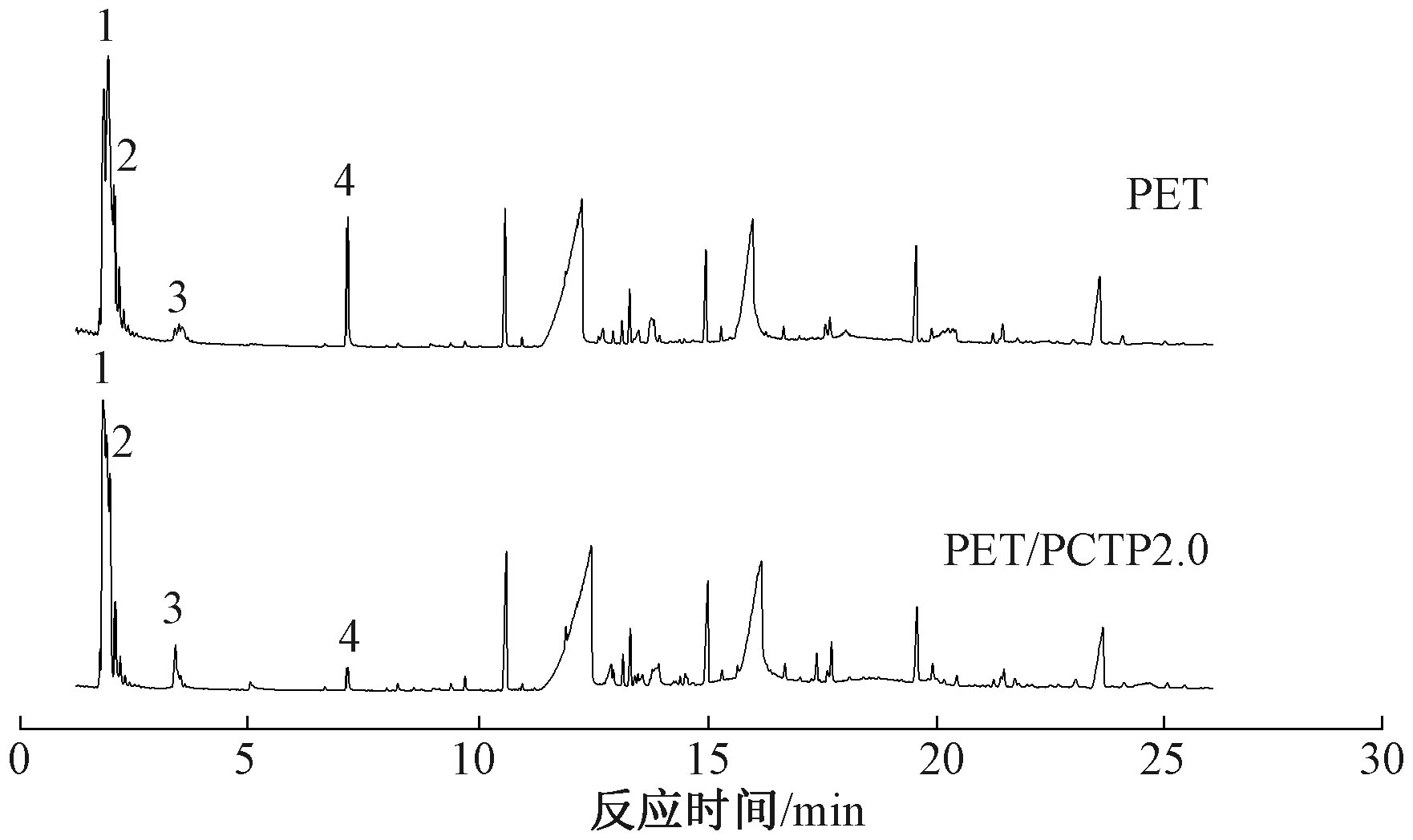
Total ion chromatograms of PET and PET/PCTP2.0 at 600 ℃"

Tab.4

Pyrolysis products of PET and PET/PCTP2.0 at 600 ℃"

峰号 主要
产物
PET PET/PCTP2.0
时间/
min
峰面积/
%
时间/
min
峰面积/
%
1 CO2 1.821 9.10 1.801 14.00
2 CH3CHO 1.915 18.13 1.879 14.04
3 C6H6 3.460 1.67 3.380 2.03
4 C8H8 7.130 2.86 7.127 0.63

Fig.7

Absorbancy curves of pyrolysis products of PET and PET/PCTP2.0 varying with time.(a) Total pyrolysis products; (b) Aromatic compounds; (c) CO2; (d) CO"

Fig.8

Optical photos (a) and SEM images (b) of char residues of PET and PET/PCTP composites"

Fig.9

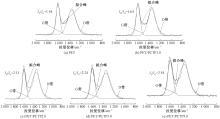
Raman spectra of char residues for PET and PET/PCTP composites"

Fig.10

XPS survey scan spectra, P2p, O1s, C1s and N1s scan spectra of char residues for PET/PCTP2.0.(a)XPS total scan spectrum; (b)C1s scan spectrum; (c)O1s scan spectrum; (d)P2p scan spectrum; (e)N1s scan spectrum"

Fig.11

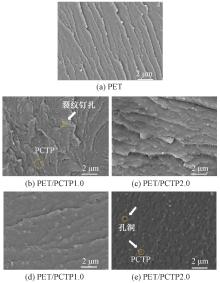
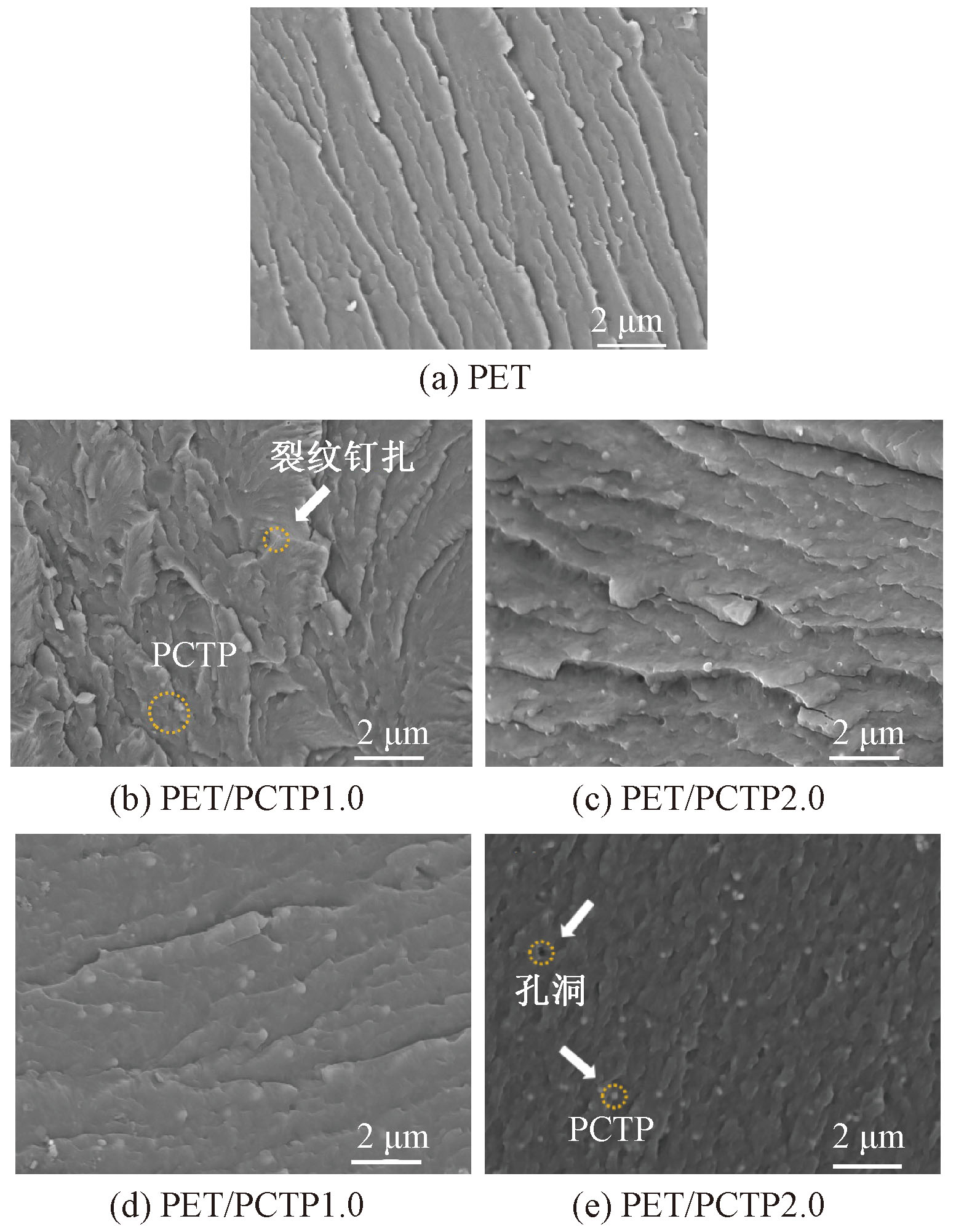
SEM images of fractured surfaces of PET and PET/PCTP composites"

Fig.12

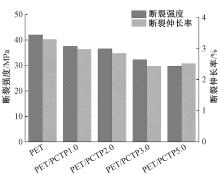
Tensile strength and elongation at break of PET and PET/PCTP composites"

[1] BADIA J D, MARTINEZ-FELIPE A, SANTONJA-BLASCO L, et al. Thermal and thermo-oxidative stability of reprocessed poly(ethylene terephthalate)[J]. Journal of Analytical and Applied Pyrolysis, 2013, 99:191-202.
[2] LIU Y, ZHAO W, YU X, et al. Preparation of dyeing, flame retardant and anti-dripping polyethylene terephthalate fibers based on natural sodium copper chlorophyll dyeing and intercalation of phosphorylated sucrose fatty acid ester[J]. Composites Part B: Engineering, 2022. DOI:10.1016/j.compositesb.2022.110194.
[3] FU T, WANG X L, WANG Y Z. Flame-responsive aryl ether nitrile structure towards multiple fire hazards suppression of thermoplastic polyester[J]. Journal of Hazardous Materials, 2020. DOI:10.1016/j.jhazmat.2020.123714.
[4] FANG Y, LIU X, TAO X. Intumescent flame retardant and anti-dripping of PET fabrics through layer-by-layer assembly of chitosan and ammonium polyphosphate[J]. Progress in Organic Coatings, 2019, 134:162-168.
[5] MALKAPPA K, BANDYOPADHYAY J, RAY S S. Design of poly(cyclotriphosphazene)-functionalized zirconium phosphate nanoplatelets to simultaneously enhance the dynamic mechanical and flame retardancy properties of polyamide 6[J]. ACS Omega, 2020, 5(23): 13867-13877.
[6] ZHOU Y, QIU S, GUO W, et al. Construction of hierarchical Ti3C2Tx@PHBP-PHC architecture with enhanced free-radical quenching capability: effective reinforcement and fire safety performance in bis maleimide resin[J]. Chemical Engineering Journal, 2022. DOI:10.1016/j.cej.2021.131634.
[7] ZHOU X, QIU S, MU X, et al. Polyphosphazenes-based flame retardants: a review[J]. Composites Part B: Engineering, 2020. DOI:10.1016/j.compositesb.2020.108397.
[8] YANG D, DONG L, HOU X, et al. Synthesis of bio-based poly(cyclotriphosphazene-resveratrol) microspheres acting as both flame retardant and reinforcing agent to epoxy resin[J]. Polymers for Advanced Technologies, 2019, 31(1):135-145.
[9] 孔抵柱, 李家炜, 徐红, 等. 环三磷腈和三嗪衍生物协同阻燃对聚酯性能的影响[J]. 纺织学报, 2017, 38(7): 11-17.
KONG Dizhu, LI Jiawei, XU Hong, et al. Synergistic effect between cyclotriphosphazene and triazine derivatives on flame retardancy of poly(ethyleneterephthalate)[J]. Journal of Textile Research, 2017, 38(7): 11-17.
[10] PAN T, HUANG X, WEI H, et al. Intrinsically fluorescent microspheres with superior thermal stability and broad ultraviolet-visible absorption based on hybrid polyphosphazene material[J]. Macromolecular Chemistry and Physics, 2012, 213(15):1590-1595.
[11] SUI Y, SIMA H, SHAO W, et al. Novel bioderived cross-linked polyphosphazene microspheres decorated with FeCo-layered double hydroxide as an all-in-one intumescent flame retardant for epoxy resin[J]. Composites Part B: Engineering, 2022. DOI:10.1016/j.compositesb.2021.109463.
[12] QIU S, SHI Y, WANG B, et al. Constructing 3D polyphosphazene nanotube@mesoporous silica@bimetallic phosphide ternary nanostructures via layer-by-layer method: synthesis and applications[J]. ACS Applied Materials & Interfaces, 2017. DOI:10.1021/acsami.7b06440.
[13] DAVIS R D, GILMAN J W, VANDERHART D L. Processing degradation of polyamide 6/montmorillonite clay nanocomposites and clay organic modifier[J]. Polymer Degradation & Stability, 2003, 79(1):111-121.
[14] QIU S, SHI Y, WANG B, et al. Constructing 3D polyphosphazene nanotube@mesoporous silica@bimetallic phosphide ternary nanostructures via layer-by-layer method: synthesis and applications[J]. ACS Appl Mater Interfaces, 2017, 9(27): 23027-23038.
[15] QIU S, XING W, FENG X, et al. Self-standing cuprous oxide nanoparticles on silica @polyphosphazene nanospheres: 3D nanostructure for enhancing the flame retardancy and toxic effluents elimination of epoxy resins via synergistic catalytic effect[J]. Chemical Engineering Journal, 2017. DOI:10.1016/j.cej.2016.10.100.
[16] 袁野, 张安莹, 魏丽菲, 等. 含磷阻燃聚酯的合成动力学及其性能[J]. 纺织学报, 2024, 45(4):50-58.
YUAN Ye, ZHANG Anying, WEI Lifei, et al. Synthesis kinetics and properties of phosphorus containing flame-retardant polyethylene tere-phthalate[J]. Journal of Textile Research, 2024, 45(4):50-58.
[17] TAO Y, LIU C, LI P, et al. A flame-retardant PET fabric coating: flammability, anti-dripping properties, and flame-retardant mechanism[J]. Progress in Organic Coatings, 2021. DOI:10.1016/j.porgcoat.2020.105971.
[18] QIU S, XING W, MU X, et al. A 3D nanostructure based on transition-metal phosphide decorated heteroatom-doped mesoporous nanospheres interconnected with graphene: synthesis and applica-tions[J]. ACS Applied Materials & Interfaces, 2016. DOI:10.1021/acsami.6b11101.
[19] YANG Guang, WU Wei-Hong, Yong-Hui, et al. Synthesis of a novel phosphazene-based flame retardant with active amine groups and its application in reducing the fire hazard of epoxy resin[J]. Journal of Hazardous Materials, 2019. DOI:10.1016/j.jhazmat.2018.11.093.
[20] ZHAO X, WEI P, QIAN Y, et al. Effect of talc on thermal stability and flame retardancy of polycarbonate/PSBPBP composite[J]. Journal of Applied Polymer Science, 2012, 125(4):3167-3174.
[21] 李宝洁, 朱元昭, 钟毅, 等. 聚磷腈改性沸石咪唑酯骨架材料的制备及其在聚酯阻燃中的应用[J]. 纺织学报, 2022, 43(11): 104-112.
LI Baojie, ZHU Yuanzhao, ZHONG Yi, et al. Preparation and application of polyphosphazene modified zeolite imidazolate framework materials for flame retardancy of poly(ethylene terephthalate)[J]. Journal of Textile Research, 2022, 43(11): 104-112.
[22] WANG P, XIA L, JIAN R, et al. Flame-retarding epoxy resin with an efficient P/N/S-containing flame retardant: preparation, thermal stability, and flame retardance[J]. Polymer Degradation and Stability, 2018, 149:69-77.
[23] MALMGREN S, CIOSEK K, HAHLIN M, et al. Comparing anode and cathode electrode/electrolyte interface composition and morphology using soft and hard X-ray photoelectron spectroscopy[J]. Electrochimica Acta, 2013, 97: 23-32.
[24] TANG G, ZHANG R, WANG X, et al. Enhancement of flame retardant performance of bio-based polylactic acid composites with the incorporation of aluminum hypophosphite and expanded graphite[J]. Journal of Macromolecular Science Part A: Pure and Applied Chemistry, 2013, 50(2): 255-269.
[25] PING Z, LEI S, LU H, et al. Synergistic effect of nanoflaky manganese phosphate on thermal degradation and flame retardant properties of intumescent flame retardant polypropylene system[J]. Polymer Degradation & Stability, 2009, 94(2): 201-207.
[26] PARK Y T, QIAN Y, CHAN C, et al. Epoxy toughening with low graphene loading[J]. Advanced Functional Materials, 2015, 25(4): 575-585.
[1] CHEN Shichang, CAO Junhua, CHEN Wenxing. Process simulation of falling film liquid-state polymerization of polyester [J]. Journal of Textile Research, 2025, 46(01): 16-24.
[2] CHEN Shun, QIAN Kun, LIANG Fuwei, GUO Wenwen. Preparation and properties of flame retardant hydrophobic cotton fabric with eugenol-based composite coating [J]. Journal of Textile Research, 2023, 44(12): 115-122.
[3] ZHANG Wenqi, LI Lili, HU Zexu, WEI Lifei, XIANG Hengxue, ZHU Meifang. Preparation method of and anti-dripping and flame retardant properties of polycaprolactam 6 composite resin based on homotriazine ring structure [J]. Journal of Textile Research, 2023, 44(11): 1-8.
[4] LI Baojie, ZHU Yuanzhao, ZHONG Yi, XU Hong, MAO Zhiping. Preparation and application of polyphosphazene modified zeolite imidazolate framework materials for flame retardancy of poly(ethylene terephthalate) [J]. Journal of Textile Research, 2022, 43(11): 104-112.
[5] GAO Feng, SUN Yanlin, XIAO Shunli, CHEN Wenxing, LÜ Wangyang. Microstructure and properties of polyester composite fibers with different drafting ratios [J]. Journal of Textile Research, 2022, 43(08): 34-39.
[6] LIU Ke, CHEN Shuang, XIAO Ru. Preparation and properties of synergistic flame retardant copolyamide 6 fiber with phosphaphenanthrene group [J]. Journal of Textile Research, 2021, 42(07): 11-18.
[7] REN Yuanlin, JIANG Li'na, HUO Tongguo, TIAN Tian. Research progress of halogen-free flame retardancy and smoke suppression of polyacrylonitrile [J]. Journal of Textile Research, 2019, 40(07): 182-188.
[8] LI Xiaochuan, QU Qianqian, LI Xuming. Preparation and properties of polylactic acid/polypropylene blend fiber by melt spinning [J]. Journal of Textile Research, 2019, 40(03): 8-12.
[9] . Extraction and characterization of oligomers from high molecular weight poly(ethylene terephthalate) [J]. Journal of Textile Research, 2018, 39(11): 1-7.
[10] . Flame retardant finishing of polyester fabric with phenyl phosphate ester containing triazine structure [J]. JOURNAL OF TEXTILE RESEARCH, 2018, 39(03): 98-102.
[11] . Preparation of a novel N-P flame retardant and its flame retardant properties in cotton fabric [J]. JOURNAL OF TEXTILE RESEARCH, 2017, 38(11): 97-101.
[12] . Hydrophilic modification of polypropylene fibers prepared by melt electrospinning [J]. JOURNAL OF TEXTILE RESEARCH, 2016, 37(10): 13-18.
[13] . Determination of polyester molecular weight and its distribution by advanced polymer chromatography and laser light scattering detector [J]. Journal of Textile Research, 2016, 37(05): 11-16.
[14] . Preparation and performance of biodegradable slice of poly (propylene carbonate) / polypropylene for nonwoven fabrics [J]. JOURNAL OF TEXTILE RESEARCH, 2013, 34(7): 15-21.
[15] . Influence of melamine cyanurate on flame retardancy of poly(ethylene terephthalate) [J]. JOURNAL OF TEXTILE RESEARCH, 2012, 33(11): 20-26.
Viewed
Full text


Abstract

Cited

  Shared   
  Discussed   
No Suggested Reading articles found!