Journal of Textile Research ›› 2026, Vol. 47 ›› Issue (05): 91-98.doi: 10.13475/j.fzxb.20250703801

• Fiber Materials • Previous Articles     Next Articles

Cashmere fiber length measurement based on improved U-Net and global optimization algorithm

TONG Junyi, YANG Ruihua()   

  1. College of Textile Science and Engineering, Jiangnan University, Wuxi, Jiangsu 214122, China
  • Received:2025-07-14 Revised:2026-03-15 Online:2026-05-15 Published:2026-07-10
  • Contact: YANG Ruihua E-mail:yangrh@jiangnan.edu.cn

Abstract:

Objective Conventional manual stapling methods for measuring cashmere fiber length suffer from low efficiency and subjectivity, requiring 30-40 min for each sample. Existing automated instruments, including Almeter capacitors and optical fiber diameter analyzers (OFDA), have limitations such as incomplete short fiber clamping and restriction to specific sample forms. With computer vision-based methods on the other hand, the threshold segmentation frequently causes fiber breaks, and tracking individual fibers in complex intersecting networks is extremely difficult. This study develops an automated measurement method based on an improved U-Net and global optimization algorithms to overcome these limitations.

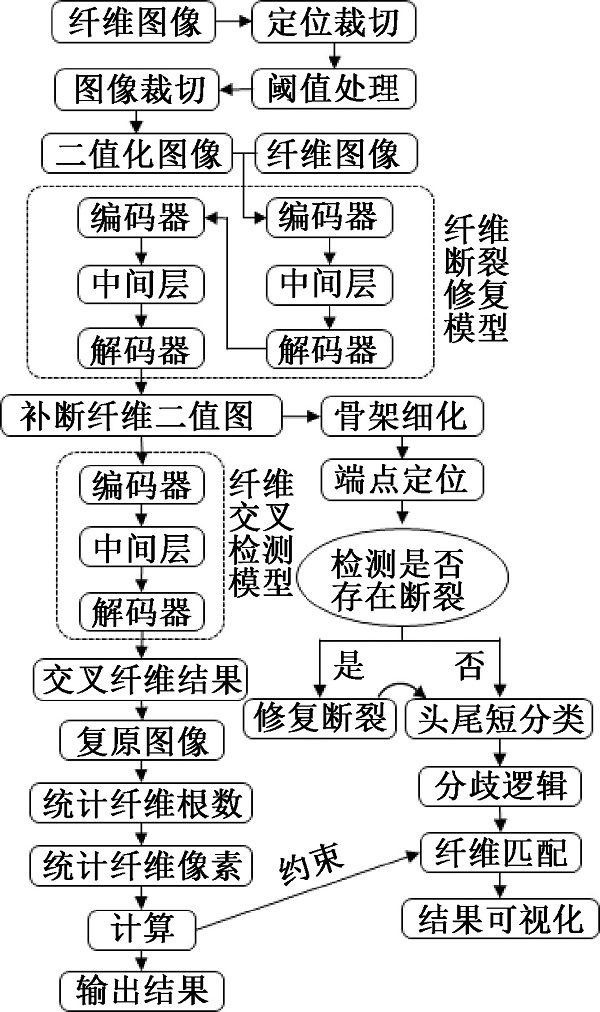
Method An improved U-Net (encoder-decoder convolutional network) architecture incorporating directional convolution, spatial attention, nonlocal feature modules, and morphological processing layers was constructed to repair fiber breaks caused by threshold segmentation. A UNet++ (nested U-Net) model with an EfficientNet-B0 encoder and a hybrid Dice-focal loss function was built for crossover region detection. A two-stage globally optimized path tracking algorithm using directional similarity, historical experience scores, and necessity coefficients, combined with a simulated annealing-based matching algorithm, was adopted to obtain the complete fiber length distribution.

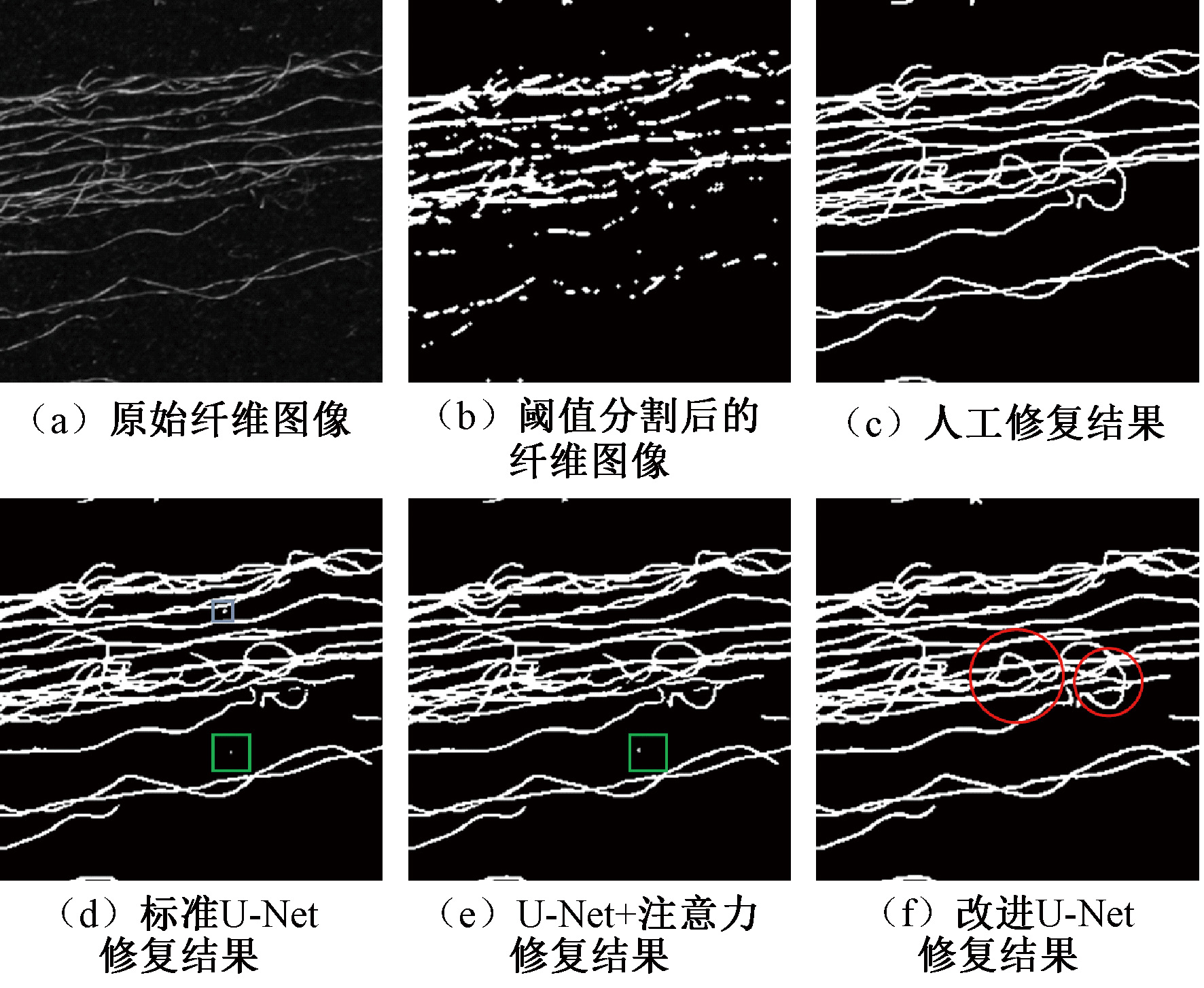
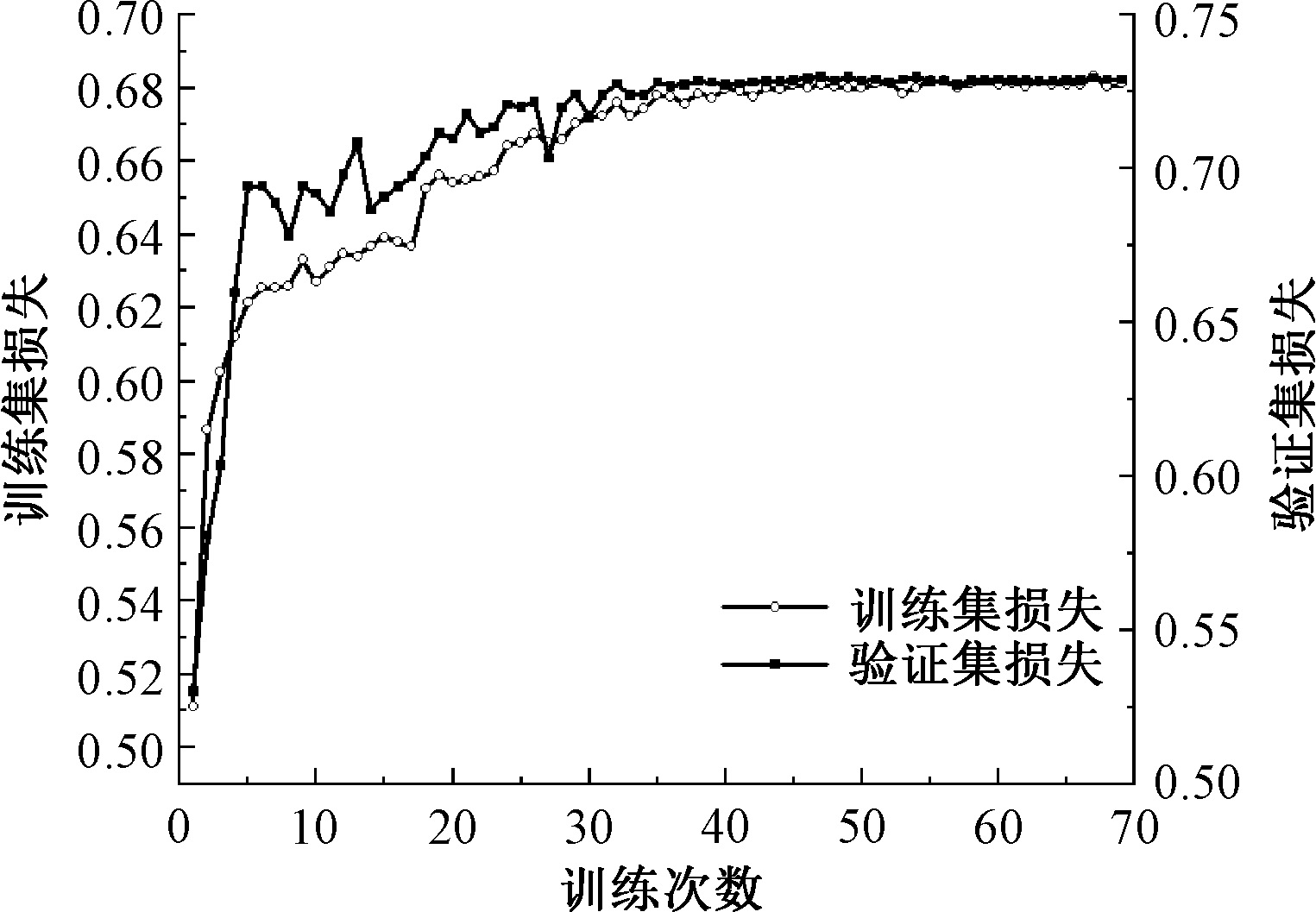
Results The improved U-Net achieved a recall of 98.67% and an F1 value of 91.29% in fiber break repair. Precision was reduced due to morphological dilation operations required to ensure full fiber connectivity, as these operations cause slight over-prediction at the pixel level. However, this trade-off ensures that fiber breaks are fully repaired, reducing tracking failures in subsequent steps. The crossover detection model based on UNet++ achieved an intersection over union (IoU value) of 71.74% and a recall of 85.42% on the test set, effectively identifying overlapping regions where pixel loss occurs.

Measurements were conducted on cashmere samples from five batches provided by an enterprise in Inner Mongolia and compared with manual stapling results. The absolute error ranged from 0.23 to 1.07 mm across all sample groups, with an average absolute error of 0.67 mm and an average relative error of 1.78%. Three of the five sample groups had relative errors below 2%, and the remaining two were within 3%. One sample group showed a larger deviation, attributable to an insufficient number of medium-length fibers in the sample, which limited the convergence of the simulated annealing-based matching process.

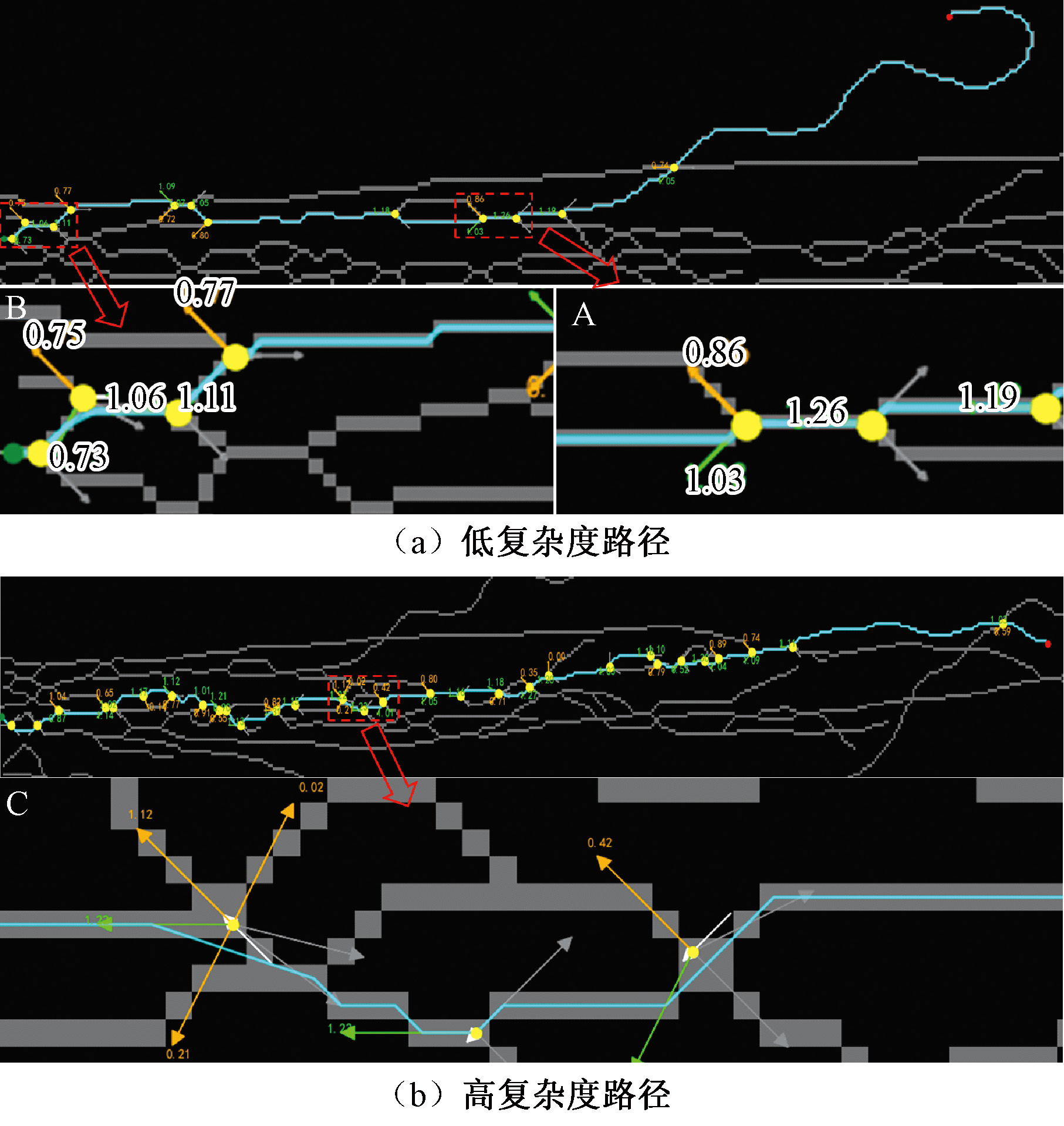
The two-stage path tracking algorithm was validated in complex crossover scenarios. In a case involving 12 crossovers, the algorithm correctly identified the exit direction by incorporating historical decision weighting, even when directional similarity scores of competing directions differed by only 0.17. In a high-complexity case involving 30 crossovers, where the most challenging decision point had 6 candidate exit directions, the algorithm selected the direction consistent with the actual fiber extension by combining directional similarity, historical experience scores, and global optimization weighting.

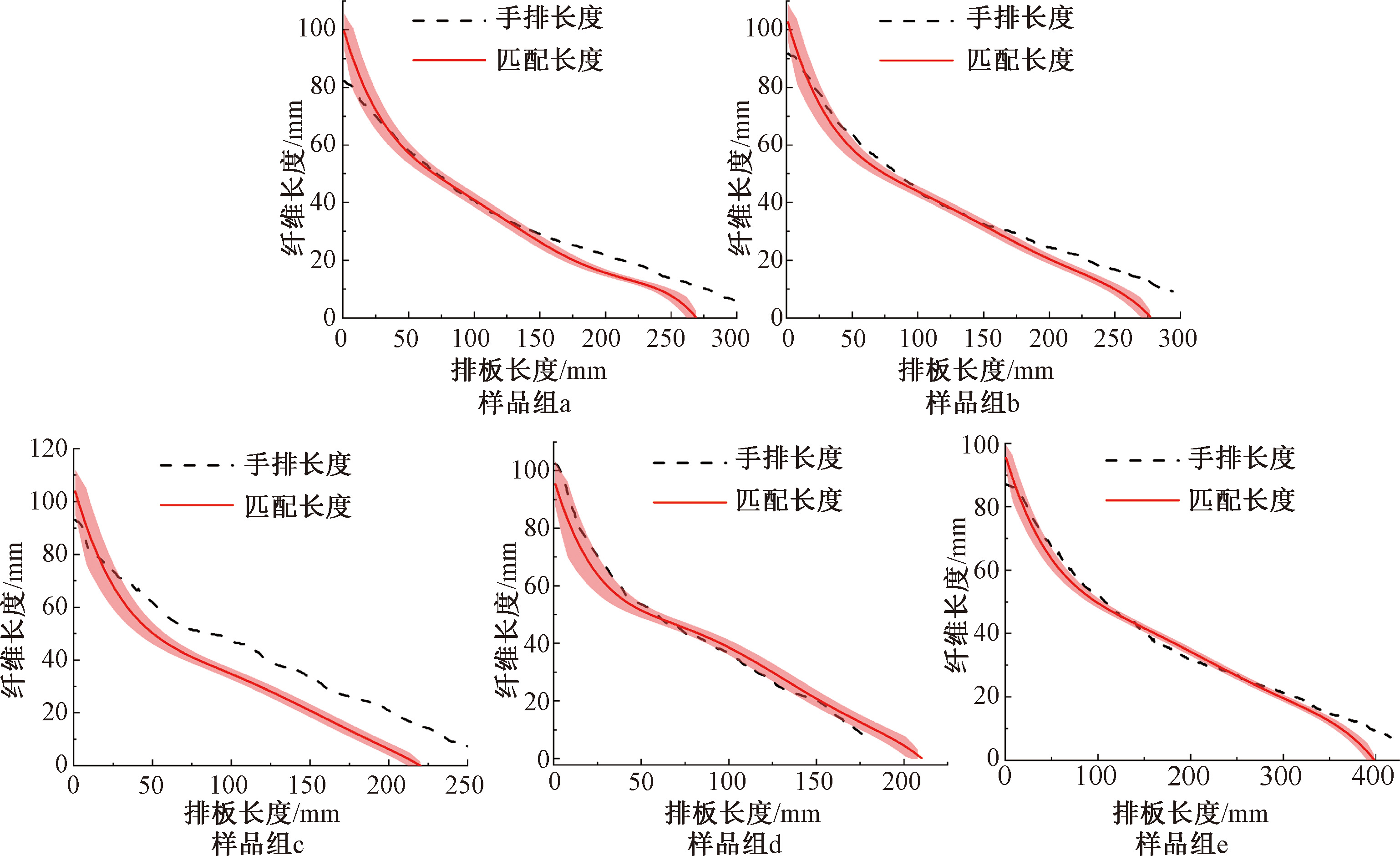
The overall fiber length range and distribution pattern were consistent with those of the manual stapling method. The frequency of fibers below 10 mm was generally higher than in the manual method, consistent with the known limitation that short fibers in manual stapling are densely packed and difficult to separate accurately.

Conclusion An automated cashmere fiber length measurement system integrating deep learning and intelligent optimization algorithms was developed. The improved U-Net architecture incorporating directional convolution, spatial attention, and nonlocal feature modules achieved a F1 value of 91.29% and an IoU value of 91.29% of 80.70% in fiber break repair. The two-stage globally optimized path tracking algorithm enabled accurate single-fiber tracking in complex crossover networks by incorporating directional continuity, historical decision experience, and global coordination among competing fiber paths. The simulated annealing-based matching algorithm obtained the complete fiber length distribution. Evaluated on five batches of cashmere samples, the system showed good agreement with the manual stapling method, with an average absolute error of 0.67 mm and an average relative error of 1.78%. The method addresses the technical challenges of threshold-induced fiber breakage and individual fiber tracking in complex networks, and may be extended to other natural fiber types in future work.

Key words: cashmere, fiber length measurement, deep learning, image processing, tracking algorithm

CLC Number: 

  • TS131.8

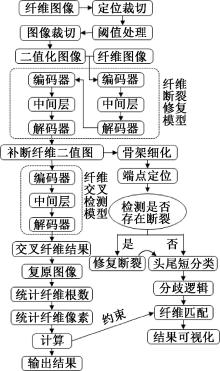
Fig.1

Overall processing flow"

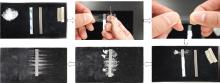
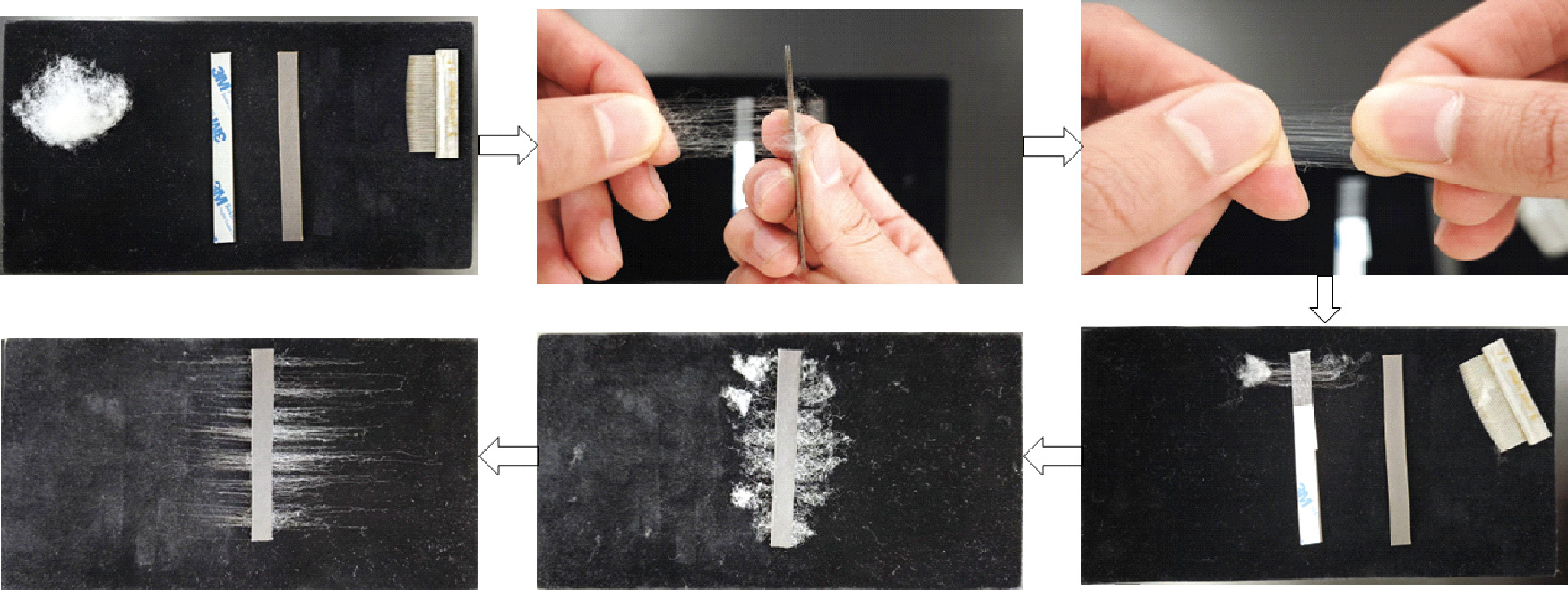
Fig.2

Sample making process"

Tab.1

Performance comparison of fiber break repair models"

模型
架构
验证集
IoU/%
准确
率/%
召回
率/%
验证集
F1/%
每轮
耗时/s
A 91.63 95.91 95.57 95.74 17.43
B 91.18 95.81 95.46 95.63 20.11
C 80.70 84.93 98.67 91.29 23.35

Fig.3

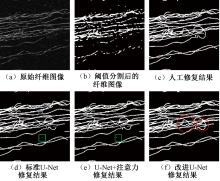
Comparison of fiber break repair results of three models. (a) Original fiber image; (b) Image of fiber after threshold segmentation; (c) Artificial repair result; (d) Standard U-Net repair result; (e) U-Net+attention repair result; (f) Improved U-Net repair result"

Fig.4

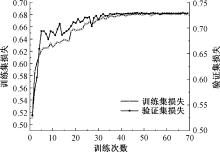
Dynamic evaluation of cross-detection model training"

Tab.2

Experimental results of fiber length measurement"

样本
名称
完整纤维像素/个 交叉纤维像素/个 比例/% 根数 本组纤维
长度/mm
平均纤维
长度/mm
手排纤维
长度/mm
相对误差/
%
58 508 36 521 9 409 5 625 13.035 79 35.854 34.54 35.15 1.74
a 47 370 58 595 6 650 9 162 13.070 96 32.521
47 603 53 193 5 196 6 883 13.043 72 40.345
64 997 64 258 10 591 9 782 13.059 91 41.970 39.10 38.03 2.81
b 58 797 47 972 8 105 3 976 13.094 83 36.673
62 557 67 638 10 381 11 095 13.052 89 43.768
52 388 49 873 7 086 6 778 13.023 72 41.570 39.67 39.11 1.43
c 61 301 42 521 8 992 6 280 13.099 63 48.489
32 205 35 843 3 725 2 132 13.041 56 34.036
42 352 34 488 2 695 2 118 13.045 49 42.580 36.10 36.33 0.63
d 55 167 51 957 7 622 7 888 13.082 90 34.913
31 831 43 544 3 377 6 344 13.060 61 35.899
61 014 65 085 11 340 11 509 13.240 104 36.057 36.78 37.64 2.28
e 74 089 77 586 13 115 13 621 13.263 116 38.821
88 272 84 149 16 259 15 890 13.290 127 40.560

Fig.5

Schematic diagrams of single fiber tracking. (a) Low-complexity path; (b)High-complexity path"

Fig.6

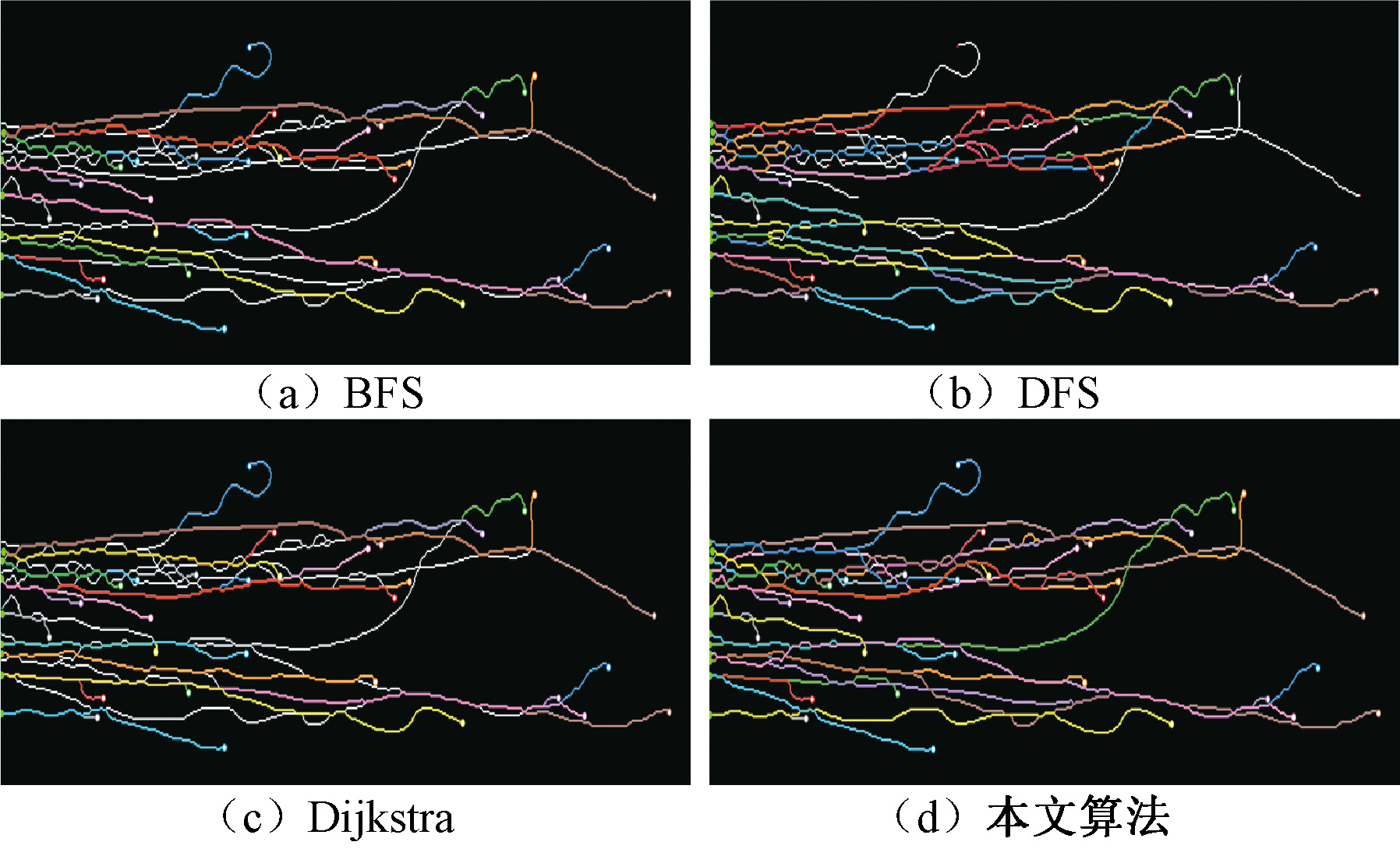
Schematic of complete fiber tracking. (a)BFS; (b)DFS; (c) Dijkstra; (d) Proposed method"

Fig.7

Fiber length curves"

[1] DRESSLER E A, BORMANN J M, WEABER R L, et al. A review of cashmere fiber phenotypes: production, heritabilities, and genetic correlations[J]. Small Ruminant Research, 2024, 240: 107369.
doi: 10.1016/j.smallrumres.2024.107369
[2] 陈旗, 杨焕焕, 赵霞. 浅析人工智能毛绒分析仪在羊绒羊毛检测中的应用[J]. 中国纤检, 2023(5): 81-84.
CHEN Qi, YANG Huanhuan, ZHAO Xia. Application of artificial intelligence plush analyzer in cashmere wool detection[J]. China Fiber Inspection, 2023(5): 81-84.
[3] 吕晓红, 冯满荣, 姚苗苗. 分梳山羊绒纤维长度的测试[J]. 中国纤检, 2017(2): 81-83.
LÜ Xiaohong, FENG Manrong, YAO Miaomiao. Test of the dehaired cashmere fiber length[J]. China Fiber Inspection, 2017(2): 81-83.
[4] 吴红艳, 王府梅. 须丛曲线理论研究[J]. 东华大学学报(自然科学版), 2013, 39(5): 599-603.
WU Hongyan, WANG Fumei. The theory of the fibrogram[J]. Journal of Donghua University (Natural Science), 2013, 39(5): 599-603.
[5] 金敬业, 王府梅, 徐步高. 基于随机须丛逐步分解模型的纤维长度分布计算方法[J]. 纺织学报, 2017, 38(2): 81-89.
JIN Jingye, WANG Fumei, XU Bugao. Method for calculating fiber length distribution based on hierarchical model of random-beard[J]. Journal of Textile Research, 2017, 38(2): 81-89.
doi: 10.1177/004051756803800110
[6] 金敬业, 杨欢, 吴美琴, 等. 基于双端须丛试样的棉毛纤维长度频率分布测量[J]. 东华大学学报(自然科学版), 2018, 44(2): 196-204, 237.
JIN Jingye, YANG Huan, WU Meiqin, et al. Length-frequency distribution testing of cotton and wool based on dual-beard sample[J]. Journal of Donghua University (Natural Science), 2018, 44(2): 196-204, 237.
[7] 孙佳慧, 马静涛, 苏健, 等. 双须光电法分梳绒测长仪与手排法的测试结果对比[J]. 东华大学学报(自然科学版), 2024, 50(3): 98-106.
SUN Jiahui, MA Jingtao, SU Jian, et al. Comparison of test results between double whisker length measurement method and hand row method[J]. Journal of Donghua University (Natural Science Edition), 2024, 50(3): 98-106.
[8] LUO J L, LU K, CHEN Y G, et al. Automatic identification of Cashmere and wool fibers based on microscopic visual features and residual network model[J]. Micron, 2021, 143: 103023.
doi: 10.1016/j.micron.2021.103023
[9] 杨传颖, 高荣贵, 石宝, 等. 基于图像处理的分梳山羊绒长度检测方法[J]. 毛纺科技, 2020, 48(2): 68-72.
YANG Chuanying, GAO Ronggui, SHI Bao, et al. Test method for carding cashmere length based on image processing[J]. Wool Textile Journal, 2020, 48(2): 68-72.
[10] RONNEBERGER O, FISCHER P, BROX T. U-Net: convolutional networks for biomedical image segmentation[C]//Medical Image Computing and Computer-Assisted Intervention-MICCAI 2015. Cham: Springer, 2015: 234-241.
[11] ZHOU Z W, RAHMAN SIDDIQUEE M M, TAJBAKHSH N, et al. UNet++: a nested U-Net architecture for medical image segmentation[C]// Deep Learning in Medical Image Analysis and Multimodal Learning for Clinical Decision Support. Cham: Springer, 2018: 3-11.
[12] WANG S Q, YATAGAWA T, SUZUKI H, et al. Image based measurement of individual fiber lengths for randomly oriented short fiber composites[J]. Journal of Nondestructive Evaluation, 2022, 41(2): 45.
doi: 10.1007/s10921-022-00876-z
[13] XING W Y, LIU Y W, XIN B J, et al. The application of deep and transfer learning for identifying cashmere and wool fibers[J]. Journal of Natural Fibers, 2022, 19(1): 88-104.
doi: 10.1080/15440478.2020.1727817
[1] DU Xiaoguang, JING Junfeng, WANG Yongbo. Research on lightweight lace fabric surface defect detection method based on improved YOLOv9s [J]. Journal of Textile Research, 2026, 47(04): 145-153.
[2] FENG Cailing, YU Shijia, HAN Shuguang. Real-time detection model for clothing keypoints based on deep learning [J]. Journal of Textile Research, 2026, 47(01): 196-206.
[3] YE Zenan, LI Ziyin, HE Jianjun, WANG Xiaodong, YE Fei, LIU Weihong. Wool and cashmere fiber recognition algorithm based on frequency-domain field depth fusion and improved SOLOv2 model [J]. Journal of Textile Research, 2026, 47(01): 80-88.
[4] TUO Wu, LIU Qiongyang, LI Qingxiang, CHEN Qian, FAN Ruige, LI Pei. Automatic size measurement of women's trousers based on machine vision and YOLO11n [J]. Journal of Textile Research, 2025, 46(12): 208-215.
[5] ZHOU Qingqing, CHANG Shuo, MAO Zhiping, WU Wei. Research progress in applications of artificial intelligence in dyeing and finishing industry [J]. Journal of Textile Research, 2025, 46(12): 260-269.
[6] YU Zhicai, YU Xiaona, DING Xiaojun, GU Bingfei. Matching of three-dimensional fabric drape models based on PointNet classification modeling [J]. Journal of Textile Research, 2025, 46(11): 111-117.
[7] ZHANG Ziyue, JIANG Hongxia, LIU Jihong. Design and evaluation of digital texture color cards for monochromatic woven fabrics [J]. Journal of Textile Research, 2025, 46(10): 167-175.
[8] ZHU Yaolin, LI Zheng, ZHANG Qiang, CHEN Xin, CHEN Jinni, ZHANG Hongsong. Quantitative detection of wool and cashmere based on near infrared spectroscopy and multi-feature network [J]. Journal of Textile Research, 2025, 46(09): 104-111.
[9] WANG Qing, JIANG Yuefu, ZHAO Tiantian, ZHAO Shihang, LIU Jiayi. Pose estimation and bobbin grasping based on deep learning methods [J]. Journal of Textile Research, 2025, 46(07): 217-226.
[10] GU Mengshang, ZHANG Ning, PAN Ruru, GAO Weidong. Object detection of weaving fabric defects using frequency-domain convolution modules [J]. Journal of Textile Research, 2025, 46(05): 159-168.
[11] LI Jiguo, JING Junfeng, CHENG Wei, WANG Yongbo, LIU Wei. Design of machine vision-based system for detecting appearance defects in glass fiber yarn clusters [J]. Journal of Textile Research, 2025, 46(05): 243-251.
[12] BAI Yuwei, XU Jian, ZHU Yaolin, DING Zhanbo, LIU Chenyu. Image detection of cotton nep in carding net based on improved YOLOv8 [J]. Journal of Textile Research, 2025, 46(03): 56-63.
[13] HUANG Xiaoyuan, HOU Jue, YANG Yang, LIU Zheng. Automatic generation of high-precision garment patterns based on improved deep learning model [J]. Journal of Textile Research, 2025, 46(02): 236-243.
[14] MA Yunjiao, WANG Lei, PAN Ruru. Three-dimensional simulation of yarn core based on two planer mirrors [J]. Journal of Textile Research, 2025, 46(02): 86-91.
[15] CAI Liling, WANG Mei, SHAO Yibing, CHEN Wei, CAO Huaqing, JI Xiaofen. Intelligent customization recommendation for traditional Hanfu based on improved stack-generative adversarial network [J]. Journal of Textile Research, 2024, 45(12): 180-188.
Viewed
Full text


Abstract

Cited

  Shared   
  Discussed   
No Suggested Reading articles found!