



2020年新冠疫情(Covid-19)的爆发使医用一次性口罩成为全球公共卫生的“第一道防线”, 月消耗量超千亿片[1-2]。后疫情时代,空气污染(如雾霾PM2.5、工业粉尘和汽车尾气)的持续威胁进一步巩固了口罩的日常防护地位[3]。口罩通常采用3层结构设计:外层为防较大颗粒和力学增强层,使用纺黏非织造布;中间层为过滤层,由熔喷非织造布制成,其纤维直径为1~5 μm,通过静电驻极效应捕获微小颗粒;内层采用纺黏非织造布为亲肤层,以提升佩戴舒适性[4]。然而,这些核心材料主要依赖石油基的聚丙烯(PP)聚合物,不仅不可再生,还难以自然降解,可在环境中持续存在数百年[5]。更严重的是,废弃口罩在环境中逐渐裂解为微塑料,能够吸附重金属与病原体,通过食物链威胁生态系统与人类健康[6]。
随着全球对可持续发展的重视和中国“碳中和碳达标”战略目标的提出,生物基与生物可降解材料成为口罩过滤领域的研究热点[7-8]。在纺黏与熔喷非织造技术中,这些生物基材料主要分为三大类:第1类是天然生物质的衍生物,如淀粉、纤维素的酯化衍生物等,这些材料来源广泛且可再生,但熔融加工性能较差,难以直接用于熔喷工艺[9];第2类是通过生物质化学或生物催化获得生物基单体,再经聚合反应制备的生物基聚合物,典型代表包括聚乳酸(PLA)和聚丁二酸丁二醇酯(PBS)等,兼具可加工性与降解性[10];第3类是微生物合成的高分子材料,如聚羟基脂肪酸酯(PHA),其生物相容性优异,但高昂的成本限制了其大规模商业化应用[11]。
PLA作为一种典型的生物基高分子材料,以其可再生性和生物可降解性受到广泛关注,尤其在一次性防护产品领域展现出重要的应用潜力[12]。PLA来源于植物淀粉与纤维素(如玉米、甘蔗),其生产过程碳排放较低,可减少对化石资源的依赖,同时在特定工业堆肥条件下可降解为二氧化碳和水,有助于缓解塑料污染问题。此外,PLA具备较高的力学强度和良好的熔融流动性,使其能够适应熔喷工艺,制备出超细纤维,实现高效过滤[13]。同时,PLA的生物相容性已在医用材料领域得到广泛验证,确保其在口罩过滤层中的安全性[14]。相比传统石油基材料,PLA的应用符合碳中和与可持续发展战略,使其成为当前最具商业化前景的生物基纺黏与熔喷过滤材料之一[15]。
然而,PLA仍存在一些限制因素,影响其在口罩过滤材料中的广泛应用。首先,PLA韧性较低,易脆裂,特别是在低温环境下机械性能下降,需要通过共混或增塑改性提高其柔韧性。其次,PLA的耐热性较差,高温下易变形,限制了其在高温灭菌或长期储存条件下的稳定性[16]。此外,与传统PP熔喷非织造布相比,PLA的静电持久性较差,不利于驻极体处理,从而影响其静电吸附能力和过滤性能,需要通过表面改性或添加驻极助剂加以优化[17]。最后,PLA的降解速率受环境因素影响较大,在自然环境中的降解较慢,且目前生产成本仍高于石油基材料,这在一定程度上限制了其大规模推广[18]。因此,针对PLA在熔喷过滤材料中的应用,未来研究需聚焦于力学性能优化、耐热稳定性提升、静电保持能力增强等方面,以进一步拓展其在高效过滤和可持续防护材料中的应用潜力。
1 PLA的改性
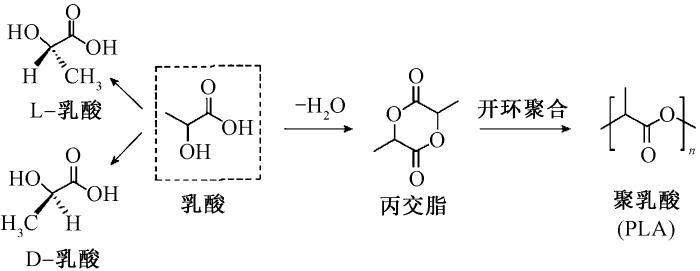
PLA是生物可降解的,其单体乳酸来源于玉米、甘蔗等可再生资源的发酵,具有良好的可持续性。PLA的单体和聚合过程如图1所示。主要通过丙交酯开环聚合制备,其分子结构由乳酸单体(L-乳酸或D-乳酸)通过酯键连接形成,并伴随小分子水的生成[21]。这是一步可逆反应,酯键的水解同样是PLA降解过程的关键步骤。由于乳酸单体的α-碳原子具有手性,因此以纯L-乳酸或D-乳酸为原料聚合所得的PLA分别被称为聚L-乳酸(PLLA)和聚D-乳酸(PDLA)。通过调控2种异构体的比例(L和D比值),可获得不同立体结构的PLA材料[22]。PLA的结晶行为及晶体形态也受L和D比值的影响。此外,分子量分布以及加工条件(如退火温度与拉伸速率)等因素也会显著影响其结晶过程[23]。通常,PLA的结晶度为30%~60%。高结晶度PLA(如PLLA)具有较高拉伸强度(50~70 MPa)和熔点(160~180 ℃),但断裂伸长率(5%~10%)较低,限制了其韧性和延展性。此外,PLA的玻璃化转变温度(Tg)为55~60 ℃,热分解温度约为250 ℃,加工时需控制温度以避免热降解。尽管PLA在塑料、包装、纺织纤维等领域应用广泛,但其化学与材料结构决定了其质硬且脆、湿热环境稳定性不高、生物降解速率较慢等局限性[24-25]。近年来关于PLA的化学增韧改性方法(共聚、接枝等)已有广泛研究,并在一定程度上改善了其力学性能和加工性能,但整体提升仍受限于其高结晶性、热敏性及末端羧基/羟基反应活性较低等结构特性[26-27]。化学改性在实现高效、可控的性能提升方面仍面临诸多挑战,尤其在实际工业应用中,还存在催化剂选择困难、反应条件苛刻、成本较高等问题[28]。因此,相较而言,物理共混法因其工艺简单、可操作性强、适于规模化加工,成为当前PLA实际应用中更具主导性的改性策略[29]。在实践中,PLA的物理共混改性多在加工阶段完成,例如通过与小分子或高分子改性剂的共混实现性能优化。该过程既可采用双螺杆挤出共混造粒后再纺丝的方式,也可通过一步法共混纺丝实现功能纤维的制备,因此,基于加工可行性与产业化前景,PLA的功能共混改性一直是当前科研与工业界开发应用的重点方向,也是本文所重点综述的内容。
图1
2 PLA的增韧增塑
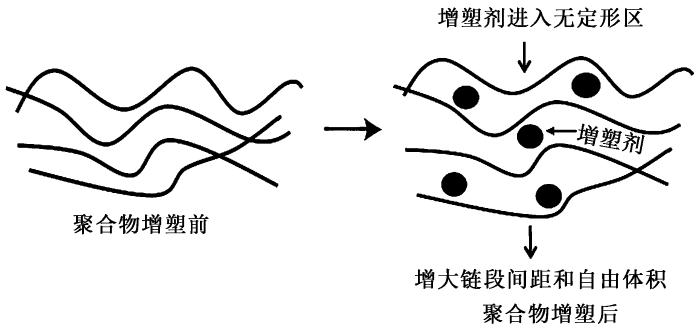
增塑是提升高分子材料柔韧性和加工流动性的重要策略,主要通过与增塑剂共混加工成型来实现[30]。增塑剂通常为低分子量或低聚合度的化合物,能够与高分子材料发生相容性分散或形成特定物理作用力(如氢键、范德华力等),来调节聚合物链间的物理结构和链段运动能力,从而改变材料的宏观性能[31]。关于增塑剂的作用机制,目前主要有3种经典理论:润滑理论、凝胶理论和自由体积理论,其中自由体积理论是目前被广泛认可的。该理论提出的增塑剂作用机制如图2所示。增塑剂能够嵌入到聚合物链段之间,增大链间距离,提升链段运动能力,增加链段的自由体积,从而有效降低聚合物的Tg,进而提高材料的柔软性和延展性[32]。适量增塑剂的加入可有效降低材料的弹性模量,提高断裂伸长率,增强其韧性,但需注意,增塑剂用量过高可能削弱材料的机械强度,降低其在纺织等领域的应用适应性[33];因此,在增塑改性过程中,需要权衡柔韧性提升与力学性能保持,以实现性能优化与加工适配性的平衡。
图2
2.1 聚丁二酸丁二醇酯
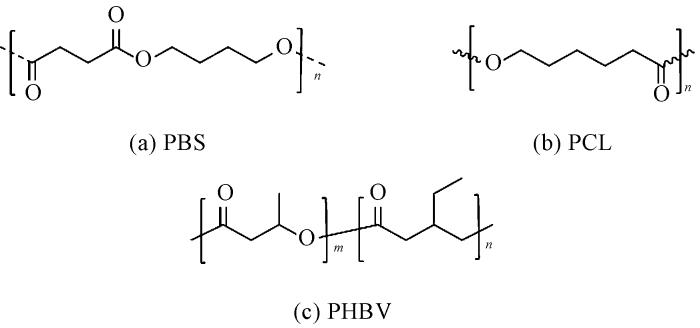
聚丁二酸丁二醇酯(PBS)是一种柔性的生物可降解聚酯[36],具有良好的韧性、延展性和加工性能,但其刚性和强度相对较低,其化学结构如图3(a)所示。通过将PBS与PLA增塑共混,可有效改善PLA的脆性问题,同时提升材料的韧性和延展性,从而实现力学性能的优化与平衡。Hassan等[37]通过熔融纺丝法制备了PLA与PBS共混纤维,随着PBS含量的增加,初始模量和断裂伸长率分别从纯PLA的80.43 cN/dtex和18%改善为44 cN/dtex和30.36%,并保持可比的拉伸强度 。Meng等[38]的研究通过熔融纺丝法制备了PLA/PBS共混熔喷非织造布,利用原位纤维化技术使PBS在PLA基体中形成纳米纤维(直径110~220 nm),显著提升了PLA的力学性能。实验表明:含10% PBS的共混非织造布拉伸强度从纯PLA的0.83 MPa提升至2.19 MPa,增幅164%;断裂伸长率从1.68%提升至12.97%,增幅672%;同时保持良好的透气(409.42 mm/s)和透湿性能(4 441 g/(m2·d))。
图3
2.2 聚己内酯
聚己内酯(PCL)作为另一种生物可降解的脂肪族聚酯(见图3(b)),具有优异的生物相容性、柔韧性和加工性,Tg约为-60 ℃,表现出良好的延展性和低温加工特性[39]。与PLA共混时,PCL可作为有效的增塑剂,改善PLA的脆性和刚性,提高其柔韧性和抗冲击性能[40]。Voorde等[41]研究了通过多层共挤技术制备的PLA和PCL共混纤维的形态、结晶性和力学性能,PCL的共混能显著提高PLA材料的韧性和延伸率,尤其是PLA/PCL(50/50)共混纤维表现出最佳力学性能,其韧性达到71.4 MJ/m3,断裂伸长率为230%,模量为30.0 MPa,相比纯PLA纤维(韧性0.71 MJ/m3,断裂伸长率7.0%),韧性和延展性大幅提升,有效改善了PLA的脆性。Huang等[42]研究发现PCL的加入和电子诱导反应加工(EIReP)改性显著提高了PLA纤维的热学和力学性能,加入10% PCL后,PLA的冷结晶温度从90.6 ℃降低到79.8 ℃,结晶度从6.19%提高到18.39%,且在电离辐射能量为25 kGy的EIReP处理后,PCL/PLA的结晶度有明显的下降,断裂应变提高了34.4%,表明PCL和EIReP有效改善了PLA的脆性并增强其延展性。但PCL的熔点(约60 ℃)较低,需控制共混比例以避免过滤材料在高温环境下变形。
上述聚合物的共混虽然能改善PLA的韧性和加工性能,但仍存在相容性差导致的相分离、力学性能折中(韧性提升但强度下降)、降解速率不匹配以及成本较高等问题。这些局限促使研究者转向生物基小分子增塑剂,其具有良好的相容性,能够均匀分散于PLA基体中,显著提升材料的柔韧性和加工性能,同时避免相分离和降解速率差异问题[43]。此外,生物基小分子增塑剂来源于可再生资源,具备环境友好性和成本优势,为PLA的改性提供了更为高效、可持续且经济的解决方案。
2.3 柠檬酸酯
图4
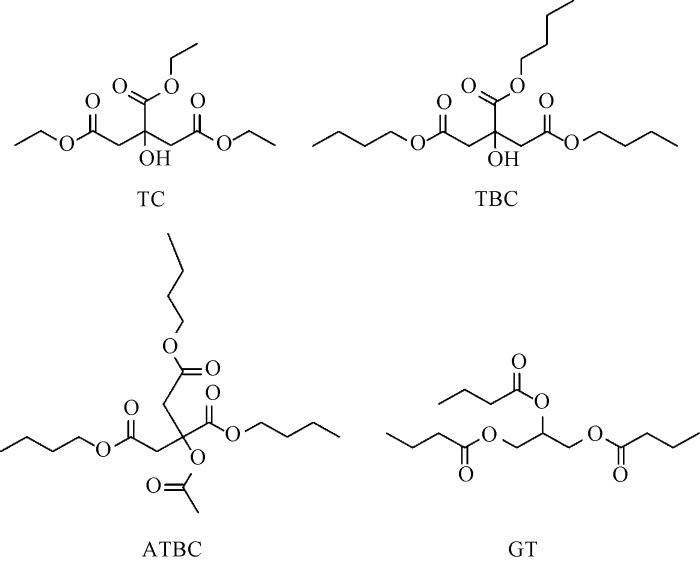
Monnier等[45]通过静电纺丝并结合ATBC作为增塑剂成功制备了增塑的PLA纤维,系统研究了ATBC对PLA分子动力学和微观结构的影响。当ATBC含量为15%,具有显著的增塑效应,可以将纯PLA纤维的Tg从61 ℃降低至36 ℃,大幅提高柔韧性。Arrieta等[46]利用静电纺丝技术制备了基于PLA-PHB(75/25)共混物的生物纳米复合纤维材料,添加15%的ATBC增塑剂可使Tg从51 ℃降低至26 ℃,使断裂伸长率从50%提高到105%,同时1%的CNC将弹性模量从70 MPa提升至230 MPa,拉伸强度从4.5 MPa增至16 MPa,显著增强了材料的柔韧性和机械性能。Sun等[47]通过静电纺丝和添加TC制备了增塑PLA纤维膜,7% TC不仅有效降低了PLA膜的Tg(从65 ℃降至53 ℃),同时显著提升了材料的韧性,具体表现为拉伸强度从0.44 MPa增加至1.02 MPa,断裂伸长率从1.32%提升至12.21%。
2.4 甘油三酯
Sun等[47]率先采用汉森溶解度参数(HSP)理论对三酯类生物基增塑剂与PLA的相容性进行了精确的计算,并通过熔融挤出[49]和静电纺丝技术系统研究了三乙酸甘油酯和三丁酸甘油酯(GT)对PLA的力学性能、热性能、过滤性能和降解性能的影响。当添加7% GT作为增塑剂时,PLA纤维膜的Tg从65 ℃显著降低至52 ℃,冷结晶温度从78 ℃降至70 ℃,同时极大增强了材料韧性,其断裂强度从0.44 MPa增加到1.08 MPa,断裂伸长率从1.32%大幅提高至12.53%。值得注意的是,在保持优异力学性能的前提下,GT增塑后的PLA材料对0.3~0.5 μm NaCl气溶胶的过滤效率在30 L/min和80 L/min流量下分别达到97.4%和96.6%,相应的空气压降仅为73.6 Pa和235.4 Pa。Olkhov等[50]采用甘油-(9,10-三氧杂环)-三油酸酯(OTOA)作为增塑剂,通过静电纺丝技术制备了含有不同OTOA含量(1%、3%和5%)的PLA非织造布,并系统研究了OTOA对PLA非织造布物理化学性能的影响。结果表明,OTOA的加入有效降低了PLA的Tg,纯PLA的Tg为67.3 ℃,而添加1%、3%和5% OTOA后,Tg分别降至65.2、63.4、61.3 ℃,表明OTOA具有良好的增塑效果。此外,力学性能测试结果表明,OTOA的加入显著提高了PLA的拉伸强度和断裂伸长率,尤其是3% OTOA含量的PLA非织造布表现出最佳的力学性能和较高的孔隙率,为增塑PLA在生物医学领域的应用提供了新的可能性。
3 PLA的加速降解
PLA作为一种典型的生物可降解材料,其降解过程主要包含2个关键阶段:水解阶段(见图1)和微生物代谢阶段[51]。然而,PLA的生物降解性能显著依赖于环境条件。研究表明,在工业堆肥条件(58±2) ℃,相对湿度50%~55%,特定微生物群落)下,PLA可在3~6个月内实现90%以上的降解率,完全符合美国材料与试验协会ASTM D6400—2021《在市政或工业堆肥设施中设计用于有氧堆肥塑料的标签标准规范》和欧盟EN 13432:2000《可通过堆肥和生物降解回收的包装要求》等国际生物降解标准[52]。然而,在自然环境(如土壤、淡水和海洋)中,由于温度、湿度和微生物活性的限制,PLA的降解速率显著降低,通常需要数年甚至数十年才能完全降解[53]。
3.1 聚(3-羟基丁酸-co-3-羟基戊酸共聚酯)
Liu等[59]采用熔喷技术大规模制备了PLA/PHBV熔喷非织造布,研究了PHBV的添加对PLA性能的影响。添加5%的PHBV后,PLA/PHBV熔喷非织造布的拉伸应力达到2.5 MPa,断裂伸长率提升至45%,韧性达到1.0 MJ/m3,分别比纯PLA提高了18%、65%和90%。此外,PHBV的加入显著加速了PLA的降解速率,PLA/PHBV熔喷非织造布在土壤中4个月内可完全降解为二氧化碳和水,而纯PLA的降解速率较慢。这种材料在使用期间具有良好的力学性能,而在使用寿命结束后能够快速降解,减少了对环境的长期污染,展现了其在医疗、过滤和环保领域的广阔应用前景。Lo等[60]通过静电纺丝制备了PLA/PHBV纳米纤维膜,重点探讨了PHBV对PLA性能的改善,尤其是在生物降解性方面的显著提升。PHBV的加入不仅增强了PLA的疏水性和机械性能,优化了材料的过滤效率和透气性,同时显著提高了其在多种环境中的生物降解能力。在堆肥环境中,PLA/PHBV膜在4周内完全降解,而纯PLA降解有限;在海洋环境中,PLA/PHBV(1∶1)膜降解率接近90%,而纯PLA几乎不降解。这种降解性能的提升归因于PHBV促进了PLA降解细菌的附着和生物膜形成,加速了PLA的水解和酶解过程。
3.2 生物基小分子增塑剂
生物基小分子增塑剂因可再生来源、环保无毒及优异的相容性,在改善PLA材料性能方面展现出巨大潜力。它们能够有效降低 PLA 的Tg,提高其柔韧性和可加工性。相比传统石油基增塑剂,生物基增塑剂还能通过增强 PLA 结构中的分子链间隙、提高水分渗透性和酯键水解速率,从而加速其生物降解过程。此外,部分生物基增塑剂(如柠檬酸酯类)在降解过程中可与微生物代谢途径相结合,进一步提升 PLA 的可生物降解性[48],因此,研究生物基增塑剂对 PLA 降解性能的影响,对于提升其应用性能并增强材料的环境友好性具有重要意义。
相关研究已证实生物基增塑剂对 PLA 降解速率的显著促进作用。Sun等[47]采用静电纺丝技术,通过添加生物基三酯(3%、5%、7% TC和GT)制备了一系列增塑PLA多孔纤维膜。结果表明,这些增塑剂不仅显著提高了PLA膜的力学性能,还加速了其降解速率,并呈现随增塑剂含量增加而升高的趋势。在 50 ℃ 条件下,GT增塑后PLA纤维膜在96 h内的酶降解速率达到34.18%,约为纯PLA纤维膜的2倍。Arriet等[46]使用15 wt% ATBC作为增塑剂去改善PLA-PHB (75/25)静电纺膜的力学和降解性能。实验表明,未增塑的PLA-PHB纤维膜在16 d的堆肥条件下仍能保持较大比例的回收率,表现出较低的降解速率,而增塑后材料在堆肥环境暴露 10 d后即变得易碎,说明增塑剂显著促进了降解。此外,还研究了不同含量低聚乳酸(OLA)对PLA-PHB纤维膜的增塑效果[61]。结果发现,OLA的加入不仅提高了共混物的结晶速率和力学性能,还极大地加速了其降解过程。特别是含有15%和20% OLA的PLA-PHB膜在堆肥环境中16 d后即开始解体,而未增塑的PLA-PHB纤维膜降解则需要更长时间。OLA通过增强聚合物链的流动性,加速了PLA和PHB的水解,从而显著提升了材料的降解速率。这些研究表明,合理选择生物基增塑剂可有效优化PLA过滤材料的力学性能,并进一步提升其生物降解能力,为其在可持续防护领域的应用提供了新的可能。
4 PLA共混改性剂的比较
生物可降解高分子与小分子添加剂与PLA共混,可取得较好的增塑增韧和加速降解效果[62-63]。表1示出了不同共混改性剂对PLA的关键参数如Tg、结晶度、力学性能和降解性能的影响。由表可知,添加量在3%~25%,会对PLA纤维的模量、拉伸强力、断裂伸长率、生物降解速率产生不同程度的影响。加入量少,PLA的物理性能变化小,但其生物可降解性已有足够提升;加入量多,PLA的物理性能变化大,但对其降解性能的促进有限。值得注意的是,高分子添加剂与PLA的共混相容性不高,易降低材料的力学性能[33]。小分子增塑剂与PLA相容性好,但在使用过程中容易从材料中迁移或渗出[34]。此外,本文所列举的几种生物可降解大分子的价格都远高于小分子增塑剂,这也是PLA在口罩等终端产品开发所需要权衡的重要因素。
表1 不同可降解聚合物和增塑剂对PLA材料性能的影响
Tab.1
| 改性剂 | 添加量/% | Tg/℃ | 结晶度/% | 拉伸强度/MPa | 断裂伸长率/% | 降解性能 | 参考文献 |
|---|---|---|---|---|---|---|---|
| PBS | 5 | 63.2 | — | 2.28 | 30.36 | — | [37] |
| PBS | 10 | 54.0 | 46.5 | 2.19 | 12.97 | — | [38] |
| PCL | 10 | — | 18.4 | 9.00 | 189.0 | — | [42] |
| ATBC | 15 | 26.0 | 15.9 | 4.50 | 105.0 | 10 d堆肥环境中易碎 | [46] |
| TC | 7 | 53.0 | 34.7 | 1.02 | 12.21 | 50 oC,4 d酶降解30.51% | [47] |
| GT | 7 | 52.0 | 31.1 | 1.08 | 12.53 | 50 oC,4 d酶降解34.18% | [47] |
| OTOA | 5 | 61.3 | 7.4 | 1.20 | 22.50 | — | [50] |
| PHBV | 5 | — | — | 2.50 | 45.00 | 4个月土壤中完全降解 | [59] |
| PHBV | 25 | 49.4 | 13.8 | 3.10 | 24.20 | 3周模拟土壤中完全降解 | [60] |
| OLA | 15 | 44.7 | 21.7 | 3.75 | 41.50 | 16 d堆肥环境中易碎 | [61] |
5 结束语
本文系统综述了PLA基口罩过滤材料的最新研究进展,重点围绕力学性能增强(如高分子增韧、小分子增塑)和降解速率优化(如与可降解聚合物、增塑剂共混)展开讨论。可降解聚合物共混能够有效改善PLA的力学性能和降解性能,但仍存在相分离、成本较高等问题。生物基小分子增塑剂因其来源广泛、环境友好且成本低廉,能够显著提高PLA的韧性并加速其降解速率,然而,增塑剂的添加量大、易迁移渗出等问题仍需进一步解决。
未来,PLA基材料的发展将朝着更环保和更智能的方向迈进。首先,开发新型生物基增塑剂和优化共混体系是提升PLA性能的关键第一步,旨在改善其力学性能和降解速率。其次,在满足基础性能需求的基础上,进一步的功能改性(如抗菌、抗病毒、智能化等)将成为研究重点。这些功能改性策略应以生物基和生物可降解为前提,确保材料在满足高性能需求的同时,保持环境友好性。
总之,PLA基口罩过滤材料在可持续性和功能性方面的不断创新,将为全球公共卫生和环境保护提供强有力的技术支持,推动口罩从“一次性耗材”向“高性能智能装备”的转型升级。未来的研究应继续聚焦于低成本、高性能、智能化的PLA基材料开发,为实现绿色防护技术的广泛应用奠定基础。通过多学科交叉和技术创新,PLA基材料有望在医疗、农业、包装等领域实现更广泛的应用,推动可持续材料的发展。
参考文献
Masks for COVID-19
[J].DOI:10.1002/advs.v9.3 URL [本文引用: 1]
COVID-19 pandemic repercussions on the use and management of plastics
[J].DOI:10.1021/acs.est.0c02178 URL [本文引用: 1]
Bio-based electrospun nanofiber as building blocks for a novel eco-friendly air filtration membrane: a review
[J].DOI:10.1016/j.seppur.2021.119623 URL [本文引用: 1]
Face masks and respirators: towards sustainable materials and technologies to overcome the shortcomings and challenges
[J].DOI:10.1002/nano.v3.10 URL [本文引用: 1]
Current knowledge on the presence, biodegradation, and toxicity of discarded face masks in the environment
[J].DOI:10.1016/j.jece.2023.109308 URL [本文引用: 1]
Microplastics release from face masks: characteristics, influential factors, and potential risks
[J].DOI:10.1016/j.scitotenv.2024.171090 URL [本文引用: 1]
Recent advances and future perspectives in engineering biodegradable face masks
[J].
DOI:10.1039/D2TA08019B
URL
[本文引用: 1]

Development of biodegradable and functionalised face mask nonwovens to address the plastic pollution issue generated by disposable face masks.
生物可降解无纺布材料研究进展
[J].
DOI:10.19491/j.issn.1001-9278.2024.07.015
[本文引用: 1]
随着人们对于绿色环保理念的重视,生物可降解无纺布材料因兼备性能优异、环境友好且用途广泛等优势,不仅是现阶段的研究热点,未来也极具发展潜力。本文按照天然高分子型、微生物型和化学合成型3种不同原料来源,对可降解聚合物无纺布的性能特点和国内外研究现状进行了概述和分析,重点介绍了几种常见的脂肪族聚酯类合成型可降解无纺布材料,并展望了未来发展趋势。
Research progress in biodegradable nonwoven mate-rials
[J].
DOI:10.19491/j.issn.1001-9278.2024.07.015
[本文引用: 1]
With a growth of concern about the concept of sustainable development and environment protection, biodegradable nonwoven materials have not only become an important topic in academic research, but also been expected to exhibit great development potential in future because of their advantages such as excellent performance, environmental friendliness, and wide application range. This paper reviewed the research progress in biodegradable polymeric nonwovens in terms of three different sources of biodegradable polymers, including natural polymers, microbial polymers, and synthetic polymers, and their future development perspective was also analyzed.
Biopolymer-based filtration materials
[J].
DOI:10.1021/acsomega.1c00791
PMID:34056334
[本文引用: 1]
Biobased materials such as cellulose, chitin, silk, soy, and keratin are attractive alternatives to conventional synthetic materials for filtration applications. They are cheap, naturally abundant, and easily fabricated with tunable surface chemistry and functionality. With the planet's increasing crisis due to pollution, the need for proper filtration of air and water is undeniably urgent. Additionally, fibers that are antibacterial and antiviral are critical for public health and in medical environments. The current COVID-19 pandemic has highlighted the necessity for cheap, easily mass-produced antiviral fiber materials. Biopolymers can fill these roles very well by utilizing their intrinsic material properties, surface chemistry, and hierarchical fiber morphologies for efficient and eco-friendly filtration of physical, chemical, and biological pollutants. Further, they are biodegradable, making them attractive as sustainable, biocompatible green filters. This review presents various biopolymeric materials generated from proteins and polysaccharides, their synthesis and fabrication methods, and notable uses in filtration applications.© 2021 The Authors. Published by American Chemical Society.
Environmental performance of bio-based and biodegradable plastics: the road ahead
[J].
DOI:10.1039/c7cs00149e
PMID:28932844
[本文引用: 1]
Future plastic materials will be very different from those that are used today. The increasing importance of sustainability promotes the development of bio-based and biodegradable polymers, sometimes misleadingly referred to as 'bioplastics'. Because both terms imply "green" sources and "clean" removal, this paper aims at critically discussing the sometimes-conflicting terminology as well as renewable sources with a special focus on the degradation of these polymers in natural environments. With regard to the former we review innovations in feedstock development (e.g. microalgae and food wastes). In terms of the latter, we highlight the effects that polymer structure, additives, and environmental variables have on plastic biodegradability. We argue that the 'biodegradable' end-product does not necessarily degrade once emitted to the environment because chemical additives used to make them fit for purpose will increase the longevity. In the future, this trend may continue as the plastics industry also is expected to be a major user of nanocomposites. Overall, there is a need to assess the performance of polymer innovations in terms of their biodegradability especially under realistic waste management and environmental conditions, to avoid the unwanted release of plastic degradation products in receiving environments.
Polyhydroxyalkanoate (PHA): properties and modifications
[J].DOI:10.1016/j.polymer.2020.123161 URL [本文引用: 1]
Fabrication of poly(lactic acid) filter media via the meltblowing process and their filtration performances: a comparative study with polypropylene meltblown
[J].DOI:10.1016/j.seppur.2020.118185 URL [本文引用: 1]
Poly(lactic acid) fibers, yarns and fabrics: manufacturing, properties and applications
[J].
DOI:10.1177/0040517520984101
URL
[本文引用: 1]
Poly(lactic acid) (PLA) fiber was developed more than a decade ago. It has been regarded as the most promising sustainable and biodegradable fiber to replace conventional polyethylene terephthalate (PET) polyester fiber in textile products. This paper reviews recent developments in PLA polymerization, PLA filament and fiber spinning, staple yarn spinning, fabric production, dyeing and finishing and aftercare procedures. The properties of PLA fiber are broadly similar to those of PET fiber; however, the properties of PLA fiber that differ, including thermal degradation and low hydrolytic resistance to strong alkaline, significantly affect the method selection and parameter setting of production and processing of PLA fibers and fabrics. PLA filaments are mainly produced by two-step melt spinning to get fibers with stable quality, but degradation at high temperature is still a problem. PLA staple yarns are normally spun using ring spinning. Currently existing knitting or weaving techniques can be used to produce PLA fabrics. PLA fabrics can be dyed with disperse dyes at 110°C, but their color fastness and shades are different from PET fabrics when using the same dyes. The scouring and dyeing of PLA/cotton blended fabrics and the reductive clearing after dyeing remain to be improved. As a new fiber, the entry of PLA fiber into the textile market faces difficult challenges as well as great opportunities in the future.
Current applications of poly(lactic acid) composites in tissue engineering and drug delivery
[J].DOI:10.1016/j.compositesb.2020.108238 URL [本文引用: 1]
聚乳酸基生物可降解熔喷非织造材料的研究进展与展望
[J].
Research progress and prospect on biodegradable polylactic acid-based melt-blown nonwovens
[J].
Properties of non-woven polylactic acid fibers prepared by the rotational jet spinning method
[J].DOI:10.1016/j.mtsust.2020.100046 URL [本文引用: 1]
口罩过滤材料及其驻极技术的研究进展
[J].
DOI:10.19491/j.issn.1001-9278.2024.09.009
[本文引用: 1]
综述了口罩的发展历史及其核心过滤层聚合物非织造布种类和相应驻极技术的最新进展,其中驻极工艺包括电晕充电、水驻极和静电纺丝等,需要辅以驻极添加剂,常用的聚合物非织造过滤材料主要有聚丙烯和聚乳酸。同时,对其未来的发展趋势进行了展望。
Research progress in mask filter materials and their electret technology
[J].
DOI:10.19491/j.issn.1001-9278.2024.09.009
[本文引用: 1]
This paper introduced the developmental history of masks and reviewed the latest research advancements in polymer nonwoven filter materials and corresponding electret technologies. These electret techniques included corona charging, hydrocharging, and electrospinning, which were required for the addition of electret additives. The commonly used polymer nonwoven filter materials mainly included polypropylene and polylactic acid. Meanwhile, the prospect of the future trends in this field were proposed.
Synthesis, properties, environmental degradation, processing, and applications of polylactic acid (PLA): an overview
[J].DOI:10.1007/s00289-024-05252-7 [本文引用: 1]
医疗卫生用聚乳酸非织造材料的制备及其亲水改性研究进展
[J].
DOI:10.19491/j.issn.1001-9278.2022.05.025
[本文引用: 1]
简述了静电纺丝法、纺粘法和熔喷法等聚乳酸(PLA)非织造材料制备工艺,重点介绍和分析了成纤改性、成网改性和后整理等PLA非织造材料亲水改性方法,阐述了PLA非织造材料在医疗卫生领域的用途,包括药物缓释、伤口敷料和口罩制造等;最后,对PLA非织造材料亲水改性未来的发展趋势进行了展望。
Research progress in preparation and hydrophilic modification of polylactic acid nonwovens for medical and health applications
[J].
DOI:10.19491/j.issn.1001-9278.2022.05.025
[本文引用: 1]
This paper briefly introduced the preparation technologies of poly(lactic acid) (PLA) nonwovens such as electrospinning, spunbonding, and meltblown techniques. The hydrophilic modification methods of PLA nonwovens such as fiber?forming modification, web?forming modification and post?finishing were especially introduced. Then, the applications of PLA nonwovens in the medical and health field, including drug release, wound dressing and mask manufacturing, was discussed. Finally, the future development trend in the hydrophilic modification of PLA nonwovens was prospected.
A review on recent trends of the antibacterial nonwovens air filter materials: classification, fabrication, and applica-tion
[J].DOI:10.1016/j.seppur.2023.125404 URL [本文引用: 1]
PLA bioplastic production: from monomer to the polymer
[J].DOI:10.1016/j.eurpolymj.2023.112076 URL [本文引用: 1]
Poly(lactic acid) stereo complexes based molecular architectures: synthesis and crystallization
[J].DOI:10.1016/j.progpolymsci.2023.101742 URL [本文引用: 1]
Effect of poly(lactic acid) crystallization on its mechanical and heat resistance performances
[J].DOI:10.1016/j.polymer.2020.123280 URL [本文引用: 1]
Poly(lactic acid) (PLA) and polyhydroxyalkanoates (PHAs), green alternatives to petroleum-based plastics: a review
[J].
DOI:10.1039/d1ra02390j
PMID:35479695
[本文引用: 1]
In spite of the fact that petroleum-based plastics are convenient in terms of fulfilling the performance requirements of many applications, they contribute significantly to a number of ecological and environmental problems. Recently, the public awareness of the negative effects of petroleum-based plastics on the environment has increased. The present utilization of natural resources cannot be sustained forever. Furthermore, oil is often subjected to price fluctuations and will eventually be depleted. The increase in the level of carbon dioxide due to the combustion of fossil fuel is causing global warming. Concerns about preservation of natural resources and climate change are considered worldwide motivations for academic and industrial researchers to reduce the consumption and dependence on fossil fuel. Therefore, bio-based polymers are moving towards becoming the favorable option to be utilized in polymer manufacturing, food packaging, and medical applications. This paper represents an overview of the feasibility of both Poly Lactic Acid (PLA) and polyhydroxyalkanoates (PHAs) as alternative materials that can replace petroleum-based polymers in a wide range of industrial applications. Physical, thermal, rheological, and mechanical properties of both polymers as well as their permeability and migration properties have been reviewed. Moreover, PLA's recyclability, sustainability, and environmental assessment have been also discussed. Finally, applications in which both polymers can replace petroleum-based plastics have been explored and provided.This journal is © The Royal Society of Chemistry.
A review on poly lactic acid (PLA) as a biodegradable polymer
[J].DOI:10.1007/s00289-022-04160-y [本文引用: 1]
PLA block polymers: versatile materials for a sustainable future
[J].
DOI:10.1021/acs.biomac.5c00161
PMID:40193281
[本文引用: 1]
Block polymers present an almost endless realm of possibilities to develop functional materials for myriad applications. The established self-assembly of block polymers allows researchers to access properties that are inaccessible in homopolymers. However, there is a need to develop more sustainable options than the current commodity block polymers. Derived from renewable resources and industrially compostable, poly(lactide) (PLA) is at the forefront of technological advancements in sustainable block polymers. Its material properties including high stiffness, relatively high glass transition temperature, and semicrystallinity in isotactic versions lend themselves to many applications, and its ease of synthesis provides a well-established platform for developing high-performance materials. This Perspective highlights recent advancements associated with PLA-containing block polymers, including their syntheses, mesostructural considerations, and mechanical properties, from resilient elastomers to tough plastics. We also give our perspective on the subfield of PLA block polymers, our outlook on the future, and our assessment of exciting developments yet to come.
低温等离子体对聚乳酸的表面改性及其应用
[J].
Surface modification of poly(lactic acid) by low temperature plasma and its application
[J].
Green copolymers based on poly(lactic acid):short review
[J].
DOI:10.3390/ma14185254
URL
[本文引用: 1]
Polylactic acid (PLA) is a biodegradable and biocompatible polymer that can be applied in the field of packaging and medicine. Its starting substrate is lactic acid and, on this account, PLA can also be considered an ecological material produced from renewable resources. Apart from several advantages, polylactic acid has drawbacks such as brittleness and relatively high glass transition and melting temperatures. However, copolymerization of PLA with other polymers improves PLA features, and a desirable material marked by preferable physical properties can be obtained. Presenting a detailed overview of the accounts on the PLA copolymerization accomplishments is the innovation of this paper. Scientific findings, examples of copolymers (including branched, star, grafted or block macromolecules), and its applications are discussed. As PLA copolymers can be potentially used in pharmaceutical and biomedical areas, the attention of this article is also placed on the advances present in this field of study. Moreover, the subject of PLA synthesis is described. Three methods are given: azeotropic dehydrative condensation, direct poly-condensation, and ring-opening polymerization (ROP), along with its mechanisms. The applied catalyst also has an impact on the end product and should be adequately selected depending on the intended use of the synthesized PLA. Different ways of using stannous octoate (Sn(Oct)2) and examples of the other inorganic and organic catalysts used in PLA synthesis are presented.
Durable polylactic acid (PLA)-based sustainable engineered blends and biocomposites: recent developments, challenges, and opportunities
[J].DOI:10.1021/acsengineeringau.1c00011 URL [本文引用: 1]
Research progress of novel bio-based plasticizers and their applications in poly(vinyl chloride)
[J].DOI:10.1007/s10853-021-05934-x [本文引用: 1]
新型环境友好绿色增塑剂的分子设计
[J].
Molecular design of environmental friendly green plasticizers
[J].
Strategies for strengthening toughened poly(lactic acid) blend via natural reinforcement with enhanced biodegradability: a review
[J].DOI:10.1016/j.ijbiomac.2023.126214 URL [本文引用: 2]
Super tough poly(lactic acid) blends: a comprehensive review
[J].
DOI:10.1039/d0ra01801e
PMID:35492128
[本文引用: 2]
Poly(lactic acid) or poly(lactide) (PLA) is a renewable, bio-based, and biodegradable aliphatic thermoplastic polyester that is considered a promising alternative to petrochemical-derived polymers in a wide range of commodity and engineering applications. However, PLA is inherently brittle, with less than 10% elongation at break and a relatively poor impact strength, which limit its use in some specific areas. Therefore, enhancing the toughness of PLA has been widely explored in academic and industrial fields over the last two decades. This work aims to summarize and organize the current development in super tough PLA fabricated polymer blending. The miscibility and compatibility of PLA-based blends, and the methods and approaches for compatibilized PLA blends are briefly discussed. Recent advances in PLA modified with various polymers for improving the toughness of PLA are also summarized and elucidated systematically in this review. Various polymers used in toughening PLA are discussed and organized: elastomers, such as petroleum-based traditional polyurethanes (PUs), bio-based elastomers, and biodegradable polyester elastomers; glycidyl ester compatibilizers and their copolymers/elastomers, such as poly(ethylene--glycidyl methacrylate) (EGMA), poly(ethylene--butylene-acrylate--glycidyl methacrylate) (EBA-GMA); rubber; petroleum-based traditional plastics, such as PE and PP; and various biodegradable polymers, such as poly(butylene adipate--terephthalate) (PBAT), polycaprolactone (PCL), poly(butylene succinate) (PBS), and natural macromolecules, especially starch. The high tensile toughness and high impact strength of PLA-based blends are briefly outlined, while the super tough PLA-based blends with impact strength exceeding 50 kJ m are elucidated in detail. The toughening strategies and approaches of PLA based super tough blends are summarized and analyzed. The relationship of the properties of PLA-based blends and their morphological parameters, including particle size, interparticle distance, and phase morphologies, are presented.This journal is © The Royal Society of Chemistry.
环境友好型增塑剂增韧聚乳酸的最新研究进展
[J].
Latest research progress in polylactic acid toughened by environmental friendly plasticizer
[J].
Research progress in fully biorenewable tough blends of polylactide and green plasticizers
[J].DOI:10.1016/j.ijbiomac.2024.135345 URL [本文引用: 1]
Poly(butylene succinate) (PBS): materials, processing, and industrial applications
[J].DOI:10.1016/j.progpolymsci.2022.101579 URL [本文引用: 1]
Biodegradable poly (lactic acid)/poly (butylene succinate) fibers with high elongation for health care products
[J].
DOI:10.1177/0040517517708538
URL
[本文引用: 2]
Poly (lactic acid)/poly (butylene succinate) (PLA/PBS) blend fibers with high miscibility and improved elongation with comparable mechanical strength were fabricated using the melt spinning process in order to reduce the impact on the environment by long-lasting plastics-based composites. The PLA/PBS blend fibers produced in different ratios have revealed high miscibility, which has been confirmed by morphological studies. The thermal properties showed the melting temperature of PLA at 167.13℃ and PLA/PBS blends at 169.18℃, and an increased content of PBS in blends also led to improved crystallinity. Importantly, during tensile testing, it is observed that the fracture behavior of the specimen changed from brittle fracture of neat PLA to ductile fracture of the blends, as demonstrated by the significant increase in the elongation at break with comparable tensile strength and modulus. Furthermore, the washing fastness, rubbing fastness, exhaustion values, strength loss, and shade depth (K/ S value) for the knitted and dyed fibers were explored. It was found that the exhaustion and K/ S value increased when the temperature increased, but the strength decreased. The exhaustion and K/ S value of PLA/PBS blend fabrics improved compared to pure PLA fabric, with excellent washing and rubbing fastness.
Tailoring the microstructure of biodegradable PLA/PBS melt-blown nonwovens with enhanced mechanical performance by in situ PBS fibrils formation
[J].DOI:10.1021/acs.iecr.4c00591 URL [本文引用: 2]
Effect of molecular weight on the crystallization and melt memory of poly(ε-caprolactone) (PCL)
[J].DOI:10.1021/acs.macromol.3c00234 URL [本文引用: 1]
Optimization and physical performance evaluation of electrospun nanofibrous mats of PLA, PCL and their blends
[J].
Exploring morphological effects on the mechanics of blended poly(lactic acid)/poly(ε-caprolactone) extruded fibers fabricated using multilayer coextru-sion
[J].DOI:10.1021/acs.macromol.0c00289 URL [本文引用: 1]
Fabrication of melt-spun fibers from irradiation modified biocompatible PLA/PCL blends
[J].DOI:10.1016/j.eurpolymj.2021.110895 URL [本文引用: 2]
Exploring the potential of bio-plasticizers: functions, advantages, and challenges in polymer science
[J].DOI:10.1007/s10924-024-03353-y [本文引用: 1]
Petro-based and bio-based plasticizers: chemical structures to plasticizing properties
[J].DOI:10.1002/pola.v54.1 URL [本文引用: 1]
Molecular dynamics in electrospun amorphous plasticized polylactide fibers
[J].DOI:10.1016/j.polymer.2015.07.047 URL [本文引用: 1]
Biodegradable electrospun bionanocomposite fibers based on plasticized PLA-PHB blends reinforced with cellulose nanocrystals
[J].DOI:10.1016/j.indcrop.2015.12.058 URL [本文引用: 3]
Biobased triesters as plasticizers for improved mechanical and biodegradable performance of polylactic acid fibrous membranes as facemask materials
[J].
Glycerol: its properties, polymer synthesis, and applications in starch based films
[J].DOI:10.1016/j.eurpolymj.2022.111377 URL [本文引用: 2]
A natural butter glyceride as a plasticizer for improving thermal, mechanical, and biodegradable properties of poly(lactide acid)
[J].DOI:10.1016/j.ijbiomac.2024.130366 URL [本文引用: 1]
Effect of glycero-(9, 10-trioxolane)-trialeate on the physicochemical properties of non-woven polylactic acid fiber materials
[J].
DOI:10.3390/polym13152517
URL
[本文引用: 2]
Biocompatible glycero (9,10-trioxolane) trioleate (ozonide of oleic acid triglyceride, OTOA) was incorporated into polylactic acid (PLA) fibers by electrospinning and nonwoven PLA mats with 1%, 3% and 5% OTOA content. The morphological, mechanical, thermal and water sorption properties of electrospun PLA mats after the addition of OTOA were studied. A morphological analysis showed that the addition of OTOA increased the average fiber diameter and induced the formation of pores on the fiber surface, leading to an increase in the specific surface area for OTOA-modified PLA fibrous mats. PLA fiber mats with 3% OTOA content were characterized by a highly porous surface morphology, an increased specific surface area and high-water sorption. Differential scanning calorimetry (DSC) was used to analyze the thermal properties of the fibrous PLA mats. The glass transition temperatures of the fibers from the PLA–OTOA composites decreased as the OTOA content increased, which was attributed to the plasticizing effect of OTOA. DSC results showed that OTOA aided the PLA amorphization process, thus reducing the crystallinity of the obtained nonwoven PLA–OTOA materials. An analysis of the mechanical properties showed that the tensile strength of electrospun PLA mats was improved by the addition of OTOA. Additionally, fibrous PLA mats with 3% OTOA content showed increased elasticity compared to the pristine PLA material. The obtained porous PLA electrospun fibers with the optimal 3% OTOA content have the potential for various biomedical applications such as drug delivery and in tissue engineering.
A review on degradation mechanisms of polylactic acid: hydrolytic, photodegradative, microbial, and enzymatic degrada-tion
[J].DOI:10.1002/pen.v60.9 URL [本文引用: 2]
A review of biodegradable plastics: chemistry, applications, properties, and future research needs
[J].
DOI:10.1021/acs.chemrev.2c00876
PMID:37470246
[本文引用: 1]
Environmental concerns over waste plastics' effect on the environment are leading to the creation of biodegradable plastics. Biodegradable plastics may serve as a promising approach to manage the issue of environmental accumulation of plastic waste in the ocean and soil. Biodegradable plastics are the type of polymers that can be degraded by microorganisms into small molecules (e.g., HO, CO, and CH). However, there are misconceptions surrounding biodegradable plastics. For example, the term "biodegradable" on product labeling can be misconstrued by the public to imply that the product will degrade under any environmental conditions. Such misleading information leads to consumer encouragement of excessive consumption of certain goods and increased littering of products labeled as "biodegradable". This review not only provides a comprehensive overview of the state-of-the-art biodegradable plastics but also clarifies the definitions and various terms associated with biodegradable plastics, including oxo-degradable plastics, enzyme-mediated plastics, and biodegradation agents. Analytical techniques and standard test methods to evaluate the biodegradability of polymeric materials in alignment with international standards are summarized. The review summarizes the properties and industrial applications of previously developed biodegradable plastics and then discusses how biomass-derived monomers can create new types of biodegradable polymers by utilizing their unique chemical properties from oxygen-containing functional groups. The terminology and methodologies covered in the paper provide a perspective on directions for the design of new biodegradable polymers that possess not only advanced performance for practical applications but also environmental benefits.
Degradation rates of plastics in the environment
[J].
Comprehensive exploration of natural degradation of poly(lactic acid) blends in various degradation media: a review
[J].
DOI:10.1016/j.ijbiomac.2021.07.196
PMID:34358596
[本文引用: 1]
Poly(lactic acid) (PLA), a bio-based polyester, has been extensively investigated in the recent past owing to its excellent mechanical properties. Several studies have been conducted on PLA blends, with a focus on improving the brittleness of PLA to ensure its suitability for various applications. However, the increasing use of PLA has increased the contamination of PLA-based products in the environment because PLA remains intact even after three years at sea or in soil. This review focuses on analyzing studies that have worked on improving the degradation properties of PLA blends and studies how other additives affect degradation by considering different degradation media. Factors affecting the degradation properties, such as surface morphology, water uptake, and crystallinity of PLA blends, are highlighted. In natural, biotic, and abiotic media, water uptake plays a crucial role in determining biodegradation rates. Immiscible blends of PLA with other polymer matrices cause phase separation, increasing the water absorption. The susceptibility of PLA to hydrolytic and enzymatic degradation is high in the amorphous region because it can be easily penetrated by water. It is essential to study the morphology, water absorption, and structural properties of PLA blends to predict the biodegradation properties of PLA in the blends.Copyright © 2018. Published by Elsevier B.V.
Accelerating the biodegradation of poly(lactic acid) through the inclusion of plant fibers: a review of recent advances
[J].
Electrospinning of PLA nanofibers: recent advances and its potential application for food packaging
[J].DOI:10.1021/acs.jafc.2c02611 URL [本文引用: 1]
Development and advantages of biodegradable PHA polymers based on electrospun PHBV fibers for tissue engineering and other biomedical applications
[J].
Recent trends in the development of Polyhydroxyalkanoates (PHAs) based biocomposites by blending with different bio-based polymers
[J].DOI:10.1007/s10965-024-03947-z [本文引用: 1]
Large-scale preparation of mechanically high-performance and biodegradable PLA/PHBV melt-blown nonwovens with nanofibers
[J].DOI:10.1016/j.eng.2023.02.021 URL [本文引用: 2]
Fabrication of biodegradable PLA-PHBV medical textiles via electrospinning for healthcare apparel and personal protective equipment
[J].DOI:10.1016/j.scp.2024.101536 URL [本文引用: 2]
Biodegradable electrospun PLA-PHB fibers plasticized with oligomeric lactic acid
[J].DOI:10.1016/j.polymdegradstab.2020.109226 URL [本文引用: 2]
Polylactic acid blends: the future of green, light and tough
[J].DOI:10.1016/j.progpolymsci.2018.07.001 URL [本文引用: 1]
Recent advancements in bio-based plasticizers for polylactic acid(PLA): a review
[J].DOI:10.1016/j.polymertesting.2024.108603 URL [本文引用: 1]

 京公网安备11010502044800号


