纺织学报 ›› 2025, Vol. 46 ›› Issue (04): 29-37.doi: 10.13475/j.fzxb.20240104901
曹展瑞1,2, 纪灿灿1,2, 赫羴姗1,2, 周丰1,3, 向阳3, 高飞3, 刘轲1,2( ), 王栋1,2
CAO Zhanrui1,2, JI Cancan1,2, HE Shanshan1,2, ZHOU Feng1,3, XIANG Yang3, GAO Fei3, LIU Ke1,2(), WANG Dong1,2
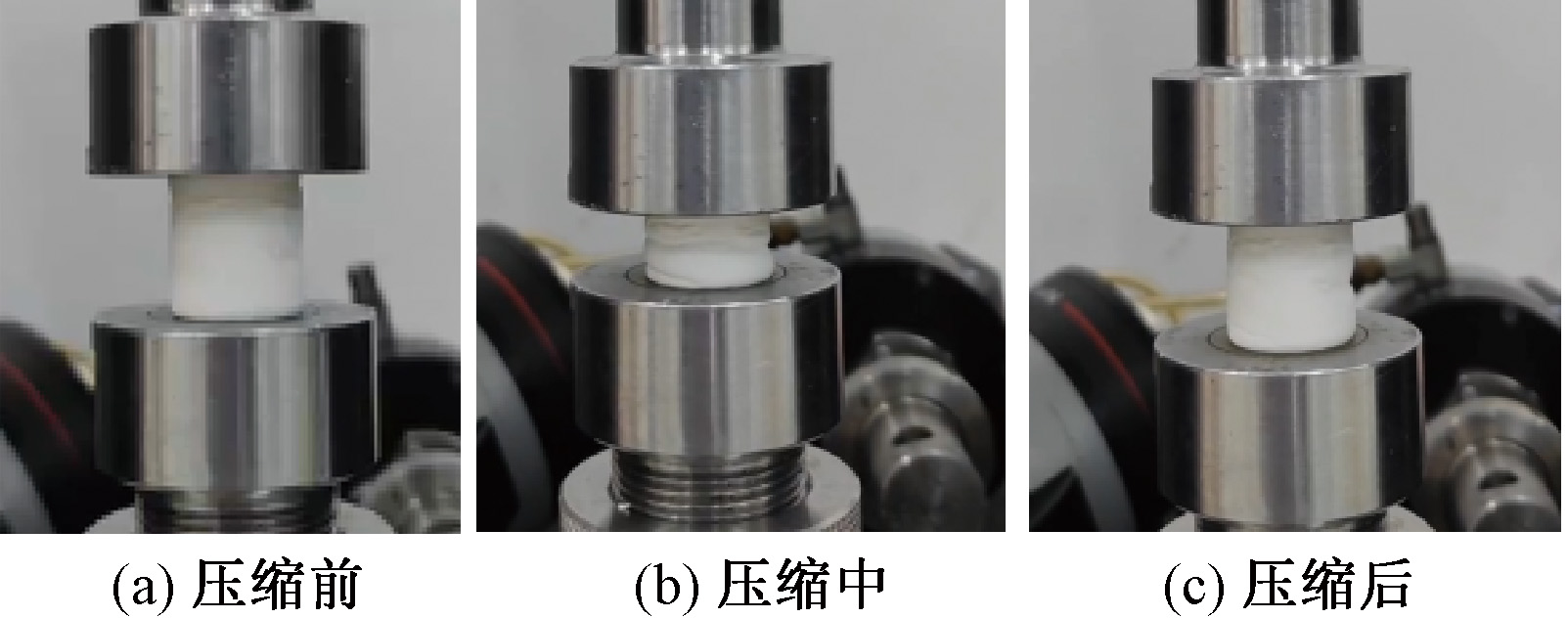
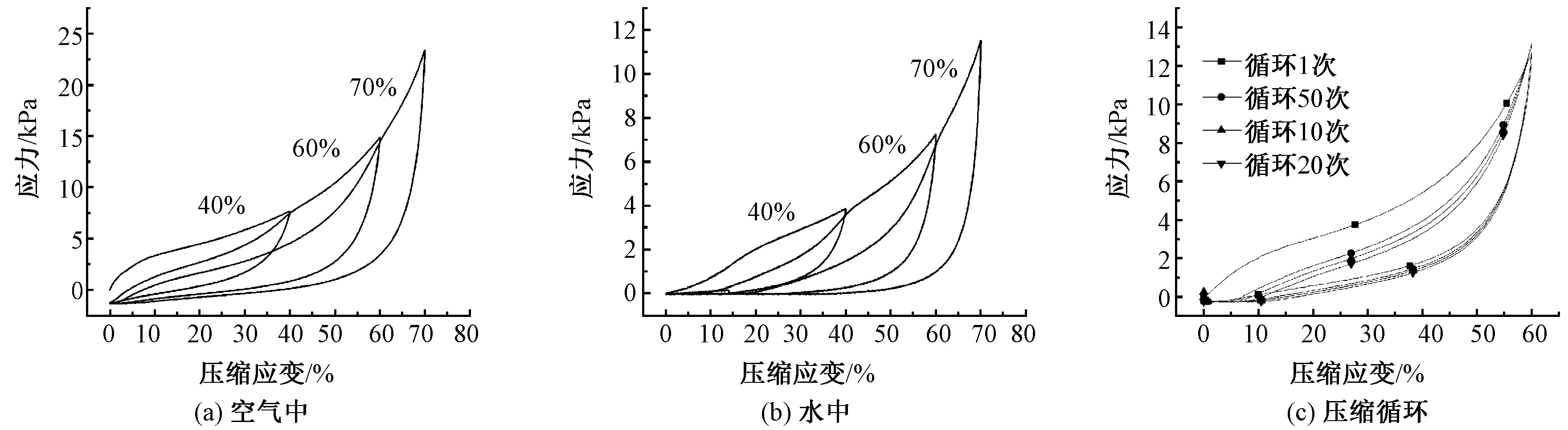
摘要: 针对传统微球层析材料对牛血清蛋白等生物制品的分离速度慢、分离效率低的问题,采用冷冻干燥方法制备出乙烯-乙烯醇共聚物(EVOH)纳米纤维-壳聚糖季铵盐(CS)复合气凝胶材料,并通过扫描电子显微镜、X射线光电子能谱仪、傅里叶红外光谱仪等对气凝胶吸附材料的表面形貌和表面化学组成进行了表征和分析。结果表明,该气凝胶材料具有以EVOH纳米纤维为骨架的互穿多孔结构,压缩回弹性优异,对牛血清白蛋白(BSA)的静态饱和吸附量高达1 121.6 mg/g。本研究为生物大分子分离和纯化材料的构筑提供了一种简单高效的方法。
中图分类号:
| [1] | YANG Hongmei, LI Yuheng, TU Chuanyi, et al. Double-enzyme active MnO2@BSA mediated lab-on-paper dual-modality aptasensor for di (2-ethylhexyl) phthalate[J]. Analytica Chimica Acta, 2024. DOI:10.1016/j.aca.2023.342135. |
| [2] | LIANG Xiaoping, HU Ping, ZHANG Hongyang, et al. Hypercrosslinked strong anion-exchange polymers for selective extraction of fluoroquinolones in milk sam-ples[J]. Journal of Pharmaceutical and Bio-medical Analysis, 2019, 166: 379-386. |
| [3] | FAIT Fabio, STEINBACH Julia C, KANDELBAUER Andreas, et al. Incorporation of silica nanoparticles into porous templates to fabricate mesoporous silica microspheres for high performance liquid chromatography applications[J]. Journal of Chromatography A, 2023. DOI:10.1016/j.chroma.2023.464190. |
| [4] | ZHAO Liangsheng, LI Shasha, LIANG Chao, et al. High-strength and low-crystallinity cellulose/agarose composite microspheres: fabrication, characterization and protein adsorption[J]. Biochemical Engineering Journal, 2021. DOI:10.1016/j.bej.2020.107826. |
| [5] | WANG Bing, QIU Shuting, CHEN Zhong, et al. Assembling nanocelluloses into fibrous materials and their emerging applications[J]. Carbohydrate Polymers, 2023. DOI:10.1016/j.carbpol.2022.120008. |
| [6] | LIU Xueyan, WU Huiping, WU Peiyi. Synchronous engineering for biomimetic murray porous membranes using isocyanate[J]. Nano Letters, 2022, 22(7): 3077-3086. |
| [7] | DOU Xueyu, WANG Qian, LI Zhaoling, et al. Seaweed-derived electrospun nanofibrous membranes for ultrahigh protein adsorption[J]. Advanced Functional Materials, 2019. DOI:10.1002/adfm.201905610. |
| [8] | CHEN Biao, WU Shuangquan, YE Qifa. Fabrication and characterization of biodegradable KH560 crosslinked chitin hydrogels with high toughness and good biocompatibility[J]. Carbohydrate Polymers, 2021. DOI:10.1016/j.carbpol.2021.117707. |
| [9] | MU Mengya, LI Yingzhan, YU Houyong et al. Construction of nanocellulose aerogels with mechanical flexibility and pH-responsive properties via a cross-linker structure design strategy[J]. ACS Sustainable Chemistry & Engineering, 2021, 9(29): 9951-9960. |
| [10] | LUO Liushan, CHEN Luying, ZHOU Zhaohan, et al. Eco-friendly and underwater superelastic cellulose nanofibrous aerogels for efficient capture and high-throughput protein separation[J]. Separation and Purification Technology, 2024. DOI:10.1016/j.seppur.2023.125062. |
| [11] | DANG Wei, WANG Bowne, XU Zhuoli, et al. Pore structure, thermal insulation and compressive property of ZrO2 nanofiber aerogels with carbon junction fabricated by freeze drying[J]. Journal of Non-Crystalline Solids, 2023. DOI:10.1016/j.jnoncrysol.2022.122031. |
| [12] | CHENG Pan, HUANG Peng, JI Cancan, et al. An EVOH nanofibrous sterile membrane with a robust and antifouling surface for high-performance sterile filtration via glutaraldehyde crosslinking and a plasma-assisted process[J]. Soft Matter, 2022, 18(26): 4991-5000. |
| [13] | VOGEL Claus, KOMBER Hartmut, MEIER-HAACK Jochen. Temperature-stable anion-exchange materials from cyclopolymerization of quaternary ammonium halides[J]. Reactive and Functional Polymers, 2017, 117: 34-42. |
| [14] | 樊木, 肖玲, 杜予民. 壳聚糖季铵盐分子结构与吸湿保湿性研究[J]. 武汉大学学报(理学版), 2003(2):205-208. |
| FAN Mu, XIAO Ling, DU Yumin. Study on the molecular structure and hygroscopicity of chitosan quaternary ammonium salt[J]. Journal of Wuhan University (Science Edition), 2003(2):205-208. | |
| [15] | MOHR B J, NANKO H, KURTIS K E. Aligned kraft pulp fiber sheets for reinforcing mortar[J]. Cement and Concrete Composites, 2006, 28(2): 161-172. |
| [16] | KAMON Yuri, INOUE Naoko, MIHAR Erika, et al. Hydrophilic crosslinked-polymeric surface capable of effective suppression of protein adsorption[J]. Applied Surface Science, 2016, 378: 467-472. |
| [17] |
HOU Ting, GUO Kechun, WANG Zhongguo, et al. Glutaraldehyde and polyvinyl alcohol crosslinked cellulose membranes for efficient methyl orange and Congo red removal[J]. Cellulose, 2019, 26: 5065-5074.
doi: 10.1007/s10570-019-02433-w |
| [18] | AYYARU Sivasankaran, AHN Young-Ho. Application of sulfonic acid group functionalized graphene oxide to improve hydrophilicity, permeability, and antifouling of PVDF nanocomposite ultrafiltration membranes[J]. Journal of Membrane Science, 2017, 525: 210-219. |
| [19] | KIM Kibeom, SUNG Woonmo, PARK Hyunjin, et al. Hydrophobic properties of ethylene-vinyl alcohol copolymer treated with plasma source ion implanta-tion[J]. Journal of Applied Polymer Science, 2004, 92(4): 2069-2075. |
| [20] | RAJESH Sahadevan, CRANDALL Caitlin, SCHNEIDEMAN Steven, et al. Cellulose-graft-polyethyleneamidoamine anion-exchange nanofiber membranes for simultaneous protein adsorption and virus filtration[J]. ACS Applied Nano Materials, 2018, 1(7): 3321-3330. |
| [21] | LIU Haiyan, GURGEL Patrick V, CARBONELL Ruben G. Preparation and characterization of anion exchange adsorptive nonwoven membranes with high protein binding capacity[J]. Journal of Membrane Science, 2015, 493: 349-359. |
| [22] | YE Hui, HUANG Lilan, LI Wenrui, et al. Protein adsorption and desorption behavior of a pH-responsive membrane based on ethylene vinyl alcohol copolymer[J]. RSC Advances, 2017, 7(35): 21398-21405. |
| [23] | LIU Chang, YU Jiajing, YOU Junyang, et al. Cellulose/chitosan composite sponge for efficient protein adsorption[J]. Industrial & Engineering Chemistry Research, 2021, 60(25): 9159-9166. |
| [24] | 李一, 张恒宇, 郭雯卓, 等. 阻抗阶跃渐变层结构纤维素/Ti3C2Tx气凝胶材料的制备及其吸波性能[J]. 纺织学报, 2025, 46(3):17-26. |
| LI Yi, ZHANG Hengyu, GUO Wenzhuo, et al. Preparation of cellulose/Ti3C2Tx aerogel absorbing materials with impedance step gradient layer structure and their absorption properties[J]. Journal of Textile Research, 2025, 46(3):17-26. | |
| [25] | SONG Fei, WANG Xiuli, WANG Yuzhong. Fabrication of novel thermo-responsive electrospun nanofibrous mats and their application in bioseparation[J]. European Polymer Journal, 2011, 47(10): 1885-1892. |
| [26] |
YANG Zuoting, XU Jia, WANG Jiqi, et al. Design and preparation of self-driven BSA surface imprinted tubular carbon nanofibers and their specific adsorption performance[J]. Chemical Engineering Journal, 2019, 373: 923-934.
doi: 10.1016/j.cej.2019.05.129 |
| [27] | YANG Zhuoting, CHEN Junjie, WANG Jiqi, et al. Self-driven BSA surface imprinted magnetic tubular carbon nanofibers: fabrication and adsorption performance[J]. ACS Sustainable Chemistry & Engineering, 2020, 8(8): 3241-3252. |
| [28] | CHENG Pan, LIU Ke, WAN Yucai, et al. Solution viscosity-mediated structural control of nanofibrous sponge for RNA separation and purification[J]. Advanced Functional Materials, 2022. DOI:10.1002/adfm.202112023. |
| [1] | 张文丽, 刘鑫, 张俏俏, 支超, 李建伟, 樊威. 基于废旧亚麻织物的超弹性气凝胶制备及其性能[J]. 纺织学报, 2025, 46(04): 47-55. |
| [2] | 李一, 张恒宇, 郭雯卓, 陈剑英, 王妮, 肖红. 阻抗阶跃渐变层结构纤维素/Ti3C2Tx气凝胶材料的制备及其吸波性能[J]. 纺织学报, 2025, 46(03): 17-26. |
| [3] | 马亮, 俞旭华, 刘文武, 李慈, 方以群, 李俊, 徐佳骏. 气凝胶复合材料在干式潜水服内胆隔热性能提升中的应用[J]. 纺织学报, 2024, 45(07): 181-188. |
| [4] | 高志浩, 宁新, 明津法. 生物质基碳气凝胶及其在储能器件中应用研究进展[J]. 纺织学报, 2024, 45(06): 210-218. |
| [5] | 王新庆, 季东圣, 李舒畅, 杨晨, 张宗宇, 刘实诚, 王航, 田明伟. 包载型聚丙烯腈/SiO2气凝胶复合纳米纤维制备及其隔热性能[J]. 纺织学报, 2024, 45(05): 35-42. |
| [6] | 时吉磊, 唐春霞, 付少海, 张丽平. 柔韧隔热纤维素基气凝胶制备与性能[J]. 纺织学报, 2024, 45(04): 8-14. |
| [7] | 肖昊, 孙辉, 于斌, 朱祥祥, 杨潇东. 壳聚糖-SiO2气凝胶/纤维素/聚丙烯复合水刺材料的制备及其吸附染料性能[J]. 纺织学报, 2024, 45(02): 179-188. |
| [8] | 杨其亮, 杨海伟, 王邓峰, 李长龙, 张乐乐, 王宗乾. 超疏水弹性丝素蛋白纤维气凝胶的制备及其吸油性能[J]. 纺织学报, 2023, 44(09): 1-10. |
| [9] | 吕红丽, 罗丽娟, 师建军, 郑振荣, 李红晨. 柔性增强二氧化硅气凝胶的研究进展[J]. 纺织学报, 2023, 44(08): 217-224. |
| [10] | 柳敦雷, 陆佳颖, 薛甜甜, 樊玮, 刘天西. 超疏水隔热聚酯纳米纤维/二氧化硅气凝胶复合膜的制备及其性能[J]. 纺织学报, 2023, 44(07): 18-25. |
| [11] | 吕婧, 刘增伟, 程青青, 张学同. 芳纶纳米纤维气凝胶的研究进展[J]. 纺织学报, 2023, 44(06): 10-20. |
| [12] | 孙将皓, 邵彦峥, 魏春艳, 王迎. 海藻酸钠/改性氧化石墨烯微孔气凝胶纤维制备与吸附性能[J]. 纺织学报, 2023, 44(04): 24-31. |
| [13] | 何满堂, 王黎明, 覃小红, 俞建勇. 静电纺纳米纤维在界面太阳能蒸汽转化应用中的研究进展[J]. 纺织学报, 2023, 44(03): 201-209. |
| [14] | 赵伦玉, 隋晓锋, 毛志平, 李卫东, 冯雪凌. 气凝胶材料在纺织品上的应用研究进展[J]. 纺织学报, 2022, 43(12): 181-189. |
| [15] | 楚艳艳, 李施辰, 陈超, 刘莹莹, 黄伟韩, 张越, 陈晓钢. 柔性抗冲击纺织材料及其结构的研究进展[J]. 纺织学报, 2022, 43(12): 203-212. |
|
||
 京公网安备11010502044800号