纺织学报 ›› 2025, Vol. 46 ›› Issue (03): 216-224.doi: 10.13475/j.fzxb.20240403101

• 机械与设备 • 上一篇    

管状织物的六角形三维编织工艺设计

丁彩红(), 贺少旭   

  1. 东华大学 机械工程学院, 上海 201620
  • 收稿日期:2024-05-01 修回日期:2024-06-26 出版日期:2025-03-15 发布日期:2025-04-16
  • 作者简介:丁彩红(1973—),女,副教授,博士。主要研究方向为纺织机械机电一体化技术,机械设计和故障诊断技术。E-mail:dingch@dhu.edu.cn

Design of hexagonal three-dimensional braiding technology for tubular fabrics

DING Caihong(), HE Shaoxu   

  1. College of Mechanical Engineering, Donghua University, Shanghai 201620, China
  • Received:2024-05-01 Revised:2024-06-26 Published:2025-03-15 Online:2025-04-16

摘要:

目前第2代六角形编织机的编织工艺尚无明确的编写规则或方法,为解决上述问题,提出了面向管状织物结构设计的六角形编织工艺方法。首先,通过分析携纱器在角轮上的位置变换原理,提出了等效角轮理论。然后,结合六角形编织机结构及其运动特点,提出了编织机的等效角轮单元,介绍了在六角轮的底盘上构建六角形编织机等效角轮系统时,编织机所包含的底盘单元结构。其次,结合管状织物的结构参数和等效角轮的结构特点,建立携纱器排布方式与织物结构之间的内在联系,阐述管状织物的成形原理。再次,通过分析织物成形过程,定义了底盘工艺单元,然后基于管状织物的成形原理提出了等效角轮单元的选取原则,从而构建六角形编织机等效角轮系统的底盘结构,确定携纱器的排布方式,接着阐述了携纱器的运动准则,得到可循环执行的工艺步骤。最后,开展了具体的管状织物编织实例设计并进行相关实物编织实验。实验结果验证了编织工艺方法的正确性,该成果将有利于第2代六角形编织机管状编织工艺的快速开发。

关键词: 六角形编织, 管状织物, 编织工艺, 等效角轮, 携纱器, 复合材料

Abstract:

Objective Hexagonal three-dimensional braiding technology enables more flexible braiding processes, allowing for the fabrication of complex braided structures. The flexibility resulted in challenges such as difficulty in process development and lack of systemization, failing to meet the demands of hexagonal braiding technology. Therefore, a hexagonal braiding technique was proposed for tubular fabric structural design aiming to address these issues. By establishing an inherent connection between fabric structure and braiding machine through equivalent horn gears, the efficiency of hexagonal three-dimensional braiding technology design for tubular fabrics was enhanced.

Method Initially, the transfer principle of the yarn carrier on the horn gears was analyzed, and the theory of equivalent horn gears was proposed. Combined with the structure and motion characteristics of the hexagonal braiding machine, the equivalent horn gears unit of the braiding machine was proposed. Subsequently, based on the structural parameters of tubular fabrics, the inherent connection between the arrangement law of the yarn carrier and the fabric structure was established based on the equivalent horn gears. Finally, by analyzing the yarn forming process, the bottom plate process unit was defined. Combining with the principle of tubular fabric forming, the bottom plate structure of the hexagonal braiding machine equivalent horn gears system was constructed, obtaining the arrangement law of the yarn carrier, elucidating the movement criteria of the yarn carrier, and obtaining recyclable process steps.

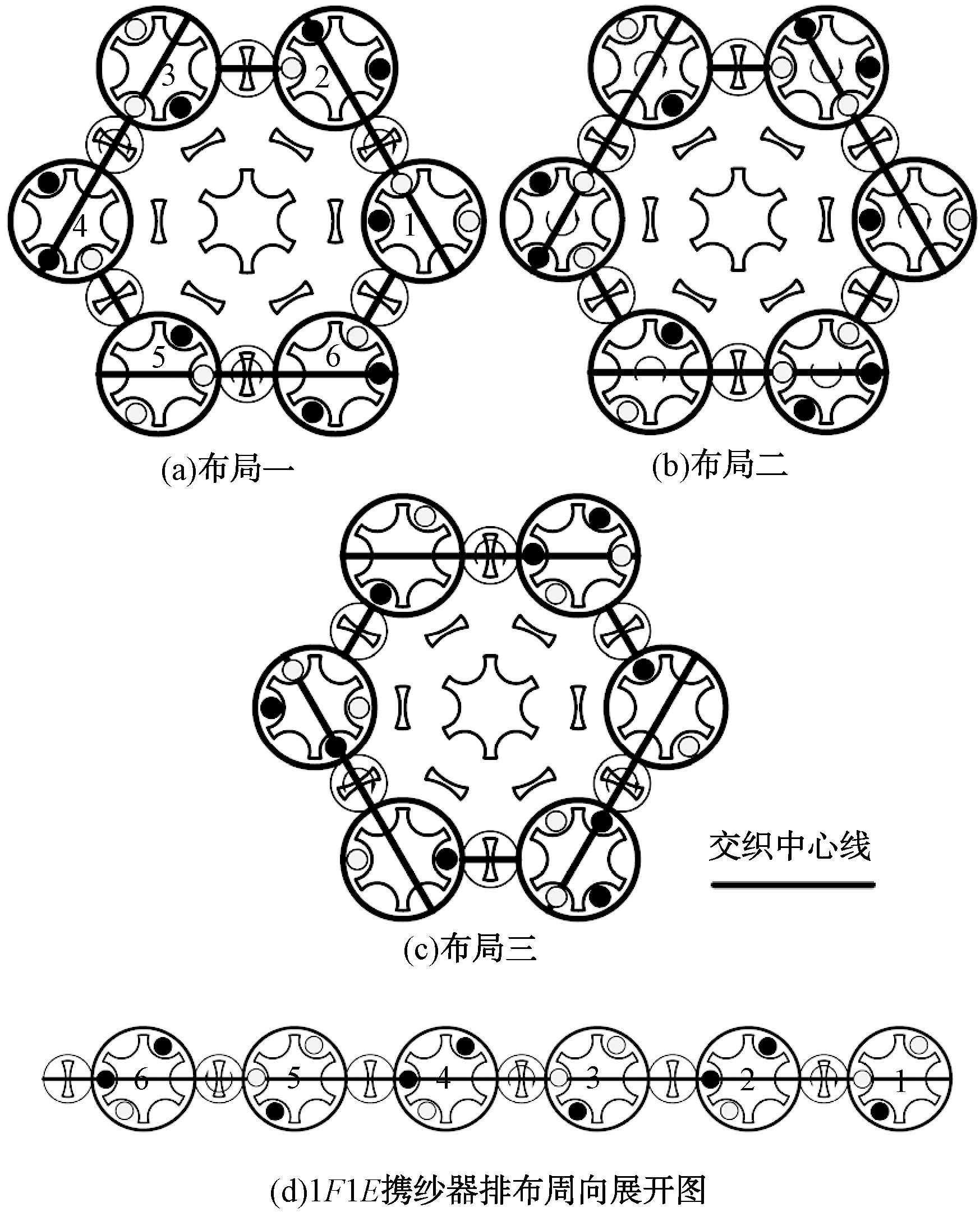
Results Firstly, the principle of carrier position transformation was analyzed, and the theory of equivalent horn gears was proposed. Combined with the structural characteristics of the second-generation hexagonal braiding machine, the equivalent horn gears unit of the second-generation hexagonal braiding machine was proposed, further elucidating the chassis motion unit of the hexagonal braiding machine equivalent horn gears system. Secondly, based on the structural parameters of tubular fabrics, and the structural characteristics of the equivalent horn gears, the inherent connection between the arrangement law of the yarn carrier and the fabric structure was established, reflecting the forming principle of tubular fabrics. Thirdly, by analyzing the fabric forming principle, the bottom plate process unit was defined. Then, combining with the principle of tubular fabric forming, the selection principle of the equivalent horn gears unit was proposed, and the bottom plate structure of the hexagonal braiding machine equivalent horn gears system was constructed, thereby determining the arrangement law of the yarn carrier. Fourthly, the yarn carriers were arranged based on the interweaving centerline, and the motion steps of the process units were planned respectively, resulting in recyclable execution steps. Fifthly, the braiding process of the 3∶3-1 tubular fabric was designed, and relevant experiments were conducted, achieving consistent fabric structural characteristics with the designed fabric configuration.

Conclusion Building upon the foundation of hexagonal horn gears and stepwise directional motion and drawing inspiration from the establishment method of Maypole tubular fabric forming process, this study explores the hexagonal three-dimensional braiding technology for tubular fabrics. Leveraging the structural characteristics of the second-generation hexagonal braiding machine, the theory of equivalent horn gears is proposed. Mapping the arrangement of yarn carriers to fabric structure, a hexagonal braiding technology based on the theory of equivalent horn gears is developed. Finally, the feasibility and correctness of this approach are verified through braiding experiments. Although hexagonal three-dimensional braiding machines have been continuously improved in mechanical and electronic control aspects, enabling more flexible braiding of complex fabric structures, a corresponding universal braiding technology or theory for hexagonal braiding has yet to emerge. Systematic methods still lack to establish the regulatory relationship between braiding processes and fabric structures. The hexagonal braiding technology proposed provides effective technical support for the rapid development of tubular fabrics, filling the gap in the braiding process system of hexagonal braiding machines and promoting the advancement of hexagonal braiding technology. With the popularity of hexagonal braiding machines, new production demands continue to emerge, driving the development of hexagonal braiding technology to new heights.

Key words: hexagonal braiding, tubular braid, braiding technology, equivalent horn gear, yarn carrier, composite material

中图分类号: 

  • TS107

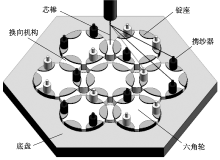
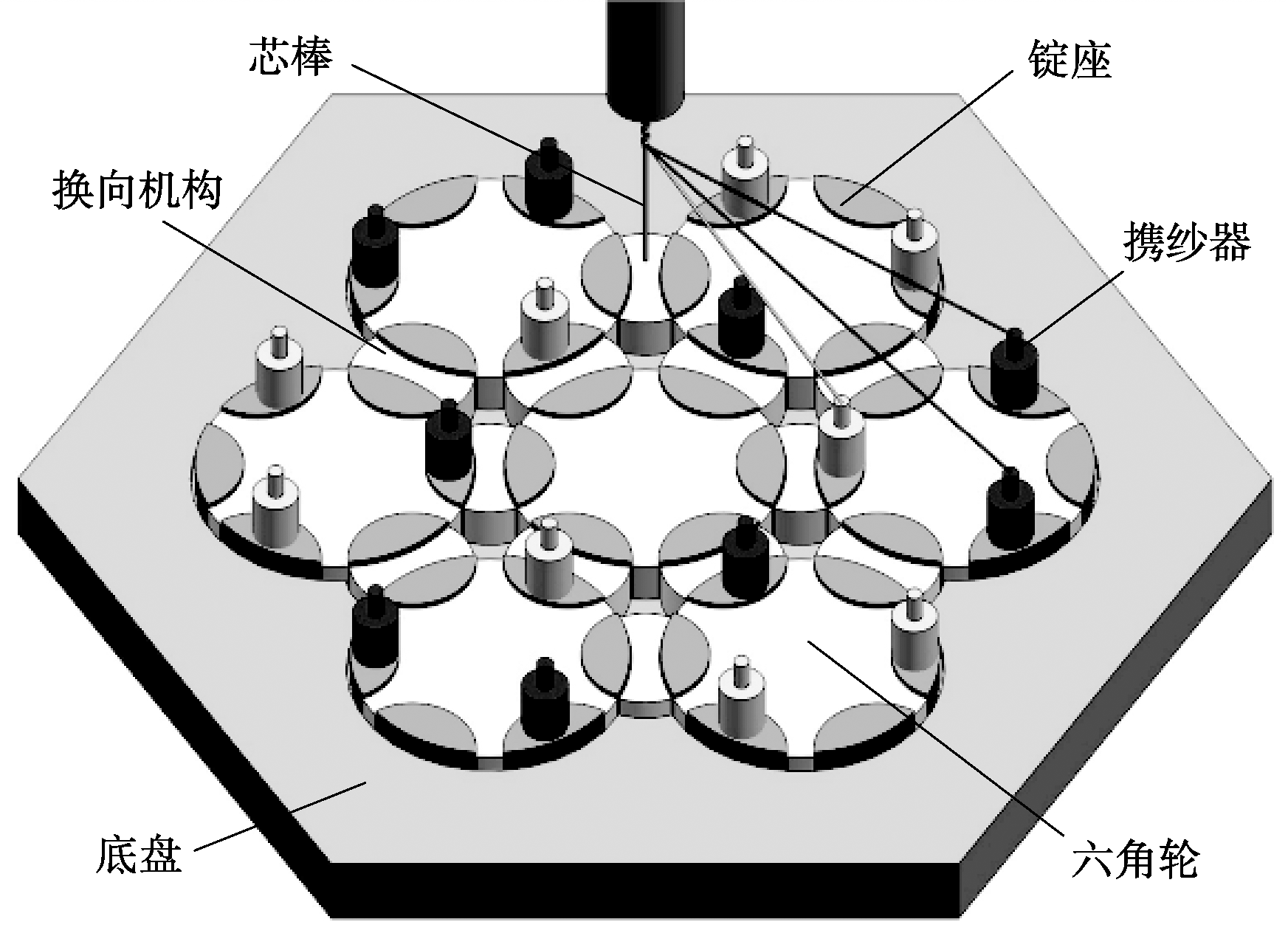
图1

第2代六角形编织机结构示意图"

图2

携纱器在槽口位置上的转移方式"

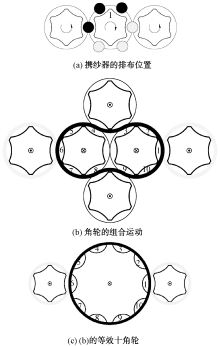
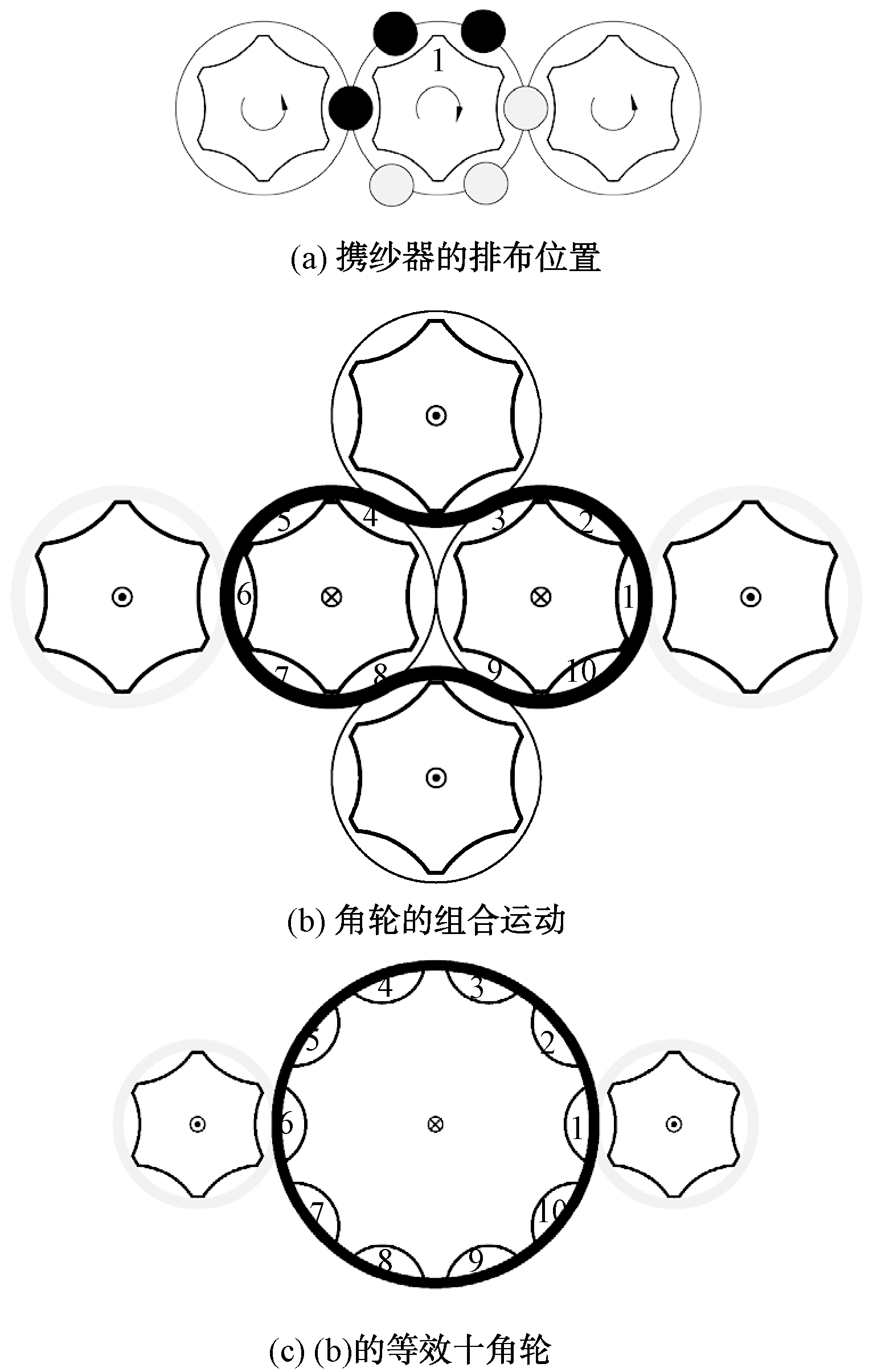
图3

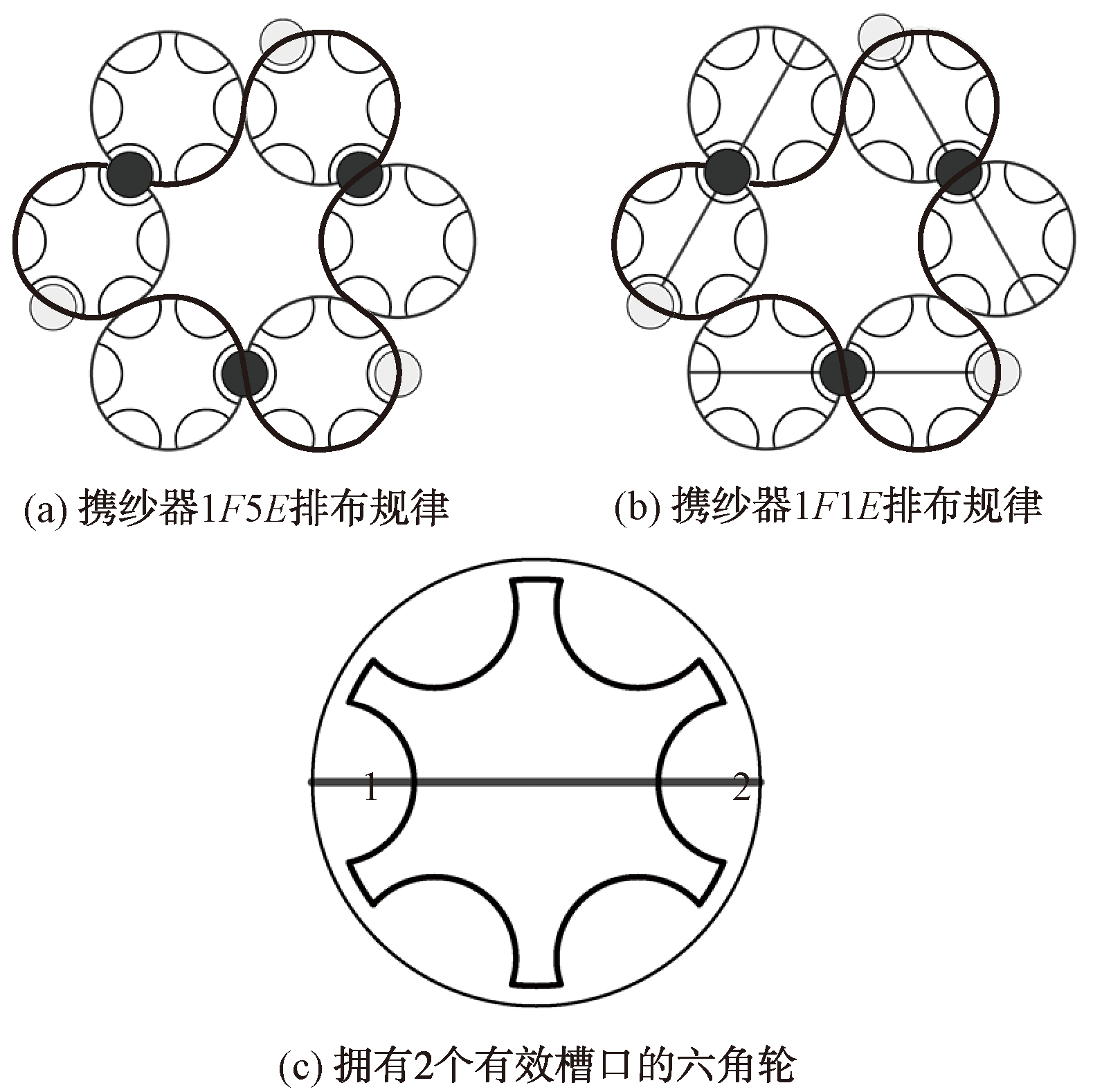
六角轮底盘上的携纱器排布方式"

图4

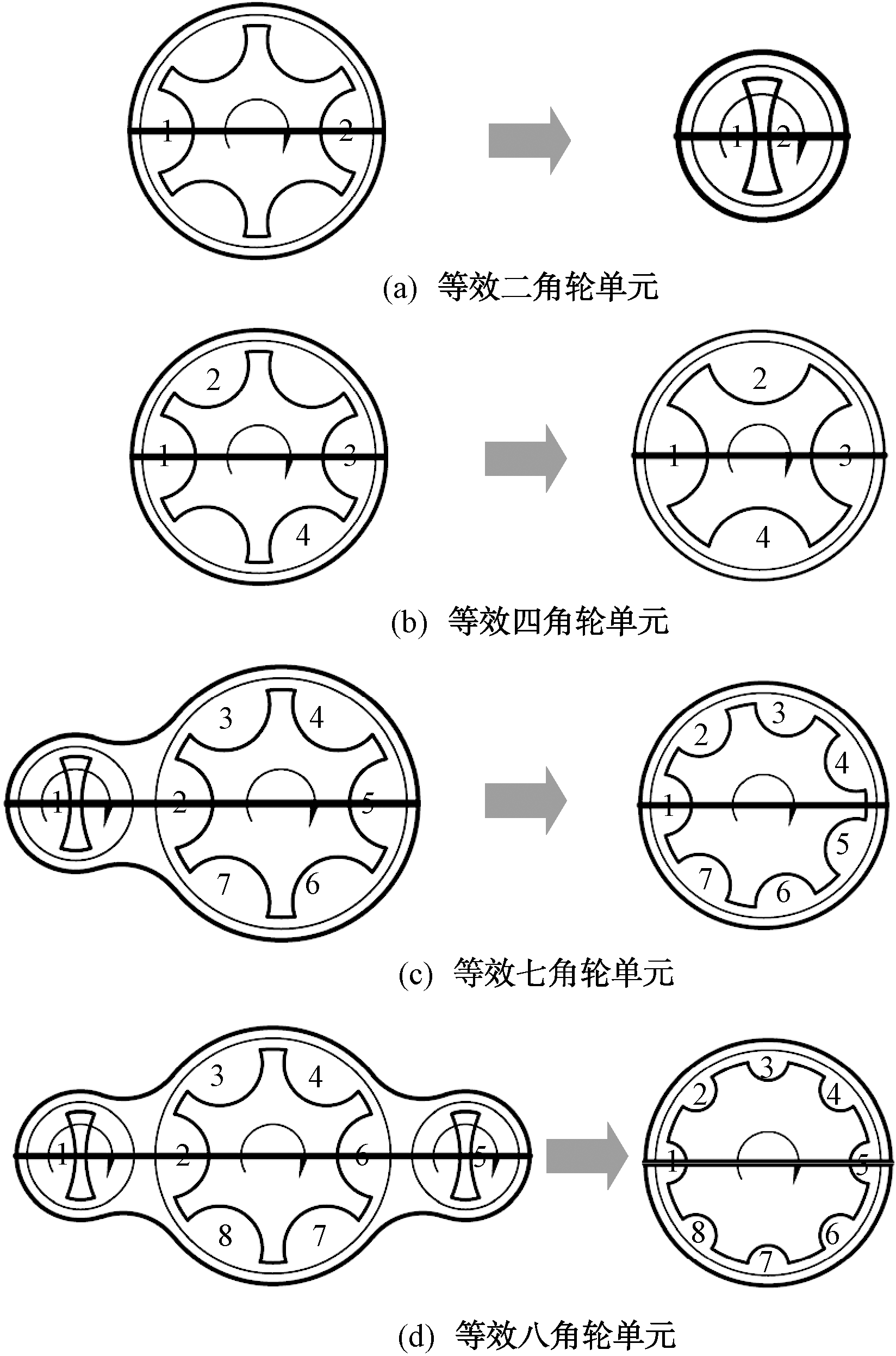
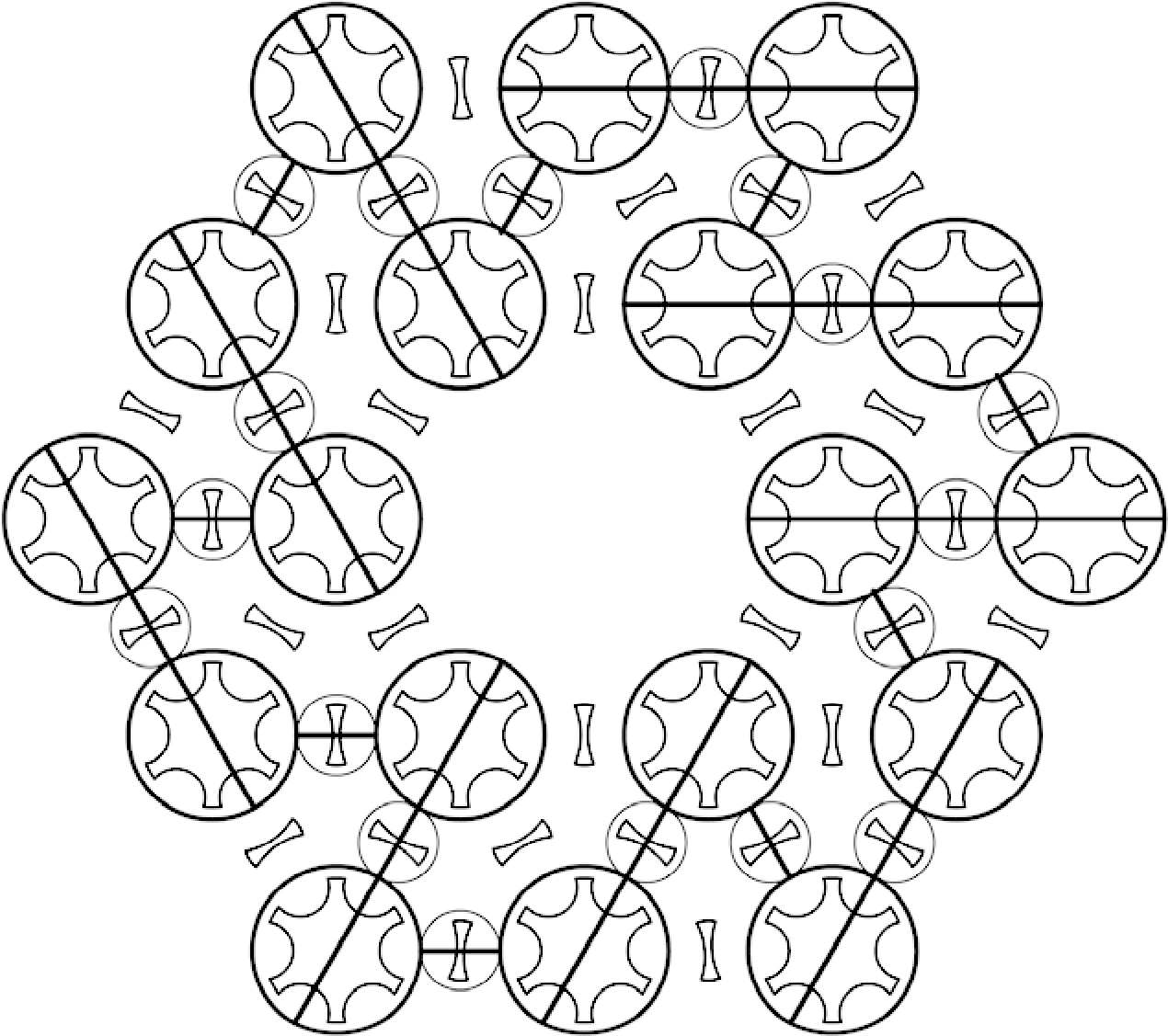
六角形编织机的几种等效角轮单元"

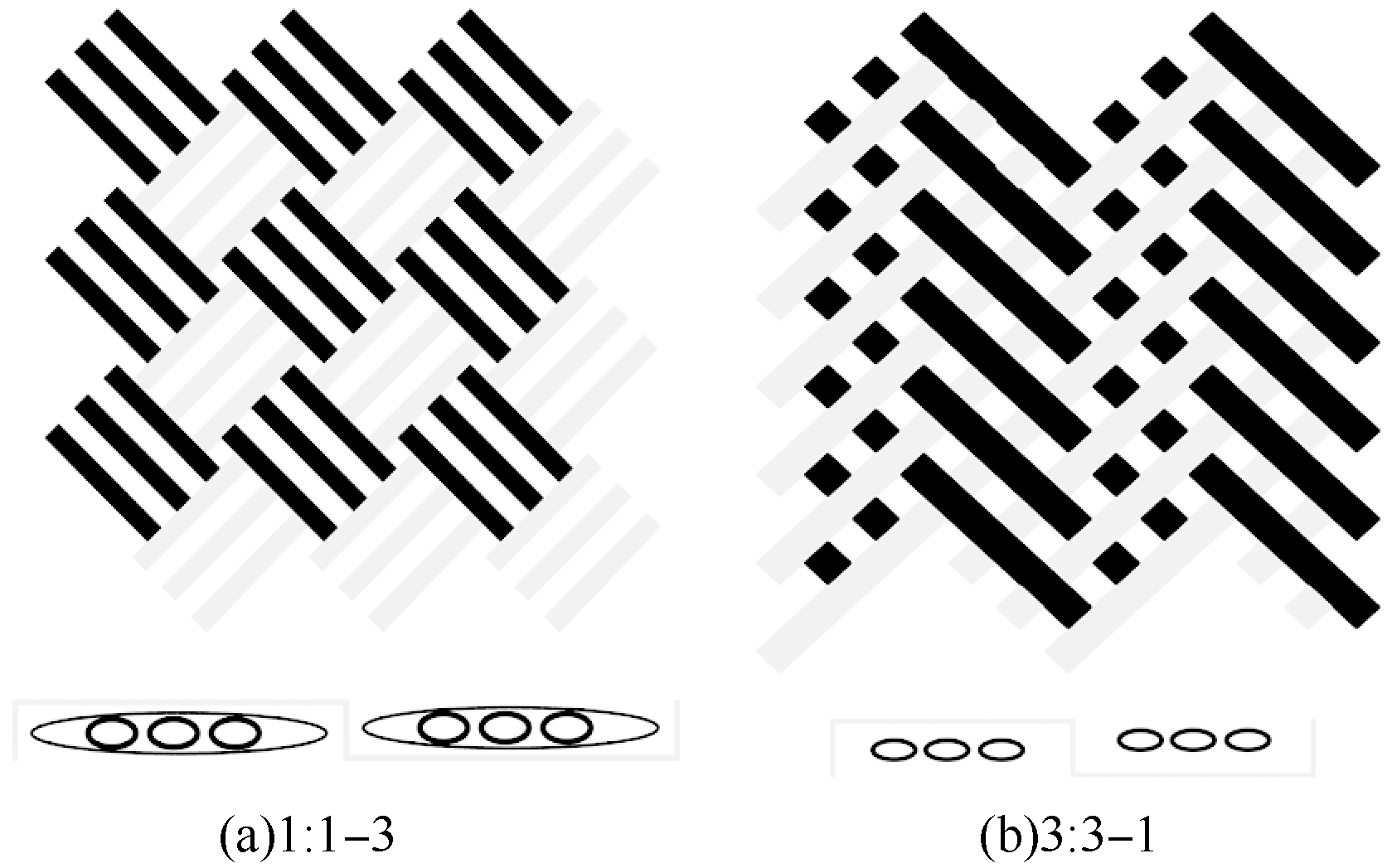
图5

常见纱线结构及其表达方式"

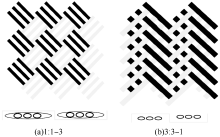
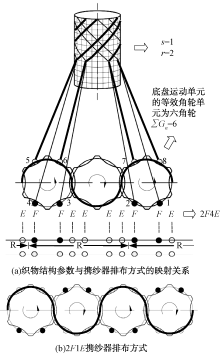
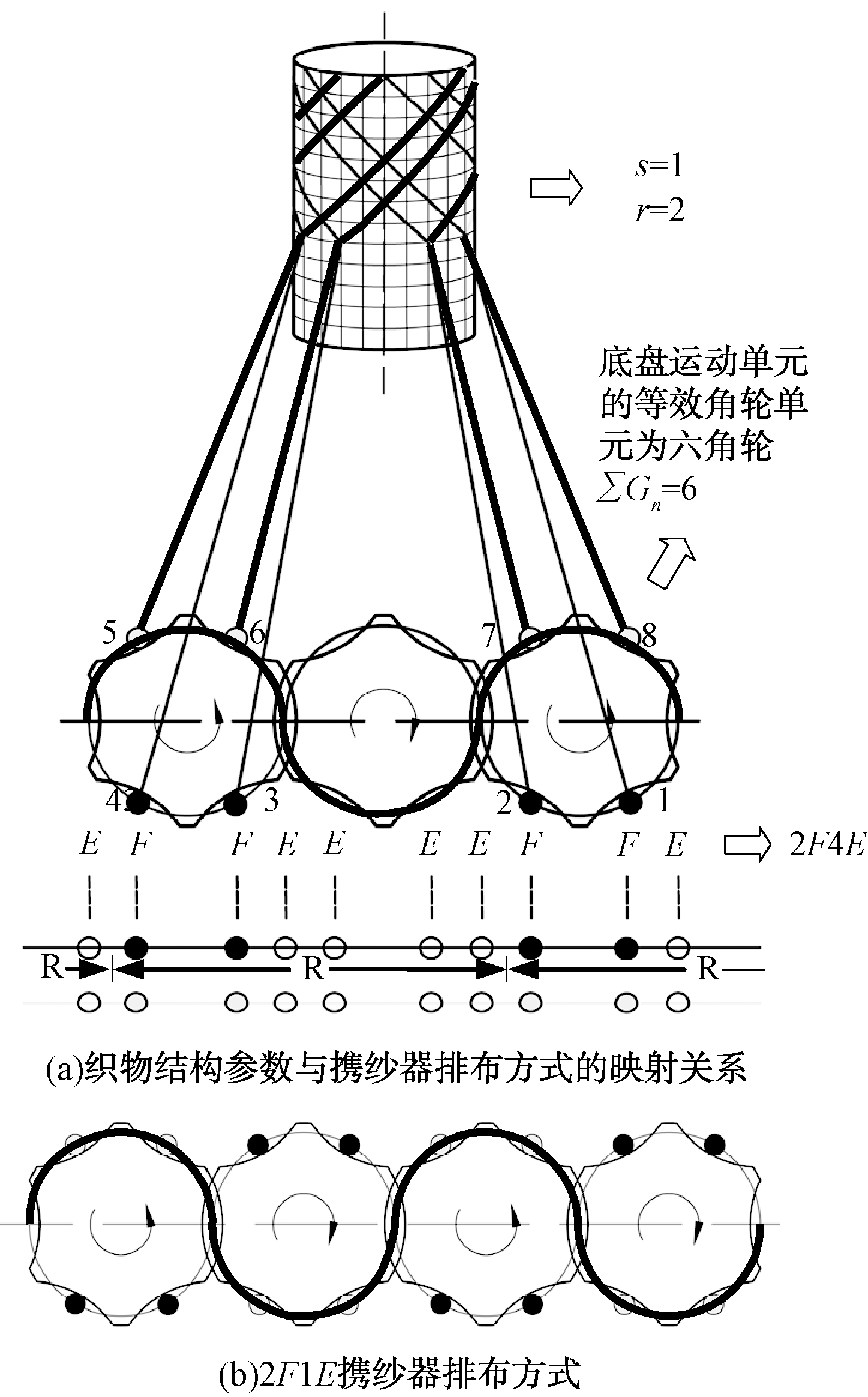
图6

管状织物结构参数与携纱器排布方式的关系示意图"

图7

织物成形过程"

图8

双层六角轮编织机上构建的等效角轮编织系统"

图9

携纱器的运动方式及其布局"

图10

管状织物的结构特征"

[1] 汪星明, 邢誉峰. 三维编织复合材料研究进展[J]. 航空学报, 2010, 31(5): 914-927.
WANG Xingming, XING Yufeng. Developments in research on 3D braided composites[J]. Acta Aeronautica et Astronautica Sinica, 2010, 31(5): 914-927.
[2] 高馨语. 三维编织三通圆管编织方法和准静态压缩行为[D]. 上海: 东华大学, 2022:1-18.
GAO Xinyu. Braiding techniques and quasi-static compressive behavior of 3-D braided composite three-way circular tubes[D]. Shanghai: Donghua University, 2022:1-18.
[3] 陈曦, 缪旭红, 刘青, 等. 全成形Y形三通管织物编织工艺设计[J]. 纺织学报, 2021, 42(5): 73-78.
CHEN Xi, MIAO Xuhong, LIU Qing, et al. Knitting process design of fully-fashioned Y-shaped three-way pipe fabrics[J]. Journal of Textile Research, 2021, 42(5): 73-78.
[4] MEI H, HAN Z, LIANG S, et al. Process modelling of 3D hexagonal braids[J]. Composite Structures 2020, 6: 1-19.
[5] ROBERT A Florentine. Apparatus for weaving a three-dimensional article: 4312261[P]. 1982-01-26.
[6] BROWN Richard. Braiding apparatus: 4934240[P]. 1988-12-16.
[7] KYOSEV Y. Braiding machine components[M].// Braiding technology for textiles. Cambridge: Woodhead Publishing, 2015: 115-151.
[8] BOGDANOVICH A E. An overview of three-dimensional braiding technologies[M]. Netherlands: Advances in Braiding Technology, 2016:3-78.
[9] EMONTS C, GRIGAT N, MERKORD F, et al. Innovation in 3D braiding technology and its applica-tions[J]. Textiles, 2021, 1(2): 185-205.
[10] KYOSEV Y, GLEANER P. Extended horn gears in 3 Dmaypole braiding: theoretical analysis, gear arrangementand prediction of the floating length[J]. Journal of Textilesand Fibrous Materials, 2018, 1: 1-7.
[11] KYOSEV Y. Patterning of braided products[M]. Braiding Technology for Textiles. Netherlands: Elsevier, 2015: 29-46.
[1] 李皎, 辛世纪, 陈利, 易伟, 陈小明. 双机器人分区针刺成形轨迹规划[J]. 纺织学报, 2025, 46(03): 207-215.
[2] 杨露, 孟家光, 陈雨青, 支超. 基于废旧纺织品的湿度响应纤维素/聚氨酯复合材料的制备及其性能[J]. 纺织学报, 2025, 46(02): 26-34.
[3] 刘仁义, 杨琴, 孙宝忠, 顾伯洪, 张威. 织物增强复合材料的电热驱动形状记忆回复行为[J]. 纺织学报, 2025, 46(01): 72-79.
[4] 郭艳文, 黄晓梅, 曹海建. 增强体结构对三维角联锁复合材料抗冲击性能的影响[J]. 纺织学报, 2025, 46(01): 80-86.
[5] 左红梅, 高敏, 阮芳涛, 邹梨花, 徐珍珍. MXene-氧化石墨烯改性碳纤维/聚乳酸复合材料制备及其力学性能[J]. 纺织学报, 2025, 46(01): 9-15.
[6] 孙戬, 王彤, 陈云辉, 林何, 刘晖, 成小乐. 织物增强橡胶基复合材料本构模型及其应用[J]. 纺织学报, 2025, 46(01): 95-102.
[7] 郭琦, 吴宁, 孟影, 安达, 黄建龙, 陈利. 变厚度头锥体织物的工艺设计与验证[J]. 纺织学报, 2024, 45(12): 98-108.
[8] 余晓佩, 沈伟, 陈立峰, 竺铝涛. 玻璃纤维复合材料损伤裂纹修复及其性能评价[J]. 纺织学报, 2024, 45(11): 121-127.
[9] 肖渊, 童垚, 胡呈安, 武贤军, 杨磊鹏. 导电复合材料涂覆式全织物基柔性压阻传感器制备[J]. 纺织学报, 2024, 45(10): 152-160.
[10] 姜梦敏, 王一璠, 金欣, 王闻宇, 肖长发. 聚吡咯共轭结构对碳纤维增强树脂基复合材料热循环稳定性能的影响[J]. 纺织学报, 2024, 45(10): 23-30.
[11] 周领辉, 祝成炎, 金肖克, 马雷雷, 陈海相, 田伟. 基于三维显微镜成像的墨西哥红酸枝内部纤维分布及结构形态表征[J]. 纺织学报, 2024, 45(09): 56-62.
[12] 吕丽华, 庞现柯, 刘澳. 变厚度三维机织复合材料的抗冲击性能[J]. 纺织学报, 2024, 45(09): 91-96.
[13] 陈小明, 吴凯杰, 郑宏伟, 张敬义, 苏星兆, 辛世纪, 郭东升, 陈利. 针刺/缝合多尺度联锁复合材料I型层间力学行为[J]. 纺织学报, 2024, 45(08): 173-182.
[14] 李天宇, 沈伟, 陈立峰, 竺铝涛. 三维角联锁机织复合材料的制备及其弯曲压缩失效机制[J]. 纺织学报, 2024, 45(08): 183-189.
[15] 马亮, 俞旭华, 刘文武, 李慈, 方以群, 李俊, 徐佳骏. 气凝胶复合材料在干式潜水服内胆隔热性能提升中的应用[J]. 纺织学报, 2024, 45(07): 181-188.
Viewed
Full text


Abstract

Cited

  Shared   
  Discussed   
No Suggested Reading articles found!