纺织学报 ›› 2025, Vol. 46 ›› Issue (04): 146-153.doi: 10.13475/j.fzxb.20240406501
董子靖1,2( ), 吴欣媛1,2, 王瑞霞1,2, 赵华祥3, 钱利江3, 应城唯3, 孙润军1,2
DONG Zijing1,2(), WU Xinyuan1,2, WANG Ruixia1,2, ZHAO Huaxiang3, QIAN Lijiang3, YING Chengwei3, SUN Runjun1,2
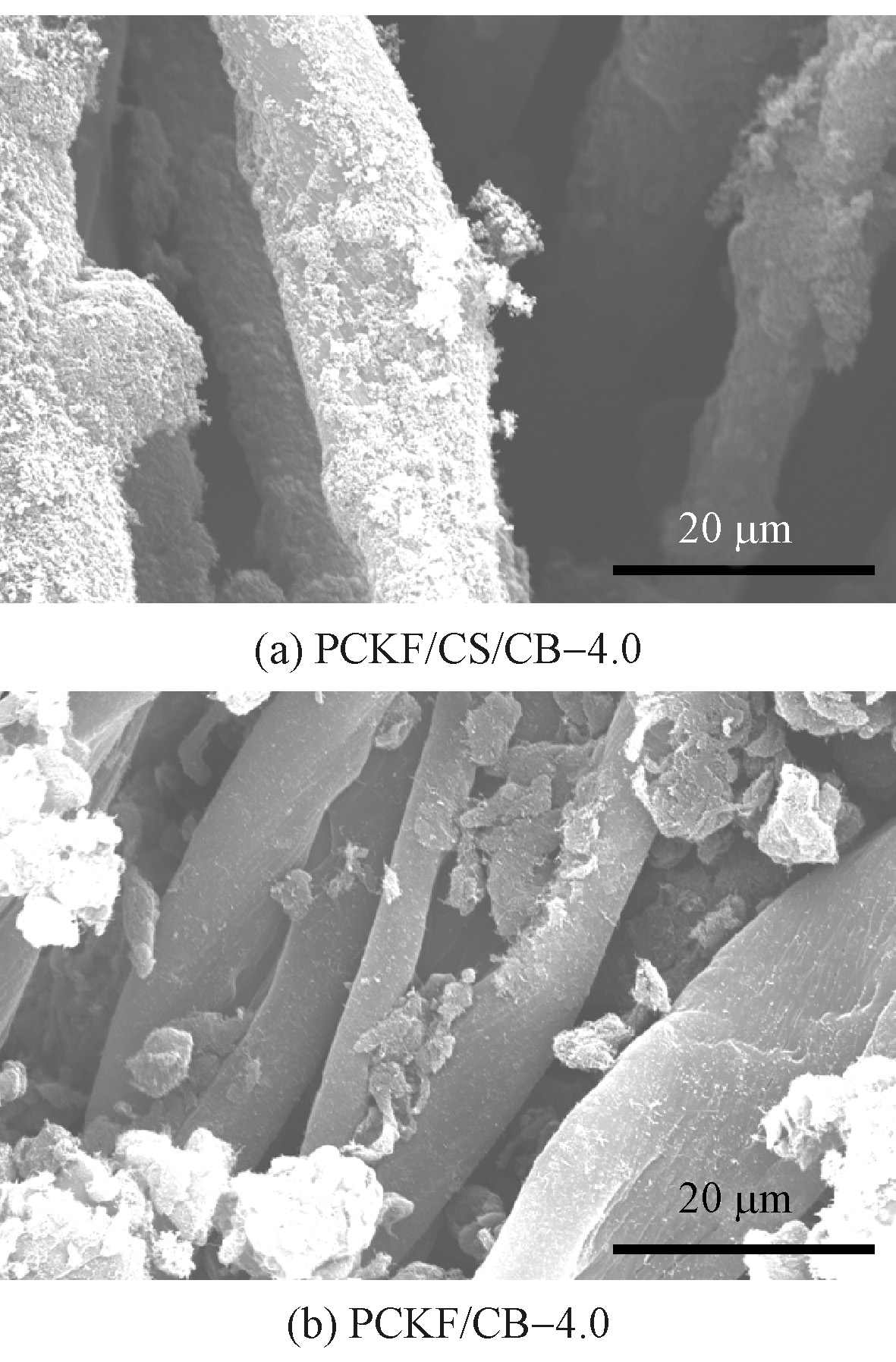
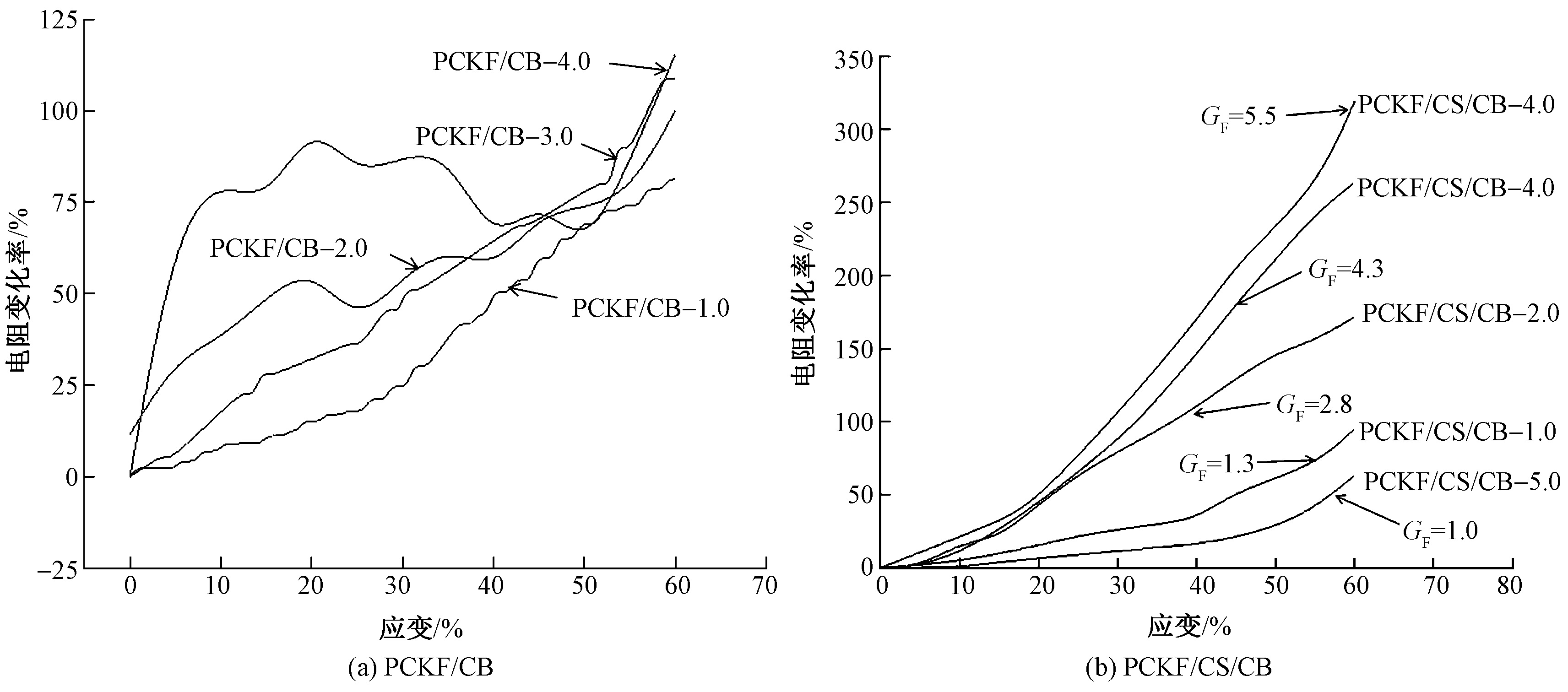
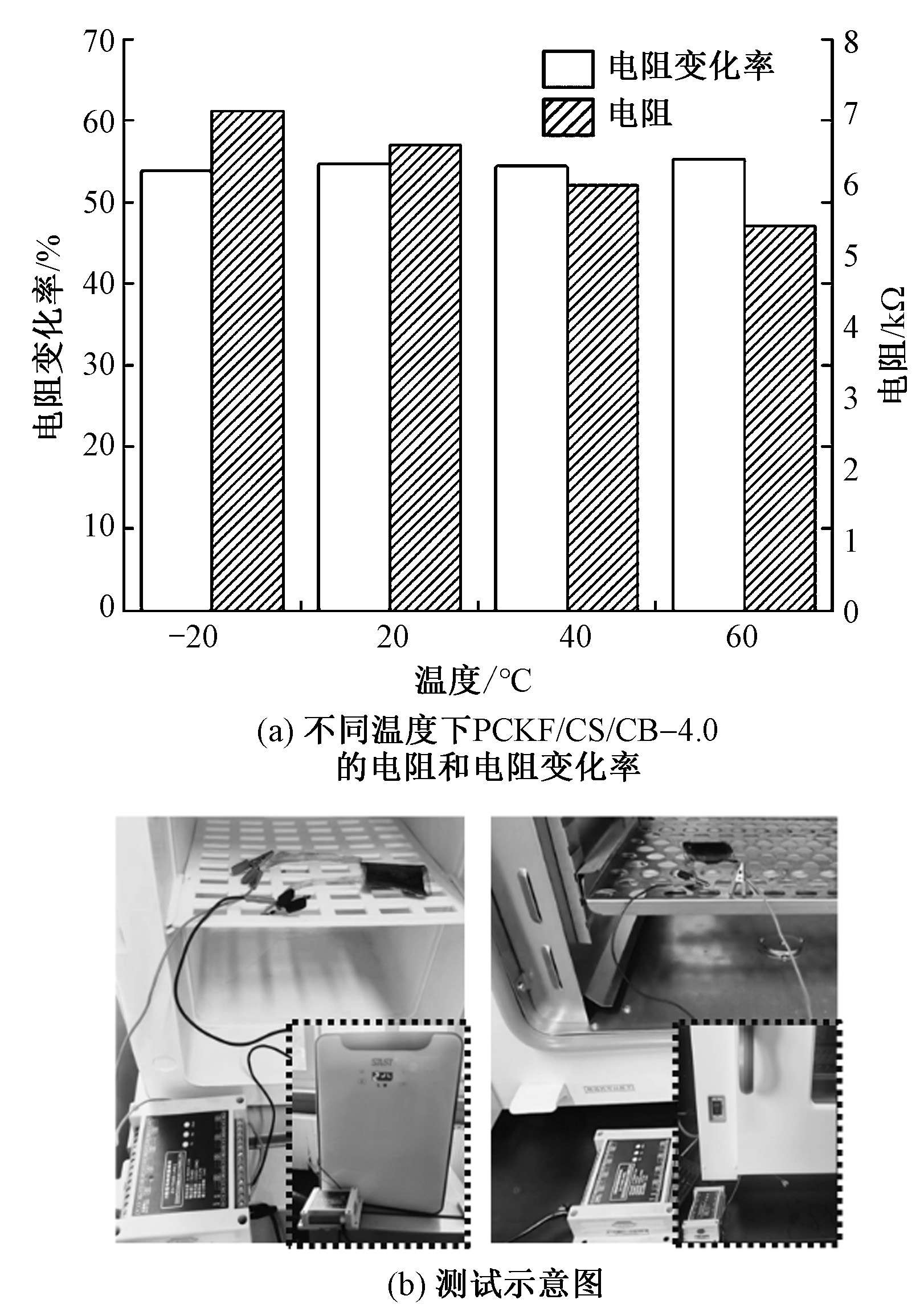
摘要: 为改善炭黑(CB)导电层与织物基底的结合牢度和均匀性,提高炭黑导电织物作为传感器的灵敏度,采用浸渍法获得壳聚糖改性的炭黑导电纯棉针织物,通过改善碳系导电填充材料在织物上的均匀度,提高织物应变传感器的灵敏度,从而开发一种可监测人体运动的柔性应变传感器。使用扫描电子显微镜、傅里叶红外光谱仪分析其表面形貌和结构,采用ZH-T0型电阻测量模块结合织物强力机,测试样品拉伸应变灵敏度和稳定性。结果表明:与未使用壳聚糖改性的炭黑导电织物相比,壳聚糖对于织物的改性处理可使炭黑更均匀地包覆在织物上,赋予纯棉针织物良好的传感性能;在60%的应变条件下,电阻变化率达到332.37%,灵敏度为5.5左右,相对于未改性样品的电阻变化率提高了183.3%,灵敏度提高了175%;改性后的样品在不同频率、拉伸百分比和1 000次往复拉伸中其拉伸应变性能保持稳定,在宽温度范围内可稳定使用。壳聚糖修饰的炭黑导电织物可用于监测人身体多个部位的运动状态,并且具有良好的重复性。
中图分类号:
| [1] | LV J C, ZENG L, ZHANG L, et al. Multifunctional polypyrrole and rose-like silver flower-decorated e-textile with outstanding pressure/strain sensing and energy storage performance[J]. Chemical Engineering Journal, 2021, 23(6): 5-11. |
| [2] | 汤健, 闫涛, 潘志娟. 导电复合纤维基柔性应变传感器的研究进展[J]. 纺织学报, 2021, 42(5): 168-177. |
| TANG Jian, YAN Tan, PAN Zhijuan, et al. Research progress of flexible strain sensorsbased on conductive composite fibers[J]. Journal of Textilarch, 2021, 42(5): 168-177. | |
| [3] | LONG Q, XING T, et al. A highly sensitive and flexible capacitive pressure sensor based on a micro- arrayed polydimethylsiloxane dielectric layer[J]. Journal of Materials Chemistry C, 2023, 15(2): 11-14. |
| [4] | WANG J, LU C, ZHANG K. Textile-based strain sensor for human motion detection[J]. Energy & Environmental Materials, 2020, 3(1): 226-238. |
| [5] | CHOI C, LEE J M, KIM S H, et al. Twistable and stretchable sandwich structured fiber for wearable sensors and supercapacitors[J]. Nano Letters, 2016, 16(12): 323-348. |
| [6] | 王晓雷, 缪旭红, 李煜天, 等. 导电纱线在针织柔性应变传感器上的应用进展[J]. 毛纺科技, 2019, 47(3): 81-84. |
| WANG Xiaolei, LIAO Xuhong, LI Yutian, et al. Progress in application of conductive yarns to knitted flexible strain sensors[J]. Wool Textile Journal, 2019, 47(3):81-84. | |
| [7] | 张华, 龚天巡, 黄文, 等. 基于石墨烯复合材料的柔性应力传感器制备及力电特性[J]. 电子元件与材料, 2018, 37(319): 34-38. |
| ZHANG Hua, GONG Tianxun, HUANG Wen, et al. Preparation and application of flexible strain sensor based on graphene composites[J]. Electronic Compoents and Materials, 2018, 37(319): 34-38. | |
| [8] | ZANG Y, ZANG Y P. Advances of flexible pressure sensors toward artificial intelligence and health care applications[J]. Materials Horizons, 2015, 2: 140-156. |
| [9] | DORNISH M, KAPLAN D, S. Standards and guidelines for biopolymers in tissue-engineered medical products: ASTM alginate and chitosan standard guides[J]. Annals of the New York Academy of Sciences, 2001, 944: 7-12. |
| [10] | MA L, GAO C, MAO Z, et al. Collagen chitosan porous scaffolds with improved biostability for skin tissue engineering[J]. Biomaterials, 2003, 24(26): 3-12. |
| [11] | 伏广伟, 贺显伟. 导电纤维与纺织品及其抗静电性能测试[J]. 纺织导报, 2007(6): 112-114. |
| FU Guangwei, HE Xianwei. Conductive fibers and textiles and their antistatic properties test[J]. China Textile Leader, 2007(6): 112-114. | |
| [12] | SUH J K, SCHERPIN S, MARDI T. Basic science of articular cartilage injury and repair[J]. Operative Techniques in Sports Medicine, 1995, 3(2): 78-86. |
| [13] | OSKOUYI A B, SUNDARARAJ U, MERTINY PT. Conductivity and piezoresistivity of composites containing randomly dispersed conductive nano-platelets[J]. Multidisciplinary Digital Publishing Institute, 2014(4): 383-391. |
| [14] | HSHIEH F Y, BEESON H D. Flammability testing of pure and flame retardant-treated cotton fabrics[J]. Fire & Materials, 1995, 19(5): 233-239. |
| [15] | SHEN M Y, KUAN C F, KUAN H C, et al. Preparation, characterization, thermal nd flame-retardant properties of green silicon-containing epoxy/functionalized graphene nanosheets composites[J]. Journal of Nanomaterials, 2013(4-8): 363-371. |
| [16] | XIA L, LV Y, MIAO Z, et al. A flame retardant fabric nanocoating based on nanocarbon black particles@polymer composite and its fire-alarm application[J]. Chemical Engineering Journal, 2022. DOI.10.1016/j.cej.2021.133501. |
| [17] | 贾俊楠, 卢少微, 汪英, 等. 基于壳聚糖修饰的聚氨酯导电织物制备与应变传感性能[J]. 电子元件与材料, 2023, 42(3): 303-308. |
| JIA Junnan, LU Shaowei, WANG Ying, et al. Preparation and strain sensing properties of chitosan modified polyurethane conductive fabric[J]. Electronic Components and Materials, 2023, 42(3): 303-308. | |
| [18] | XIA P, ZHANG K, FANG J, et al. A novel fabrication of open porouspoly-(γ-benzyl-l-glutamate) microcarriers with large pore size to promote cellular infiltration and proliferation[J]. Materials Letters, 2017, 206: 136-139. |
| [19] | 刘逸新. 基于纤维集合体结构柔性应变传感器的构筑及其性能研究[D]. 杭州: 浙江理工大学, 2021, 85-98. |
| LIU Yixin. Study on the construction and performance of flexible strain sensor based on fiber assemblies structure[D]. Hangzhou: Zhejiang Sci-Tech University, 2021: 85-98. | |
| [20] | 张岑岑, 解敬文. 有机碳黑复合导电纤维混纺面料的设计[J]. 河南工程学院学报, 2021, 33(1): 3-4. |
| ZHANG Qinqin, XIE Jingwen. Design of organic carbon black composite conductive fiber blended fabric[J]. Journal of HENAN University of Engineering, 2021, 33(1): 3-4. | |
| [21] | 邵怡沁, 魏佳博, 宋倩倩, 等. 石墨烯柔性导电针织物双向传感性能[J]. 纺织高校基础科学学报, 2022, 35(4): 61-67. |
| SHAO Yiqin, WEI Jiabo, SONG Qianqian, et al. Bidirectiona lsensing properties of graphene flexible conductive knitted fabric[J]. Basic Scientics Journal of Textile Universities, 2022, 35(4): 61-67. | |
| [22] | LIN M, ZHENG Z, YANG L, et al. A High-performance, sensitive wearable multifunctional sensor based on rubber/CNT for human motion and skin temperature detection[J]. Advanced Materials, 2022, 34(1): 210-229. |
| [23] | ATALAY O, KENNON W R, DEMIROK E. Weft-knitted strain sensor for monitoring respiratory rate and its electro-mechanical modeling[J]. Sensors Journal IEEE, 2015, 15(1): 110-122. |
| [24] | XUE P, TAO X M, TSAN H Y. In situ SEM studies on strain sensing mechanisms of ppy-coated electrically conducting fabrics[J]. Applied Surface Science, 2007, 253(7): 3387-3392. |
| [25] | ZHU G, WANG F, CHEN L, et al. Highly flexible TPU/SWCNTs composite-based temperature sensors with linear negative temperature coefficient effect and photo-thermal effect[J]. Composites Science and Technology, 2022. DOI.10.1016/j.compscitech.2021.109133. |
| [1] | 曹展瑞, 纪灿灿, 赫羴姗, 周丰, 向阳, 高飞, 刘轲, 王栋. 阴离子交换型乙烯-乙烯醇共聚物纳米纤维气凝胶蛋白分离材料[J]. 纺织学报, 2025, 46(04): 29-37. |
| [2] | 岳欣琰, 邵剑波, 王小虎, 韩潇, 赵晓曼, 洪剑寒. 基于镀银锦纶/锦纶/水性聚氨酯复合纱的一维结构柔性电容传感器[J]. 纺织学报, 2025, 46(03): 82-89. |
| [3] | 刘延波, 高鑫羽, 郝铭, 胡晓东, 杨波. 基于光热改性的复合纤维毡及其在高黏度油吸附中的应用[J]. 纺织学报, 2024, 45(11): 55-64. |
| [4] | 房磊, 刘秀明, 贾娇娇, 蔺志浩, 任燕飞, 侯凯文, 巩继贤, 扈延龄. 高分子量壳聚糖皮芯结构微纳米纤维膜制备[J]. 纺织学报, 2024, 45(09): 1-9. |
| [5] | 卢道坤, 王仕飞, 董倩, 史纳蔓, 李思琦, 干露露, 周爽, 沙莎, 张如全, 罗磊. 基于MXene的导电织物构筑及其多功能应用[J]. 纺织学报, 2024, 45(09): 137-145. |
| [6] | 吕子豪, 徐慧慧, 袁小红, 王清清, 魏取福. 光动力抗菌水刺棉的染整一体化制备及其性能[J]. 纺织学报, 2024, 45(08): 26-34. |
| [7] | 王玉玺, 唐春霞, 张丽平, 付少海. 纳米炭黑的Steglich酯化反应制备及乙二醇分散性[J]. 纺织学报, 2024, 45(07): 104-111. |
| [8] | 陈锦苗, 李纪伟, 陈萌, 宁新, 崔爱华, 王娜. 壳聚糖微纳米纤维复合抗菌空气滤材的制备及其性能[J]. 纺织学报, 2024, 45(05): 19-26. |
| [9] | 冯颖, 于汉哲, 张宏, 李可心, 马标, 董鑫, 张建伟. 静电纺壳聚糖基纳米纤维的制备及其在水处理中应用研究进展[J]. 纺织学报, 2024, 45(05): 218-227. |
| [10] | 陈莹, 沈娜弟, 张露. 全纤维电容式传感器的结构设计及其性能[J]. 纺织学报, 2024, 45(05): 43-50. |
| [11] | 胡自强, 骆晓蕾, 魏璐琳, 刘琳. 植酸/壳聚糖对涤纶/棉混纺织物的协同阻燃整理[J]. 纺织学报, 2024, 45(04): 126-135. |
| [12] | 李丽丽, 袁亮, 唐雨霞, 杨文菊, 王浩. 聚多巴胺/壳聚糖改性棉织物的茶色素染色及其抗菌和防紫外线性能[J]. 纺织学报, 2024, 45(03): 106-113. |
| [13] | 李曼丽, 季志浩, 龙柱, 王益峰, 金恩琪. 壳聚糖荧光防伪印花涂料的制备及其应用性能[J]. 纺织学报, 2024, 45(03): 114-121. |
| [14] | 李平, 朱平, 刘云. 壳聚糖基膨胀阻燃涤纶/棉混纺织物的制备及其性能[J]. 纺织学报, 2024, 45(02): 162-170. |
| [15] | 肖昊, 孙辉, 于斌, 朱祥祥, 杨潇东. 壳聚糖-SiO2气凝胶/纤维素/聚丙烯复合水刺材料的制备及其吸附染料性能[J]. 纺织学报, 2024, 45(02): 179-188. |
|
||
 京公网安备11010502044800号