纺织学报 ›› 2025, Vol. 46 ›› Issue (03): 151-157.doi: 10.13475/j.fzxb.20240407001
廖喜林1,2,3, 曾媛1, 刘淑萍1,2,3, 李亮1,2,3, 李淑静1,2,3, 刘让同1,2,3( )
)
LIAO Xilin1,2,3, ZENG Yuan1, LIU Shuping1,2,3, LI Liang1,2,3, LI Shujing1,2,3, LIU Rangtong1,2,3()
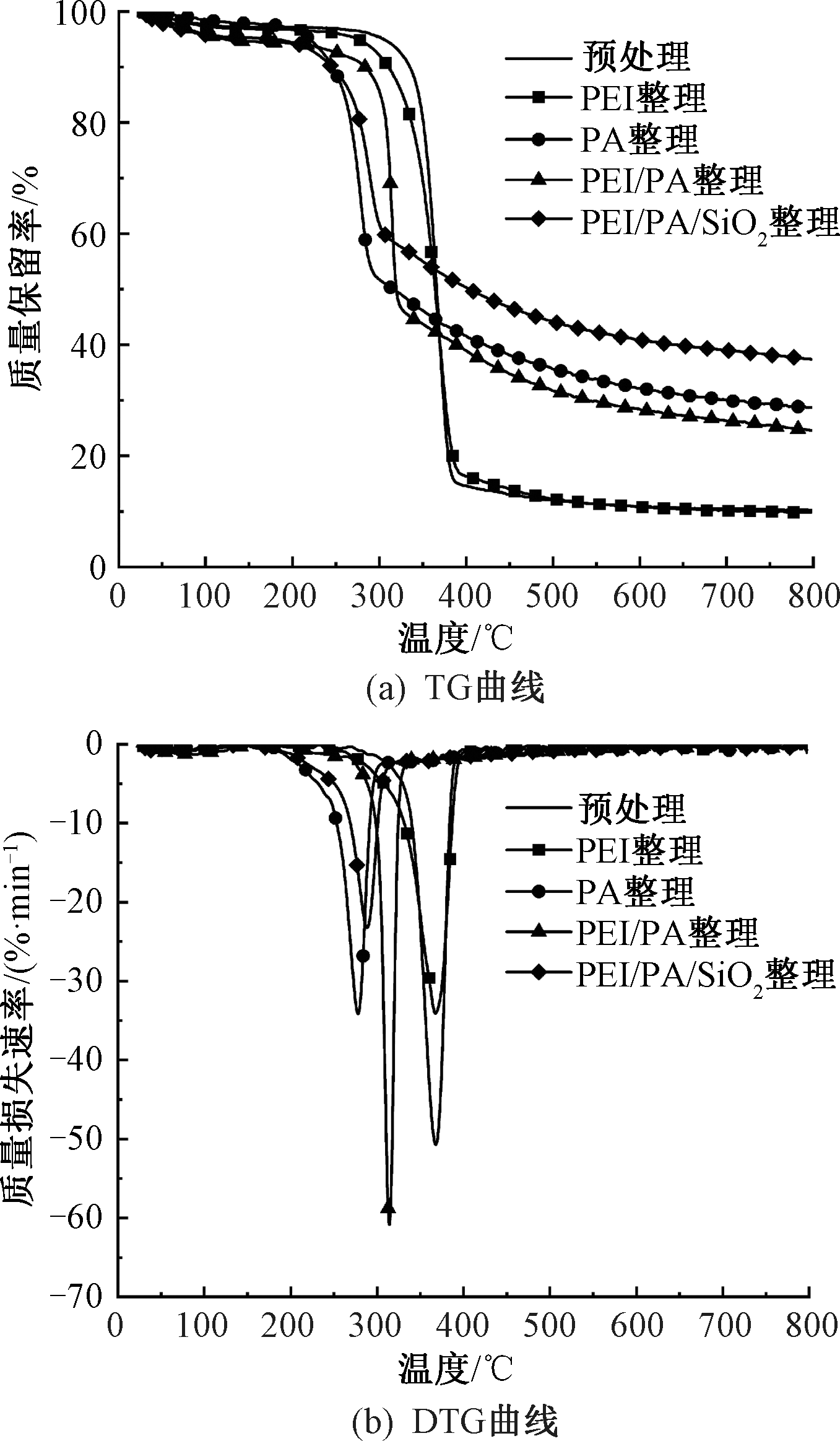
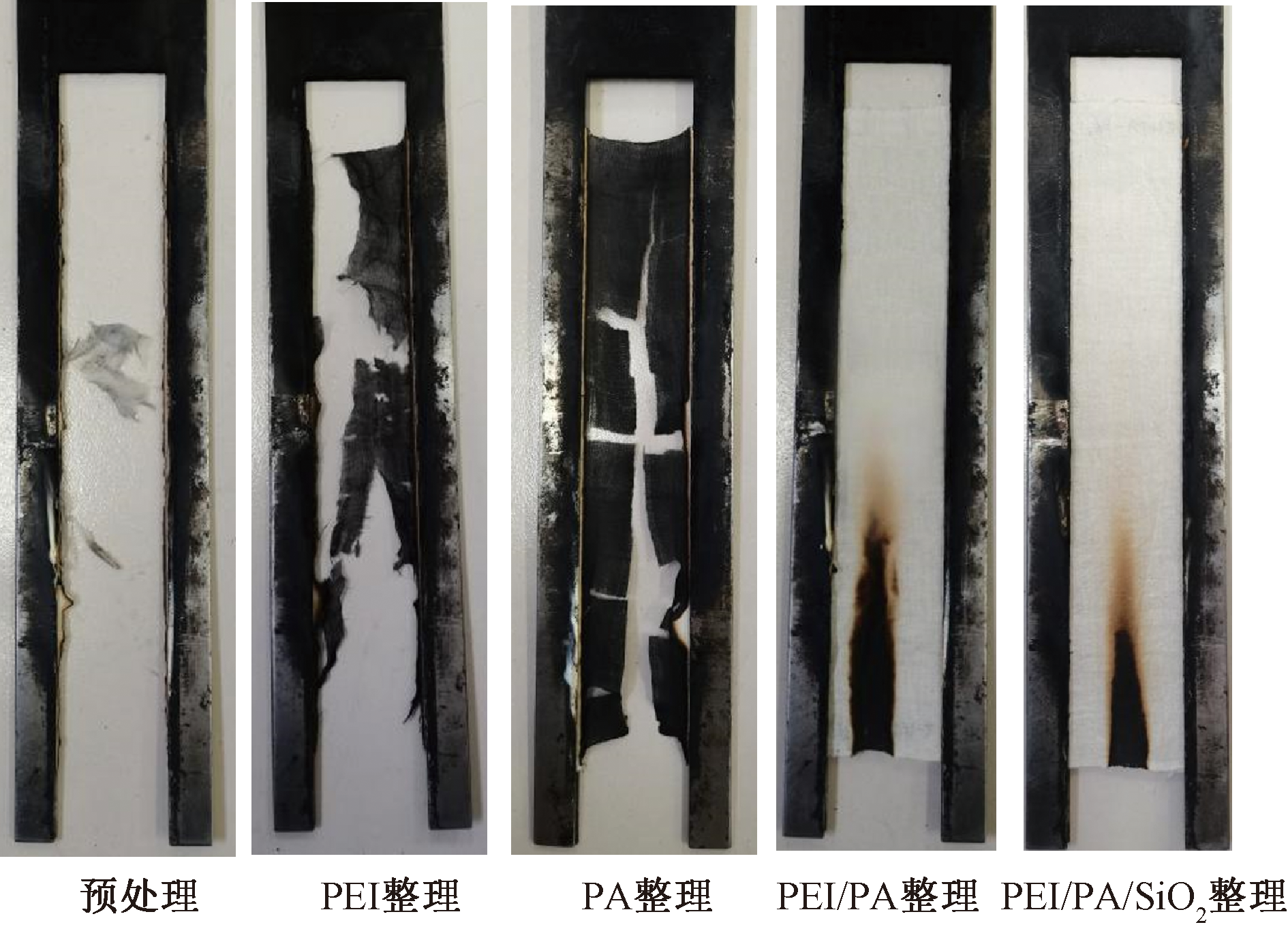
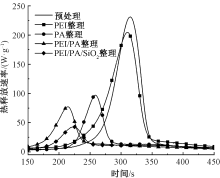
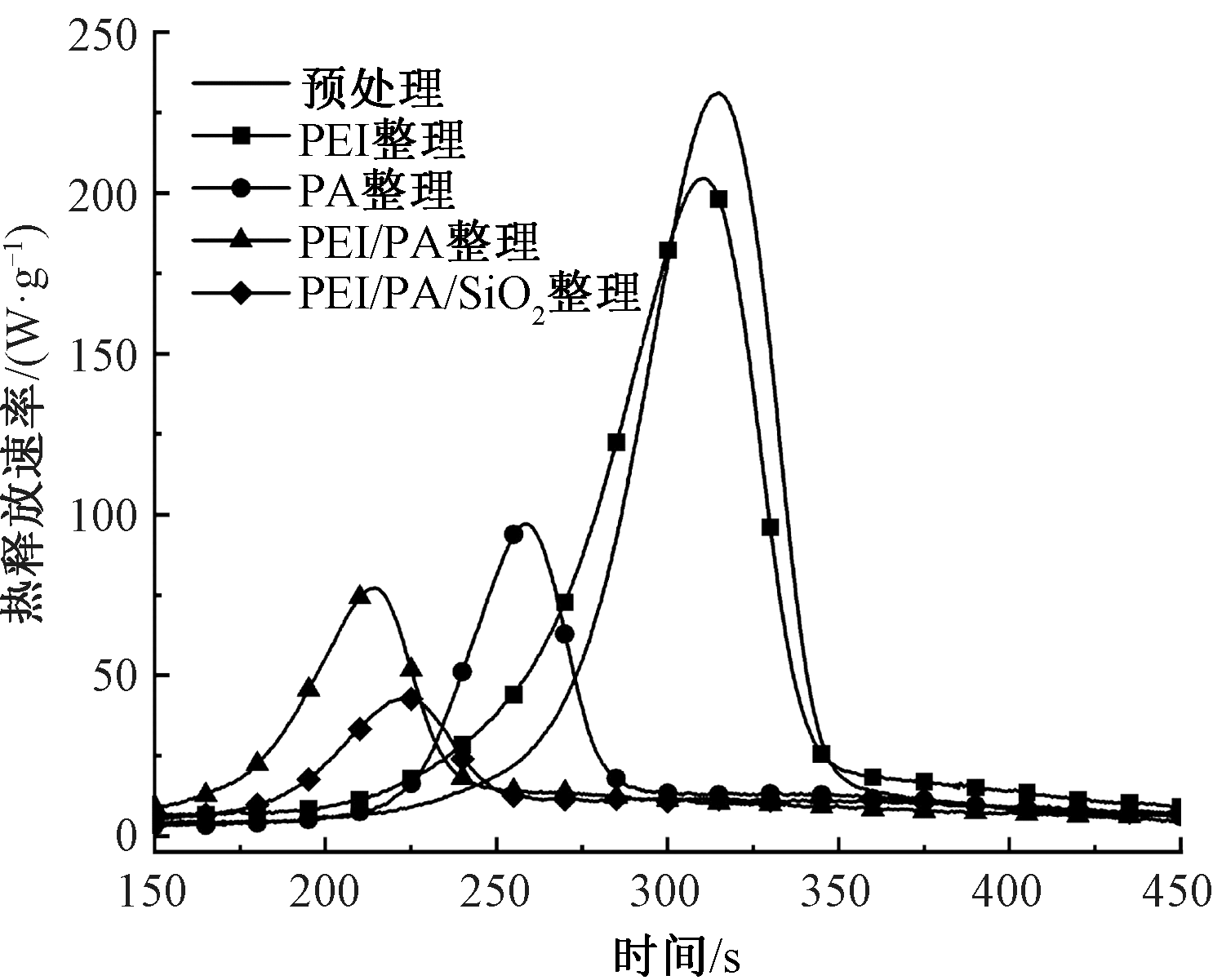
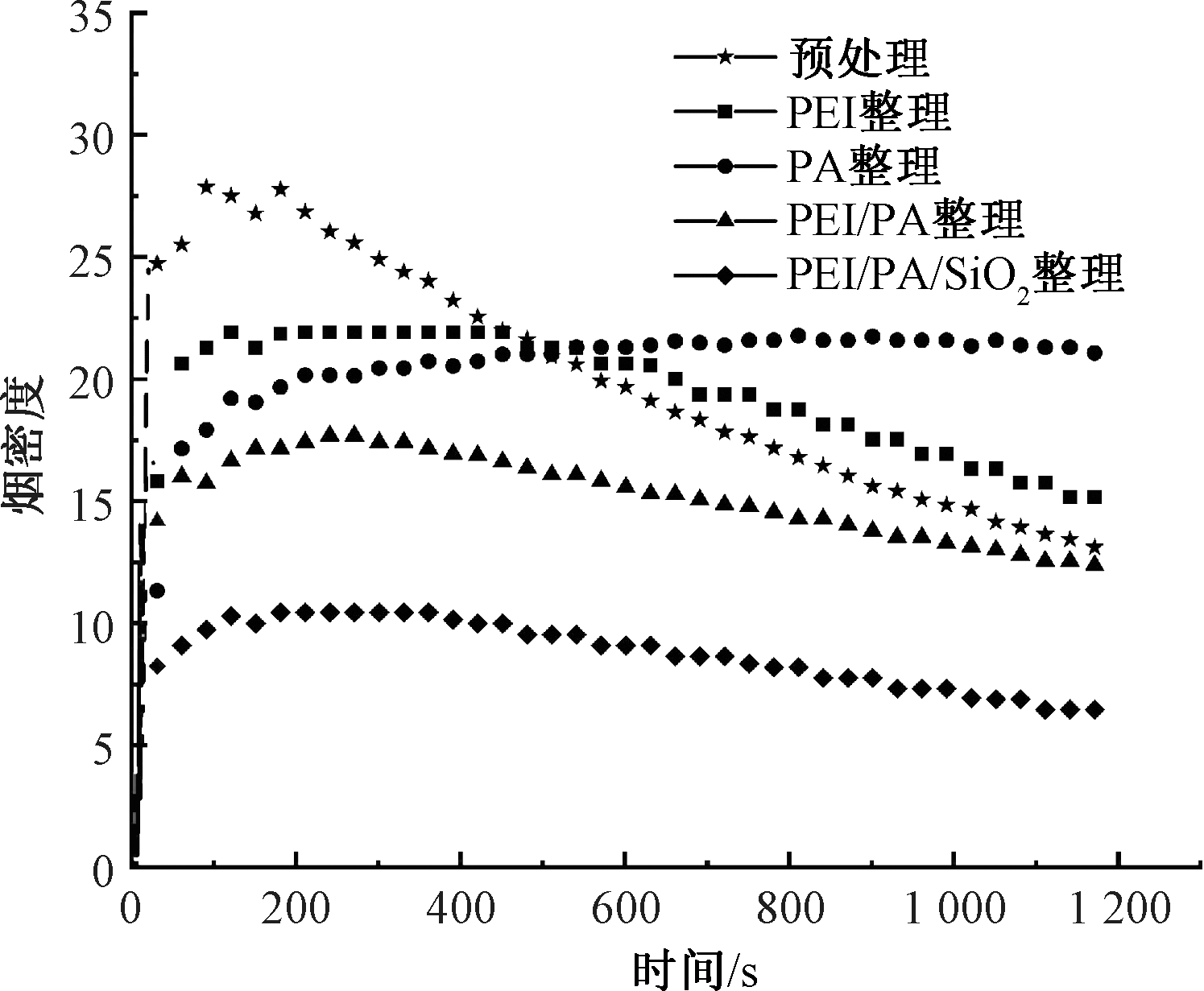
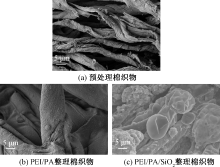
摘要: 为实现棉织物的高效阻燃,以聚乙烯亚胺(PEI)、植酸(PA)、纳米二氧化硅(SiO2)为原料,构建磷/氮/硅复配协效阻燃体系。采用喷涂法对棉织物进行阻燃整理,借助X射线能谱分析仪、垂直燃烧测试仪、扫描电子显微镜、极限氧指数测试仪、热重分析仪、微型量热仪和烟密度测试等分析了阻燃棉织物的微观形貌表面形貌、燃烧性能、阻燃性能、热释放性能、热稳定性及其阻燃机制。结果表明:PEI、PA、SiO2三者复配整理棉织物的阻燃效果最佳,整理后棉织物的极限氧指数(LOI)为30.3%,离火自熄,损毁长度降为7.2 cm;与预处理的棉织物相比,阻燃棉织物的热释放能力和总热释放量分别下降了85.0%和83.3%;PA先于棉织物吸热降解,抑制棉织物的初始热裂解;PEI、PA、SiO2通过协同作用形成石墨化结构的炭化层,可提高其稳定性并阻隔氧气及热量的传递,有效改善了棉织物的阻燃性能。
中图分类号:
| [1] | 马晶晶, 刘让同, 刘威, 等. 角蛋白植酸涂层棉织物的协同阻燃效果[J]. 棉纺织技术, 2023, 51(12): 40-45. |
| MA Jingjing, LIU Rangtong, LIU Wei, et al. Synergistic flame retardancy of keratin/phytic acid coated cotton fabric[J]. Cotton Textile Technology, 2023, 51(12): 40-45. | |
| [2] | 廖喜林, 王慧, 刘淑萍, 等. 植酸/茶多酚整理棉织物的阻燃及防紫外线性能[J]. 毛纺科技, 2024, 52 (3): 22-27. |
| LIAO Xilin, WANG Hui, LIU Shuping, et al. Flame-retardant and UV-resistant properties of phytic acid/tea polyphenol finishing cotton fabric[J]. Wool Textile Journal, 2023, 52 (3): 22-27. | |
| [3] | 黄益婷, 程献伟, 关晋平, 等. 磷/氮阻燃剂对涤纶/棉混纺织物的阻燃整理[J]. 纺织学报, 2022, 43(6): 94-99. |
| HUANG Yiting, CHENG Xianwei, GUAN Jinping, et al. Phosphorus/nitrogen-containing flame retardant for flame retardant finishing of polyester/cotton blended fabric[J]. Journal of Textile Research, 2022, 43(6): 94-99. | |
| [4] | 蒋琦, 刘云, 朱平. 茶多酚基阻燃/防紫外线棉织物的制备及其性能[J]. 纺织学报, 2023, 44(2): 222-229. |
| JIANG Qi, LIU Yun, ZHU Ping. Preparation and properties of flame retardant / anti-ultraviolet cotton fabrics with tea polyphenol based flame retardants[J]. Journal of Textile Research, 2023, 44(2): 222-229. | |
| [5] | WAN M S, LI Y Z, PING L, et al. High-efficient flame-retardant finishing of cotton fabrics based on phytic acid[J]. International Journal of Molecular Sciences, 2023, 24(2): 1093-1093. |
| [6] | 刘海龙, 程如鸽. 植酸生物基阻燃剂的应用研究进展[J]. 印染, 2023 (9): 1-3. |
| LIU Hailong, CHENG Ruge. Research progress of phytic acid bio-based flame retardants[J]. China Dyeing & Finishing, 2023 (9): 1-3. | |
| [7] | 毋登辉, 李欣航, 赵培华. 反应型P-N膨胀型阻燃剂的合成及其在棉织物中的应用[J]. 精细化工, 2023, 40(5): 1136-1143. |
| WU Denghui, LI Xinhang, ZHAO Peihua. Synthesis of reactive P-N intumescence flame retardant and its application in cotton fabric[J]. Fine Chemicals, 2023, 40(5): 1136-1143. | |
| [8] | 杨雅茹, 王童谣, 陈建航, 等. 磷-氮协同阻燃抗熔滴涤棉织物的制备与性能[J]. 印染, 2023 (7): 55-59. |
| YANG Yaru, WANG Tongyao, CHEN Jianhang, et al. Preparation of flame retardant and anti-dripping polyester-cotton fabric based on phosphorus-nitrogen synergy and its properties[J]. China Dyeing & Finishing, 2023 (7): 55-59. | |
| [9] | 曾凡鑫, 秦宗益, 沈玥莹, 等. 自熄性棉织物的喷涂辅助层层自组装法制备及其阻燃性能[J]. 纺织学报, 2021, 42(1): 103-111. |
| ZENG Fanxin, QIN Zongyi, SHEN Yueying, et al. Preparation and flame-retardant properties of self-extinguishing cotton fabrics by spray-assisted layer-by-layer self-assembly technology[J]. Journal of Textile Research, 2021, 42(1): 103-111. | |
| [10] | ZHANG Jiaojiao, CHEN Bing, LIU Jian, et al. Multifunctional antimicrobial and flame-retardant cotton fabrics modified with a novel N,N-di (ethyl phosphate) biguanide[J]. Cellulose, 2020, 27(12): 7255-7269. |
| [11] | 陈宇. 无卤含磷耐久阻燃棉织物的制备及其性能研究[D]. 重庆: 西南大学, 2022: 4-7. |
| CHEN Yu. Study on preparation and properties of halogen-free phosphorus-containing durable flame-retardant cotton fabric[D]. Chongqing: Southwest University, 2022: 4-7. | |
| [12] | SUNG J K, JINHO J. Synergistic UV-curable flame-retardant finish of cotton using comonomers of vinyl-phosphonic acid and acrylamide[J]. Fibers and Polymers, 2017, 18(12): 2328-2333. |
| [13] | 李平阳, 付灿, 董玲玲. 阻燃疏水棉织物的制备及其性能[J]. 纺织学报, 2022, 43(6): 107-114. |
| LI Pingyang, FU Can, DONG Lingling. Preparation and performance of flame retardant and hydrophobic cotton fabric[J]. Journal of Textile Research, 2022, 43(6): 107-114. | |
| [14] | 钱耀威, 殷连博, 李家炜, 等. 聚乙烯基膦酸/多乙烯多胺层层自组装阻燃棉织物的制备及其性能[J]. 纺织学报, 2023, 44(9): 144-152. |
| QIAN Yaowei, YIN Lianbo, LI Jiawei, et al. Preparation and properties of flame retardant cotton fabrics by layer-by-layer assembly of polyvinylphosphonic acid and polyethylene poly-amine[J]. Journal of Textile Research, 2023, 44(9): 144-152. | |
| [15] | PAN Haifeng, SONG Lei, MA Liyan, et al. Layer-by-layer assemble thin films based on fully biobased polysaccharides: chitosan and phosphorylated cellulose for flame-retardant cotton fabric[J]. Cellulose, 2014, 21(4): 2995-3006. |
| [1] | 张洁, 郭鑫源, 关晋平, 程献伟, 陈国强. 磷/氮阻燃剂原位沉积对棉织物的耐久阻燃改性[J]. 纺织学报, 2025, 46(02): 180-187. |
| [2] | 宋婉萌, 王宝弘, 孙宇, 杨家祥, 刘云, 王玉忠. 兼具力学性能与高效阻燃性能粘胶织物的制备及其性能[J]. 纺织学报, 2025, 46(02): 188-196. |
| [3] | 袁华彬, 王沂沨, 王家朋, 向永翾, 陈国强, 邢铁玲. 基于山嵛酸和ZIF-8改性的超疏水防结冰棉织物[J]. 纺织学报, 2025, 46(02): 197-206. |
| [4] | 巢探宇, 叶韵, 李娜, 廖思含, 马琪凯, 崔莉. 基于脂肪酶固定化的棉织物易去油污整理及其应用[J]. 纺织学报, 2025, 46(01): 130-137. |
| [5] | 武浩, 周嫦娥, 高振清, 冯嘉禾. 基于还原-氧化体系的活性染料染色棉织物剥色[J]. 纺织学报, 2024, 45(12): 128-136. |
| [6] | 王心雨, 郭明明, 张乐乐, 郑伟杰, AMJAD Farooq, 王宗乾. 耐久性抗菌超疏水棉织物的制备及其性能[J]. 纺织学报, 2024, 45(11): 170-177. |
| [7] | 肖渊, 童垚, 胡呈安, 武贤军, 杨磊鹏. 导电复合材料涂覆式全织物基柔性压阻传感器制备[J]. 纺织学报, 2024, 45(10): 152-160. |
| [8] | 张应秀, 徐丽慧, 潘虹, 姚程健, 赵红, 窦梅冉, 沈勇, 赵诗怡. 基于甘蔗渣多孔碳的超疏水棉织物制备及其性能[J]. 纺织学报, 2024, 45(10): 161-169. |
| [9] | 赵强, 刘正江, 高晓平, 张云婷, 张宏. 蒙脱土协同TiO2整理棉织物的功能性[J]. 纺织学报, 2024, 45(09): 121-128. |
| [10] | 刘慧, 李平, 朱平, 刘云. γ-脲基丙基三乙氧基硅烷/苯基膦酸阻燃抗菌棉织物的制备及其性能[J]. 纺织学报, 2024, 45(08): 205-214. |
| [11] | 赵攀, 谭文丽, 赵心蕊, 付金凡, 刘成显, 袁久刚. 基于离子液体微溶焊接的可降解薄膜制备及其性能[J]. 纺织学报, 2024, 45(08): 89-98. |
| [12] | 徐豫松, 周杰, 甘佳怡, 张涛, 张先明. 含磷氮水性聚氨酯的制备及其在涤纶织物阻燃整理中应用[J]. 纺织学报, 2024, 45(07): 112-120. |
| [13] | 李旭, 刘祥吉, 靳鑫, 杨承昊, 董朝红. 耐久高效磷/氮协同阻燃剂的制备及其在棉织物上的应用[J]. 纺织学报, 2024, 45(07): 121-129. |
| [14] | 吴雨航, 魏建斐, 顾伟文, 王玉萍, 张安莹, 王锐. 共聚阻燃改性聚对苯二甲酸乙二醇酯的制备及其性能[J]. 纺织学报, 2024, 45(06): 1-10. |
| [15] | 韩华, 胡安然, 孙艺文, 丁作伟, 李伟, 张彩云, 郭增革. 碘释放抗菌涂层棉织物的制备及其在伤口修复中的应用[J]. 纺织学报, 2024, 45(05): 113-120. |
|
||
 京公网安备11010502044800号