纺织学报 ›› 2025, Vol. 46 ›› Issue (03): 141-150.doi: 10.13475/j.fzxb.20240202801

• 染整工程 • 上一篇    下一篇

双稳态温致变色印花织物的制备及其光谱兼容性能

毛丽芬1, 肖红2, 毛庆辉1, 麻伍军1, 梁志结1, 李敏1()   

  1. 1.南通大学 纺织服装学院, 江苏 南通 226019
    2.军事科学院 系统工程研究院, 北京 100010
  • 收稿日期:2024-02-26 修回日期:2024-12-04 出版日期:2025-03-15 发布日期:2025-04-16
  • 通讯作者: 李敏(1986—),女,校聘教授,博士。主要研究方向为功能纺织品技术。E-mail:minmin0421@163.com
  • 作者简介:毛丽芬(1999—),女,硕士生。主要研究方向为微胶囊的制备及应用研究。
  • 基金资助:
    国家重点研发计划项目(2022YFB3807105)

Preparation and spectral compatibility of bistable thermochromic printed fabrics

MAO Lifen1, XIAO Hong2, MAO Qinghui1, MA Wujun1, LIANG Zhijie1, LI Min1()   

  1. 1. School of Textile and Clothing, Nantong University, Nantong, Jiangsu 226019, China
    2. Institute of Systems Engineering, Academy of Military Sciences, Beijing 100010, China
  • Received:2024-02-26 Revised:2024-12-04 Published:2025-03-15 Online:2025-04-16

摘要: 针对单稳态温致变色纺织品颜色随外界环境变化而变化导致其无法自主控制色相的问题,利用双稳态温致变色微胶囊存在2个变色点而在高温条件下呈无色态和低温条件下呈有色态的性能特点,将其与分散染料复配,并采用筛网印花法印制高温沙土色-低温深灰色和高温中绿色-低温深绿色2种双稳态温致变色色块。研究了2种色块的变色性能、牢度性能、手感等。结果表明:2种色块变色灵敏度较高(变色响应时间≤30 s),抗疲劳性较好(循环次数≥200次),且通过高温和低温刺激可以实现色块在10~50 ℃范围内稳态维持2种特定的颜色,从而实现了色块颜色的自主调控;其中中绿色和深绿色色块在710~880 nm和620~660 nm波段的平均光谱反射率比值(KG)分别为6.44和8.16,且对典型被子植物具有广谱的光谱模拟效果;以光子晶体为低发材料印制的色块发射率为0.47,热红外成像显示其可起到红外低可探测效果;用3种色块套印印制出的印花织物具有良好的耐皂洗、耐摩擦和耐日晒色牢度且光泽低。

关键词: 可见光, 近红外, 热红外, 双稳态变色, 印花织物, 微胶囊, 温致变色纺织品

Abstract:

Objective Aiming at the problem that the color of monostable thermochromic textiles changes with the external environment, resulting in the hue uncontrolled autonomously. In this study, multi-spectrum-compatible thermochromic textiles are prepared by using bistable thermochromic microcapsules with two color-changing dots, compounding them with dispersion dyes and combining them with a color block printed with photonic crystals as a low-emission material.

Method The bistable thermochromic microcapsules and conventional disperse dyes were used as colorants. The bistable thermochromic microcapsules were colorless under high temperature stimulation and colored under low temperature stimulation, and the color of conventional disperse dyes was not affected by temperature. The bistable thermochromic fabric was printed by screen printing method, and the near-infrared camouflage was achieved by adjusting the color paste formulation. In addition, printed fabrics with low-emissivity color blocks were overprinted by screen printing with photonic crystals as color paste.

Results The two kinds of printed color blocks have high color change sensitivity (color change response time ≤30 s), good fatigue resistance (≥200 cycles), and the color blocks can be achieved by high temperature and low temperature stimulation in the range of 10~50 ℃ to maintain the two specific colors in a steady state, thus realizing the color of the color blocks of the autonomous control; in which the average spectral reflectance ratio (KG) of the medium green and dark green color blocks in the 710-880 nm band and 620-660 nm band are 6.44 and 8.16, respectively, and have a broad-spectrum spectral simulation effect on typical angiosperms; in addition, the photonic crystal as a low hair material printed with the photonic crystal as a low-hair material, and has a broad-spectrum spectral simulation effect. The KG of the medium green and dark green color blocks in the 710-880 nm band and 620-660 nm band is 6.44 and 8.16, respectively, and has a broad-spectrum spectral simulation of typical angiosperms; in addition, the emissivity of the color blocks printed with photonic crystals as the low-emitting material is 0.47, and thermal infrared imaging shows that it can play a role in the infrared low-detectability effect; the printed fabrics printed with three color block overprinting have good color fastness to soap washing, friction and sunlight, and their gloss is low.

Conclusion The research addresses the difficulty in the color of monostable thermochromic textiles changes with the change of external environment, which leads to the incapability to control the hue independently. Based on the large difference between the achromatic temperature and the chromogenic temperature of the bistable thermochromic microcapsules, it is compounded with disperse dyes to prepare printed fabrics that can maintain two colors steadily in high and low temperature environments. Combined with low-emitting materials, it is expected to be applied to the field of camouflage and camouflage of textiles.

Key words: visible light, near infrared, thermal infrared, steady-state discoloration, printed fabric, microcapsule, thermochromic textiles

中图分类号: 

  • TS194.2

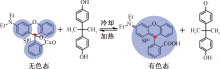
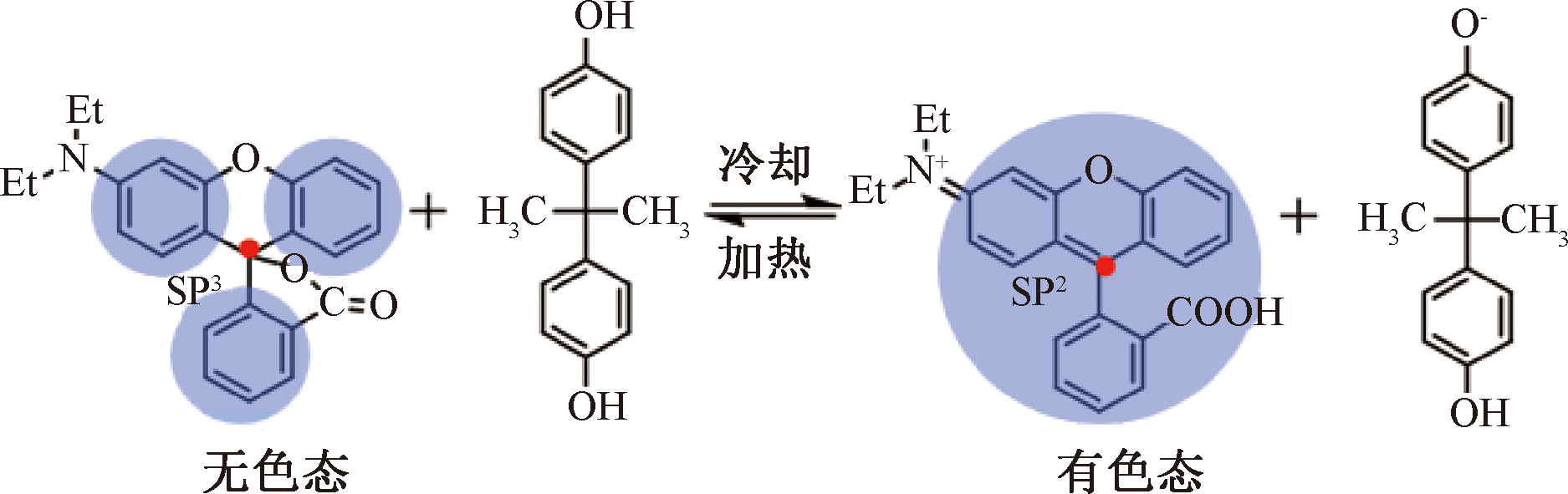
图1

温致变色微胶囊变色原理示意图"

表1

可见光变色色浆配方及印制织物的颜色参数"

配方序号 变色微胶囊用量/g 分散染料用量/g 高温下颜色参数 低温下颜色参数
ΔL* Δa* Δb* ΔL* Δa* Δb*
1# 1.0 3.8 0.5 0.7 2.3 0.03 -0.3 12.31 -0.67 19.31
2# 1.0 7.0 0 0 0 0 0 0
3# 2.0 7.0 0.14 0.19 -0.29 -0.31 1.97 -0.04
4# 1.0 1.5 7.0 1.80 -0.42 0.05 1.78 0.32 2.71
5# 1.0 8.0 1.08 -0.36 0.87 -0.45 0.14 -2.08
6# 1.0 7.0 1.5 1.33 0.27 -0.79 -2.82 0.42 1.02

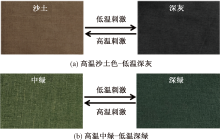
图2

印花色块实物图"

表2

印花色块颜色参数"

色块 高温刺激 低温刺激
L* a* b* 色相 L* a* b* 色相
可见光变色色块 48.17 4.59 15.71 沙土色 40.02 0.85 -0.79 深灰色
可见光变色兼容近红外色块 34.92 -9.92 13.85 中绿色 28.31 -7.37 5.74 深绿色

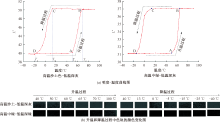
图3

色块色明度-温度曲线及变色实物图"

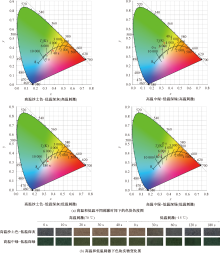
图4

不同刺激时间下色块的色度图和实物图"

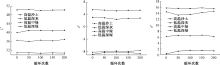
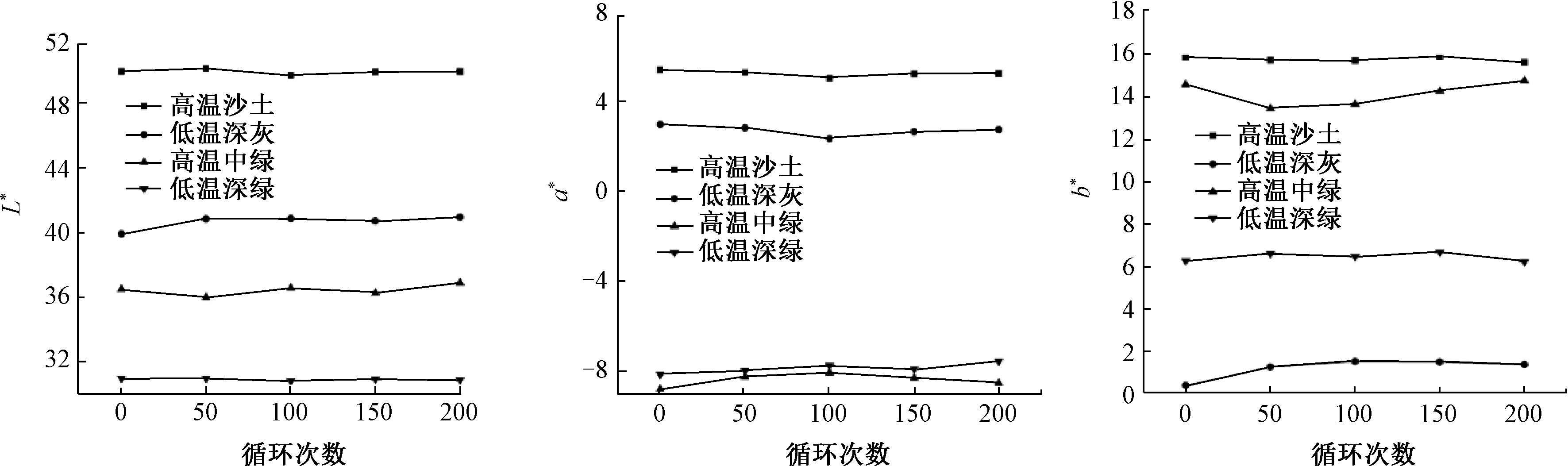
图5

不同循环次数下色块的颜色参数"

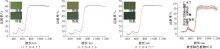
图6

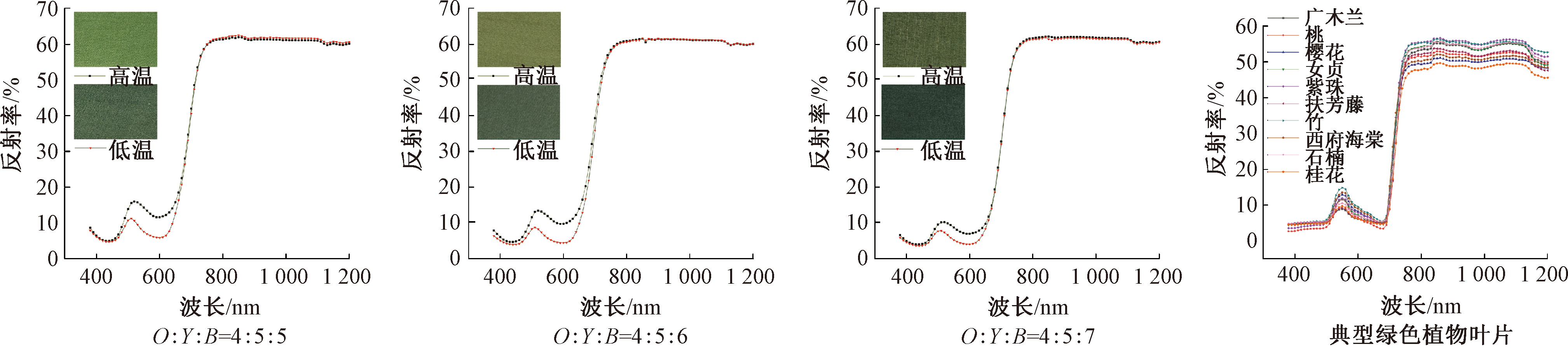
不同含量的分散翠蓝S-GL下印制的色块和典型绿色植物叶片的反射光谱曲线"

表3

样品与植物叶片的反射光谱拟合数据"

叶片类型 高温 低温
拟合度 欧式距离 光谱角度/rad 拟合度 欧式距离 光谱角度/rad
380~
1 200 nm
400~
780 nm
780~
1 200 nm
400~
780 nm
780~
1 200 nm
380~
1 200 nm
400~
780 nm
780~
1 200 nm
400~
780 nm
780~
1 200 nm
广玉兰 0.983 0.549 0.514 0.256 0.023 0.982 2.289 0.496 0.265 0.024
0.987 0.526 0.640 0.245 0.013 0.985 2.280 0.621 0.257 0.013
樱花 0.987 0.507 0.749 0.220 0.011 0.985 2.374 0.730 0.250 0.012
女贞 0.985 0.484 0.506 0.238 0.027 0.984 2.371 0.488 0.255 0.028
紫珠 0.987 0.444 0.418 0.225 0.020 0.986 2.406 0.400 0.243 0.020
扶芳藤 0.983 0.558 0.630 0.329 0.025 0.982 2.281 0.611 0.305 0.025
0.986 0.437 0.422 0.228 0.011 0.984 2.494 0.403 0.260 0.012
桂花 0.985 0.600 0.859 0.242 0.018 0.983 2.230 0.840 0.258 0.019
石楠 0.984 0.506 0.486 0.244 0.021 0.983 2.355 0.467 0.259 0.022
西府海棠 0.988 0.466 0.701 0.210 0.014 0.986 2.421 0.682 0.243 0.014
标准值 ≤4.0 ≤17.2 ≤6.87 ≤4.0 ≤17.2 ≤6.87

图7

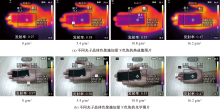
黑色色块热成像图片和发射率"

图8

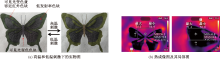
双稳态温致变色印花织物"

表4

双稳态变色织物色牢度、手感和力学性能"

参数 耐皂洗色
牢度/级
耐摩擦色
牢度/级
耐日晒
色牢度/
主观指标

力学性能
方向 断裂强力/
N
断裂伸长
率/%
断裂功/
(N·mm)
平滑 柔软 温暖 综合
沾色 变色 干摩擦 湿摩擦
原布 0.51 0.49 0.67 0.54 1.2 经向 1 195 23.83 15 146
纬向 741 19.15 8 304
印花
织物
4 4 4 4 3~4 0.61 0.61 0.75 0.65 0.9 经向 1 269 35.06 27 605
纬向 814 25.19 13 201
[1] 叶景鹏. 热敏变色微胶囊的制备及其在纺织品上的应用研究[D]. 杭州: 浙江理工大学, 2022: 1-14.
YE Jingpeng. Preparation of thermochromic microcapsules and its application in textiles[D]. Hangzhou: Zhejiang University of Technology, 2022: 1-14.
[2] 胡安钟. 温致变色织物变色灵敏度提升方法研究[D]. 无锡: 江南大学, 2022: 1-6.
HU Anzhong. Research on the method of improving the color sensitivity of thermochromic fabrics[D]. Wuxi: Jiangnan University, 2022: 1-6.
[3] CHENG Y L, ZHANG X Q, FANG C Q, et al. Discoloration mechanism, structures and recent applications of thermochromic materials via different methods: a review[J]. Journal of Materials Science & Technology, 2018, 34(12): 2225-2234.
[4] 胡怡斌, 包妮沙, 刘善军, 等. 典型伪装材料高光谱特征及识别方法研究[J]. 光谱学与光谱分析, 2023, 43(1): 297-302.
HU Yibin, BAO Nisha, LIU Shanjun, et al. Research on hyperspectral features and identification methods of typical camouflage materials[J]. Spectroscopy and Spectral Analysis, 2023, 43(1): 297-302.
[5] LIU L, ZHANG K Q, LIU H Y, et al. Experimental study on the interfacial heat transfer of sessile droplet evaporation using temperature-sensitive paint[J]. Experimental Thermal and Fluid Science, 2021. DOI: 10.1016/j.expthermflusci.2021.110436.
[6] WANG Y, YU M, GAO Y, et al. Three-layer composite coatings with compatibility of low infrared emissivity and high wave transmittance[J]. Journal of Alloys and Compounds, 2023. DOI: 10.1016/j.jall-com.2023.169038.
[7] ZHANG W G, LV D D. Preparation and characterization of Ge/TiO2 one-dimensional photonic crystal with low infrared-emissivity in the 8-14 μm band[J]. Materials Research Bulletin, 2019. DOI: 10.1016/j.materresbull.2019.110747.
[8] WANG C C, GONG X D, LI J S, et al. Ultrahigh-sensitivity thermochromic smart fabrics and flexible temperature sensors based on intramolecular proton-coupled electron transfer[J]. Chemical engineering journal, 2022. DOI: 101016/j.cej.2022.136444.
[9] 钟子恒. 耐晒温致变色织物的制备及性能研究[D]. 无锡: 江南大学, 2023: 3-11.
ZHONG Ziheng. Preparation and properties of sun-resistant thermochromic fabrics[D]. Wuxi: Jiangnan University, 2023: 3-11.
[10] ZHANG W, JI X Z, PENG J B, et al. High-Performance thermoresponsive dual-output dye system for smart textile application[J]. Advanced Functional Materials, 2019. DOI: 10.1002/adfm.201906463.
[11] 张典典, 李敏, 关玉. 仿植被可见光-近红外反射光谱特征的分散染料印花织物制备及其性能[J]. 纺织学报, 2023, 44(1): 142-148.
ZHANG Diandian, LI Min, GUAN Yu, et al. Preparation and properties of disperse dye printed fabrics imitating the characteristics of visible-near infrared reflectance spectra of vegetation[J]. Journal of Textile Research, 2023, 44(1): 142-148.
[12] WU F, CHEN M Y, CHEN Z X, et al. Omnidirectional terahertz photonic band gap broaden effect in one-dimensional photonic crystal containing few-layer graphene[J]. Optics Communications, 2021.DOI: 10.1016/j.optcom.2021.126898.
[13] 于献, 郁飞, 倪维良, 等. 黄绿色红外低发射率无光涂层的制备及表征[J]. 涂料工业, 2015, 45(5): 18-22.
YU Xian, YU Fei, NI Weiliang, et al. Preparation and characterization of yellow-green infrared low emissivity matt coating[J]. Coating Industry, 2015, 45(5): 18-22.
[1] 罗巧玲, 付少海, 王冬, 王美慧, 郭亚飞, 郝新敏. 生物基锦纶56弱酸性染料仿绿色植被染色[J]. 纺织学报, 2025, 46(02): 130-137.
[2] 赵登, 张燚, 郑梦杰, 毕曙光, 冉建华. 基于液相剥离石墨烯的可见-近红外光隐身锦纶织物[J]. 纺织学报, 2025, 46(02): 153-160.
[3] 鲁辉, 蔡钦泽, 张国庆, 周岚, 刘国金, 邵敏. 多元色素光敏变色微胶囊的制备及其在织物中的变色性能[J]. 纺织学报, 2025, 46(01): 111-118.
[4] 王波, 蒋志青, 鲍军方, 刘津玮. 棉纤维产地溯源技术及研究进展[J]. 纺织学报, 2024, 45(11): 244-250.
[5] 刘文静, 张欣睿, 赵晓曼, 洪剑寒, 王鸿博, 韩潇. 相变材料微胶囊的研究进展[J]. 纺织学报, 2024, 45(09): 235-243.
[6] 孙浪涛, 杨宇珊. 调温抗菌微胶囊的制备及其在棉织物上的应用[J]. 纺织学报, 2024, 45(02): 171-178.
[7] 帅旗, 孙硕, 成世杰, 张宏伟, 左丹英. 氮硼掺杂碳量子点/异氰酸酯型微胶囊复合整理棉织物及其防紫外线性能[J]. 纺织学报, 2023, 44(08): 126-132.
[8] 赵明顺, 陈枭雄, 于金超, 潘志娟. 光致变色聚乳酸纤维的纺制及其微观结构与性能[J]. 纺织学报, 2023, 44(07): 10-17.
[9] 谭家玲, 刘佳音, 于伟东, 殷允杰, 王潮霞. 基于SiO2微胶囊的多色谱温敏变色棉织物制备及其性能[J]. 纺织学报, 2023, 44(07): 167-174.
[10] 王国琴, 付小航, 朱羽科, 吴礼光, 王挺, 蒋孝佳, 陈华丽. 可见光响应的介孔TiO2光降解罗丹明B机制及其降解途径[J]. 纺织学报, 2023, 44(05): 155-163.
[11] 李学良, 杜玉红, 任维佳, 左恒力. 基于近红外光谱和残差神经网络的异性纤维分类识别[J]. 纺织学报, 2023, 44(05): 84-92.
[12] 张典典, 李敏, 关玉, 王思翔, 胡桓川, 付少海. 仿植被可见光-近红外反射光谱特征的分散染料印花织物制备及其性能[J]. 纺织学报, 2023, 44(01): 142-148.
[13] 王瑞, 司银松, 芦浩浩, 杲爽, 傅雅琴. 基于近红外光谱法的桑蚕丝接枝率快速定量测定[J]. 纺织学报, 2022, 43(11): 29-34.
[14] 周小桔, 胡正龙, 任一鸣, 谢兰东. Bi2MoO6修饰TiO2复合纳米棒阵列光催化剂的制备及其光催化性能[J]. 纺织学报, 2022, 43(10): 97-105.
[15] 杨梦凡, 王潮霞, 殷允杰, 邱华. 棉织物的螺吡喃微胶囊印花及其光致变色性能[J]. 纺织学报, 2022, 43(09): 137-142.
Viewed
Full text


Abstract

Cited

  Shared   
  Discussed   
No Suggested Reading articles found!