纺织学报 ›› 2025, Vol. 46 ›› Issue (03): 131-140.doi: 10.13475/j.fzxb.20240106201
殷连博1,2, 李家炜1,2( ), 段慧敏1,2, 宋理想2, 陈玉霜3, 厉巽巽3, 戚栋明1,2
YIN Lianbo1,2, LI Jiawei1,2(), DUAN Huimin1,2, SONG Lixiang2, CHEN Yushuang3, LI Xunxun3, QI Dongming1,2
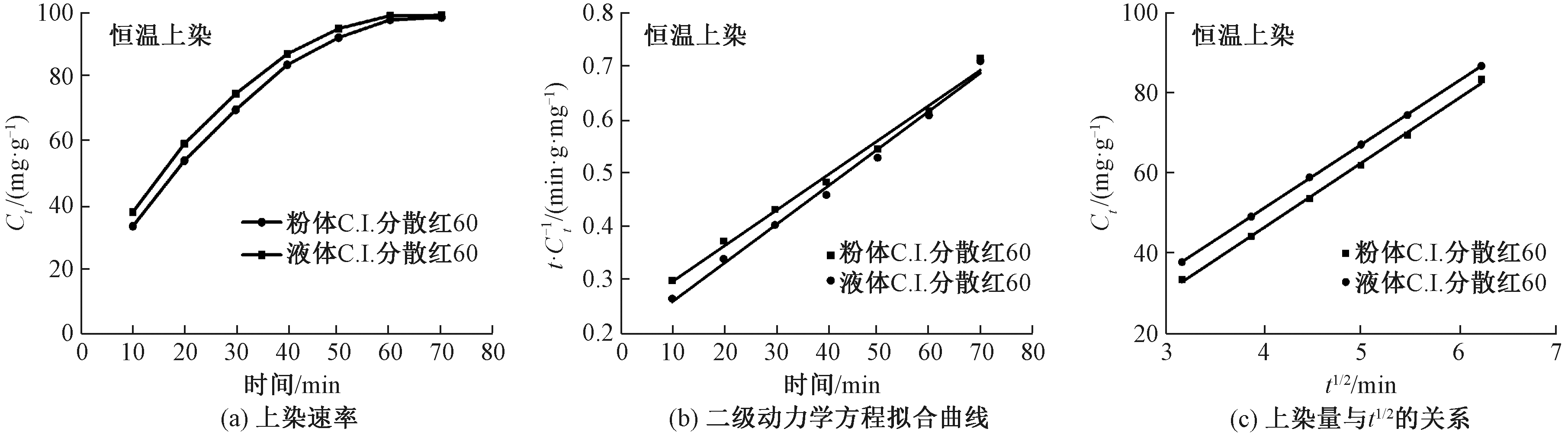
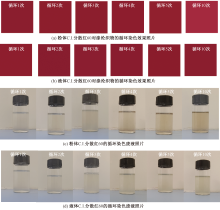
摘要: 针对传统粉体分散染料染涤纶织物染色水耗高、染色废水化学需氧量(COD)高等问题,通过液体分散染料染色废水循环染色,降低水耗,实现染色废水减排。以商用粉体和液体C.I.分散红60为研究对象,探究了对涤纶织物的染色动力学及其循环染色性能;通过测试上染率,染色织物的颜色参数和色牢度,证实了液体分散染料的染色废水循环染色的可行性。结果表明:与粉体C.I.分散红60相比,液体C.I.分散红60在涤纶织物上的染色速率常数、扩散系数更大、半染时间更短,其染色废水上染率、色不匀度和色牢度与常规鲜水染色相当,更适合循环染色;在10次循环染色后废水中加入COD降解剂,COD去除率达98%,可再次循环染色;利用液体C.I.分散红60循环染色废水进行液体C.I.分散蓝291涤纶染色,染色后织物色光牢度等与鲜水效果一致。使用液体分散染料染色废水循环染色,染色效果稳定,可实现节水、减排目标,符合低碳环保要求。
中图分类号:
| [1] | 纪柏林, 王碧佳, 毛志平. 纺织染整领域支撑低碳排放的关键技术[J]. 纺织学报, 2022, 43(1): 113-121. |
| JI Bolin, WANG Bijia, MAO Zhiping. Key technologies supporting low-carbon emissions in the field of textile dyeing and finishing[J]. Journal of Textile Research, 2022, 43(1): 113-121. | |
| [2] | 吴伟, 纪柏林, 毛志平. 活性及分散染料染色新技术[J]. 纺织学报, 2023, 44(5): 1-12. |
| WU Wei, JI Bolin, MAO Zhiping. New technologies for dyeing with reactive and disperse dyes[J]. Journal of Textile Research, 2023, 44(5): 1-12. | |
| [3] | 付政, 关玉, 孙素梅, 等. 纳米分散染料胶囊的制备及其对涤纶织物轧染染色性能[J]. 精细化工, 2022, 39(5): 1035-1043. |
| FU Zheng, GUAN Yu, SUN Sumei, et al. Preparation of nanodispersed dye capsules and their performance in pad dyeing of polyester fabric[J]. Fine Chemicals, 2022, 39(5): 1035-1043. | |
| [4] | 赵航. 聚酯纤维深度节水减排染色新技术的研发及应用[D]. 西安: 西安工程大学, 2016: 1-3. |
| ZHAO Hang. Development and application of water saving and emission reduction new dyeing technology for polyester fiber[D]. Xi'an: Xi'an Polytechnic University, 2016: 1-3. | |
| [5] | 艾丽, 朱亚伟. 液体分散染料研发技术现状及其应用前景[J]. 纺织学报, 2023, 44(5): 220-227. |
| AI Li, ZHU Yawei. Current status and application prospects of research and development technology for liquid dispersed dyes[J]. Journal of Textile Research, 2023, 44(5): 220-227. | |
| [6] | ZHENG M, SUN Y, LI C, et al. A novel and eco-friendly approach for dyeing polyester fabrics by liquid disperse dyes treated with deep eutectic solvent[J]. Coloration Technology, 2023, 139(5): 552-564. |
| [7] | MIGUEL A G, TALES M G, ALINE F A, et al. Reuse of wastewaters on dyeing of polyester fabric with encapsulated disperse dye[J]. Environmental Technology, 2017, 40(4): 408-417. |
| [8] | 钱春霞, 何权辉, 赵朋, 等. 液体分散染料的制备及分散剂的选择[J]. 染料与染色, 2021, 58(5): 43-49. |
| QIAN Chunxia, HE Quanhui, ZHAO Peng, et al. Preparation of liquid disperse dyes and selection of dispersants[J]. Dyestuffs and Coloration, 2021, 58(5): 43-49. | |
| [9] | 姜建堂, 吴夏琼, 王莉莉, 等. 液体分散染料制备技术及现状[J]. 纺织导报, 2022, 6: 84-87. |
| JIANG Jiantang, WU Xiaqiong, WANG Lili, et al. Preparation technology and current status of liquid disperse dyes[J]. China Textile Leader, 2022, 6: 84-87. | |
| [10] | 王召伟, 钟毅, 徐红, 等. 液体分散染料的制备及应用[J]. 印染, 2022, 10: 6-10. |
| WANG Zhaowei, ZHONG Yi, XU Hong, et al. Preparation and application of liquid disperse dyes[J]. China Dyeing & Finishing, 2022, 10: 6-10. | |
| [11] | 蒋俊浩, 卜广玖, 殷允杰, 等. 涤纶印花用免水洗液体分散染料的制备及应用工艺研究[J]. 染料与染色, 2020, 57(4): 12-15. |
| JIANG Junhao, BU Guangjiu, YIN Yunjie, et al. Prepara-tion and application of liquid disperse dyes for polyester printing[J]. Dyestuffs and Coloration, 2020, 57(4): 12-15. | |
| [12] | 卜广玖, 王震, 陆前进, 等. 涤纶浸染用高固色率液体分散染料[J]. 印染, 2020, 46(4): 27-30, 34. |
| BU Guangjiu, WANG Zhen, LU Qianjin, et al. Liquid disperse dyes with high fixation yield for exhaust dyeing of polyester[J]. China Dyeing & Finishing, 2020, 46(4): 27-30, 34. | |
| [13] | 陈娟. 涤纶织物的热熔染色工艺研究[D]. 苏州: 苏州大学, 2017: 21-53. |
| CHEN Juan. Study on thermosol dyeing technology of polyester fabric[D]. Suzhou: Soochow University, 2017: 21-53. | |
| [14] | 李剑浩, 熊春贤, 章云菊, 等. 三苯乙烯基苯酚聚氧乙烯醚磷酸酯盐的合成及其对染料的分散性能[J]. 现代纺织技术, 2023, 31(3): 182-187. |
| LI Jianhao, XIONG Chunxian, ZHANG Yunjun, et al. Synthesis of triphenyl phenol polyoxyethylene ether phosphate and its dispersion performance for dyes[J]. Advanced Textile Technology, 2023, 31(3): 182-187. | |
| [15] | 袁秋晓. 液体分散染料染色工艺及机理研究[D]. 杭州: 江理工大学, 2022: 3-51. |
| YUAN Qiuxiao. Study on dyeing process and mechanism of liquid disperse dyes[D]. Hangzhou: Zhejiang Sci-Tech University, 2022: 3-51. | |
| [16] | QIAN T, ZHONG Y, MAO Z P, et al. The comb-like modified styrene-maleic anhydride copolymer dispersant for disperse dyes[J]. Journal of Applied Polymer Science, 2019. DOI: 10.1002/app.47330. |
| [17] | 孙洋洋, 姜建堂, 田妮妮, 等. 三苯乙烯基阴离子分散剂在液体分散染料制备中的应用[J]. 精细化工, 2022, 39(6): 1263-1269. |
| SUN Yuangyang, JIANG Jiantang, TIAN Nini, et al. The application of triphenylene based anionic dispersant in the preparation of liquid dispersed dyes[J]. Fine Chemicals, 2022, 39(6): 1263-1269. | |
| [18] | 李冰林, 皮碧荣, 孙淑娟, 等. 分散染料全流程染色残液再生及循环利用[J]. 印染助剂, 2023, 40(6): 1-5. |
| LI Binglin, PI Birong, SUN Shujuan, et al. Regeneration and recycling of dyeing residues from the whole process of disperse dyes[J]. Textile Auxiliaries, 2023, 40(6): 1-5. | |
| [19] | 韩博, 王玉霖, 舒大武, 等. 活性染料染色废水的循环染色[J]. 纺织学报, 2023, 44(8): 151-157. |
| HAN Bo, WANG Yulin, SHU Dawu, et al. Cyclic dyeing of reactive dye dyeing wastewater[J]. Journal of Textile Research, 2023, 44(8): 151-157. | |
| [20] | LI J W, YIN L B, SONG L X, et al, Investigating the effect of anchoring groups modified comb-like polycarboxylate hyperdispersants on dispersion and stability in dispersed dyes[J]. Progress in Organic Coatings, 2024. DOI: 10.1016/j.porgcoat.2024.108371. |
| [21] | 李立新, 金淑兰, 柴丽琴, 等. 可生物降解聚丁二酸丁二醇酯(PBS)纤维的染色性能研究[J]. 丝绸, 2020, 57(8): 12-18. |
| LI Lixin, JIN Shulan, CHAI Liqin, et al. A study on the dyeing performance of biodegradable polybutylene succinate (PBS) fibers[J]. Journal of Silk, 2020, 57(8): 12-18. | |
| [22] | 唐奇, 柴丽琴, 徐天伟, 等. 聚乳酸/聚3-羟基丁酸-戊酸酯共混纤维及其雪尼尔纱的染色动力学[J]. 纺织学报, 2023, 44(6): 129-136. |
| TANG Qi, CHAI Liqin, XU Tianwei, et al. Dyeing kinetics of polylactic acid/polyhydroxybutyrate valerate blend fibers and their chenille yarns[J]. Journal of Textile Research, 2023, 44(6): 129-136. | |
| [23] | 王成龙, 李立新, 吴绍明, 等. 染色促进剂对聚丁二酸丁二醇酯纤维分散染料染色动力学和热力学的影响[J]. 纺织学报, 2022, 43(1): 147-152. |
| WANG Chenglong, LI Lixin, WU Shaoming, et al. Effect of dye promoters on dyeing kinetics and thermodynamics of polybutylene succinate dyeing with disperse dye[J]. Journal of Textile Research, 2022, 43(1): 147-152. |
| [1] | 李鑫, 叶培培, 赵晓曼, 王鸿博, 杨国荣, 洪剑寒. 氧化铋-硅橡胶基X射线防护织物的制备及性能[J]. 纺织学报, 2025, 46(02): 227-235. |
| [2] | 朱琳, 王展鹏, 吴宝宅, 汪少朋, 刘一鸣, 代成娜, 陈标华. 废旧涤纶织物的溶剂萃取剥色及其对醇解的影响[J]. 纺织学报, 2025, 46(01): 103-110. |
| [3] | 徐豫松, 周杰, 甘佳怡, 张涛, 张先明. 含磷氮水性聚氨酯的制备及其在涤纶织物阻燃整理中应用[J]. 纺织学报, 2024, 45(07): 112-120. |
| [4] | 邵明军, 蹇玉兰, 唐唯, 柴希娟, 万辉, 解林坤. 涤纶织物表面耐久超疏水涂层制备及其水油分离性能[J]. 纺织学报, 2024, 45(04): 142-150. |
| [5] | 范奥运, 沈军炎, 杨雷, 李剑浩, 张志坚. 表面活性剂与纳米颗粒协同稳定Pickering有机硅乳液的制备及其应用性能[J]. 纺织学报, 2024, 45(01): 136-145. |
| [6] | 姜绍华, 梁帅童, 裴刘军, 张红娟, 王际平. 基于概率密度函数的织物染色侵入动力学分析[J]. 纺织学报, 2023, 44(10): 90-97. |
| [7] | 张建磊, 申攀登, 何琳, 程隆棣. 异质性环境规制对中国纺织服装业碳排放的影响[J]. 纺织学报, 2023, 44(10): 149-156. |
| [8] | 韩博, 王玉霖, 舒大武, 王涛, 安芳芳, 单巨川. 活性染料染色废水的循环染色[J]. 纺织学报, 2023, 44(08): 151-157. |
| [9] | 唐奇, 柴丽琴, 徐天伟, 王成龙, 王直成, 郑今欢. 聚乳酸/聚3-羟基丁酸-戊酸酯共混纤维及其雪尼尔纱的染色动力学[J]. 纺织学报, 2023, 44(06): 129-136. |
| [10] | 艾丽, 朱亚伟. 液体分散染料研发技术现状及其应用前景[J]. 纺织学报, 2023, 44(05): 220-227. |
| [11] | 吴伟, 纪柏林, 毛志平. 活性及分散染料染色新技术[J]. 纺织学报, 2023, 44(05): 1-12. |
| [12] | 张典典, 李敏, 关玉, 王思翔, 胡桓川, 付少海. 仿植被可见光-近红外反射光谱特征的分散染料印花织物制备及其性能[J]. 纺织学报, 2023, 44(01): 142-148. |
| [13] | 梅敏, 钱建华, 周榆凯, 杨晶晶. 纳米SiO2/含氟硅防水透湿整理剂的制备及其应用[J]. 纺织学报, 2022, 43(12): 118-124. |
| [14] | 张楚丹, 王锐, 王文庆, 刘燕燕, 陈睿. 阳离子改性阻燃涤纶织物的制备及其性能[J]. 纺织学报, 2022, 43(12): 109-117. |
| [15] | 付政, 李敏, 何颖婷, 王春霞, 付少海. 纳米包覆分散染料的制备及其免水洗染色性能[J]. 纺织学报, 2022, 43(09): 129-136. |
|
||
 京公网安备11010502044800号