纺织学报 ›› 2025, Vol. 46 ›› Issue (04): 103-108.doi: 10.13475/j.fzxb.20240602301
张蕙1, 杨海伟1, 金鲜花2, 杨超2, 王宗乾1( )
)
ZHANG Hui1, YANG Haiwei1, JIN Xianhua2, YANG Chao2, WANG Zongqian1()
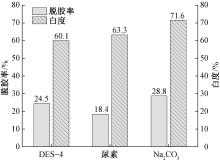
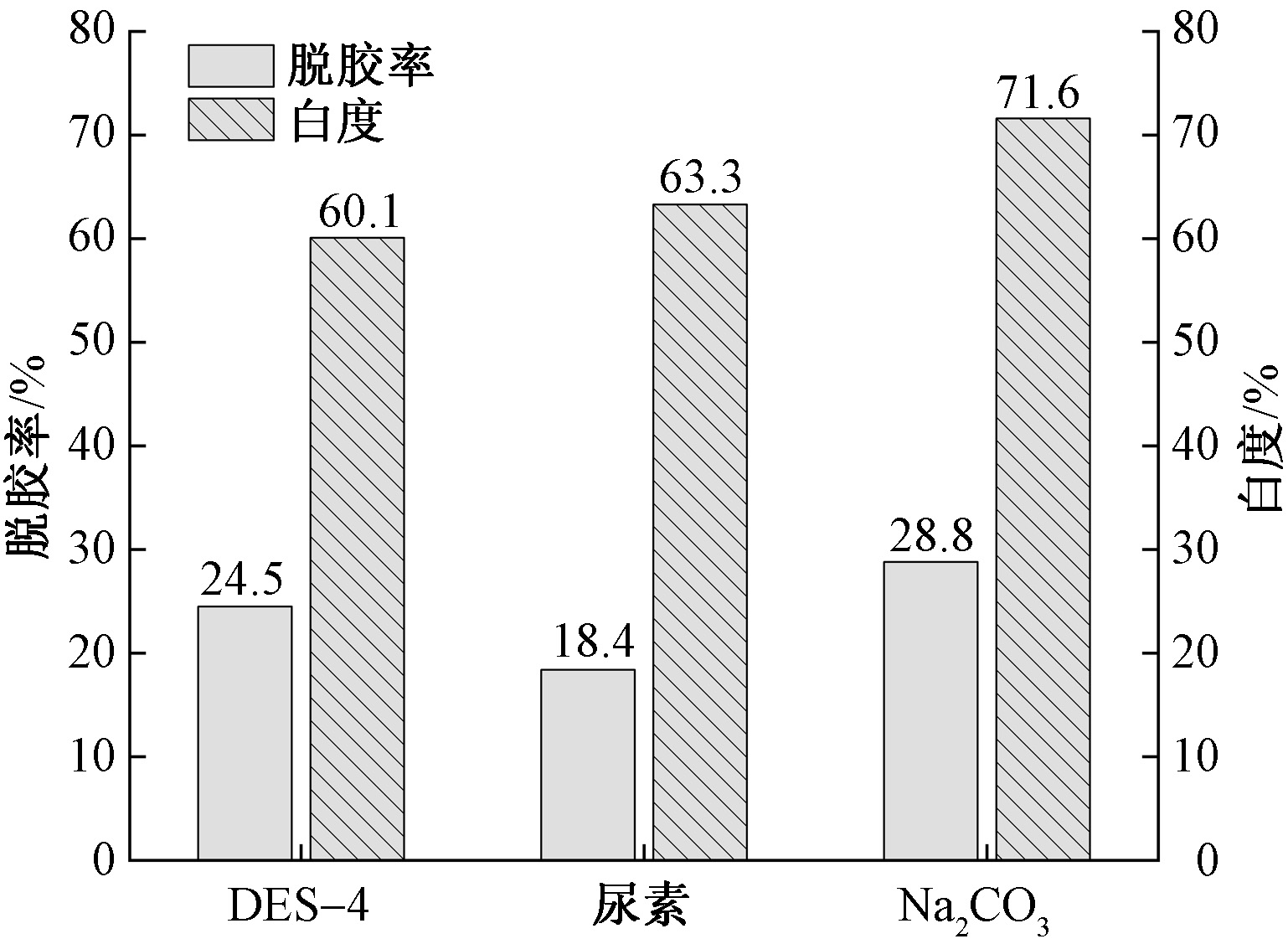
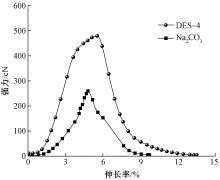
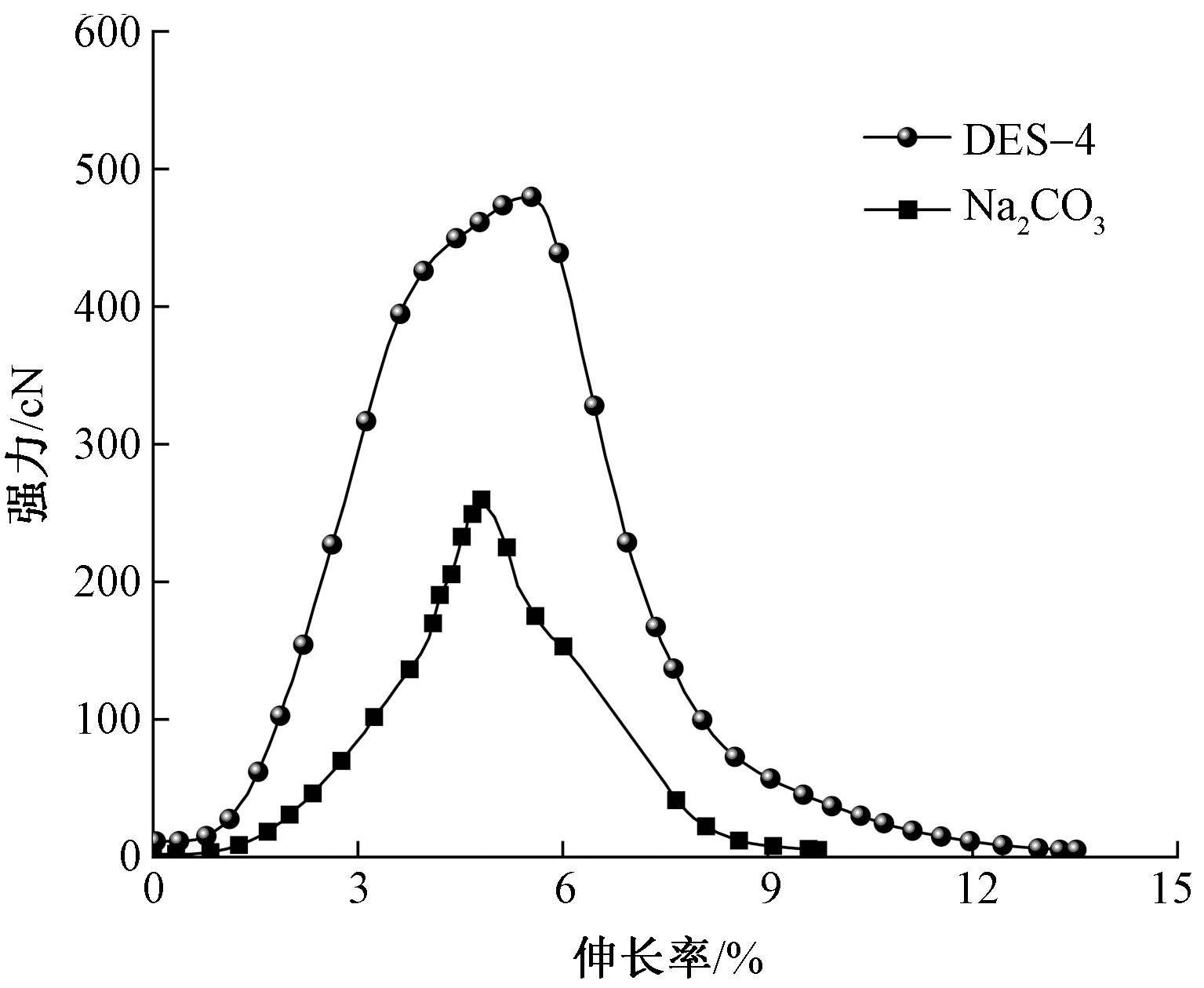
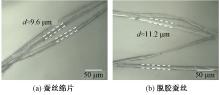
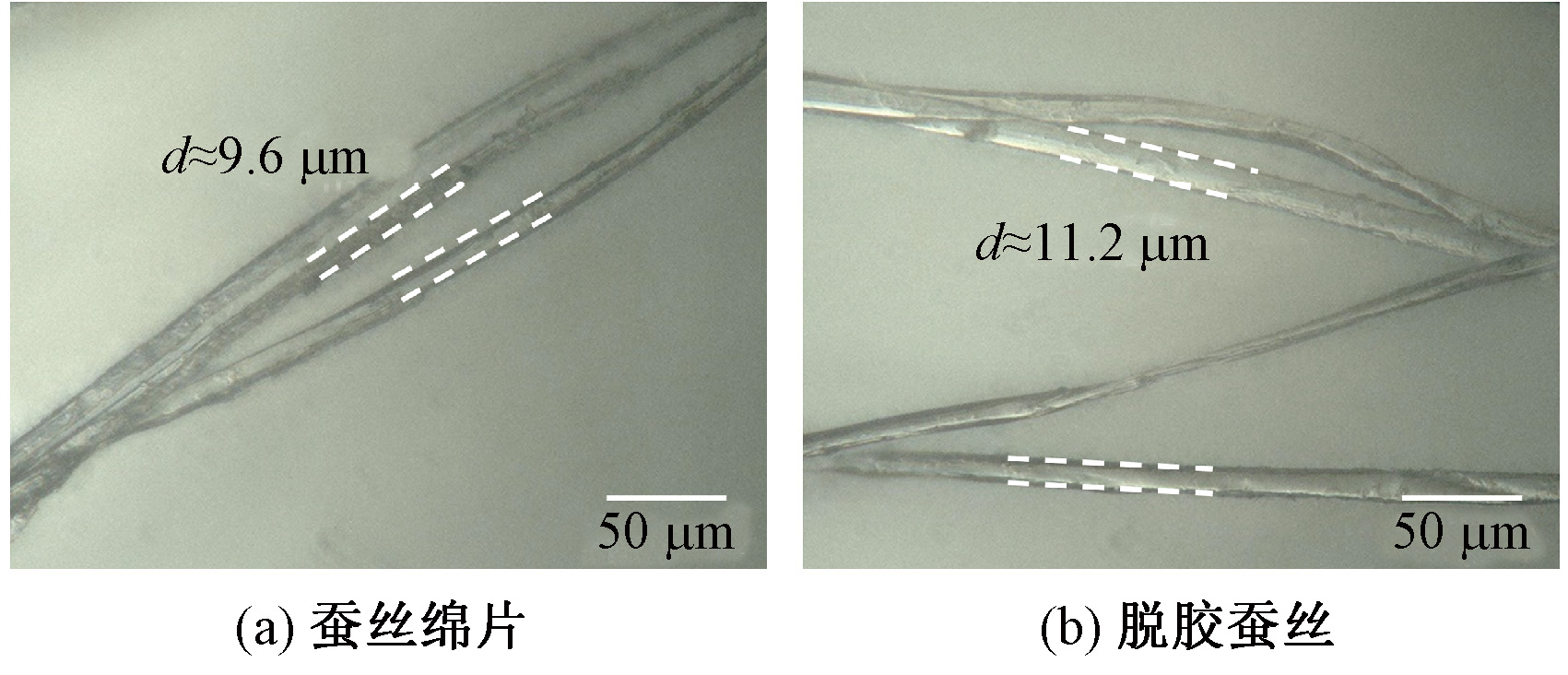
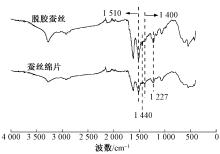
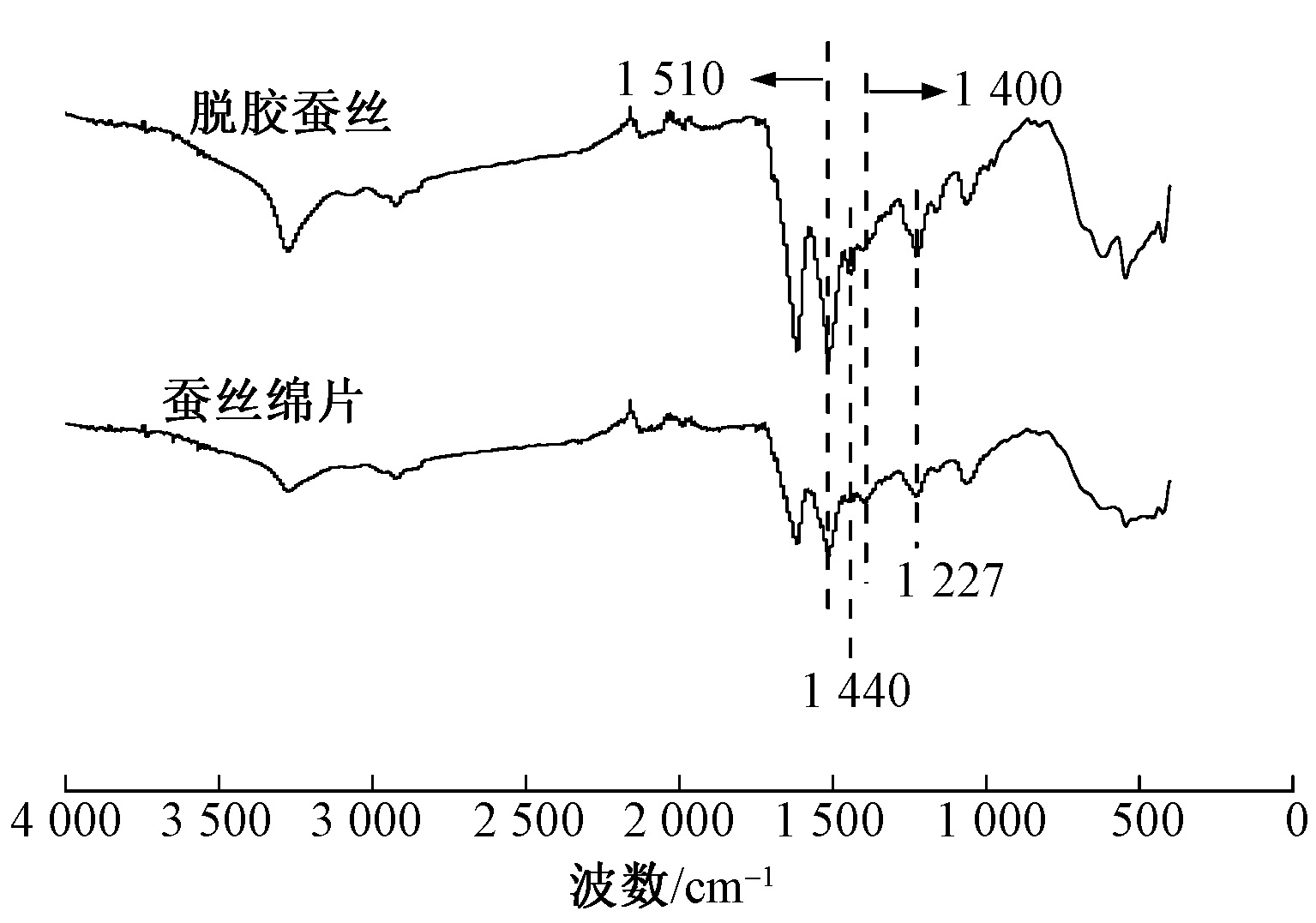
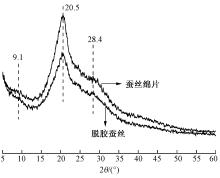
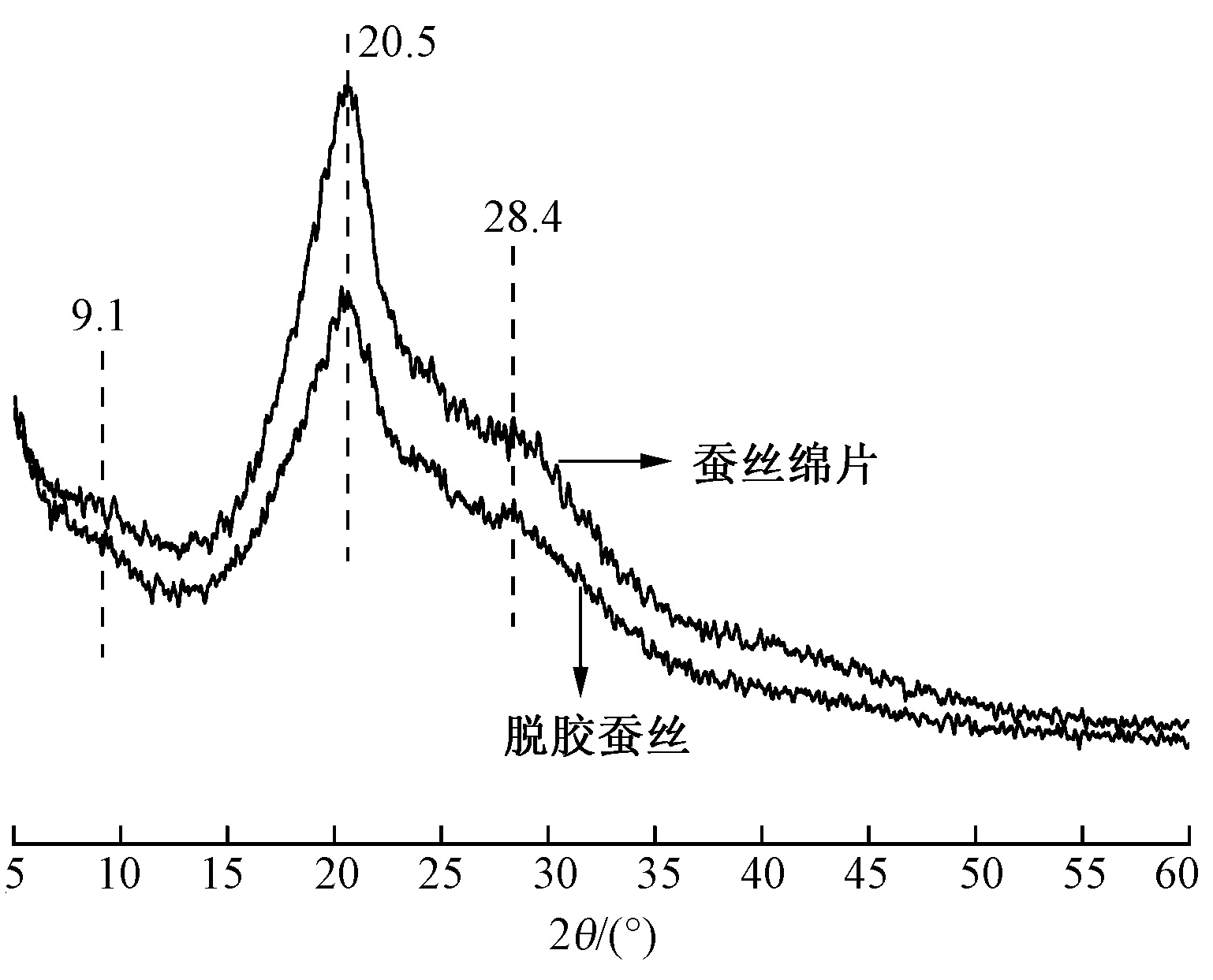
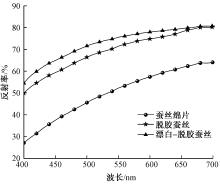
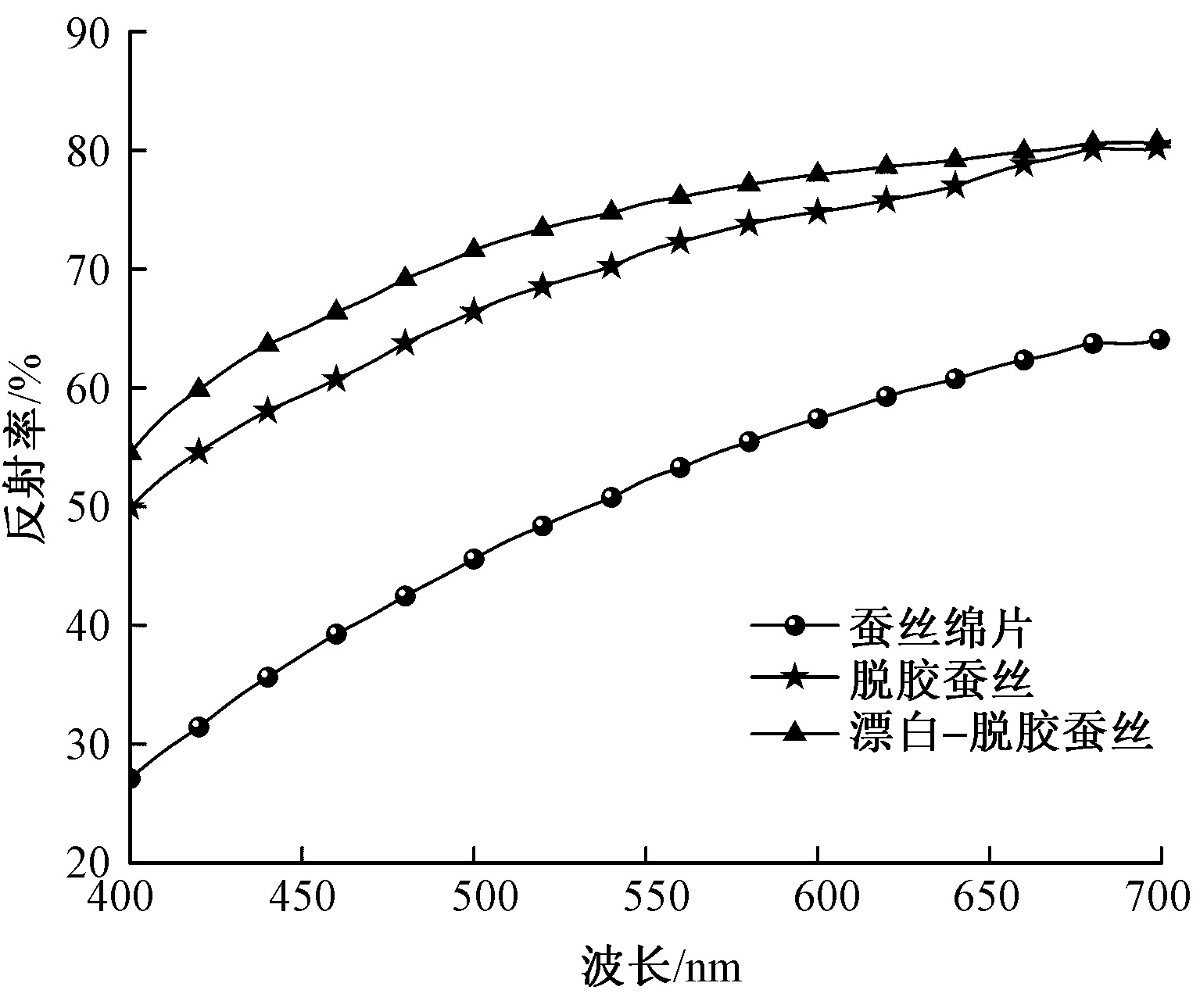
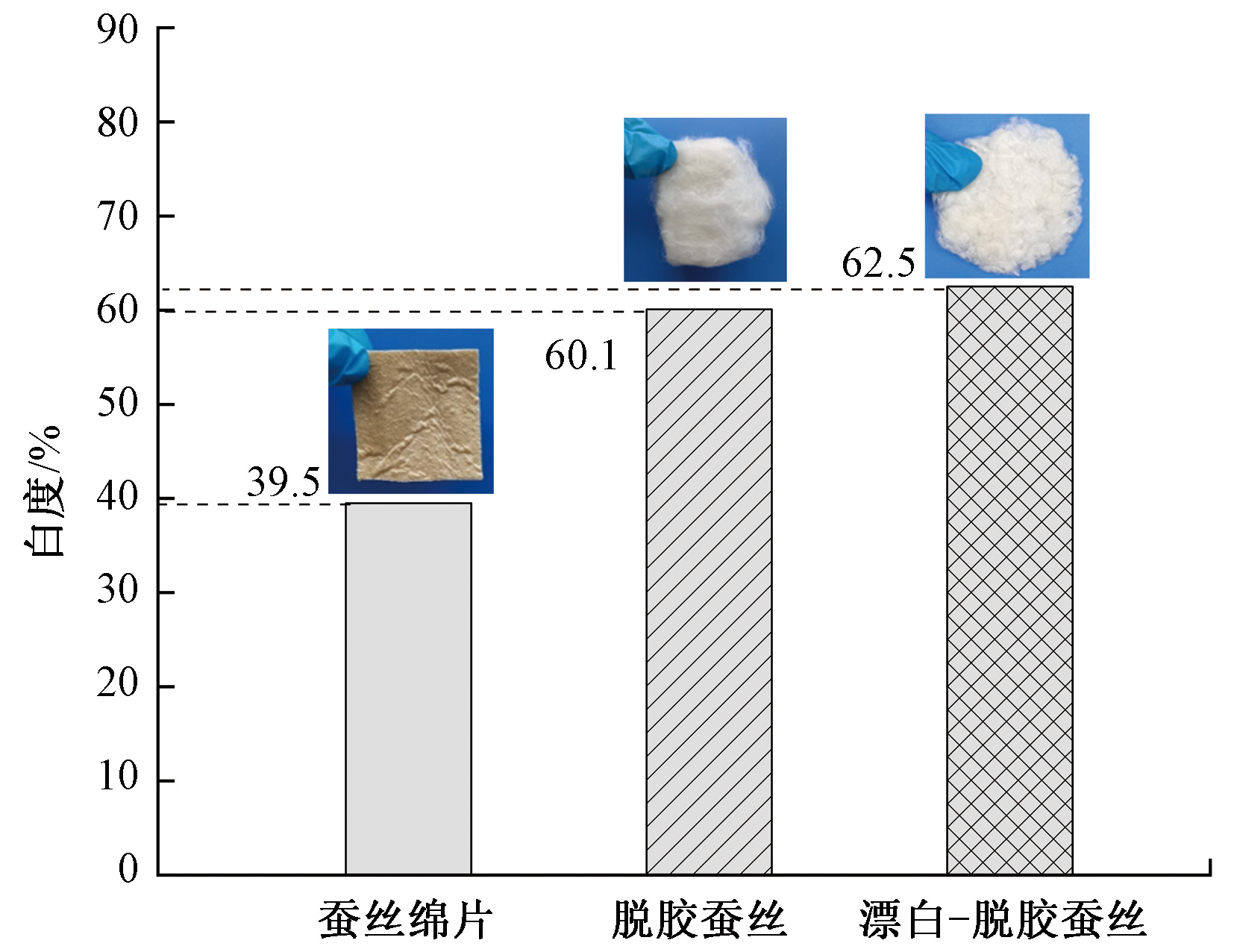
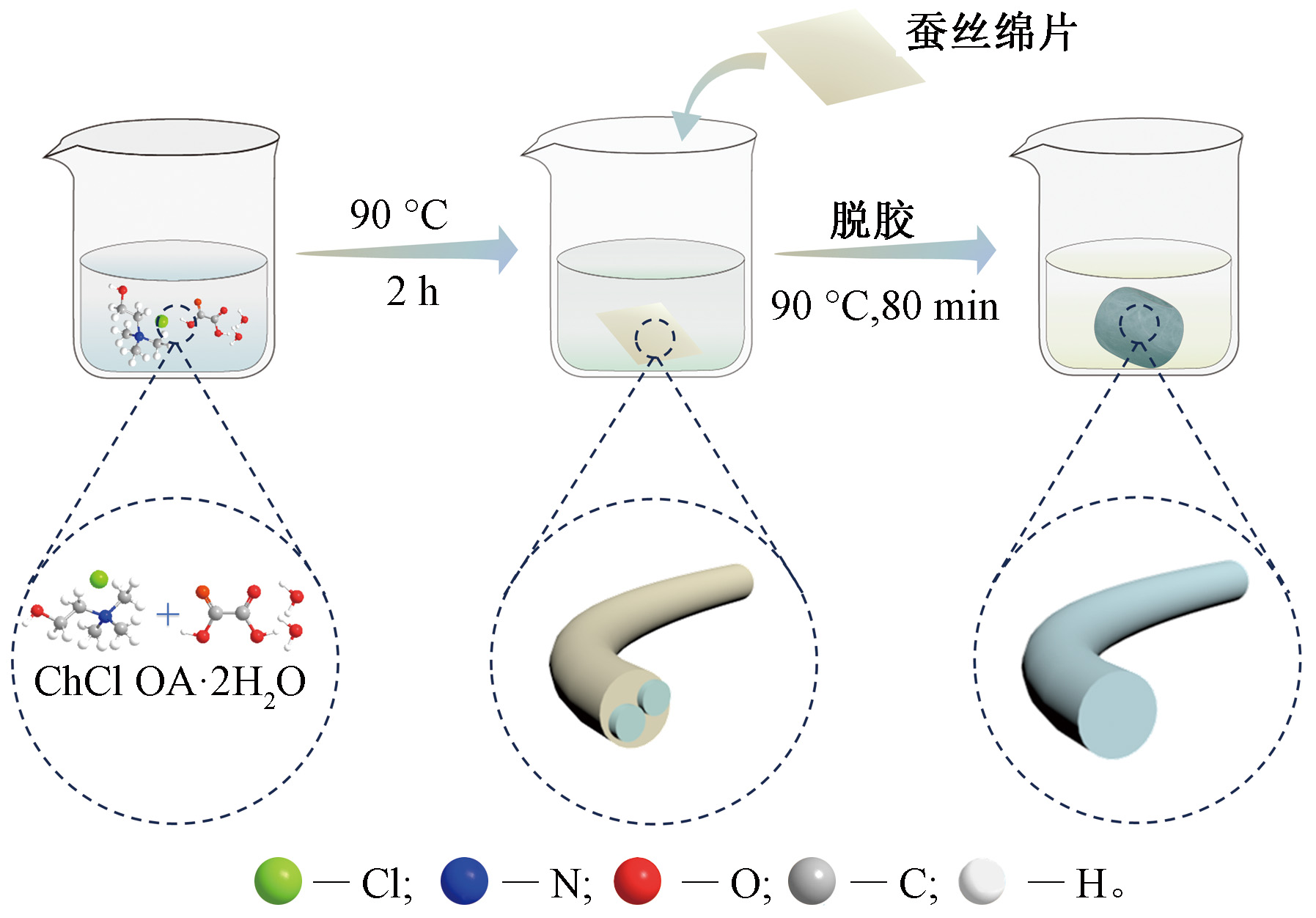
摘要: 为提高蚕丝绵片的脱胶效率和脱胶质量,将预先制备的4种不同组分氯化胆碱低共熔溶剂用于对蚕丝绵片的脱胶,并与碳酸钠、尿素脱胶蚕丝进行比较。采用超景深显微系统、傅里叶变换红外光谱仪、X射线衍射仪测试了脱胶蚕丝的形貌结构、化学及聚集态结构。结果表明:氯化胆碱/草酸二水合物低共熔溶剂用于蚕丝绵片的脱胶效果最佳,脱胶率为24.5%,该脱胶工艺中蚕丝纤维直径平均膨胀至原来的1.17倍;与非碱体系的尿素脱胶对比,蚕丝的脱胶率提升,脱胶时间缩短;与碳酸钠脱胶对比,蚕丝强力受损降低;红外光谱与X射线衍射曲线表明低共熔溶剂脱胶不影响蚕丝素聚集态结构;同时添加低共熔溶剂还有助于提升双氧水对蚕丝绵片的漂白白度。剖析脱胶机制认为,一方面缘于低共熔溶剂对蚕丝纤维具有优异的膨润作用,促进了丝胶组分的溶解去除,另一方面低共熔溶剂呈现酸性,对蚕丝素组分损伤弱,降低脱胶蚕丝纤维的强力损伤。
中图分类号:
| [1] | 张勇, 陆浩杰, 梁晓平, 等. 蚕丝基智能纤维及织物:潜力、现状与未来展望[J]. 物理化学学报, 2022, 38(9): 64-79. |
| ZHANG Yong, LU Haojie, LIANG Xiaoping, et al. Silk materials for intelligent fibers and textiles: potential, progress and future perspective[J]. Acta Physico-Chimica Sinica, 2022, 38(9): 64-79. | |
| [2] | WANG F, ZHANG Y Q. Effects of alkyl polyglyco-side(APG) on Bombyx mori silk degumming and the mechanical properties of silk fibroin fibre[J]. Materials Science and Engineering: C, 2017, 74: 152-158. |
| [3] | SCHMIDT T, PUCHALLA N, SCHENDZIELORZ M, et al. Degumming and characterization of Bombyx mori and non-mulberry silks from Saturniidae silkworms[J]. Scientific Reports, 2023. DOI:10.1038/S41598-023-46474-5. |
| [4] | WANG R, ZHU Y, SHI Z, et al. Degumming of raw silk via steam treatment[J]. Journal of Cleaner Production, 2018, 203: 492-497. |
| [5] | 王宗乾, 杨海伟, 王邓峰. 脱胶对蚕丝纤维的溶解及丝素蛋白性能的影响[J]. 纺织学报, 2018, 39(4): 69-76. |
| WANG Zongqian, YANG Haiwei, WANG Dengfeng. Influence of degumming on solution of silk fiber and property of fibroin[J]. Journal of Textile Research, 2018, 39(4): 69-76. | |
| [6] | WANG Y L, LIANG Y Y, HUANG J C, et al. Proteomic analysis of silk fibroin reveals diverse biological function of different degumming processing from different origin[J]. Frontiers in Bioengineering and Biotechnology, 2022. DOI:10.3389/FBIOE.2021.777320. |
| [7] | 王宗乾, 杨海伟, 周剑, 等. 尿素脱胶对丝素蛋白气凝胶力学性能的影响[J]. 纺织学报, 2020, 41(4): 9-14. |
| WANG Zongqian, YANG Haiwei, ZHOU Jian, et al. Effect of urea degumming on mechanical properties of silk fibroin aerogels[J]. Journal of Textile Research, 2020, 41(4): 9-14. | |
| [8] | EL-SAYED H, MOWAFI S, EL-FIKY A F, et al. Low temperature water-saving bio-degumming of natural silk using thermophilic protease[J]. Sustainable Chemistry and Pharmacy, 2022. DOI:10.1016/J.SCP.2022.100681. |
| [9] | CHANDRAN K, KAIT C F, WILFRED C D, et al. A review on deep eutectic solvents: physiochemical properties and its application as an absorbent for sulfur dioxide[J]. Journal of Molecular Liquids, 2021. DOI:10.1016/J.MOLLIQ.2021.117021. |
| [10] | YING L, ZHAO H, LI C, et al. Surface reconstruction and low-temperature dyeing performances of a poly(lactic acid) filament pretreated with a choline chlo-ride and oxalic acid deep eutectic solvent[J]. Macromolecules, 2022, 55(14): 6238-6246. |
| [11] | DLUGOSZ O. Natural deep eutectic solvents in the synthesis of inorganic nanoparticles[J]. Materials, 2023. DOI:10.3390/MA16020627. |
| [12] | 王一通, 龚立, 王菲菲, 等. 蚕茧丝素纳米纤维的绿色提取及结构调控研究[J]. 蚕业科学, 2022, 48(4): 332-339. |
| WANG Yitong, GONG Li, WANG Feifei, et al. Green extraction and structure regulation of silk fibroin nanofibers from silkworm cocoon[J]. Acta Sericologica Sinica, 2022, 48(4): 332-339. | |
| [13] | HUANG H, TANG Q, LIN G, et al. Anthraquinone-assisted deep eutectic solvent degumming of ramie fibers: evaluation of fiber properties and degumming performance[J]. Industrial Crops Products, 2022. DOI:10.1016/J.INDCROP.2022.115115. |
| [14] | AHMED B, GWON J, THAPALIYA M, et al. Combined effects of deep eutectic solvent and microwave energy treatments on cellulose fiber extraction from hemp bast[J]. Cellulose, 2023, 30(5): 2895-2911. |
| [15] | ANIS P, TOPRAK T, YENER E, et al. Investigation of the effects of environmentally friendly degumming methods on silk dyeing performance[J]. Textile Research Journal, 2019, 89(7): 1286-1296. |
| [16] |
LING S, QI Z, KNIGHT D P, et al. Synchrotron FTIR microspectroscopy of single natural silk fibers[J]. Biomacromolecules, 2011, 12(9): 3344-3349.
doi: 10.1021/bm2006032 pmid: 21790142 |
| [17] |
KHAN M M R, TSUKADA M, GOTOH Y, et al. Physical properties and dyeability of silk fibers degummed with citric acid[J]. Bioresource Technology, 2010, 101(21): 8439-8445.
doi: 10.1016/j.biortech.2010.05.100 pmid: 20598526 |
| [1] | 李亿鸿, 蔡君怡, 诸葛晓洁, 吴东芮, 滕德英, 俞建勇, 丁彬, 李召岭. 羧基化纳米纤维素增强的柔性透明导电弹性体[J]. 纺织学报, 2025, 46(04): 11-19. |
| [2] | 王浙峰, 蔡王丹, 李诗雅, 徐青艺, 张红霞, 祝成炎, 金肖克. 抗菌除臭复合功能机织物的服用性能[J]. 纺织学报, 2025, 46(03): 90-99. |
| [3] | 李欢, 孟文俊, 张京, 姜哲, 卫艺敏, 周曼, 王强. 低共熔溶剂体系中的羊毛靛蓝染料染色[J]. 纺织学报, 2025, 46(03): 123-130. |
| [4] | 杨鑫, 张昕, 潘志娟. 丝素纳米原纤增强再生丝素蛋白/聚乙烯醇纤维的结构与性能[J]. 纺织学报, 2024, 45(11): 1-9. |
| [5] | 王勃翔, 徐航丹, 李佳, 林杰, 程德红, 路艳华. 柞蚕丝素纳米纤维温敏复合膜制备及其生物相容性[J]. 纺织学报, 2024, 45(09): 18-25. |
| [6] | 尹祥, 朱恩清, 杨静, 杨海艳, 王大伟, 石纯, 史正军. 可纺性竹原纤维的脱胶工艺及其性能[J]. 纺织学报, 2024, 45(09): 106-112. |
| [7] | 刘术, 侯腾, 周乐乐, 李祥龙, 杨斌. 桑蚕的强制牵伸抽丝及其纤维性能[J]. 纺织学报, 2024, 45(06): 11-15. |
| [8] | 黄晴, 苏振岳, 周一帆, 刘青松, 李懿, 赵萍, 王鑫. 饲料与桑叶饲喂的家蚕蚕丝品质分析[J]. 纺织学报, 2024, 45(05): 1-9. |
| [9] | 李曼丽, 季志浩, 龙柱, 王益峰, 金恩琪. 壳聚糖荧光防伪印花涂料的制备及其应用性能[J]. 纺织学报, 2024, 45(03): 114-121. |
| [10] | 陈锟, 许晶莹, 郑怡倩, 李加林, 洪兴华. 丝网印刷还原氧化石墨烯改性蚕丝织物的导电与电热性能[J]. 纺织学报, 2024, 45(03): 122-128. |
| [11] | 石路健, 宋亚伟, 谢汝义, 高志超, 房宽峻. 莱赛尔机织物防原纤化前处理工艺优化[J]. 纺织学报, 2023, 44(12): 96-105. |
| [12] | 刘骏韬, 孙婷, 涂虎, 胡敏, 张如全, 孙雷, 罗霞, 纪华. 全棉水刺非织造布的等离子体冷堆脱脂漂白工艺响应面法优化[J]. 纺织学报, 2023, 44(11): 132-141. |
| [13] | 卜凡, 应丽丽, 李长龙, 王宗乾. 羽绒在乳酸/半胱氨酸低共熔溶剂中的溶解行为及其机制[J]. 纺织学报, 2023, 44(10): 24-30. |
| [14] | 谭婷, 李哲阳, 马明波, 周文龙. 天然绿色蚕丝抗氧化组分向皮肤迁移的特性研究[J]. 纺织学报, 2023, 44(10): 75-80. |
| [15] | 何铠君, 沈加加, 刘国金. 石墨烯改性蚕丝的制备方法及其应用研究进展[J]. 纺织学报, 2023, 44(09): 223-231. |
|
||
 京公网安备11010502044800号