纺织学报 ›› 2025, Vol. 46 ›› Issue (06): 127-134.doi: 10.13475/j.fzxb.20240706601

• 纺织工程 • 上一篇    下一篇

棕榈纤维吸声复合材料的老化性能

张毅1(), 沈殷2, 高金霞3, 郁崇文4   

  1. 1.浙江工业职业技术学院, 浙江 绍兴 312000
    2.绍兴中纺联检验技术服务有限公司, 浙江 绍兴 312030
    3.绍兴透真纺织科技有限公司, 浙江, 绍兴 312033
    4.东华大学 纺织学院, 上海 201620
  • 收稿日期:2024-07-30 修回日期:2025-01-19 出版日期:2025-06-15 发布日期:2025-07-02
  • 作者简介:张毅(1985—),男,副教授,硕士。主要研究方向为麻类纤维的脱胶与产品开发。E-mail:zhangyigyxy@163.com
  • 基金资助:
    浙江工业职业技术学院“专业学科一体化建设”项目(XKC201921006);浙江省教育厅一般科研项目(Y202146090)

Aging properties of acoustic-absorbing composites from palm fiber

ZHANG Yi1(), SHEN Yin2, GAO Jinxia3, YU Chongwen4   

  1. 1. Zhejiang Industry Polytechnic College, Shaoxing, Zhejiang 312000, China
    2. Shaoxing China Textile Union Inspection Technical Services Co., Ltd., Shaoxing, Zhejiang 312030, China
    3. Shaoxing Touzhen Textile Co., Ltd., Shaoxing, Zhejiang 312033, China
    4. College of Textiles, Donghua University, Shanghai 201620, China
  • Received:2024-07-30 Revised:2025-01-19 Published:2025-06-15 Online:2025-07-02

摘要: 为探讨棕榈吸声复合材料替代黄麻吸声内饰板的可行性,研究了棕榈纤维毡/陶粒/聚(3-羟基丁酸酯-co-3-羟基戊酸酯) (PHBV)吸声复合材料、黄麻纤维毡/PHBV吸声内饰板分别在自然光老化、湿热老化、紫外光照老化工艺下的拉伸强度、弯曲强度、无缺口冲击强度和吸声系数平均值,以及在自然光老化、湿热老化工艺下的抑菌率;分析了湿热老化下吸声复合材料的吸水率和厚度方向膨胀率;测试了紫外光照老化下2种纤维的木质素含量、表面和拉伸断面形貌、化学结构;运用剩余强度模型预测了自然光老化下的力学性能。结果表明:3种老化工艺下棕榈吸声复合材料完全可替代黄麻吸声内饰板,对金黄色葡萄球菌、大肠杆菌均有一定的抑菌效果;湿热老化下复合材料的吸水率、厚度方向膨胀率随温度上升而增大,抑菌率快速下降;纤维木质素含量的减少是导致紫外光照老化下复合材料力学性能降低的重要原因;预测1 095 d后吸声材料的拉伸强度为24.97 MPa,弯曲强度为44.23 MPa,1 825 d后拉伸强度为22.51 MPa,弯曲强度为41.94 MPa。

关键词: 棕榈纤维毡, 吸声系数, 老化性能, 湿热老化, 汽车内饰材料, 剩余强度模型, 吸声复合材料

Abstract:

Objective Since 2022, the production of jute-based acoustic-absorbing composite materials has declined due to reduced imports of raw jute materials. Automotive interior manufacturers are actively exploring new types of fibers that can either be blended with or partially replace jute in the production of acoustic materials. Through a comparative study on the aging properties of palm fiber acoustic-absorbing composites and widely used jute fiber acoustic interior panels in the market, this research further investigates the feasibility of substituting jute-based panels with palm fiber composites while improving the durability of such acoustic-absorbing interior components.

Method Palm fiber felt/ceramic/poly(3-hydroxy-butyrate-co-3-hydroxy-valerate) (PHBV) acoustic-absorbing composite and jute fiber felt/PHBV acoustic-absorbing interior panels were studied under the natural light aging, hot-humid aging and ultraviolet light aging with the average values of tensile strength, bending strength, un-notched impact strength and sound absorption coefficient, bacteriostatic rate under natural light aging and hot-humid aging process. The water absorption rate and thickness-direction expansion rate of the acoustic-absorbing composite were analyzed. The lignin content, the composite's appearance change, the tensile section morphology and the chemical junction of the two fibers were tested under ultraviolet irradiation. The residual strength model was used to predict the mechanical properties under natural light aging.

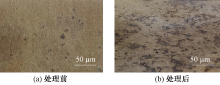
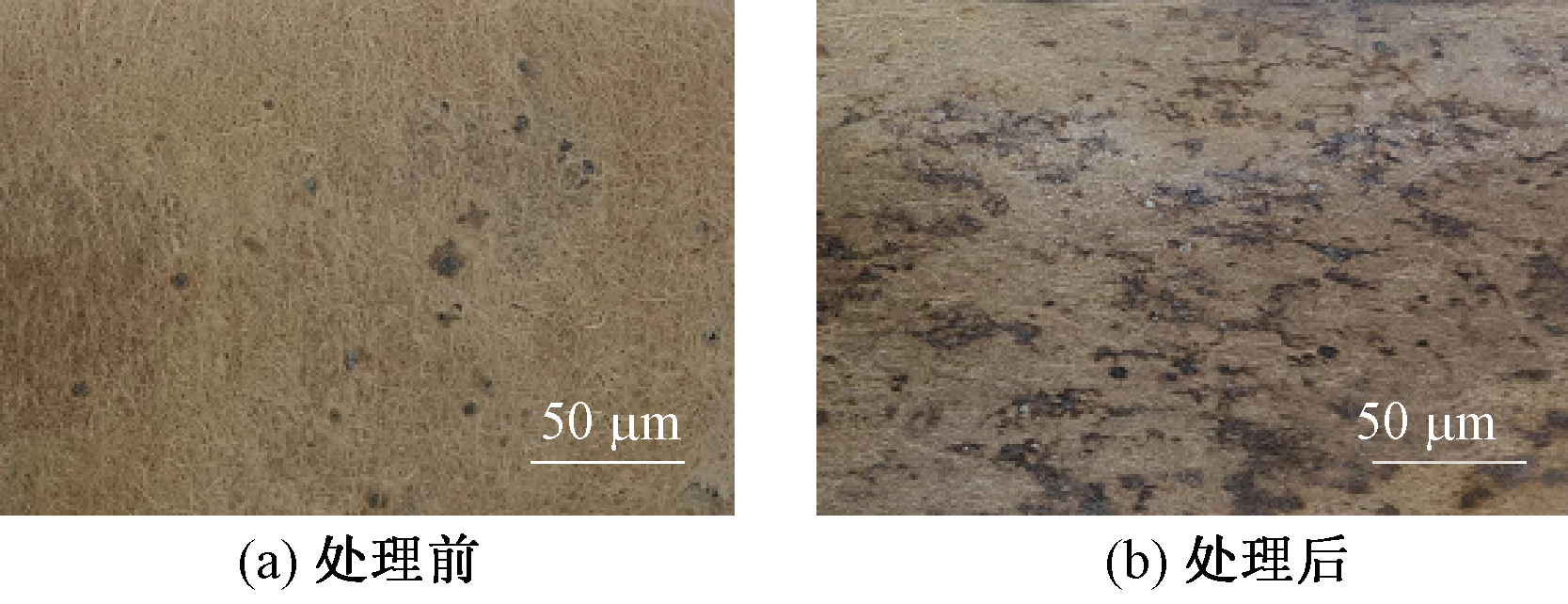
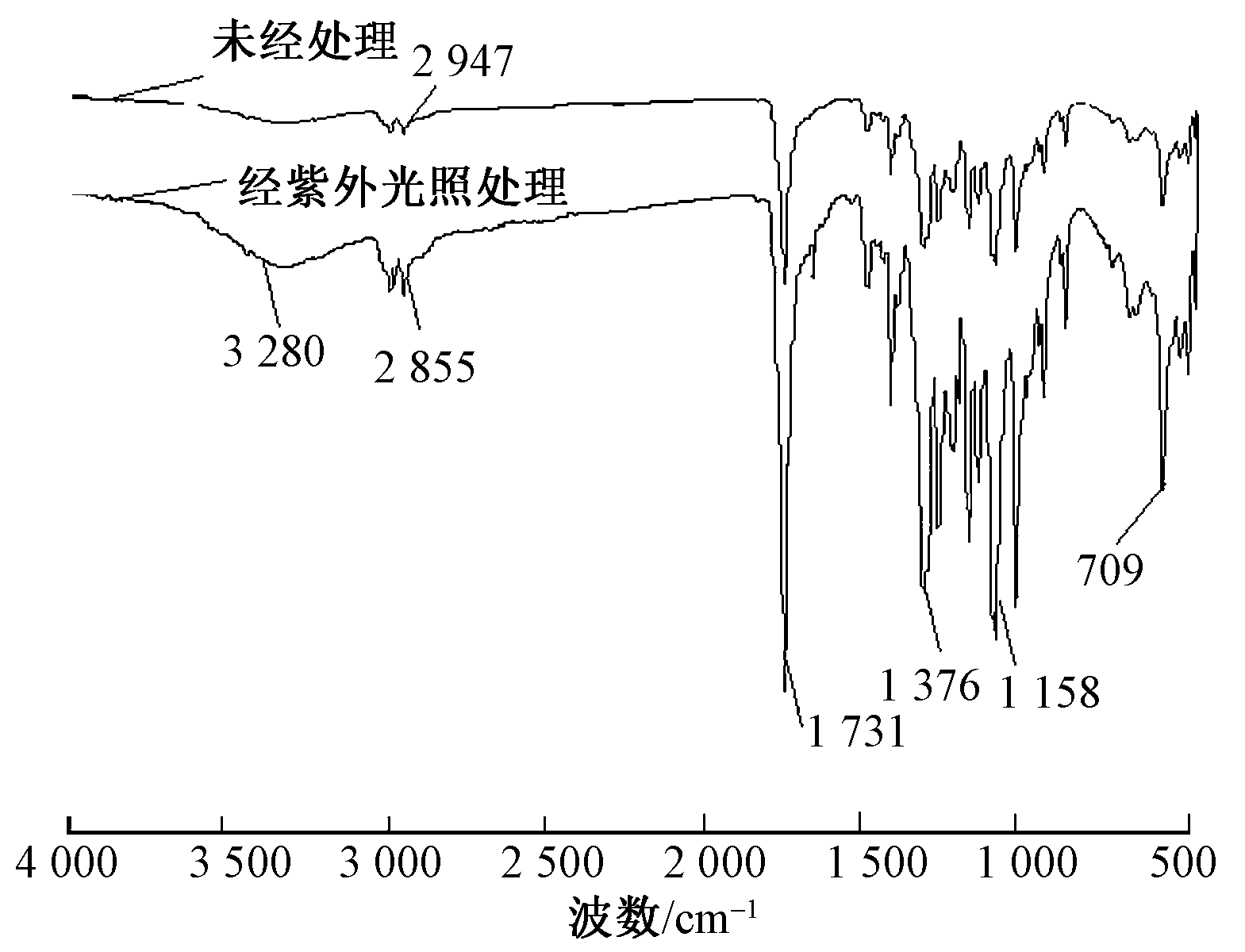
Results Under natural light aging process, the average values of tensile strength, bending strength, unnotched impact strength and acoustic absorbing coefficient of the two kinds of acoustic-absorbing composite materials decreased gradually with extended treatment time. The water absorption rate and thickness expansion rate of the two types of acoustic-absorbing composites increased rapidly with the increase of the humidity and heat temperature, but the bacteriostatic rate decreased rapidly. According to the water transport dynamics equation, for the palm acoustic composite material at 65 ℃, which could initially determine that it conformed to the Fickian water absorption model. With the increase of aging times under the ultraviolet light, the tensile strength, bending strength and unnotched impact strength all increased first and then decreased, and the mean value of acoustic-absorbing coefficient decreased gradually. The lignin content of the two fibers decreased with the increase of irradiation times. It had certain antibacterial effect on staphylococcus aureus and escherichia coli. At the same time, the surface of the two composite materials were discolored and cracks appeared, the appearance of the treated palm fiber acoustic-absorbing composite material became darker, and the surface became rough and uneven. Under the condition of 4 000-500 cm-1 band, there were five characteristic absorption peaks of palm fiber acoustic composite, which are 3 280, 1 731, 1 376, 1 158 and 709 cm-1. Among them, 3 280, 1 158 and 709 cm-1 were speculated as O—H bond vibration, C—O ether bond stretching vibration and C—H group vibration after degradation of PHBV. The residual strength model was used to predict the tensile strength and bending strength under natural light process. After 1 095 d (3 a), the tensile strength and bending strength of the material was 24.97 MPa and 44.93 MPa respectively. After 1 825 days (5 a), the tensile strength was 22.51 MPa and the bending strength was 41.94 MPa.

Conclusion Under the natural light aging, hot-humid aging and ultraviolet light aging, the palm acoustic composite could replace the jute acoustic interior panel completely. The water absorption rate and thickness expansion rate of the composite increased with the increase of temperature and tended to balance in the later stage. The decrease of fiber lignin content was an important reason for the degradation of properties of ultraviolet light aging composites. According to the residual strength model, under the natural light aging process, the tensile strength and bending strength of the palm acoustic absorbing composite material after 1 095 d and 1 825 d could also reach the tensile strength and bending strength of the standard specified in QC/T 906—2013 ″Technical Requirements and Test Methods for Bast Fiber Composite Panels for Automotive Interior Parts″.

Key words: palm fiber felt, acoustic absorbing coefficient, aging property, hot-humid aging, automotive interior material, residual strength model, acoustic-absorbing composite material

中图分类号: 

  • TS102.2

表1

自然光老化工艺下2种吸声复合材料的性能"

老化
时间/
d
拉伸强度/
MPa
弯曲强度/
MPa
无缺口冲击
强度/(kJ·m-1)
吸声系数
平均值
抑菌率/%
对金黄色葡萄球菌 对大肠埃希菌
棕榈
纤维
黄麻
纤维
棕榈
纤维
黄麻
纤维
棕榈
纤维
黄麻
纤维
棕榈
纤维
黄麻
纤维
棕榈
纤维
黄麻
纤维
棕榈
纤维
黄麻
纤维
0 36.5 32.9 53.8 54.4 6.1 5.9 0.63 0.65 70.28 73.35 77.52 78.20
60 35.3 32.2 53.1 53.9 6.0 5.7 0.62 0.62 61.39 64.28 68.03 71.08
120 34.4 31.1 52.6 53.2 5.8 5.0 0.58 0.53 50.16 54.55 57.39 60.15
180 33.6 30.1 51.9 51.7 5.2 4.4 0.49 0.46 34.39 40.47 48.06 49.52
240 32.7 29.6 51.6 51.2 5.0 4.2 0.43 0.42 19.76 23.33 34.30 37.71
300 32.2 29.2 50.4 50.9 4.8 4.1 0.42 0.41 15.82 19.75 23.15 26.69

表2

湿热老化工艺下2种吸声复合材料的吸水率和厚度方向膨胀率"

老化
时间/d
吸水率/% 厚度方向膨胀率/%
棕榈纤维 黄麻纤维 棕榈纤维 黄麻纤维
25 ℃ 45 ℃ 65 ℃ 25 ℃ 45 ℃ 65 ℃ 25 ℃ 45 ℃ 65 ℃ 25 ℃ 45 ℃ 65 ℃
20 0.3 1.1 2.1 0.2 0.9 1.6 0.22 2.27 4.08 0.19 2.09 4.02
40 1.2 2.8 3.5 0.8 2.3 3.2 0.54 3.59 6.35 0.49 3.38 6.17
60 1.9 4.1 5.3 1.5 3.6 5.2 0.67 4.88 8.22 0.62 4.56 7.95
80 2.8 4.7 6.4 2.1 4.3 6.1 0.85 6.21 9.19 0.81 5.92 9.01
100 2.9 4.9 6.6 2.3 4.5 6.2 1.13 6.25 9.21 1.09 5.99 9.05

表3

温度为65 ℃、相对湿度为90%条件下2种吸声复合材料的性能"

老化
时间/
d
拉伸强度/MPa 弯曲强度/MPa 无缺口冲击强度/
(kJ·m-1)
吸声系数平均值 抑菌率/%
对金黄色葡萄球菌 对大肠埃希菌
棕榈纤维 黄麻纤维 棕榈纤维 黄麻纤维 棕榈纤维 黄麻纤维 棕榈纤维 黄麻纤维 棕榈纤维 黄麻纤维 棕榈纤维 黄麻纤维
0 36.5 32.9 53.8 54.4 6.1 5.9 0.63 0.65 70.28 73.35 77.52 78.20
20 36.8 33.4 54.1 54.9 6.0 5.7 0.62 0.62 56.29 58.60 61.31 65.29
40 37.1 34.7 54.5 55.3 5.7 5.4 0.57 0.59 29.37 36.19 44.86 47.71
60 35.9 33.2 54.0 53.9 5.5 5.3 0.54 0.55 12.59 22.12 26.23 32.80
80 33.7 31.5 53.2 53.2 5.4 5.1 0.52 0.54 5.24 8.90 10.09 13.54
100 30.5 29.8 52.1 52.4 5.1 4.9 0.50 0.51 0.00 0.00 0.00 0.00

表4

紫外光照老化工艺下2种吸声复合材料的性能及纤维毡中棕榈纤维、黄麻纤维的木质素含量"

老化
时间/h
拉伸强度/MPa 弯曲强度/MPa 无缺口冲击强度/(kJ·m-1) 吸声系数平均值 纤维毡中木质素含量/%
棕榈纤维 黄麻纤维 棕榈纤维 黄麻纤维 棕榈纤维 黄麻纤维 棕榈纤维 黄麻纤维 棕榈纤维 黄麻纤维
0 36.5 32.9 53.8 54.4 6.1 5.9 0.63 0.65 11.72 12.95
120 37.2 33.6 54.6 55.1 6.4 6.3 0.58 0.59 10.09 11.58
240 36.1 32.9 53.9 54.1 5.7 5.8 0.51 0.50 9.27 10.30
360 35.2 31.8 52.7 53.0 5.1 5.2 0.49 0.44 7.83 8.65
480 33.5 30.4 51.0 51.5 4.8 4.8 0.48 0.43 7.42 7.92
600 31.6 29.1 49.6 50.1 4.5 4.4 0.46 0.42 7.35 7.61

图1

紫外光照老化处理前后棕榈纤维吸声复合材料表面形貌"

图2

紫外光照老化处理前后棕榈纤维吸声复合材料拉伸断面形貌"

图3

紫外光老化处理前后棕榈纤维吸声复合材料的红外光谱"

[1] 杨宝奎, 张亮亮. 新能源汽车内饰轻量化设计研究[J]. 汽车测试报告, 2023(21):76-78.
YANG Baokui, ZHANG Liangliang. Research on light weight design of new energy vehicle interior[J]. Vehicle Test Report, 2023(21):76-78.
[2] AHMAD F, CHOI Hs, PARK Mk. A review: natural fiber composites selection in view of mechanical, light weight, and economic properties[J]. Macromolecular Materials and Engineering, 2015, 300(1):10-24.
[3] 张毅, 邵利锋, 杨彬, 等. 棕榈纤维毡/聚(3-羟基丁酸酯-co-3-羟基戊酸酯)热压复合材料的吸声性能[J]. 纺织学报, 2022, 43(10):24-30.
ZHANG Yi, SHAO Lifeng, YANG Bin, et al. Acoustic properties of palm fiber felt/poly(3-hydroxybutyrate-co-3-hydroxyvalerate) hot-pressed composites[J]. Journal of Textile Research, 2022, 43(10):24-30.
doi: 10.13475/j.fzxb.20210804907
[4] 张琨. 汽车内饰板注塑工艺优化和质量控制[D]. 上海: 上海交通大学,2022:14-15.
ZHANG Kun. Quality control and process optimization of automobile interior panel injection molding[D]. Shanghai: Shanghai Jiao Tong University,2022:14-15.
[5] 胡建鹏, 姚利宏, 邢东, 等. 天然植物纤维增强聚乳酸复合材料老化降解性能研究进展[J]. 林产工业, 2022, 59(6):29-34.
HU Jianpeng, YAO Lihong, XING Dong, et al. Research progress on the aging and degradation properties of natural plant fiber reinforced polylactic acid composites[J]. China Forest Products Industry, 2022, 59(6):29-34.
[6] 陈旭, 刘燕峰, 刘青曼, 等. 苎麻纤维增强复合材料的光老化性能[J]. 工程塑料应用, 2021, 49(4):98-103.
CHEN Xu, LIU Yanfeng, LIU Qingman, et al. Photo aging properties of ramie fiber reinforced composites[J]. Engineering Plastics Application, 2021, 49(4):98-103.
[7] 吴瑞, 李岩, 于涛. 不同种类纤维增强复合材料湿热老化性能对比[J]. 复合材料学报, 2022, 39(9):4406-4419.
WU Rui, LI Yan, YU Tao. Comparative study on the hygrothermal durability of different fiber reinforced composites[J]. Acta Materiae Compositae Sinica, 2022, 39(9):4406-4419.
[8] 何莉萍, 刘龙镇, 苏胜培, 等. 纤维含量对黄麻纤维增强树脂基复合材料力学与热性能的影响[J]. 复合材料学报, 2023, 40(4):2038-2048.
HE Liping, LIU Longzhen, SU Shengpei, et al. Effects of fiber addition on the mechanical and thermal properties of jute fiber reinforced resin composites[J]. Acta Materiae Compositae Sinica, 2023, 40(4):2038-2048.
[9] 柏育材, 王志健. 交通噪声防治措施及降噪材料研究进展[J]. 上海船舶运输科学研究所学报, 2023, 46(6):60-66.
BAI Yucai, WANG Zhijian. Research advances in traffic noise control measures and materials[J]. Journal of Shanghai Ship and Shipping Research Institute, 2023, 46(6):60-66.
[10] 王威力, 魏程, 田晶. 碳纤维复合材料的湿热老化模型研究[J]. 复合材料科学与工程, 2023(11):44-48.
WANG Weili, WEI Cheng, TIAN Jing. Research on hygrothermal ageing models of carbon fiber compo-sites[J]. Composite Materials Science and Engineering, 2023(11):44-48.
[11] 杨宇腾. 岩土工程用玄武岩纤维复合材料耐久性研究[J]. 粘接, 2024, 51(3):69-72.
YANG Yuteng. Durability study of basalt fiber composite materials for geotechnical engineering[J]. Adhesion, 2024, 51(3):69-72.
[12] 聂文琪, 许帅, 高俊帅, 等.聚(3-羟基丁酸-co-3-羟基戊酸酯)改性涤纶长丝的降解性能[J]. 纺织学报, 2023, 44(9):35-42.
NIE Wengqi, XU Shuai, GAO Junshuai, et al. Degradation properties of poly(3-hydroxybutyrate-co-3-hydroxyvalerate) modified polyester composite filament[J]. Journal of Textile Research, 2023, 44(9):35-42.
[13] JOSEPH P V, RABELLO M S, MATTOSO L H C, et al. Environmental effects on the degradation behaviour of sisal fiber reinforced PP composites[J]. Composites Science and Technology, 2002, 62(10):1357-1358.
[14] 杨坚, 陈润宇, 杨晨, 等.聚(3-羟基丁酸酯-co-3-羟基戊酸酯)中β晶的形成与转变[J]. 高分子通报, 2023, 36(7):851-860.
YANG Jian, CHEN Runyu, YANG Chen, et al. The formation and transformation of β-form crystals in poly(3-hydroxybutyrate-co-3-hydroxyvalerate)[J]. Polymer Bulletin, 2023, 36(7):851-860.
[15] 钱红飞, KOBIR MD Foysal, 陈龙, 等. 聚乳酸/聚(3-羟基丁酸酯-co-3-羟基戊酸酯)共混纤维的结构及其织物染色性能[J]. 纺织学报, 2023, 44(3):104-110.
QIAN Hongfei, KOBIR MD Foysal, CHEN Long, et al. Structure of polylactide/poly(3-hydroxybutyrate-co-3-hydroxyvalerate) blend fibers and dyeing properties for their fabrics[J]. Journal of Textile Research, 2023, 44(3):104-110.
[16] 胡晓兰, 自雅娴, 兰茜, 等. 阻燃黄麻纤维/聚酯纤维复合材料的紫外老化性能[J]. 高分子材料科学与工程, 2022, 38(2):109-114.
HU Xiaolan, ZI Yaxian, LAN Xi, et al. Ultraviolet aging properties of flame retardant jute fiber/polyester fiber composites[J]. Polymer Materials Science and Engineering, 2022, 38(2):109-114.
[17] 李友明, 景昭, 吴增文, 等. 随机疲劳下复合材料剩余刚度-剩余强度关联模型及寿命预测[J]. 强度与环境, 2024, 51(1):23-25.
LI Youming, JING Zhao, WU Zengwen, et al. Residual stiffness-residual strength correlated model and life prediction of composite materials under random fatigue loading[J]. Structure & Environment Engineering, 2024, 51(1):23-25.
[1] 张书诚, 邢剑, 徐珍珍. 基于废弃聚苯硫醚滤料的多层吸声材料制备及其性能[J]. 纺织学报, 2022, 43(12): 35-41.
[2] 张毅, 邵利锋, 杨彬, 高金霞, 郁崇文. 棕榈纤维毡/聚(3-羟基丁酸酯-co-3-羟基戊酸酯)热压复合材料的吸声性能[J]. 纺织学报, 2022, 43(10): 24-30.
[3] 沈岳, 蒋高明, 刘其霞. 梯度结构活性碳纤维毡吸声性能分析[J]. 纺织学报, 2020, 41(10): 29-33.
[4] 郭郎, 王丽琴, 赵星. 丝织品的热老化及其寿命预测[J]. 纺织学报, 2020, 41(07): 47-52.
[5] 潘金峰, 肖长发, 闫静静, 封严, 朱正涛. 聚全氟乙丙烯纤维织物的制备及其性能[J]. 纺织学报, 2019, 40(02): 87-93.
[6] 张美玲 沈忆文 王瑞 李先锋 郑广伟. 芳纶纤维的冷等离子体处理及其老化性能[J]. 纺织学报, 2018, 39(11): 73-78.
[7] 李长伟 吕丽华. 废弃羊毛吸声复合材料的制备及其性能[J]. 纺织学报, 2018, 39(10): 74-80.
[8] 吕赛龙 霍瑞亭 贾国强. 光催化自清洁纺织品的制备及其性能[J]. 纺织学报, 2018, 39(05): 87-91.
[9] 栾巧丽 邱华 成钢 刘晓燕. 羊毛及其混合纤维非织造材料的吸声性能[J]. 纺织学报, 2017, 38(03): 67-71.
[10] 吕丽华 毕吉红 于翔. 废弃纤维吸声复合材料的制备及其吸声性能[J]. 纺织学报, 2016, 37(2): 39-43.
[11] 沈岳 蒋高明 季涛 高强 刘其霞. 活性炭纤维材料吸声性能预测模型[J]. 纺织学报, 2013, 34(4): 27-31.
[12] 沈岳 蒋高明 季涛 高强 刘其霞. 活性炭纤维材料吸声性能分析[J]. 纺织学报, 2013, 34(3): 1-4.
[13] 胡凤霞 杜兆芳 赵淼淼 张健. 麻纤维汽车内饰材料的吸声性能与针刺工艺的关系[J]. 纺织学报, 2013, 34(12): 45-0.
[14] 姜生 蔡永东 周祥 晏雄 . 多层复合吸声结构的制备与性能研究[J]. 纺织学报, 2012, 33(9): 20-25.
[15] 杜兆芳 胡凤霞 赵淼淼 黄芙蓉 王少松 王安洋 . 汽车内饰材料的吸声性能[J]. 纺织学报, 2011, 32(6): 45-49.
Viewed
Full text


Abstract

Cited

  Shared   
  Discussed   
No Suggested Reading articles found!