纺织学报 ›› 2026, Vol. 47 ›› Issue (04): 104-112.doi: 10.13475/j.fzxb.20250503001
周郑宇, 杨瑞华( )
)
ZHOU Zhengyu, YANG Ruihua()
摘要:
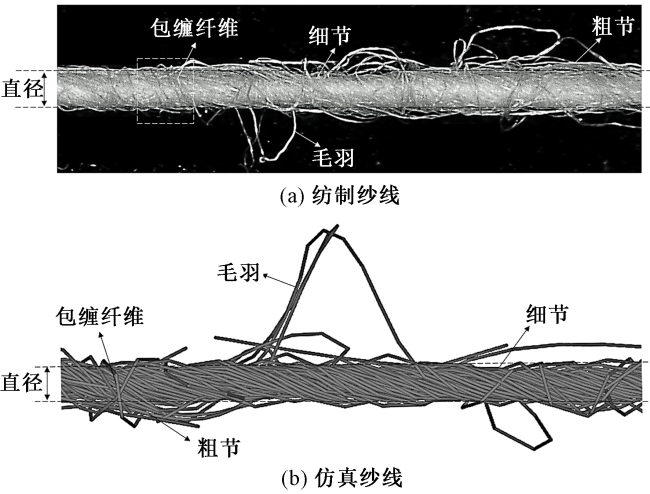
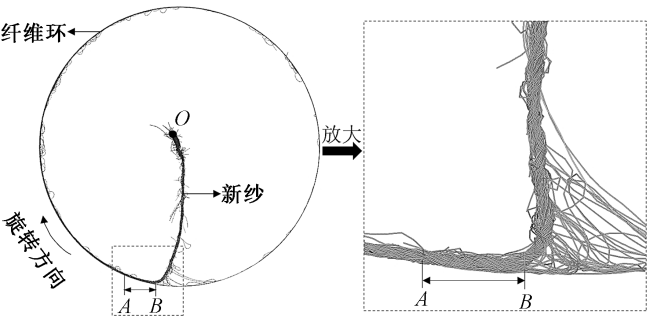
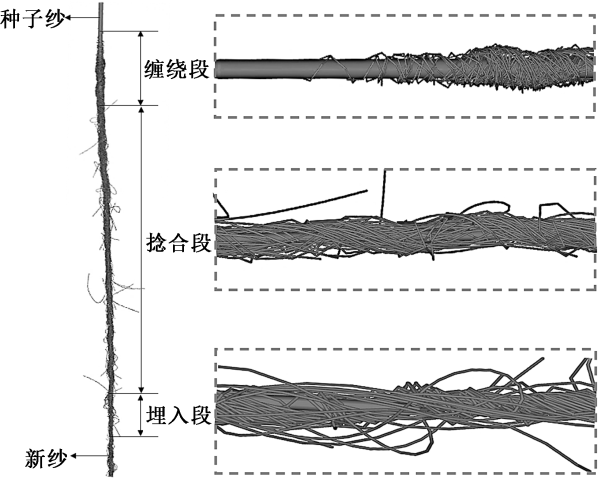
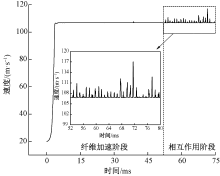
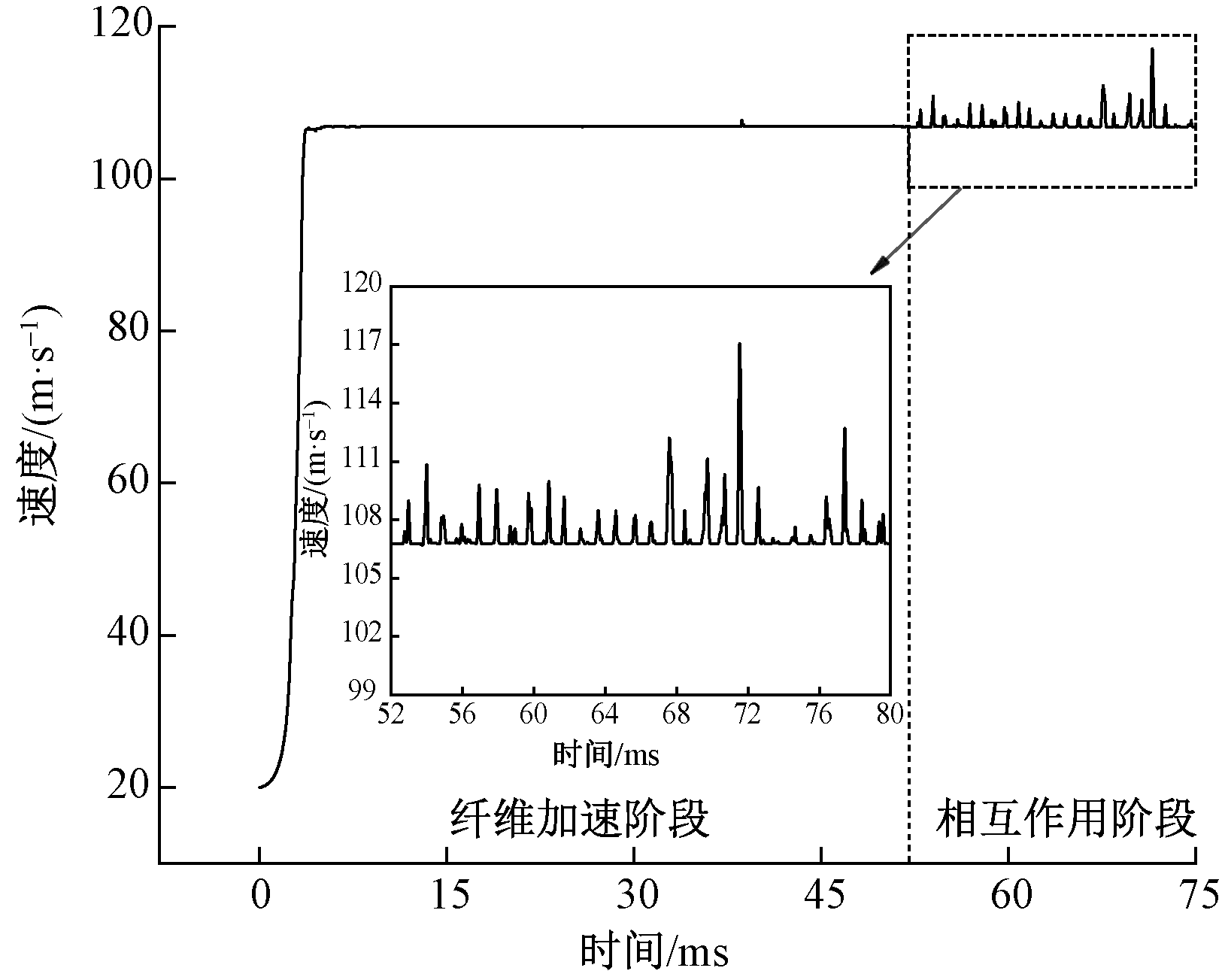
为深入揭示转杯纺成纱机制,助力攻克国产全自动转杯纺接头技术难题,基于计算流体力学(CFD)与离散元法(DEM)耦合建模方法,通过Rocky DEM和ANSYS Fluent协同仿真平台,模拟73 tex转杯纺棉纱的成纱过程。探究了纤维输送、凝聚和加捻成纱的动态机制,对纤维与种子纱的运动速度和受力进行分析。结果表明,数值模拟结果清晰呈现了纤维三维空间排列、捻度传递、包缠纤维和纱线接头动态演变过程,仿真纱线的表面特征与实际情况高度吻合,有效验证了转杯纺纱相关理论的科学性。本文实现了转杯纺过程中纤维凝聚、加捻和成纱的数值模拟,为基于数值仿真的纺纱器结构优化和工艺参数调控提供了理论参考,对促进转杯纺技术向数字化与智能化方向发展具有借鉴作用。
中图分类号:
| [1] |
SHI Q Q, AKANKWASA N T, ZHANG Y Z, et al. Characterization of the airflow field in the rotor spinning unit based on a novel experimental approach and numerical simulation[J]. Textile Research Journal, 2021, 91(7/8): 717-728.
doi: 10.1177/0040517520957400 |
| [2] |
XIONG H L, JIN Y Z. Analysis of fiber movement and deformation in a rotor unit by experiment[J]. The Journal of the Textile Institute, 2022, 113(8): 1627-1636.
doi: 10.1080/00405000.2021.1943248 |
| [3] | 邵秋, 杨瑞华. 再循环棉/原棉转杯纺纱线的耐磨性[J]. 纺织学报, 2025, 46(3): 64-71. |
| SHAO Qiu, YANG Ruihua. Abrasion resistance of recycled cotton/raw cotton rotor spun yarn[J]. Journal of Textile Research, 2025, 46(3): 64-71. | |
| [4] |
UTEBAY B, CELIK P, CAY A. Valorization of fabric wastes through production of recycled cotton yarns by compact ring and open-end rotor spinning[J]. Journal of Cleaner Production, 2023, 409: 137135.
doi: 10.1016/j.jclepro.2023.137135 |
| [5] |
LIN H T, ZENG Y C, WANG J. Computational simulation of air flow in the rotor spinning unit[J]. Textile Research Journal, 2016, 86(2): 115-126.
doi: 10.1177/0040517515586162 |
| [6] |
YANG R H, HE C, ZHONG H X. Effects of trash-removing part geometry on the airflow in the rotor spinning unit and the yarn properties[J]. Textile Research Journal, 2023, 93(5/6): 1090-1098.
doi: 10.1177/00405175221130511 |
| [7] | YANG R H, LIU C, XUE Y, et al. Numerical analysis and comparison of airflow in rotors with U and V groove during rotor spinning process[J]. Journal of Engineered Fibers and Fabrics, 2016, 11(4): 29-35. |
| [8] | 李玲, 史倩倩, 田顺, 等. 输纤通道对称性对双喂入双分梳转杯纺气流场以及纱线特性的影响[J]. 纺织学报, 2025, 46(2): 69-77. |
| LI Ling, SHI Qianqian, TIAN Shun, et al. Influence of fiber channel symmetry on dual-feed-opening rotor spinning flow field and yarn characteristics[J]. Journal of Textile Research, 2025, 46(2): 69-77. | |
| [9] | 林惠婷, 汪军. 纤维在输纤通道气流场中运动的模拟[J]. 纺织学报, 2018, 39(2): 55-61. |
|
LIN Huiting, WANG Jun. Simulation on fiber motion in airflow field of transfer channel[J]. Journal of Textile Research, 2018, 39(2): 55-61.
doi: 10.1177/004051756903900110 |
|
| [10] | YANG R H, GONG X X. Simulation of fiber movement in the high speed vortex during the rotor spinning process[J]. Fibres & Textiles in Eastern Europe, 2024, 32(6): 1-12. |
| [11] |
LI F Y, ZHANG D T, WANG Q R, et al. Straightening trajectory of hooked fibers in the fiber transport channel of rotor spinning investigated by fluid solid coupled simulation[J]. Scientific Reports, 2025, 15: 3359.
doi: 10.1038/s41598-025-86538-2 |
| [12] |
龚新霞, 邵秋, 杨瑞华. 纤维在转杯纺纺纱器中的运动和形态变化分析[J]. 纺织学报, 2024, 45(12): 199-205.
doi: 10.13475/j.fzxb.20230902301 |
|
GONG Xinxia, SHAO Qiu, YANG Ruihua. A study on movement and deformation of fibers in rotor spinning devices[J]. Journal of Textile Research, 2024, 45(12): 199-205.
doi: 10.13475/j.fzxb.20230902301 |
|
| [13] | 邵秋, 龚新霞, 杨瑞华. 循环再生纤维在转杯纺成纱器内的运动模拟与分析[J]. 服装学报, 2025, 10(1): 9-15, 32. |
| SHAO Qiu, GONG Xinxia, YANG Ruihua. Simulation and analysis of the motion of recycled fibers in rotor spinning machine[J]. Journal of Clothing Research, 2025, 10(1): 9-15, 32. | |
| [14] | 邵秋. 转杯纺再循环纤维运动特征研究与分析[D]. 无锡: 江南大学, 2024: 60-67. |
| SHAO Qiu. Research and analysis on the motion characteristics of recycled fiber in rotor spinning[D]. Wuxi: Jiangnan University, 2024: 60-67. | |
| [15] | 张弘强. 纱条中纤维形态及排列对条干不匀的影响[D]. 上海: 东华大学, 2016: 18-20. |
| ZHANG Hongqiang. Effect of fiber shape and arrangement on yarn or sliver irregularity[D]. Shanghai: Donghua University, 2016: 18-20. | |
| [16] |
KOÇ E, LAWRENCE C A. Mechanisms of wrapper fibre formation in rotor spinning: an experimental approach[J]. The Journal of the Textile Institute, 2006, 97(6): 483-492.
doi: 10.1533/joti.2005.0199 |
| [17] |
EPAARACHCHI J, KU H, GOHEL K. A simplified empirical model for prediction of mechanical properties of random short fiber/vinylester composites[J]. Journal of Composite Materials, 2010, 44(6): 779-788.
doi: 10.1177/0021998309346383 |
| [18] |
JOSEPH P V, JOSEPH K, THOMAS S. Effect of processing variables on the mechanical properties of sisal-fiber-reinforced polypropylene composites[J]. Composites Science and Technology, 1999, 59(11): 1625-1640.
doi: 10.1016/S0266-3538(99)00024-X |
| [19] | SINGH V P. The twist characteristics in open-end spun yarns[D]. Leeds: University of Leeds, 1980: 2-6. |
| [20] |
CORMACK D, GROSBERG P, HO K H. 34: the yarn twist inside the rotor in open-end spinning[J]. The Journal of the Textile Institute, 1979, 70(9): 380-384.
doi: 10.1080/00405007908658870 |
| [21] | 巴塔, 黄秀宝. 转杯纺自由纱段形态对其捻度分布的影响[J]. 东华大学学报(自然科学版), 2002, 28(5): 17-21. |
| BA Ta, HUANG Xiubao. Investigation into the effect of free yarn segment's shape on its twist distribution in rotor spinning[J]. Journal of Donghua Univer-sity (Natural Science), 2002, 28(5): 17-21. | |
| [22] | 巴塔. 转杯纺杯内捻度理论与实验研究[D]. 上海: 东华大学, 2004: 37-40. |
| BA Ta. Theoretical and experimental study on the twist inside the rotor in rotor spinning[D]. Shanghai: Donghua University, 2004: 37-40. | |
| [23] |
SENGUPTA A K, SREENIVASA MURTHY H V. Structure of fiber assembly during yarn formation in rotor spinning[J]. Textile Research Journal, 1984, 54(10): 692-694.
doi: 10.1177/004051758405401012 |
| [24] | 汪军, 王克勇, 李立轻. 转杯纺半自动接头质量提高的研究[J]. 东华大学学报(自然科学版), 2006, 32(6): 61-65. |
| WANG Jun, WANG Keyong, LI Liqing. Study on promotion of semiautomatic piecing quality in rotor spinning[J]. Journal of Donghua University (Natural Science), 2006, 32(6): 61-65. | |
| [25] | 王克勇. 转杯纺半自动接头研究[D]. 上海: 东华大学, 2005: 39-44. |
| WANG Keyong. Study on semiautomatic piecing in rotor spinning[D]. Shanghai: Donghua University, 2005: 39-44. | |
| [26] |
GUO B P, TAO X M, LO T. A mechanical model of yarn twist blockage in rotor spinning[J]. Textile Research Journal, 2000, 70(1): 11-17.
doi: 10.1177/004051750007000103 |
| [1] | 李凯, 王雨萌, 张逸龙, 杨湙雯, 董浩珍, 吴晶. 湿响应纤维束的制备及其驱动性能[J]. 纺织学报, 2026, 47(02): 126-134. |
| [2] | 李金键, 薛元, 陈宥融, CHRISTIAN Griesshammer, 张建新. 转杯纺集体自动留尾-生头-接头的机制及其技术实现[J]. 纺织学报, 2026, 47(02): 84-93. |
| [3] | 赵泽文, 吕宽, 苏旭中, 孙丰鑫. 短纤纱力学性能的宏细观耦合分析与数值模拟[J]. 纺织学报, 2026, 47(01): 106-114. |
| [4] | 李金键, 薛元, 陈宥融, 陈国方, 田飞飞, 李进忠. 全自动转杯纺纱机单锭自动接头机制及其技术实现[J]. 纺织学报, 2026, 47(01): 214-222. |
| [5] | 付佳琦, 吉陈湘, 杨瑞华. 喷气涡流纺成纱气流场及纤维运动模拟分析和实验[J]. 纺织学报, 2026, 47(01): 89-97. |
| [6] | 徐浩文, 敖利民. 芯纱实时反捻法无扭结包覆纱的技术原理与实验[J]. 纺织学报, 2026, 47(01): 98-105. |
| [7] | 张欣, 周康辉, 姜茜, 吴利伟. 基于虚拟纤维的纬编双轴向针织物模型构建及偏轴拉伸变形行为模拟[J]. 纺织学报, 2025, 46(09): 143-153. |
| [8] | 邵秋, 杨瑞华. 再循环棉/原棉转杯纺纱线的耐磨性[J]. 纺织学报, 2025, 46(03): 64-71. |
| [9] | 李金键, 薛元, 陈宥融. 时序分布的段彩竹节纱及三通道转杯成纱工艺设计[J]. 纺织学报, 2025, 46(03): 72-81. |
| [10] | 张定眺, 王倩茹, 邱芳, 李凤艳. 改进转杯纺输纤通道气流场及其纤维伸直形态的模拟[J]. 纺织学报, 2025, 46(02): 100-105. |
| [11] | 李玲, 史倩倩, 田顺, 汪军. 输纤通道对称性对双喂入双分梳转杯纺气流场以及纱线特性的影响[J]. 纺织学报, 2025, 46(02): 69-77. |
| [12] | 张瑞成, 张文清, 吕哲, 许多, 刘可帅, 徐卫林. 基于自捻纺的嵌入式低扭矩复合纱性能分析[J]. 纺织学报, 2025, 46(02): 78-85. |
| [13] | 宋凯莉, 郭明瑞, 高卫东. 装有气流导向装置的网格圈式集聚纺数值模拟与实验验证[J]. 纺织学报, 2025, 46(01): 34-41. |
| [14] | 汪燕燕, 薛元, 陈宥融, 陈国方. 四基色纤维构建的全色域混色模型及彩色纱纺制[J]. 纺织学报, 2025, 46(01): 62-71. |
| [15] | 李慧敏, 刘淑强, 杜琳琳, 张曼, 吴改红. 玄武岩/聚酰亚胺三维间隔机织物的参数化建模及高温环境传热数值模拟[J]. 纺织学报, 2025, 46(01): 87-94. |
|
||
 京公网安备11010502044800号