纺织学报 ›› 2026, Vol. 47 ›› Issue (07): 144-151.doi: 10.13475/j.fzxb.20250910001

• 纺织工程 • 上一篇    下一篇

1绞3结构提花纱罗织物创新设计原理与方法

贺荣, 周赳()   

  1. 浙江理工大学 浙江省丝绸与时尚文化研究中心, 浙江 杭州 310018
  • 收稿日期:2025-09-30 修回日期:2026-03-11 出版日期:2026-07-15 发布日期:2026-07-29
  • 通讯作者: 周赳(1969—),男,教授,博士。主要研究方向为纺织品设计。E-mail:zhoujiu34@126.com
  • 作者简介:贺荣(1978—),男,正高级工程师,博士生。主要研究方向为纺织品设计。
  • 基金资助:
    国家社会科学基金艺术学项目(22BG121)

Innovative design principles and methods of leno jacquard fabrics with 1 twist to 3 ground warp cross structure

HE Rong, ZHOU Jiu()   

  1. Silk and Fashion Research Center of Zhejiang Province, Zhejiang Sci-Tech University, Hangzhou, Zhejiang 310018, China
  • Received:2025-09-30 Revised:2026-03-11 Published:2026-07-15 Online:2026-07-29

摘要:

针对高速剑杆织机织造提花纱罗织物组织设计单一、综丝密度和生产效率低的问题,在传统纱罗织造工艺的基础上,对绞综装置进行技术创新:绞经穿过前区半综孔眼后,借助-根压杆将其压置于地经下方,取消了传统绞经后综装置,在1绞1配比条件下,后造提花纹针用量可节省高达50%,提供了更大的设计空间;增设差异配置的双停经架系统,并利用压杆装置的功能,构建了兼具开放梭口与绞转梭口的双开口结构,以及适用于普通梭口的长距离单开口结构。采用线条绘制法构建上机图,分析其组织图、穿综图和纹板图的运动规律及各部分的数学关系,进而得出相应的织造纹板矩阵,从而提出数字化设计理论。最后绞经装置按照1根绞经3根地经的配比,分别选取单层和纬三重2种类型的组织结构,按照推断的设计理论进行试织验证。相同条件下,机器车速从传统绞经装置的100 r/min左右提高到220 r/min以上,有效解决了地经与绞经张力差过大的问题,实现了提花纱罗织物的高效自由设计与稳定高速织造。

关键词: 提花纱罗织物, 绞综装置, 双开口结构, 数字化设计, 织物设计

Abstract:

Objective In order to address the technological limitations inherent in conventional jacquard leno weaving, a craft historically constrained by low operational speed (100 r/min), rigid pattern design frameworks, and mechanical incompatibilities with modern production demands, the research targets two critical challenges. One is the tension imbalance between standard ends and doup ends caused by conventional heald configurations, which restricts weaving speed and pattern complexity, and the other is the labor-intensive manual pattern design process that hinders customization capabilities. By reengineering the lifting heald mechanism and developing a matrix-based digital design system, this work bridges the gap between artisanal textile heritage and industry requirements. The elimination of standard heald devices and implementation of a dual warp stop-motion device system represents fundamental mechanical breakthroughs, enabling simultaneous preservation of traditional aesthetics and achievement of industrial-scale productivity.

Method The methodology integrated mechanical innovation with mathematical modeling. A redesigned doup heald device replaced conventional standard shaft using a pressing rod to position doup threads beneath standard threads, reducing heald usage by 50%. A dual warp stop-motion system created three distinct shed types: crossed, open, and plain. Matrix operations (A1=A2×A3) were applied to model fabric structure (A1), heald arrangement (A2), and pattern files (A3), enabling digital pattern generation. Practical validation involved weaving trials with 1∶3 twisted/ground warp ratio using single-layer and triple-weft structures on a 4,800-needle electronic jacquard loom.

Results The comprehensive trials revealed transformative advancements across technical and operational parameters. The redesigned crossed heald mechanism enabled a 120% increase in loom speed, improving operational capacity from 100 r/min to 220 r/min while maintaining continuous stability, with warp tension differentials between standard and crossed warp systems. Matrix-based pattern generation demonstrated exceptional precision, achieving consistency with manual designs for complex 8-end/3-steps weft-faced satin structures, while resolving structural conflicts in asymmetric warp distributions through matrix regularization techniques. Digital methods reduced trial weaving iterations, compressing pattern development cycles for multi-layer fabrics, with computational efficiency improvements allowing simultaneous optimization of six critical parameters (thickness of yarn, weaving speed, warp tension, warp density, pick density, heald lift height, etc.) through matrix parameterization. Structural versatility was evidenced by the system's ability to produce both conventional crossed leno fabric (requiring synchronized 2-axis coordination) and simplified non-crossed variants, the former achieving faster processing through fixed back heald positions. Practical validation across two fabric structures, i.e. single-layer and triple-weft structures, confirmed pattern fidelity on multiple high-speed rapier jacquard loom. The technology demonstrated industrial scalability. In comparative trials, the system enabled seamless integration of leno patterns with conventional jacquard weaves.

Conclusion This research provides a detailed analysis of the characteristics of the structure of the leno Jacquard loom for leno jacquard weaving and establishes a groundbreaking digital-physical framework that redefines leno jacquard production for the smart manufacturing era. It introduces a comprehensive process innovation design for the plastic Jacquard harness, which is most compatible with digital jacquard machines and high-speed rapier looms. The design innovatively modifies the crossing warp device by directly connecting the crossing warp to the warp beam, eliminating the need for the back hook. By adding drop wire device of crossing warp devices of various sizes and utilizing the function of the pressing rod device, it innovatively creates a unique dual-opening structure with open and crossed sheds, as well as a long-distance single-opening structure with a standard shed opening. Additionally, the article innovatively draws the template of weaving draft of leno jacquard fabric for both the crossing warp and non-crossing parts of the leno weaving fabric, deeply analyzing the mathematical relationships among the pattern, heald threading, and pattern card diagrams in these diagrams. It verifies the generation methods and rules of the weaving file through various changes in organizational structures, it tests the digital innovative design theory of leno jacquard weaving fabrics, ultimately achieving industrialization.

Key words: leno jacquard fabric, crossing warp device, double opening structure, digital design, fabric design

中图分类号: 

  • TS105.1

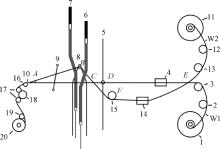
图1

提花纱罗织机创新结构简要示意图 注:1—地经经轴;2—固定后梁;3—活动后梁;4—地经停经装置;5—地综;6—基综2;7—基综1;8—半综;9—钢筘; 10—织物布面;11—绞经经轴;12—固定后梁;13—活动后梁;14—绞经停经装置;15—绞经压辊。"

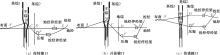
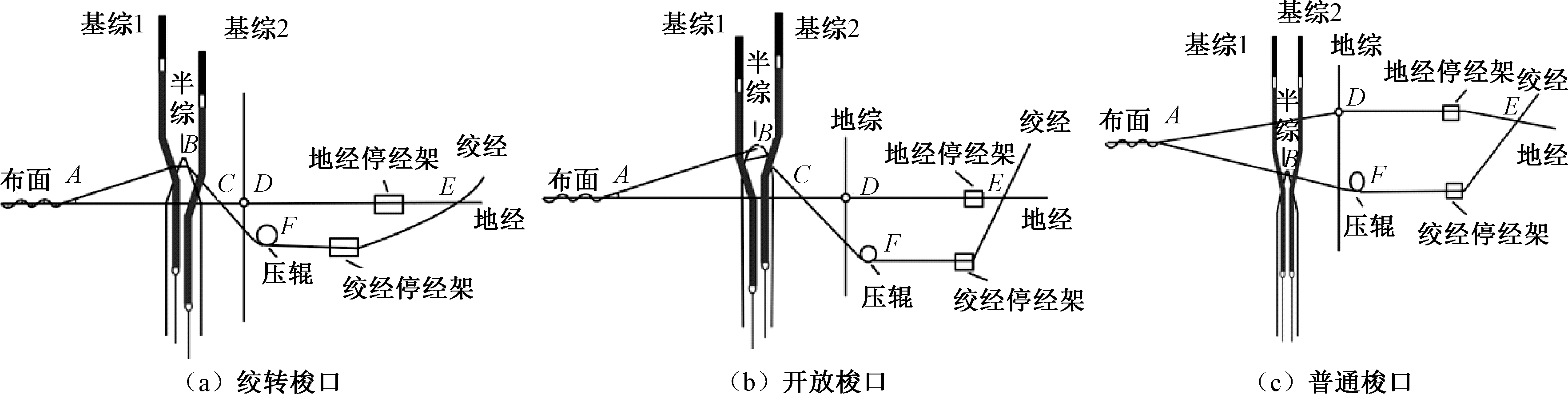
图2

创新改造后提花纱罗开口示意图"

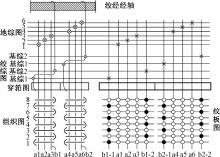
图3

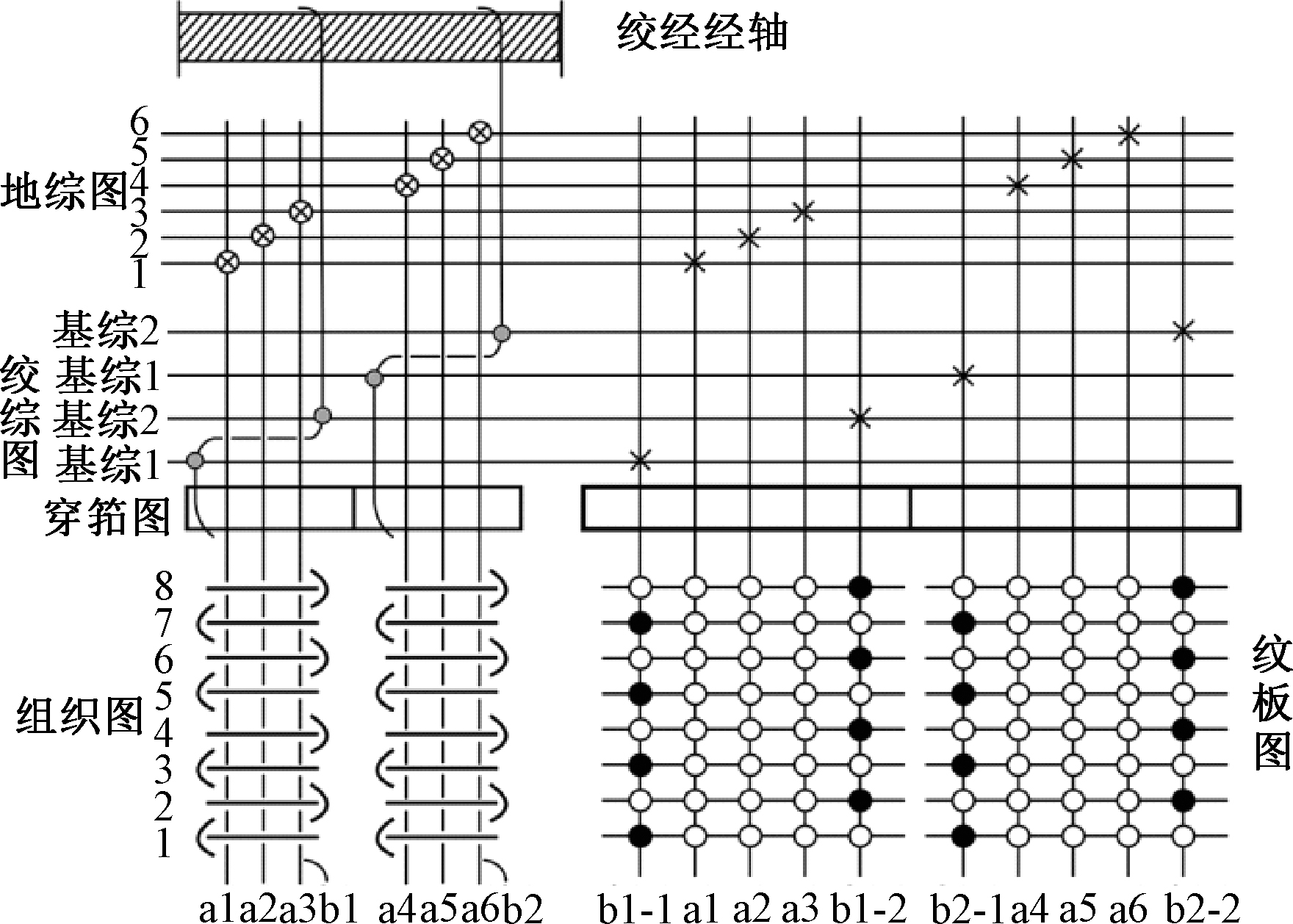
提花纱罗织物的上机图(绞经纱罗组织部分)"

图4

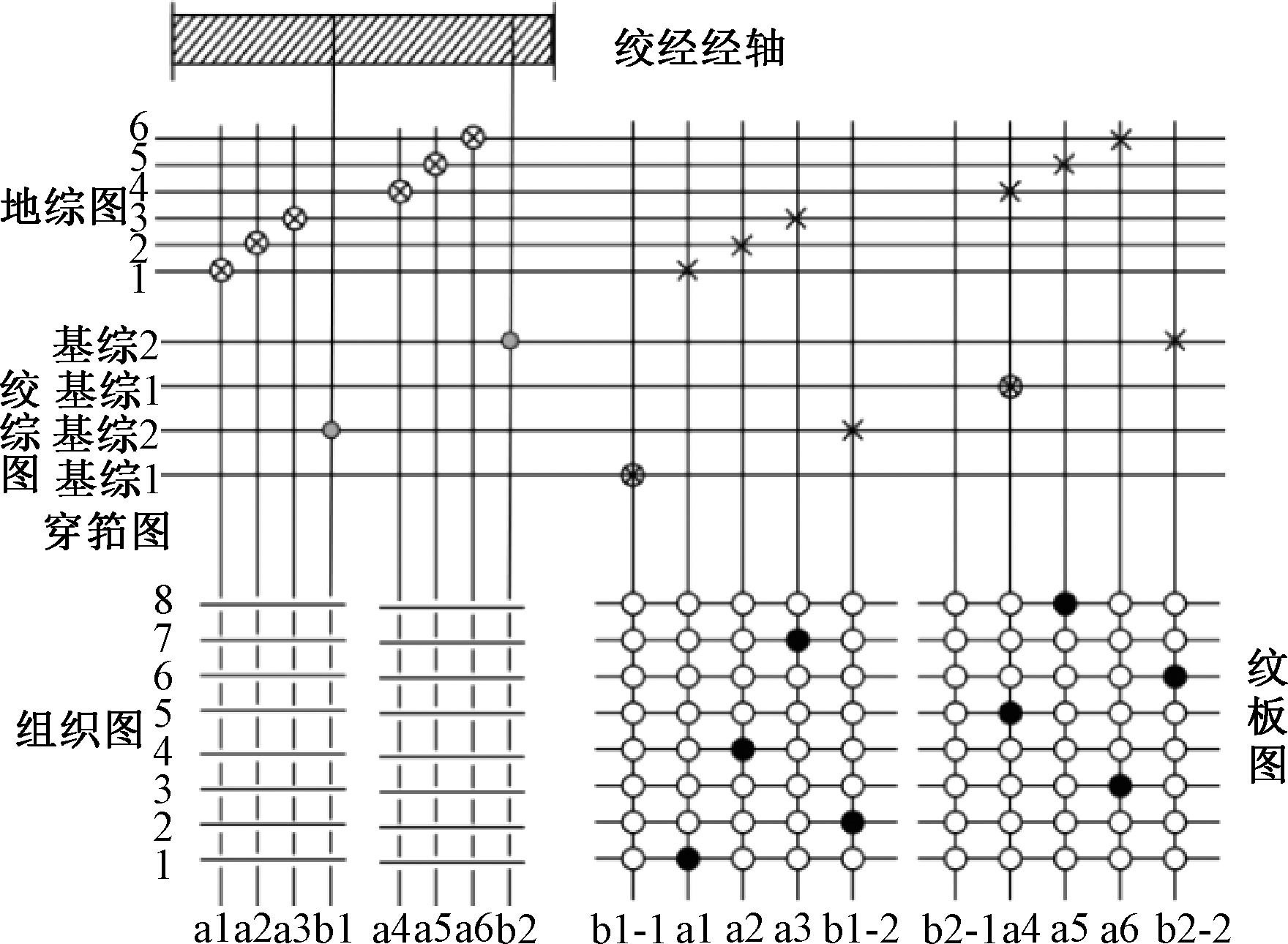
提花纱罗织物的上机图(普通组织部分)"

图5

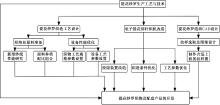
提花纱罗面料设计实践的主要技术路线"

图6

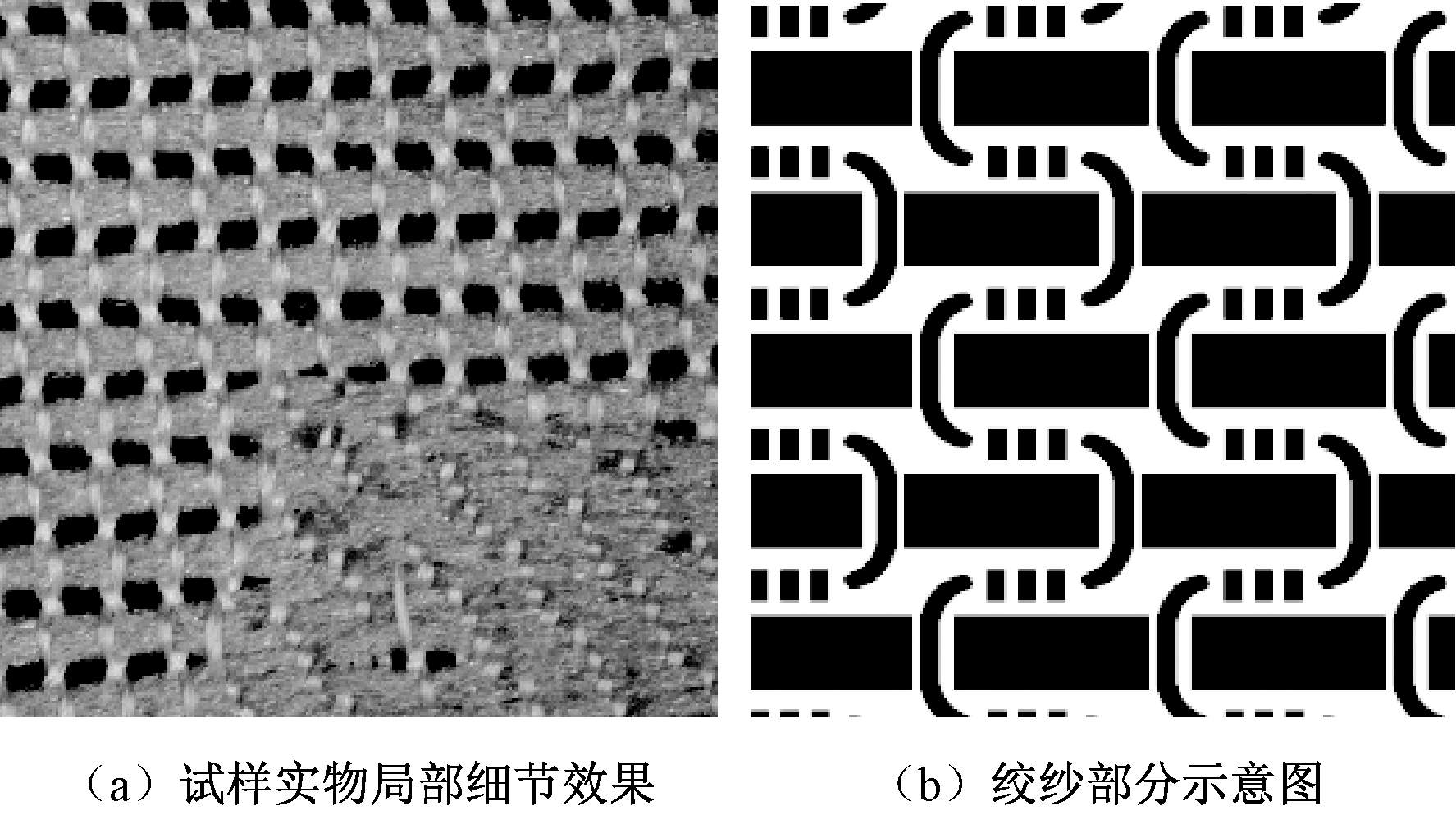
单层提花纱罗一顺绞效果图"

图7

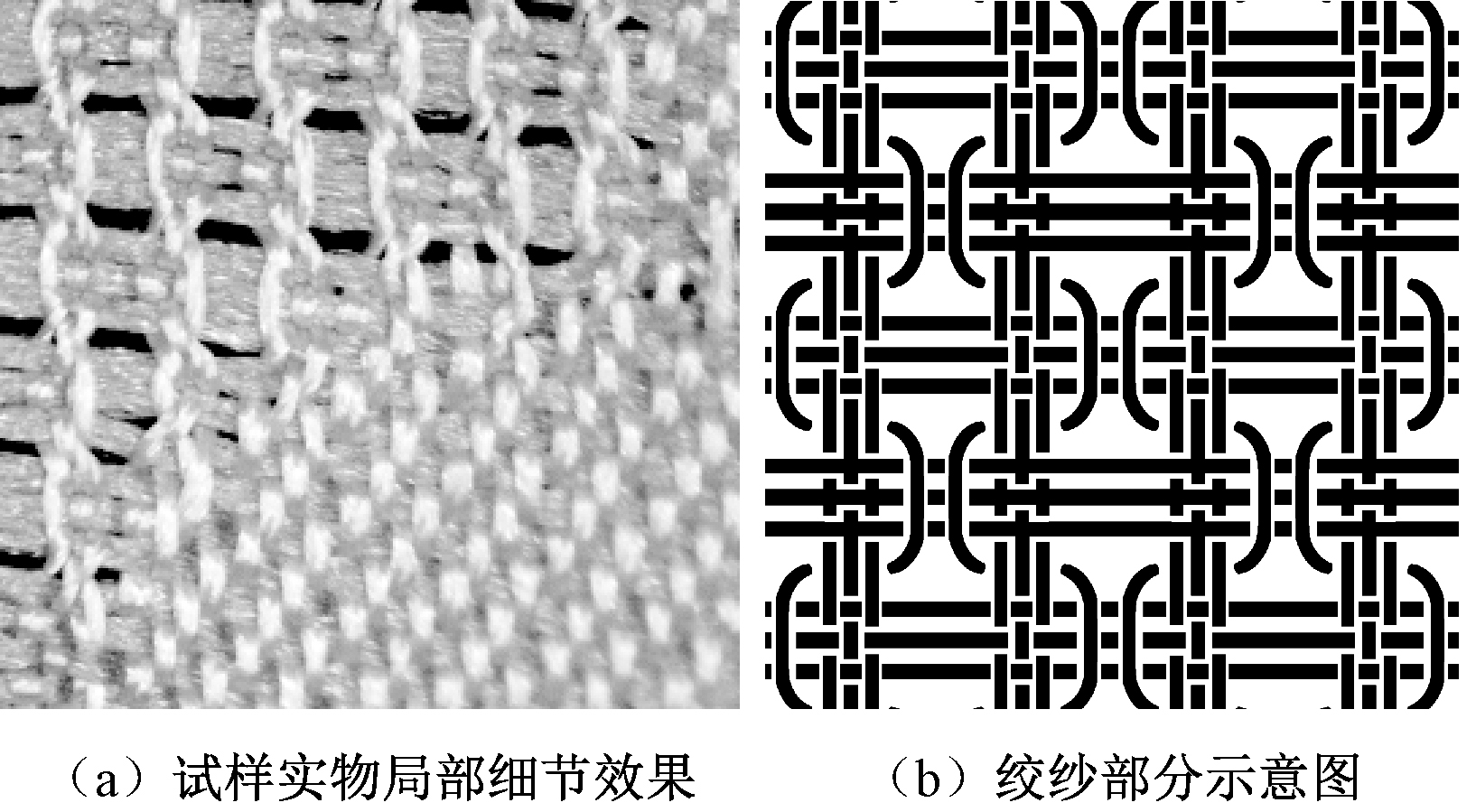
纬三重提花纱罗对称绞效果图"

[1] 蔡陛霞. 织物结构与设计[M]. 3版. 北京: 中国纺织出版社, 2004: 133.
CAI Bixia. Fabric structure and design[M]. 3rd ed. Beijing: China Textile & Apparel Press, 2004: 133.
[2] 张国辉. 用普通织机开发花式纱罗产品[J]. 纺织学报, 2005, 26(6): 96-98.
ZHANG Guohui. Development of leno brocade products with ordinary loom[J]. Journal of Textile Research, 2005, 26(6): 96-98.
[3] YAO M Y, LI L. Revival of cultural textile arts: creation of innovative weaving technology for fabricating traditional Chinese non-fixed four-warp leno[J]. The Journal of the Textile Institute, 2025, 116(6): 1071-1077.
doi: 10.1080/00405000.2024.2366027
[4] SHAKER K, NAWAB Y, AYUB ASGHAR M, et al. Tailoring the properties of leno woven fabrics by varying the structure[J]. Mechanics of Advanced Materials and Structures, 2020, 27(22): 1865-1872.
doi: 10.1080/15376494.2018.1527964
[5] TIAN X, YAO M Y, LI Y, et al. Design and fabrication of mesh-like four-warp leno cotton fabric based on self-locking effect: outstanding mechanical performance and breathability[J]. Cellulose, 2025, 32(3): 1979-1991.
doi: 10.1007/s10570-024-06365-y
[6] 尚静雨, 蒋高明, 陈钰珊, 等. 花式纱罗织物设计与三维仿真[J]. 纺织学报, 2025, 46(4): 81-88.
SHANG Jingyu, JIANG Gaoming, CHEN Yushan, et al. Design and 3-D simulation of jacquard leno fabrics[J]. Journal of Textile Research, 2025, 46(4): 81-88.
[7] 詹忻, 祝成炎. 纱罗组织数学模型的实现[J]. 纺织学报, 2009, 30(1): 46-50, 59.
ZHAN Xin, ZHU Chengyan. Realization of mathematical model for leno weaves[J]. Journal of Textile Research, 2009, 30(1): 46-50, 59.
doi: 10.1177/004051756003000105
[8] 蔡欣, 李佩. 宋代绞经花纱织造工艺及其数学建模[J]. 纺织学报, 2016, 37(11): 42-47, 54.
CAI Xin, LI Pei. Weaving techniques and mathematical model for patterned simple gauze of Song dynasty[J]. Journal of Textile Research, 2016, 37(11): 42-47, 54.
[9] 张锐, 詹忻, 田伟, 等. 纱罗组织配色模纹数学模型的构建[J]. 纺织学报, 2010, 31(4): 45-49.
ZHANG Rui, ZHAN Xin, TIAN Wei, et al. Realization of mathematical model for leno color effect[J]. Journal of Textile Research, 2010, 31(4): 45-49.
[10] 杭航, 王亚蓉. 中国古代纱罗织物品种体系及演变规律[J]. 丝绸, 2022, 59(12): 126-135.
HANG Hang, WANG Yarong. The variety system and evolution law of ancient Chinese leno fabrics[J]. Journal of Silk, 2022, 59(12): 126-135.
[11] 顾平. 织物组织与结构学[M]. 上海: 东华大学出版社, 2010: 135-136.
GU Ping. Fabric weaves and structures[M]. Shanghai: Donghua University Press, 2010: 135-136.
[12] 李海龙, 吴眉眉. 吴罗[M]. 南京: 江苏凤凰教育出版社, 2022: 144-145.
LI Hailong, WU Meimei. Wu Leno[M]. Nanjing: Jiangsu Phoenix Education Press, 2022: 144-145.
[13] 赵良臣, 闻涛. 织物组织设计中的综合和分解算法[J]. 纺织学报, 2003, 24(5): 83-85.
ZHAO Liangchen, WEN Tao. The comprehensive and decomposing algorithm in dobby weave design[J]. Journal of Textile Research, 2003, 24(5): 83-85.
[14] 祝成炎. 大循环双层多臂组织CAD技术的研究[J]. 纺织学报, 2001, 22(6): 37-38.
ZHU Chengyan. CAD for double-iayer dobby weaves with large repeat[J]. Journal of Textile Research, 2001, 22(6): 37-38.
[15] 浙江丝绸工学院, 苏州丝绸工学院. 织物组织与纹织学[M]. 2版. 北京: 中国纺织出版社, 1997: 308-344.
Zhejiang Institute of Silk Technology, Suzhou Institute of Silk Technology. Textile Structure and Weaving Technology[M]. Beijing: China Textile & Apparel Press, 1997: 308-344.
[1] 张爱丹, 李杰. 异形网点结构提花织物的防伪功能设计与评价[J]. 纺织学报, 2026, 47(04): 120-126.
[2] 陆爽怿, 王澜, 陈思, 周赳. 双经四纬提花结构双纬渐变显色模型构建及其显色特征[J]. 纺织学报, 2025, 46(09): 128-135.
[3] 陆爽怿, 陈思, 周赳. 双经四纬单纬渐变显色提花结构成形及其呈色特征[J]. 纺织学报, 2025, 46(08): 96-101.
[4] 张爱丹, 王倩. 三纬组合全显结构织物的颜色预测方法[J]. 纺织学报, 2025, 46(05): 151-158.
[5] 陆爽怿, 周赳. 基于双向多基色的全色域提花结构模型构建[J]. 纺织学报, 2024, 45(11): 88-98.
[6] 穆秀萍, 蒋高明, 陈钰珊, 李炳贤. 纬编多针道织物数字化设计方法[J]. 纺织学报, 2024, 45(11): 106-113.
[7] 李玉贤, 巫晓雯, 吴光军, 丛洪莲. 针织毛衫版片的参数化设计模型与实现[J]. 纺织学报, 2023, 44(09): 168-174.
[8] 尹昂, 丛洪莲. 经编单向导湿织物设计与结构优化[J]. 纺织学报, 2023, 44(04): 86-91.
[9] 黄锦波, 祝成炎, 张红霞, 洪兴华, 周志芳. 基于剑杆织机改造的三维间隔机织物工艺设计[J]. 纺织学报, 2021, 42(06): 166-170.
[10] 金耀, 蔡腾皓, 李彩曼, 胡雅丽, 鲁佳亮, 王怡. 基于椅子铺砌方法的织物组织设计[J]. 纺织学报, 2020, 41(09): 54-58.
[11] 孙婷, 吕智宁, 李艳清, 祝成炎, 田伟. 立体几何褶皱织物的成型与织造[J]. 纺织学报, 2020, 41(02): 64-68.
[12] 汝欣 彭来湖 胡旭东 史伟民 宋赛赛 . 长毛绒纬编针织物编织效果预测及其数字化设计[J]. 纺织学报, 2018, 39(10): 63-67.
[13] 黄紫娟. 利用表里接结结构的双面异效小花纹织物设计[J]. 纺织学报, 2016, 37(09): 26-30.
[14] 潘春宇 赵曦乐 高卫东. 偶发性色彩在剪绒织物上的应用[J]. 纺织学报, 2013, 34(12): 76-0.
[15] 李加林. 特殊循环组织在像景织物设计中的应用[J]. 纺织学报, 2003, 24(06): 69-70.
Viewed
Full text


Abstract

Cited

  Shared   
  Discussed   
No Suggested Reading articles found!