纺织学报 ›› 2024, Vol. 45 ›› Issue (12): 172-179.doi: 10.13475/j.fzxb.20231101401

• 服装工程 • 上一篇    下一篇

基于热湿舒适性的横编全成形运动内衣的分区设计

巫晓雯1, 方蕾妹1, 江昆2, 丛洪莲1()   

  1. 1.江南大学 教育部针织技术工程研究中心, 江苏 无锡 214122
    2.无锡太平针织有限公司, 江苏 无锡 214041
  • 收稿日期:2023-11-08 修回日期:2024-06-17 出版日期:2024-12-15 发布日期:2024-12-31
  • 通讯作者: 丛洪莲(1976—),女,教授,博士。主要研究方向为针织生产的数字化与智能化、针织产品的创新设计与性能。E-mail:cong-wkrc@163.com
  • 作者简介:巫晓雯(1999—),女,硕士生。主要研究方向为针织产品设计与性能。

Partition design of flat knitting forming sports underwear based on thermal and humid comfort

WU Xiaowen1, FANG Leimei1, JIANG Kun2, CONG Honglian1()   

  1. 1. Engineering Research Center for Knitting Technology, Ministry of Education, Jiangnan University, Wuxi, Jiangsu 214122, China
    2. Wuxi Pacific Knitting Co., Ltd., Wuxi, Jiangsu 214041, China
  • Received:2023-11-08 Revised:2024-06-17 Published:2024-12-15 Online:2024-12-31

摘要:

为了改善运动内衣的热湿舒适性,开发具有精细热湿分区功能的横编成形运动内衣,通过研究女性上半身的热湿分布情况,构建了成形运动内衣的热湿分区模型。同时,将超细涤纶与普通涤纶作为原料,设计开发了8种适用于横编运动内衣的组织结构,并对其透湿性、吸湿排汗性和透气性进行测试,基于实验结果采用模糊综合评价法对其热湿舒适性进行评价,得到8种组织的热湿性能优劣顺序。最后结合成形运动内衣热湿分区模型和组织结构综合评价结果设计开发了一款横编成形运动内衣,并通过红外热成像测试验证其具有较好地改善人体热湿平衡的功能。结果表明,双层组织的综合热湿性能优于单层组织,并且双层组织中蜂巢网眼组织因其正反面之间的连接通道数量最多而具有最佳的热湿性能。

关键词: 横编, 全成形, 运动内衣, 分区设计, 热湿舒适性

Abstract:

Objective It is true that the function requirements on female sports underwear are getting higher and higher. In order to improve the thermal and wet comfort of sports underwear, a fine thermal and wet partition design for sports underwear was carried out, combined with flat braid technology to reduce the seam of sports underwear and improve the comfort.

Method Based on the study of the distribution of thermat and humidity in women's upper body, a thermat and humid partition model for forming sports underwear was constructed. At the same time, using DTY as raw materials, eight types of structures suitable for flat knitting sports underwear were designed and developed, and their moisture permeability, moisture absorption, sweat drainage and air permeability were tested. Based on the experimental results, the thermal and humid comfort of the eight structures was evaluated by fuzzy comprehensive evaluation method, and the order of thermal and humid performance was obtained.

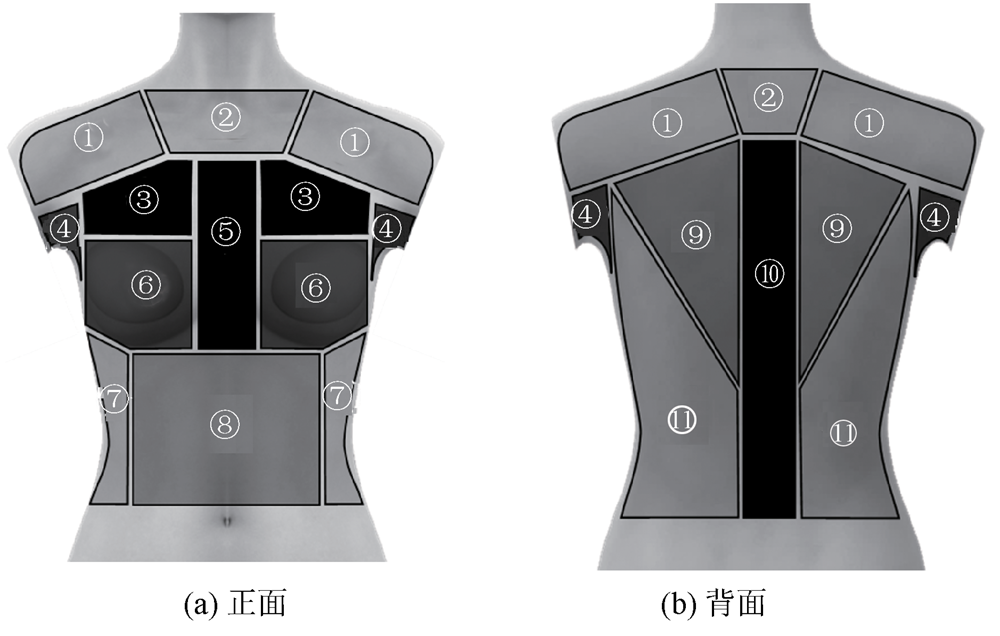
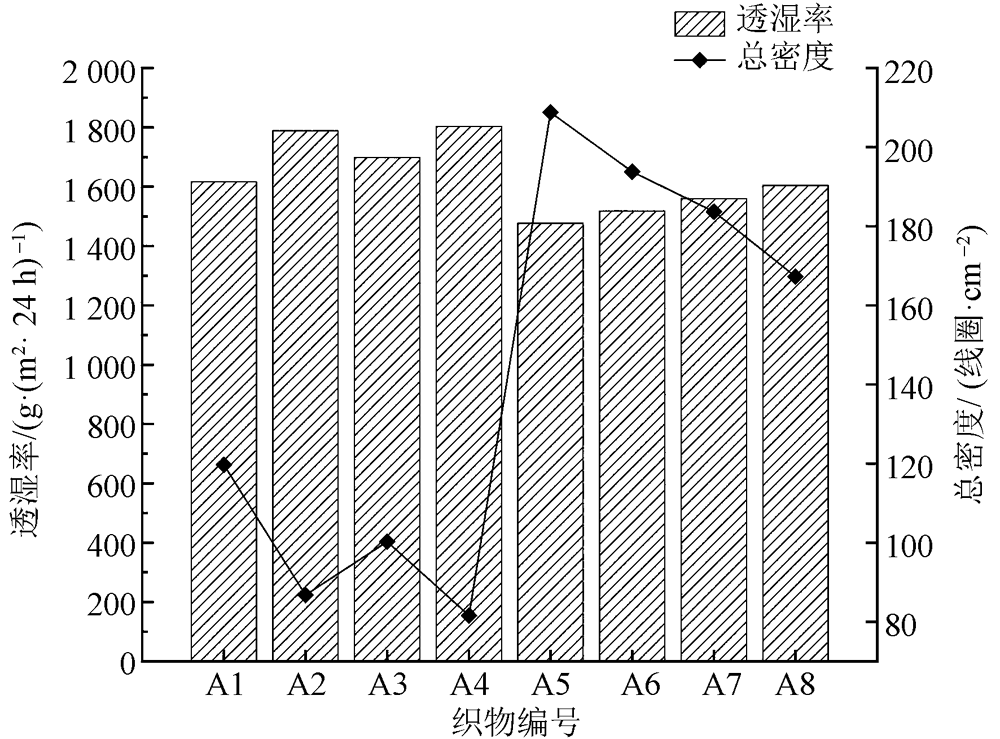
Results Through the analysis of thermal and humid distribution in the upper body of the human body, it is found that the heat in the upper chest, the middle chest and the back is the highest and the distribution of sweat glands is the most dense. The chest heat is higher, but the distribution of sweat glands is less than the upper chest, the middle chest and the back. Underarm heat is relatively low but sweat glands are densely distributed; The distribution of heat and sweat glands in abdomen and back triangle was medium. The remaining areas are at the edges of the body, where they emit less heat and have fewer sweat glands. The thermal and humid test results show that the moisture permeability of the fabric is inversely proportional to the total density of the fabric. This is because the greater the total density of the fabric, the tighter the water vapor will pass through the pores of the fabric, which will also lead to more contact points between water vapor and the fabric, resulting in poorer moisture permeability of the fabric. The moisture absorption and perspiration of the fabric is determined by the number of connecting channels between the front and back of the fabric.The more connected channels, the better the moisture absorption and perspiration, because these connected channels will form a microporous structure on the surface of the fabric, giving it a good single guide wet performance, and promote the improvement of the moisture absorption and rapid drying of the fabric. The air permeability of a fabric is mainly determined by the size and distribution of pores in the fabric. The larger and more pores, the better the air permeability of the fabric, because when the fabric is larger and more pores, the looser its structure, the easier the flow of gas inside the fabric, resulting in a higher air permeability of the fabric.

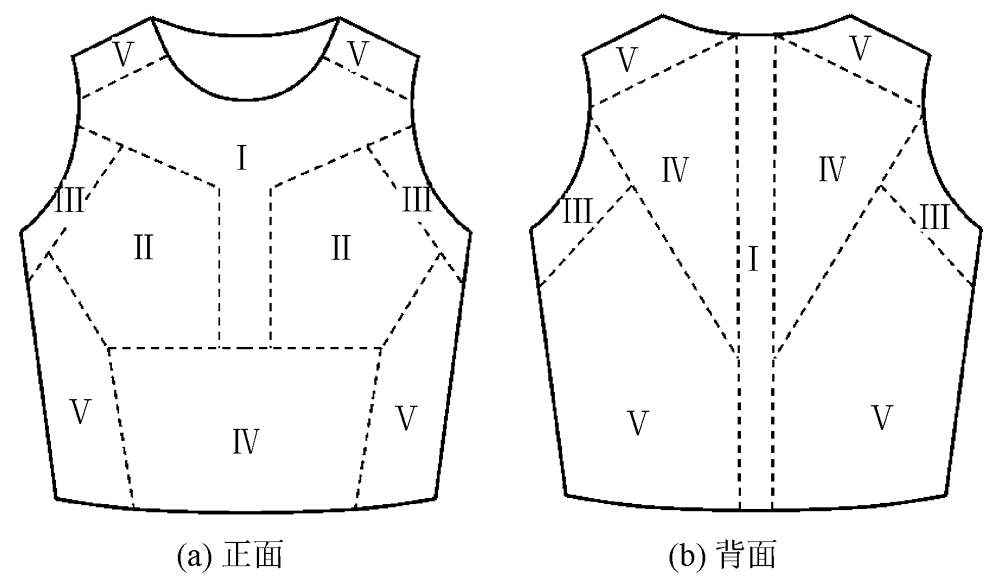
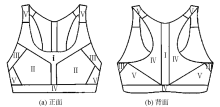
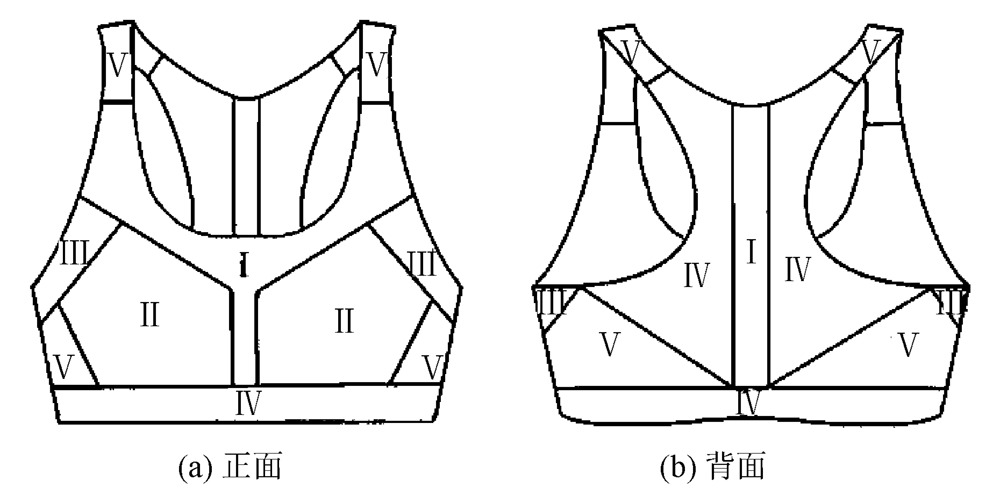
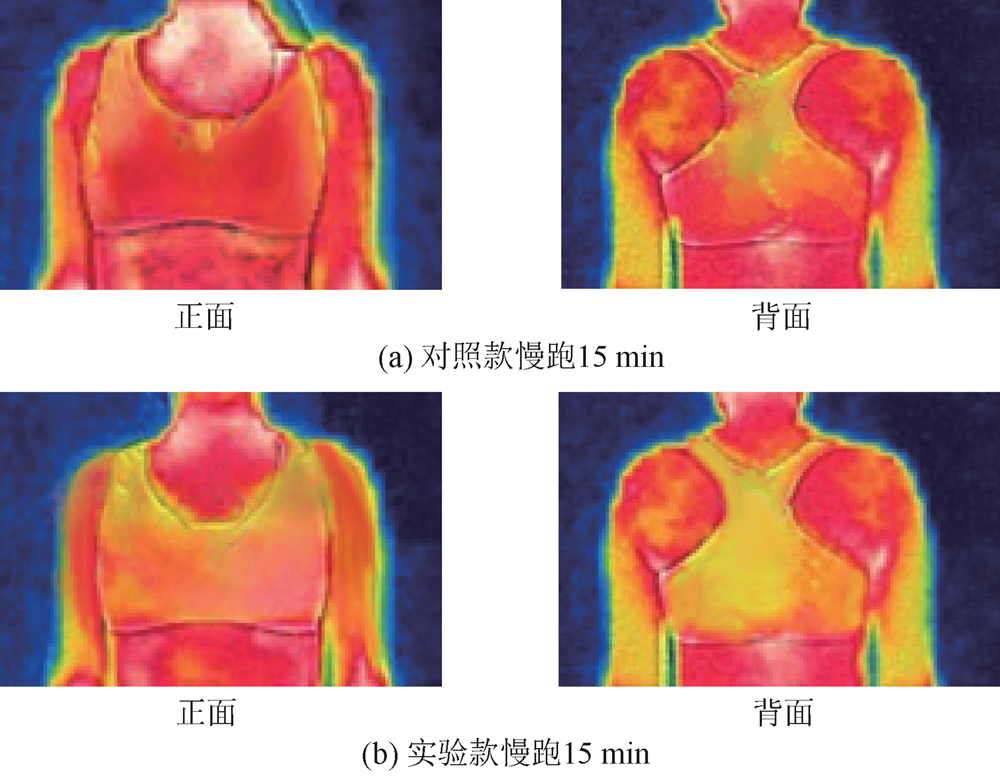
Conclusion According to the analysis of thermal and humid distribution of female upper body, the thermal and humid partition model of formed sports underwear is constructed, which is divided into five zones. Zone I is high thermal and high humid partition, II for high thermal and humid areas, III is medium thermal and high humid area, IV is area of moderate heat to moderate humidity, and V is the area of low thermal and low humidity. Through fuzzy comprehensive evaluation analysis, it can be seen that the comprehensive thermal and humid performance of the double-layer tissue is better than that of the single-layer tissue, and the honeycomb mesh tissue in the double-layer tissue has the best thermal and humid performance, which is mainly caused by the number of connecting channels between the front and back of the double-layer stitch. A flat knitting sports underwear was designed and developed by combining the thermal and humid zoning model and the comprehensive evaluation results of the tissue structure, and the function of improving the heat and humidity balance of human body was verified by infrared thermal imaging test.

Key words: flat knitting, full-forming, sports underwear, partition design, thermal and humid comfort

中图分类号: 

  • TS186.2

图1

女性上身热湿区域划分"

图2

运动内衣热湿分区模型"

图3

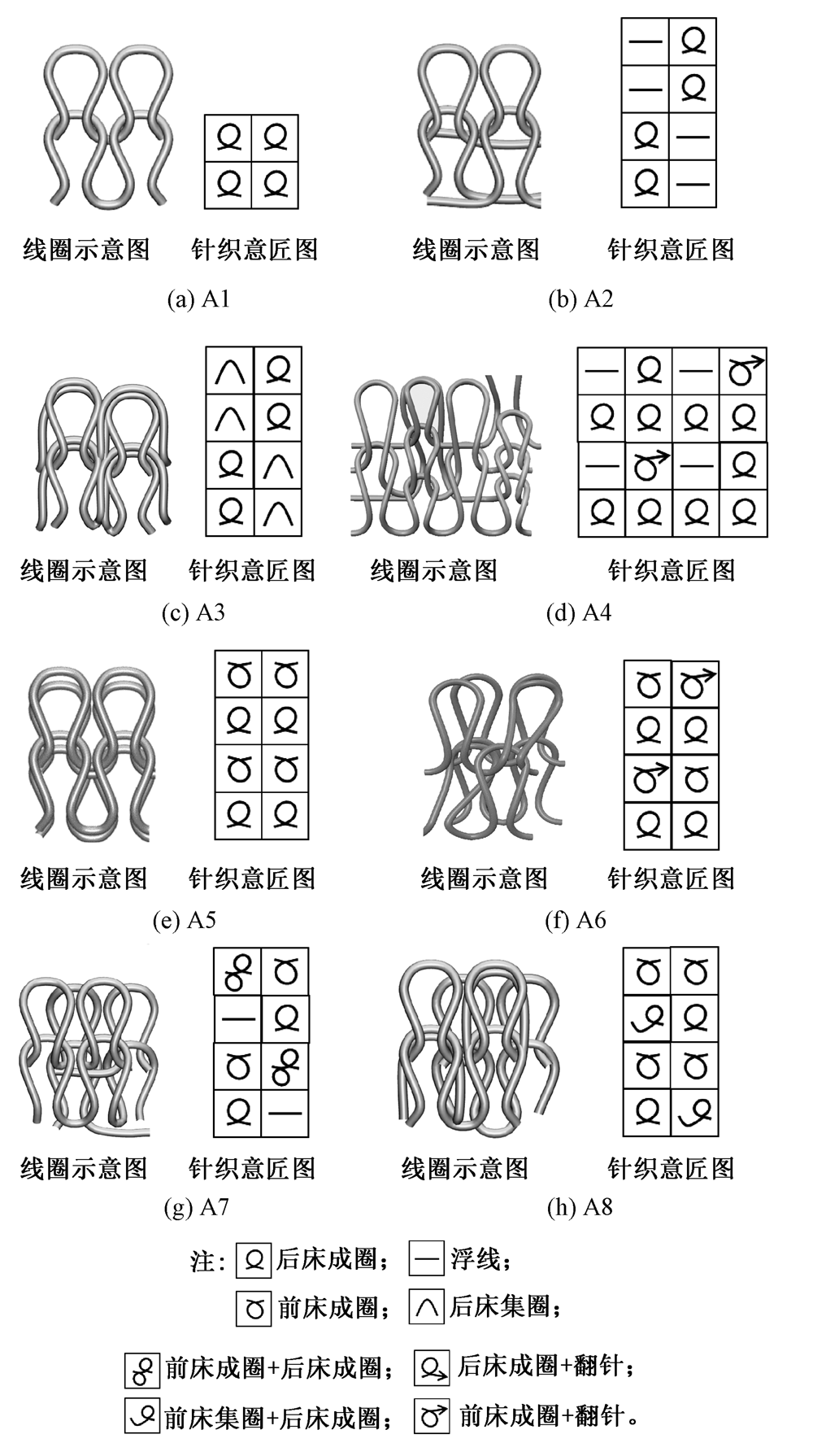
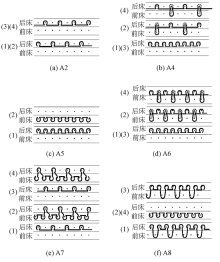
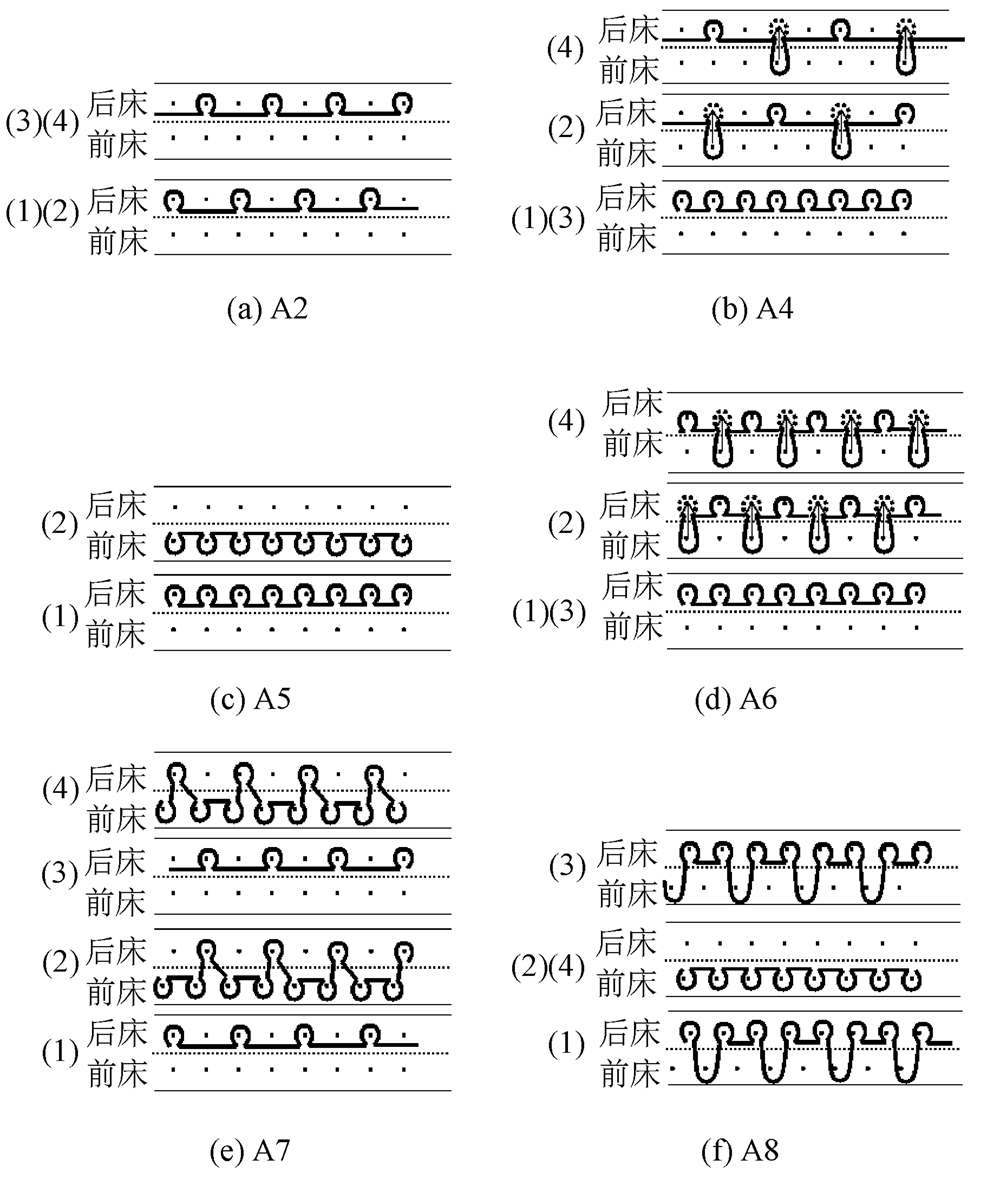
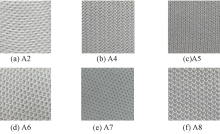
织物组织结构图"

表1

织物基本工艺参数"

织物
编号
厚度/
mm
横密/(纵行·
(5 cm)-1)
纵密/(横列·
(5 cm)-1)
总密度/
(线圈·cm-2)
A1 0.92 44 68 119.7
A2 0.96 34 60 86.8
A3 0.94 38 66 100.3
A4 0.96 35 62 81.6
A5 1.57 58 90 208.8
A6 1.60 57 85 193.8
A7 1.61 56 82 183.7
A8 1.63 51 82 167.3

图4

织物透湿量与总密度的关系"

表2

织物液态水分管理测试结果评级 级"

织物
编号
上层
浸湿
时间
下层
浸湿
时间
上层
吸水
速率
下层
吸水
速率
上层
浸湿
半径
下层
浸湿
半径
上层
扩散
速率
下层
扩散
速率
单项
传递
指数
综合
指数
A1 3 2 2 3 3 3 2 2 3 3
A2 3 2 3 3 3 4 3 4 4 3
A3 3 2 3 3 3 3 2 3 3 3
A4 3 3 3 3 3 4 3 4 4 3
A5 3 4 4 4 4 4 4 4 4 4
A6 5 4 4 4 4 4 4 4 5 5
A7 5 5 4 5 4 5 4 4 5 5
A8 5 5 5 5 5 5 4 4 5 5

图5

成形运动内衣款式图"

图6

成形运动内衣花型工艺编织图"

图7

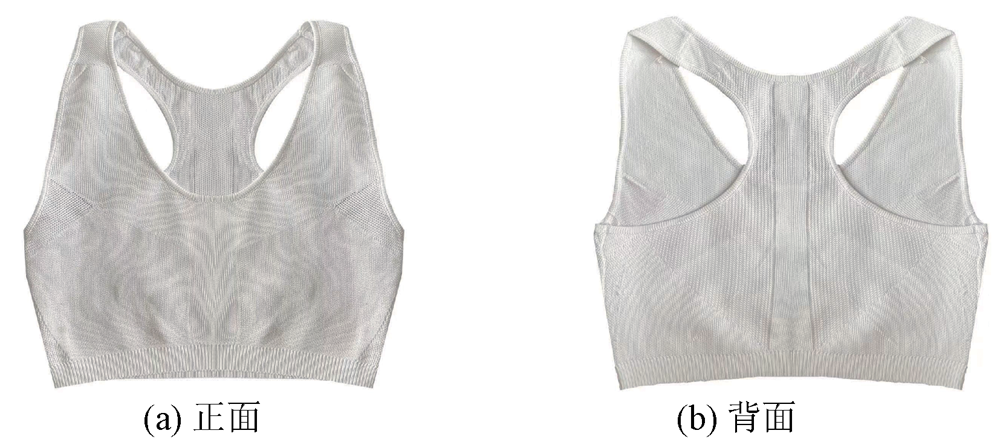
成形运动内衣实物图"

图8

成形运动内衣组织结构实物图"

图9

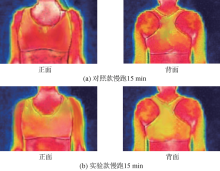
热成像性能测试对比实验"

[1] LI Y M, ZHANG W W, LIU Y L. Research on dynamic heat and moisture comfort property of sports underwear in different style[J]. Advanced Materials Research, 2011, 332: 894-897.
[2] 俞旭良, 丛洪莲, 董智佳, 等. 针织无缝运动内衣的散热导湿仿生结构设计[J]. 丝绸, 2022, 59(8):115-120.
YU Xuliang, CONG Honglian, DONG Zhijia, et al. Design of heat dissipation and moisture conduction biomimetic structure for seamless knitted sports underwear[J]. Journal of Silk, 2022, 59 (8): 115-120.
[3] 张囡. 经编全成型运动男背心的结构与性能研究[D]. 无锡: 江南大学,2019:7-8.
ZHANG Nuan. Research on the structure and performance of warp knitted full form sports men's vest[D]. Wuxi: Jiangnan University, 2019:7-8.
[4] 张昭华, 倪军, 王文玲, 等. 服装款式特征对人体局部传热性能的影响[J]. 纺织学报, 2018, 39(5): 92-96.
ZHANG Zhaohua, NI Jun, WANG Wenling, et al. Influence of clothing styleon local thermal transfer performance[J]. Journal of Textile Research, 2018, 39(5): 92-96.
[5] 许瑞超, 张一平, 陈莉娜. 针织运动面料的差动毛细导湿性[J]. 纺织学报, 2007, 28(3) : 20-22.
XU Ruichao, ZHANG Yiping, CHEN Lina. Differential capillary moisture conductivity of knitted sports-fabrics[J]. Journal of Textile Research, 2007, 28 (3): 20-22.
[6] 张文娟, 纪峰, 张瑞云, 等. 毛织物孔隙特征与透湿性关系[J]. 纺织学报, 2019, 40(1):67-72.
ZHANG Wenjuan, JI Feng, ZHANG Ruiyun, et al. Relationship between pore characteristics and moisture permeability of wool fabrics[J] Journal of Textile Research, 2019, 40 (1): 67-72.
[7] 李慧, 宋晓霞. 吸湿排汗针织面料设计及热湿舒适性评价[J]. 服装学报, 2022, 7(3):196-201,208.
LI Hui, SONG Xiaoxia. Design of moisture-wicking fabric and thermal and moisture comfort evaluation[J]. Journal of Apparel Research, 2022, 7(3):196-201,208.
[8] 孙岑文捷, 倪军, 张昭华, 等. 针织运动服的通风设计与热湿舒适性评价[J]. 纺织学报, 2020, 41 (11): 122-127,135.
SUN Cenwenjie, NI Jun, ZHANG Zhaohua, et al. Ventilation design and thermal and wet comfort evaluation of knitted sportswear[J]. Journal of Textile Research, 2020, 41 (11): 122-127,135.
[9] 吴赞敏, 吕彤, 王建伟. 运用模糊专家系统智能评价织物风格[J]. 纺织学报, 2005, 26(4): 115-117.
WU Zanmin, LÜ Tong, WANG Jianwei. Intelligent evaluation of fabric style using fuzzy expert system[J]. Journal of Textile Research, 2005, 26(4): 115-117.
[10] 陈晨涛. 人体热红外图像温度分析方法研究[D]. 杭州: 浙江大学,2020:10-11.
CHEN Chentao. Research on temperature analysis methods for human thermal infrared images[D]. Hangzhou: Zhejiang University, 2020:10-11.
[1] 王兆芳, 张辉, 丁波, 张淼. 文胸罩杯透湿率测定新方法[J]. 纺织学报, 2024, 45(01): 176-184.
[2] 姚晨曦, 万爱兰. 聚对苯二甲酸丁二醇酯/聚对苯二甲酸乙二醇酯纬编运动T恤面料的热湿舒适性[J]. 纺织学报, 2024, 45(01): 90-98.
[3] 董智佳, 郭燕雨秋, 刘海桑, 姚思宏. 经编全成形镂空紧身衣的结构设计与实现[J]. 纺织学报, 2023, 44(12): 130-137.
[4] 王兆芳, 丁波, 张辉, 陈思璘. 青年女性胸部出汗分布和出汗率的测定[J]. 纺织学报, 2023, 44(12): 145-152.
[5] 刘青, 牛丽, 蒋高明, 马丕波. 仿鳞片结构织物的制备及其防刺性能[J]. 纺织学报, 2023, 44(11): 90-97.
[6] 王予涛, 丛洪莲, 顾洪阳. 纬编成形护膝结构设计及其热湿舒适性[J]. 纺织学报, 2023, 44(10): 68-74.
[7] 孙玥, 周凌芳, 周祺旋, 张诗晨, 易洁伦. 运动内衣承托及其动态舒适性能的有限元分析[J]. 纺织学报, 2023, 44(09): 180-187.
[8] 赵辰, 王敏, 李俊. 个体降温服优化设计对其降温效果影响的研究进展[J]. 纺织学报, 2023, 44(09): 243-250.
[9] 丁雪婷, 王建萍, 潘婷, 姚晓凤, 袁鲁宁. 仿蜻蜓翅膀结构的冬季针织面料研发及其性能[J]. 纺织学报, 2023, 44(09): 75-83.
[10] 李玉贤, 丛洪莲, 吴光军. 针织立体构型产品的全成形工艺设计[J]. 纺织学报, 2023, 44(05): 132-138.
[11] 赖安琪, 蒋高明, 李炳贤. 全成形毛衫花式结构三维仿真[J]. 纺织学报, 2023, 44(02): 103-110.
[12] 牛丽, 刘青, 陈超余, 蒋高明, 马丕波. 仿生鳞片针织结构自供能传感织物的制备及其性能[J]. 纺织学报, 2023, 44(02): 135-142.
[13] 冯英杰, 蒋高明, 吴光军, 金帅. 全成形运动护膝结构设计及成形方法[J]. 纺织学报, 2023, 44(01): 112-118.
[14] 陈佳慧, 梅涛, 赵青华, 尤海宁, 王雯雯, 王栋. 热湿舒适性智能织物的研究进展[J]. 纺织学报, 2023, 44(01): 30-37.
[15] 路丽莎, 蒋高明. 全成形针织服装三维款式向二维样板转化方法[J]. 纺织学报, 2022, 43(10): 133-140.
Viewed
Full text


Abstract

Cited

  Shared   
  Discussed   
No Suggested Reading articles found!