纺织学报 ›› 2025, Vol. 46 ›› Issue (04): 138-145.doi: 10.13475/j.fzxb.20231100201
黄春月1, 黄鑫1( ), 杜海娟1, 徐文杰2, 杨雪梅3, 万科研1, 李旭1, 高杰1
HUANG Chunyue1, HUANG Xin1(), DU Haijuan1, XU Wenjie2, YANG Xuemei3, WAN Keyan1, LI Xu1, GAO Jie1
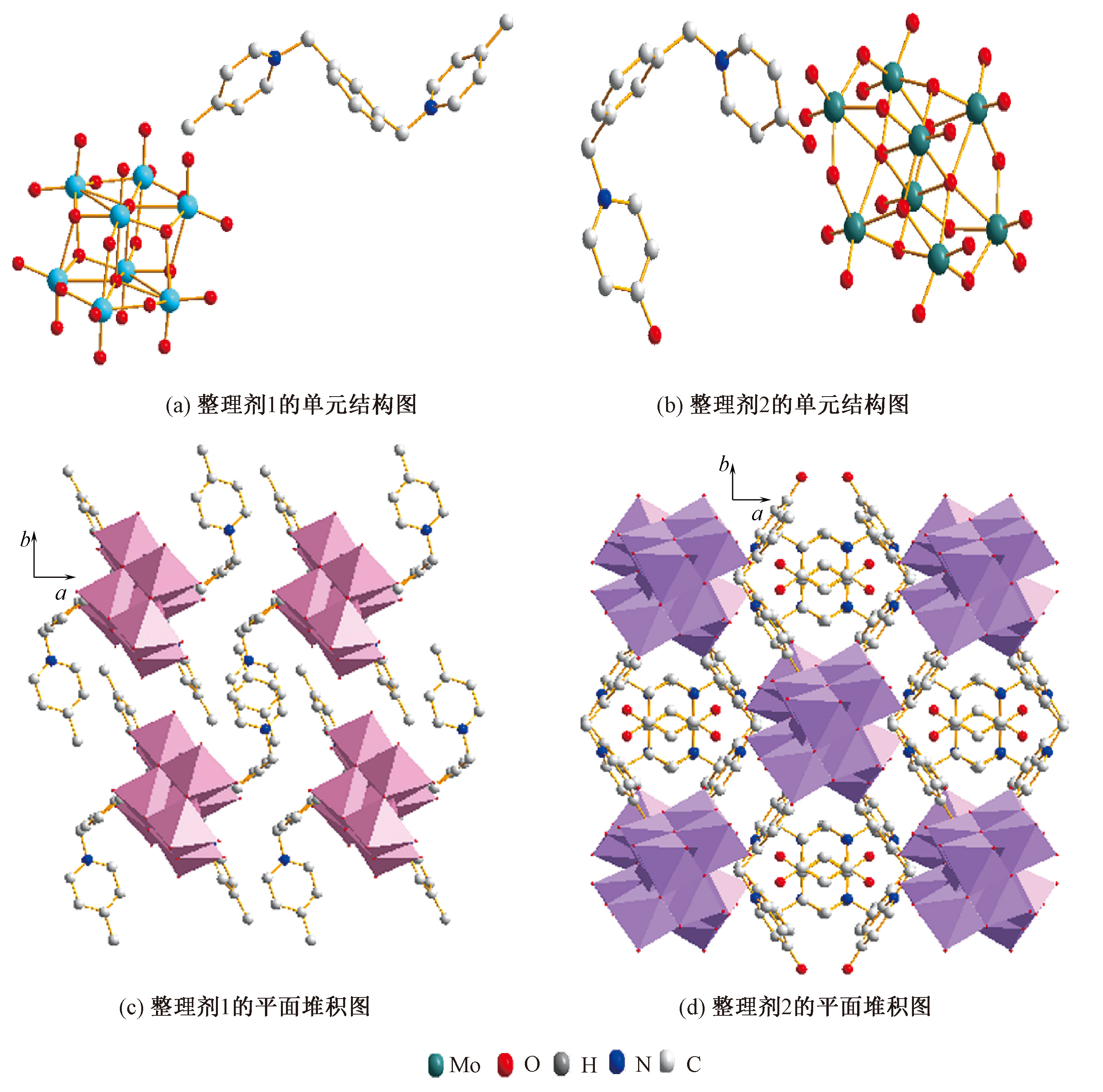
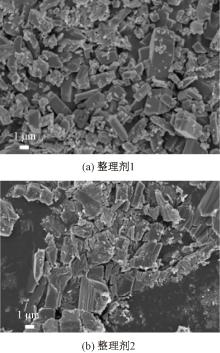
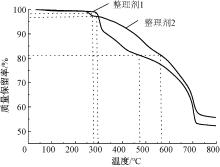
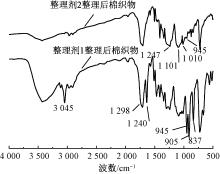
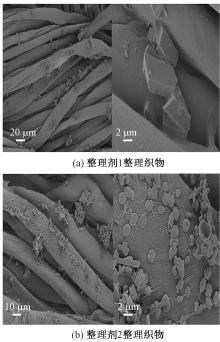
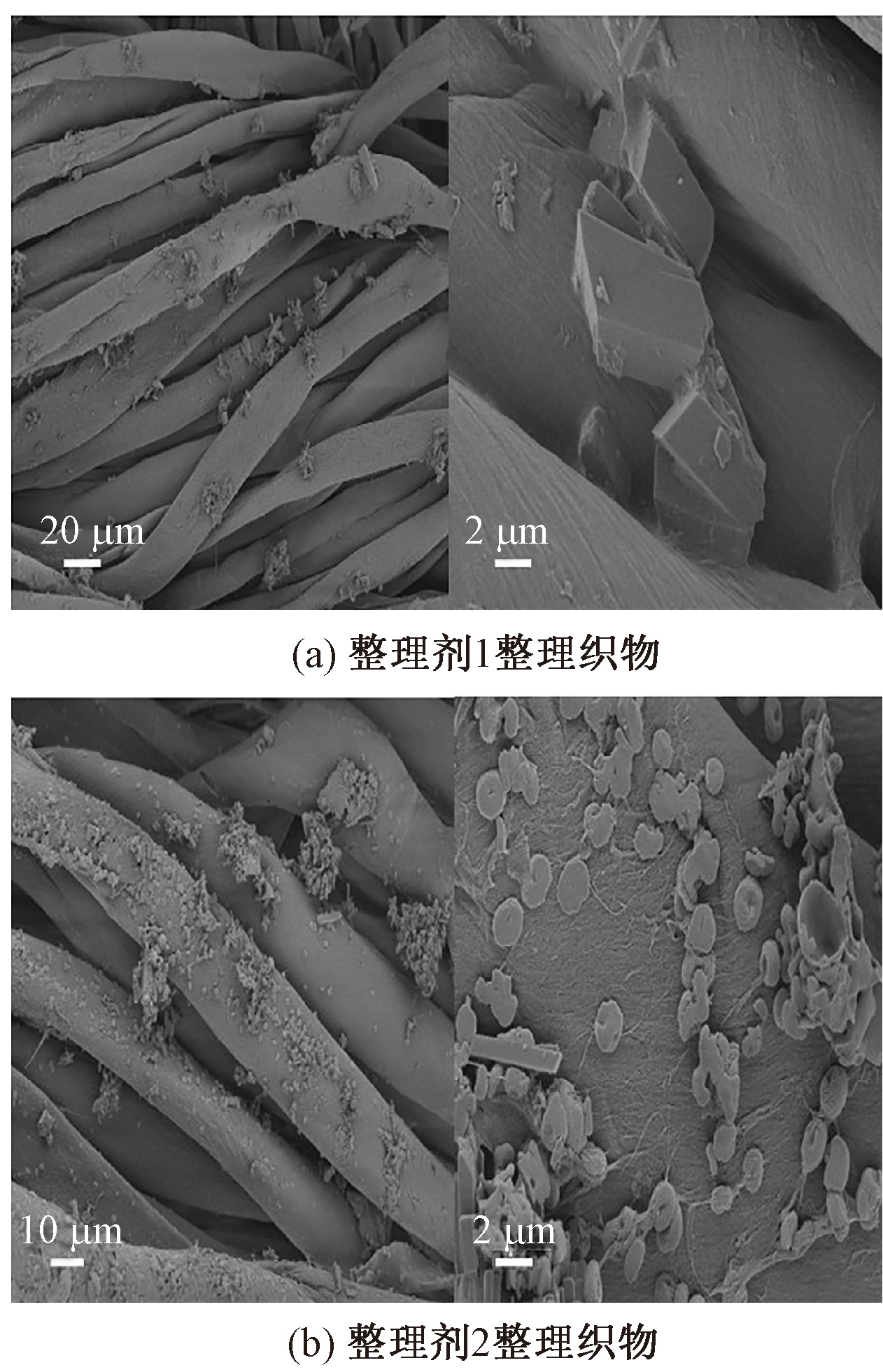
摘要: 为丰富防紫外线整理剂的品类,提升棉织物的防紫外线性能,采用有机阳离子化合物作为模板剂与钼氧簇复合,诱导产生2种不同端基结构的钼氧簇复合物作为整理剂,通过水热法将2种钼氧簇复合物原位生长到棉织物上,对棉织物进行防紫外线整理。借助X射线单晶衍射仪、扫描电镜、热重分析仪、紫外-可见分光光度计、傅里叶红外光谱仪对已获得的整理剂及其整理棉织物的结构进行表征,并对整理后织物的防紫外线性能进行测试。结果表明:2种整理剂整理棉织物的紫外线防护系数(UPF)分别可达到75.46和61.98;甲基端基钼氧簇盐整理剂1整理织物皂洗10次后UPF值为24.72,达到了AS/NZS 4399—2017《日光防护服评定和分级标准》中的最低防晒衣防护标准;羟基端基钼氧簇盐整理剂2整理织物皂洗10次后UPF值为44.99,达到了GB/T 18830—2009《纺织品防紫外线性能的评定》中规定的防紫外线产品的要求。
中图分类号:
| [1] | 肖顶. 防紫外纤维及织物研究进展[J]. 山东化工, 2021, 50(10): 75-76. |
| XIAO Ding. Progress of research on UV-protective fibres and fabrics[J]. Shandong Chemical Industry, 2021, 50(10): 75-76. | |
| [2] | 杨洋, 习智华, 李文燕, 等. 棉织物抗紫外整理工艺及测试标准的研究[J]. 纺织科学与工程学报, 2016, 33(4): 33-36. |
| YANG Yang, XI Zhihua, LI Wenyan, et al. Research on anti-ultraviolet finishing process and test standard of cotton fabric[J]. Journal of Textile Science and Engineering, 2016, 33(4): 33-36. | |
| [3] | 朱平. 功能纤维及功能纺织品[M]. 北京: 中国纺织出版社,2006: 125. |
| ZHU Ping. Functional fibers and functional textiles[M]. Beijing: China Textile & Apparel Press, 2006: 125. | |
| [4] | 帅旗, 孙硕, 成世杰, 等. 氮硼掺杂碳量子点/异氰酸酯型微胶囊复合整理棉织物及其防紫外线性能[J]. 纺织学报, 2023, 44(8): 126-132. |
| SHUAI Qi, SUN Shuo, CHENG Shijie, et al. Nitrogen-boron doped carbon quantum dots/isocyanate-based microcapsule composite finishing of cotton fabrics and their UV protection properties[J]. Journal of Textile Research, 2023, 44(8): 126-132. | |
| [5] | 刘小东, 高世会. 纯棉织物防紫外功能整理研究进展[J]. 纺织导报, 2021 (12): 49-50. |
| LIU Xiaodong, GAO Shihui. Research progress of UV protection function finishing of cotton fabric[J]. China Textile Leader, 2021 (12): 49-50. | |
| [6] | 钱如山, 朱传龙, 顾娇, 等. 纺织品抗紫外线整理剂的发展现状[J]. 上海工程技术大学学报, 2013, 27(3): 261-265. |
| QIAN Rushan, ZHU Chuanlong, GU Jiao, et al. Development status of anti-ultraviolet finishing agents for textiles[J]. Journal of Shanghai University of Engineering Science, 2013, 27(3): 261-265. | |
| [7] | 何为纺织品的抗紫外线整理,常见的紫外吸收剂有哪些?[J]. 网印工业, 2019 (10): 45-48. |
| What is UV-resistant finishing of textiles and what are the common UV absorbers?[J]. Screen Printing Industry, 2019 (10): 45-48. | |
| [8] | 李朝辉, 胡志波, 李艳霞. 苯并三唑类紫外吸收剂及其检测方法研究进展[J]. 中国纤检, 2021 (2): 70-73. |
| LI Chaohui, HU Zhibo, LI Yanxia. Progress in the study of benzotriazoles as ultraviolet absorbers and their detection methods[J]. China Fiber Inspection, 2021(2): 70-73. | |
| [9] | 李丽丽, 袁亮, 唐雨霞, 等. 聚多巴胺/壳聚糖改性棉织物的茶色素染色及其抗菌和防紫外线性能[J]. 纺织学报, 2024, 45(3): 106-113. |
| LI Lili, YUAN Liang, TANG Yuxia, et al. Tea pigment dyeing and antibacterial and anti-ultraviolet properties of polydopamine/chitosan modified cotton fabrics[J]. Journal of Textile Research, 2024, 45(3): 106-113. | |
| [10] | 盛宇, 徐丽慧, 孟云, 等. 用SiO2/TiO2复合气凝胶制备超疏水光催化防紫外线织物[J]. 纺织学报, 2019, 40(7): 90-96. |
| SHENG Yu, XU Lihui, MENG Yun, et al. Preparation of superhydrophobic photocatalytic anti-ultraviolet fabrics with SiO2/TiO2 composite aerogels[J]. Journal of Textile Research, 2019, 40(7): 90-96. | |
| [11] |
赵雪, 张安歌, 田洪瑞, 等. 基于Keggin型杂多酸的无机-有机杂化物的合成和光催化活性[J]. 高等学校化学学报, 2021, 42(6): 1723-1729.
doi: 10.7503/cjcu20200845 |
| ZHAO Xue, ZHANG Ange, TIAN Hongrui, et al. Synthesis and photocatalytic activity of inorganic-organic hybrids based on Keggin-type heteropolyacids[J]. Chemical Research in Chinese Universities, 2021, 42(6): 1723-1729. | |
| [12] | 郁佳, 郑琳娟, 张莉, 等. 缺位型多钼酸盐改性棉织物的制备及抗紫外性能[J]. 印染助剂, 2020, 37(11): 25-28. |
| YU Jia, ZHENG Linjuan, ZHANG Li, et al. Preparation and UV resistance of absent polymolybdate modified cotton fabrics[J]. Textile Auxiliaries, 2020, 37(11): 25-28. | |
| [13] | HEBEISH A, SHARAF S, FAROUK A. Utilization of chitosan nanoparticles as a green finish in multifunctionalization of cotton textile[J]. International Journal of Biological Macromolecules, 2013, 60(3): 10-17. |
| [14] | 梁志结, 程海兵, 刘慧, 等. 多钼氧酸盐光致变色的研究进展[J]. 南通大学学报(自然科学版), 2023, 22(1): 16-25. |
| LIANG Zhijie, CHENG Haibing, LIU Hui, et al. Progress of photochromism of polymolybdate[J]. Journal of Nantong University (Natural Science Edition), 2023, 22(1): 16-25. | |
| [15] |
VASILOPOULOU M, DOUVAS A M, PALILIS L C, et al. Old metal oxide clusters in new applications: spontaneous reduction of Keggin and Dawson polyoxometalate layers by a metallic electrode for improving efficiency in organic optoelectronics[J]. Journal of the American Chemical Society, 2015, 137(21): 6844-6856.
doi: 10.1021/jacs.5b01889 pmid: 25951374 |
| [16] | 韩正波, 安海艳, 王力, 等. 有机-无机杂化料{[Na2(H2O)4]2[γ-Mo8O26·(Gly-Gly)2]}·4H2O的合成及晶体结构[J]. 高等学校化学学报, 2003, 24(9): 1558-1560. |
| HAN Zhengbo, AN Haiyan, WANG Li, et al. Synthesis and crystal structure of organic-inorganic hybrid material {[Na2(H2O)4]2[γ-Mo8O26·(Gly-Gly)2]}·4H2O[J]. Chemical Research in Chinese Universities, 2003, 24(9): 1558-1560. | |
| [17] | 肖刚. 季铵型阳离子活性染料[J]. 染料与染色, 2005, 42(1): 10-14. |
| XIAO Gang. Quaternary ammonium cationic reactive dyes[J]. Dyestuffs and Dyeing, 2005, 42(1): 10-14. |
| [1] | 赵强强, 王韩星, 张奉轩, 何瑾馨, 周俊, 周兆昌, 董霞. 聚六亚甲基双胍盐酸盐改性对棉织物耐日晒色牢度的影响[J]. 纺织学报, 2025, 46(04): 109-118. |
| [2] | 赵祥璐, 方寅春, 李伟. 超疏水自清洁结构色织物的制备及其性能[J]. 纺织学报, 2025, 46(04): 154-161. |
| [3] | 郭洁琰, 徐颖雯, 丁放, 任学宏. 卤胺抗菌剂及其改性纤维的应用研究进展[J]. 纺织学报, 2025, 46(04): 255-263. |
| [4] | 廖喜林, 曾媛, 刘淑萍, 李亮, 李淑静, 刘让同. 磷/氮/硅复配协效阻燃棉织物制备及其性能[J]. 纺织学报, 2025, 46(03): 151-157. |
| [5] | 郭庆, 毛阳顺, 任亚杰, 刘济民, 王怀芳, 朱平. 基于漆酶一步催化法的羊毛织物原位染色及阻燃功能化[J]. 纺织学报, 2025, 46(02): 161-169. |
| [6] | 张洁, 郭鑫源, 关晋平, 程献伟, 陈国强. 磷/氮阻燃剂原位沉积对棉织物的耐久阻燃改性[J]. 纺织学报, 2025, 46(02): 180-187. |
| [7] | 宋婉萌, 王宝弘, 孙宇, 杨家祥, 刘云, 王玉忠. 兼具力学性能与高效阻燃性能粘胶织物的制备及其性能[J]. 纺织学报, 2025, 46(02): 188-196. |
| [8] | 袁华彬, 王沂沨, 王家朋, 向永翾, 陈国强, 邢铁玲. 基于山嵛酸和ZIF-8改性的超疏水防结冰棉织物[J]. 纺织学报, 2025, 46(02): 197-206. |
| [9] | 李鑫, 叶培培, 赵晓曼, 王鸿博, 杨国荣, 洪剑寒. 氧化铋-硅橡胶基X射线防护织物的制备及性能[J]. 纺织学报, 2025, 46(02): 227-235. |
| [10] | 巢探宇, 叶韵, 李娜, 廖思含, 马琪凯, 崔莉. 基于脂肪酶固定化的棉织物易去油污整理及其应用[J]. 纺织学报, 2025, 46(01): 130-137. |
| [11] | 肖鑫, 李伟, 卢润, 姜会钰, 李青. 等离子体协同过氧化氢活化体系对纯棉水刺非织造布的练漂处理[J]. 纺织学报, 2024, 45(12): 118-127. |
| [12] | 武浩, 周嫦娥, 高振清, 冯嘉禾. 基于还原-氧化体系的活性染料染色棉织物剥色[J]. 纺织学报, 2024, 45(12): 128-136. |
| [13] | 王心雨, 郭明明, 张乐乐, 郑伟杰, AMJAD Farooq, 王宗乾. 耐久性抗菌超疏水棉织物的制备及其性能[J]. 纺织学报, 2024, 45(11): 170-177. |
| [14] | 肖渊, 童垚, 胡呈安, 武贤军, 杨磊鹏. 导电复合材料涂覆式全织物基柔性压阻传感器制备[J]. 纺织学报, 2024, 45(10): 152-160. |
| [15] | 张应秀, 徐丽慧, 潘虹, 姚程健, 赵红, 窦梅冉, 沈勇, 赵诗怡. 基于甘蔗渣多孔碳的超疏水棉织物制备及其性能[J]. 纺织学报, 2024, 45(10): 161-169. |
|
||
 京公网安备11010502044800号