纺织学报 ›› 2025, Vol. 46 ›› Issue (04): 255-263.doi: 10.13475/j.fzxb.20240805502
郭洁琰, 徐颖雯, 丁放, 任学宏( )
)
GUO Jieyan, XU Yingwen, DING Fang, REN Xuehong()
摘要:
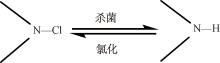
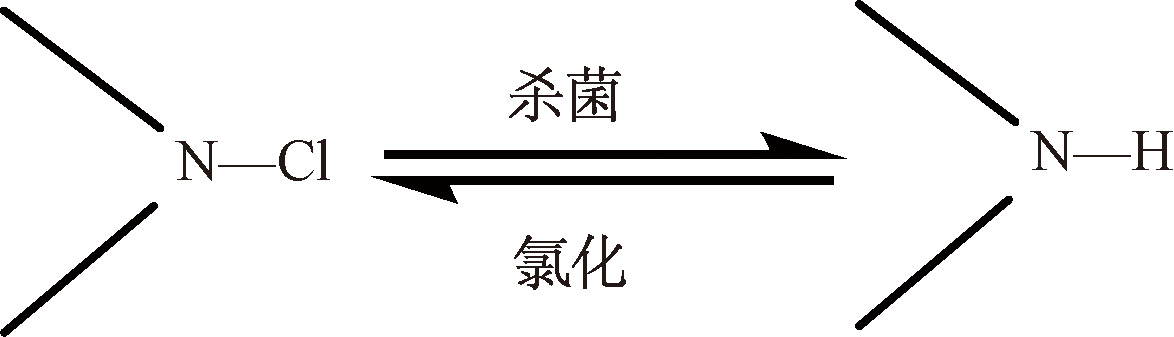
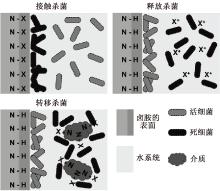
为拓展和促进卤胺抗菌材料在不同领域的应用,综述了近年来卤胺改性纤维与纺织品的研究进展。简要介绍了卤胺抗菌剂的结构、特点及抗菌机制。卤胺的结构根据卤素原子的不同,可分为氯胺、溴胺和碘胺3类;根据分子结构的不同,可分为胺类、酰胺类和亚酰胺类。卤胺抗菌剂可通过接触杀菌、释放杀菌和转移杀菌3种方式使微生物死亡。同时,详细综述了卤胺抗菌剂的制备方法,分别是表面改性技术和共混改性技术。阐述了卤胺抗菌剂在抗菌纺织品、水处理、医用材料、食品包装和空气过滤领域的应用。最后,对卤胺抗菌剂存在的问题进行了分析,并对其未来发展趋势进行了展望。
中图分类号:
| [1] | 刘畅, 石荣金, 韩璐怡, 等. 卤胺抗菌材料的研究进展[J]. 印染, 2023, 49(6): 74-81. |
| LIU Chang, SHI Rongjin, HAN Luyi, et al. Research progress of N-halamine antibacterial materials[J]. China Dyeing & Finishing, 2023, 49(6): 74-81. | |
| [2] | 计烨, 杨建军, 吴庆云, 等. 卤胺类抗菌材料的现状及进展[J]. 塑料, 2024, 53(3): 131-136, 142. |
| JI Ye, YANG Jianjun, WU Qingyun, et al. Current status and progress of haloamine antibacterial materials[J]. Plastics, 2024, 53(3): 131-136, 142. | |
| [3] | MORANDINI A, SPADATI E, LEONETTI B, et al. Sustainable triazine-derived quaternary ammonium salts as antibacterial agents[J]. RSC Advances, 2021, 11(45): 28092-28096. |
| [4] | ARDEAN C, DAVIDESCU C M, NEMEŞ N S, et al. Factors influencing the antibacterial activity of chitosan and chitosan modified by functionalization[J]. International Journal of Molecular Sciences, 2021, 22(14): 1-28. |
| [5] | NGUYEN D T, PHAM L T, LE H T T, et al. Synthesis and antibacterial properties of a novel magnetic nanocomposite prepared from spent pickling liquors and polyguanidine[J]. RSC Advances, 2018, 8(35): 19707-19712. |
| [6] | HUANG X, WANG D R, HU L Y, et al. Preparation of a novel antibacterial coating precursor and its antibacterial mechanism[J]. Applied Surface Science, 2018, 465: 478-485. |
| [7] | DING F, ZHANG S M, REN X H, et al. Development of pet fabrics containing n-halamine compounds with durable antibacterial property[J]. Fibers and Polymers, 2022, 23(2): 413-422. |
| [8] | BU D L, ZHOU Y, YANG C, et al. Preparation of quaternarized N-halamine-grafted graphene oxide nanocomposites and synergetic antibacterial proper-ties[J]. Chinese Chemical Letters, 2021, 32(11): 3509-3513. |
| [9] |
DONG A, WANG Y J, GAO Y, et al. Chemical insights into antibacterial N-halamines[J]. Chemical Reviews, 2017, 117(6): 4806-4862.
doi: 10.1021/acs.chemrev.6b00687 pmid: 28252944 |
| [10] | 夏金兰, 王春, 刘新星. 抗菌剂及其抗菌机理[J]. 中南大学学报(自然科学版), 2004, 35(1): 31-38. |
| XIA Jinlan, WANG Chun, LIU Xinxing. Research on antibacterial agents and their mechanisms of actions[J]. Journal of Central South University (Natural Science), 2004, 35(1): 31-38. | |
| [11] | 马维. 基于纳米ZnO/卤胺抗菌复合材料的构筑及应用研究[D]. 无锡: 江南大学, 2020: 60-86. |
| MA Wei. Construction and application of antibacterial composites based on ZnO nanoparticles/N-halamine[D]. Wuxi: Jiangnan University, 2020: 60-86. | |
| [12] | SUN Y Y, SUN G. Durable and refreshable polymeric N-halamine biocides containing 3-(4'-vinylbenzyl)-5,5-dimethylhydantoin[J]. Journal of Polymer Science Part A: Polymer Chemistry, 2001, 39: 3348-3355. |
| [13] | LUO J, CHEN Z B, SUN Y Y. Controlling biofilm formation with an N-halamine-based polymeric additive[J]. Journal of Biomedical Materials Research Part A, 2006, 77A(4): 823-831. |
| [14] | LI C H, XUE L Y, CAI Q, et al. Design, synthesis and biocidal effect of novel amine N-halamine microspheres based on 2,2,6,6-tetramethyl-4-piperidinol as promising antibacterial agents†[J]. RSC Advances, 2014, 4: 47853-47864. |
| [15] | CAO Z B, SUN Y Y. N-halamine-based chitosan: preparation, characterization, and antibacterial function[J]. Journal of Biomedical Materials Research Part A, 2008, 85A(1): 99-107. |
| [16] | AHMED A E-S I, HAY J N, BUSHELL M E, et al. Biocidal polymers (II): determination of biological activity of novel N-halamine biocidal polymers and evaluation for use in water filters[J]. Reactive & Functional Polymers, 2008, 68(10): 1448-1458. |
| [17] | 刘桂芝, 王英沣, 殷茂力. 季铵/卤胺化壳聚糖对棉织物的抗菌整理研究[J]. 棉纺织技术, 2023, 51(6): 68-72. |
| LIU Guizhi, WANG Yingfeng, YIN Maoli. Study on antibacterial finishing of cotton fabric treated by quaternarized/N-halamine chitosan[J]. Cotton Textile Technology, 2023, 51(6): 68-72. | |
| [18] | 孙萍, 张淑敏, 刘颖, 等. 亚麻织物的新型卤胺抗菌整理[J]. 印染, 2022, 48(3): 21-25. |
| SUN Ping, ZHANG Shumin, LIU Ying, et al. Antibacterial finish of linen fabrics with new N-halamine agent[J]. China Dyeing & Finishing, 2022, 48(3): 21-25. | |
| [19] | PENG P P, ZHANG Z W, YANG J J, et al. Grafted antibacterial cotton fabrics with N-halamine groups via atom transfer radical polymerization[J]. Cellulose, 2021, 28(13): 8855-8866. |
| [20] | MA Y, HUANG C, ZHANG Z, et al. Controlled surface radical graft polymerization of n-halamine monomers on polyester fabrics and potential application in bioprotective medical scrubs[J]. ACS Applied Polymer Materials, 2022, 4(9): 6760-6769. |
| [21] | WAN J S, LI H, CAI X Y, et al. Developing the functional cotton fabric with N-halamine antibacterial structure based on DA/PEI[J]. Cellulose, 2022, 29(18): 9953-9967. |
| [22] | WANG Y F, YIN M L, MA W, et al. N-halamine modified mesoporous silica coated cotton as multipurpose protective fibrous materials[J]. Cellulose, 2020, 27: 10461-10471. |
| [23] | LUO H, YIN X Q, TAN P F, et al. Engineering an antibacterial nanofibrous membrane containing N-Halamine for recyclable wound dressing application[J]. Materials Today Communications, 2020. DOI: 10.1016/j.mtcomm.2020.100898. |
| [24] | QU H H, WANG C, GUO Y X, et al. Electrospun N-halamine/ZnO-based platform eradicates bacteria through multimodal antibacterial mechanism of action[J]. Rare Metals, 2023, 42(1): 222-233. |
| [25] | MA W, LI J, LIU Y, et al. Preparation and characterization of excellent antibacterial TiO2/N-halamines nanoparticles[J]. Colloids and Surfaces A: Physicochemical and Engineering Aspects, 2016, 506: 284-290. |
| [26] | LIU C, SHAN H R, CHEN X X, et al. Novel inorganic-based N-halamine nanofibrous membranes as highly effective antibacterial agent for water disin-fection[J]. ACS Applied Materials & Interfaces, 2018, 10(51): 44209-44215. |
| [27] | YANG Z M, REN X H, LIU Y. N-halamine modified ceria nanoparticles: antibacterial response and accelerated wound healing application via a 3D printed scaffold[J]. Composites Part B: Engineering, 2021. DOI: 10.1016/j.compositesb.2021.109390. |
| [28] | YANG Z M, REN X H, LIU Y. Multifunctional 3D printed porous GelMA/xanthan gum based dressing with biofilm control and wound healing activity[J]. Materials Science & Engineering C, 2021. DOI: 10.1016/j.msec.2021.112493. |
| [29] | 王舒. 卤胺抗菌剂的制备及其在纺织品上的应用研究[D]. 深圳: 深圳大学, 2020: 5-10. |
| WANG Shu. Preparation of N-halamine antibacterial agent and its application on textiles[D]. Shenzhen: Shenzhen University, 2020: 5-10. | |
| [30] | TANG X, ZHANG Z X, JING L X, et al. Synthesis and antibacterial activity of Schiff base-pyridine quaternary ammonium salt-halamine compounds on cotton fabrics[J]. Cellulose, 2023, 30(16): 10519-10531. |
| [31] | LI H Y, WEN D J, WANG S J, et al. Durable multifunctional cotton fabric with superior biocidal efficacy and flame retardancy based on an ammonium phosphate N-halamine[J]. International Journal of Biological Macromolecules, 2023. DOI: 10.1016/j.ijbiomac.2023.126812. |
| [32] | 马宗敏, 闫子硕, 斯阳, 等. 水消毒用卤胺改性EVOH纳米纤维膜的制备及性能表征[J]. 产业用纺织品, 2022, 40 (4): 7-12. |
| MA Zongmin, YAN Zishuo, SI Yang, et al. Preparation and characterization of N-halamine-modified EVOH nanofibrous membranes for water disinfection[J]. Technical Textiles, 2022, 40 (4): 7-12. | |
| [33] | NAHHAL I M E, AQAD M A, KODEH F S, et al. N-Halamine-modified mesoporous silica for water disinfection[J]. Materials Chemistry and Physics, 2023. DOI: 10.1016/j.matchemphys.2022.126936. |
| [34] | MA Y, WISUTHIPHAET N, NITIN N, et al. A novel N-halamine biocidal nanofibrous membrane for chlorine rechargeable rapid water disinfection applications[J]. ACS Applied Materials & Interfaces, 2021, 13(34): 41056-41065. |
| [35] | ZHANG Y, YIN M L, LI L, et al. Construction of aerogels based on nanocrystalline cellulose and chitosan for high efficient oil/water separation and water disinfection[J]. Carbohydrate Polymers, 2020. DOI: 10.1016/j.carbpol.2020.116461. |
| [36] | 熊坦平, 谭飞, 黄成, 等. 氯胺接枝涤纶/锦纶超细纤维针织物的抗菌性能[J]. 纺织学报, 2022, 43(8): 101-106. |
| XIONG Tanping, TAN Fei, HUANG Cheng, et al. Antibacterial properties of chloramine-grafted polyester/ppolyamide microfibre knitted fabrics[J]. Journal of Textile Research, 2022, 43 (8): 101-106. | |
| [37] | CHEN W J, ZHU Y N, ZHANG Z, et al. Engineering a multifunctional N-halamine-based antibacterial hydrogel using a super-convenient strategy for infected skin defect therapy[J]. Chemical Engineering Journal, 2020. DOI: 10.1016/j.cej.2019.122238. |
| [38] | WANG Z M, TANG Y C, WANG P, et al. Dynamical integration of antibacterial, anti-inflammatory, and pro-osteogenic activities on polyetheretherketone via a porous N-halamine polymeric coating[J]. Advanced Functional Materials, 2023. DOI: 10.1002/adfm.202307286. |
| [39] | MA W, LI L, LIN X H, et al. Novel ZnO/N-halamine-mediated multifunctional dressings as quick antibacterial agent for biomedical applications[J]. ACS Applied Materials & Interfaces, 2019, 11(34): 31411-31420. |
| [40] | 范晓燕, 刘颖, 潘能宇, 等. 应用电子束辐射技术的抗菌改性聚酯纳米纤维膜[J]. 纺织学报, 2017, 38(6): 157-162. |
| FAN Xiaoyan, LIU Ying, PAN Nengyu, et al. Antibacterial modification of polyester nanofibrous membranes by electron beam irradiation technique[J]. Journal of Textile Research, 2017, 38 (6): 157-162. | |
| [41] | SHI Y Q, HE Y J, LIU J R, et al. High-efficacy antibacterial acyclic N-halamine-grafted polyvinyl alcohol film[J]. Polymer Bulletin, 2022, 80(11): 11845-11859. |
| [42] | ZHANG G Q, ZHANG Y L, ZHENG K C, et al. Durable and biocompatible antibacterial N-halamine membranes based on cellulose carbamate[J]. Industrial Crops and Products, 2022. DOI: 10.1016/j.indcrop.2022.115518. |
| [43] | ZHANG L, LI L F, WANG L C, et al. Multilayer electrospun nanofibrous membranes with antibacterial property for air filtration[J]. Applied Surface Science, 2020. DOI: 10.1016/j.apsusc.2020.145962. |
| [44] | WANG F, SI Y, YU J Y, et al. Tailoring nanonets-engineered superflexible nanofibrous aerogels with hierarchical cage-like architecture enables renewable antibacterial air filtration[J]. Advanced Functional Materials, 2021. DOI: 10.1002/adfm.202107223. |
| [45] |
SHAO W L, LI J L, ZHANG Y T, et al. Polyvinylidene fluoride multi-scale nanofibrous membrane modified using N-halamine with high filtration efficiency and durable antibacterial properties for air filtration[J]. Journal of Colloid and Interface Science, 2022, 628: 627-636.
doi: 10.1016/j.jcis.2022.08.077 pmid: 36027773 |
| [1] | 赵祥璐, 方寅春, 李伟. 超疏水自清洁结构色织物的制备及其性能[J]. 纺织学报, 2025, 46(04): 154-161. |
| [2] | 金汝诗, 陈万明, 刘国金, 刘承海, 戚栋明, 翟世民. 生物炭在印染废水处理中的应用研究进展[J]. 纺织学报, 2025, 46(04): 235-243. |
| [3] | 黄春月, 黄鑫, 杜海娟, 徐文杰, 杨雪梅, 万科研, 李旭, 高杰. 钼氧簇复合物整理剂制备及其整理棉织物的防紫外线性能[J]. 纺织学报, 2025, 46(04): 138-145. |
| [4] | 孙靖宇, 张建伟, 杨超, 佘希林, 刘嘉麒. 连续玄武岩纤维专用浸润剂体系的研究进展[J]. 纺织学报, 2025, 46(03): 245-255. |
| [5] | 郭庆, 毛阳顺, 任亚杰, 刘济民, 王怀芳, 朱平. 基于漆酶一步催化法的羊毛织物原位染色及阻燃功能化[J]. 纺织学报, 2025, 46(02): 161-169. |
| [6] | 张洁, 郭鑫源, 关晋平, 程献伟, 陈国强. 磷/氮阻燃剂原位沉积对棉织物的耐久阻燃改性[J]. 纺织学报, 2025, 46(02): 180-187. |
| [7] | 宋婉萌, 王宝弘, 孙宇, 杨家祥, 刘云, 王玉忠. 兼具力学性能与高效阻燃性能粘胶织物的制备及其性能[J]. 纺织学报, 2025, 46(02): 188-196. |
| [8] | 李鑫, 叶培培, 赵晓曼, 王鸿博, 杨国荣, 洪剑寒. 氧化铋-硅橡胶基X射线防护织物的制备及性能[J]. 纺织学报, 2025, 46(02): 227-235. |
| [9] | 左红梅, 高敏, 阮芳涛, 邹梨花, 徐珍珍. MXene-氧化石墨烯改性碳纤维/聚乳酸复合材料制备及其力学性能[J]. 纺织学报, 2025, 46(01): 9-15. |
| [10] | 肖鑫, 李伟, 卢润, 姜会钰, 李青. 等离子体协同过氧化氢活化体系对纯棉水刺非织造布的练漂处理[J]. 纺织学报, 2024, 45(12): 118-127. |
| [11] | 欧宗权, 于金超, 潘志娟. 光致变色聚乳酸/聚3-羟基丁酸酯共混纤维的纺制及其结构与性能[J]. 纺织学报, 2024, 45(12): 9-17. |
| [12] | 邴琳涵, 王锐, 吴雨航, 刘博同, 黄寒江, 魏建斐. 聚对苯二甲酸乙二醇酯基碳点热解法制备及其在阻燃改性中的应用[J]. 纺织学报, 2024, 45(10): 1-8. |
| [13] | 韩画宇, 杨文龙, 王甫, 胡柳, 胡毅. 苯并[a]吩恶嗪基功能染料制备及其在改性涤纶织物上的应用[J]. 纺织学报, 2024, 45(10): 128-136. |
| [14] | 宇平, 王海跃, 汪毅, 孙钦超, 王彦, 胡祖明. 聚酯织物的直接氟修饰疏水改性及其作用机制[J]. 纺织学报, 2024, 45(10): 137-144. |
| [15] | 钱洋, 张璐, 李晨阳, 王荣武. 静电纺海藻酸钠复合纳米纤维膜制备及其性能[J]. 纺织学报, 2024, 45(08): 18-25. |
|
||
 京公网安备11010502044800号